
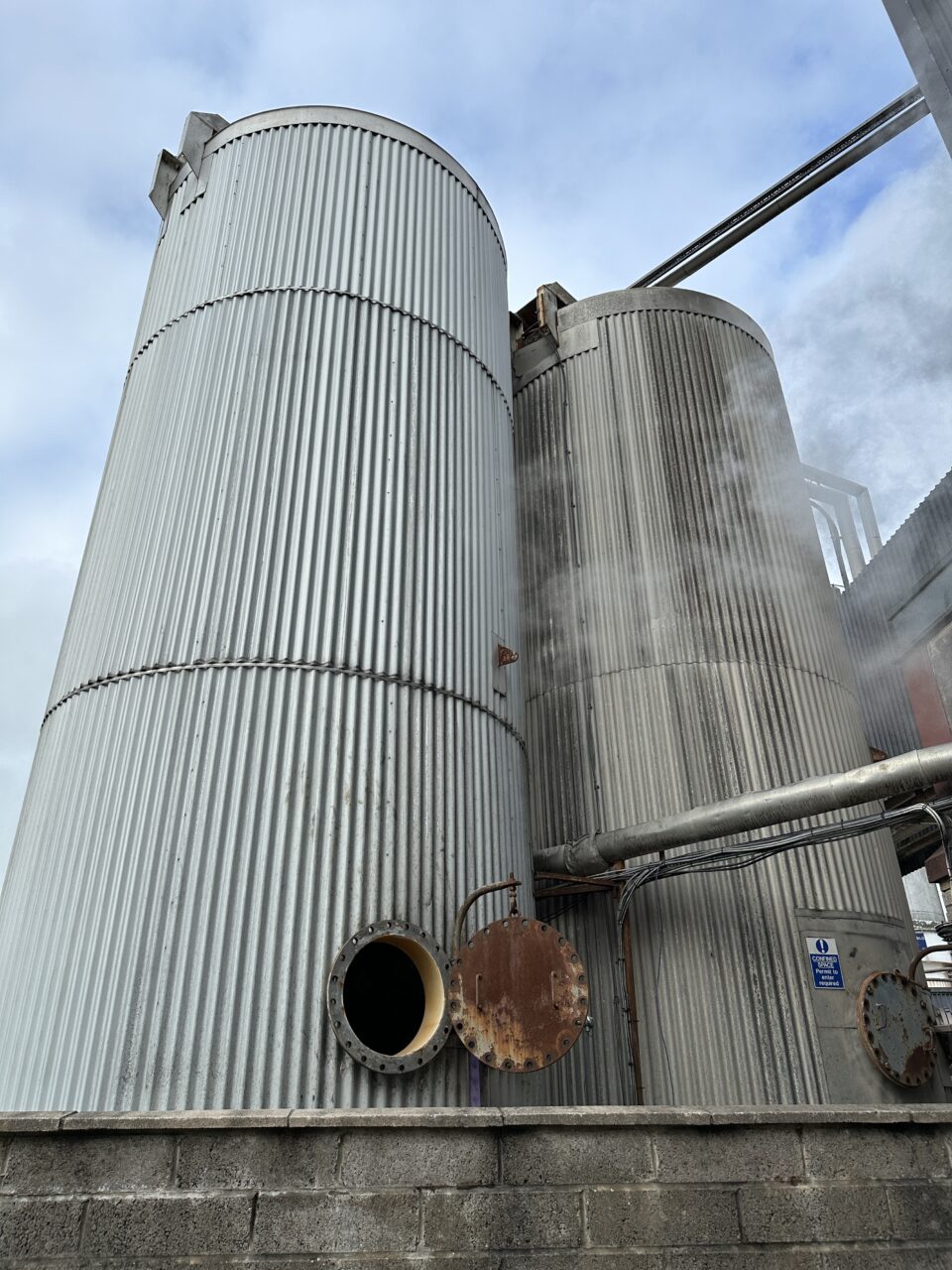
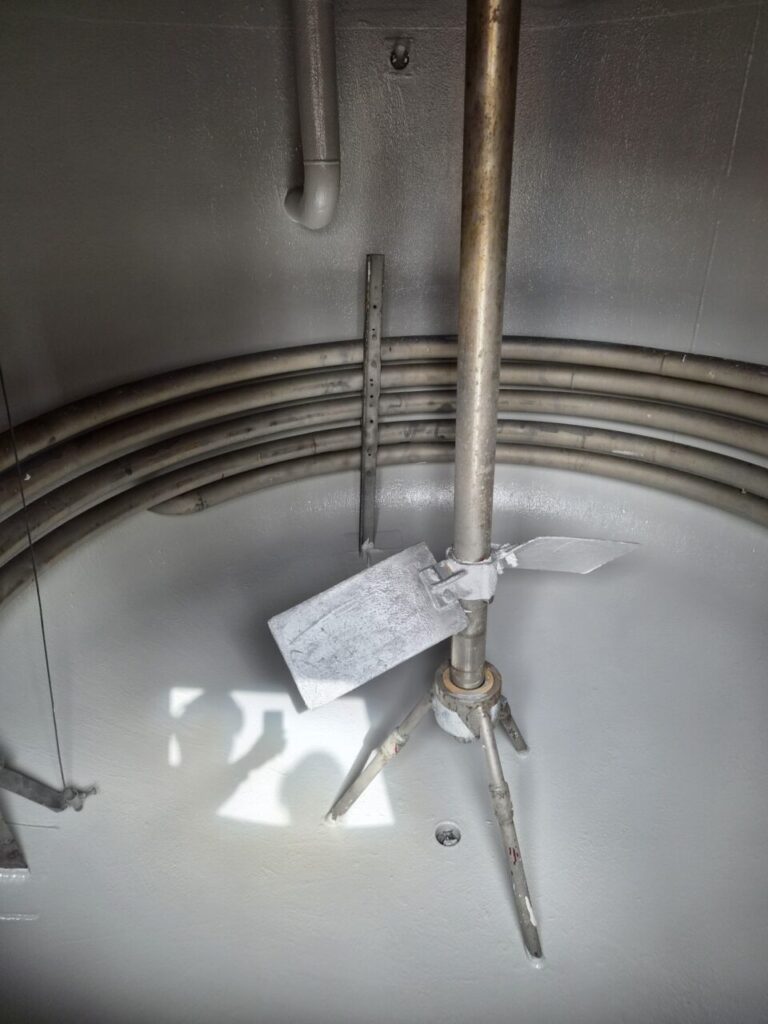
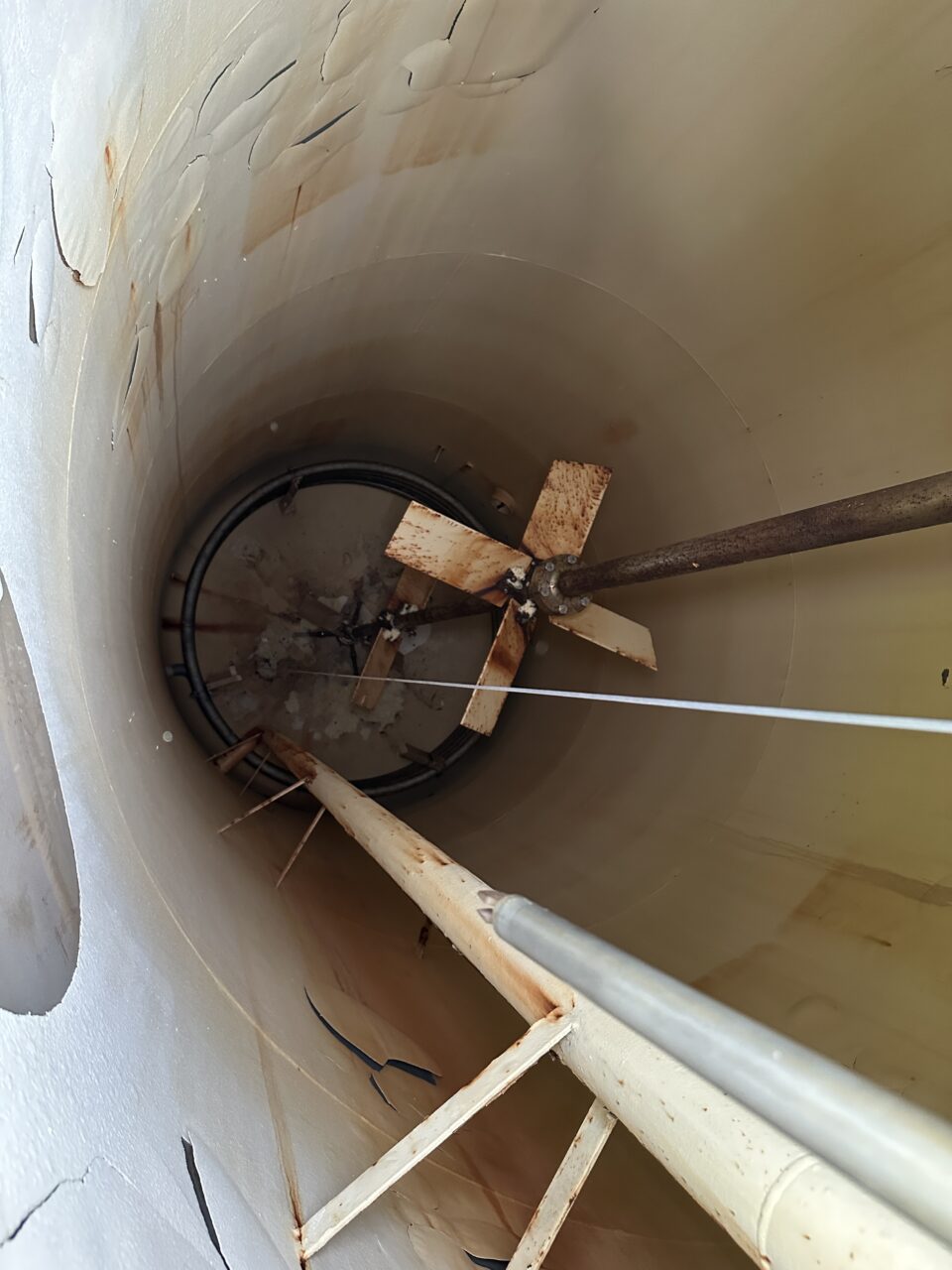
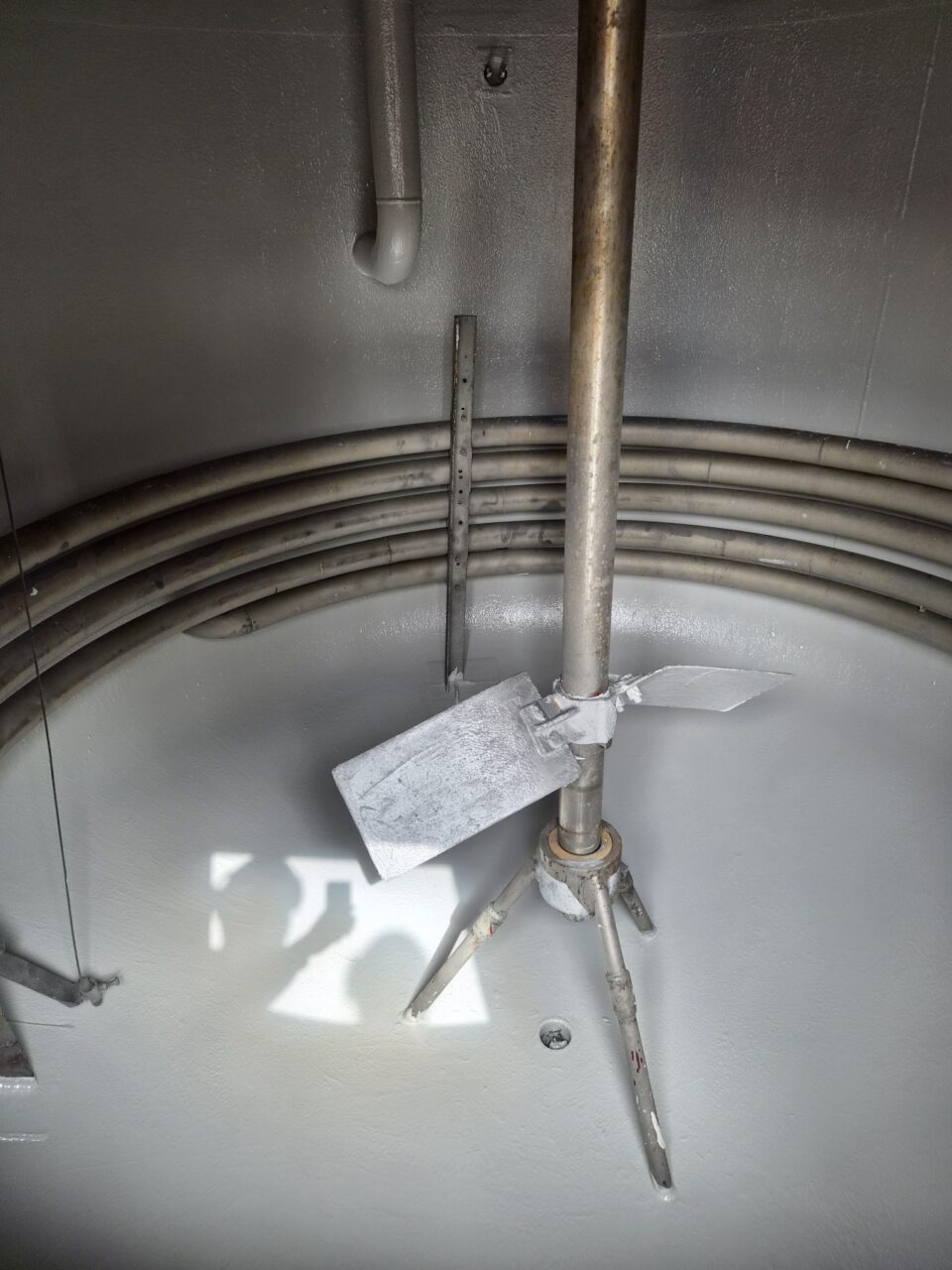
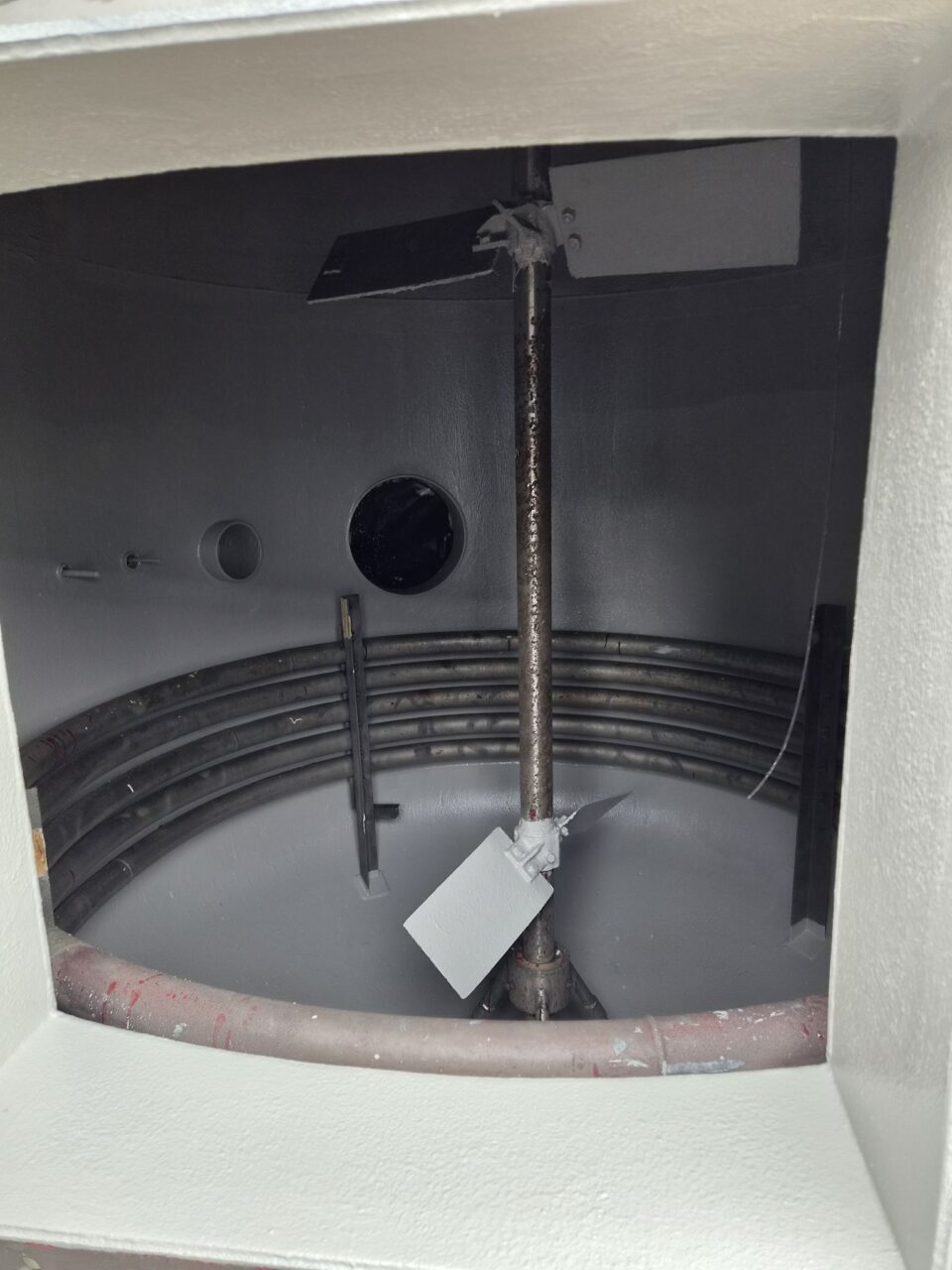
Working for a process engineering contractor, we were asked to reline two internal process tanks at a global speciality chemicals manufacturer’s site in Livingston, West Lothian. Each tank is a closed, insulated steel vessel approximately 3m in diameter and 6.27m tall, standing in a blockwork bund, with a top-entry agitator, internal heating coils, roof and side manways and a range of nozzles. The tanks hold process liquid at temperatures of up to 60°C, giving a total internal lining area of approximately 150m².
Process Tank Lining – Livingston
THE PROBLEM
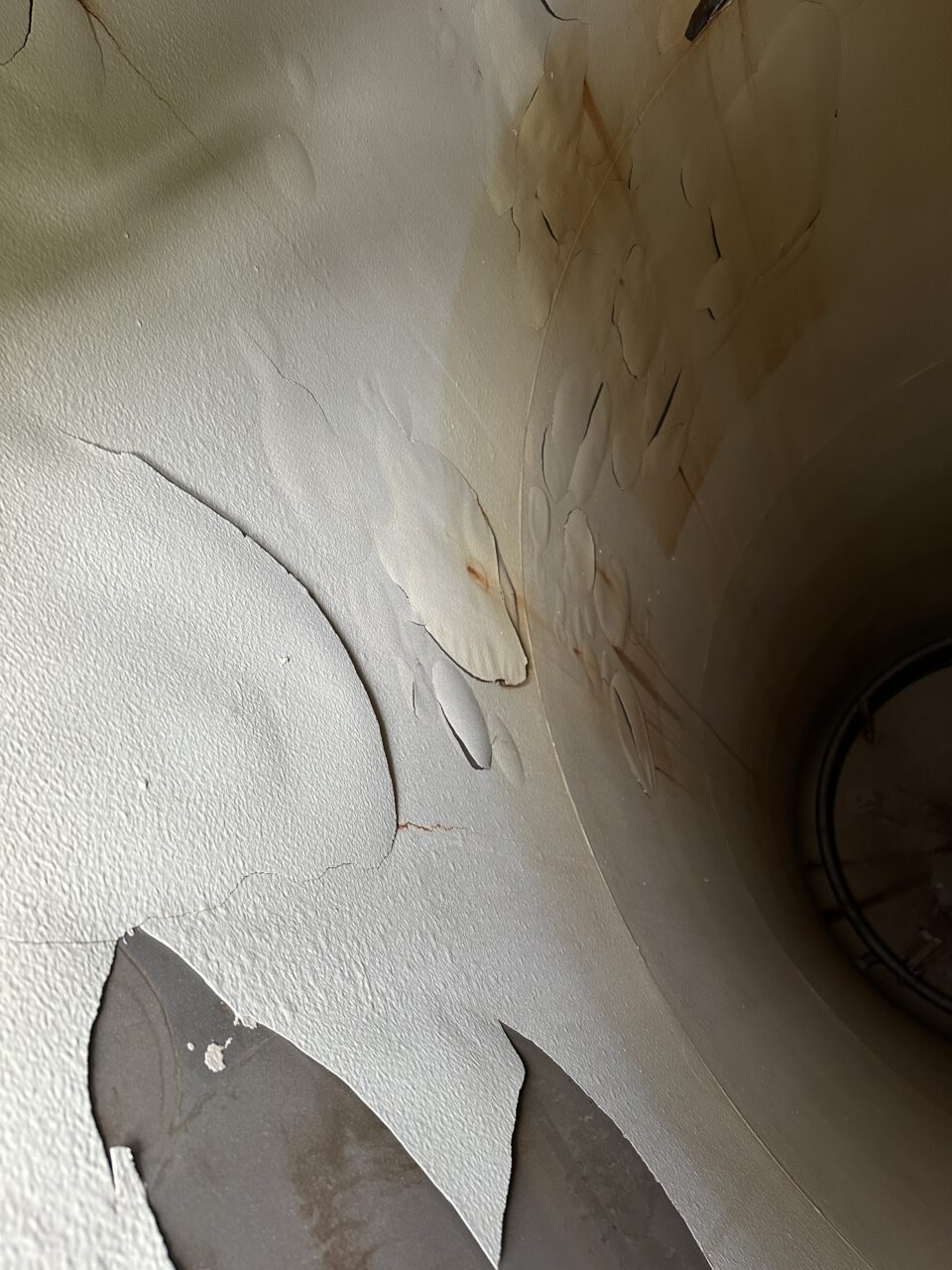
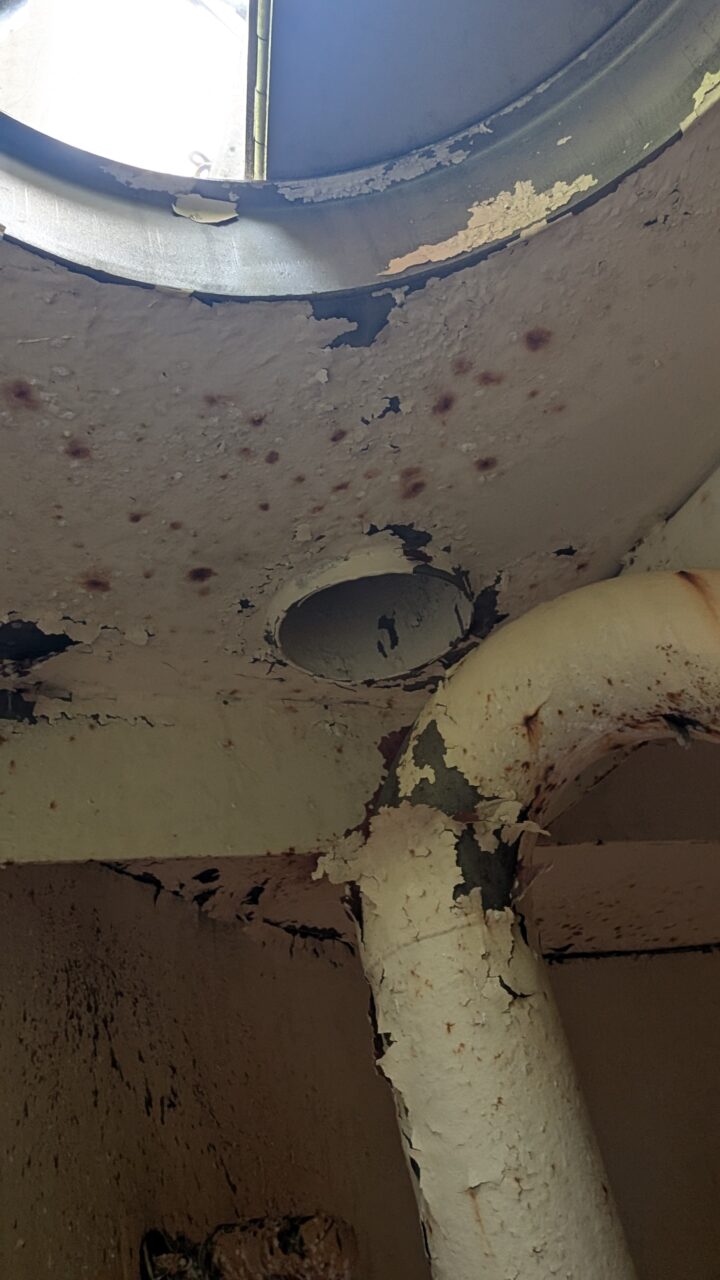
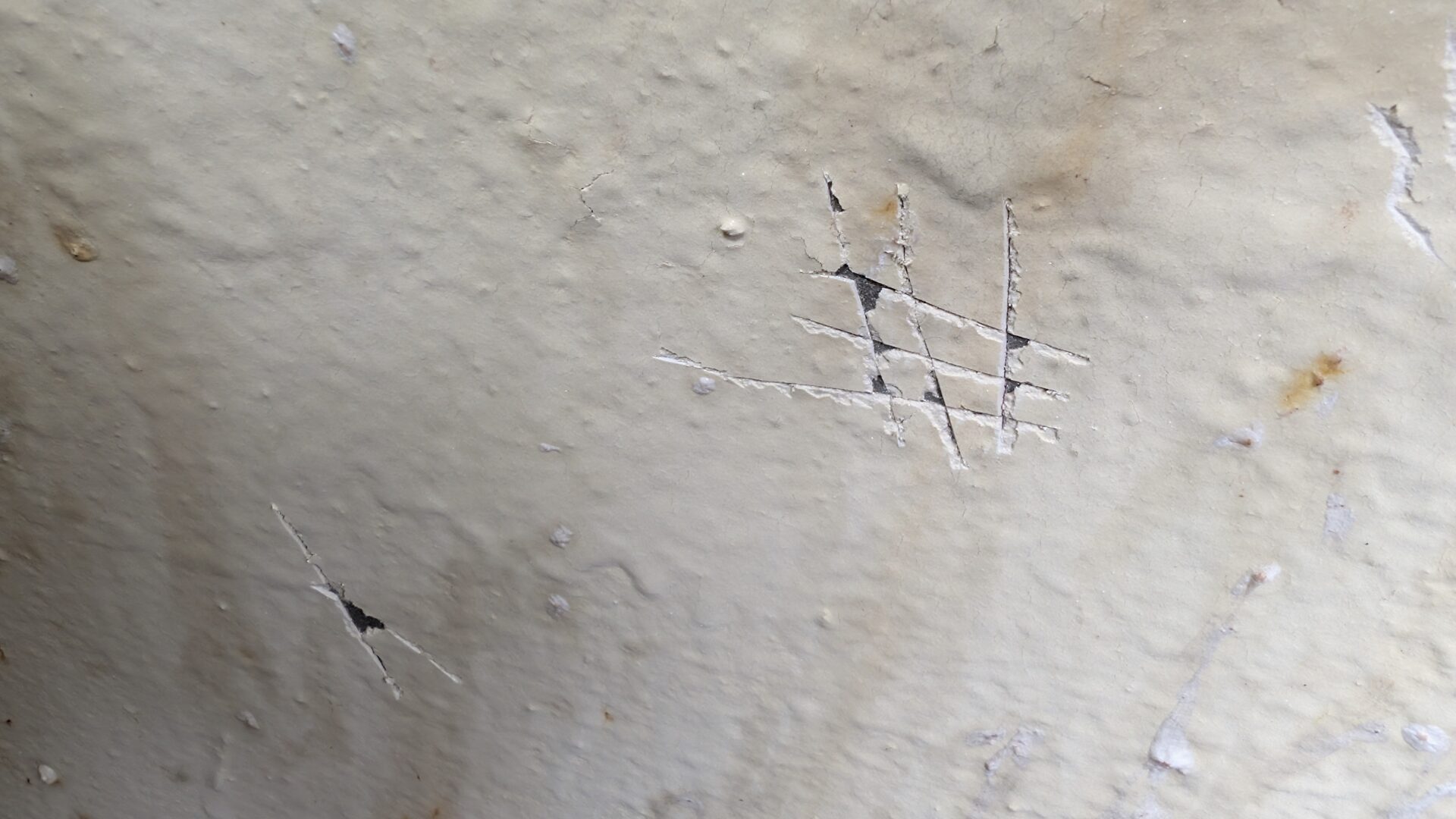
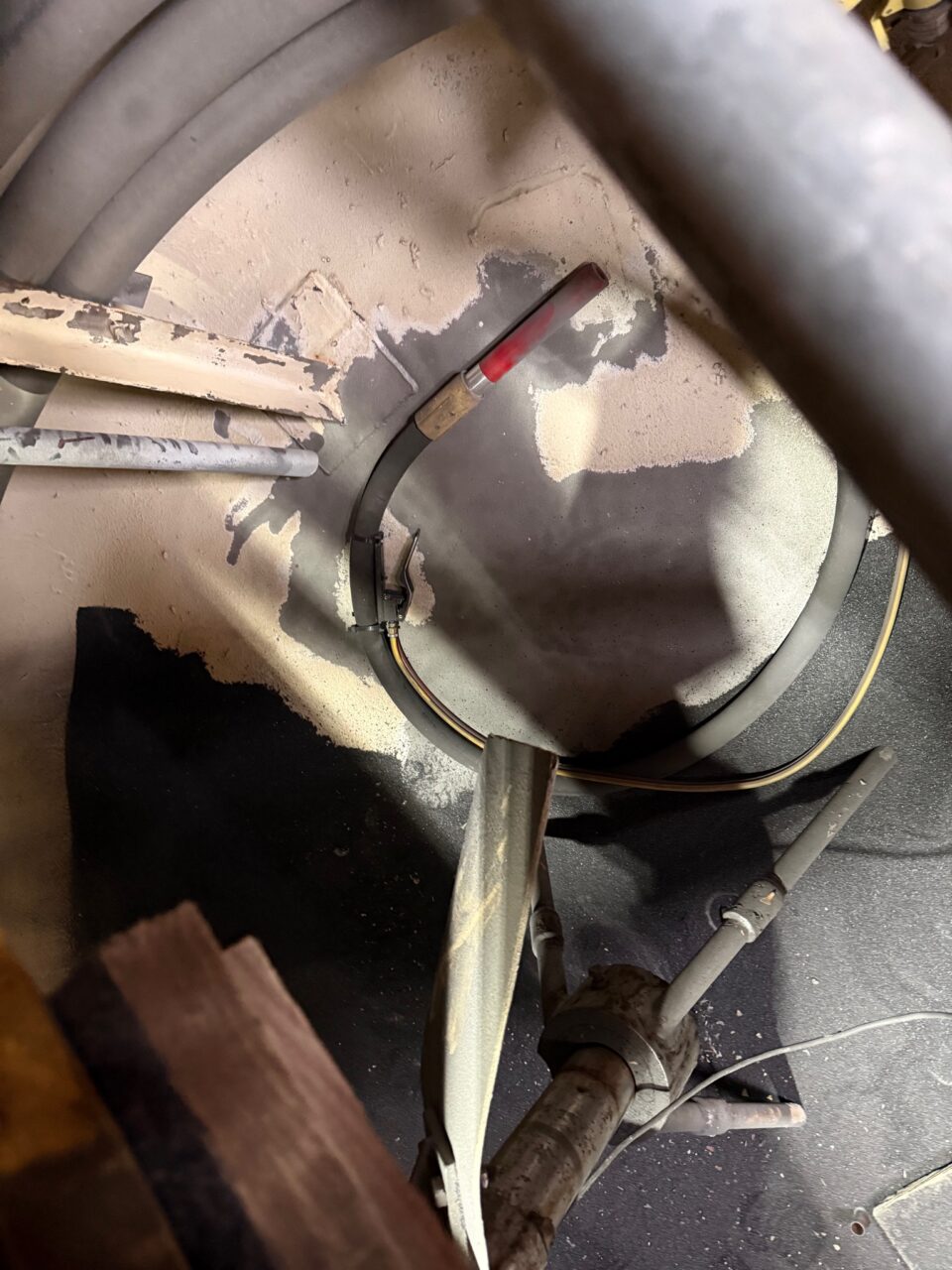
The existing tank lining had been in service for around 20 years and had reached the end of its life. Our pre-works survey found the lining disbonding from the steel in large sheets, with blistering along the weld seams, cracking and rust bleeding through to the surface. The underside of the roof and its stiffeners showed widespread flaking and corrosion, and cross-hatch adhesion tests confirmed the lining was no longer properly bonded to the steel.
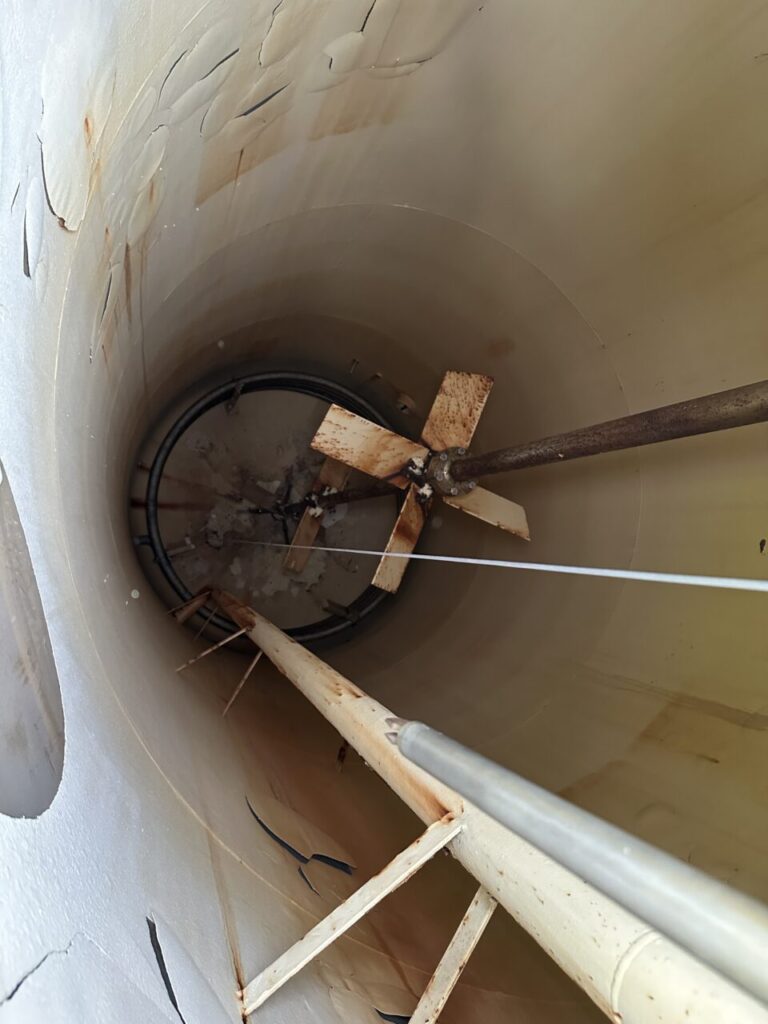
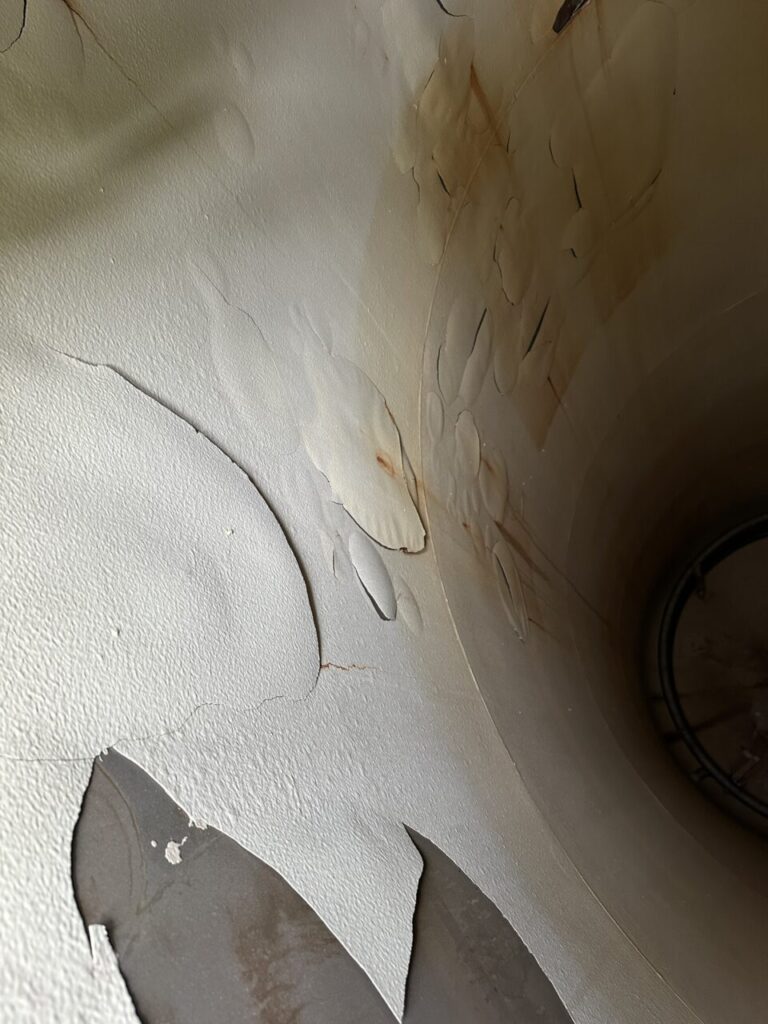
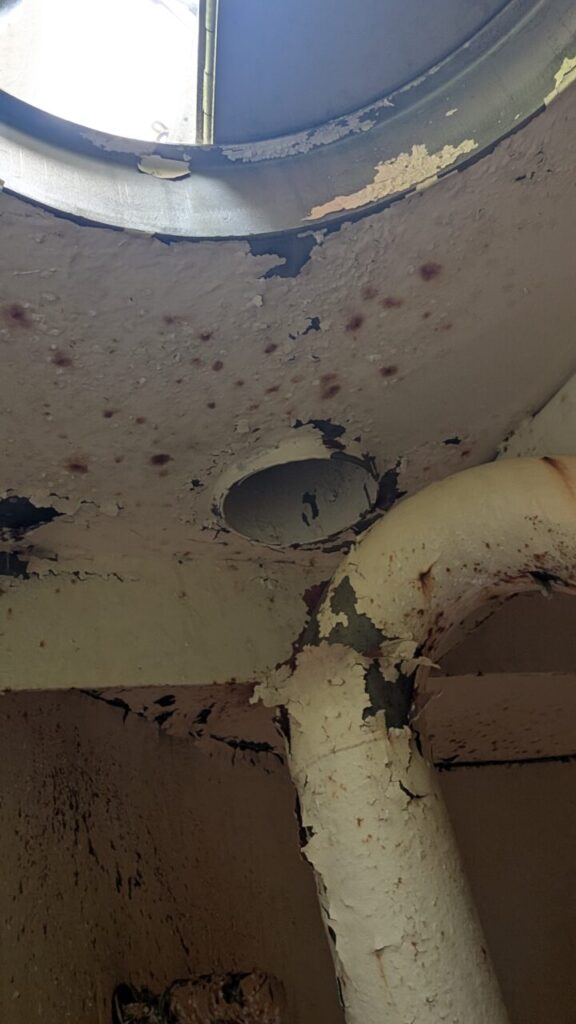
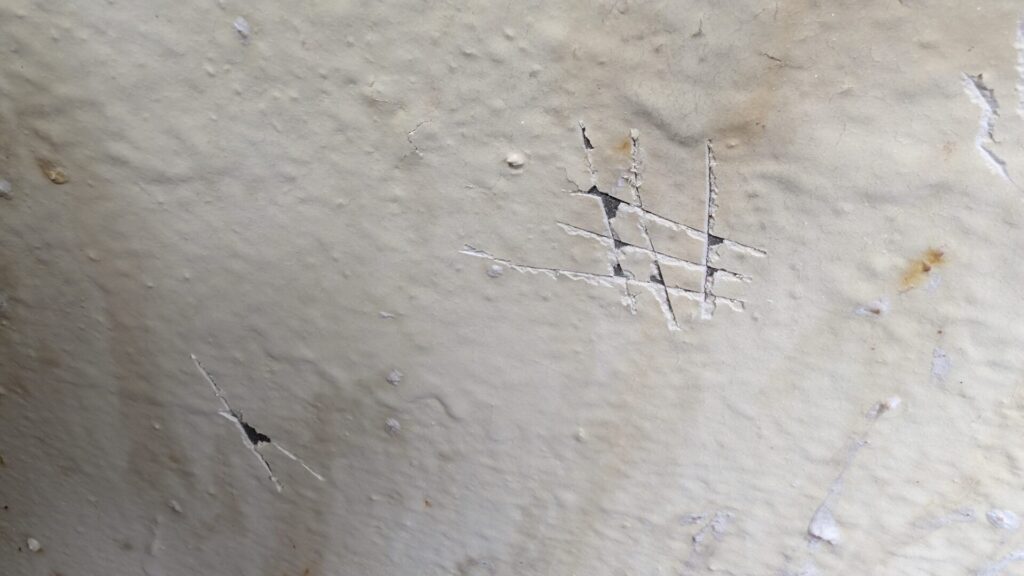
Once a lining loses adhesion in an immersed, heated tank, the liquid can travel behind it and attack the steel unseen. Patch repairs to a lining in this condition would only be a short-term fix, so the client needed the old lining removed completely and a new, high-performance tank lining system applied to correctly prepared steel. The two tanks were lined one after the other, working from internal scaffolding provided by the client.
THE SOLUTION
Cleaning and preparation
When we opened the first tank we found a heavy greasy process residue on the floor. This was dug out and the tank washed using a hot water steam cleaner, and a UV blacklight check was carried out afterwards to confirm no oils or greases remained. Any contamination left on the steel would be driven into the surface by blasting and prevent the new lining from bonding.
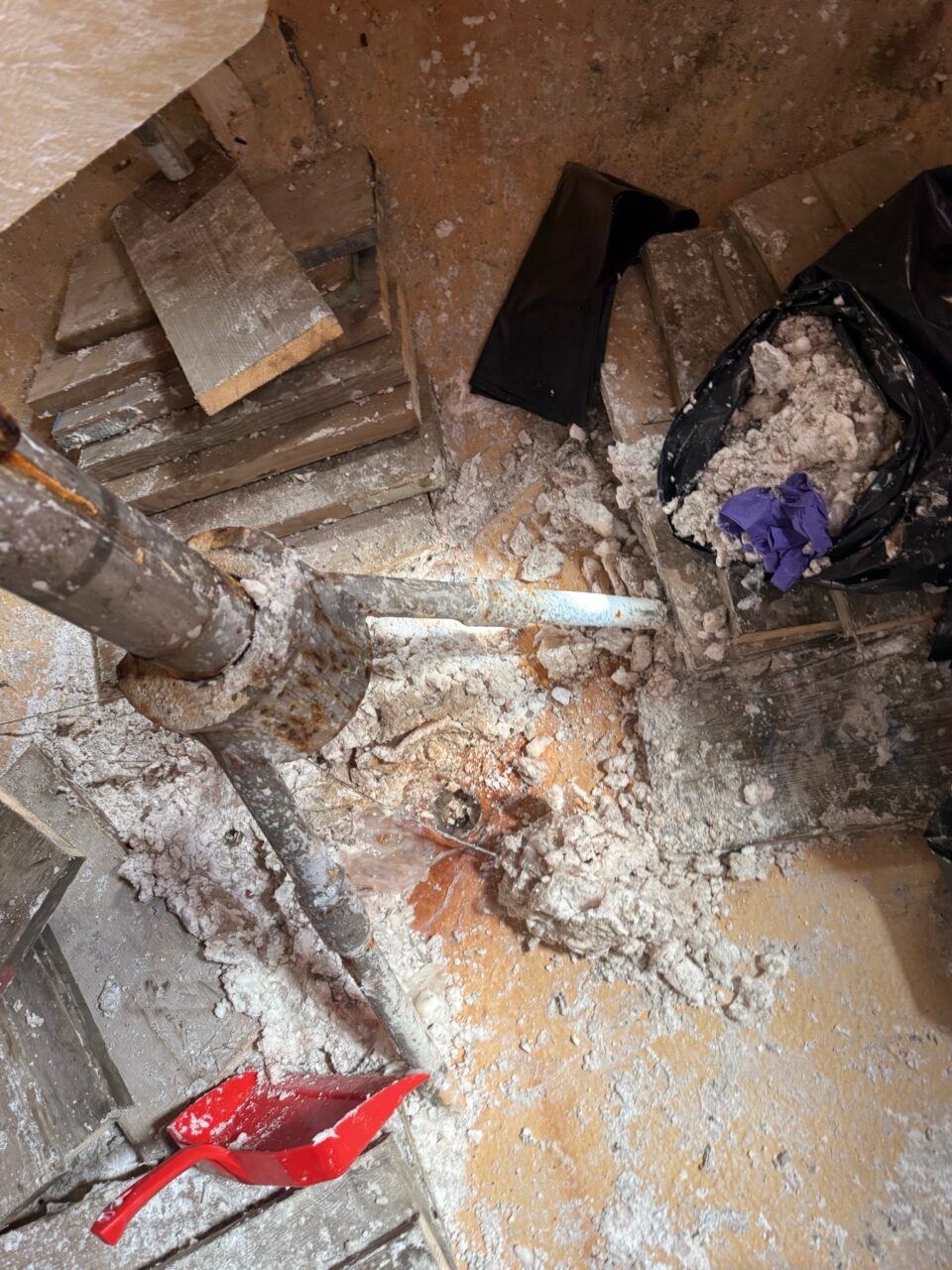
Dehumidification was set up before blasting and kept running throughout the works. Controlling the air inside the tank stops blasted steel flash rusting and keeps the steel temperature safely above the dew point during coating.
Abrasive blasting
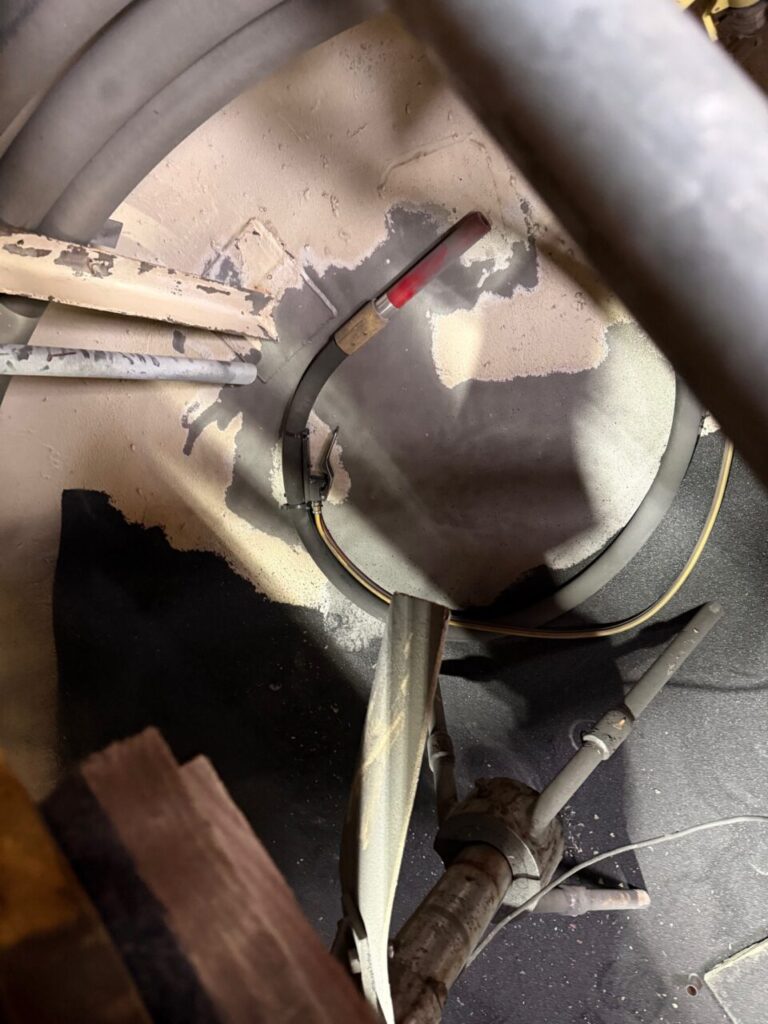
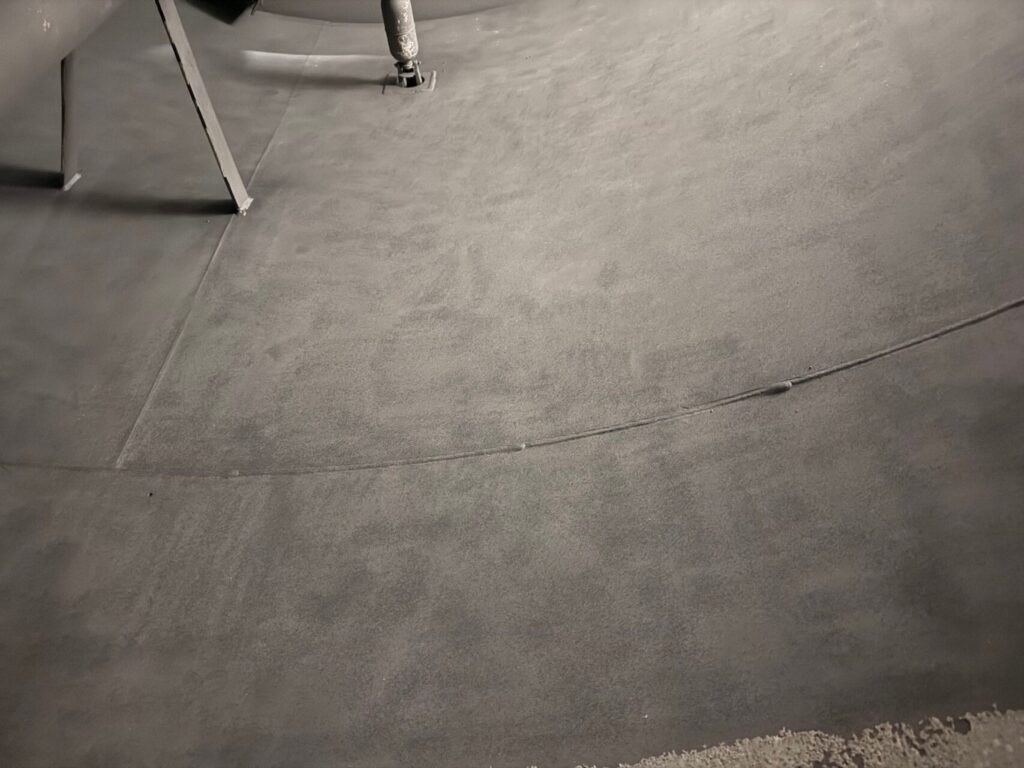
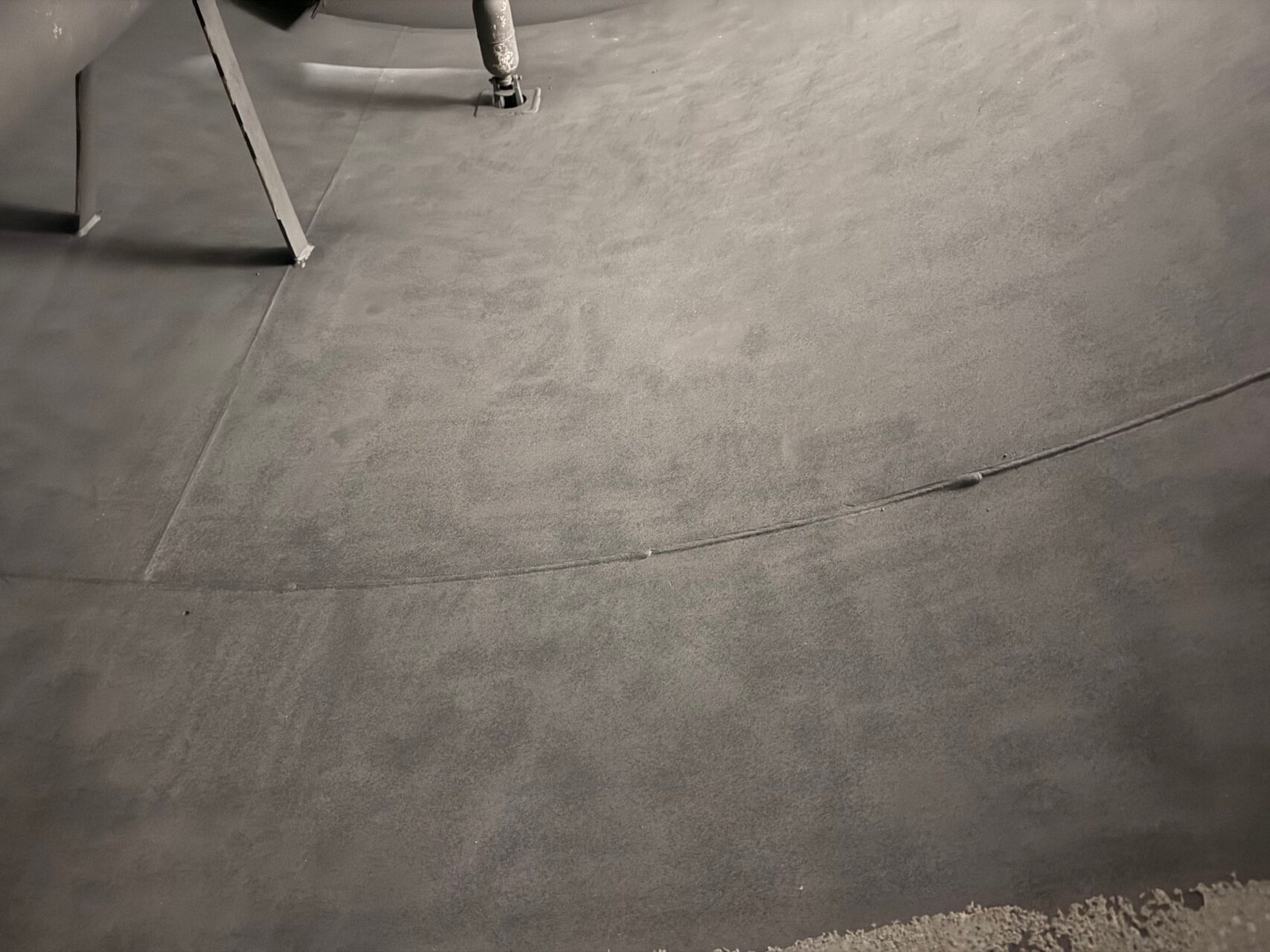
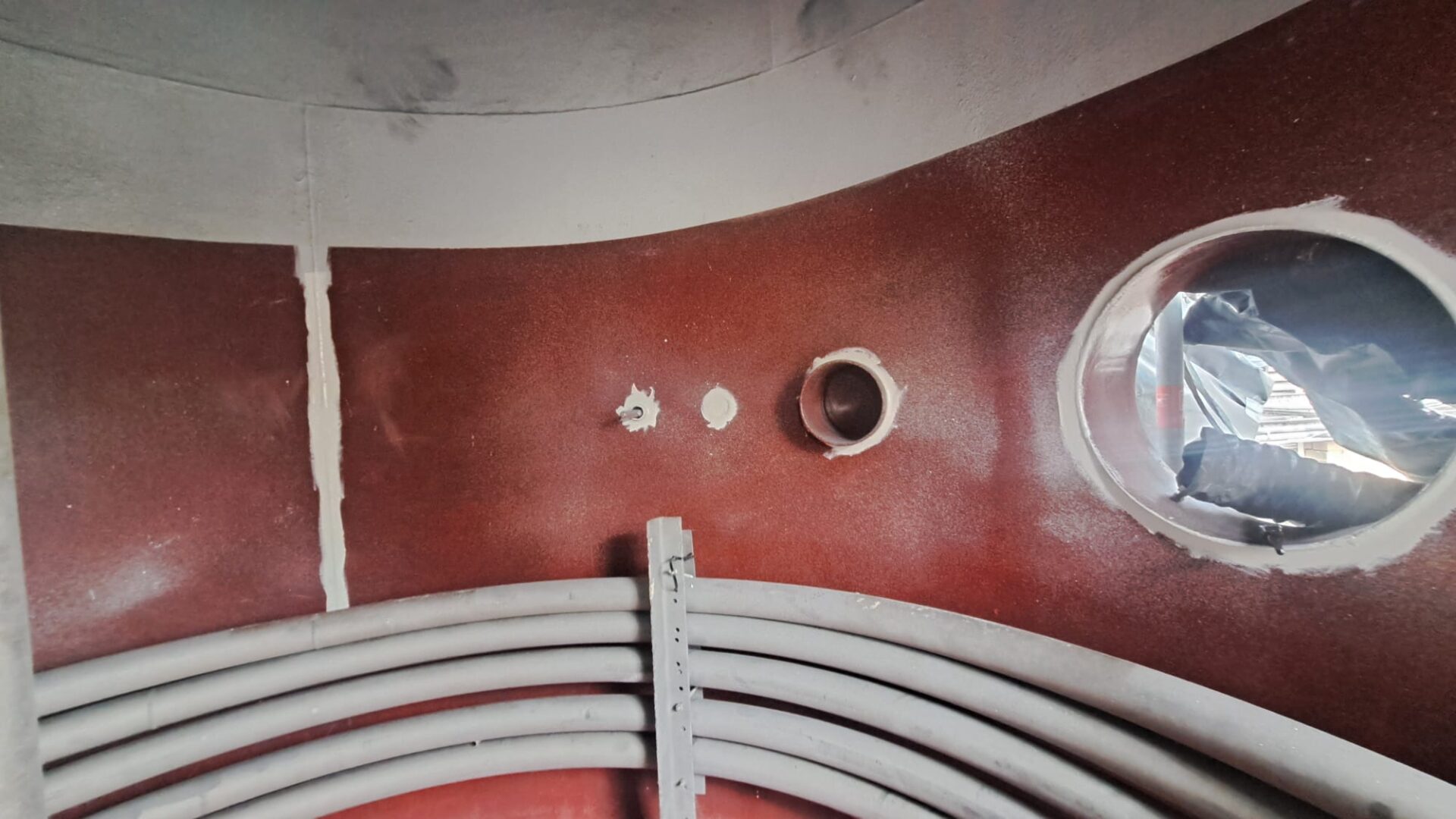
All internal surfaces of both tanks – shell, roof, base, stiffeners, brackets and nozzles – were grit blasted to Sa 2.5 (ISO 8501-1) with a minimum surface profile of 50 microns, removing the old lining back to clean, bright steel. The spent abrasive was bagged and removed and the tanks vacuumed clean.
Quality checks before lining
Before any coating was applied we checked that the steel was ready to receive it:
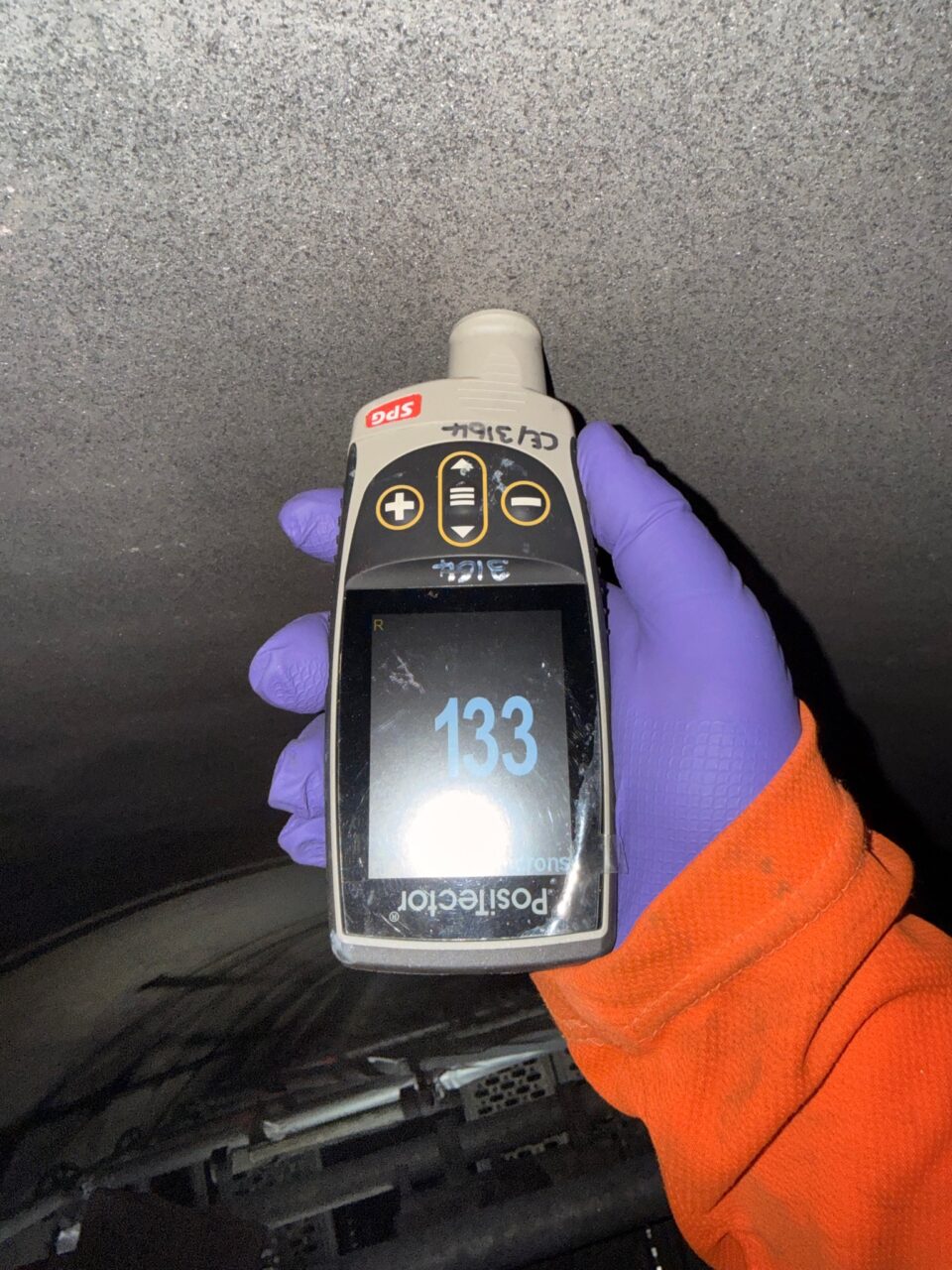
Surface profile – 63 readings were taken with a PosiTector SPG on the second tank, and every reading was above 105 microns, comfortably over the 50 micron minimum. The profile is the key the lining grips on to.
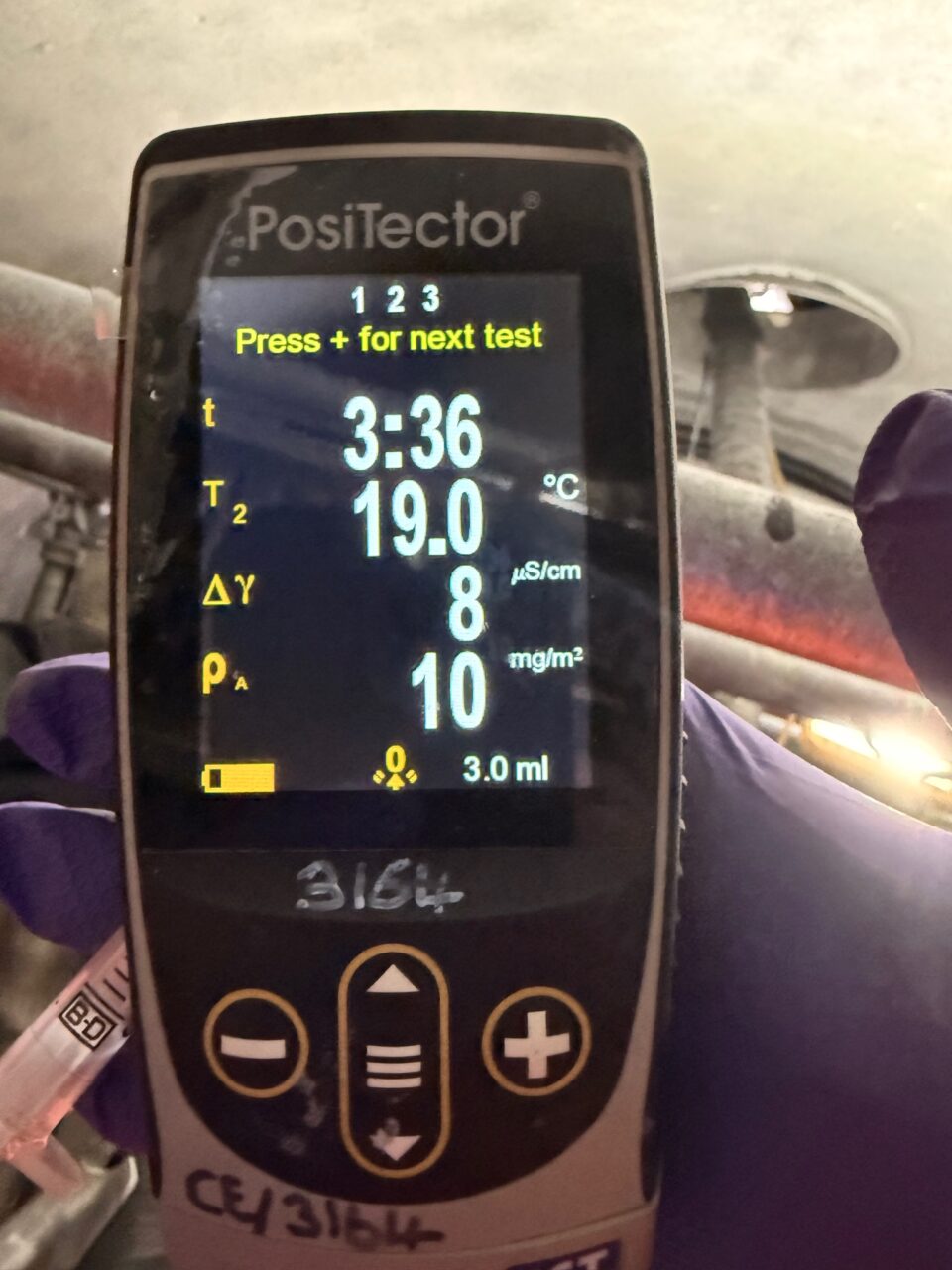
Soluble salts – salts such as chlorides left on the steel draw moisture through a lining and cause osmotic blistering. Soluble salt tests using the Bresle method gave results of 0 – 11 mg/m², well within the 25 mg/m² maximum set by Chemco International for the lining system.
Dust – a dust tape test to ISO 8502-3 was carried out after vacuuming to confirm the surface was clean enough to coat.
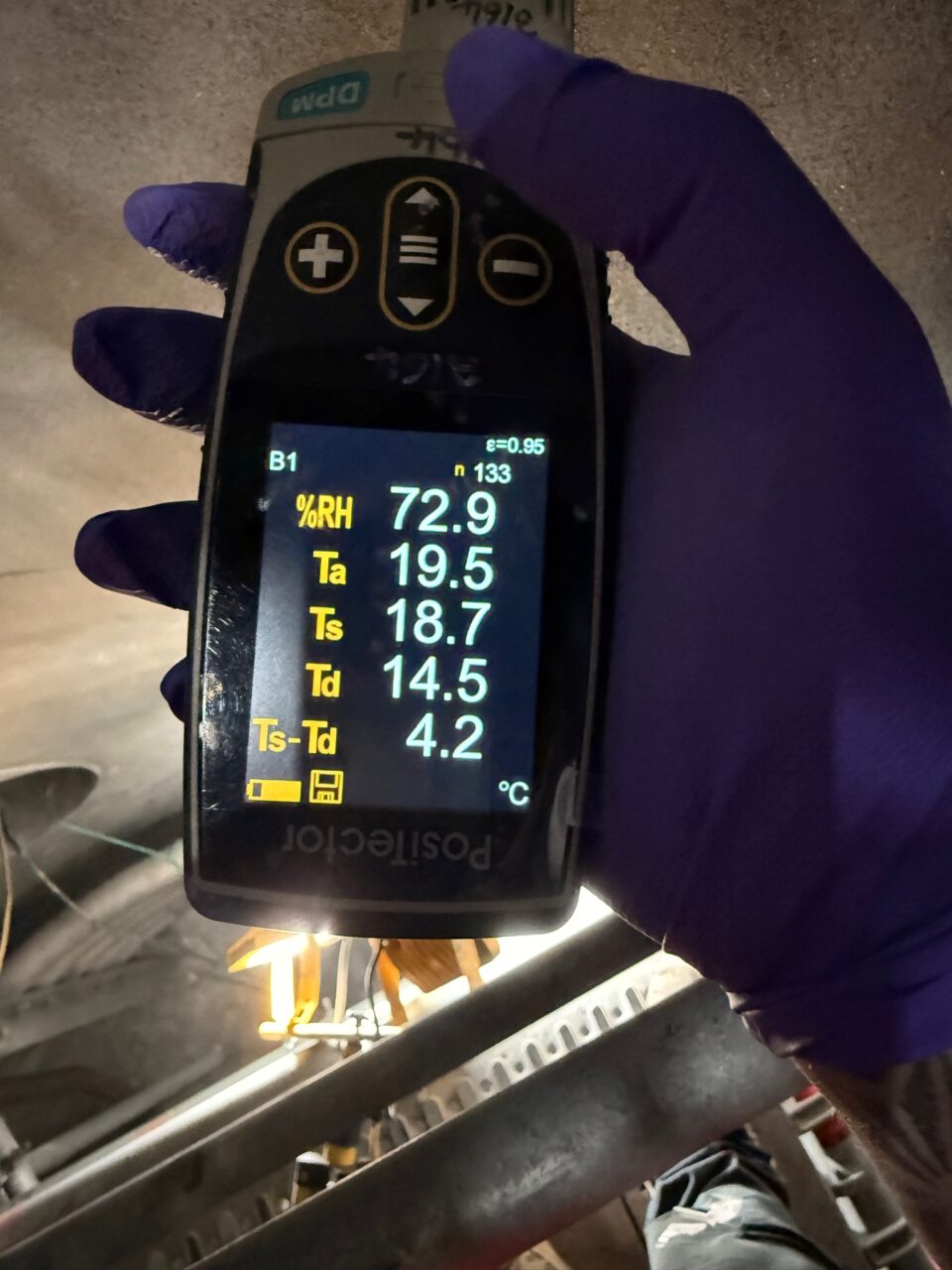
Climatic conditions – 167 readings were recorded with a PosiTector DPM before and during the coating applications, with relative humidity kept to a maximum of 80% throughout, inside the 85% limit set for the lining system. Keeping the steel at least 3°C above the dew point prevents condensation forming beneath the lining.
Tank lining system
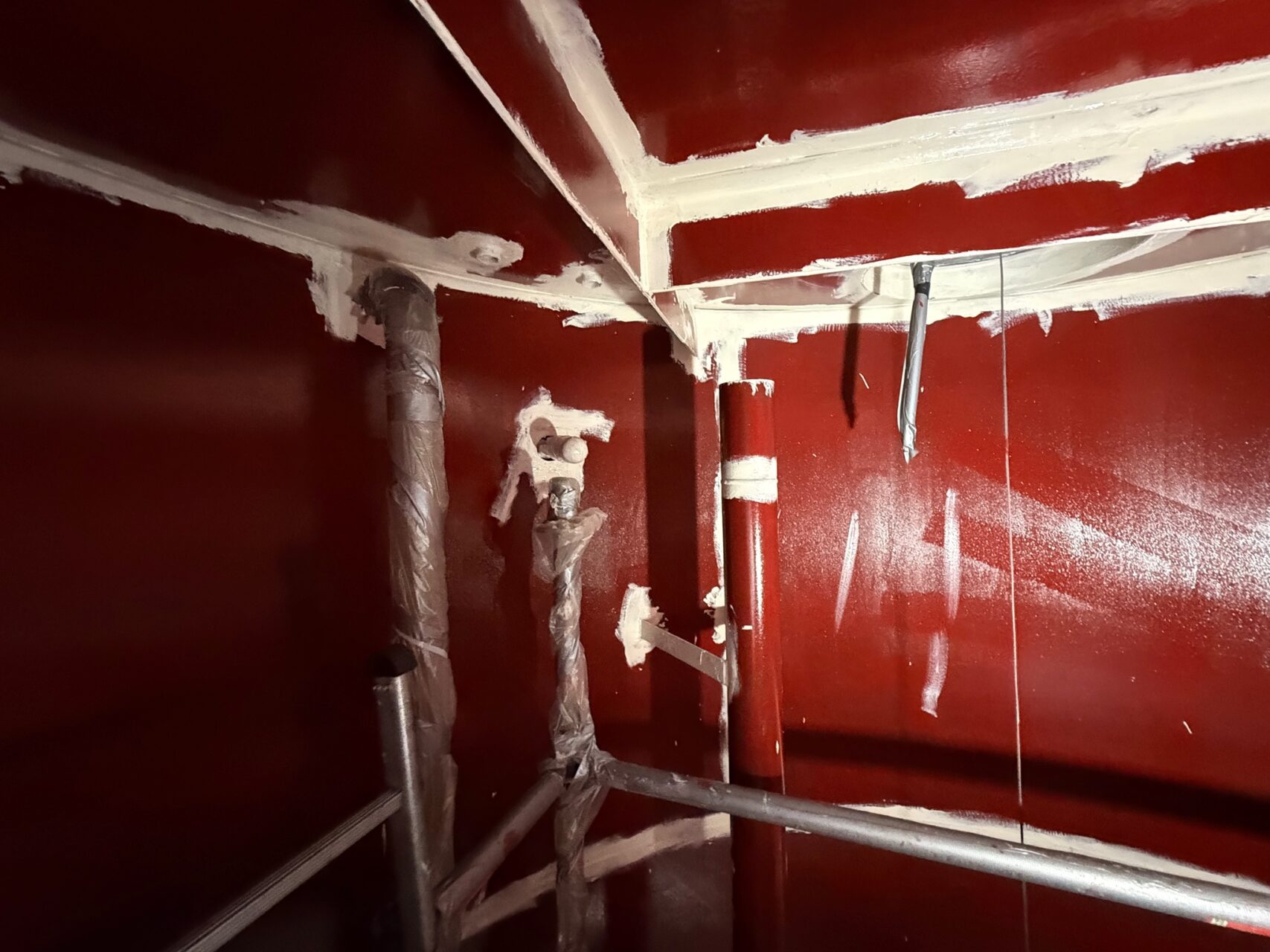
We selected a Chemco International vinyl ester glass flake lining system for its resistance to hot chemical immersion. All prepared surfaces were first primed with Chemco RF300P, applied by brush and roller. A heavy stripe coat of Chemco RB 364 was then brushed onto all welds, edges, angles, stiffeners, brackets and nozzle openings. Coatings naturally pull thin over sharp edges and welds through surface tension, so stripe coating builds extra thickness where a lining is most likely to fail.
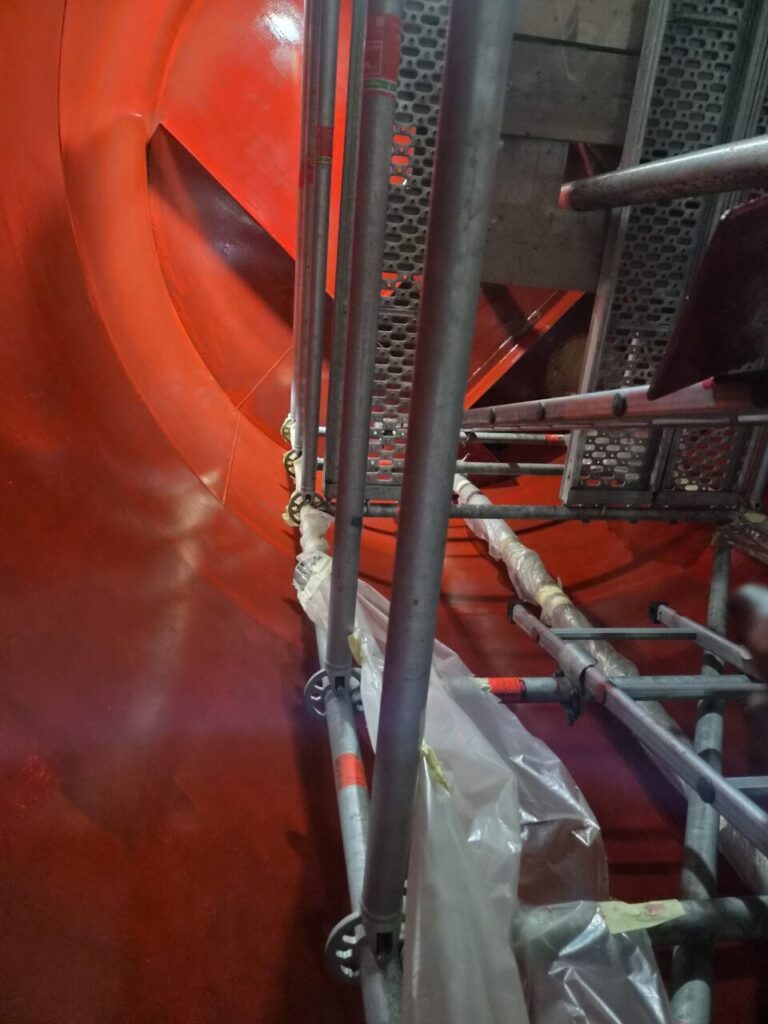
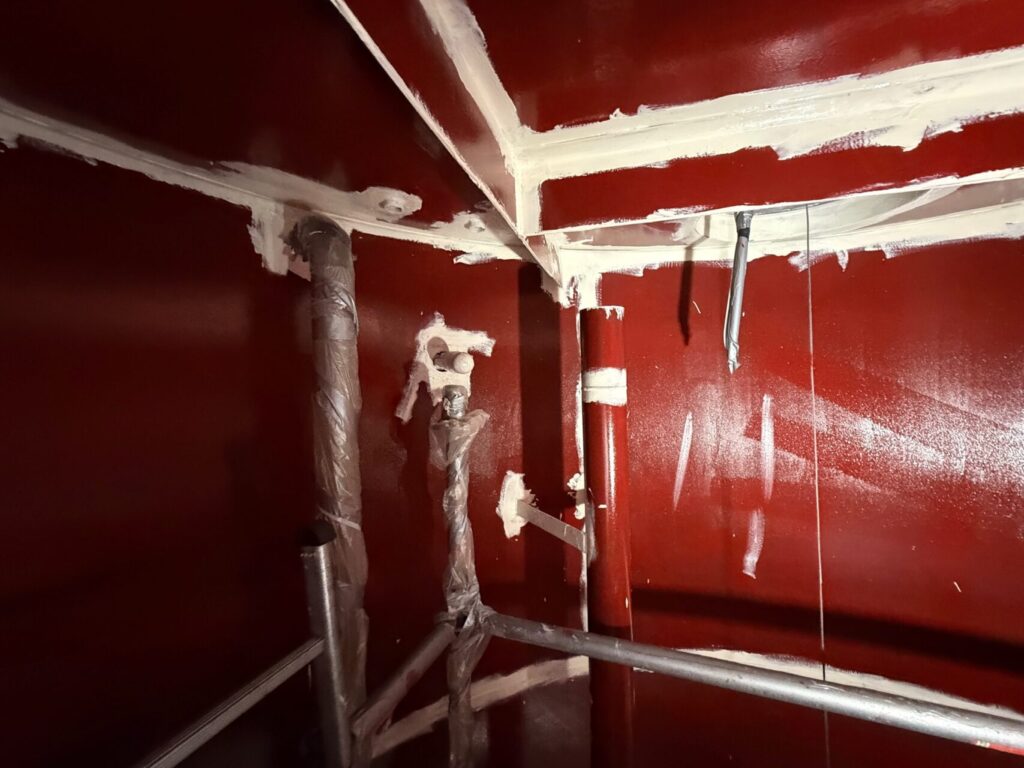
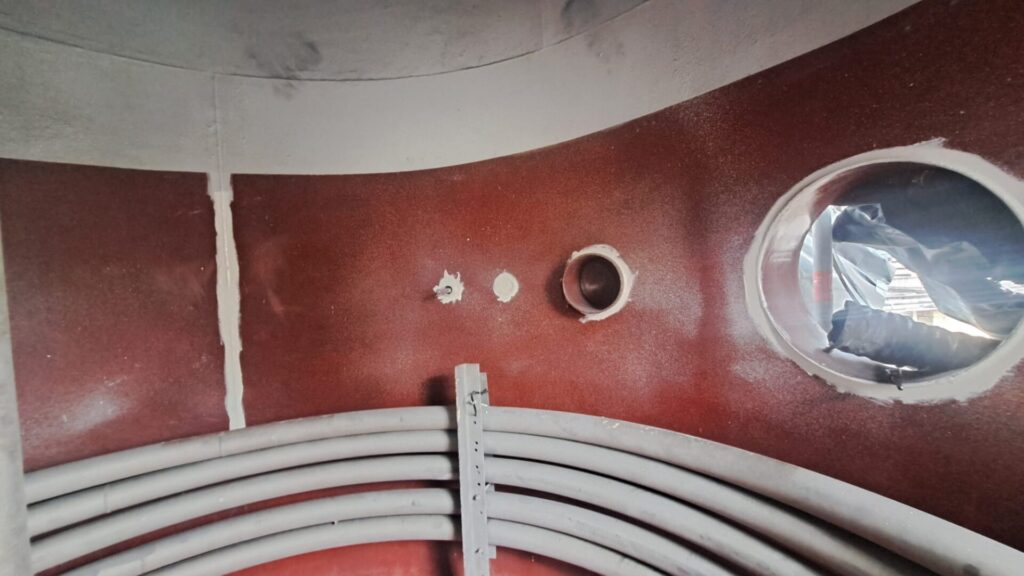
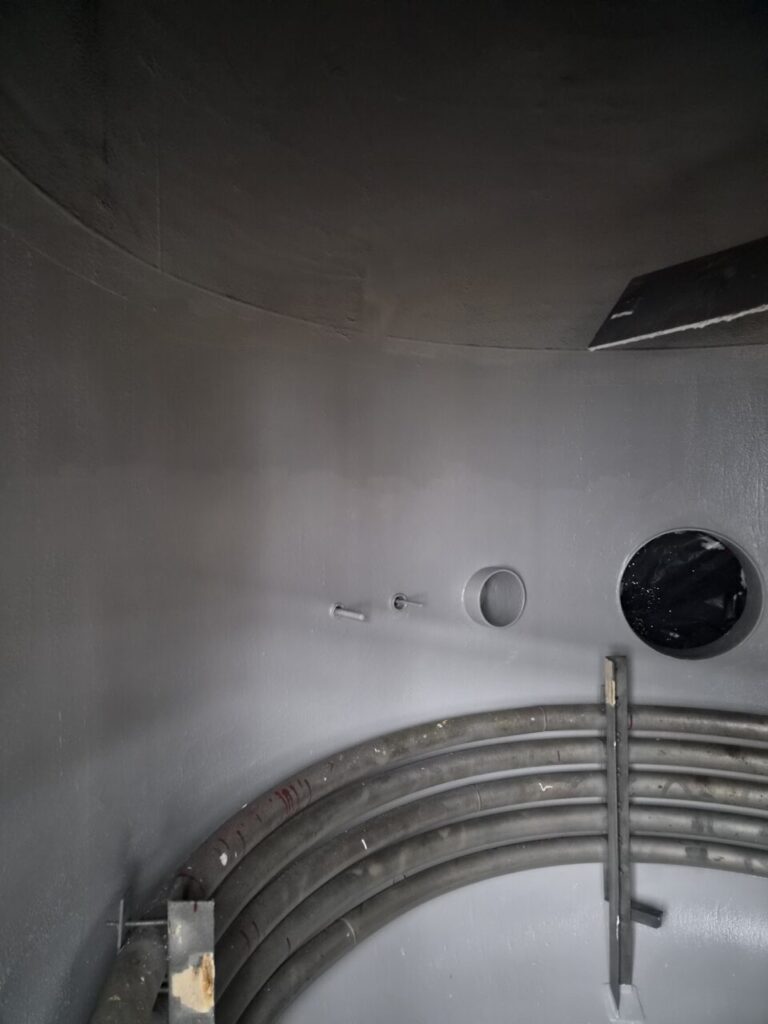
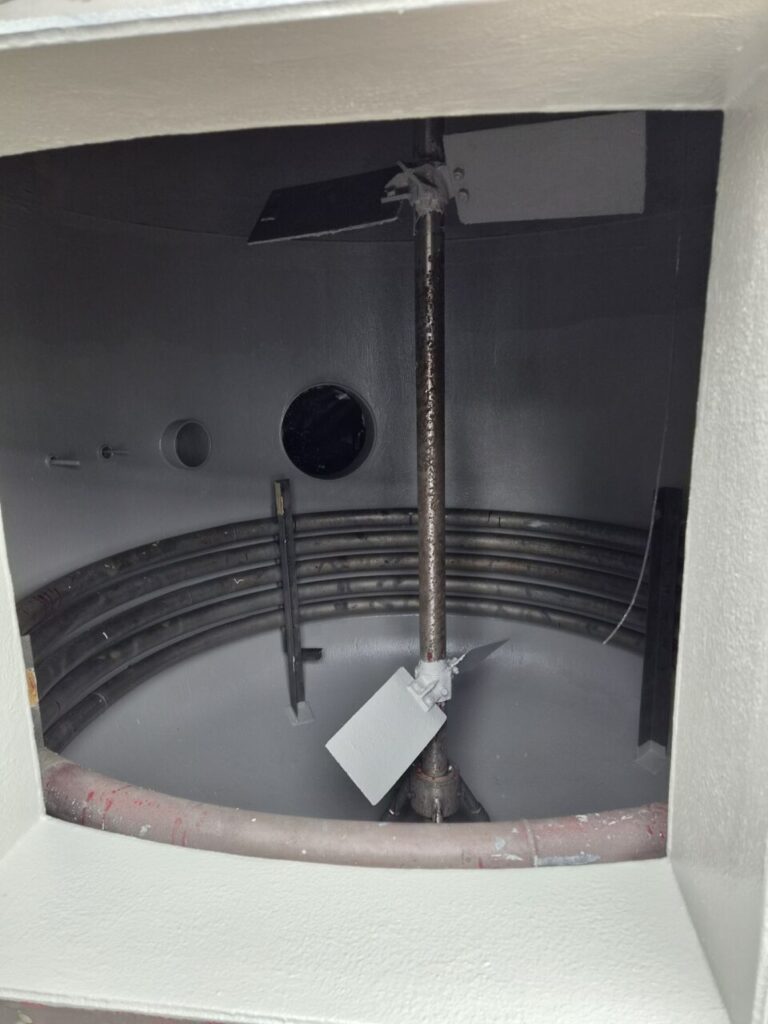
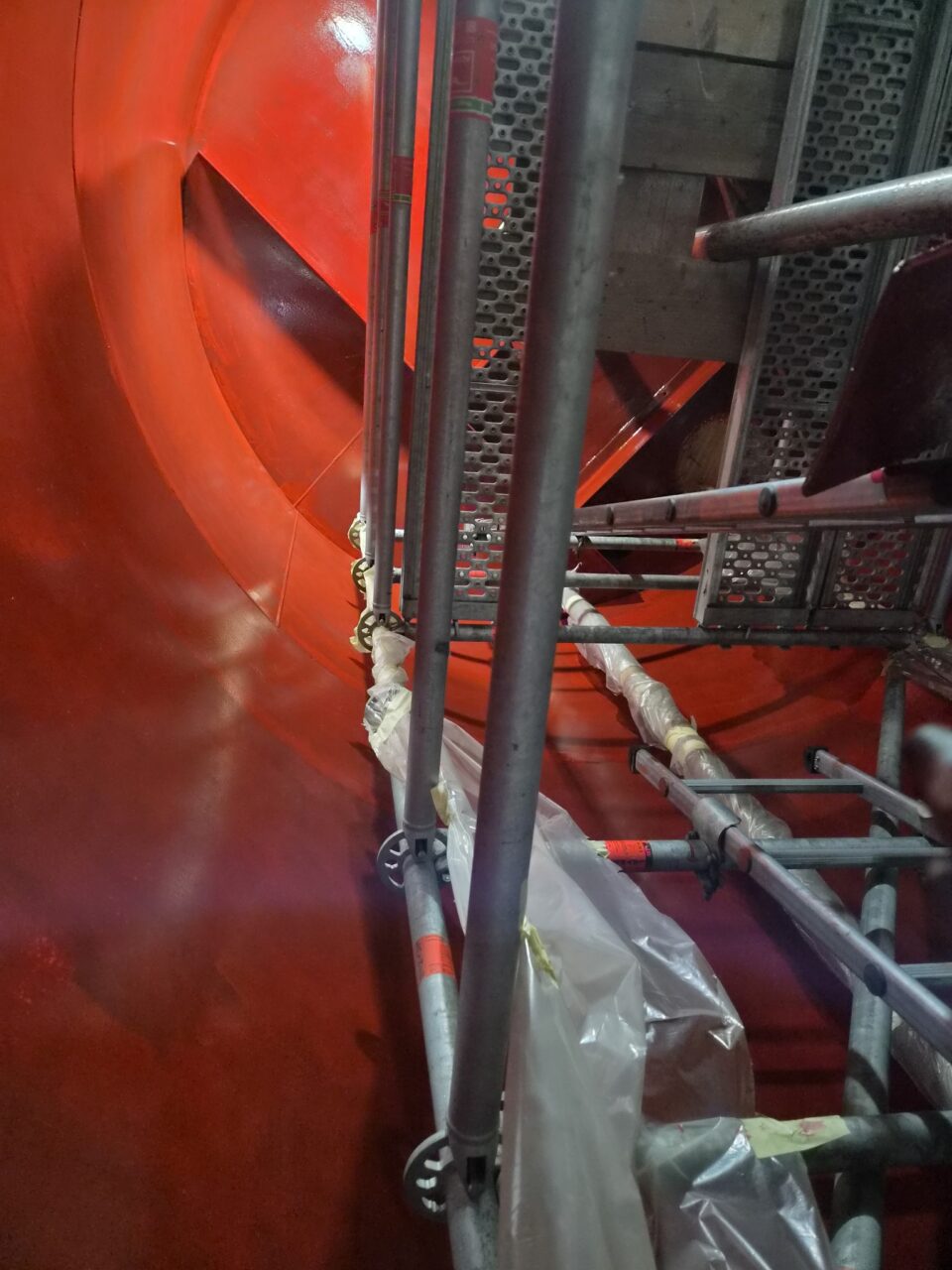
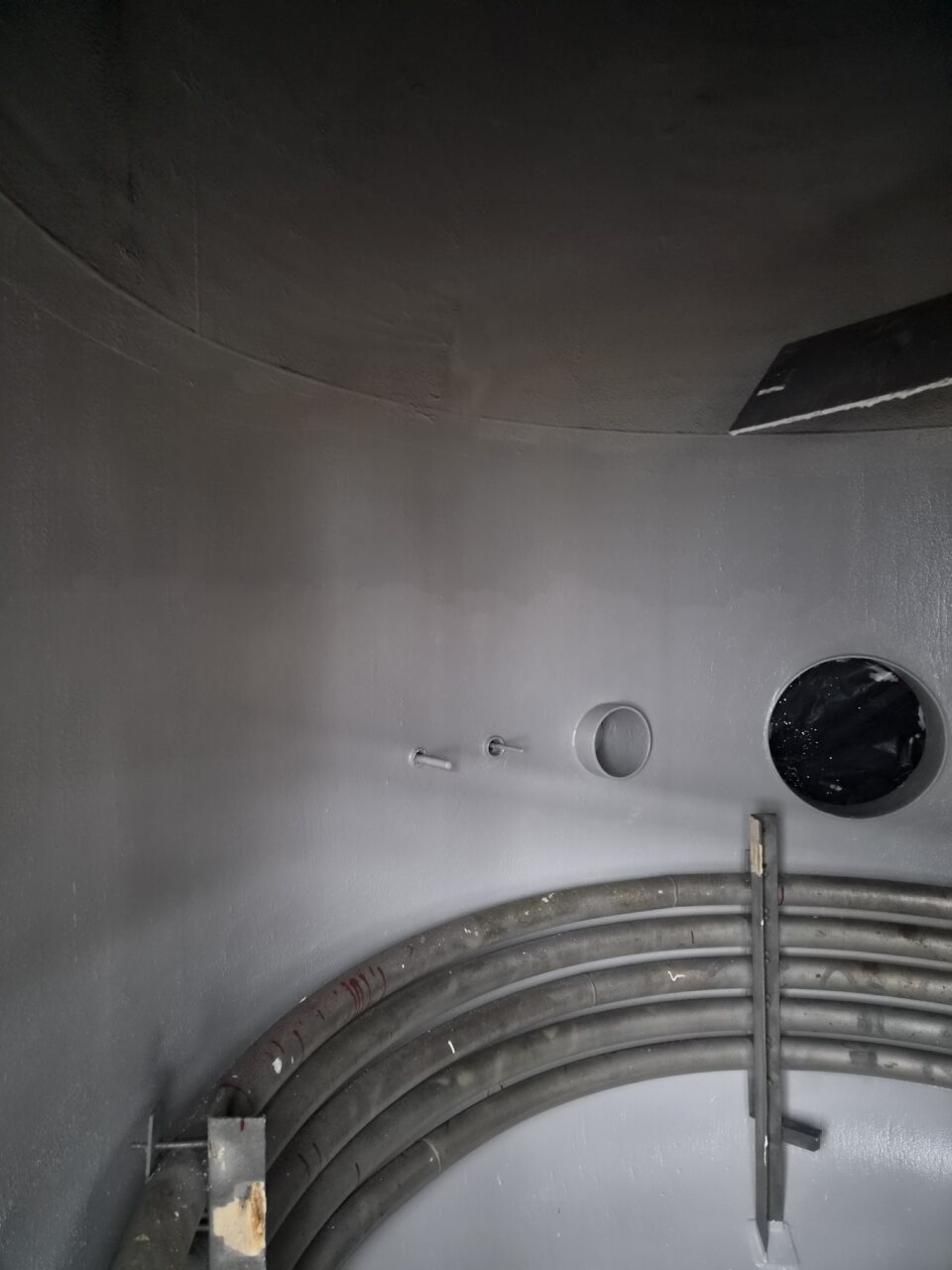
Two full coats of Chemco RB 364 vinyl ester glass flake lining were then applied by airless spray in contrasting colours, building to a nominal lining thickness of 1,000 microns. Using contrasting colours lets the operatives see at a glance that every surface has received full coverage of each coat. The overlapping glass flakes form a dense barrier that greatly lengthens the path any liquid has to take to reach the steel, while the vinyl ester resin gives high resistance to chemicals and elevated temperatures – well suited to the hot, aggressive conditions inside these tanks.
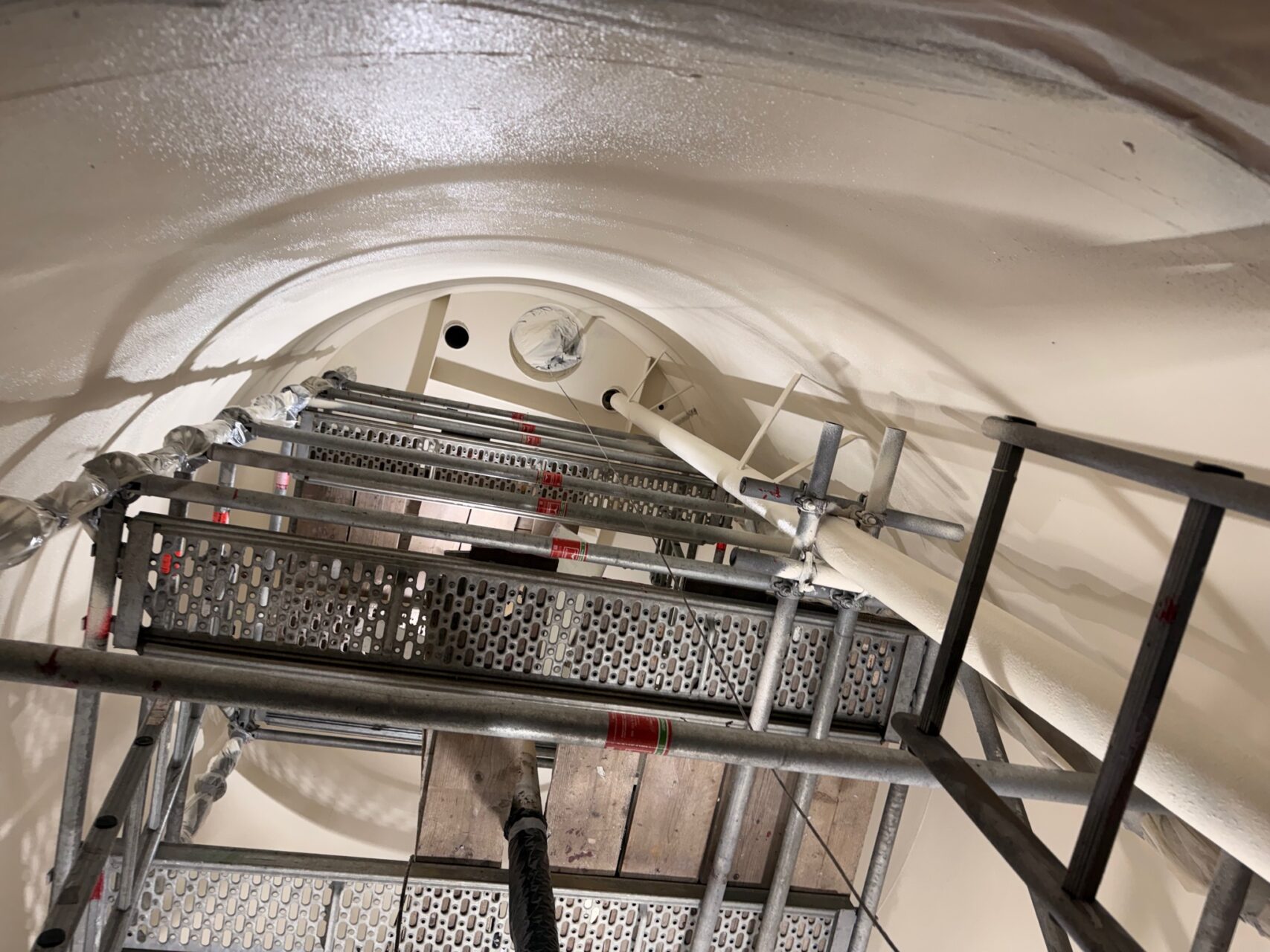
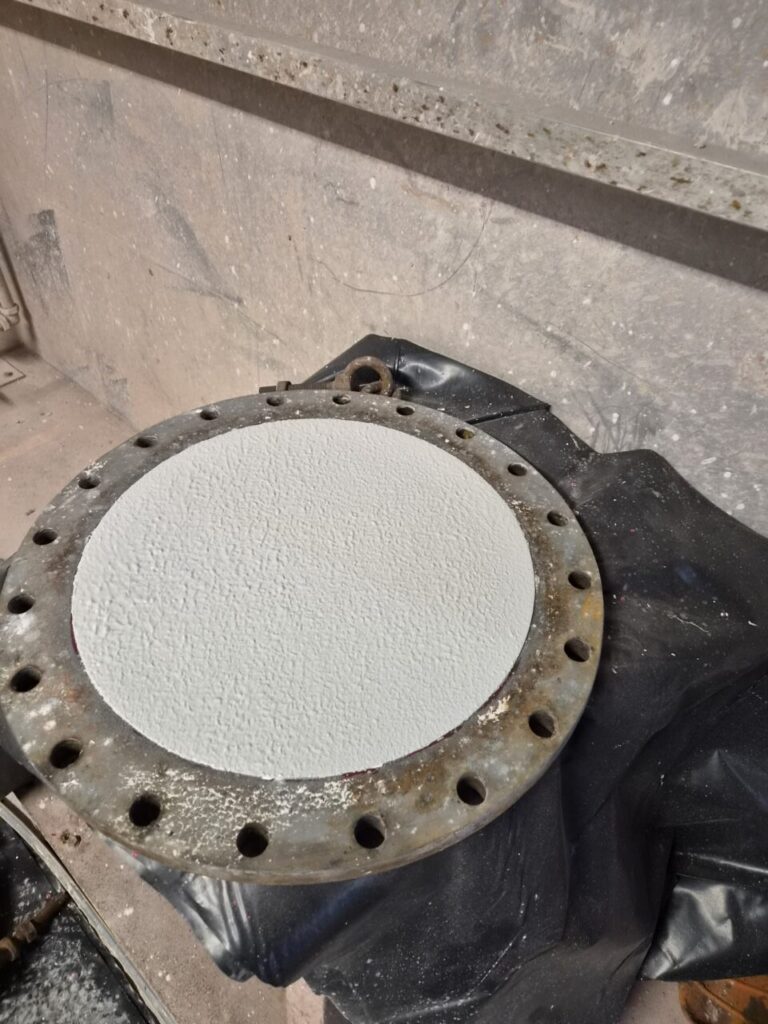
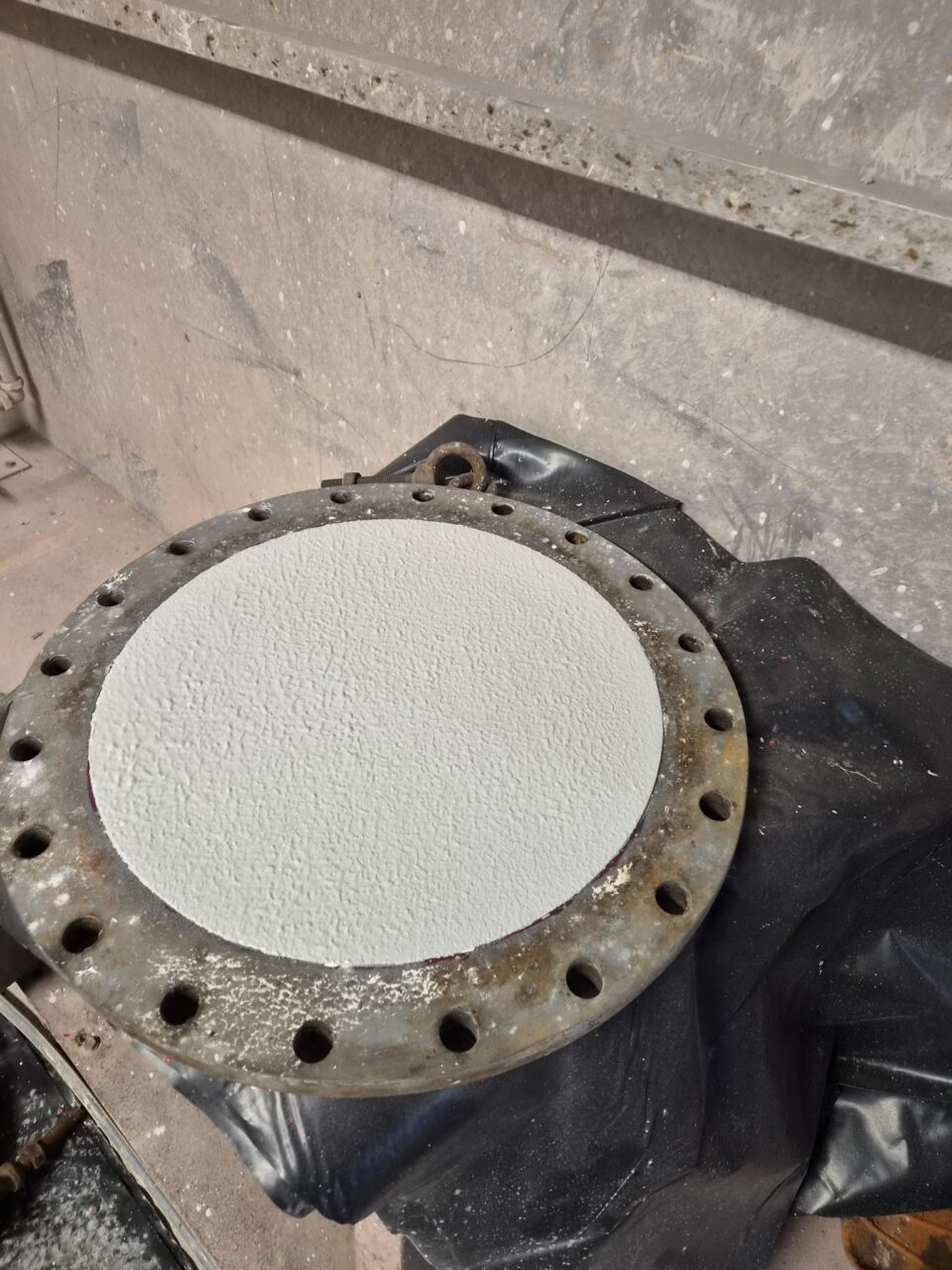
The tanks were lined in phases around the internal scaffold. Once the upper sections of the second tank were complete, the scaffold was struck and the lower section, hatches, access doors and agitator blades were hand prepared, primed and lined to the same specification.
Final inspection
Once cured, dry film thickness readings were taken across the lining with a PosiTector 6000. On the second tank, 80 readings across the shell averaged 1,401 microns and 70 readings across the lower section averaged 1,241 microns, against the nominal 1,000 micron specification.
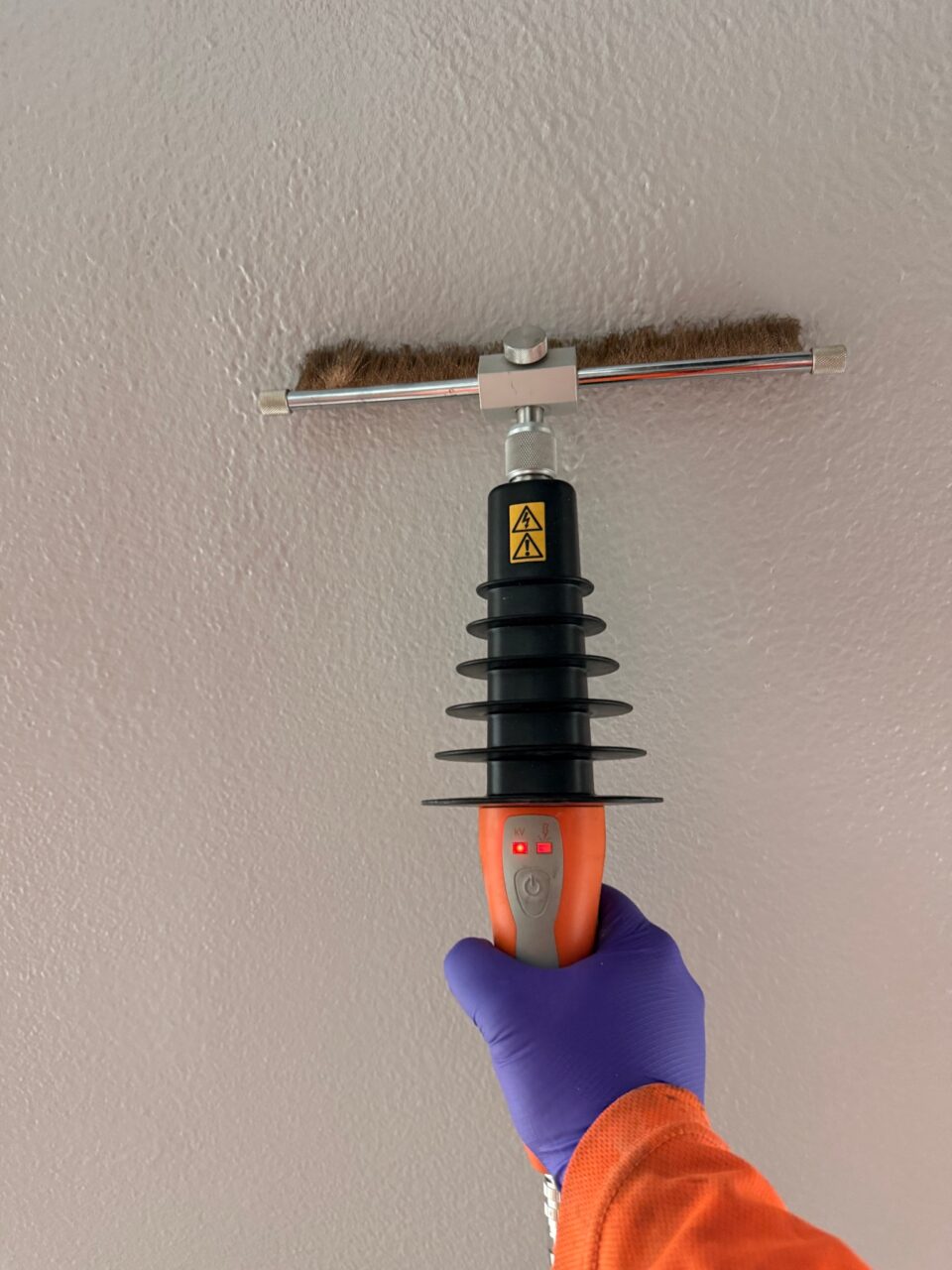
The cured lining was then spark (holiday) tested to find any pinholes or defects invisible to the eye – in an immersed tank a single pinhole can be the starting point for corrosion. Any defects found were marked, repaired by brush with the same material and re-tested.
THE RESULT
Both process tanks now have a new, fully inspected Chemco International RB 364 vinyl ester glass flake lining applied to correctly prepared steel, replacing a lining that had lost adhesion and was allowing corrosion to take hold. The tanks were handed back to the client ready for return to service.
The works were completed across two site visits between August and September 2026.
Find out more about our steel tank lining services: https://www.corrolesseastern.co.uk/services/steel-tank-linings/