
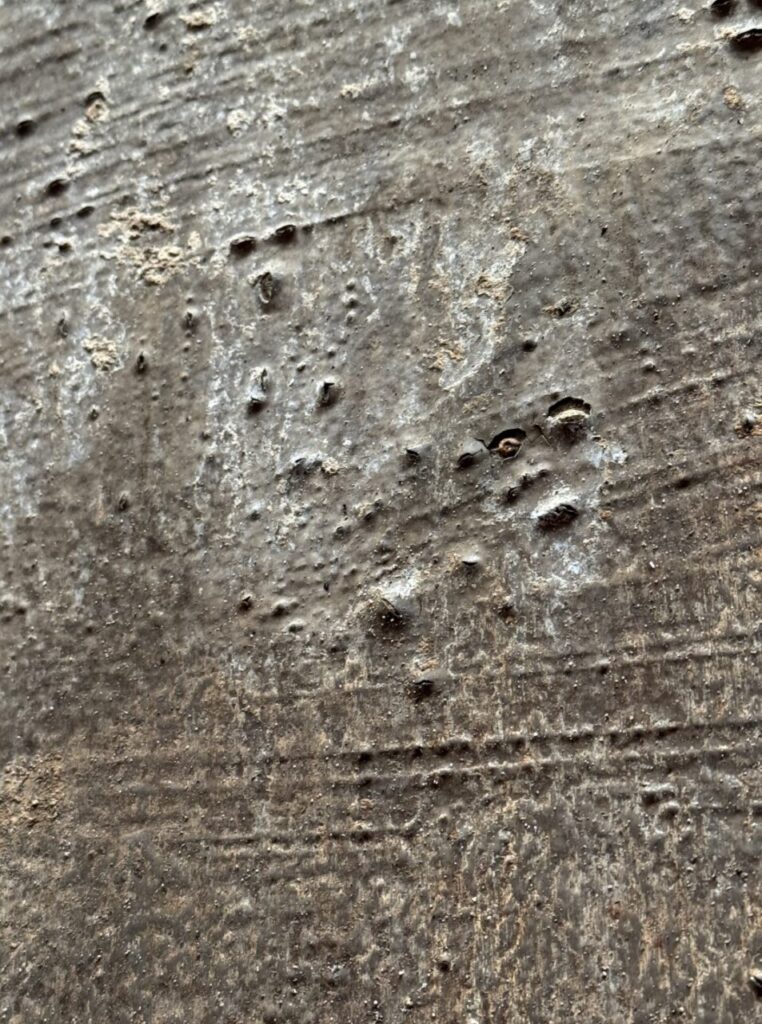
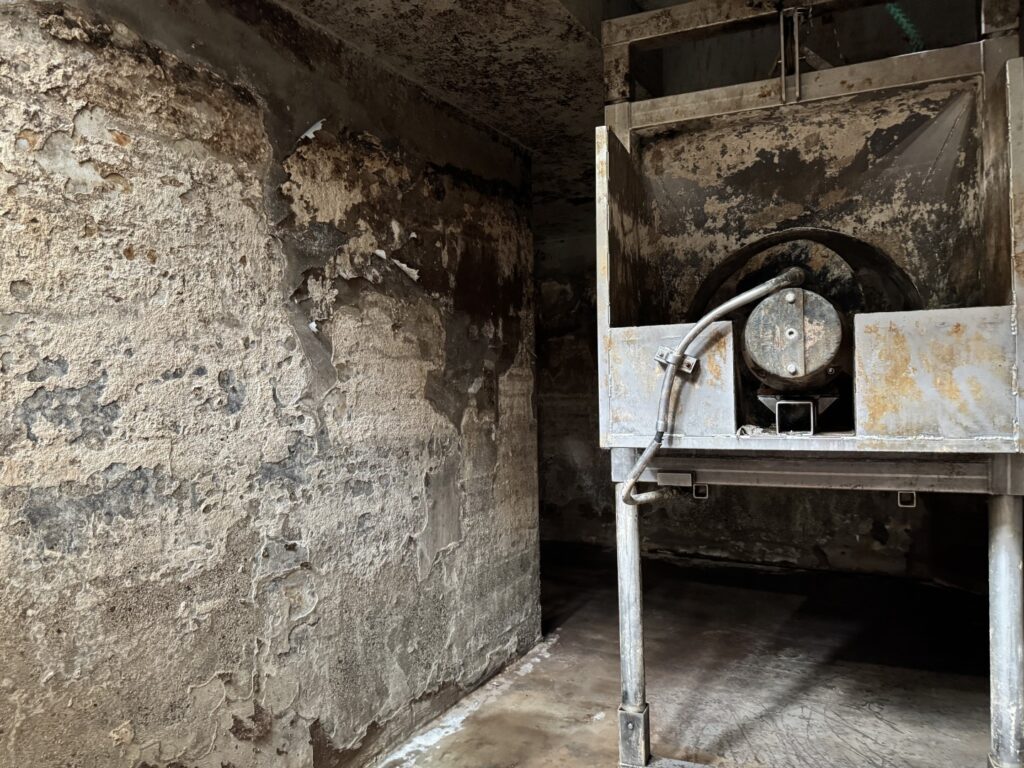
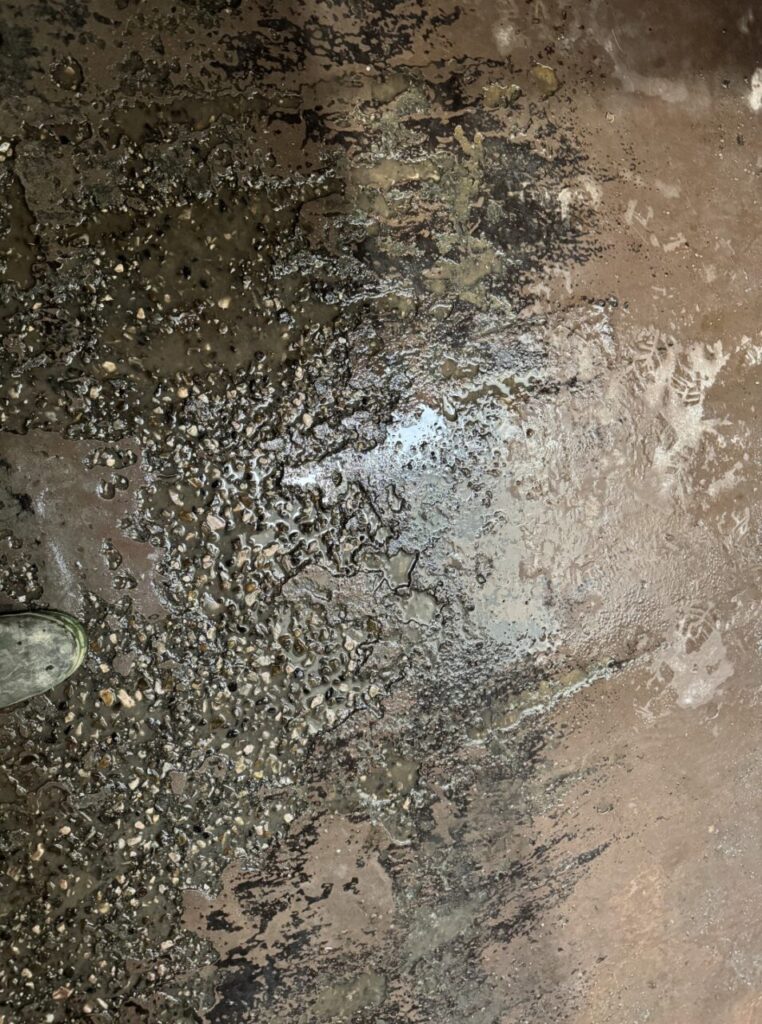
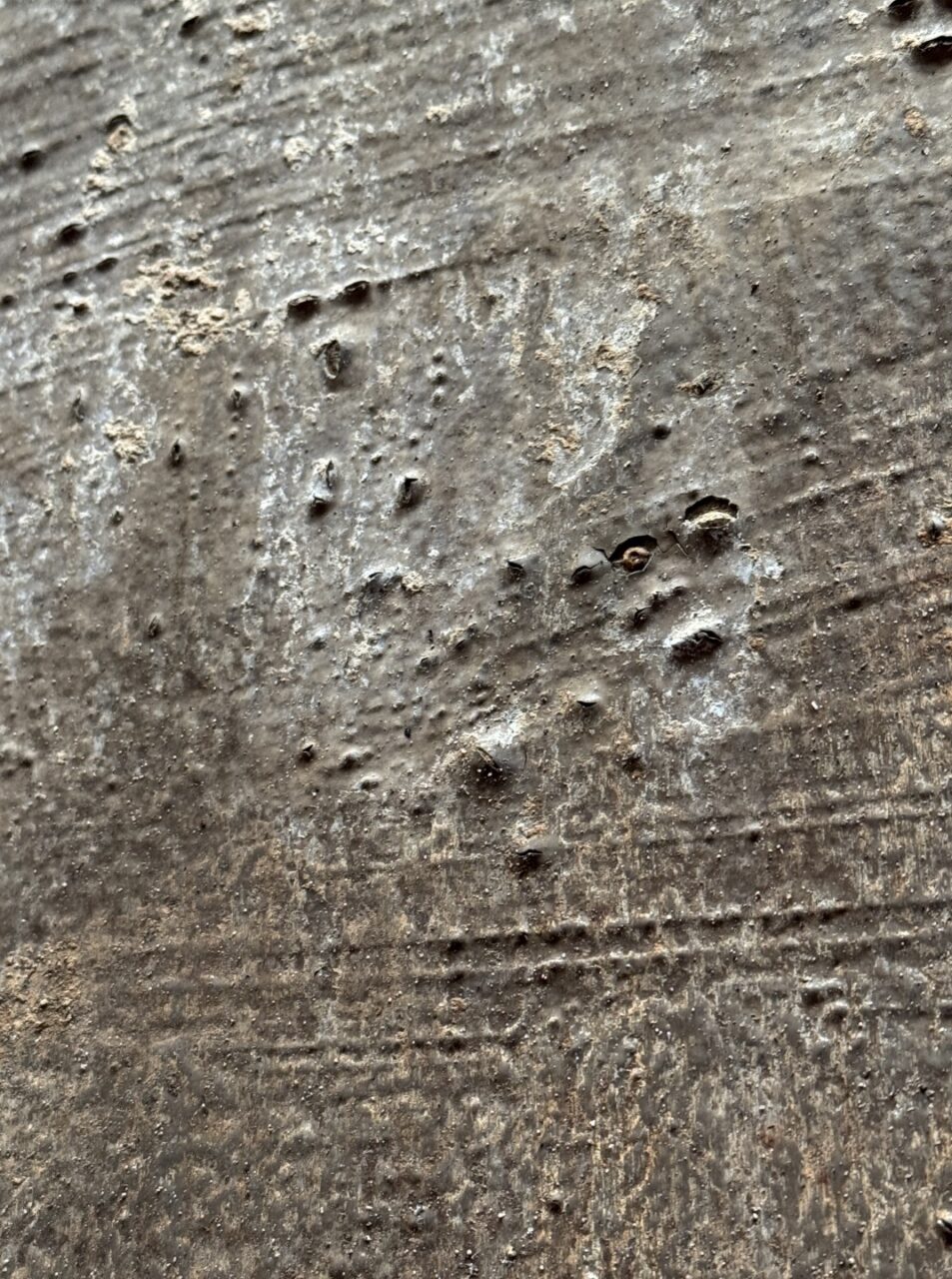
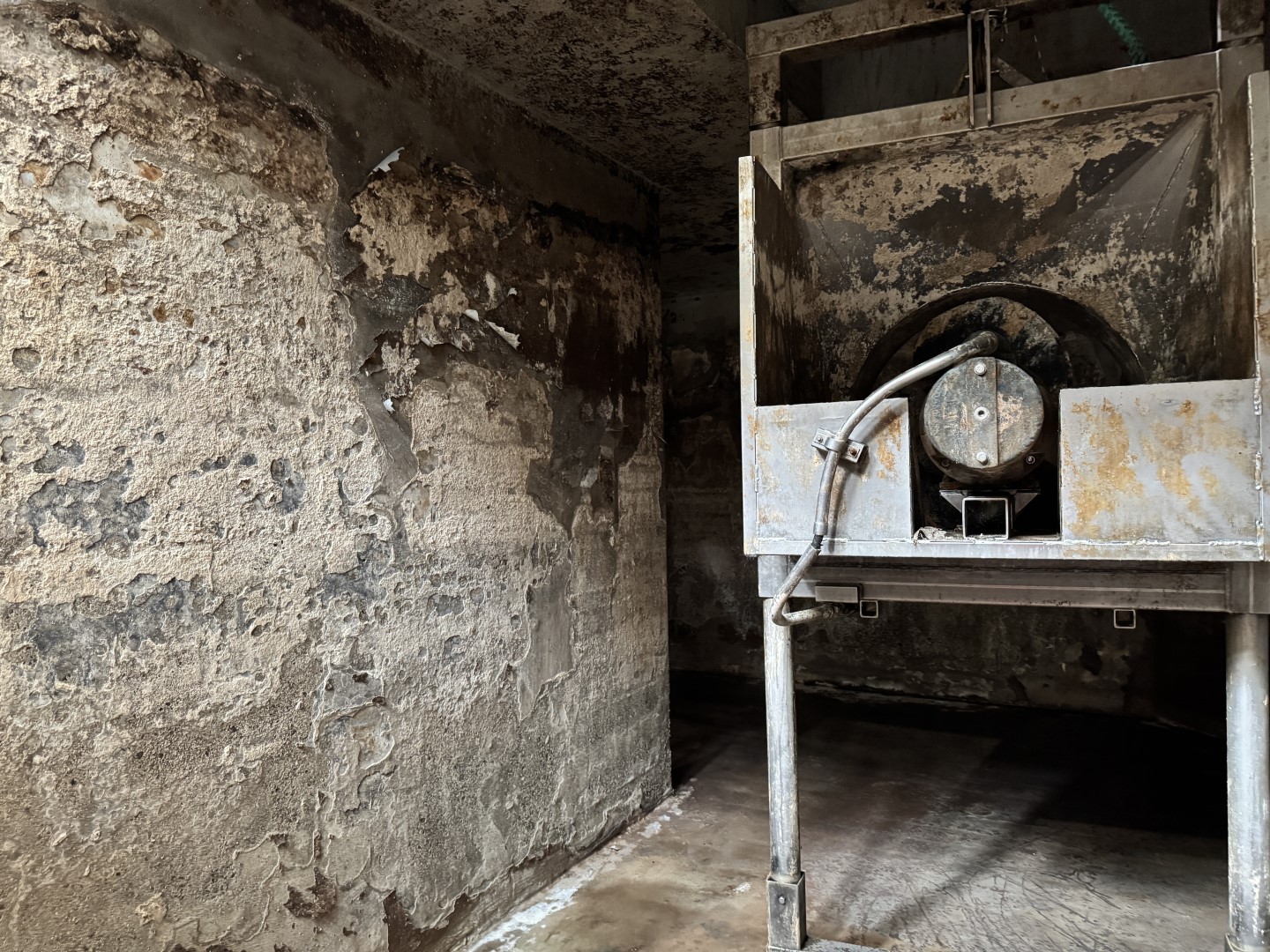
The existing concrete tank lining in this below-ground mixing pit had reached the end of its serviceable life. Breakdown had occurred as a result of osmotic blistering and the abrasive action of solids contained within the various food wastes and sludges entering the pit — a common failure mode in industrial tank lining applications handling aggressive or particulate-laden contents.
Mixing Pit Relining, Norfolk
THE PROBLEM
THE SOLUTION
Following inspection, we proposed a full concrete tank relining programme: removal of the failed coating, waterproofing of the pit structure, and application of a more durable reinforced glass flake vinyl ester tank lining system from Sherwin Williams.
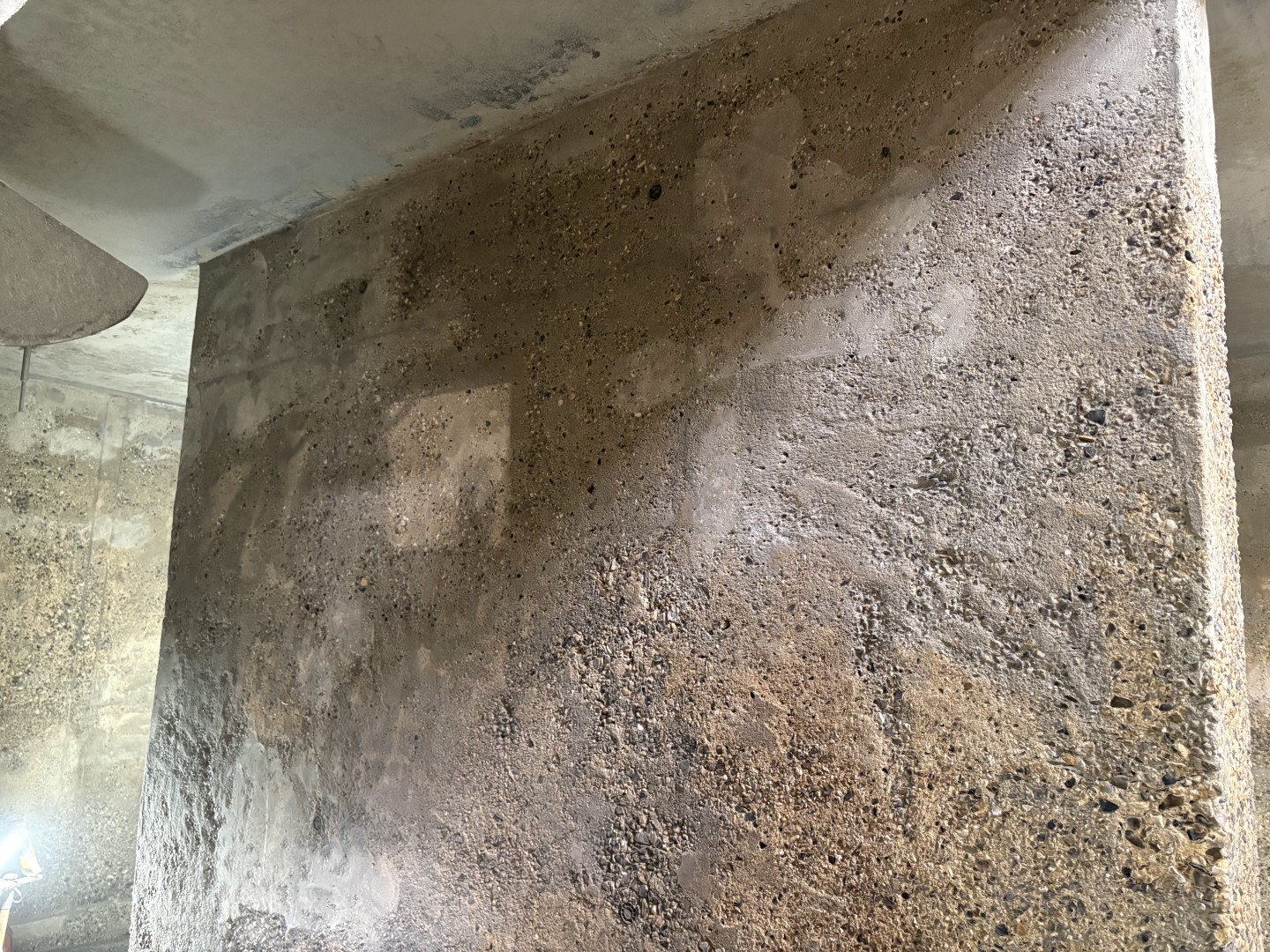
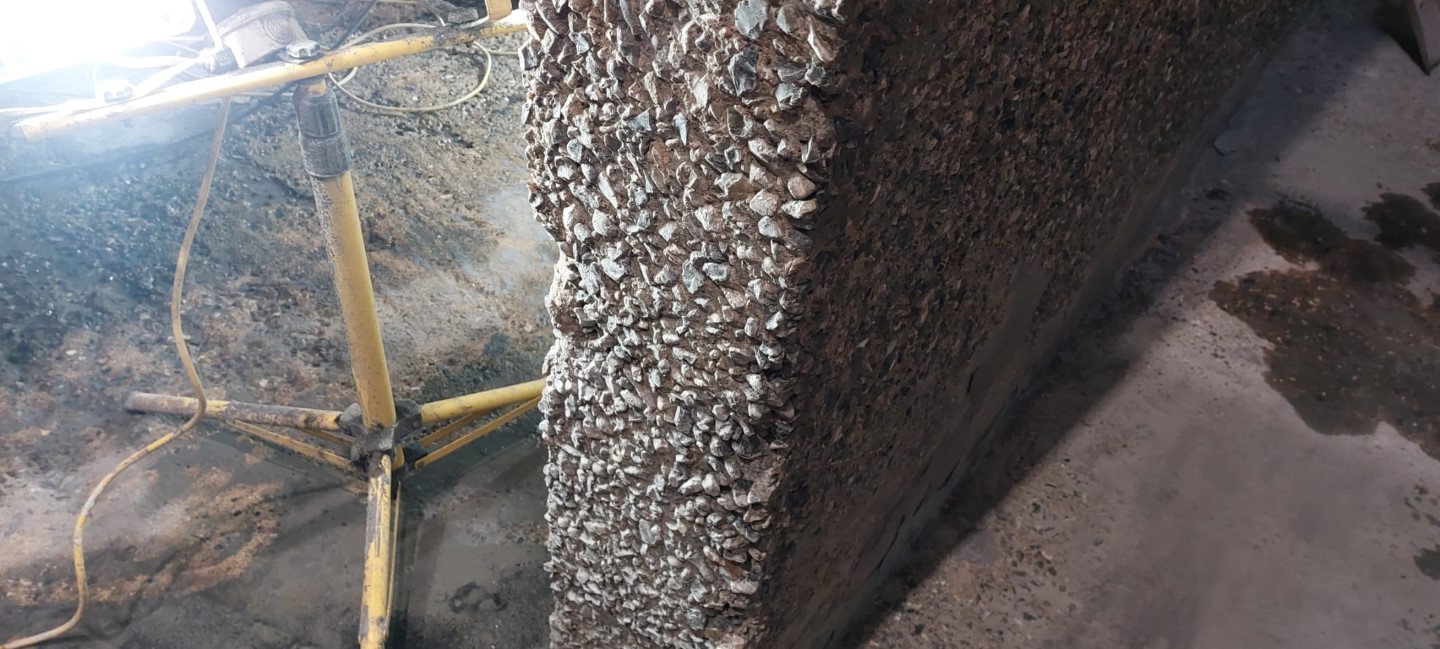
The first challenge was stripping back the existing lining. Where it remained well adhered it was thick and tenacious — this is often the case with older industrial tank coatings. Removal was carried out using water-entrained abrasive blasting to prevent the release of free silica into the working environment.
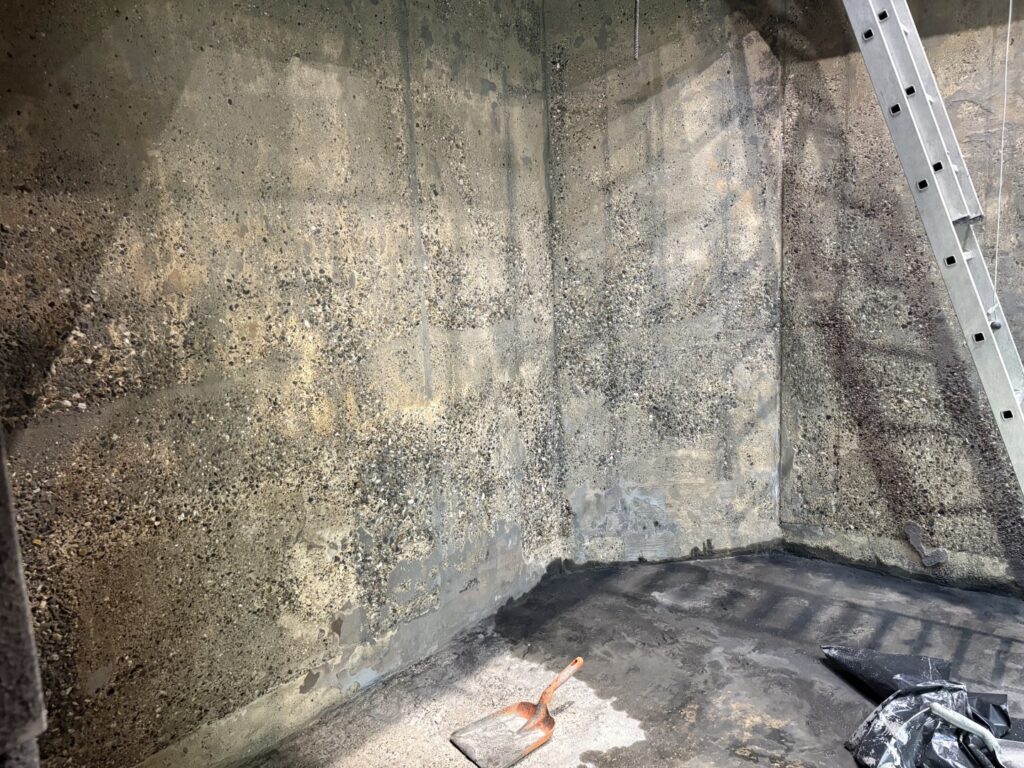
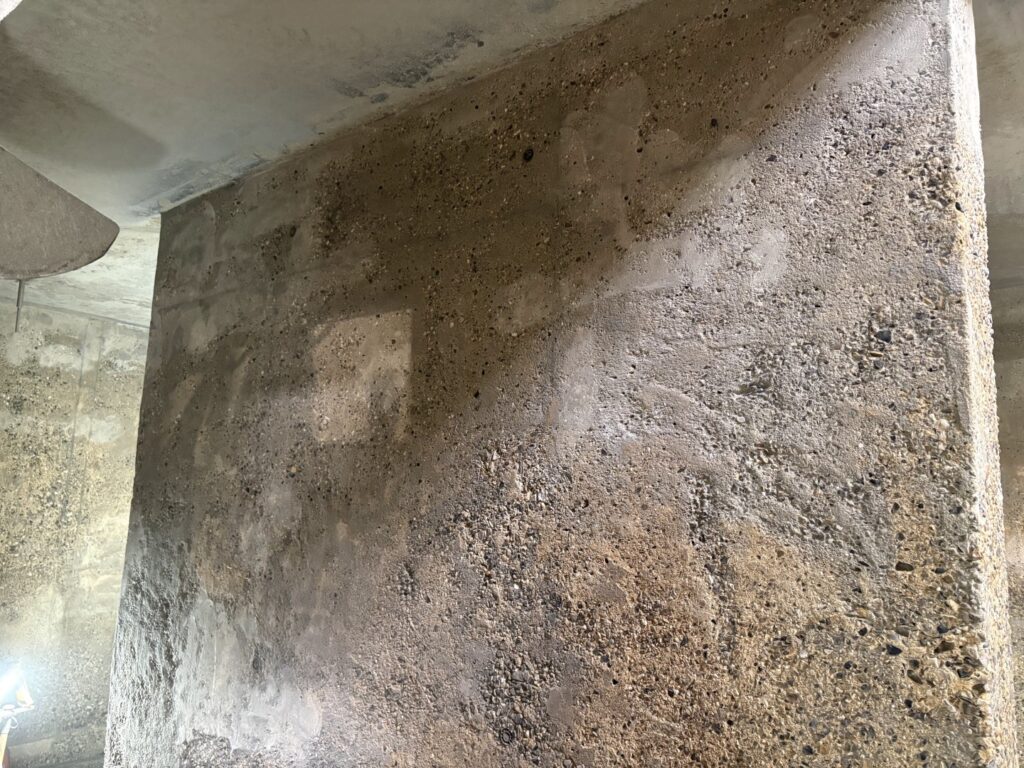
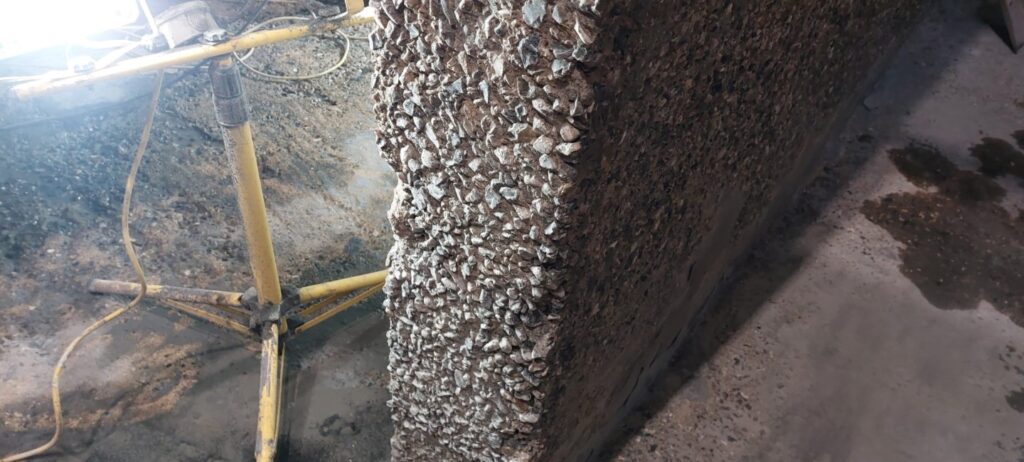
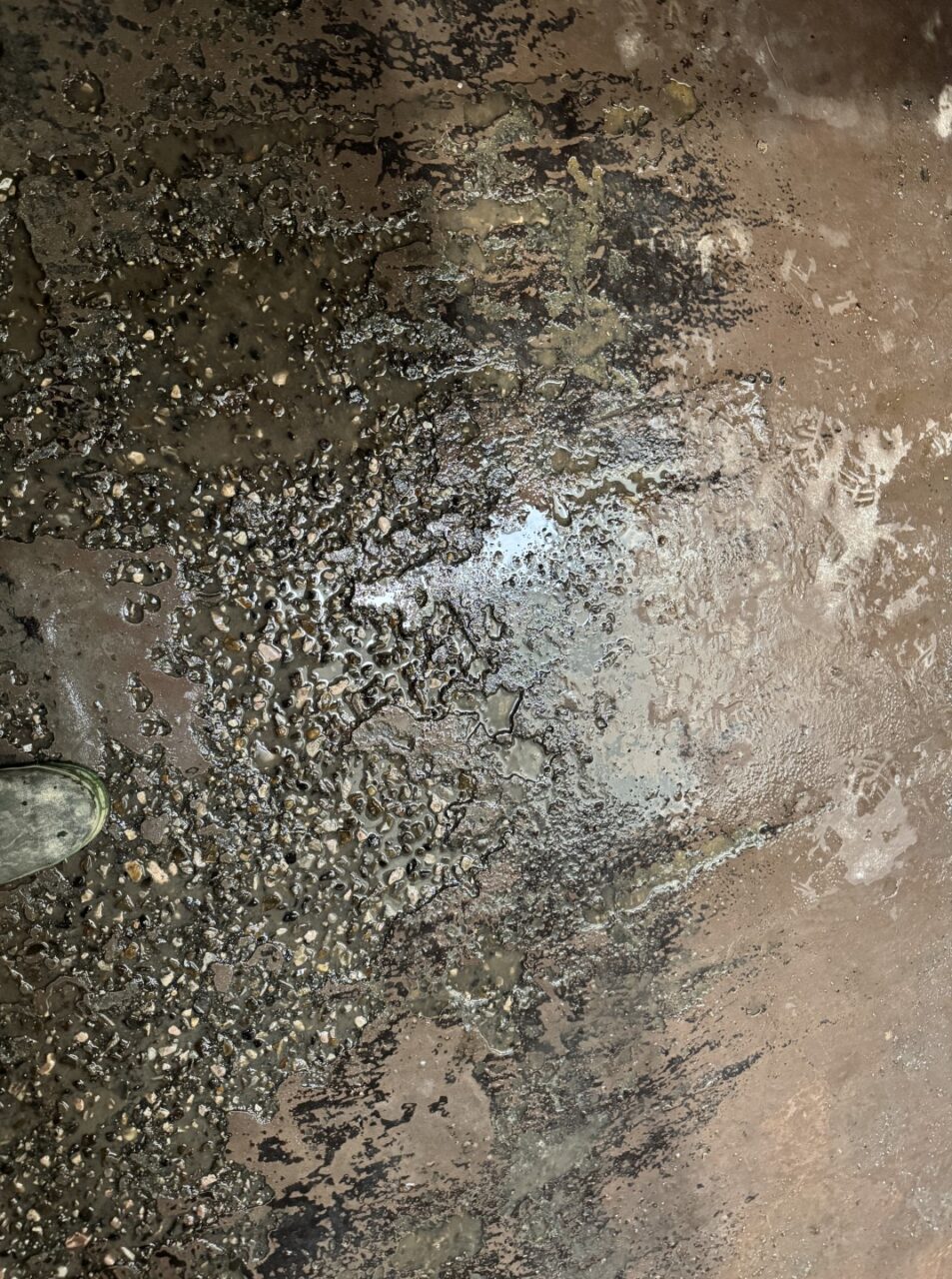
In several areas this process revealed a more significant degree of concrete degradation than had been apparent from the surface — something that is common when relining concrete storage tanks that have been subject to prolonged chemical or biological exposure.
To address the risk of osmotic blistering — one of the leading causes of premature tank lining failure in below-ground applications — Aquron 2000 spray-on waterproofing was applied across all prepared surfaces. This material penetrates up to 150mm into the substrate, forming a colloid silicate hydrogel that prevents the migration of water and moisture vapour through the concrete.
This step is particularly important in below-ground concrete tank lining work where external waterproofing is absent or compromised; without it, hydrostatic pressure drives moisture through the structure and lifts the lining from within.
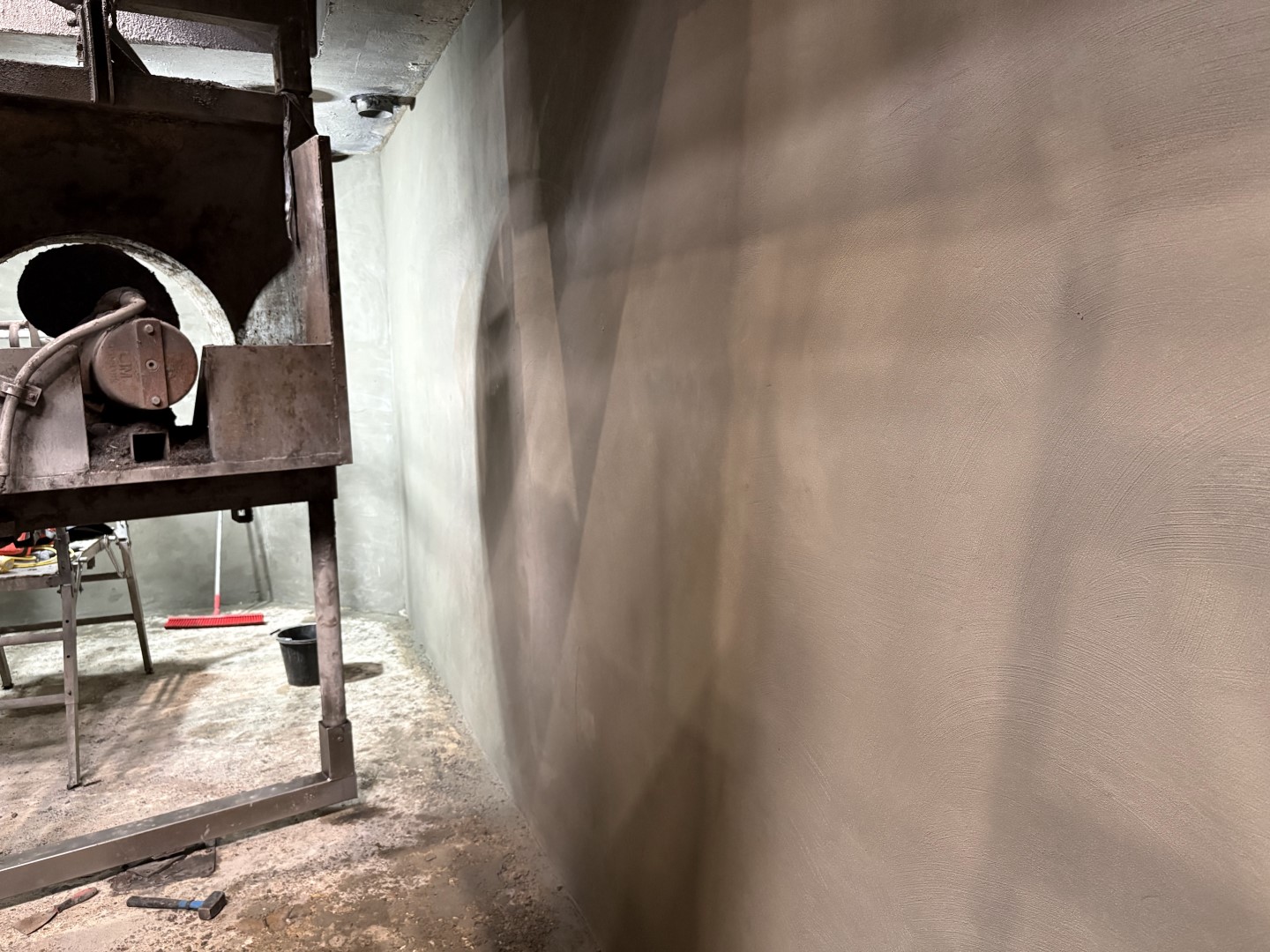
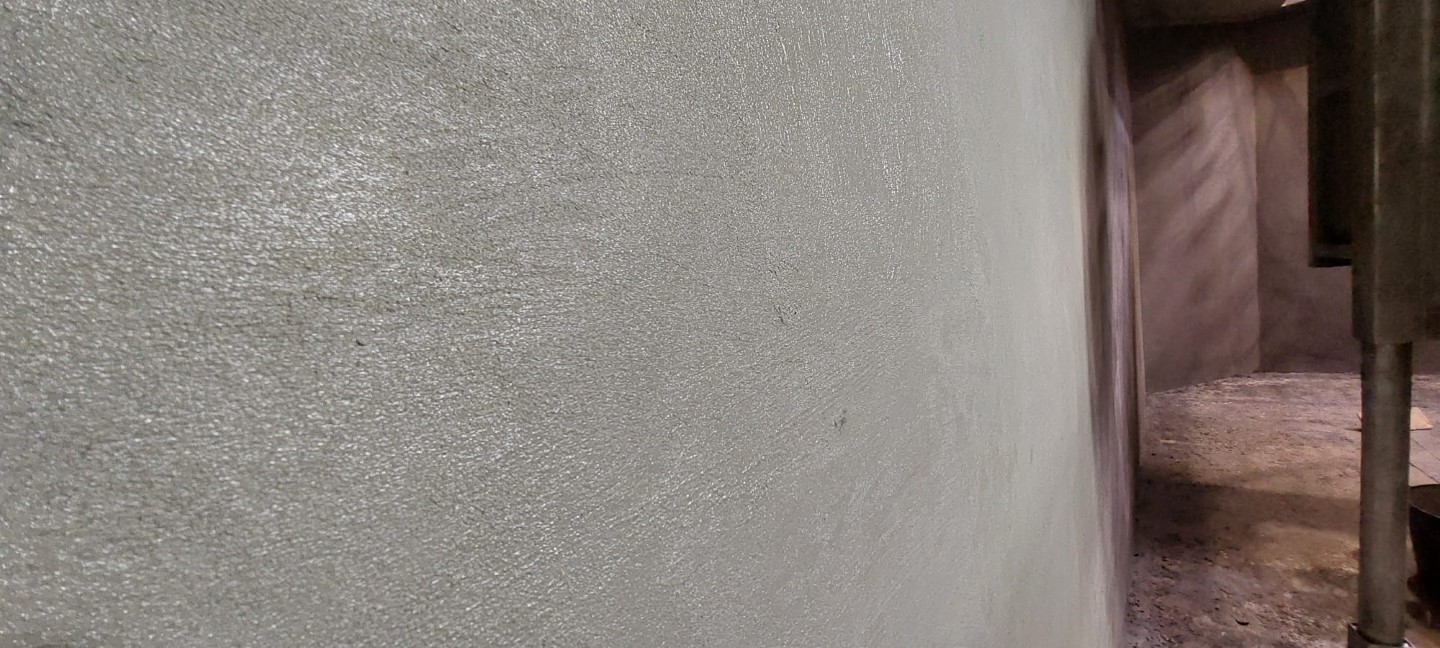
To create a surface suitable for the application of a high-performance tank coating, all areas of defective concrete were rebuilt using cementitious repair mortars, finished with fairing coats and a sponge float texture to provide a mechanical key.
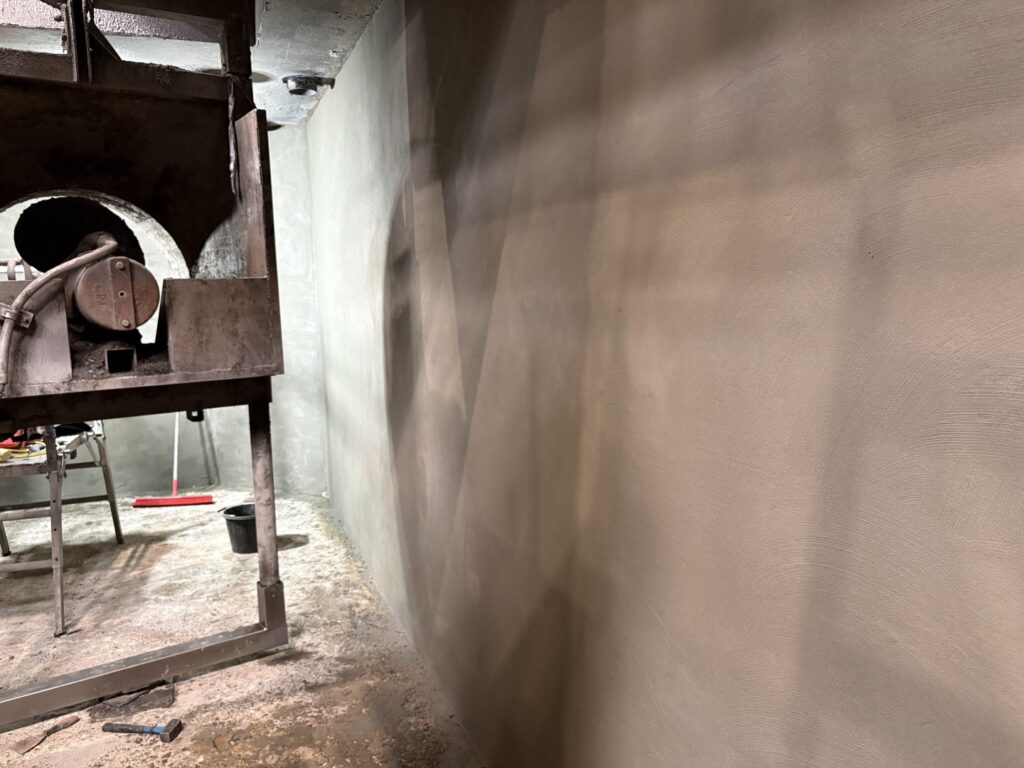
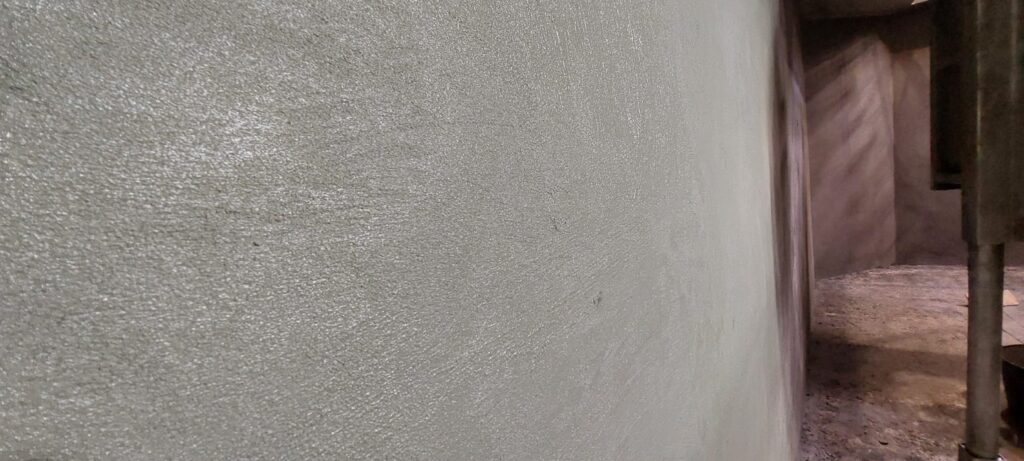
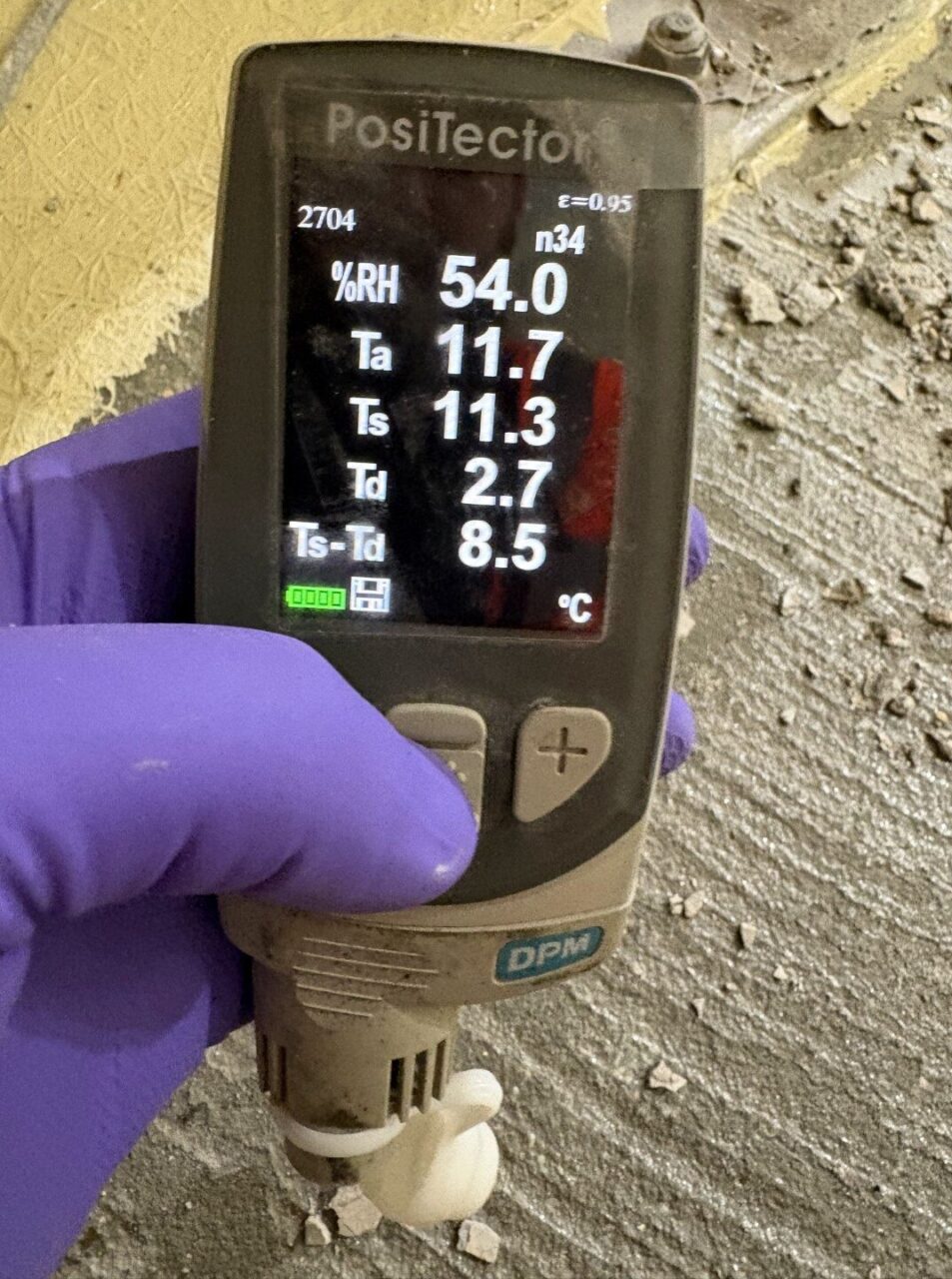
The cementitious repair materials were allowed to fully hydrate before any tank lining work continued. Moisture content was tested and recorded against the manufacturer’s requirements — a standard part of our quality assurance process on all concrete tank lining contracts.
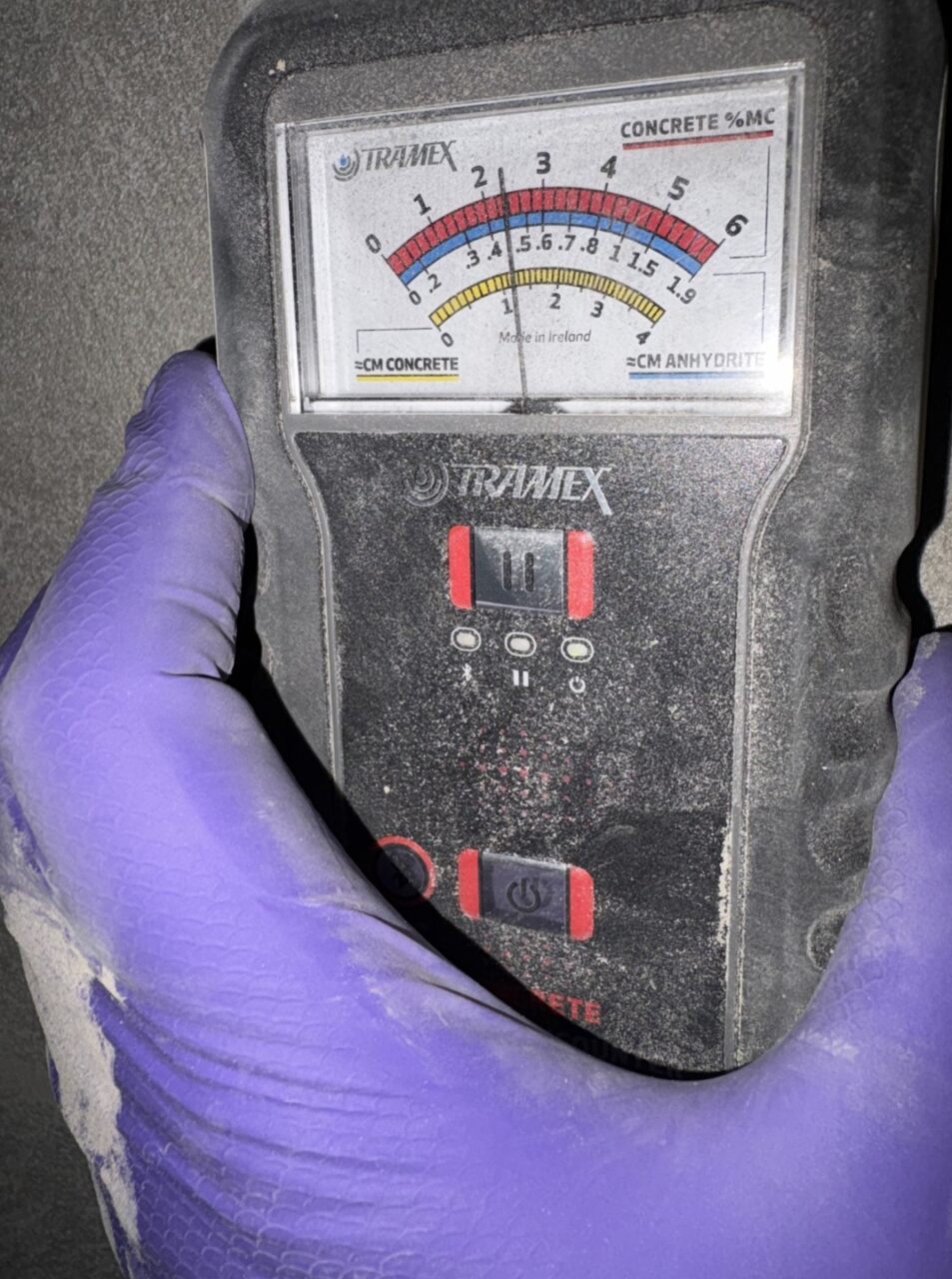
Climatic conditions — temperature, dew point and relative humidity — were also monitored and recorded throughout, both prior to and during the protective coating application.
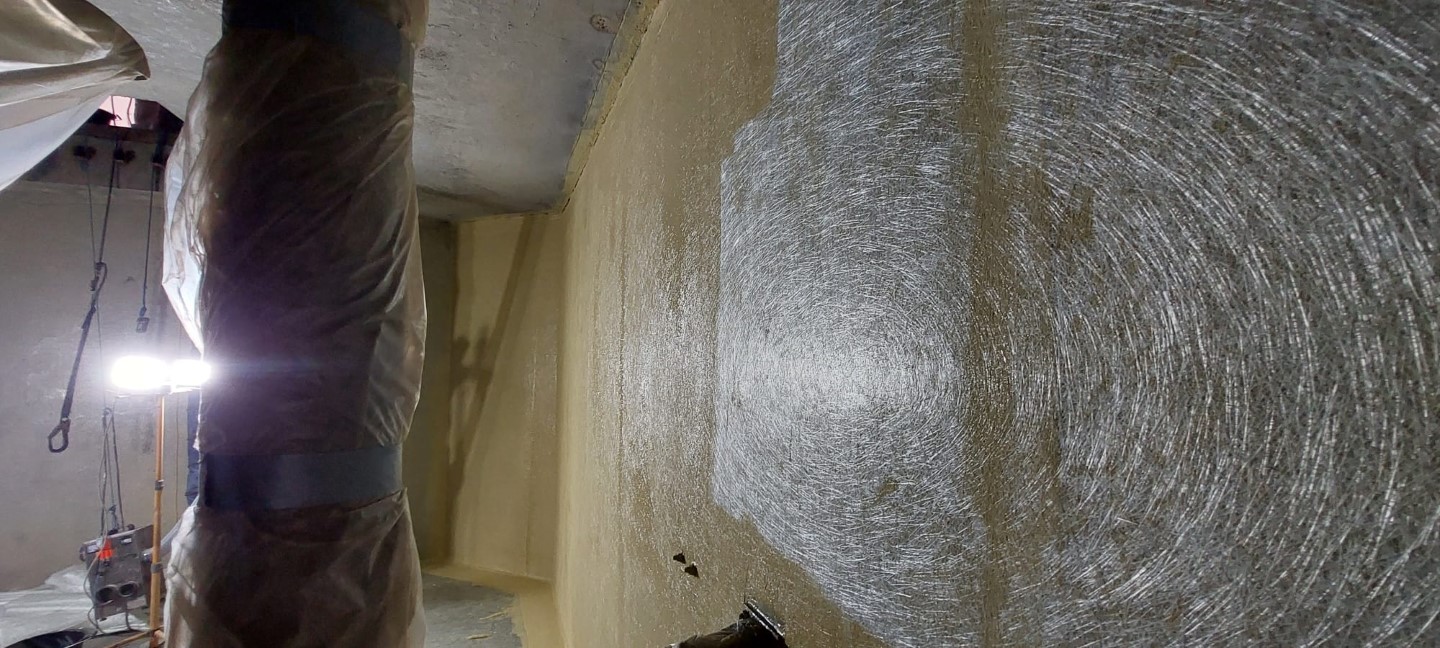
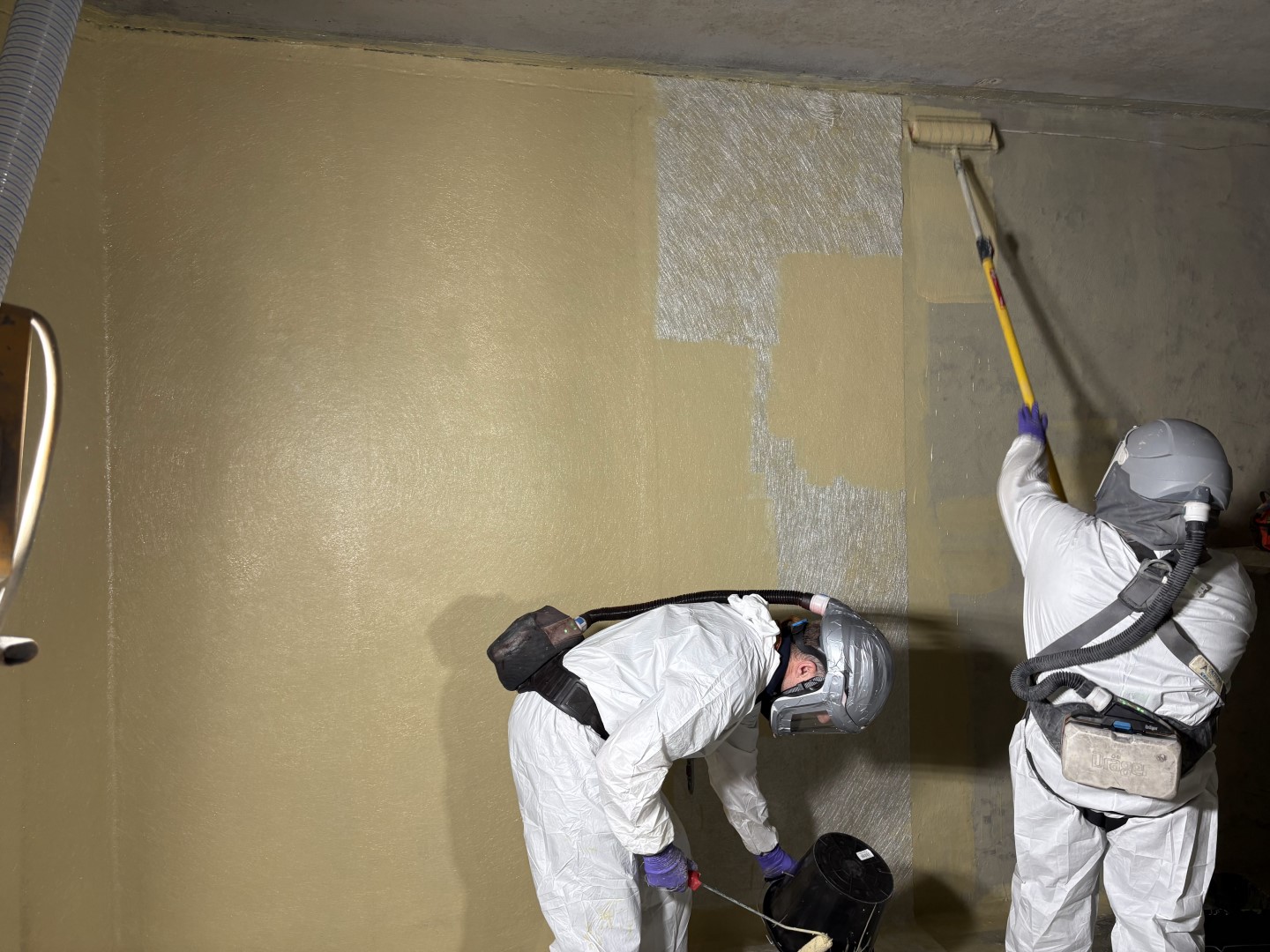
All surfaces were primed using Sherwin Williams Magnalux 42PP, a penetrating primer designed to maximise adhesion to prepared concrete substrates. A reinforcement layer of Sherwin Williams Magnalux 41VP was then applied to improve tensile strength and resistance to cracking — an important consideration in any industrial tank lining system subject to movement or thermal cycling.
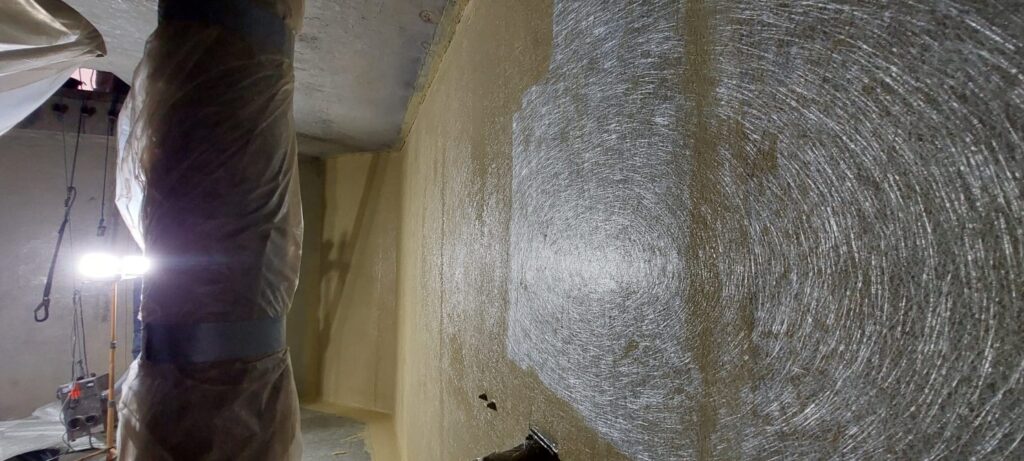
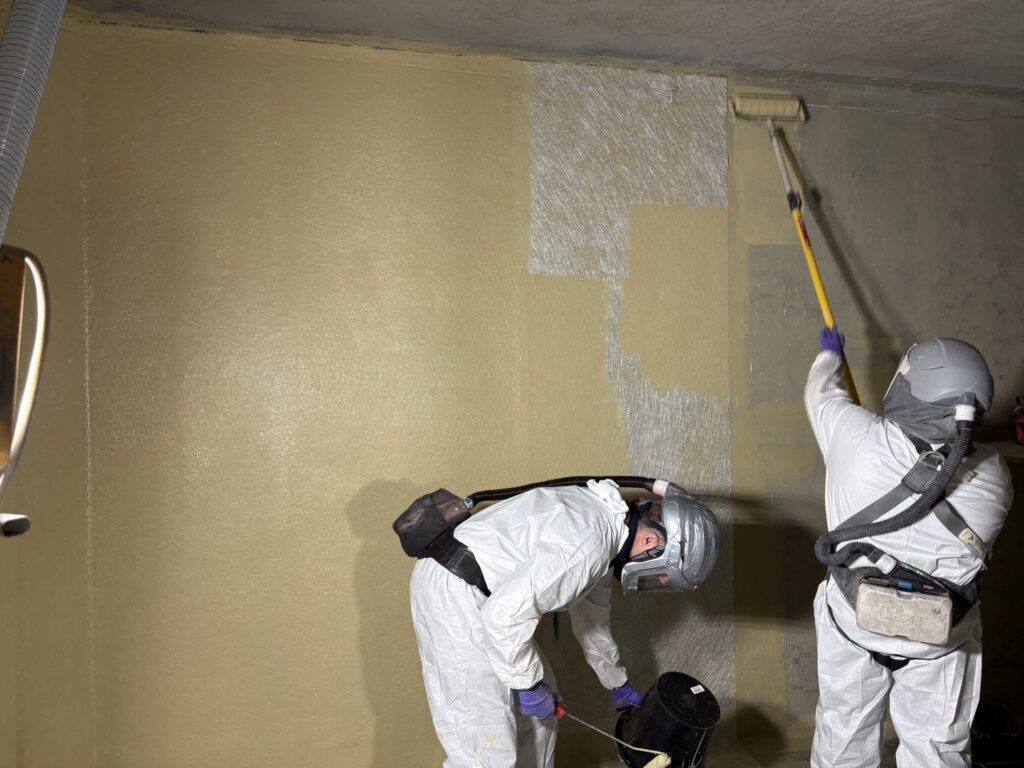
Once cured, the reinforcement layer was denibbed to eliminate any surface peaks that could cause wicking before the topcoat application. Two finish coats of Sherwin Williams Magnalux 41V2 were then applied in contrasting colours to a nominal dry film thickness of 1000 microns. The use of contrasting colours is a practical quality control measure, helping to confirm consistent coverage across the full tank lining system.
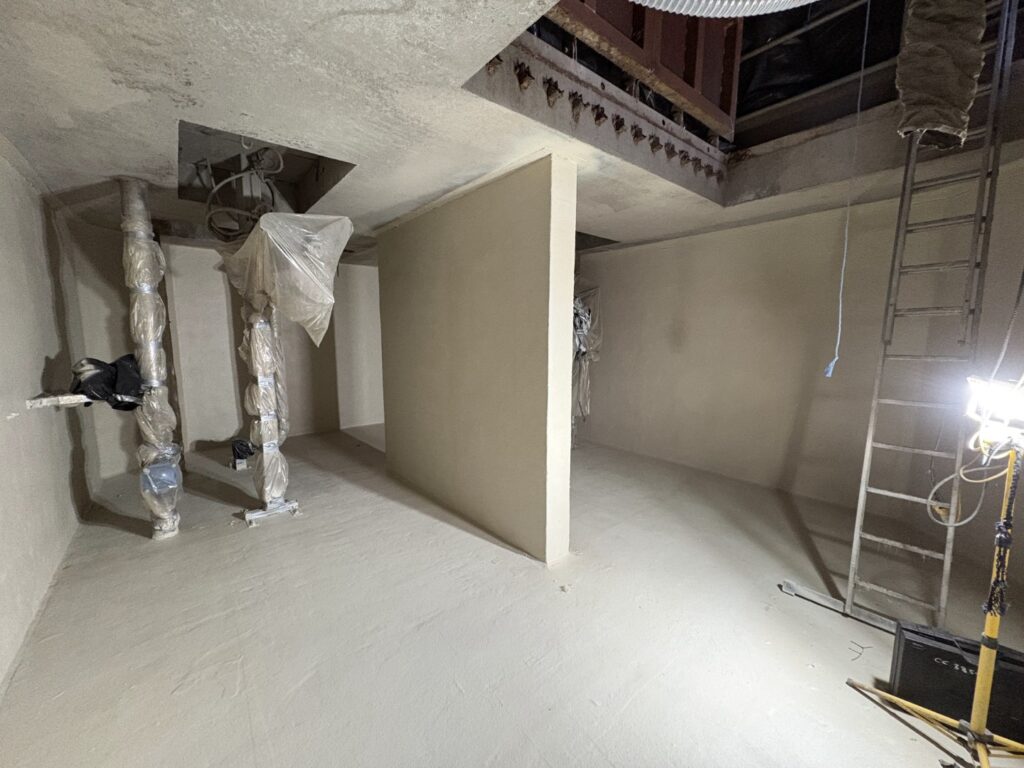
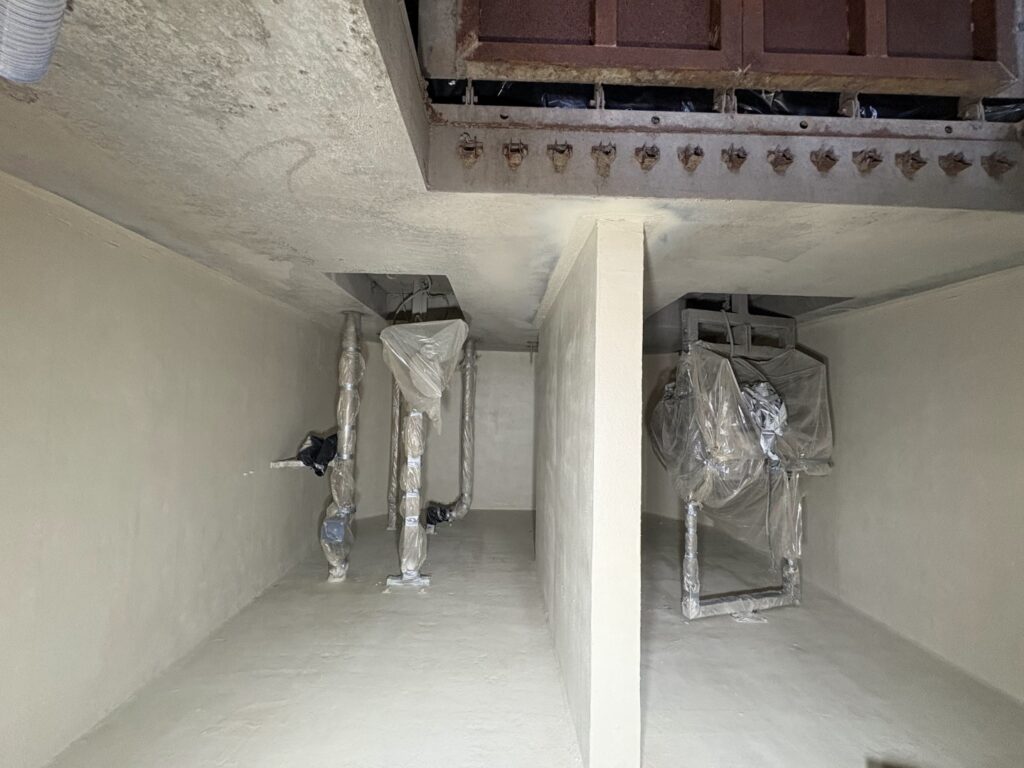
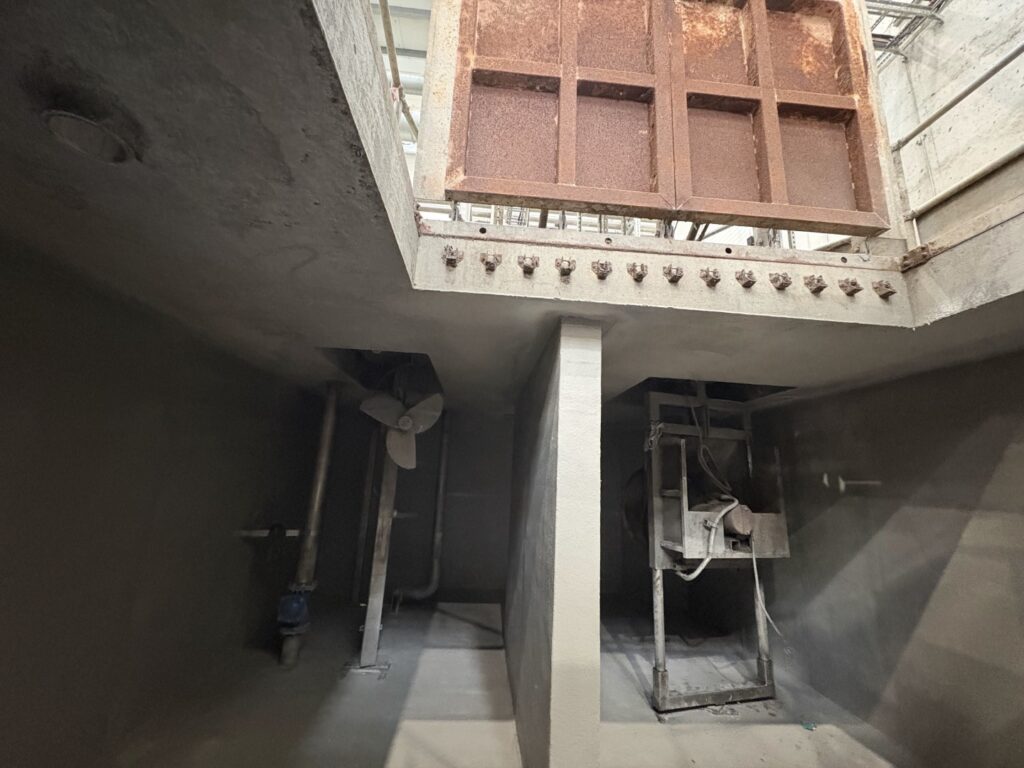
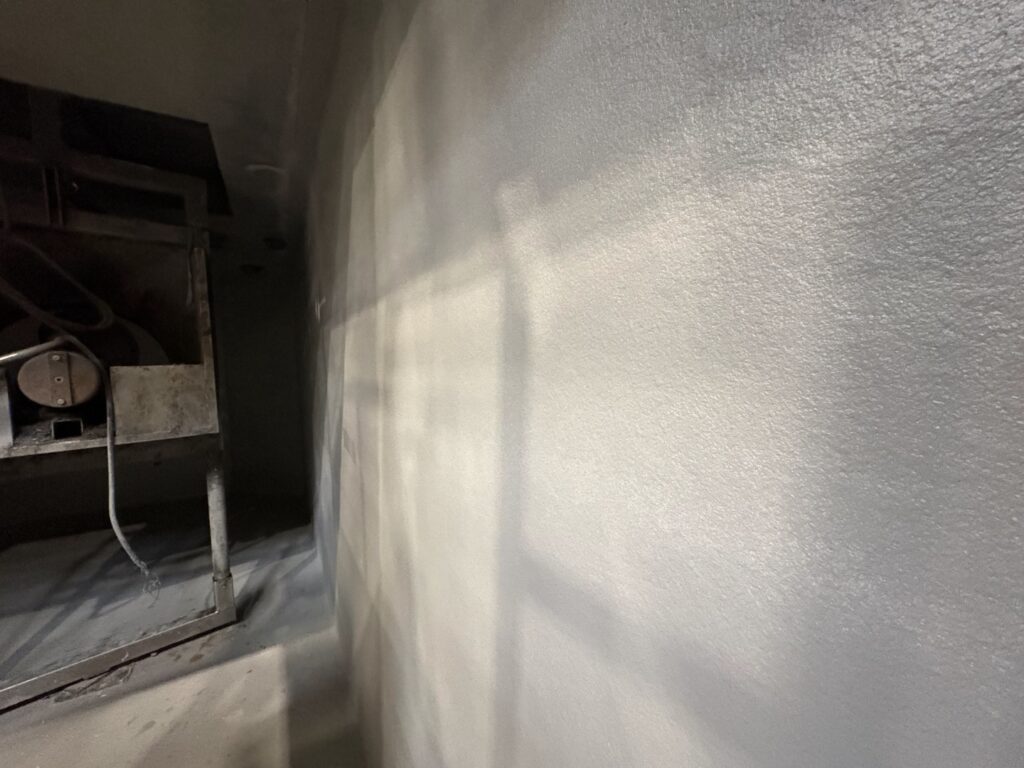
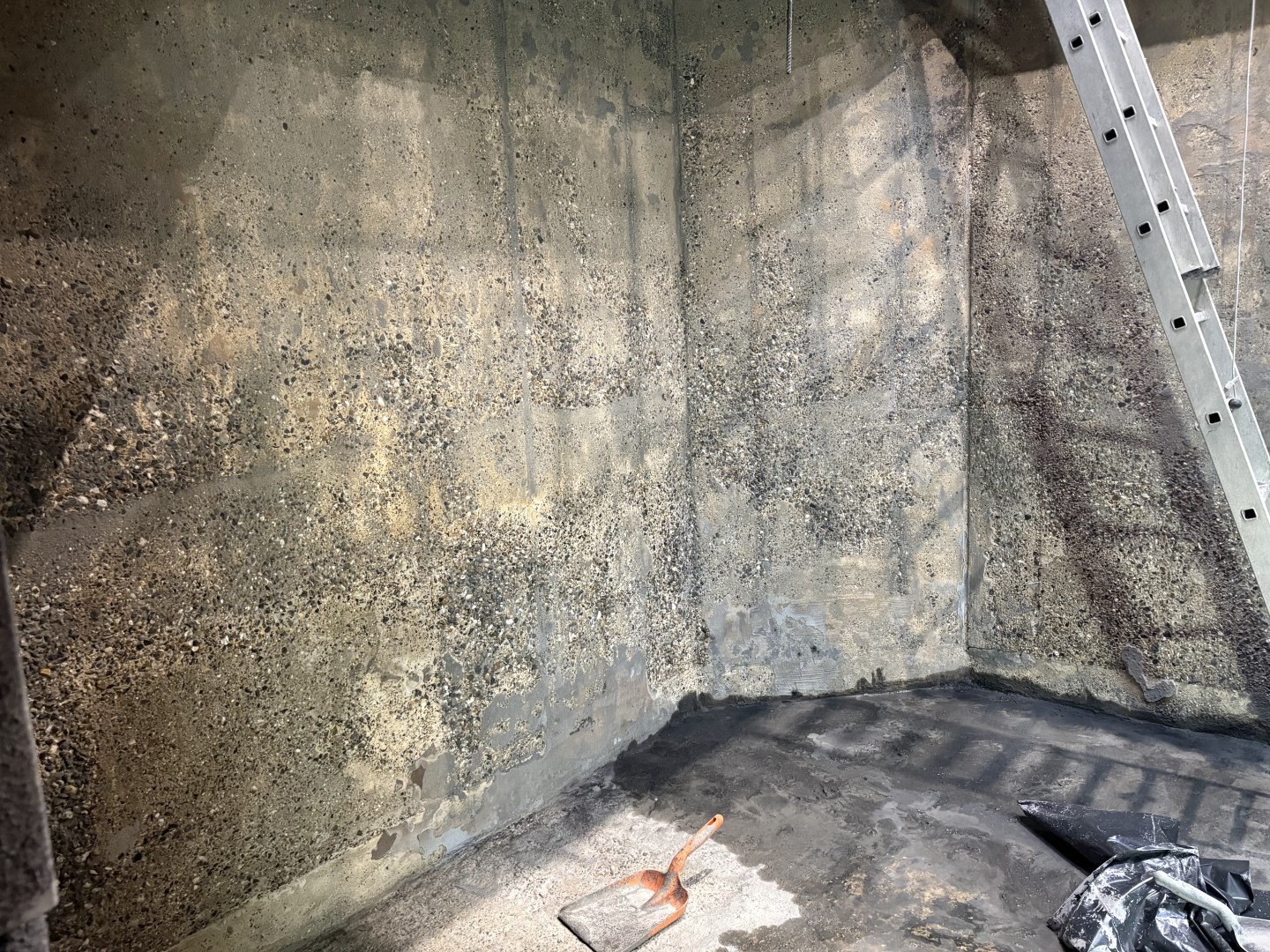
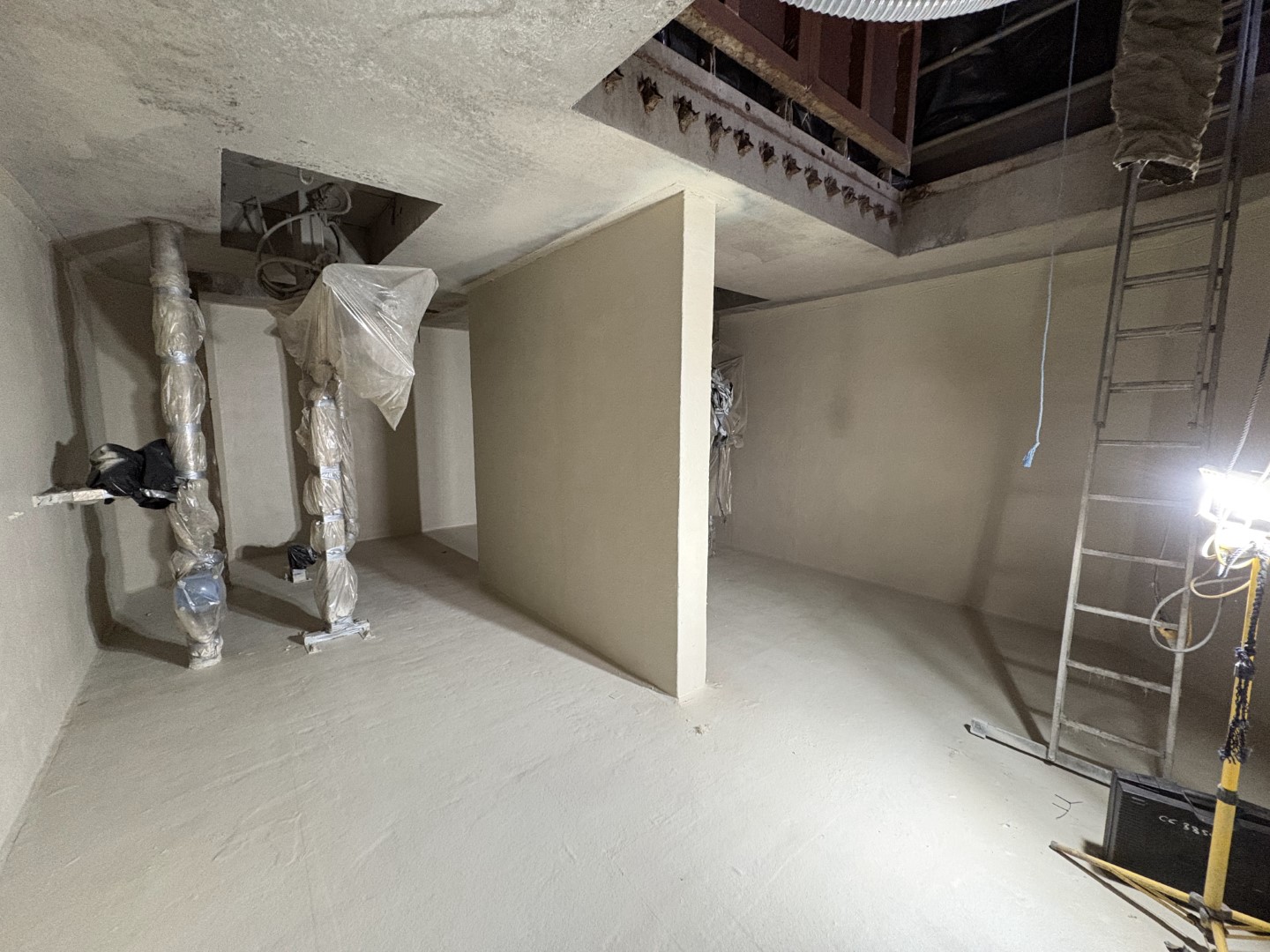
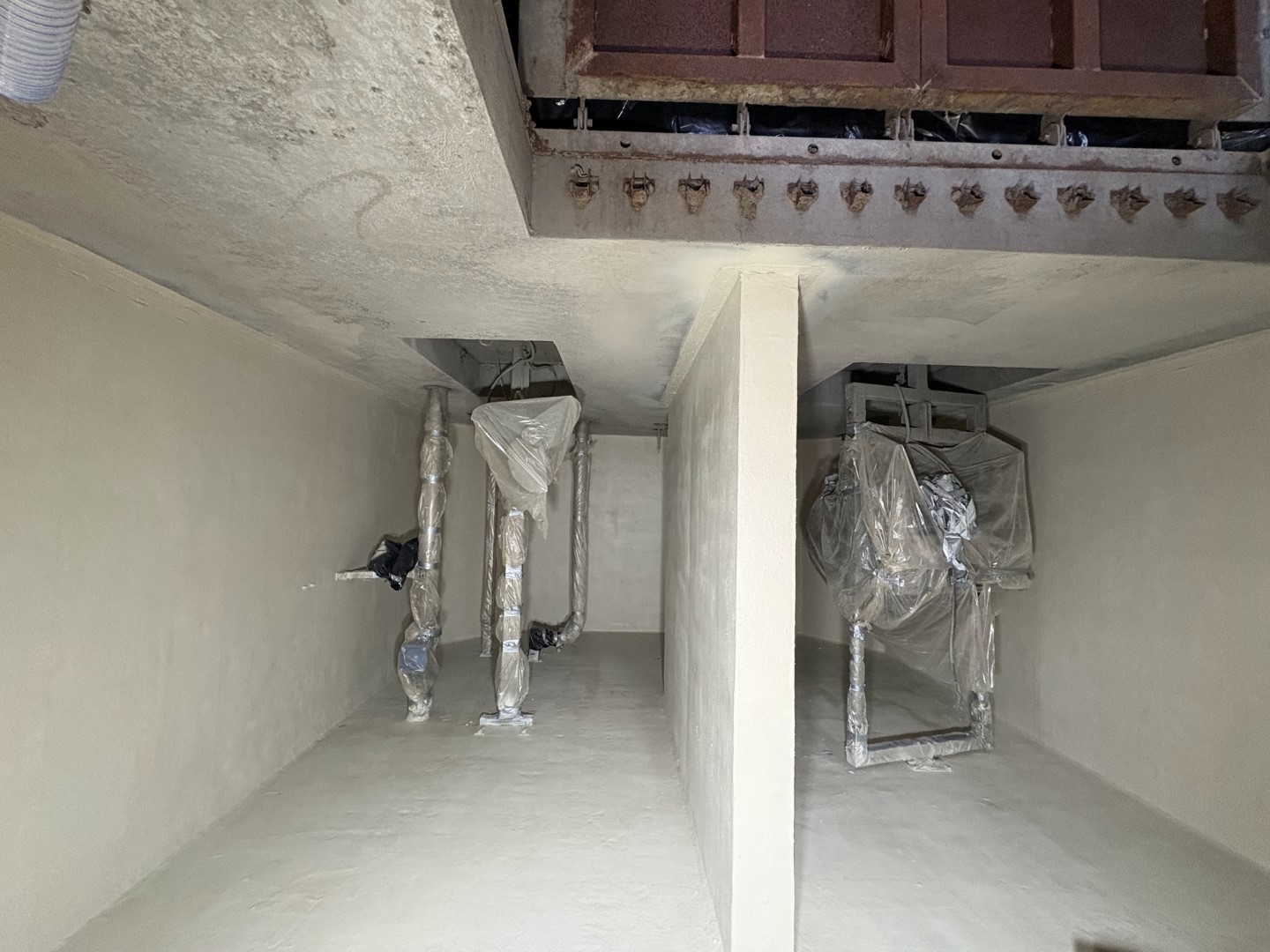
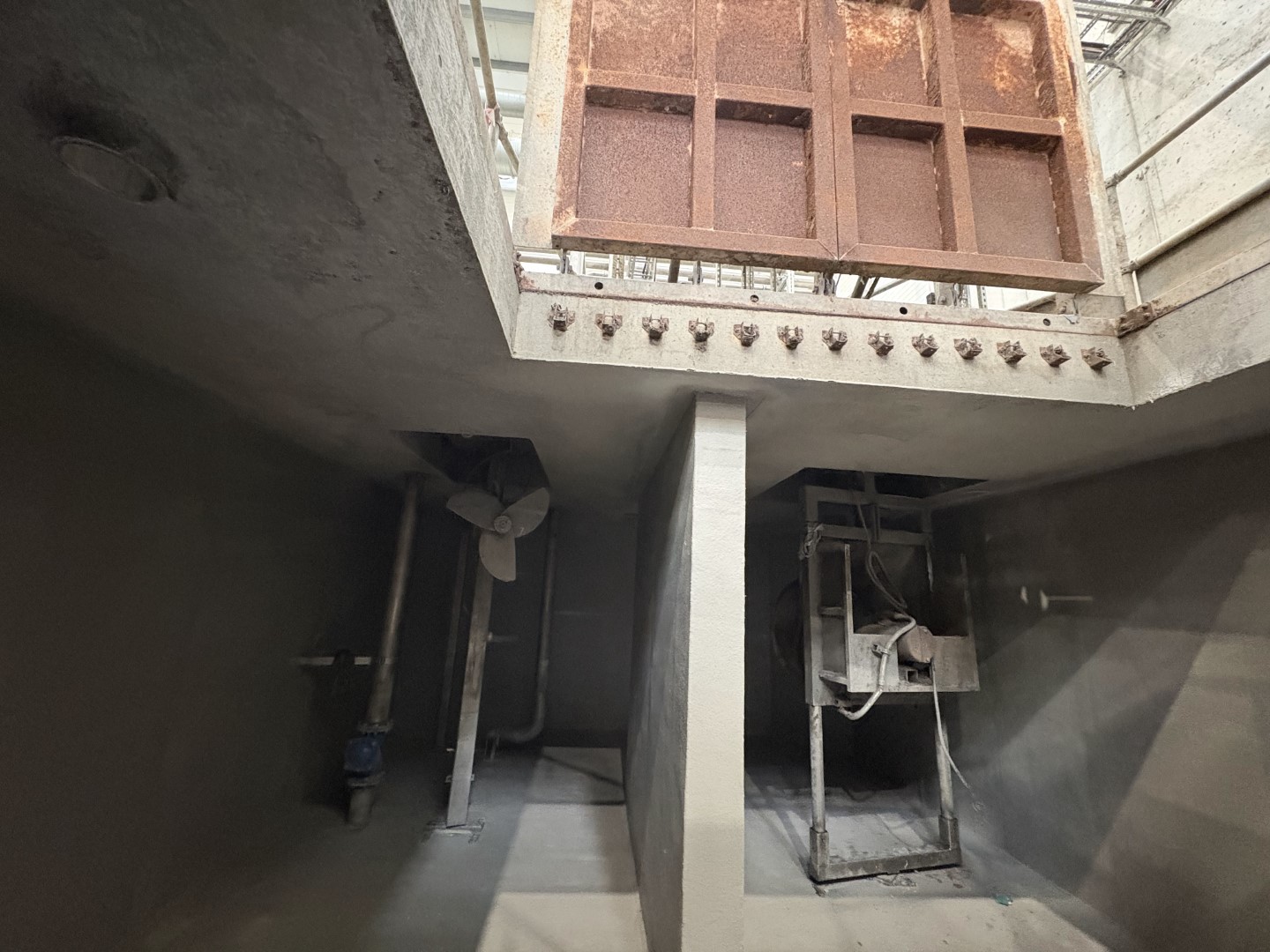
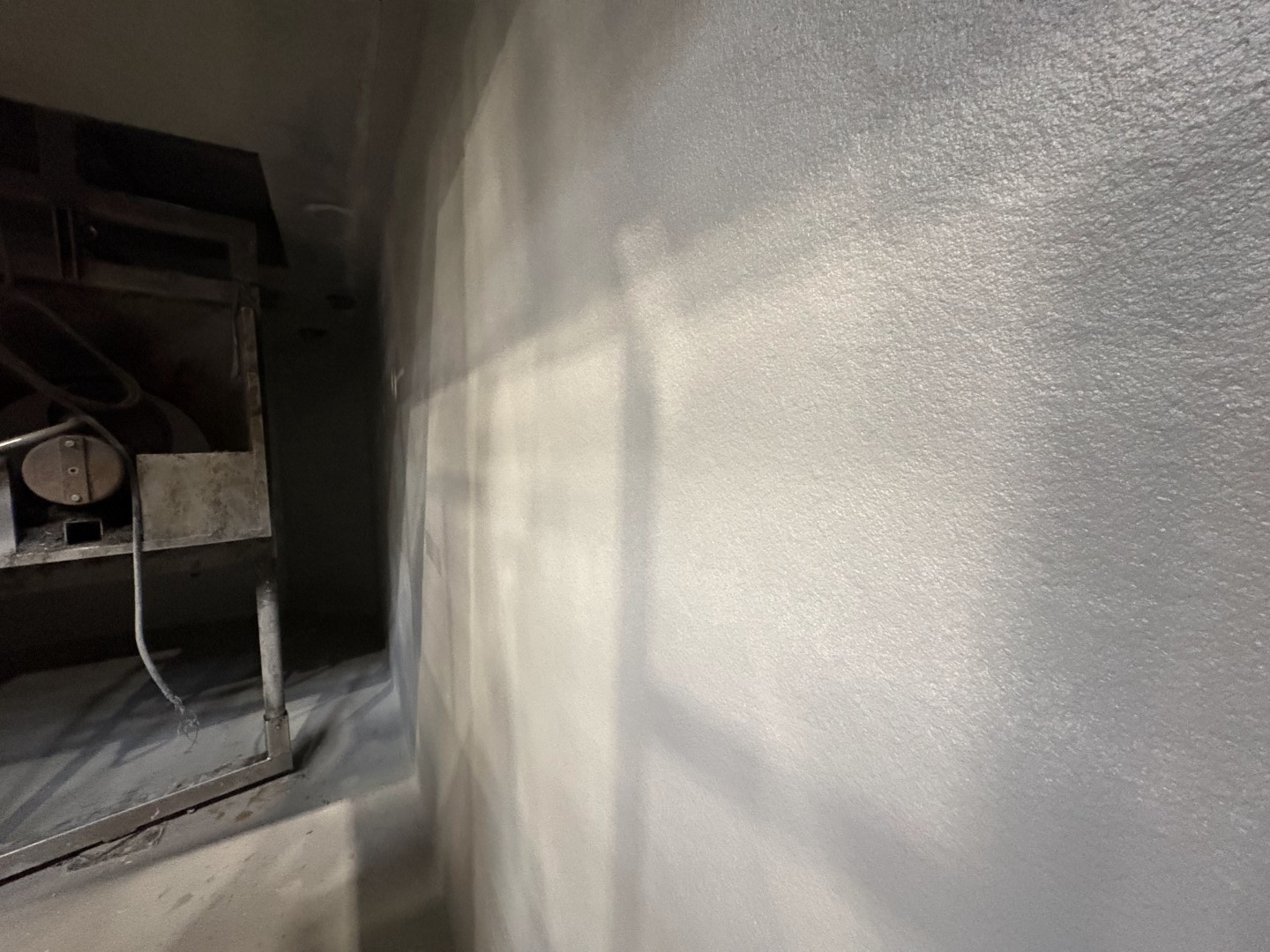
The glass flake content within this tank coating system provides significantly enhanced abrasion resistance compared to the previous lining — a critical requirement given the nature of the waste streams and sludges this pit receives.
As with all our concrete tank lining projects, the completed work was subject to DC holiday spark testing to check for pinholes or discontinuities in the coating film. Any defects identified were made good with the same material applied by brush before final sign-off