
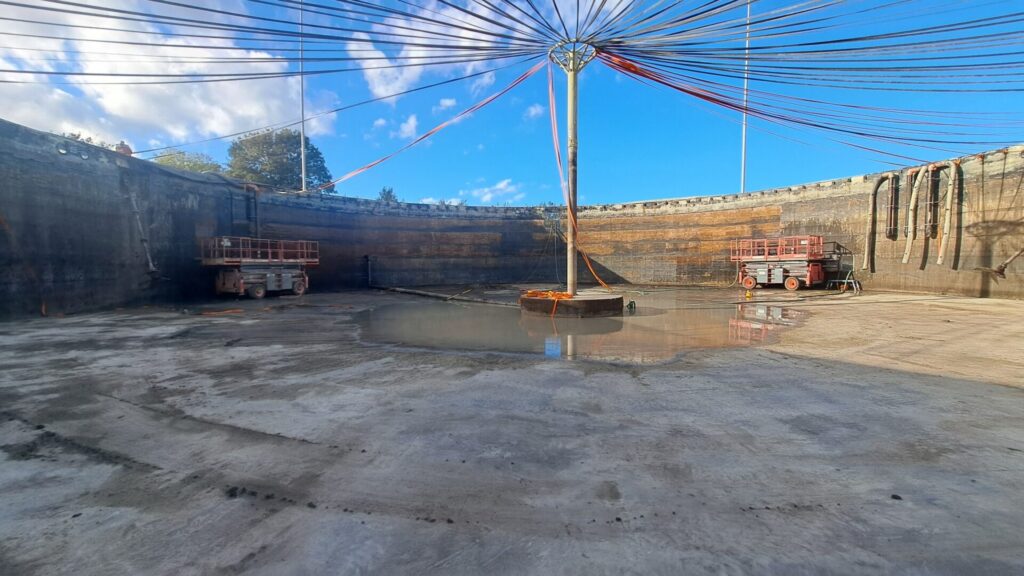
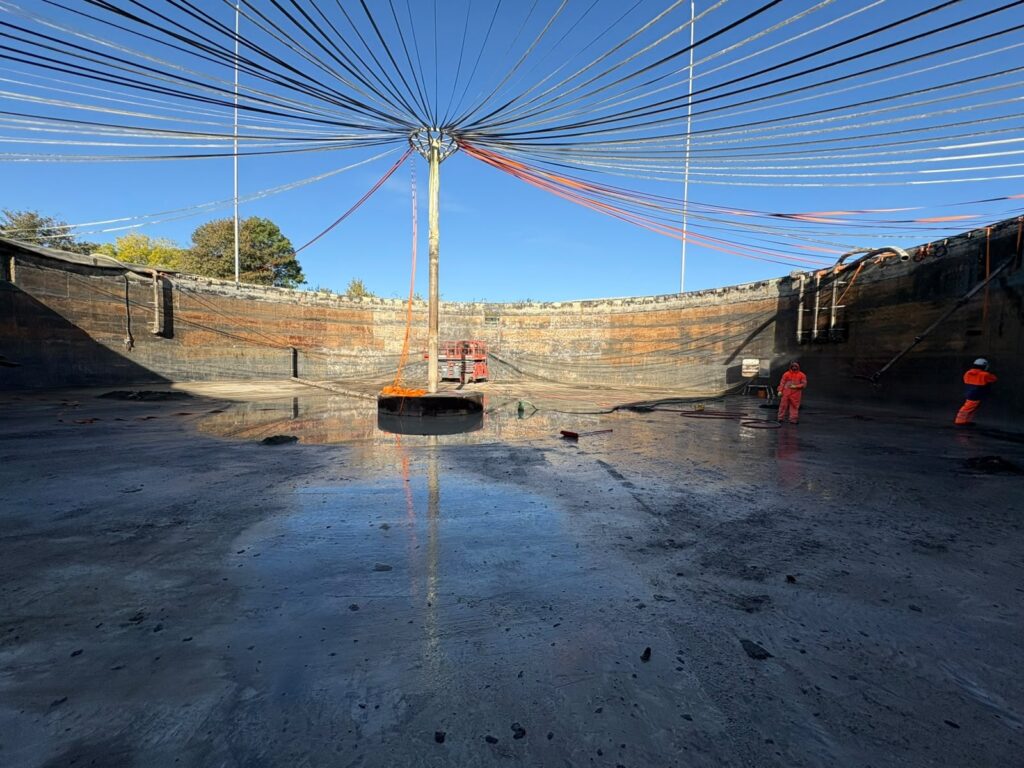
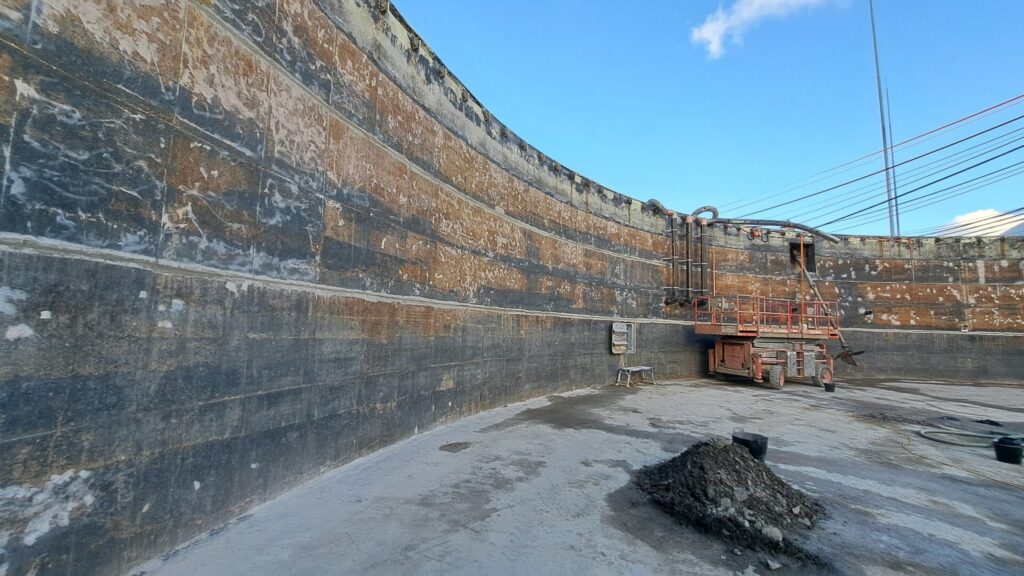
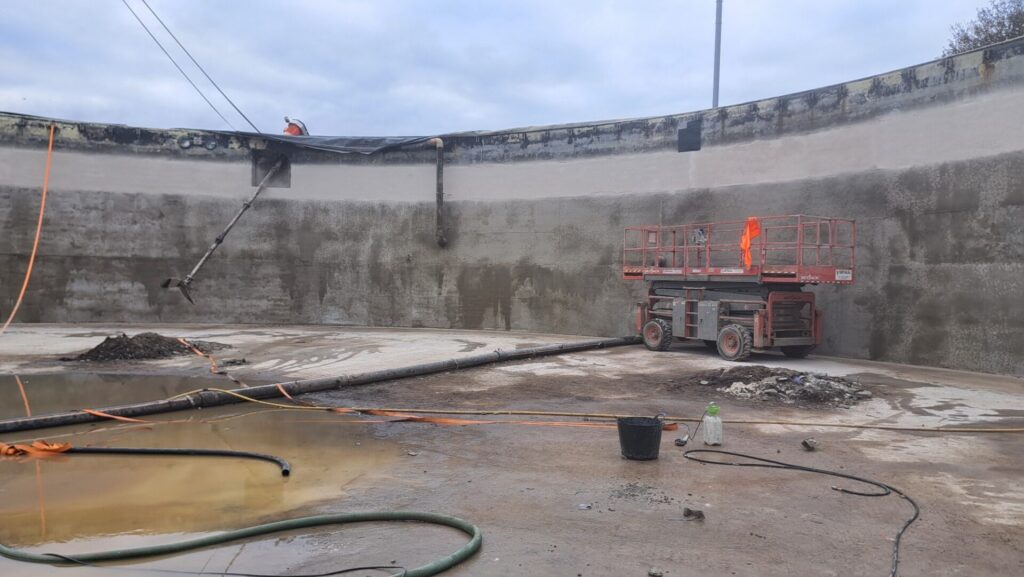
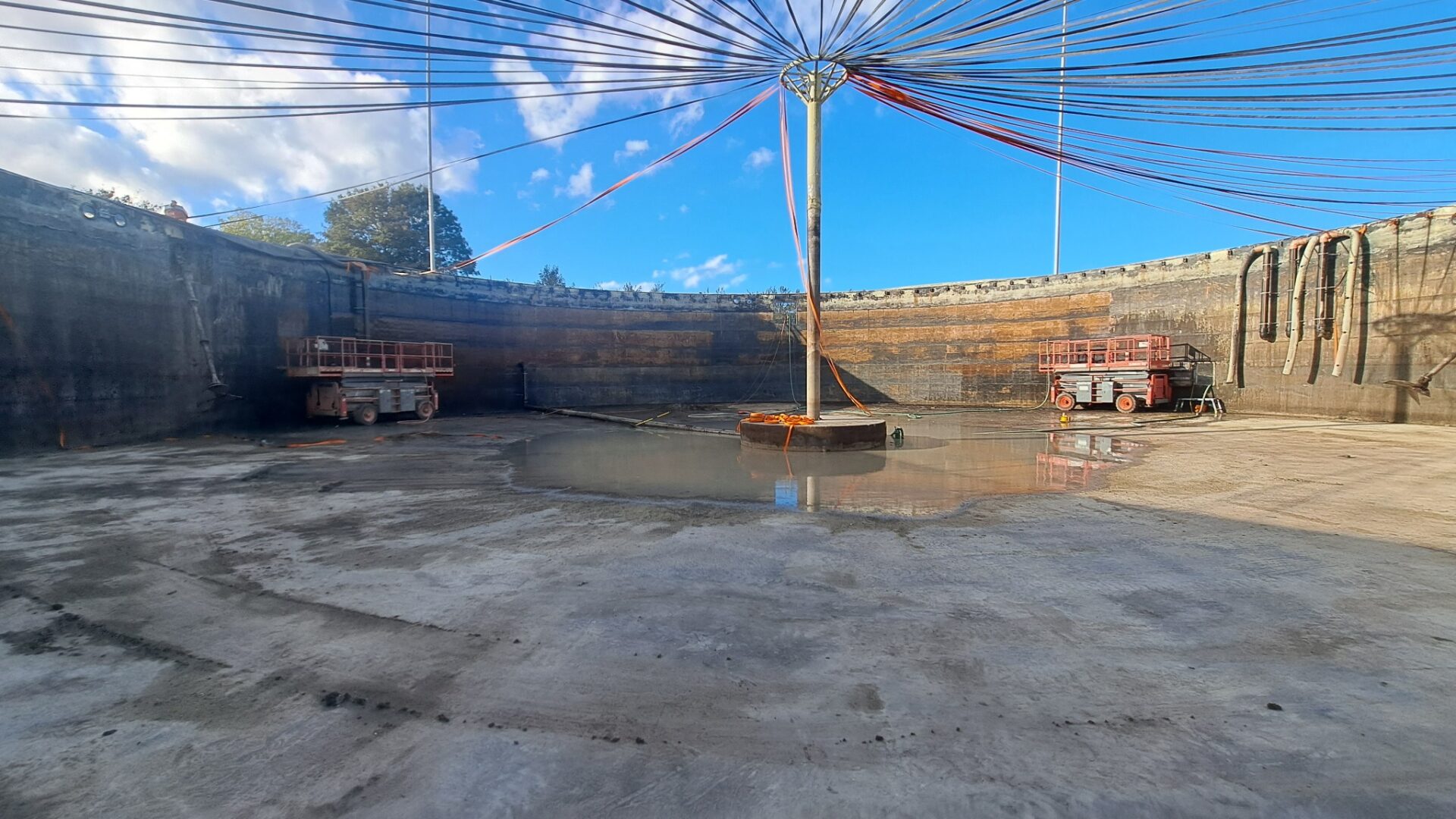
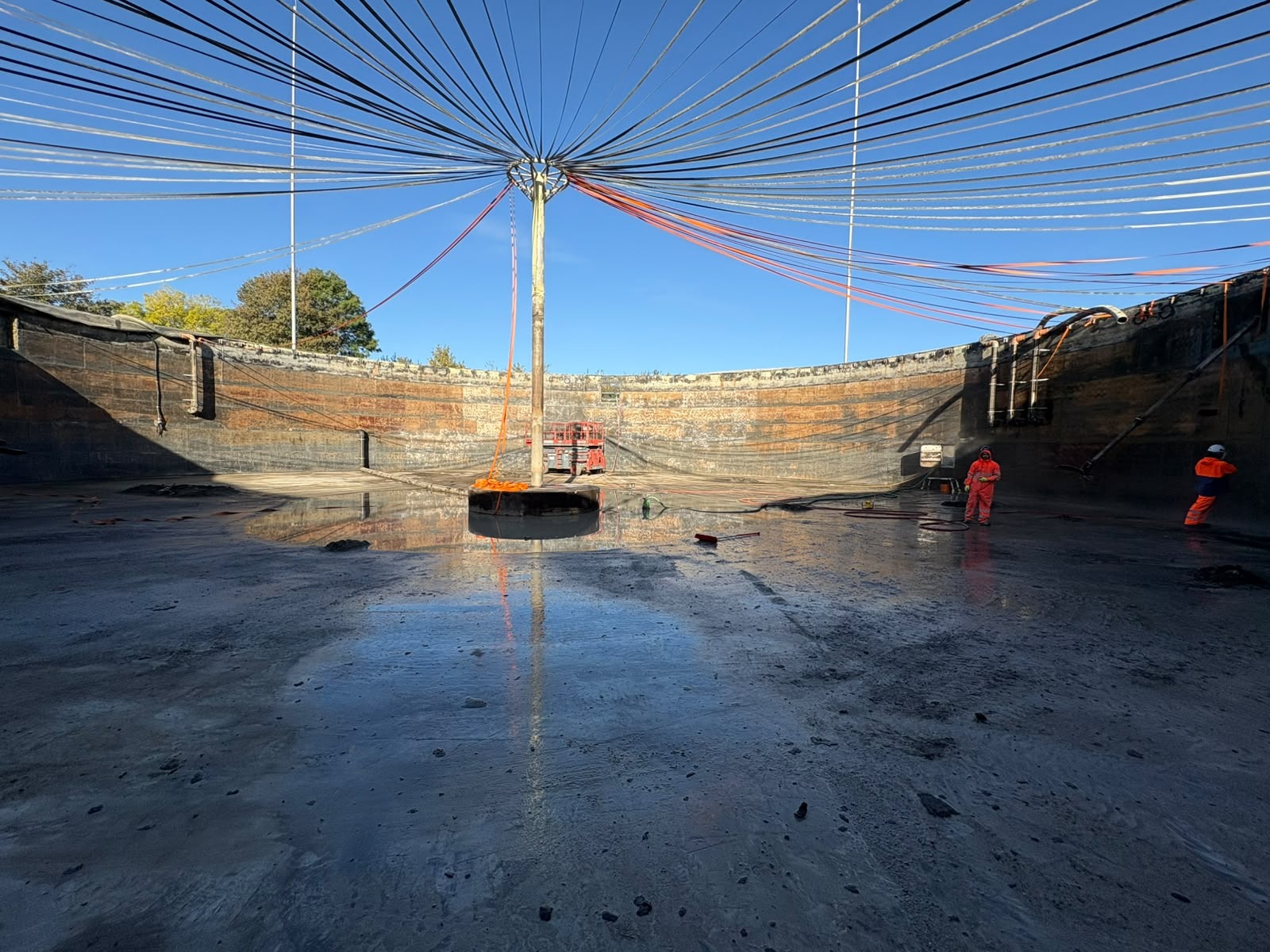
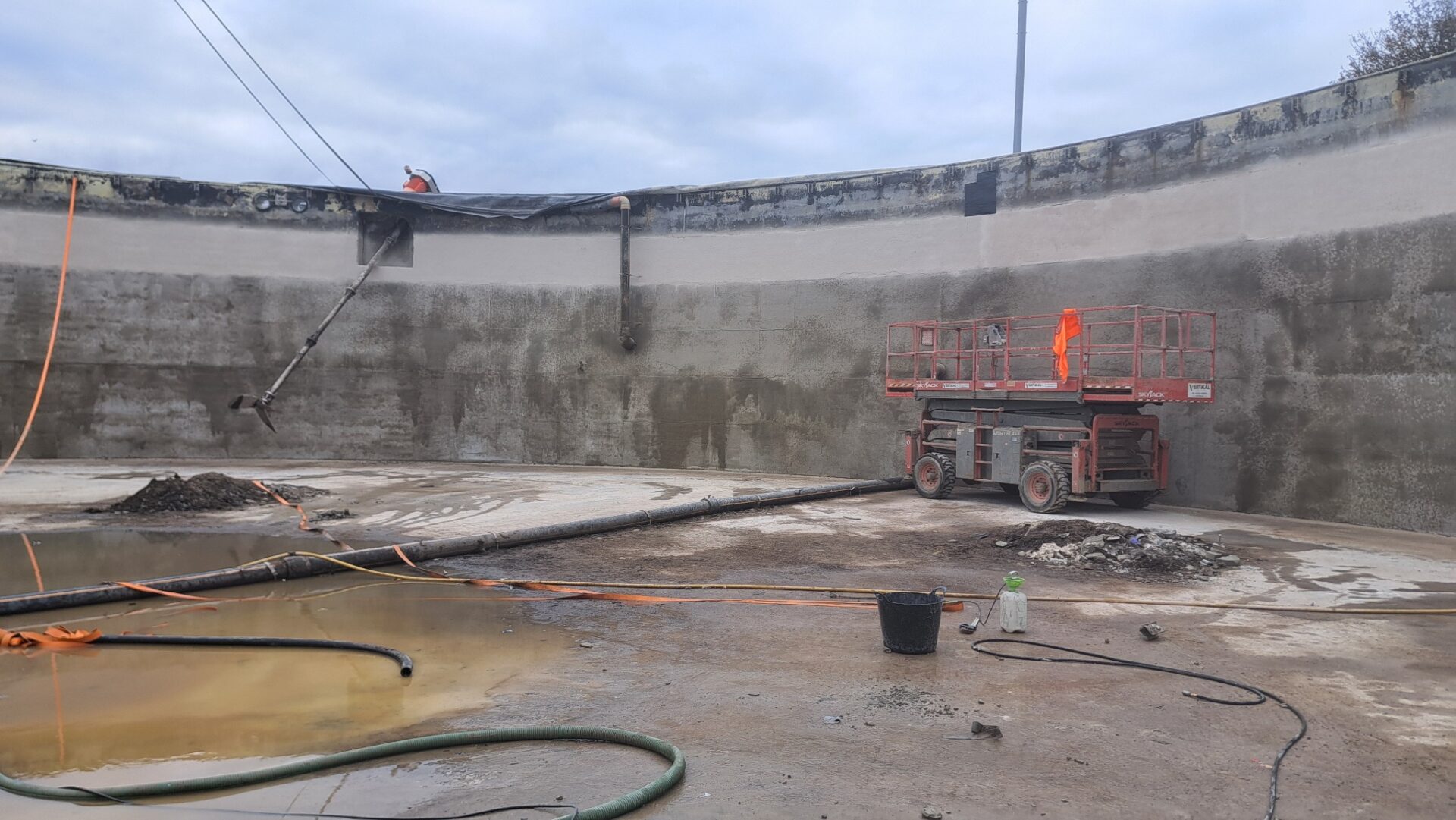
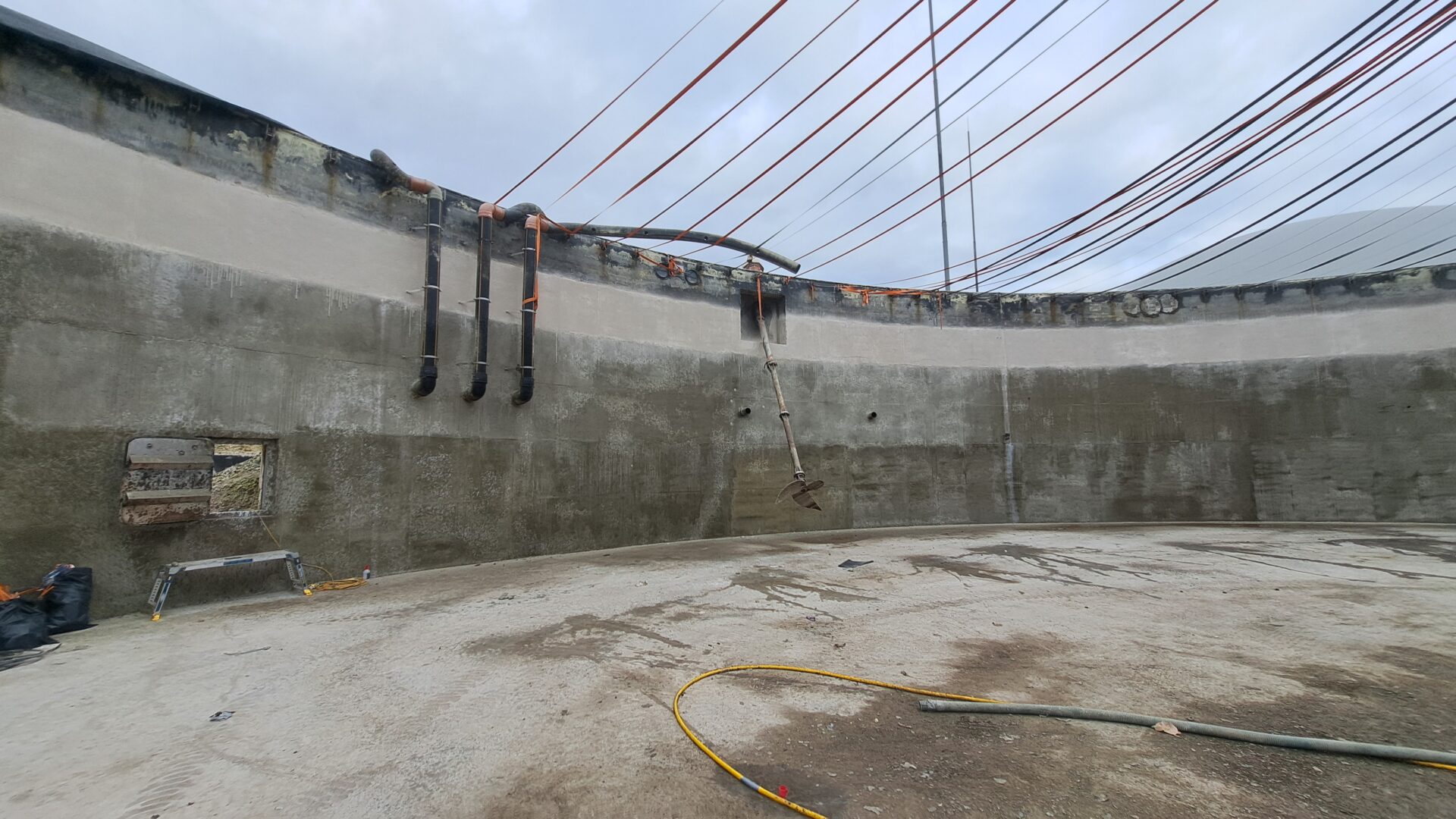
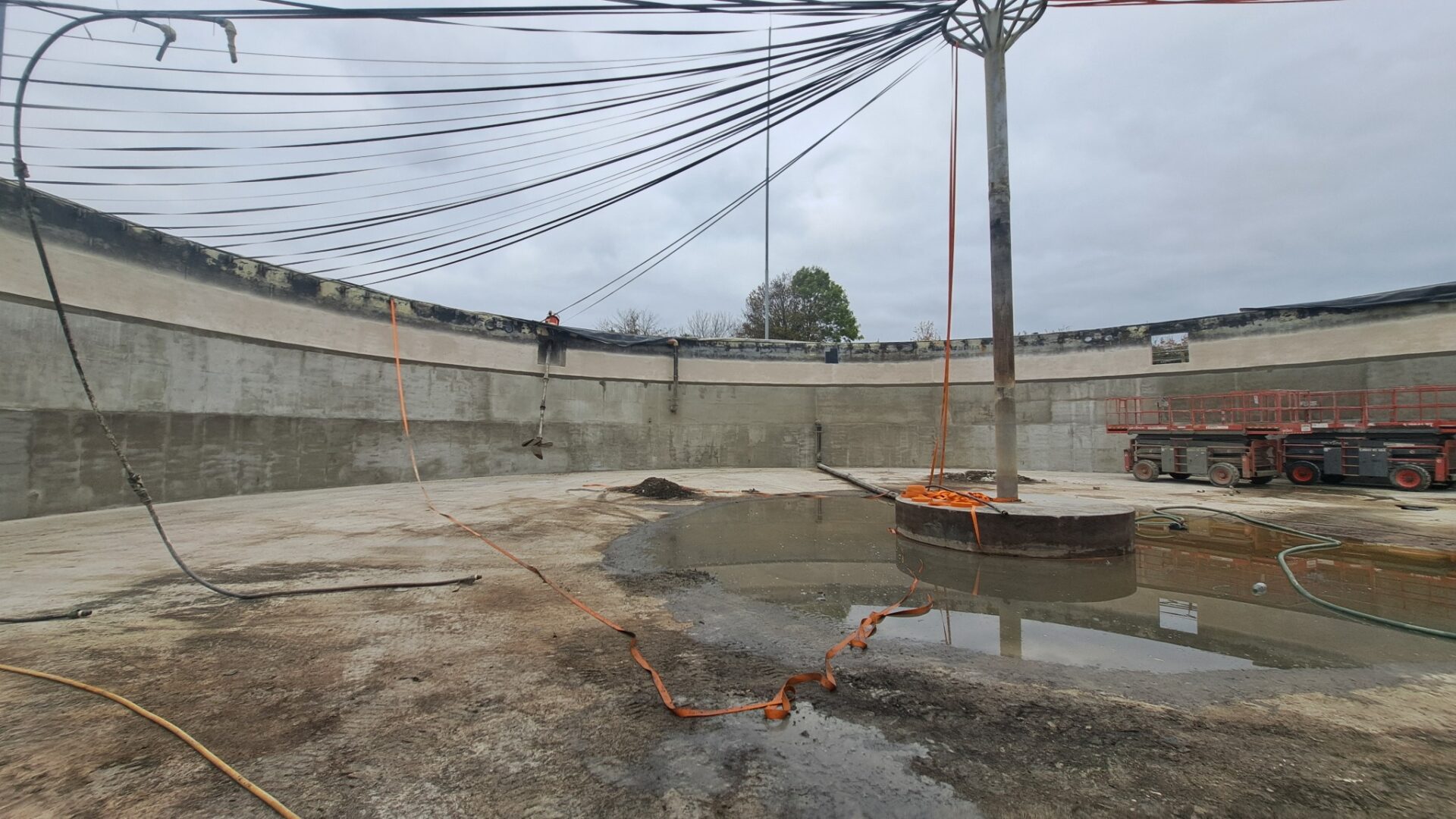
A UK anaerobic digestion operator asked us to look at the secondary digester at one of its AD plants in North Lincolnshire. The digester is a concrete tank approximately 35m in diameter, with a central support column and radial roof-support straps running out to the wall head. For the works the roof membrane had been removed, leaving the tank open to the sky.
Anaerobic Digester Lining – North Lincolnshire
THE PROBLEM
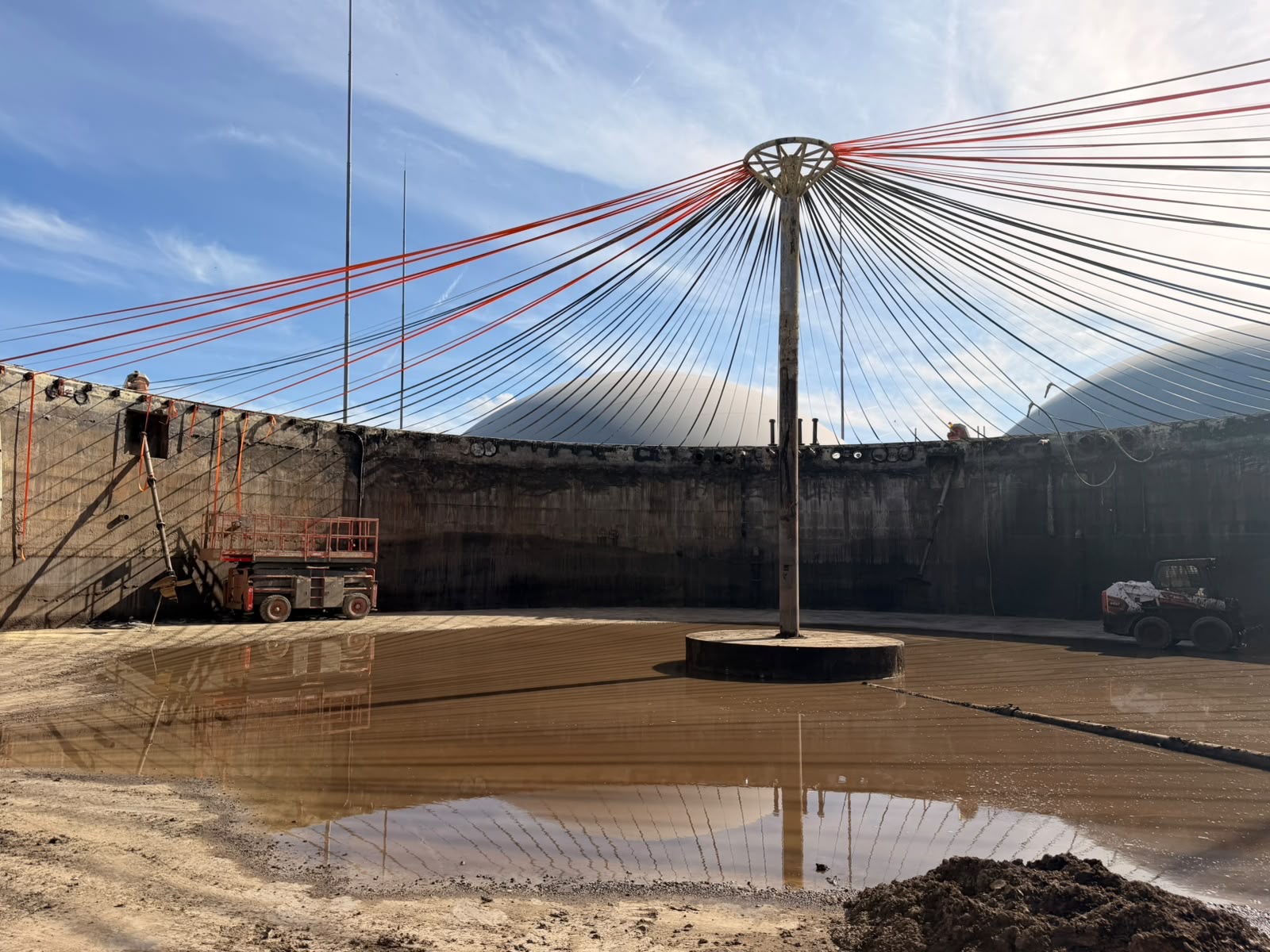
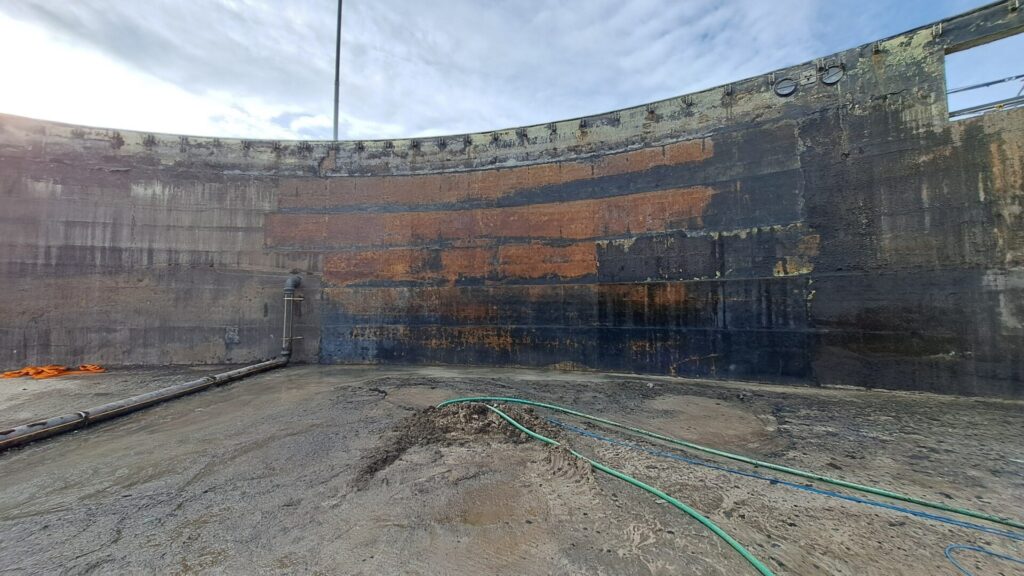
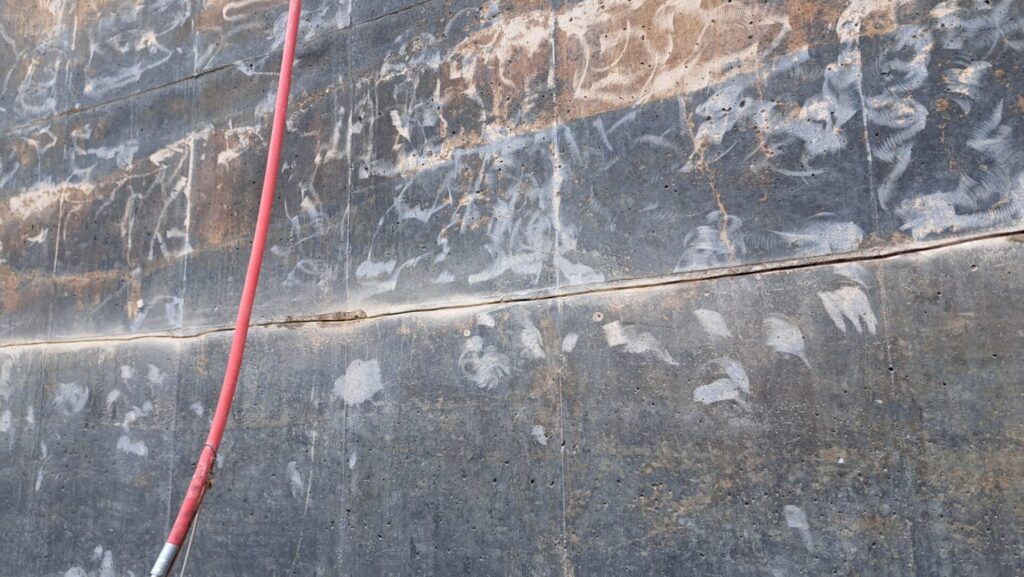
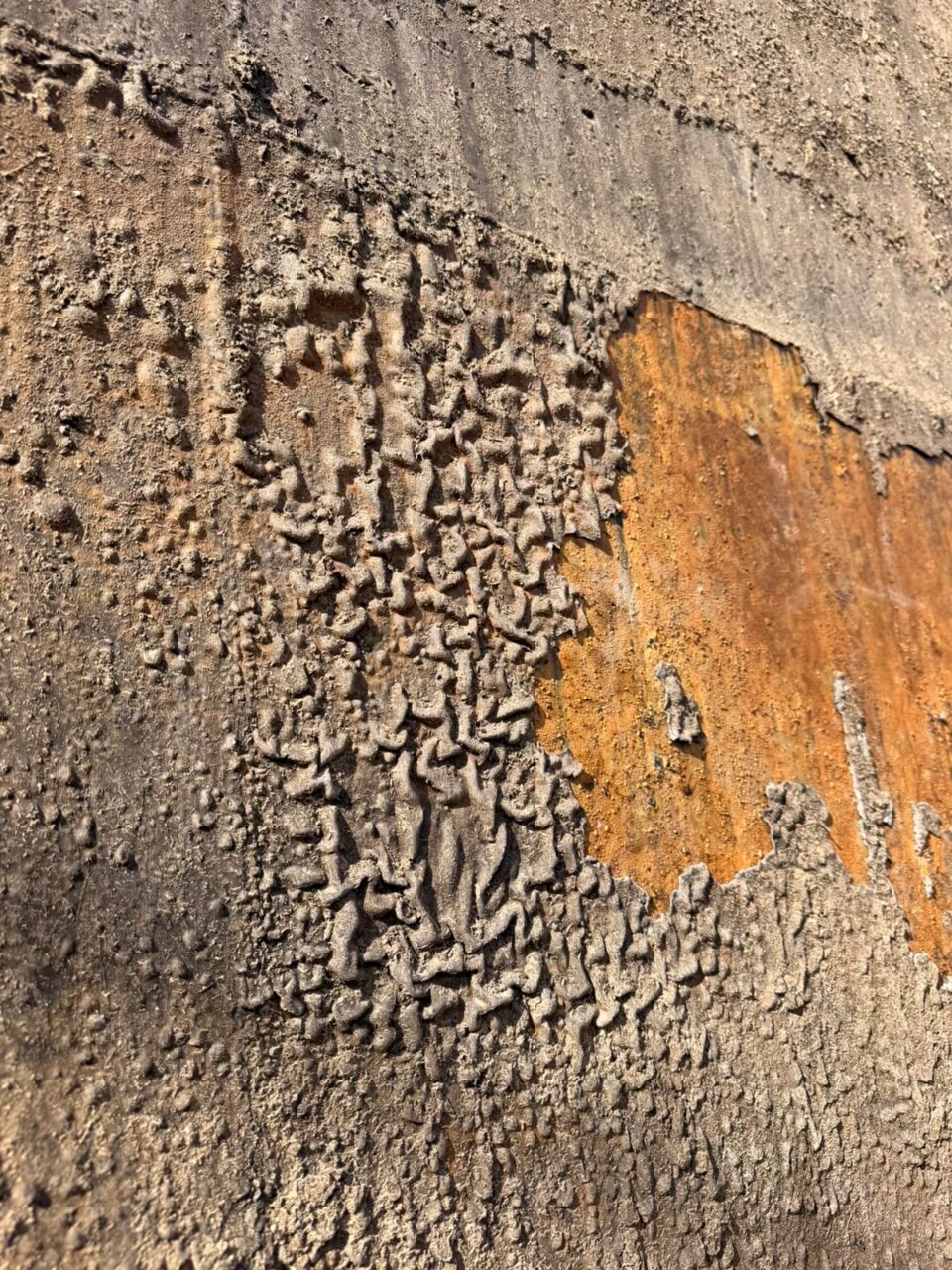
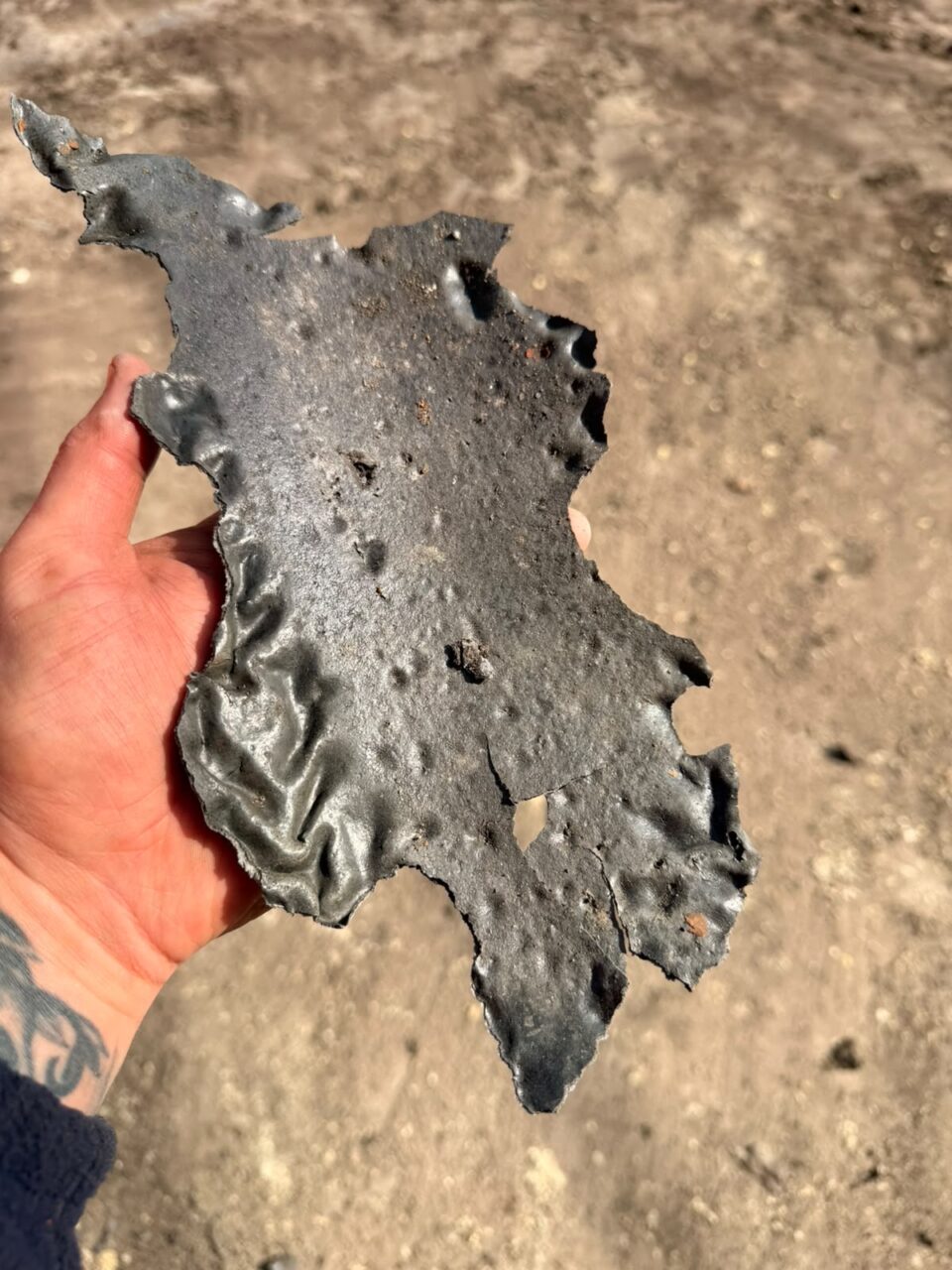
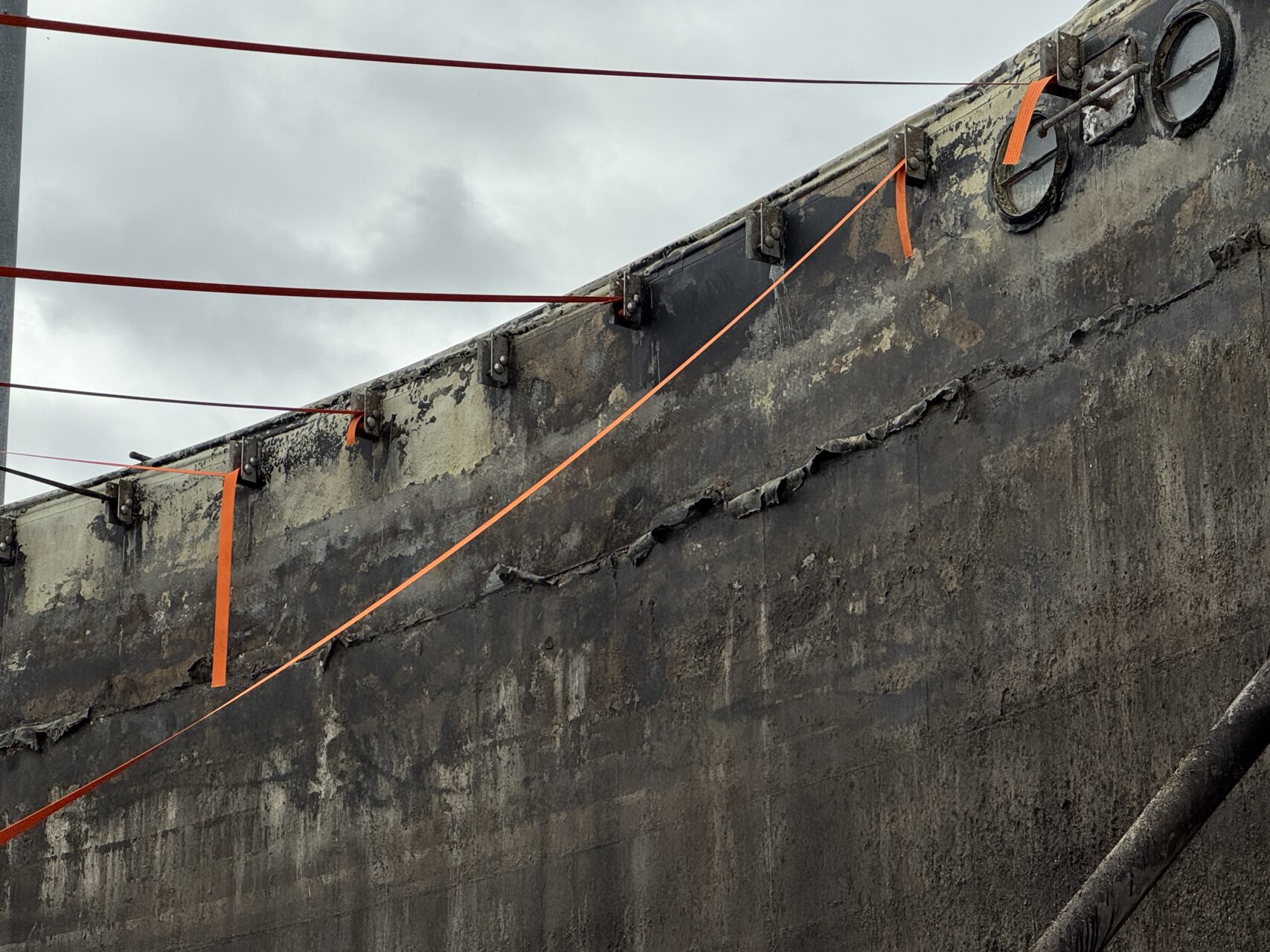
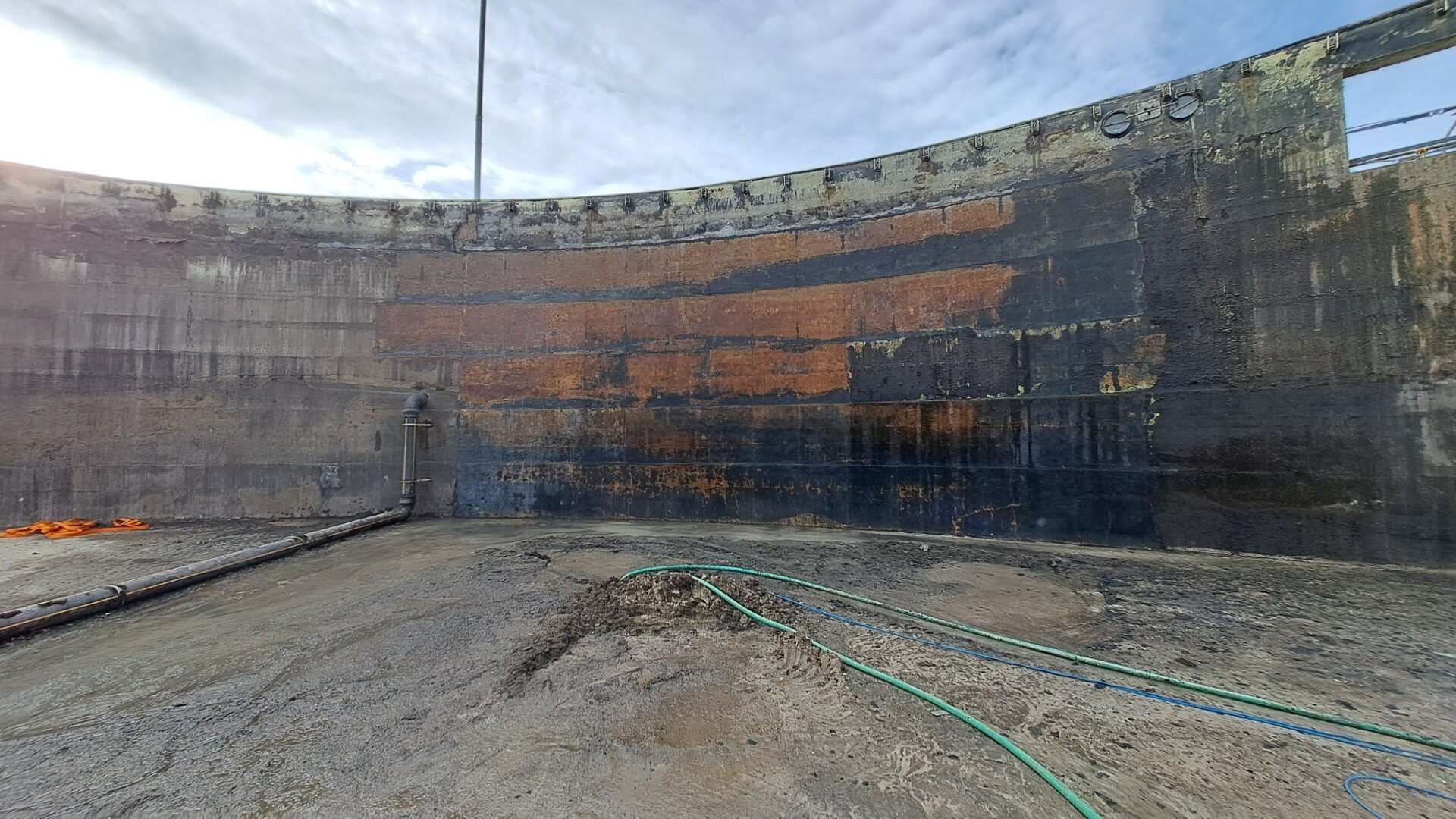
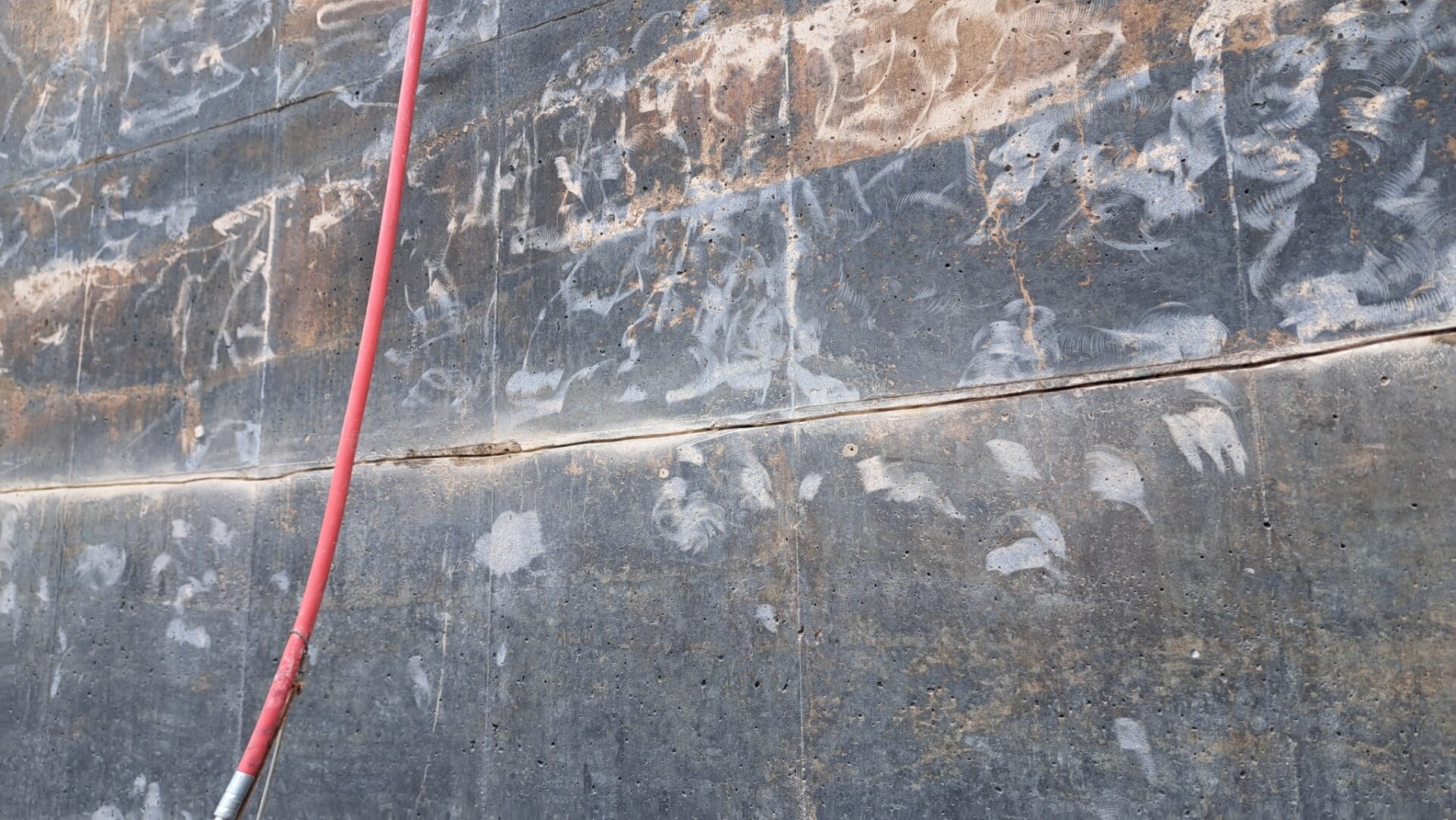
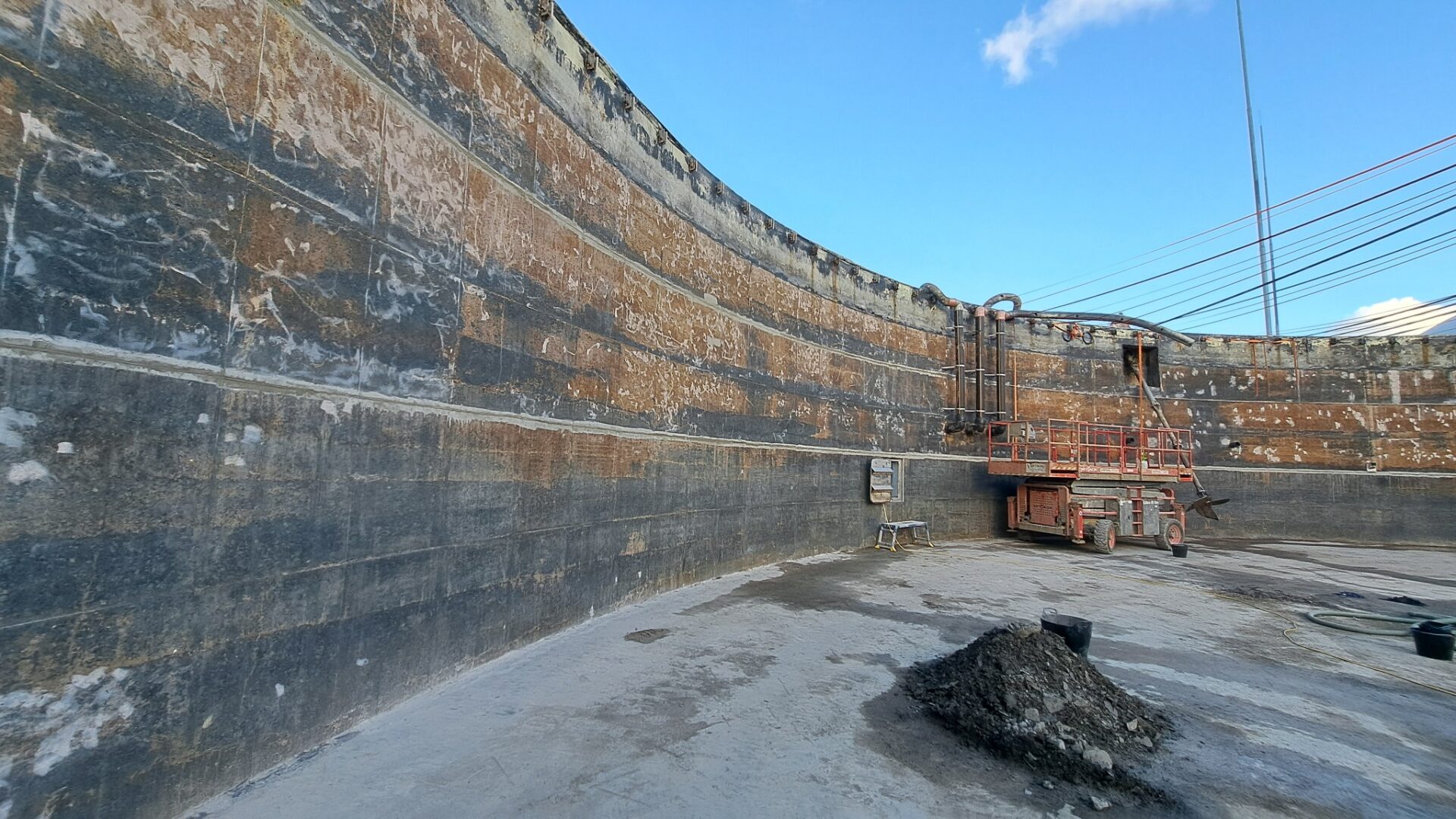
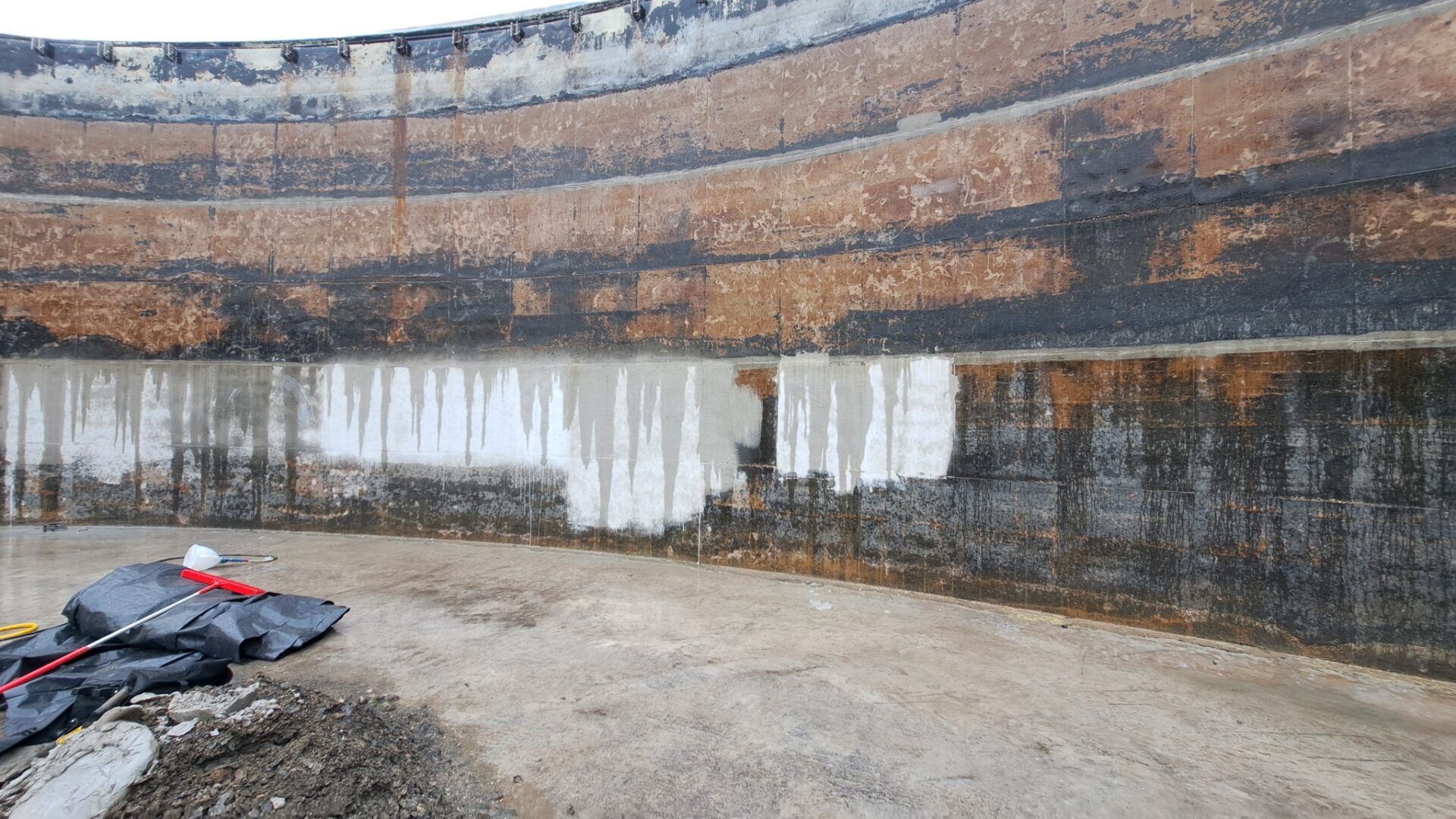
The internal walls had been lined with a thick epoxy coating from about 1m below the wall head down to the floor, and it was failing. When we surveyed the tank we found a hard, brittle coating around 1.5mm thick over a clear primer. Across the middle of the wall, which corresponds to the normal liquid level in service, the coating had shrivelled, blistered and come away from the concrete, in places right through the primer. At the top, the edge of the coating had lifted and rolled back along the wall.
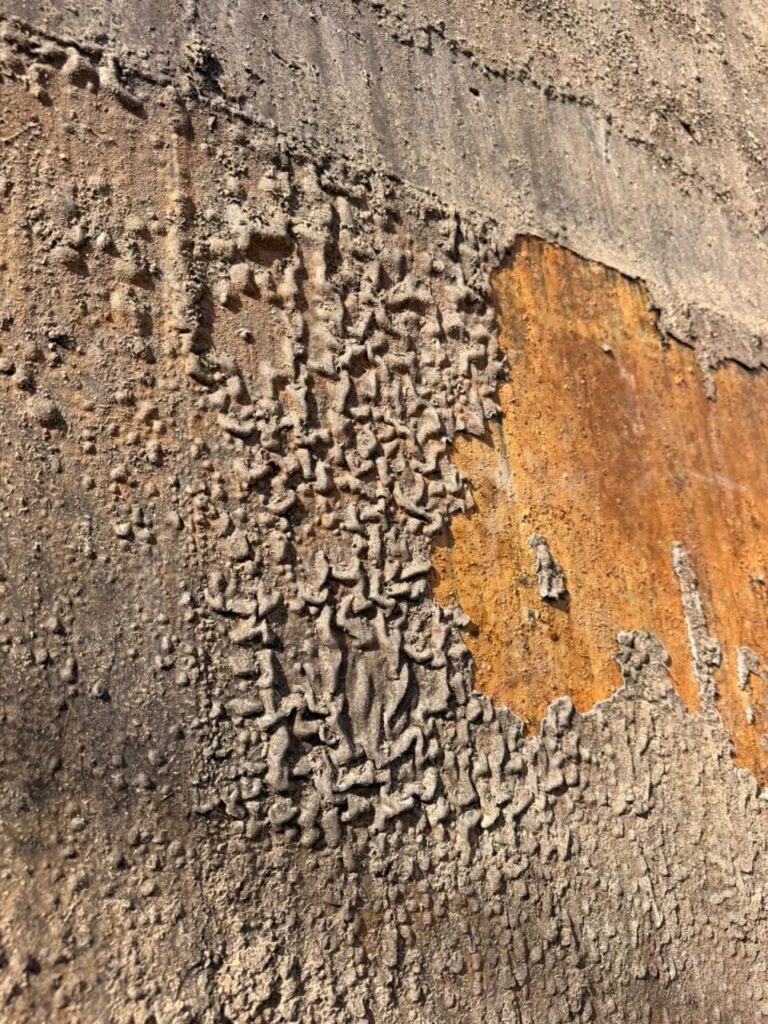
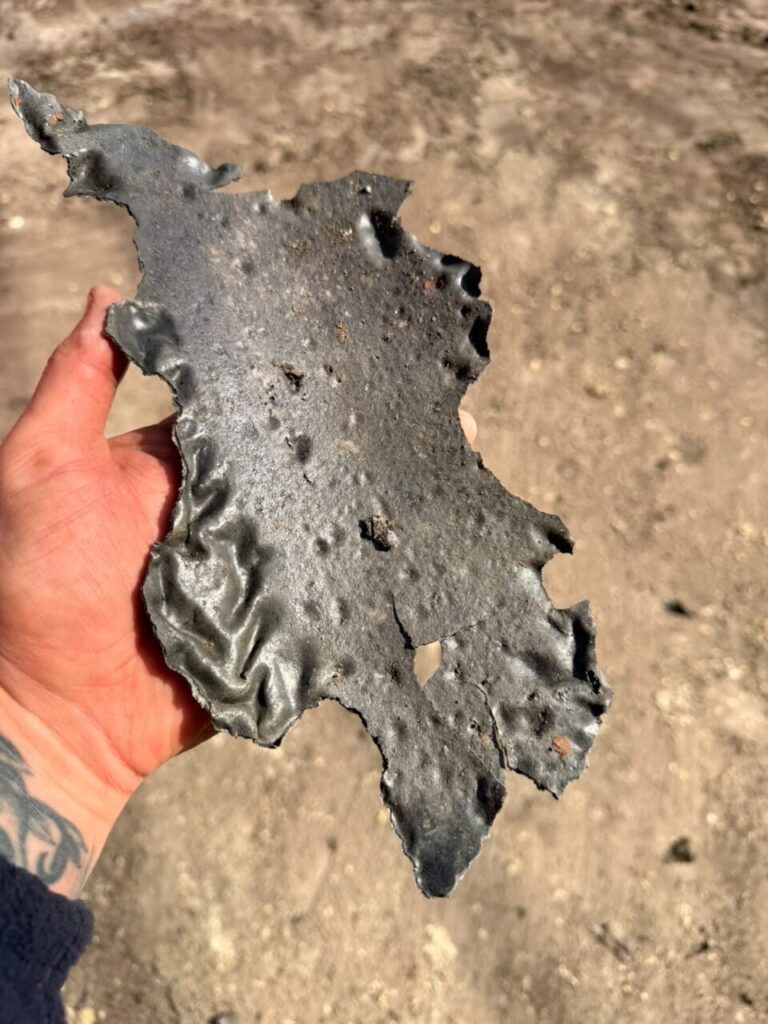
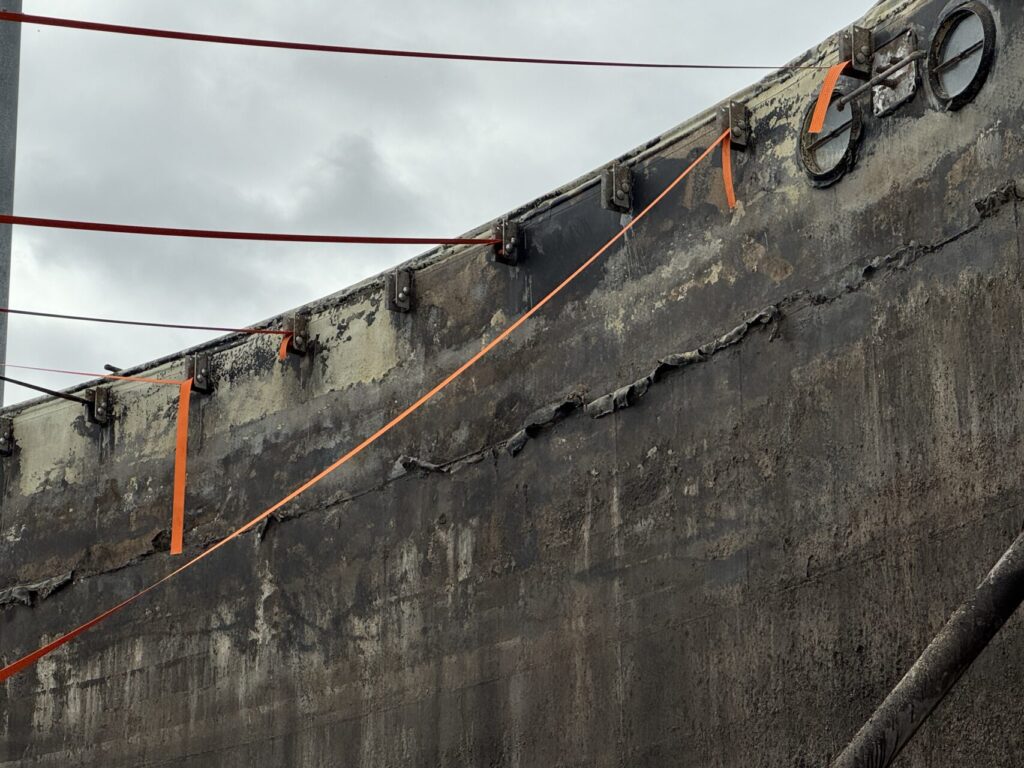
The wrinkled appearance is typical of a coating applied too thickly: solvent becomes trapped in the film, which never fully cures, and the problem is made worse if the tank goes back into service too early. Once the coating starts to debond, liquid gets behind it and the failure spreads.
Timing was also a challenge. The client needed the work done quickly, as the plant loses revenue for every day the digester is out of service, and the work would run into the autumn in an open-topped tank. Most coating systems must be applied to a surface at least 3°C above the dew point and have relative humidity limits, which would have made progress very weather dependent.
THE SOLUTION
Choosing the right system
Instead of another solvent-based coating, we proposed a cementitious system from Penetron. Penetron crystalline waterproofing would be applied to the full internal wall area of approximately 550m², with Penetron ARC acid-resistant coating to the top 1m band of approximately 115m², the gas zone. Gases released by the digestate collect in this zone and form acids that attack concrete. Neither product has a relative humidity or dew point restriction. Both need only a minimum temperature of 5°C and a damp substrate, which made them ideal for autumn working in an open tank.
Penetron works by penetrating the concrete, where its active chemicals react with moisture and the by-products of cement hydration to grow insoluble crystals within the pores and hairline cracks. This seals the concrete from within instead of relying on a surface film that can debond. Penetron ARC reacts with the acids formed in the gas zone to create a dense, acid-resistant shell.
Removing the failed lining
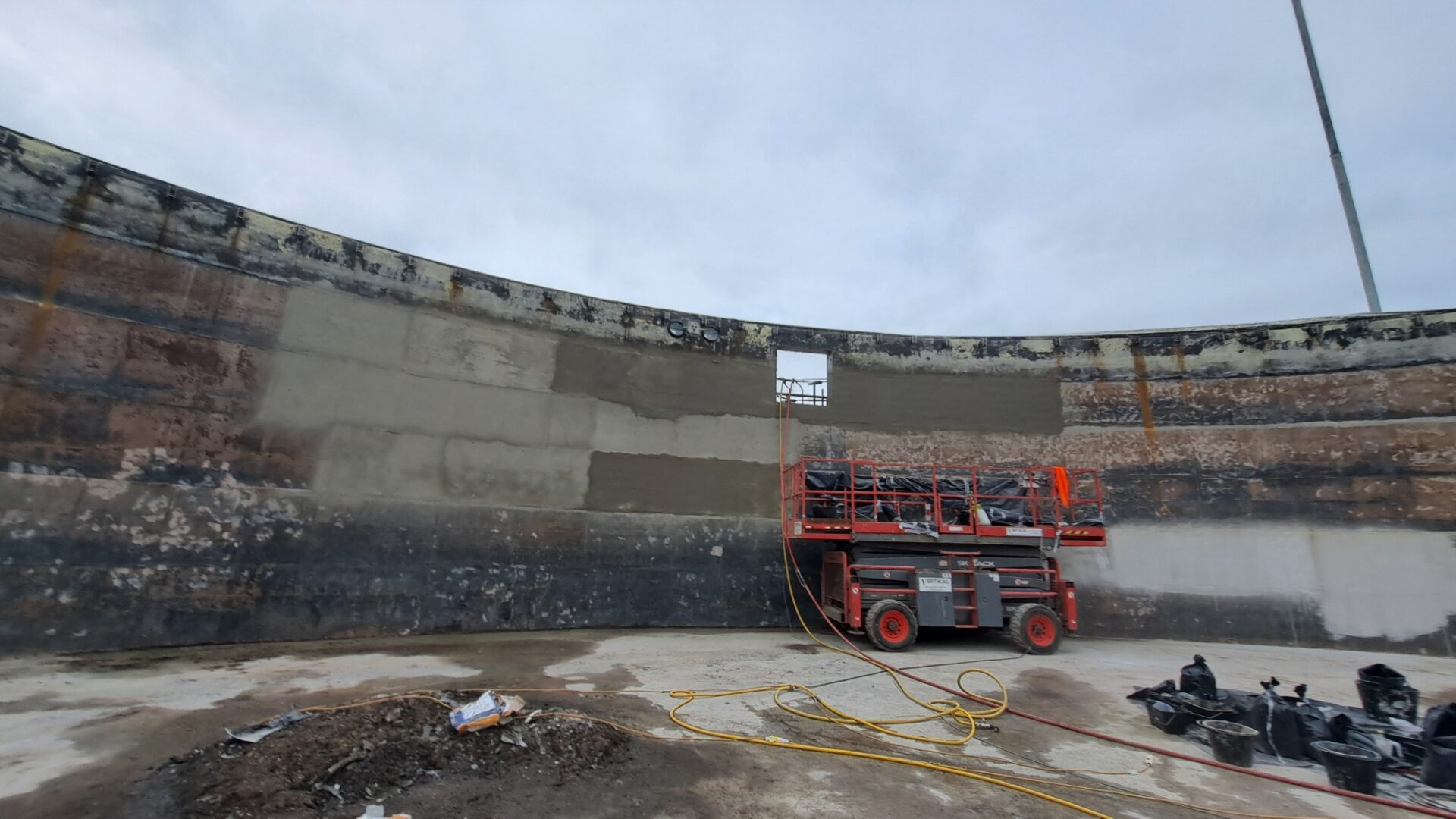
We surveyed the tank with the client on 5 October and were on site setting up two days later. Working from two scissor lifts, our team removed the failed epoxy by ultra-high-pressure (UHP) water jetting, working around the circumference of the tank. Jetting removes the coating without dust or abrasive, and the pressure was set to strip the lining without damaging sound concrete. Residual patches of primer were then removed by diamond grinding, as no paint or primer can be left on the surface if the Penetron is to penetrate the concrete.
Reviewing the substrate
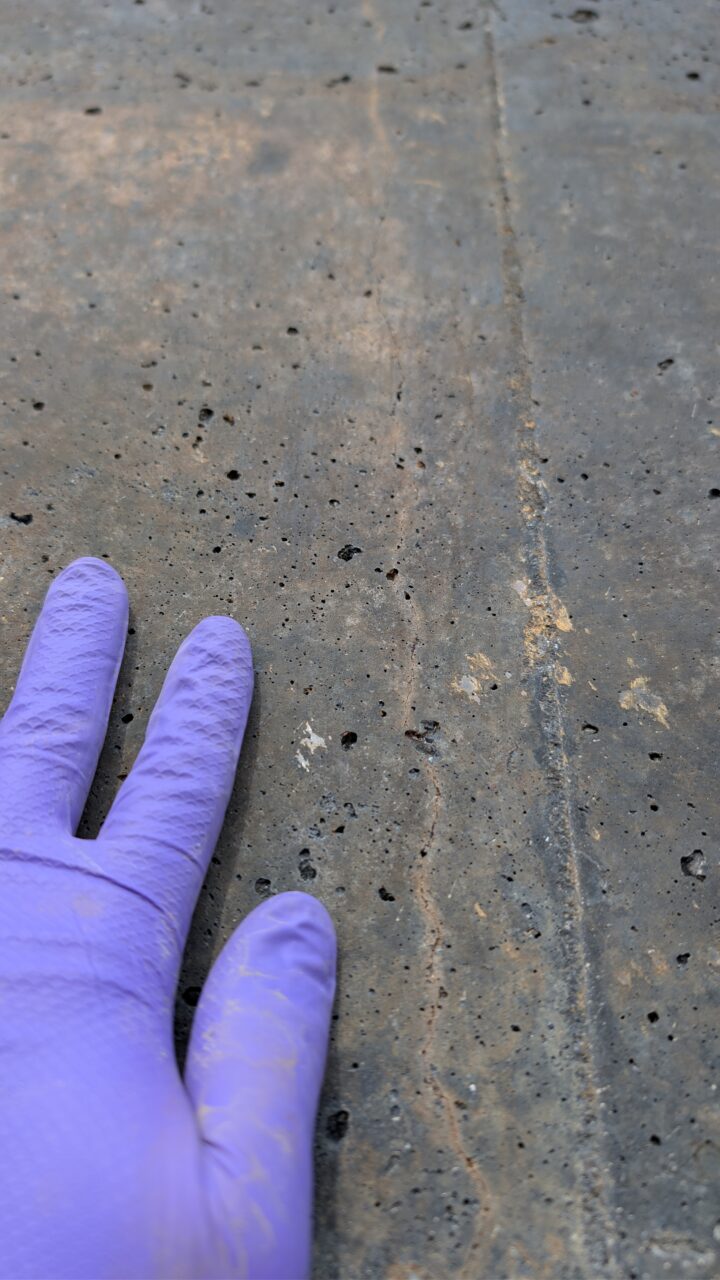
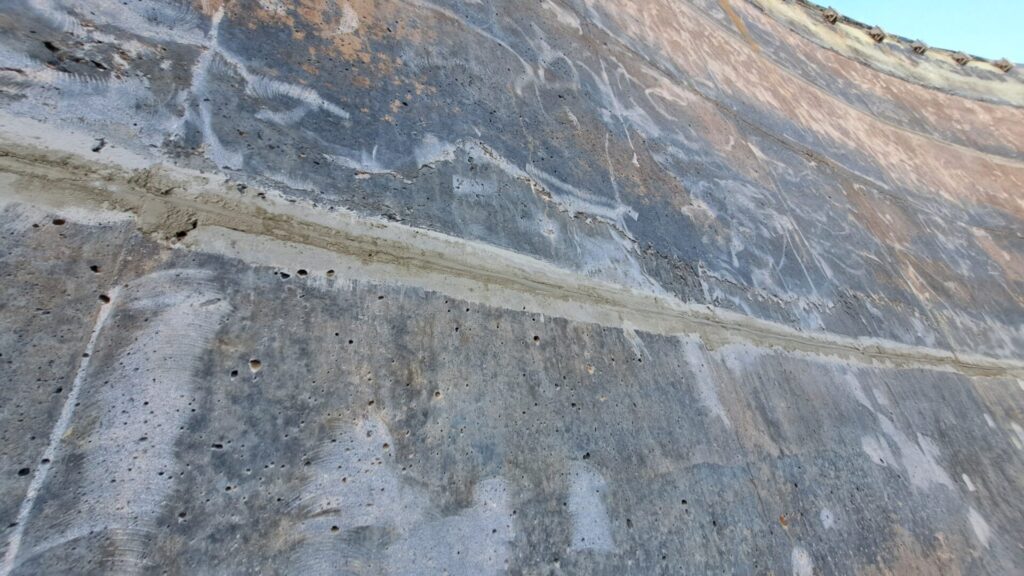
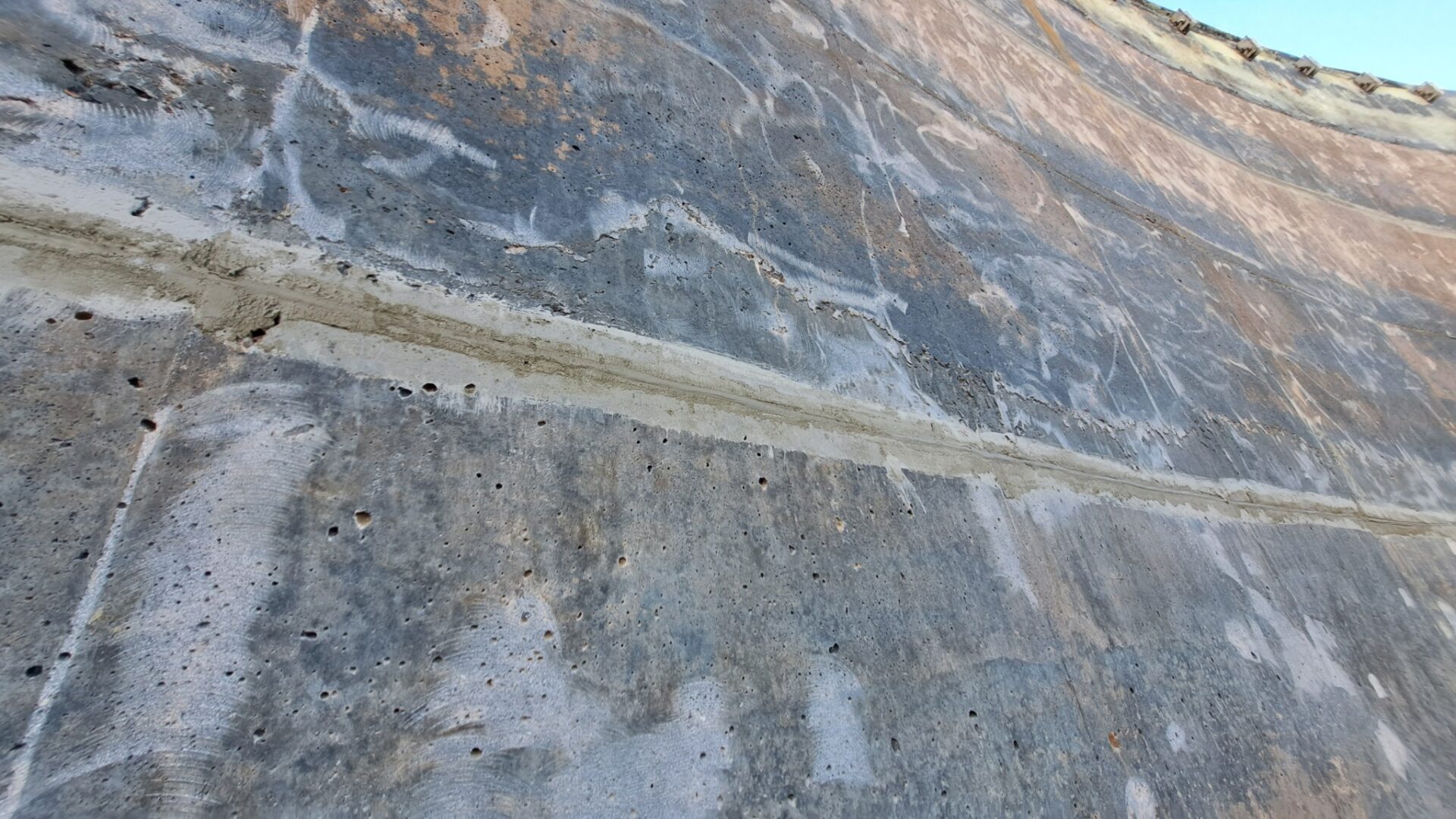
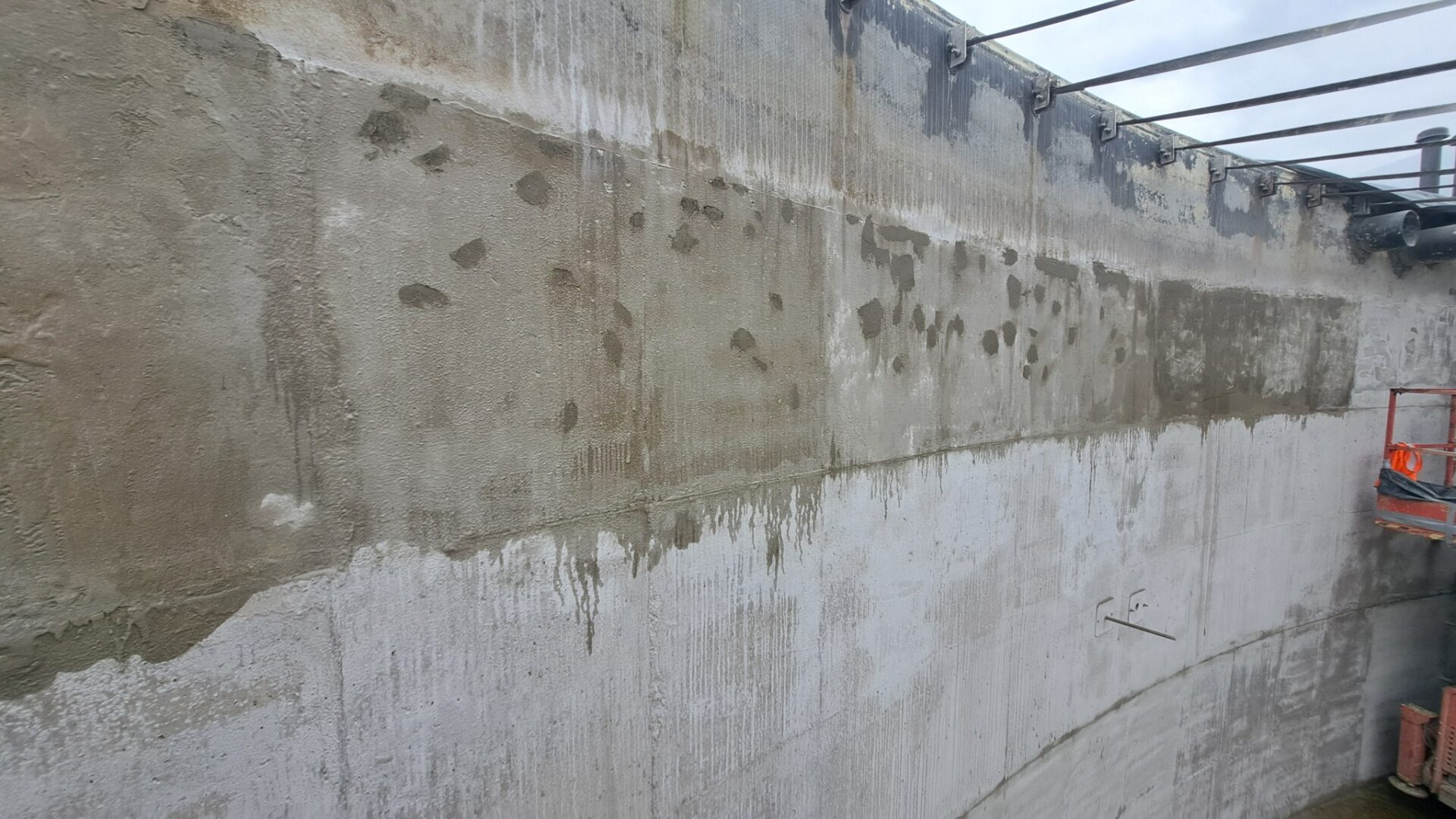
Once most of the coating was removed, we carried out a detailed substrate survey and agreed the treatment with Penetron UK. The jetting exposed fine vertical cracks, horizontal construction joints between the concrete pours, and widespread blowholes that had been hidden under the original lining. Most cracks were hairline, below the 0.5mm width that Penetron treats without further work. One construction joint opened to around 25 – 30mm wide over roughly a third of the tank. Dark staining had soaked into the concrete through the blowholes during service. A heavily jetted trial area showed that the staining went deep into sound concrete, so it did not need to be removed.
Concrete repairs
As agreed with the client, the construction joints were cut out to a minimum depth of 10mm and packed flush with Penecrete Mortar. This mortar contains Penetron’s crystalline additive, so the joints are sealed from within like the rest of the wall. The same treatment was specified for any crack wider than 0.5mm. The old coating at the floor and wall junction was also broken out and the bottom joint cut out, so that the treatment could be carried right down the wall.
Penetron crystalline waterproofing
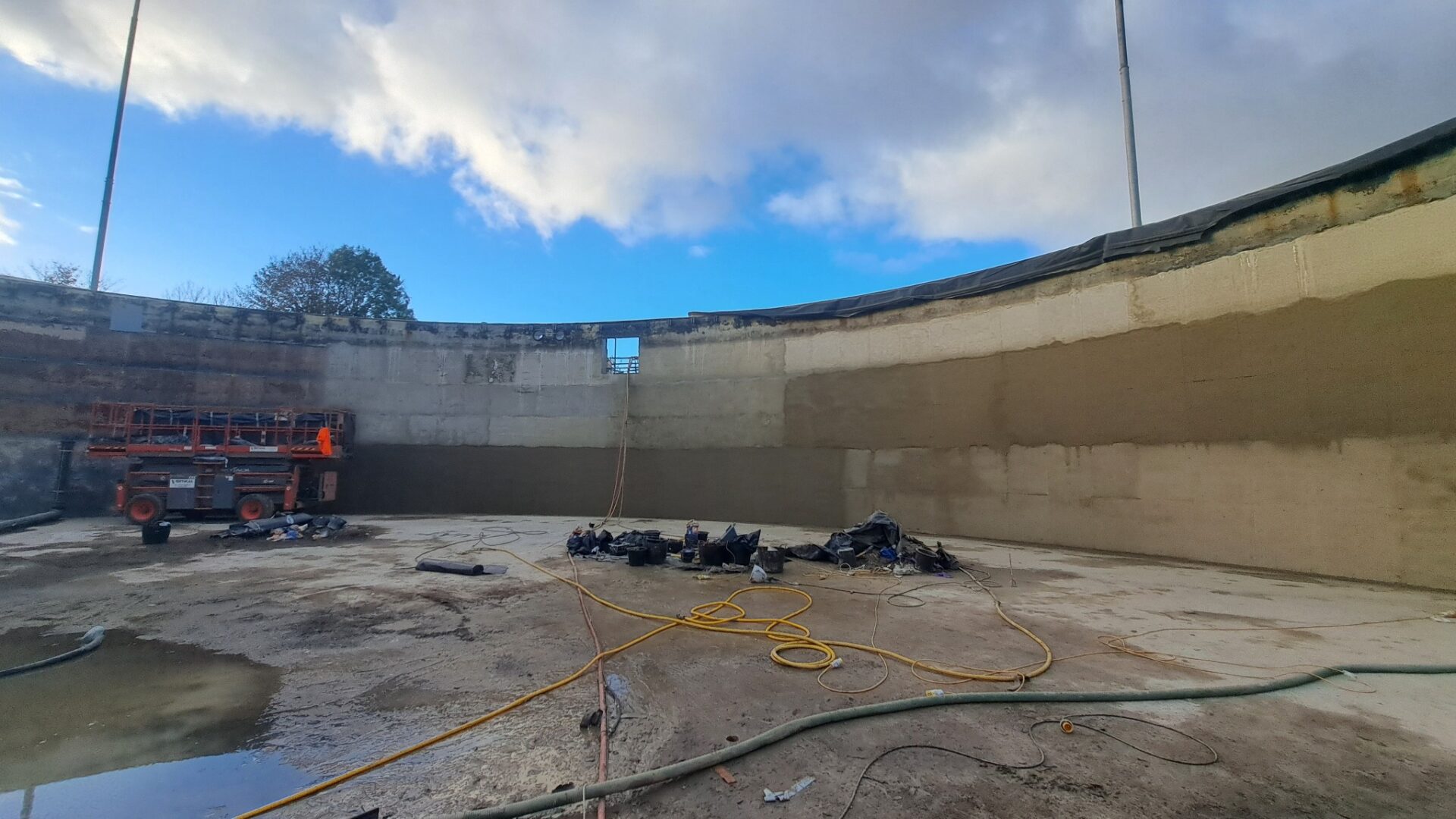
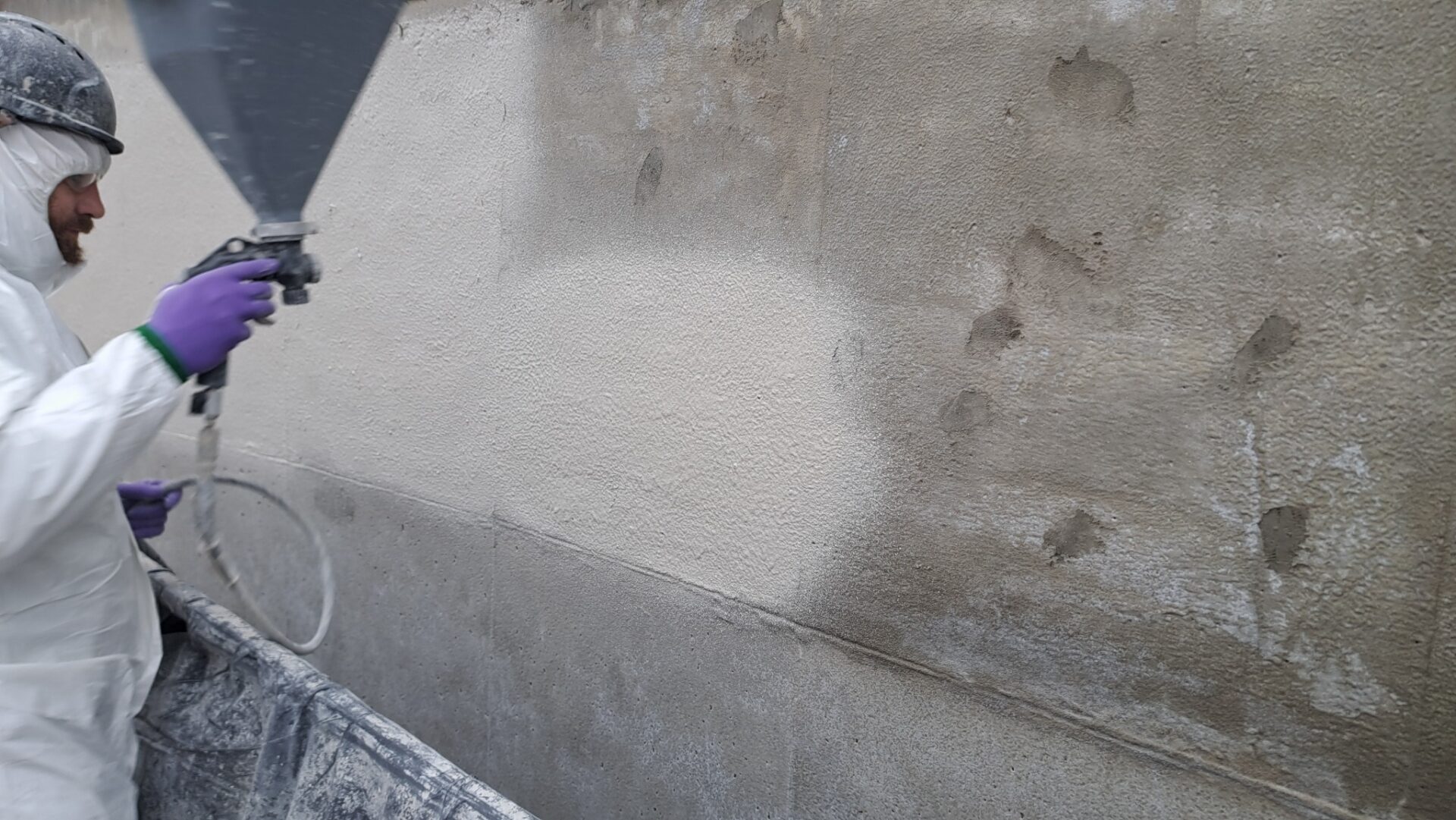
Before application, the walls were pre-wetted to a saturated surface dry condition, damp but without surface water, so that the crystalline chemicals could be drawn into the concrete. Penetron was then spray applied to the full internal wall area. To keep the programme short, a second team started applying it behind the preparation once enough of the circumference was ready.
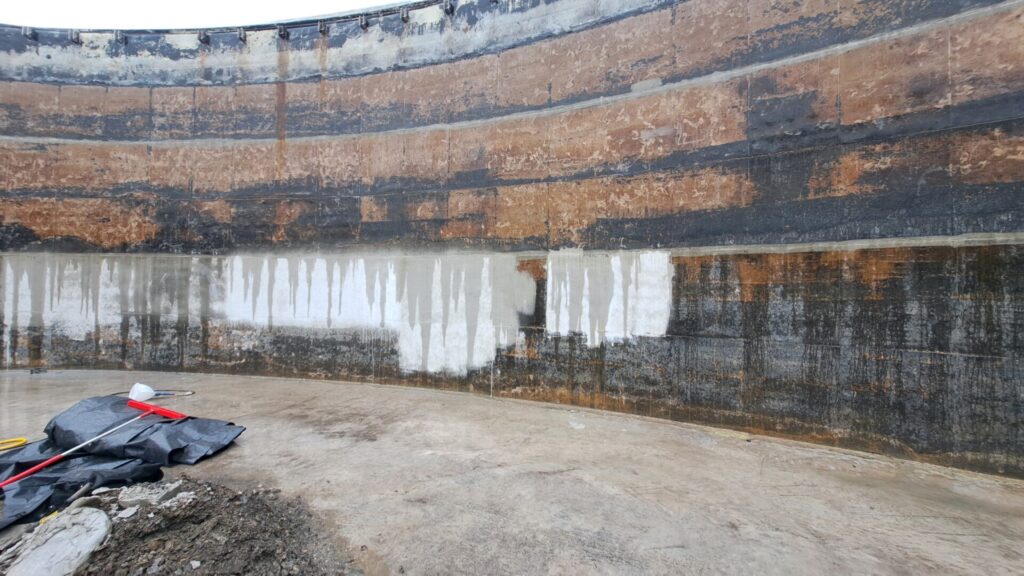
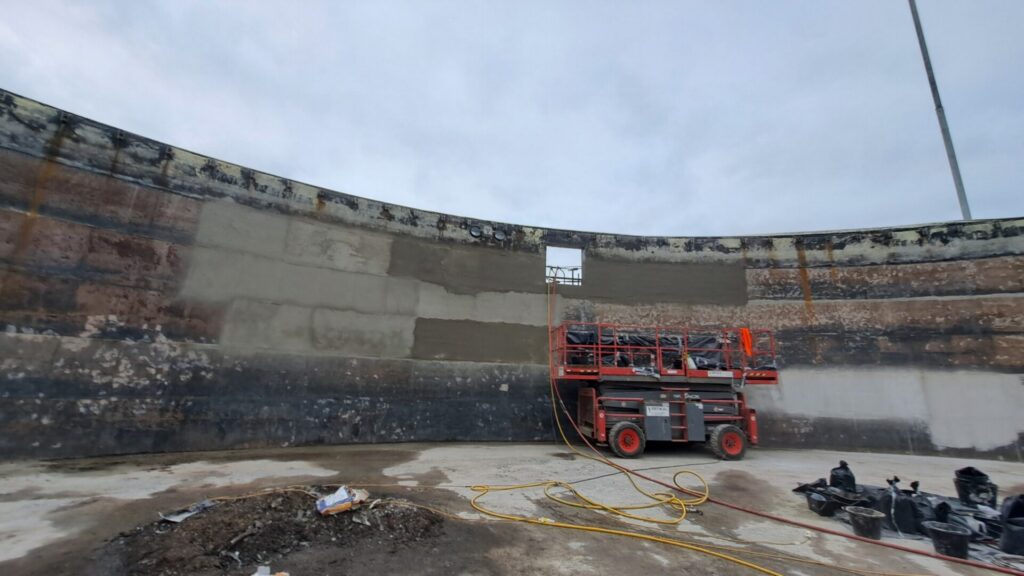
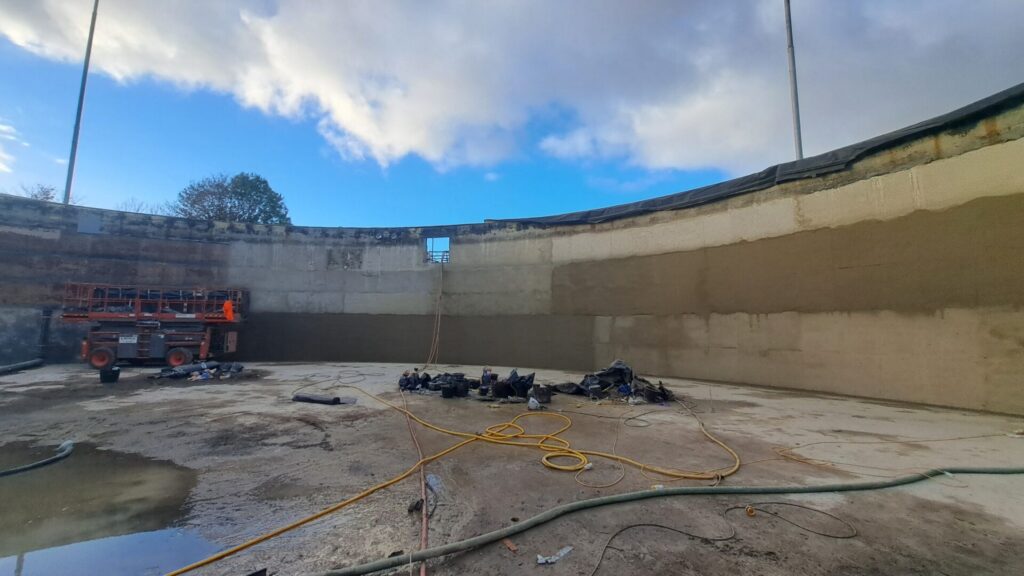
Climatic conditions were recorded throughout the application with a PosiTector DPM. Air temperatures ranged from 13.3°C to 19.0°C and surface temperatures from 11.0°C to 18.1°C, comfortably above the 5°C minimum. Relative humidity reached as high as 88%, which would have stopped work with a conventional epoxy but did not affect this system.
Penetron ARC to the gas zone
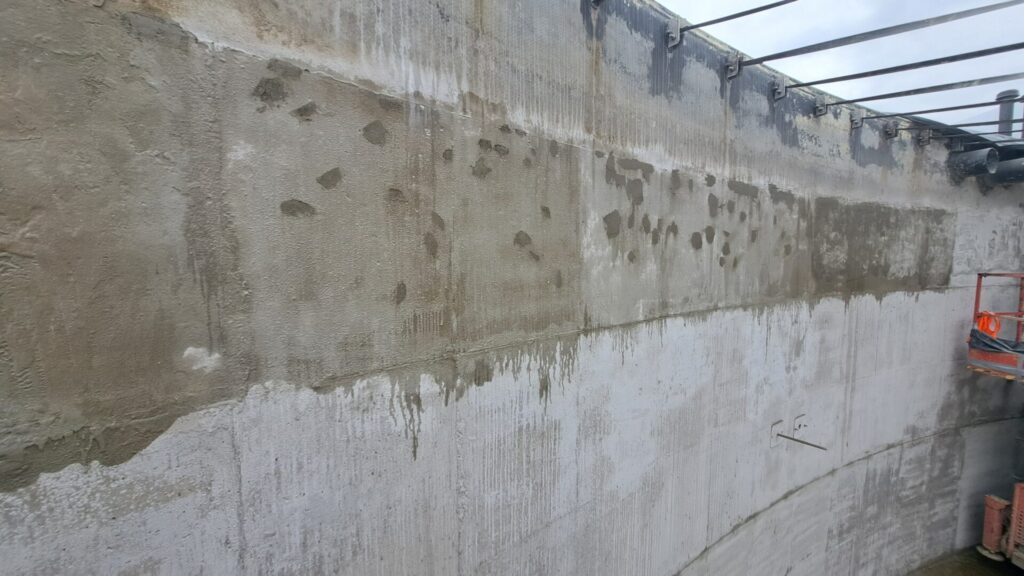
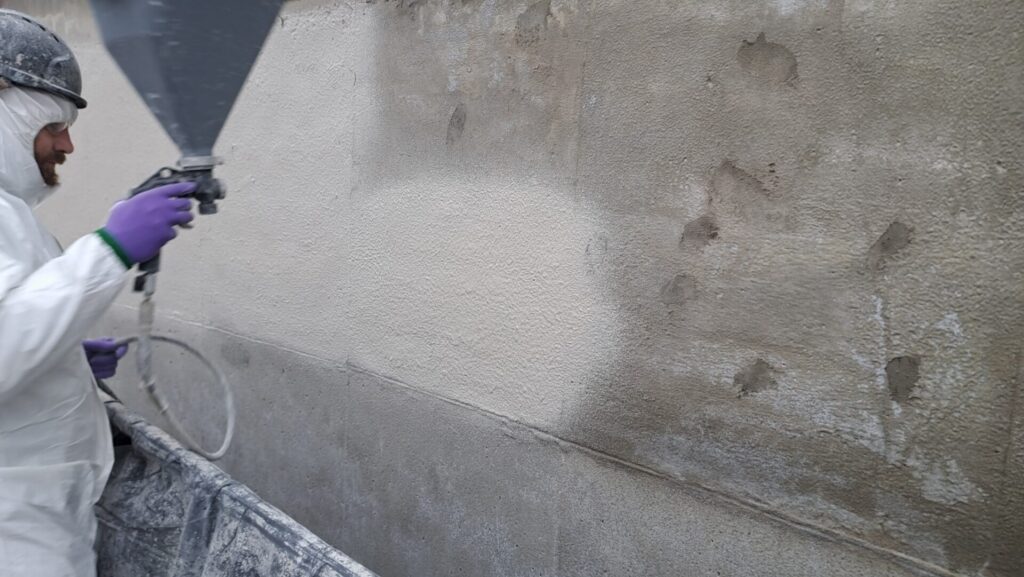
Penetron ARC does not fill holes the way a mortar does, so the blowholes in the top 1m band were filled first. Penetron ARC was then spray applied to the gas zone band with a hopper gun, which suits its short pot life. The band was set out from the bottom edge of the cast-in HDPE liner at the wall head. Once application was complete, the walls were wetted down to aid curing, as the Penetron data sheets require.
THE RESULT
The failed epoxy lining has been fully removed. The digester walls are now protected by Penetron crystalline waterproofing, with the construction joints and cracks sealed, and a Penetron ARC acid-resistant band across the gas zone. Unlike the previous lining, the crystalline treatment works within the concrete, so it cannot shrivel, blister or debond.
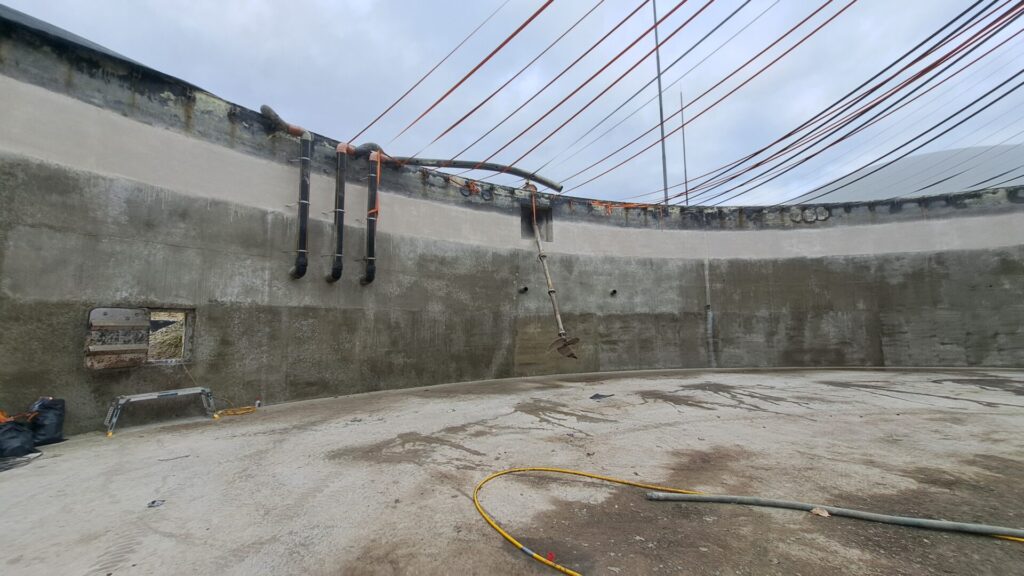
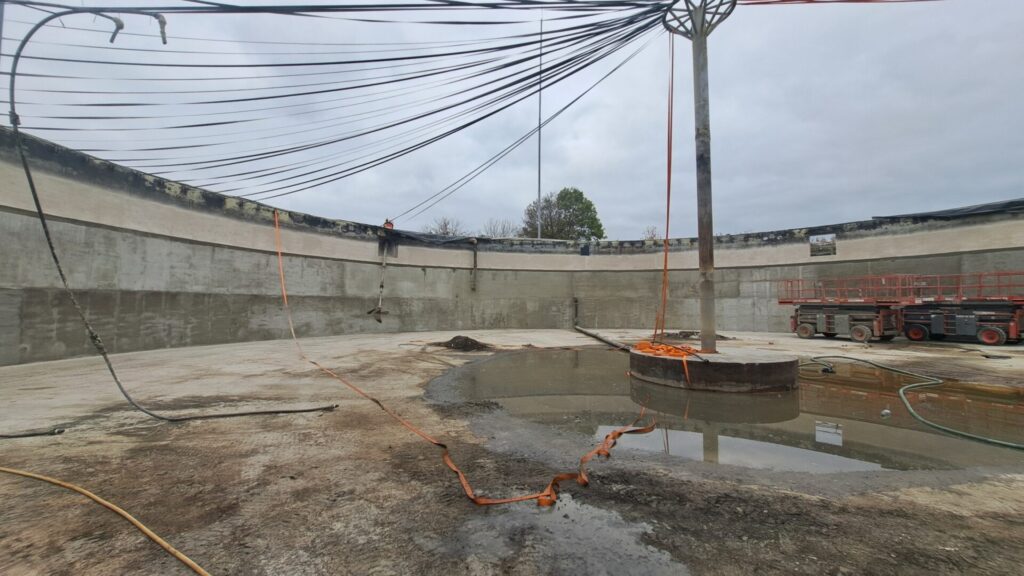
Choosing a system that is not limited by humidity or dew point allowed work to continue through the autumn weather. We completed the works in five weeks, from set-up on 7 October to demobilisation on 6 November, which kept the digester’s time out of service to a minimum. Our site diaries recorded no safety concerns, and the site was left clean and tidy at the end of every shift.
Find out more about our waterproofing services: https://www.corrolesseastern.co.uk/services/waterproofing/
Find out more about our high pressure water jetting services: https://www.corrolesseastern.co.uk/services/high-pressure-jetting/