
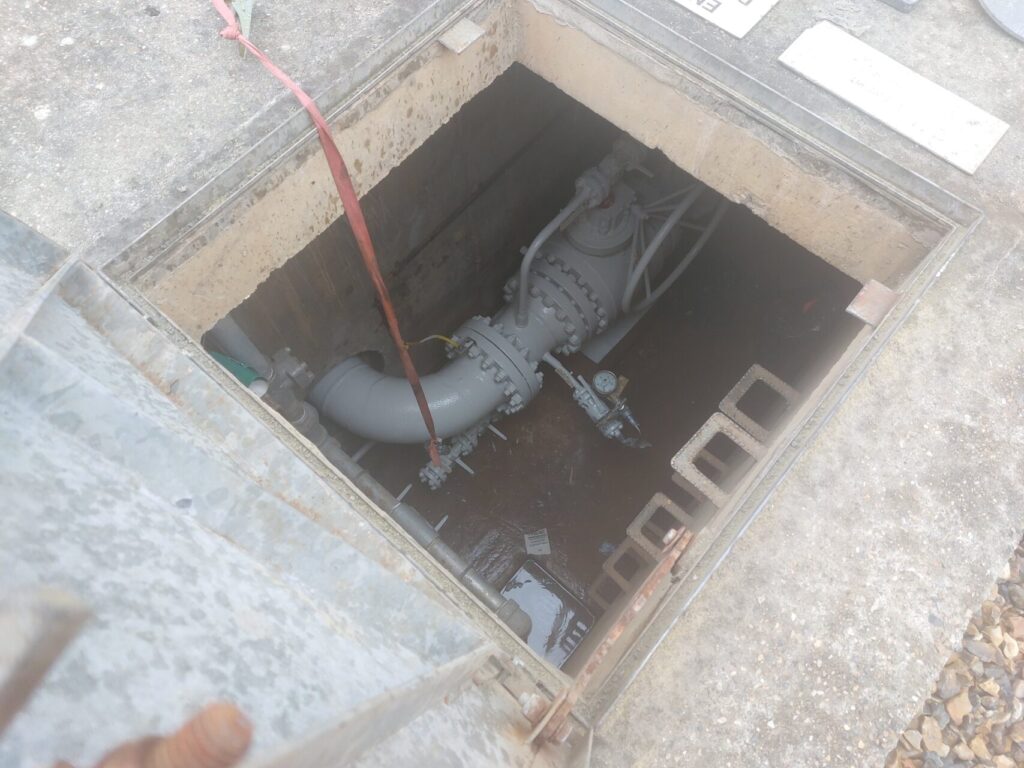
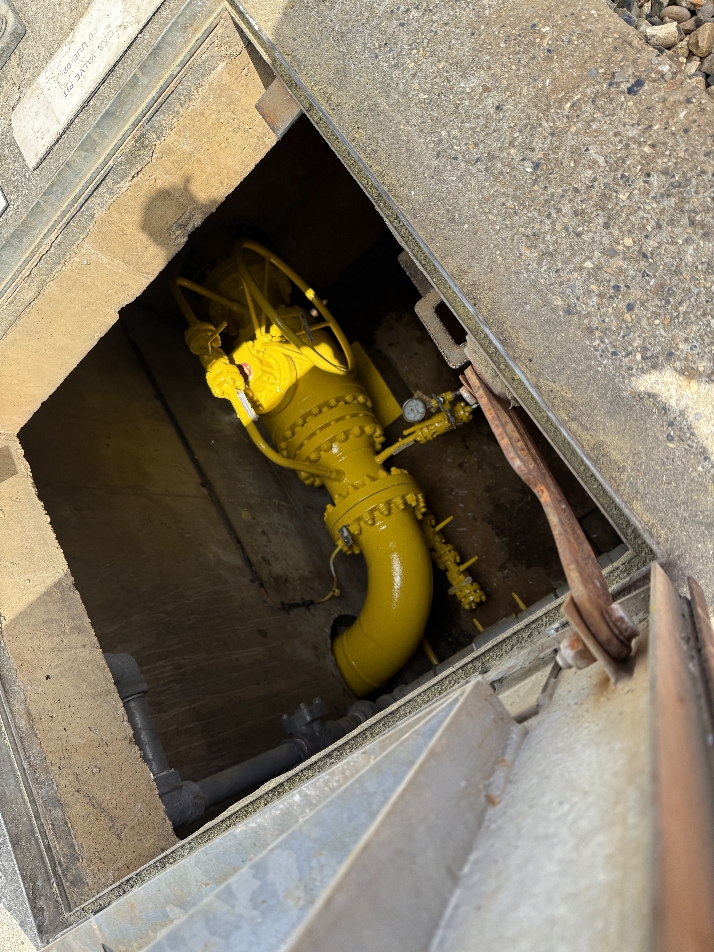
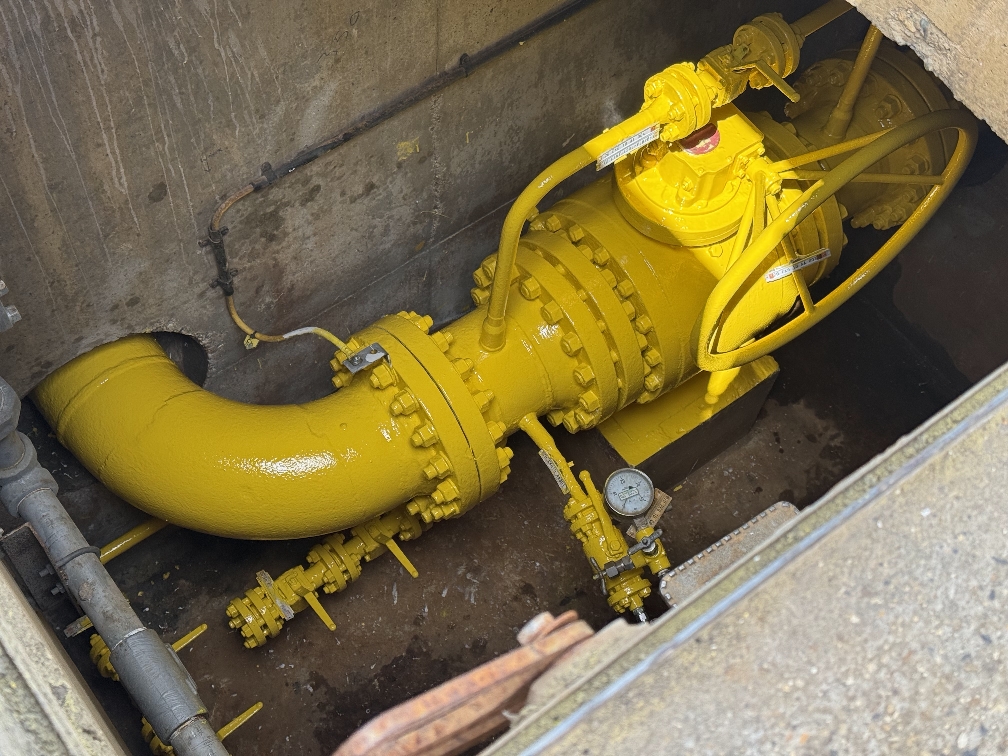
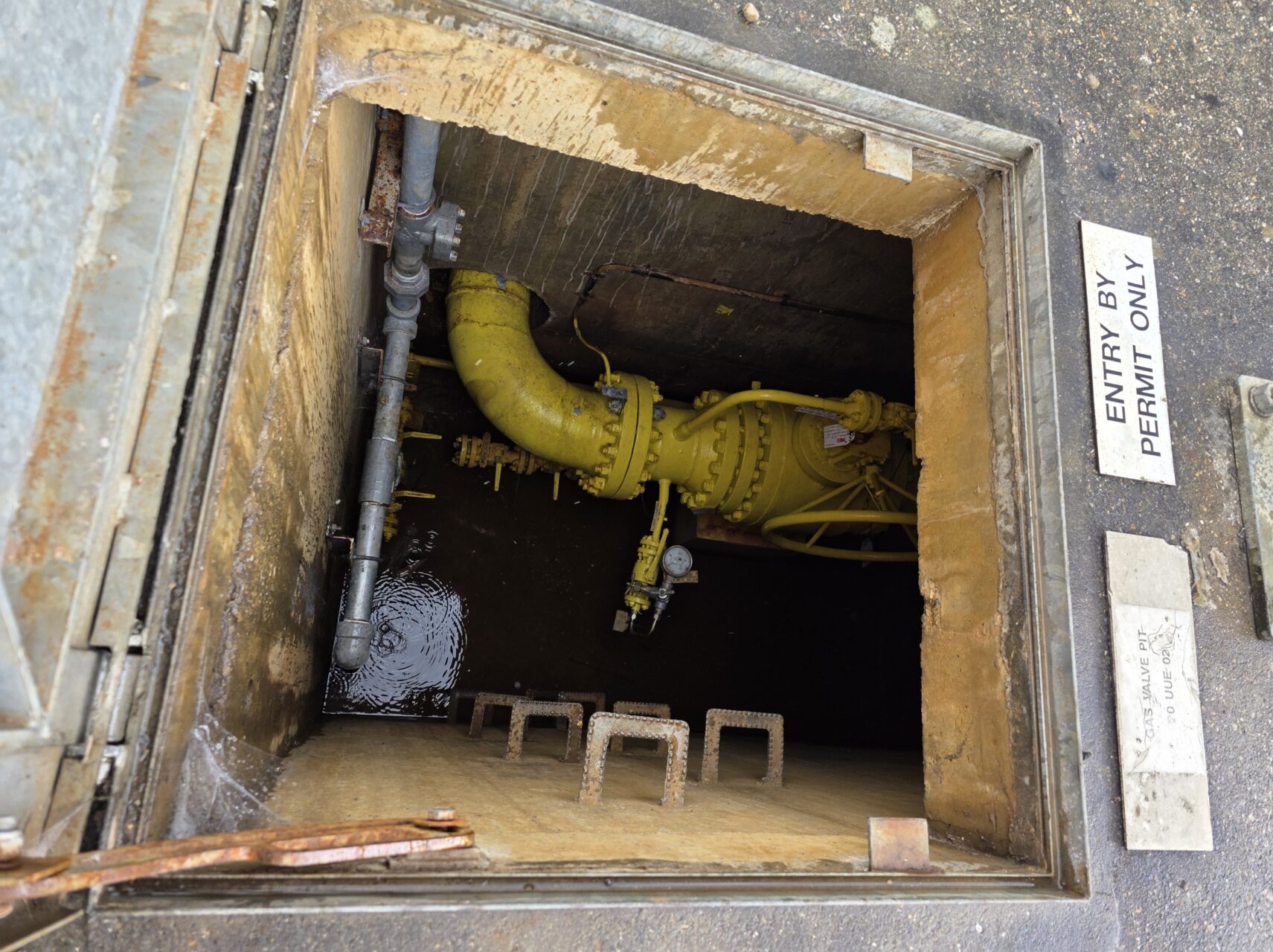
A UK energy company contacted us through our website about the protective coating on a mains gas supply pipe at one of its operational sites in East Anglia. The pipe runs through a below-ground concrete gas pit and includes a large bend, a flanged isolation valve with handwheel, a bypass line and small-bore instrument pipework – a total coated area of approximately 10m².
Gas Pipe Protective Coating – East Anglia
THE PROBLEM
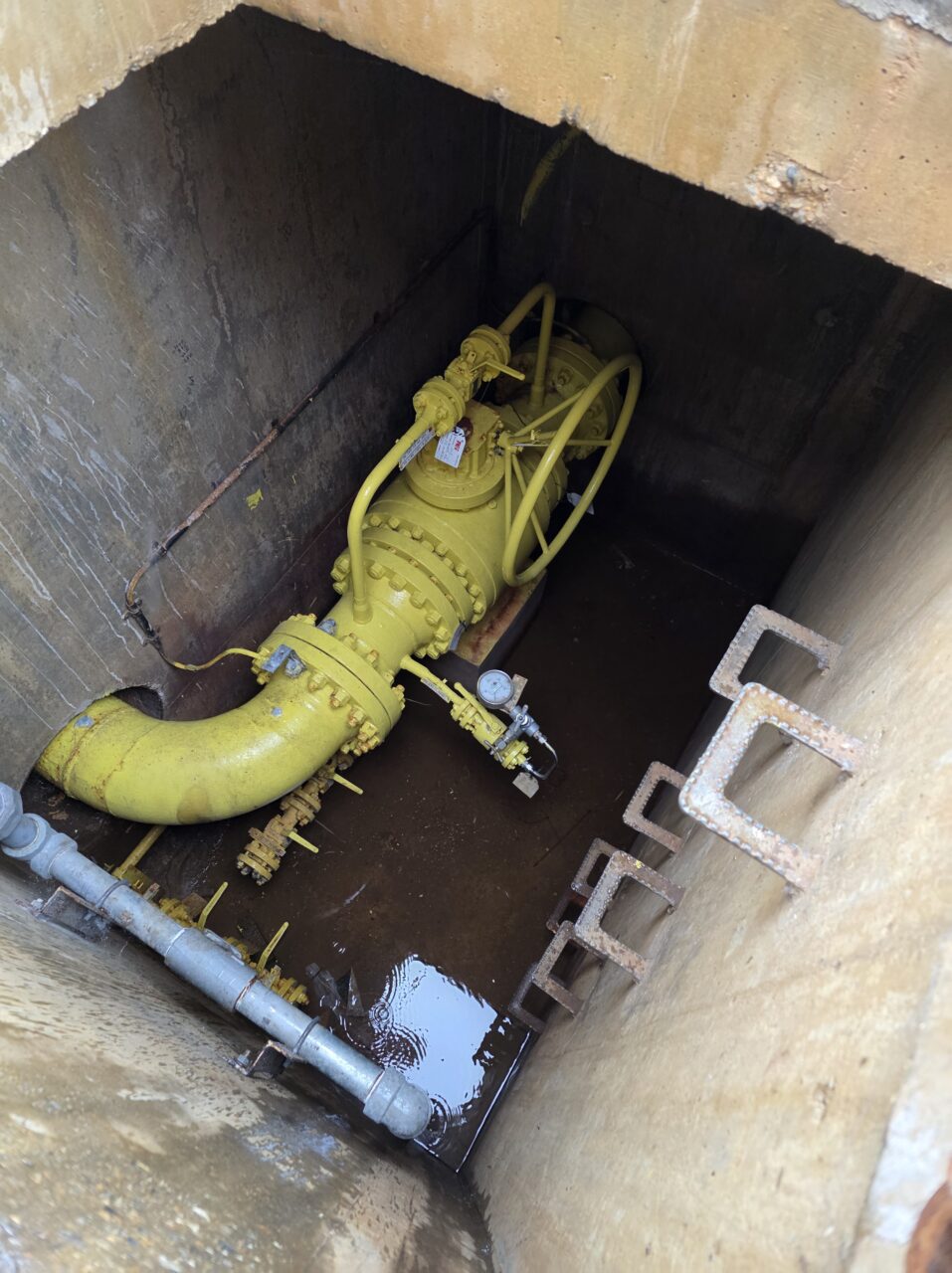
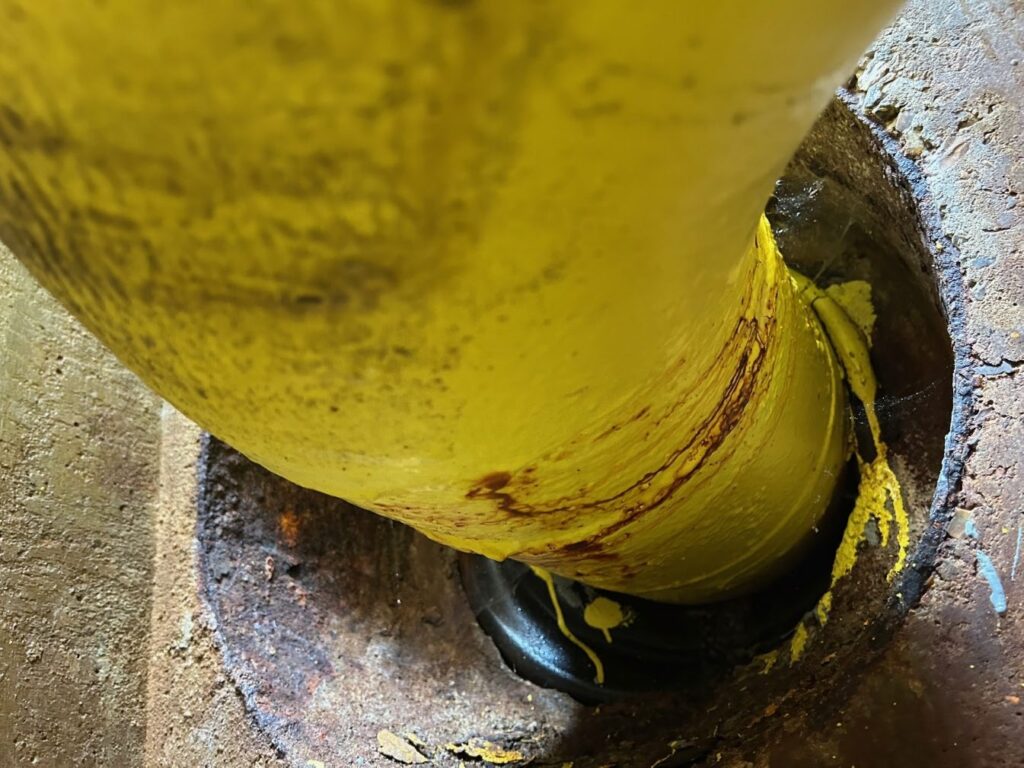
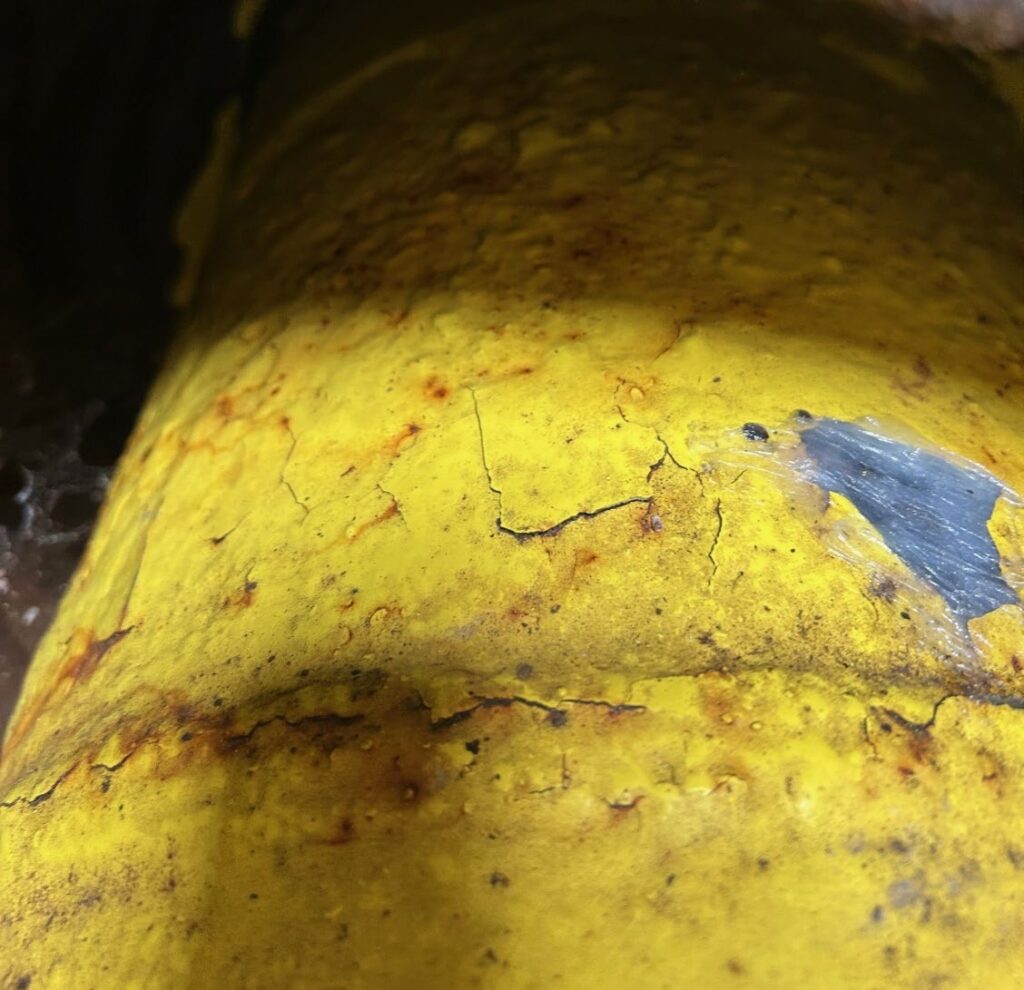
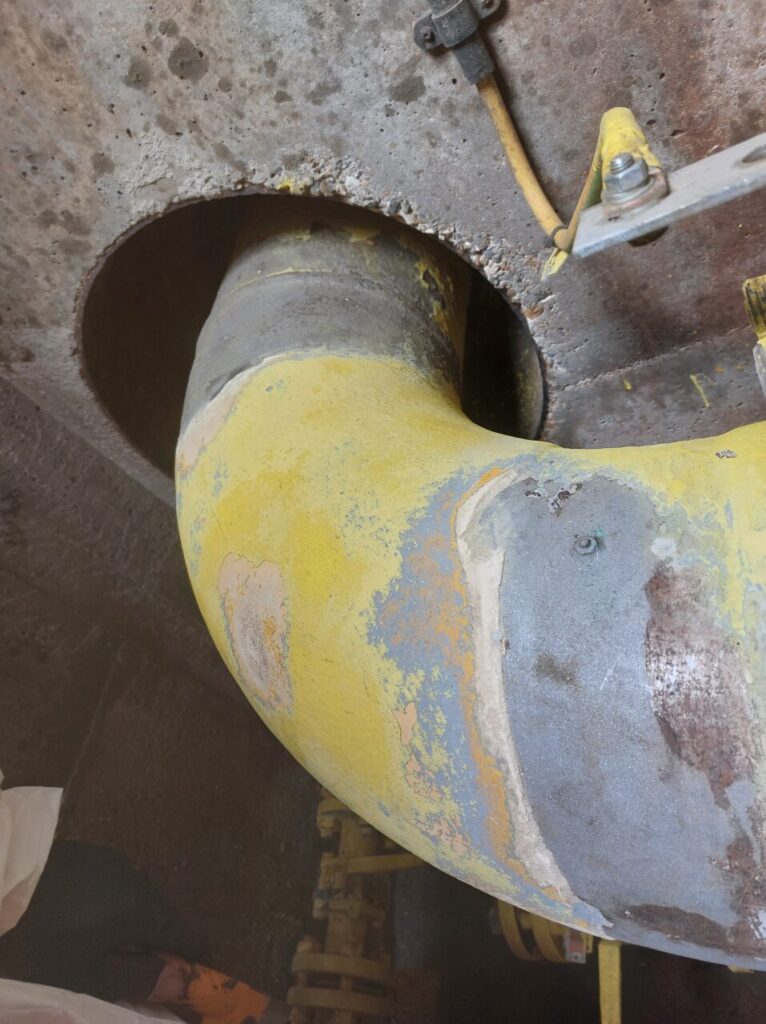
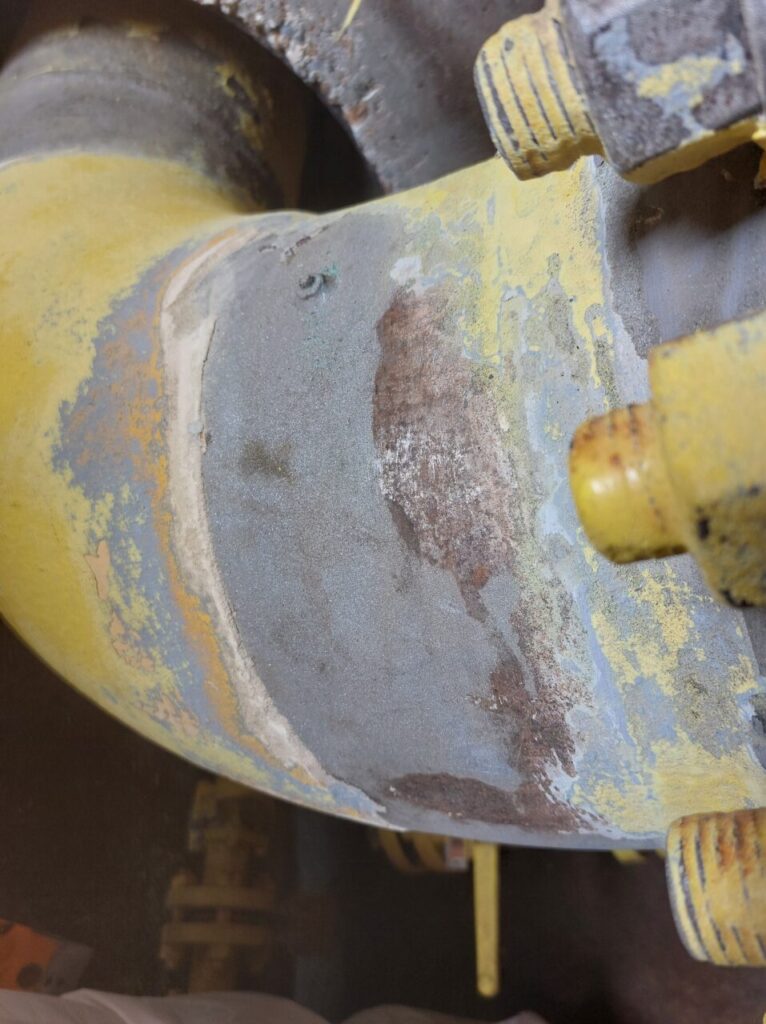
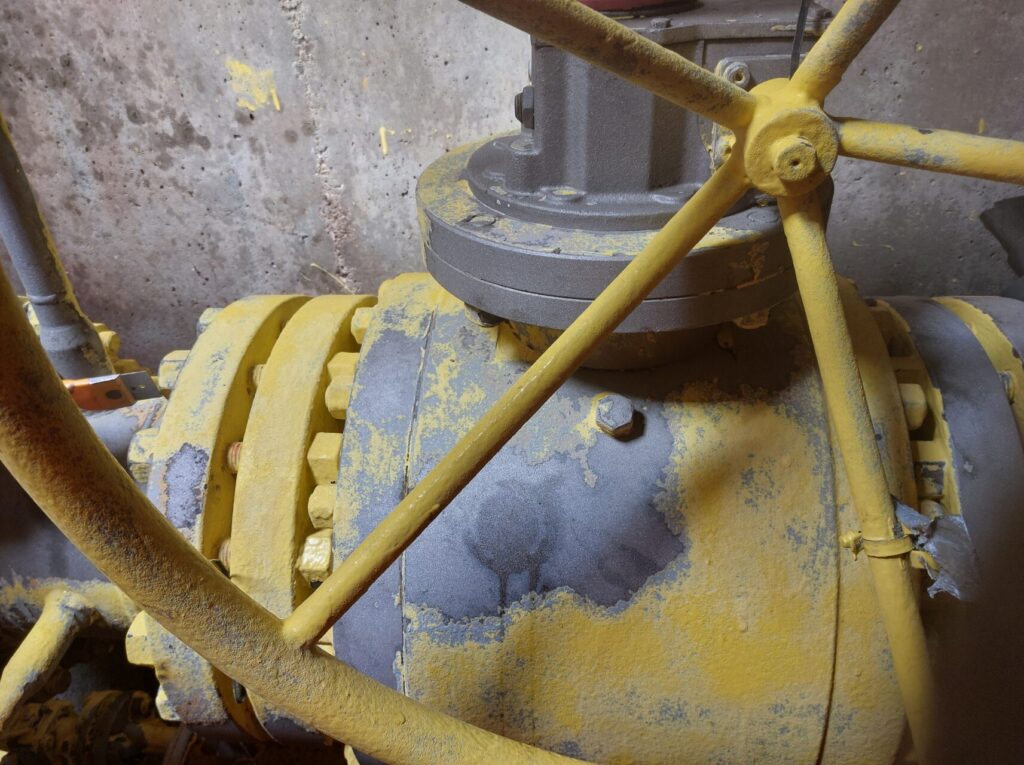
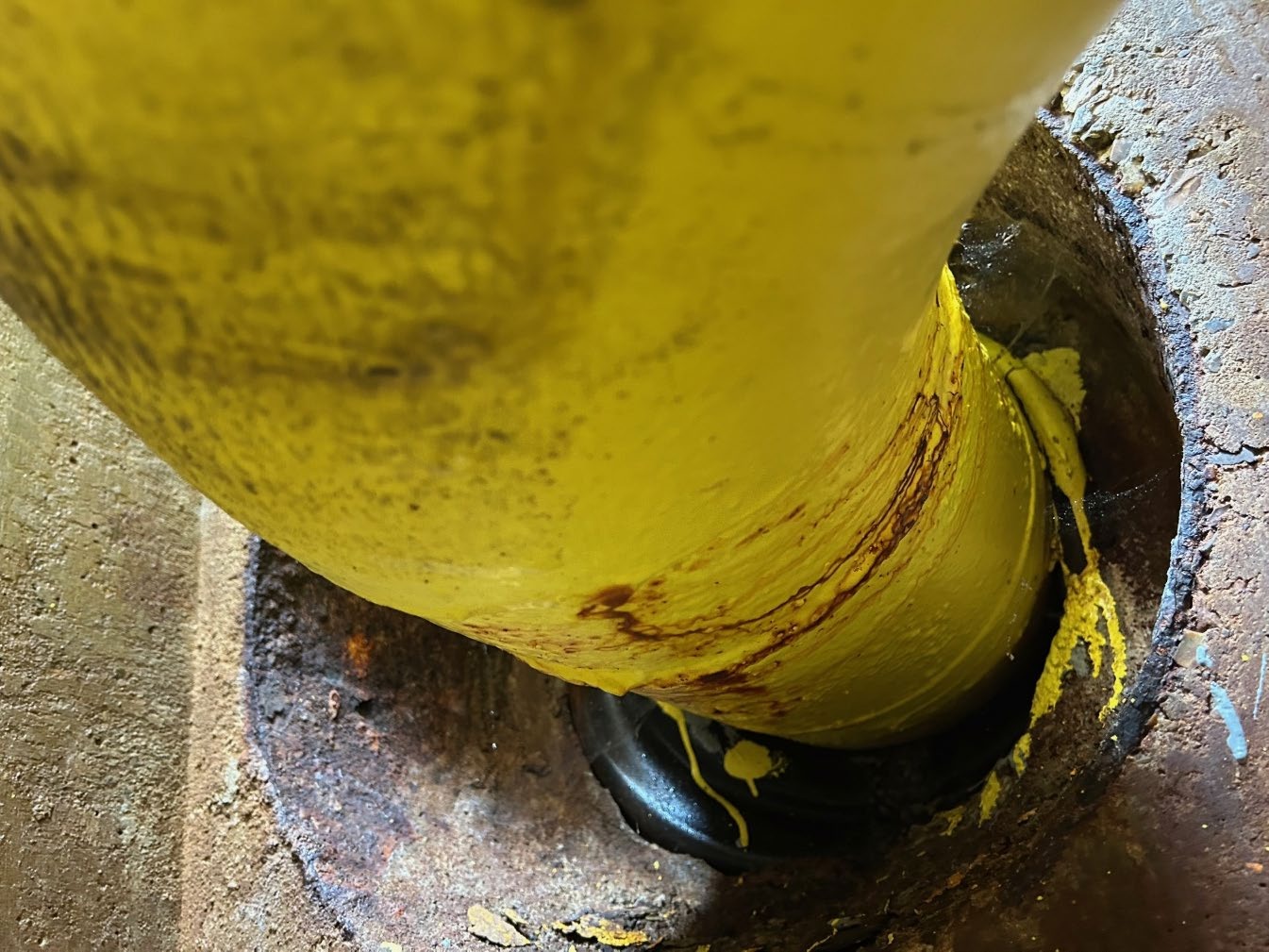
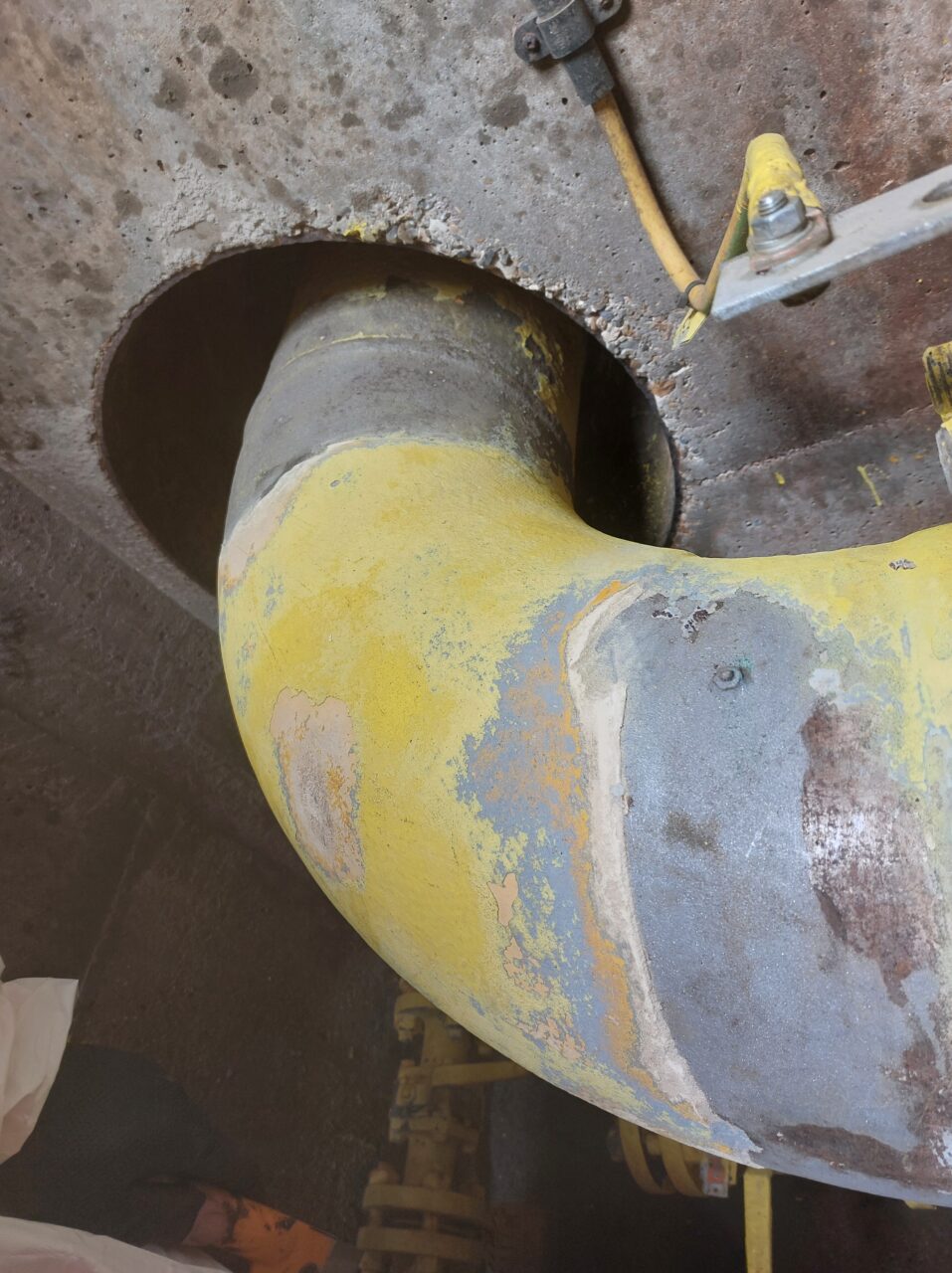
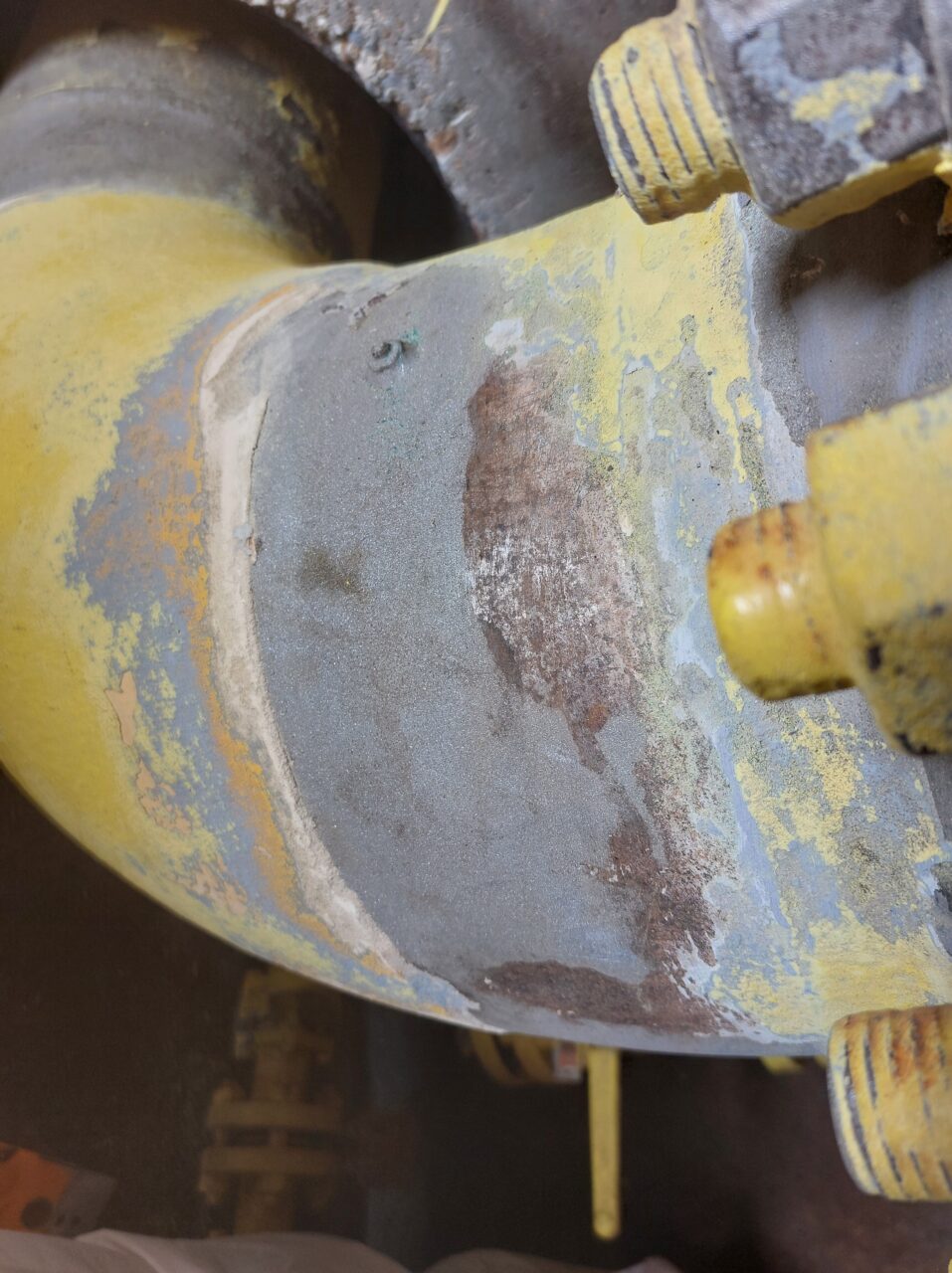
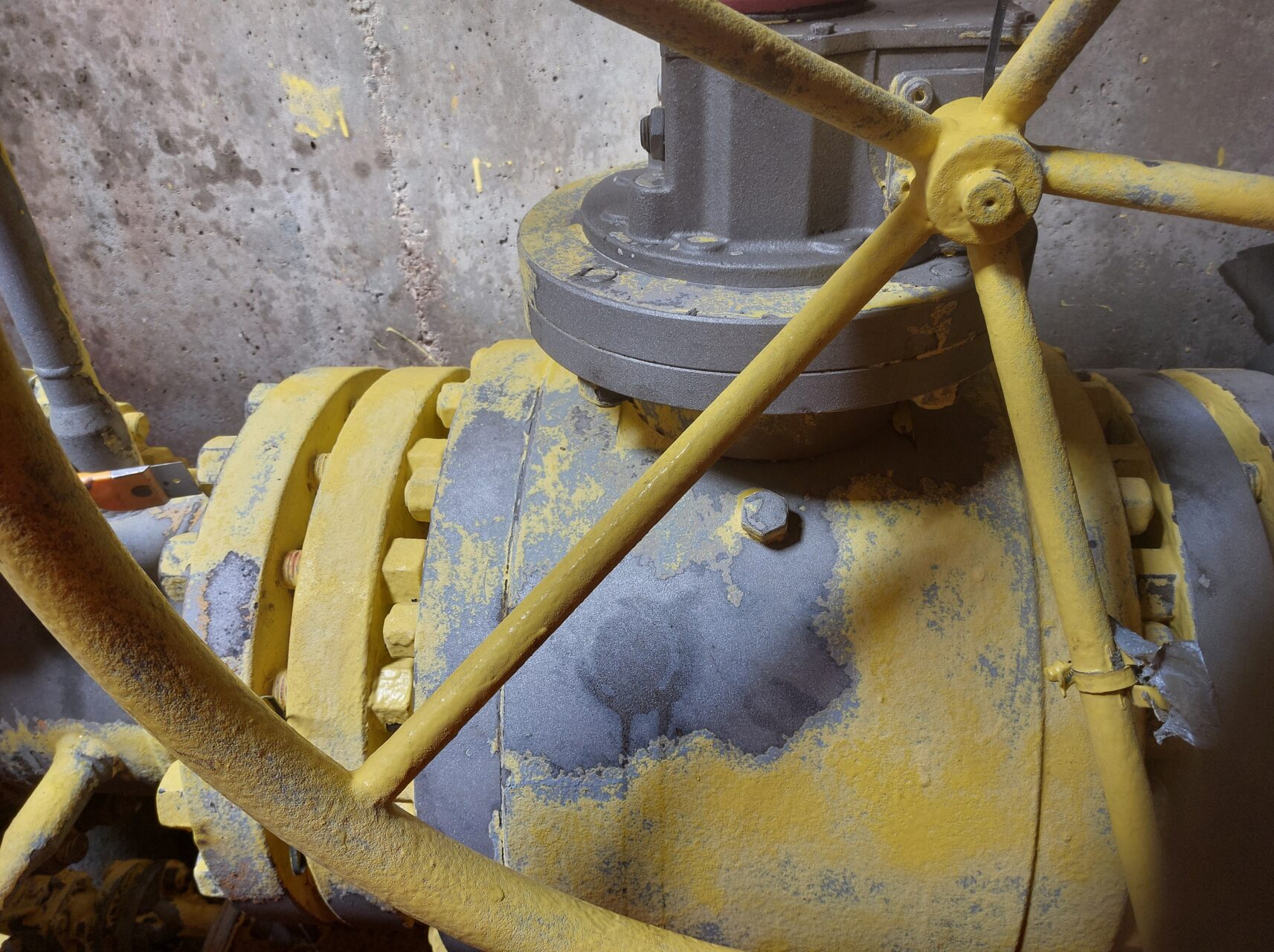
The pipework was finished in yellow, but water collects in the pit and the existing coating had begun to break down, with rust developing on the pipe and its fittings. Close up, the coating was cracking and blistering with rust bleeding through, and there was heavy rust staining where the pipe passes through the wall sleeve – a point where moisture and debris collect. The gas main is a vital asset for the site, so the client needed a long-term, durable protective coating to stop the corrosion before it could cause lasting damage to the steel.
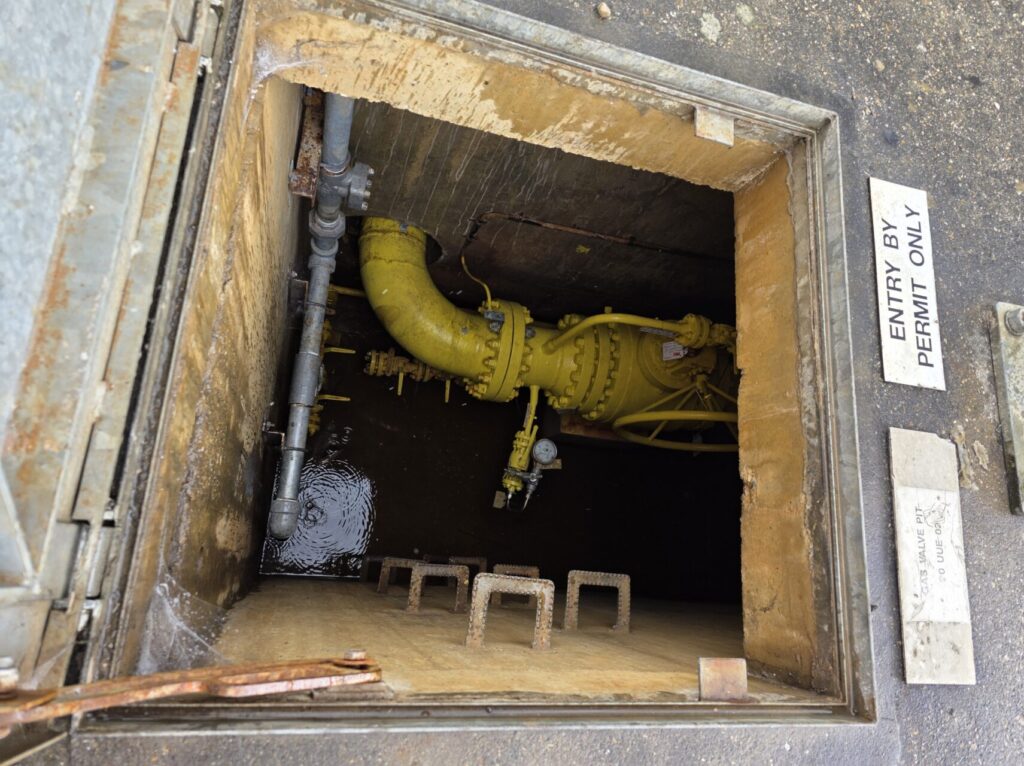
The client’s engineers supplied a detailed repair specification, and the work had to be completed before the end of July. Our Project Manager and Quality / H&S Manager visited site before the works to survey the pit and agree the practical details with the client, including access, power, water and how the specification would be applied around the valve, bolts and the tightest areas of the pit.
THE SOLUTION
Confined space set-up
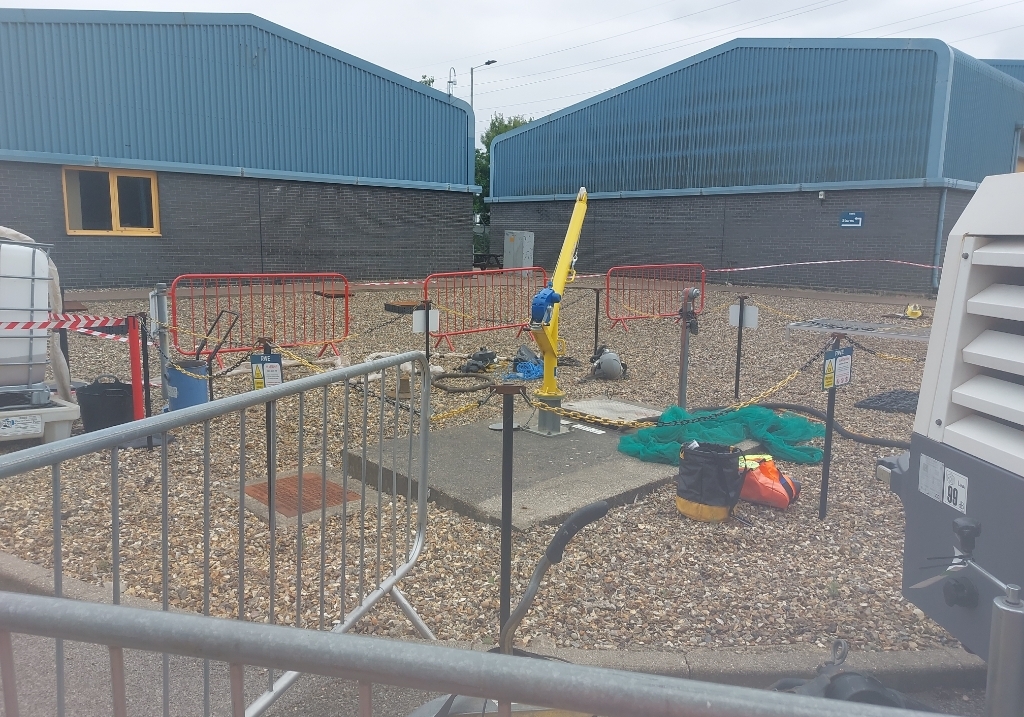
The gas pit is a confined space with a single top-entry hatch, so all works were carried out under the site’s permit system by a confined-space-trained crew. The work area was fenced off and the client’s davit crane and winch were used to lower operatives into the pit, with harnesses, lanyards and escape sets in place, a gas detector in use throughout and an entry controller at the hatch at all times. The pit was pumped out before work began.
Surface preparation
Defective coating and rust were first removed by hand using scrapers, wire brushes and coarse abrasive paper, and the pipework was then pressure washed with clean water to remove soluble salts and wiped dry. Salts left on the steel draw moisture through a coating and cause blistering, so removing them is an important step on pipework that sits in a damp pit.
All areas to be repaired were then sponge blasted to Sa 2.5 (ISO 8501-1). Sponge blasting uses abrasive bonded into a sponge media, which greatly reduces dust and rebound – ideal for working in an enclosed pit around live plant. The blasting was taken back along the pipe until sound coating was reached, and the edges of the existing coating were feathered so the new system would blend smoothly into it.
Quality checks
Surface profile – 15 readings taken with a PosiTector SPG averaged 121 microns, with every reading above 98 microns, well over the 50 micron minimum set in the specification. The profile is the key the coating grips on to.
Climatic conditions – climatic readings were taken with a PosiTector DPM before and during each coat. Keeping the steel at least 3°C above the dew point prevents condensation forming on the surface, which would stop the coating bonding. Across the recorded readings the steel stayed between 3.4°C and 5.8°C above the dew point, with relative humidity between 66% and 82%.
During the works, rain caused ground water to seep into the pit and pushed the conditions out of specification. Rather than coat in poor conditions we stood down for the day, brought in a dehumidifier and created a sealed enclosure over the pit, and work resumed the following morning. ATEX-rated extraction was also run into the pit during the coating stages to ventilate the confined space.
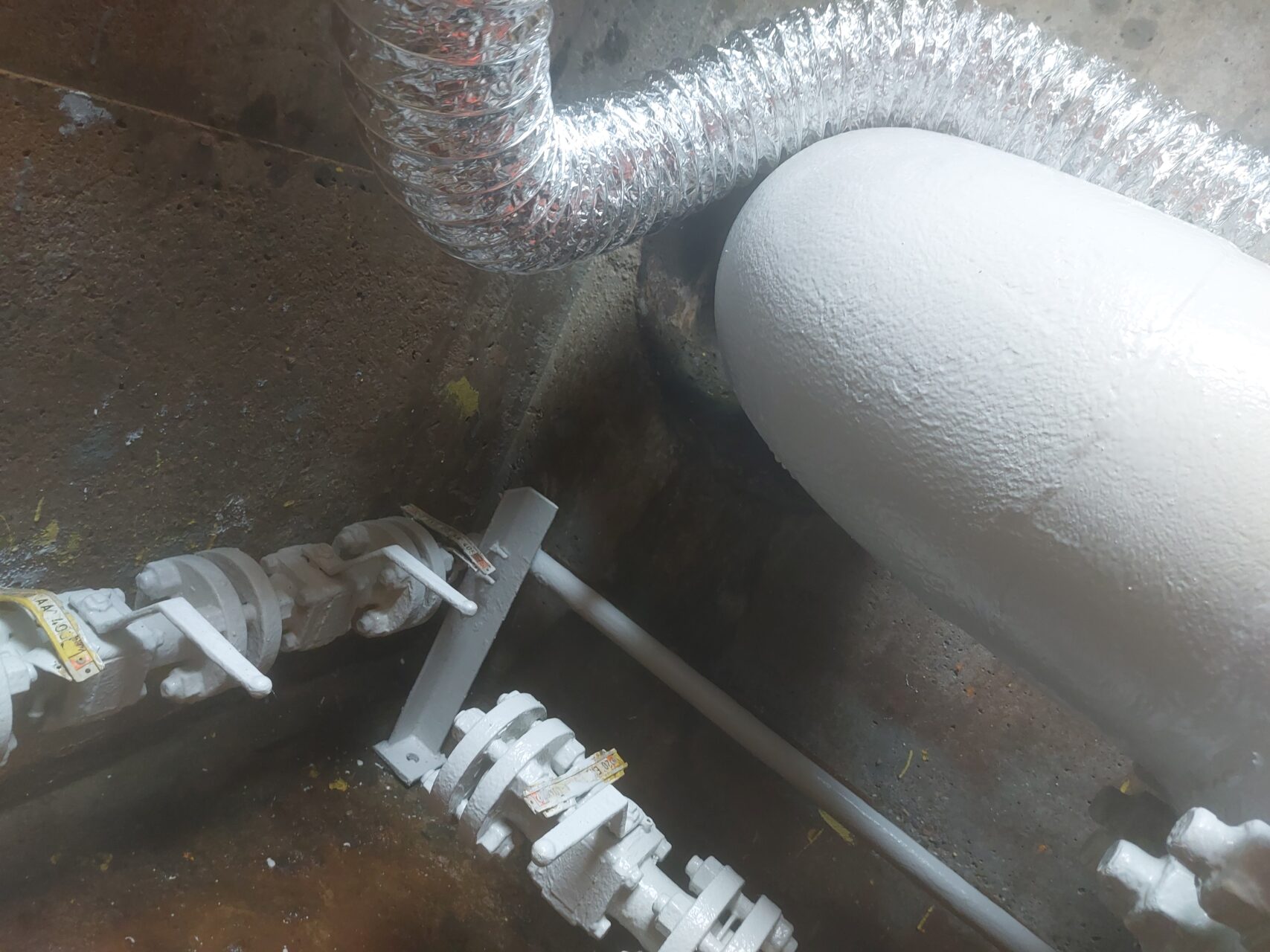
Protective coating system
The client specified a four-coat International (AkzoNobel) protective coating system, applied by brush and roller to reach into every part of the valve, flanges and small-bore pipework:
Primer – International Interplus 256 in aluminium, a surface-tolerant epoxy primer, to a nominal 100 microns.
First intermediate coat – International Interseal 670HS in white, a high-solids, surface-tolerant epoxy, to a nominal 100 microns.
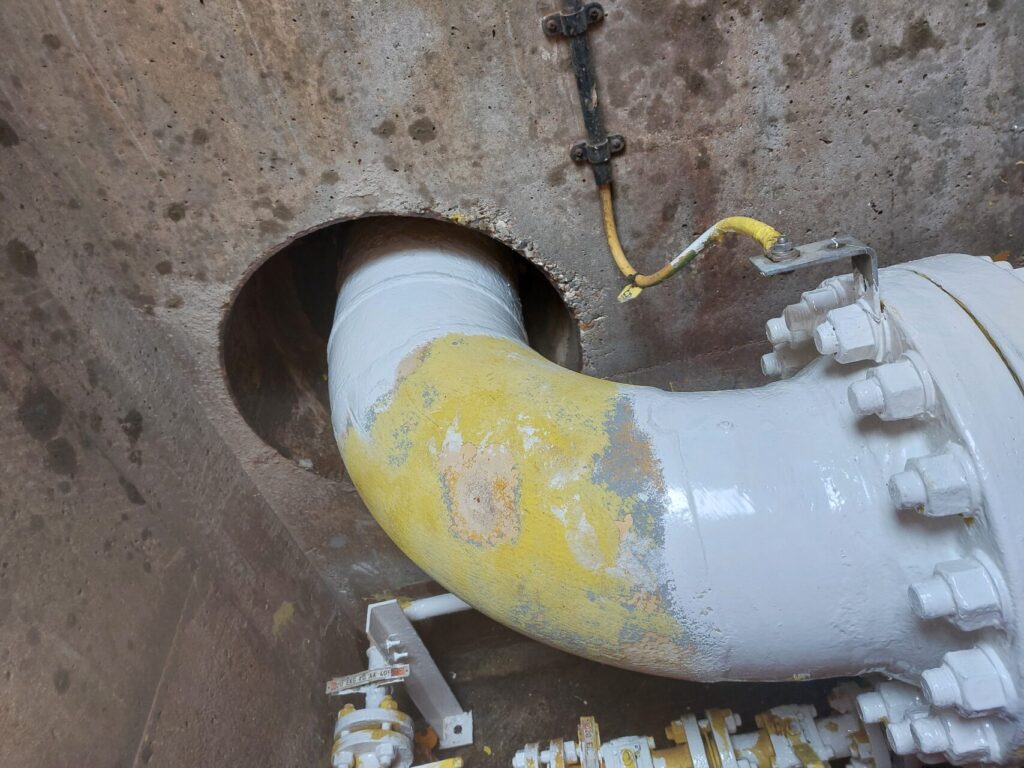
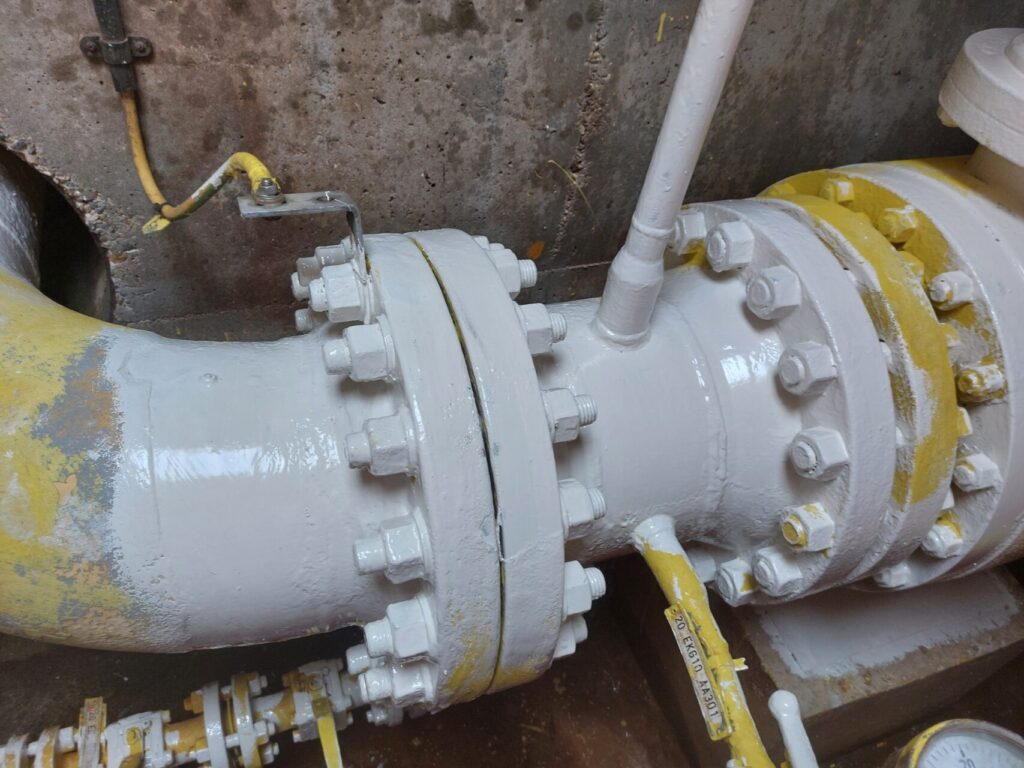
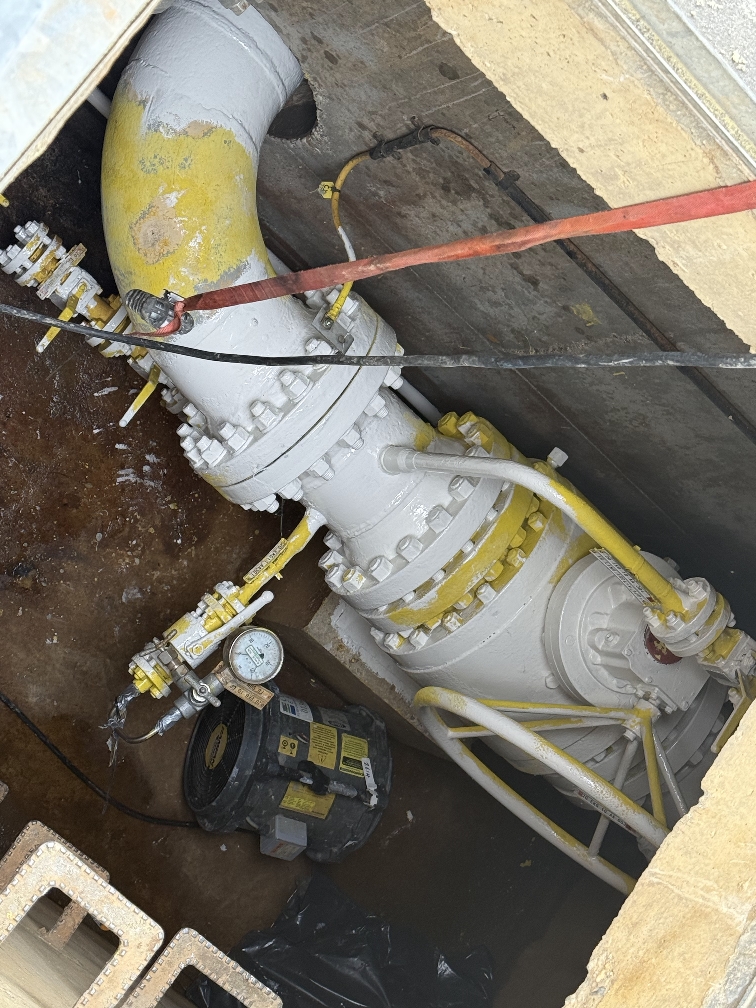
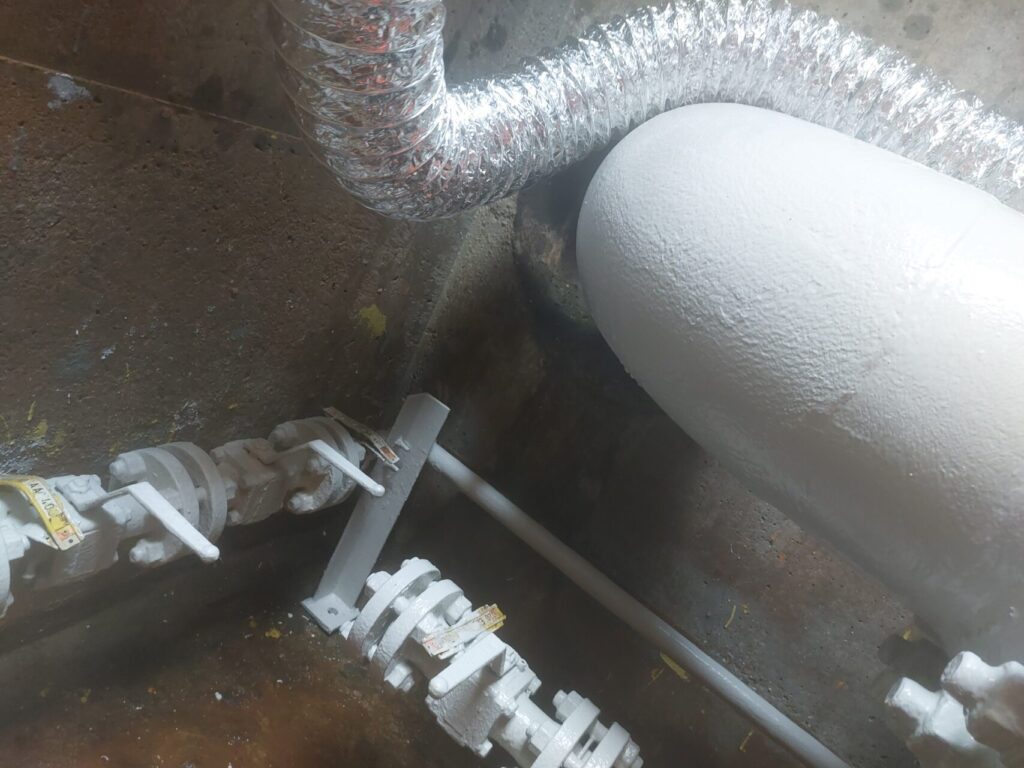
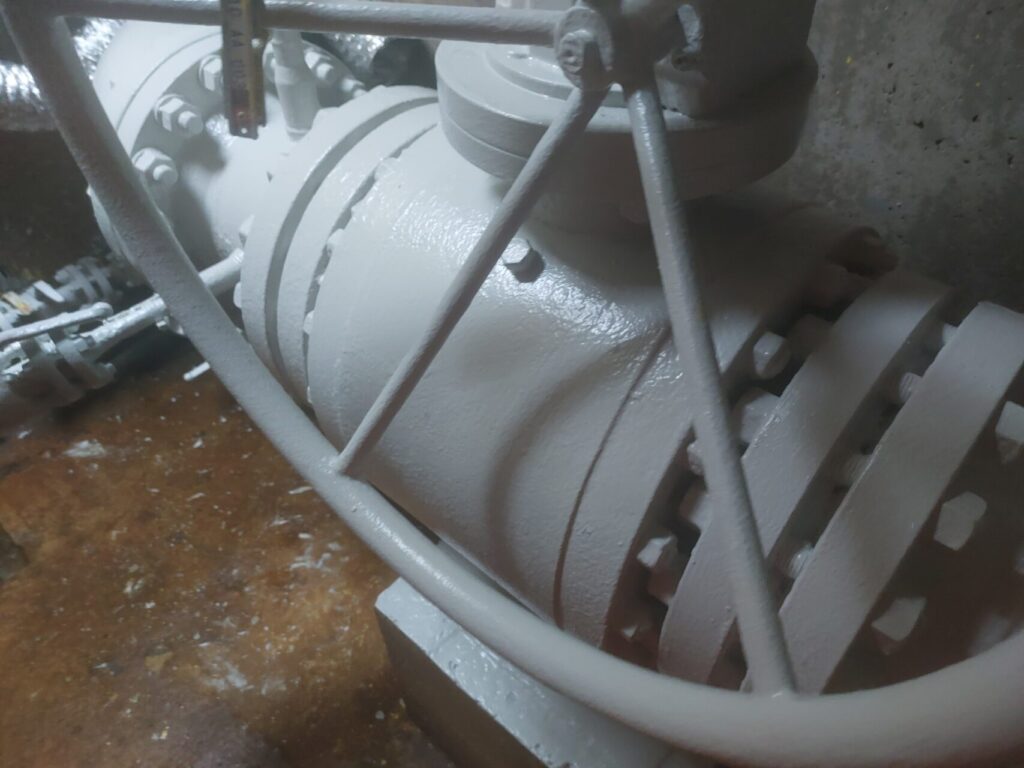
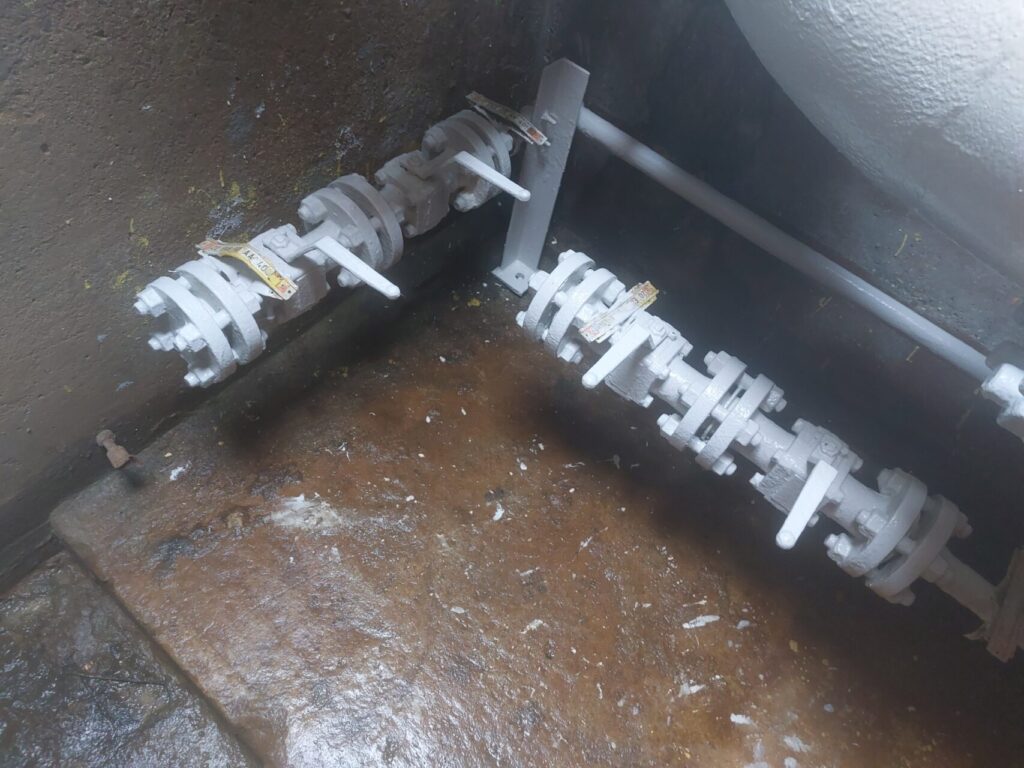
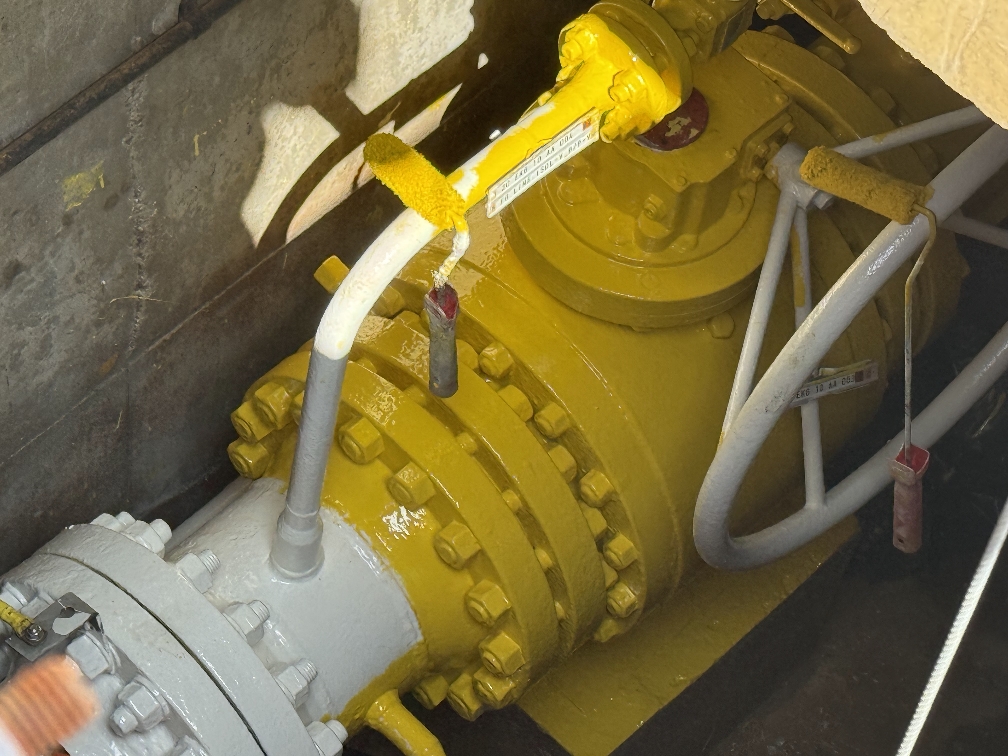
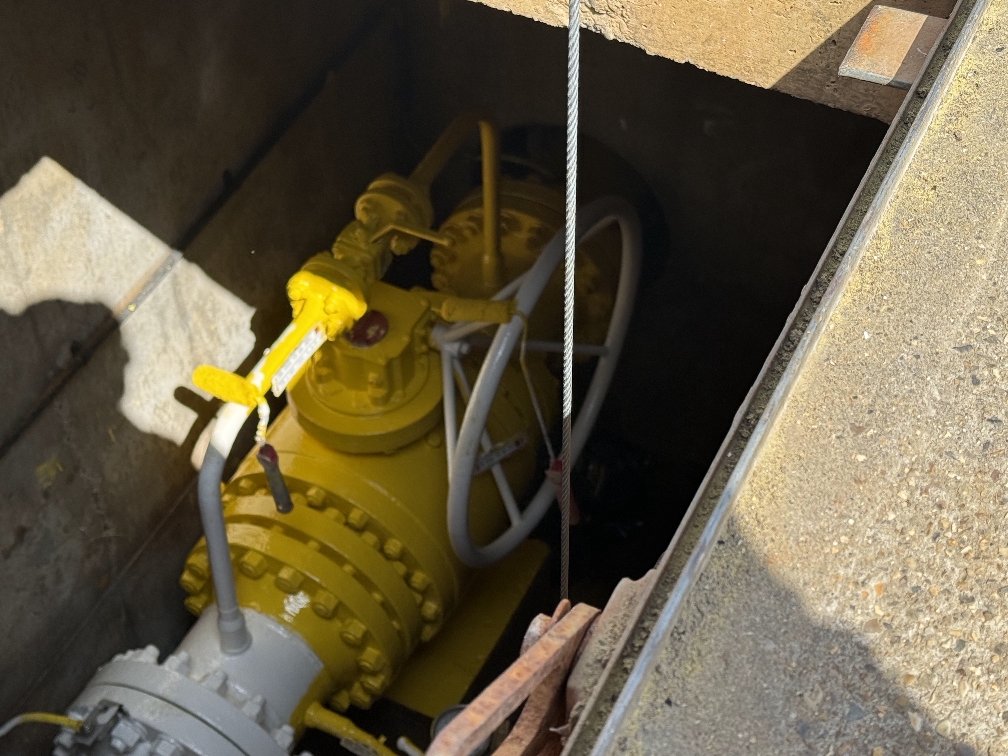
Dry film thickness readings were taken with a PosiTector 6000 after each coat. After the second intermediate coat, 66 readings averaged 518 microns with a lowest reading of 350 microns – already above the 320 micron minimum the specification set for the complete system – before the topcoat was applied. Plant identification tags were kept clear throughout.
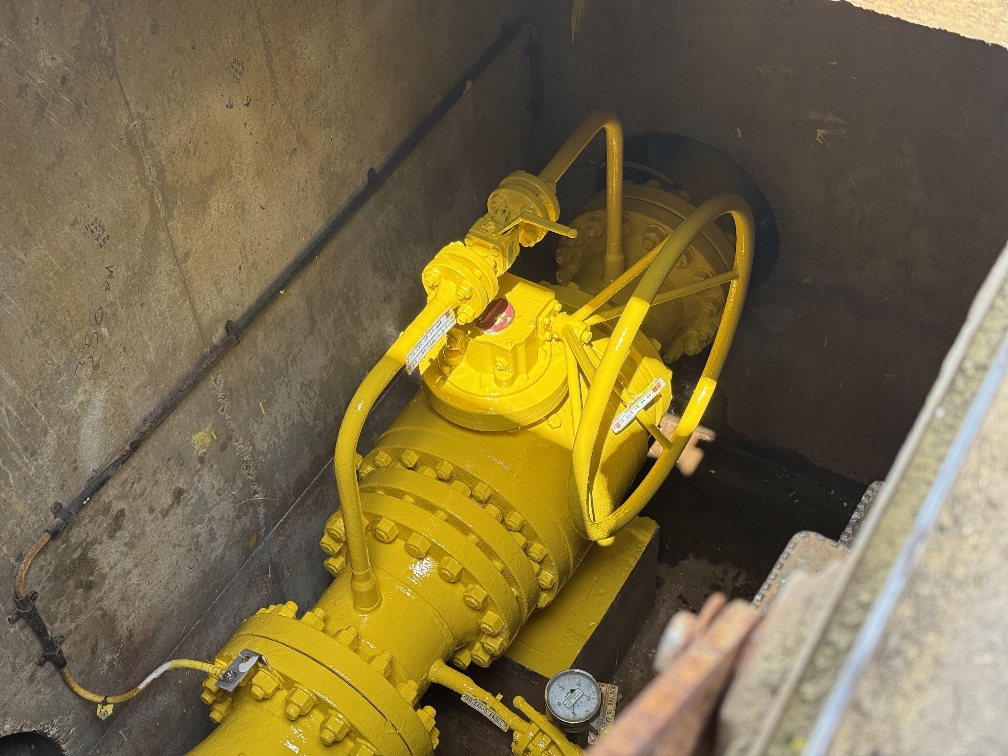
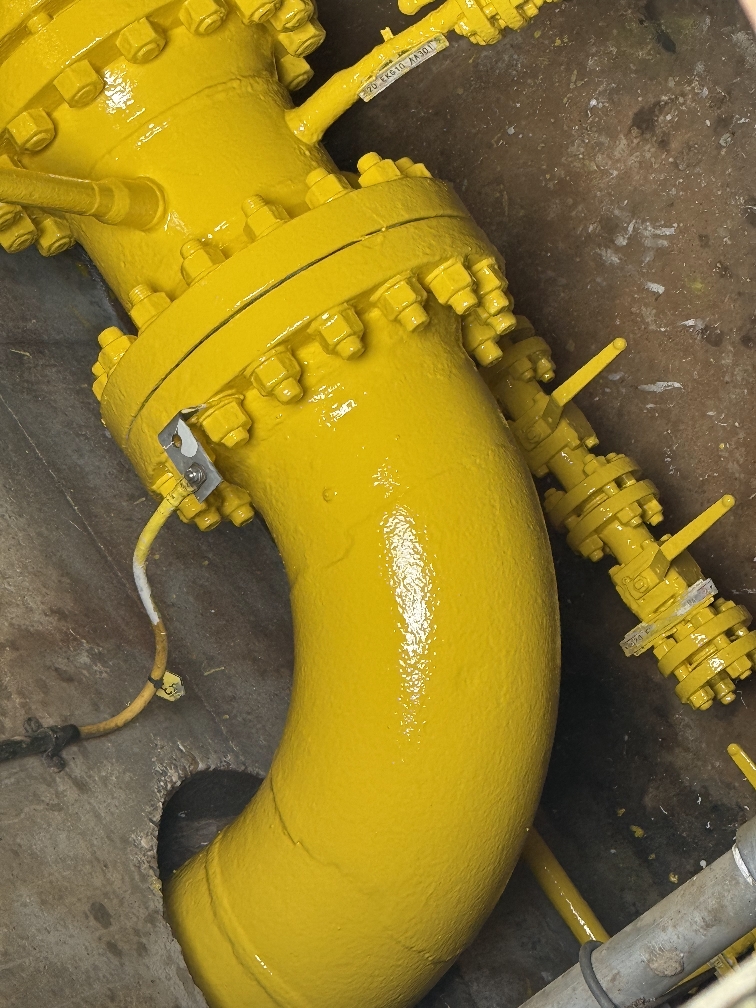
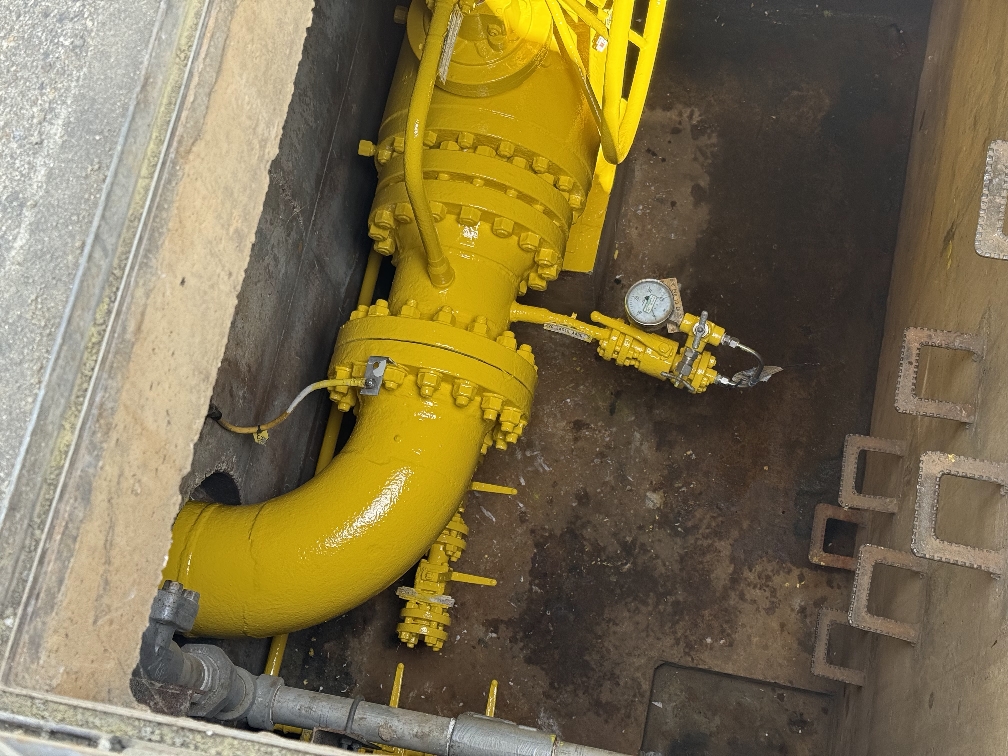

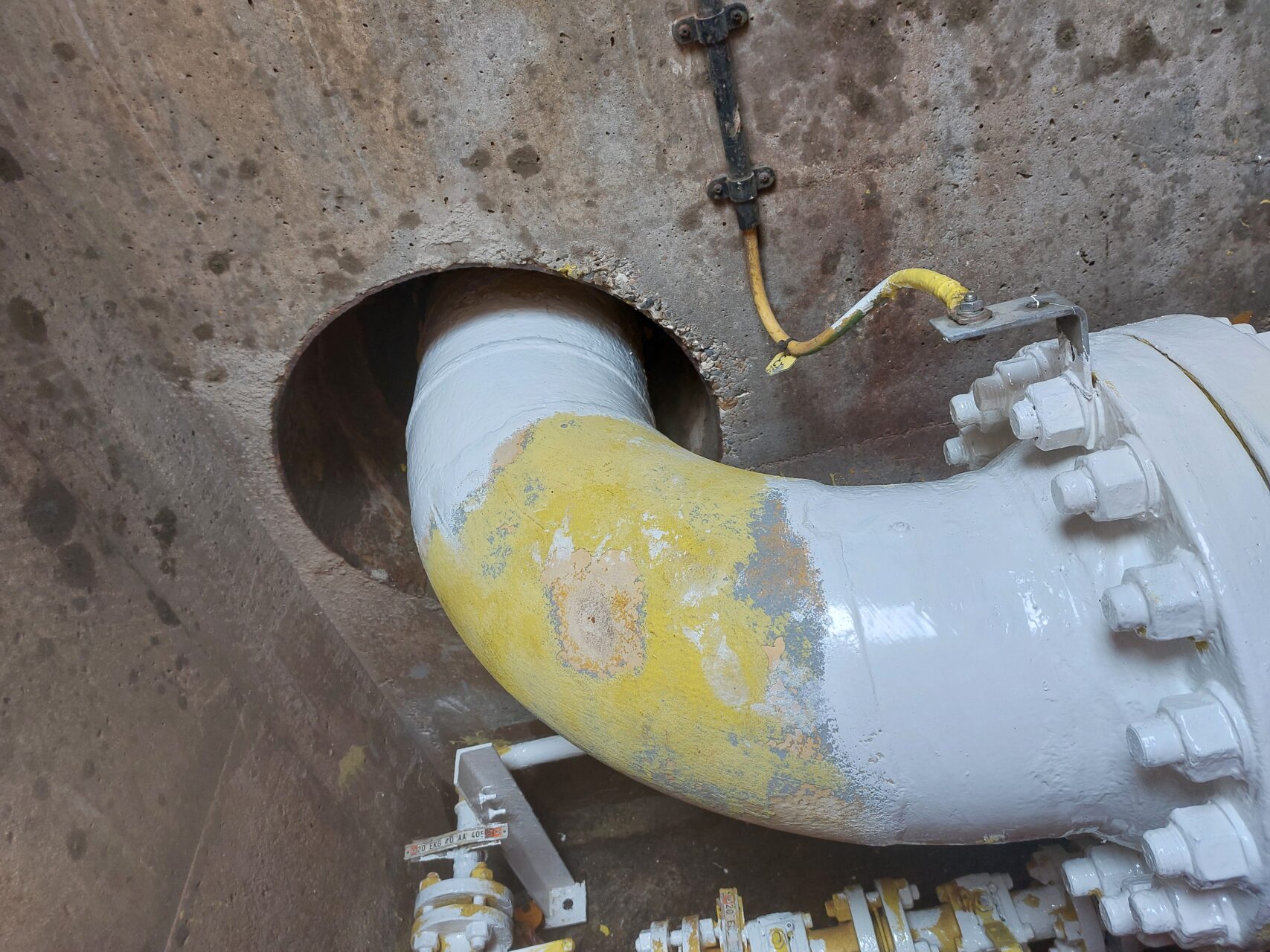
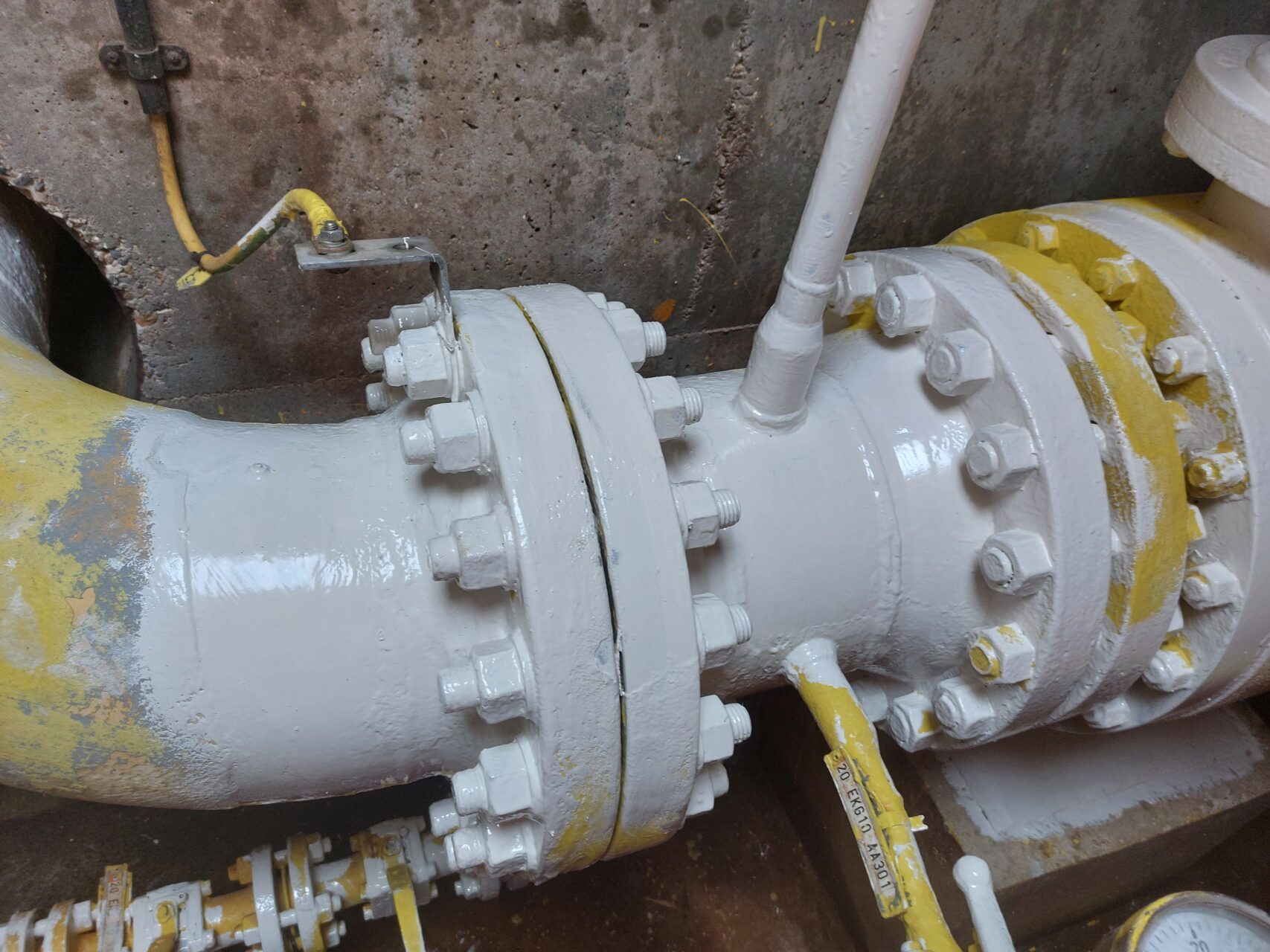
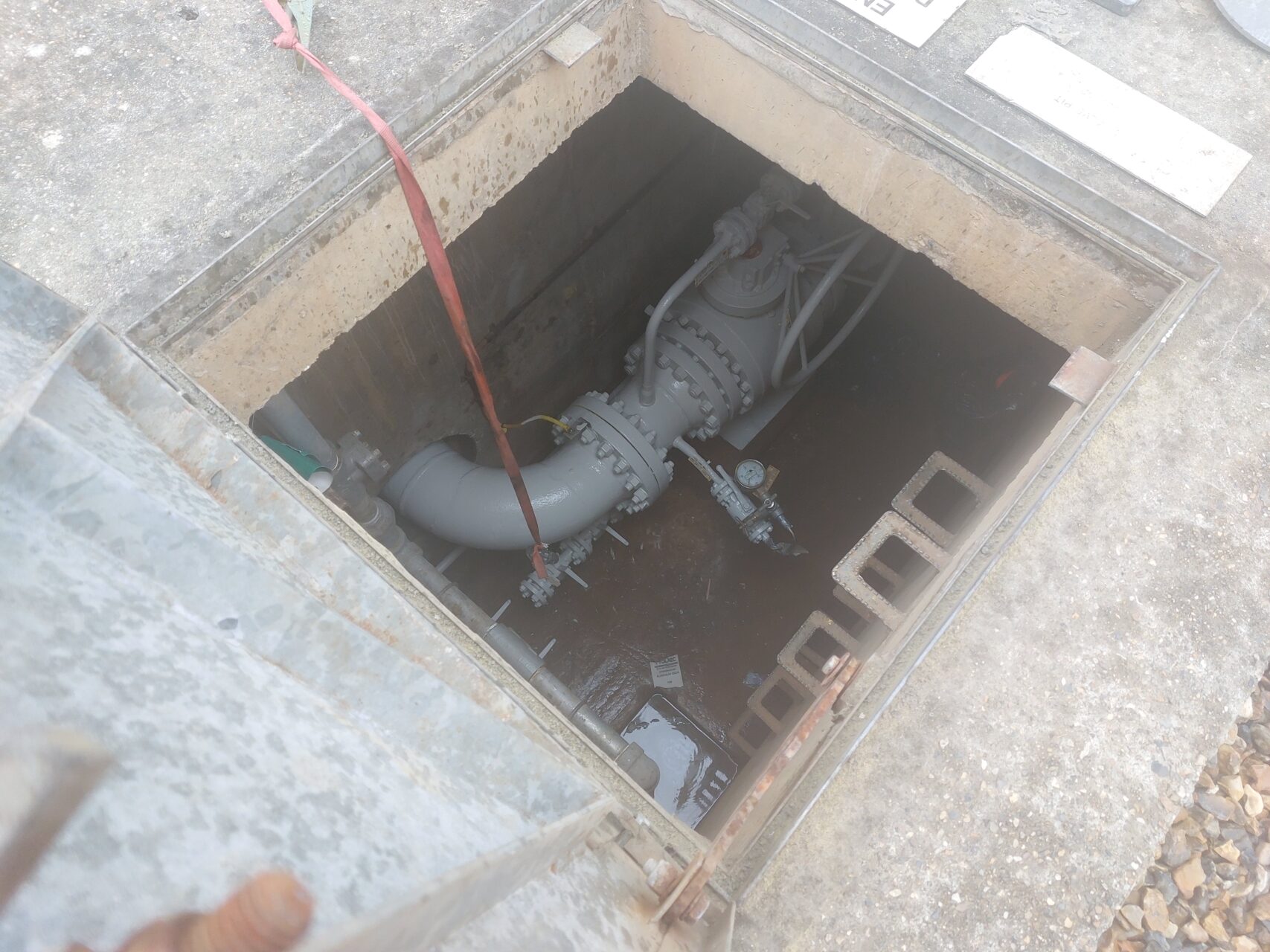
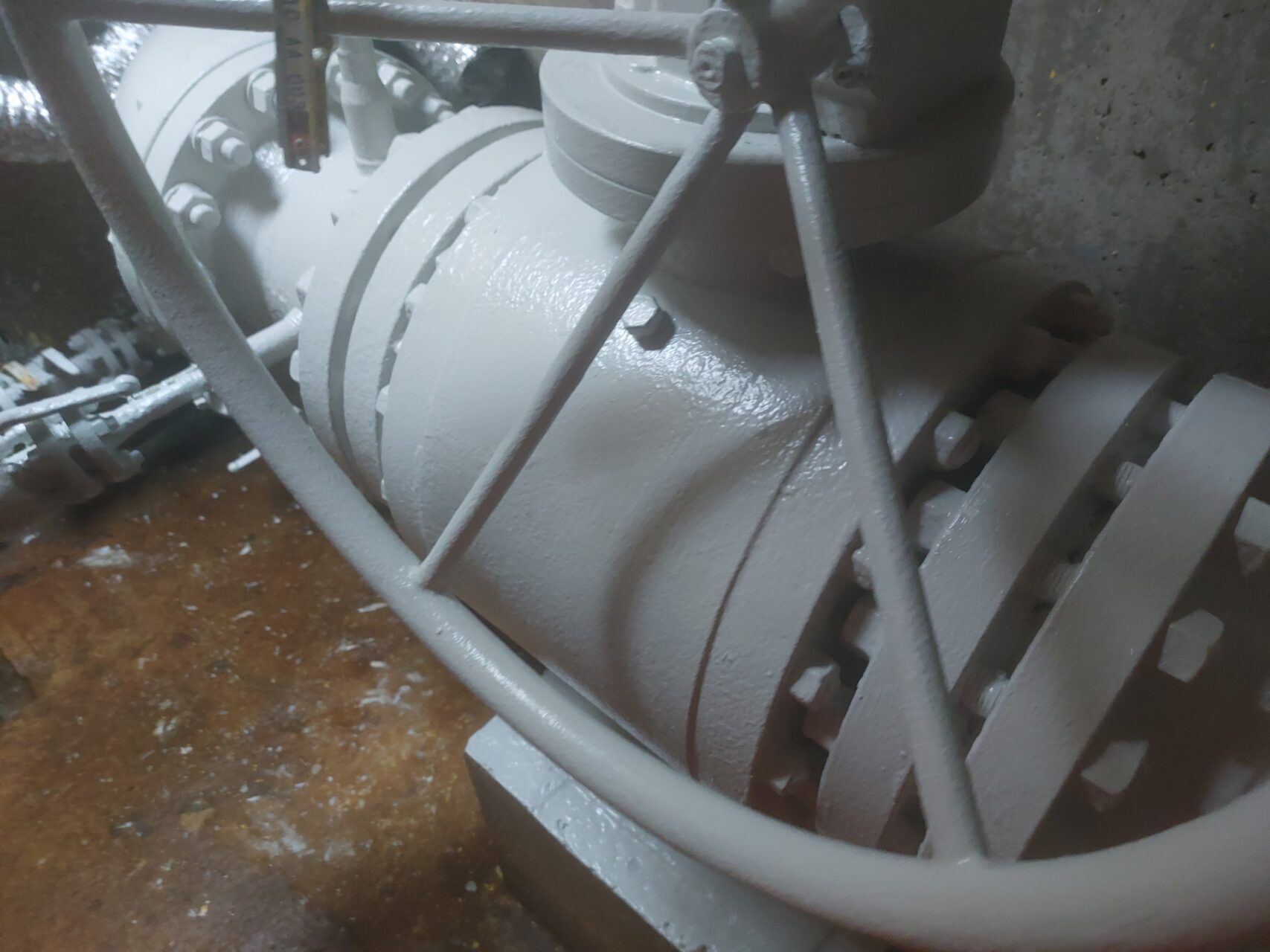
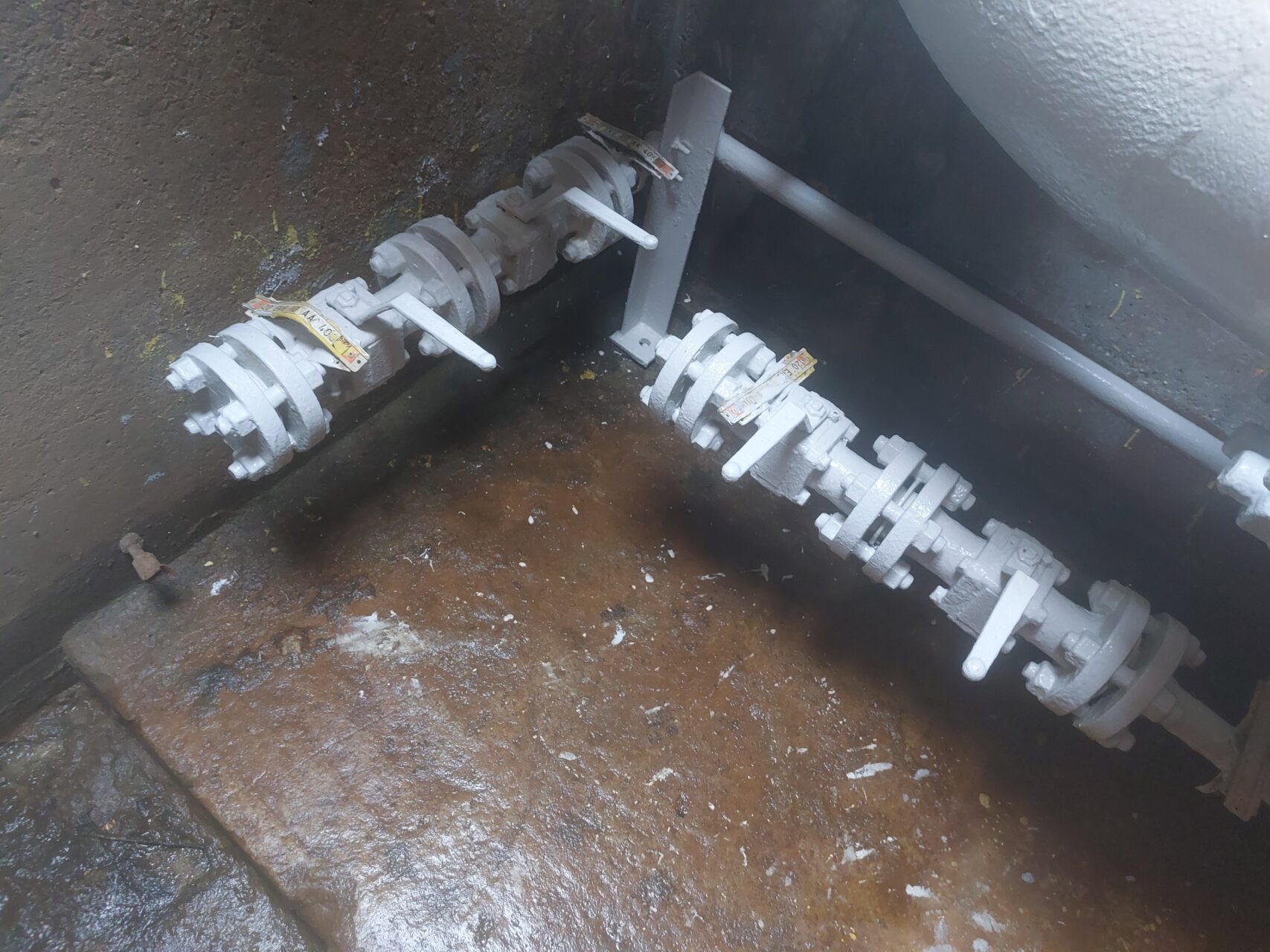
Despite the wet weather, the works were completed within the client’s deadline. The site diaries record the work area left clean and tidy at the end of each shift, and our site supervisor and operatives worked safely within the site’s confined space permit system throughout.
Find out more about our protective coating services: https://www.corrolesseastern.co.uk/services/protective-coatings/