
Working for a utilities maintenance contractor, we were asked to refurbish three galvanised steel cold water storage tanks on the roof of a school in Watford, Hertfordshire. The tanks supply the school’s domestic water – one measuring 1.8m x 1.2m x 1.3m and two measuring 2.5m x 1.5m x 1.2m – giving a total internal lining area of approximately 58m² including the internal bracing. The tanks sit in a plant enclosure on a flat roof, reached only by ladder.
School Water Tank Relining – Watford
THE PROBLEM
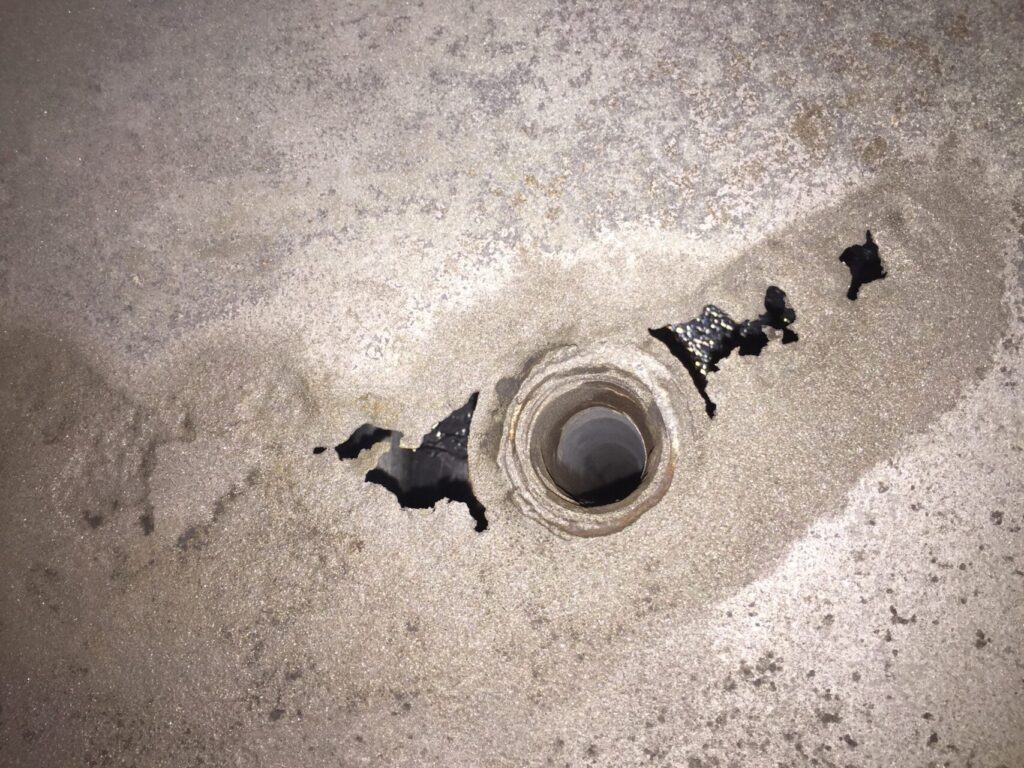
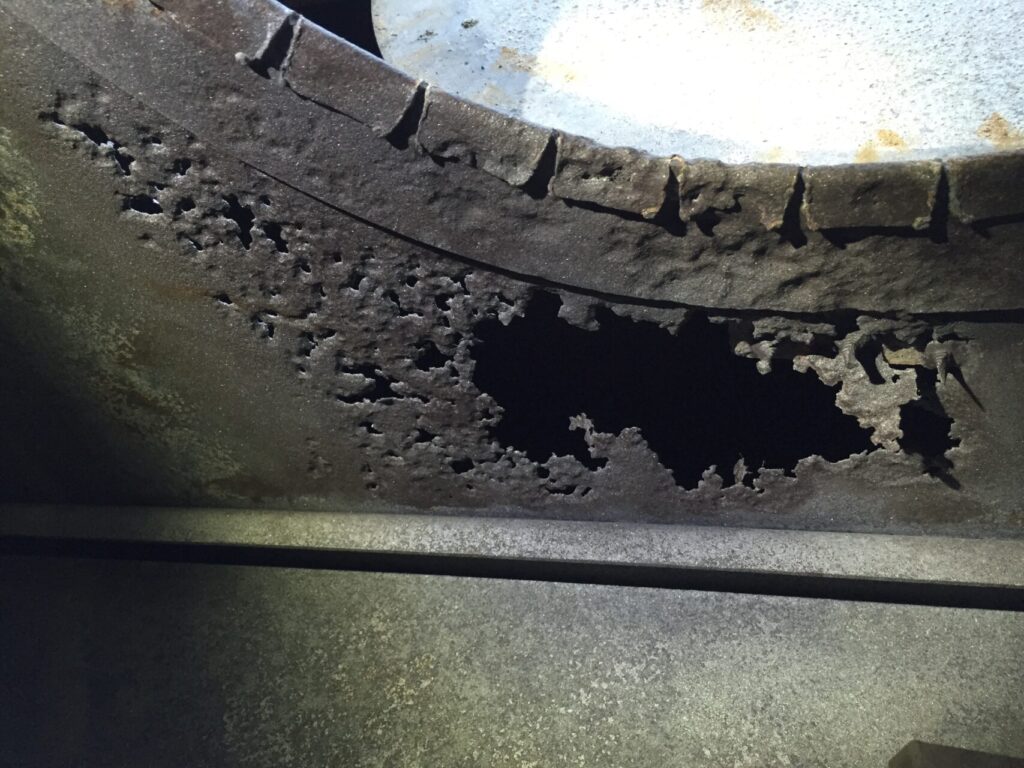
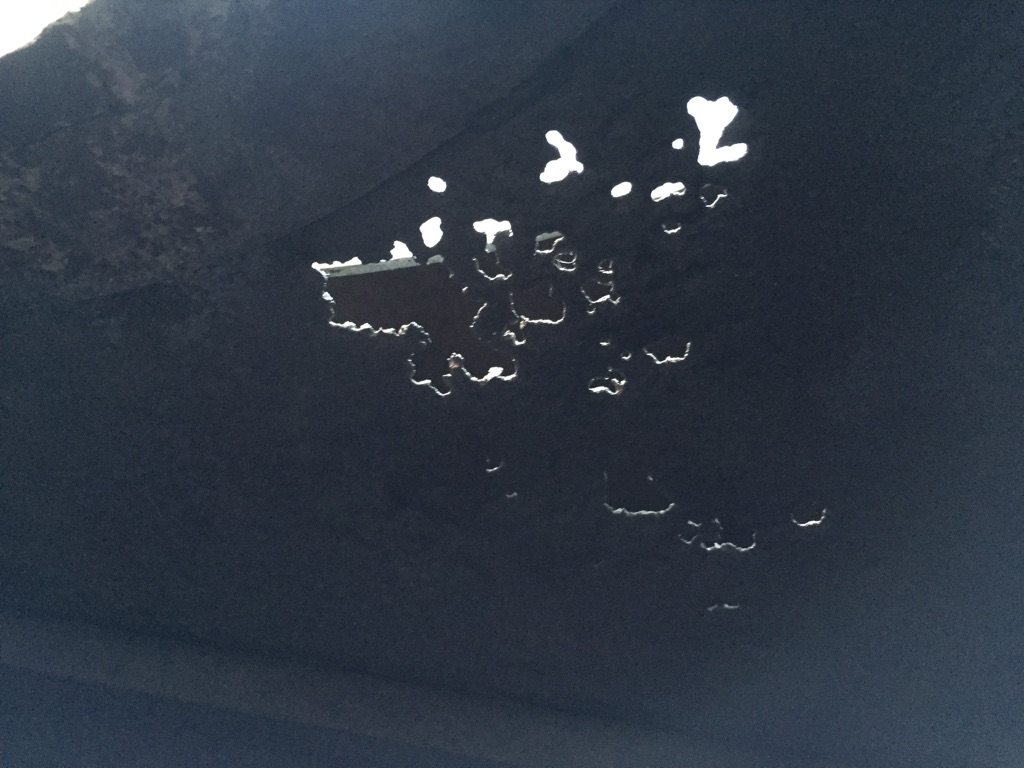
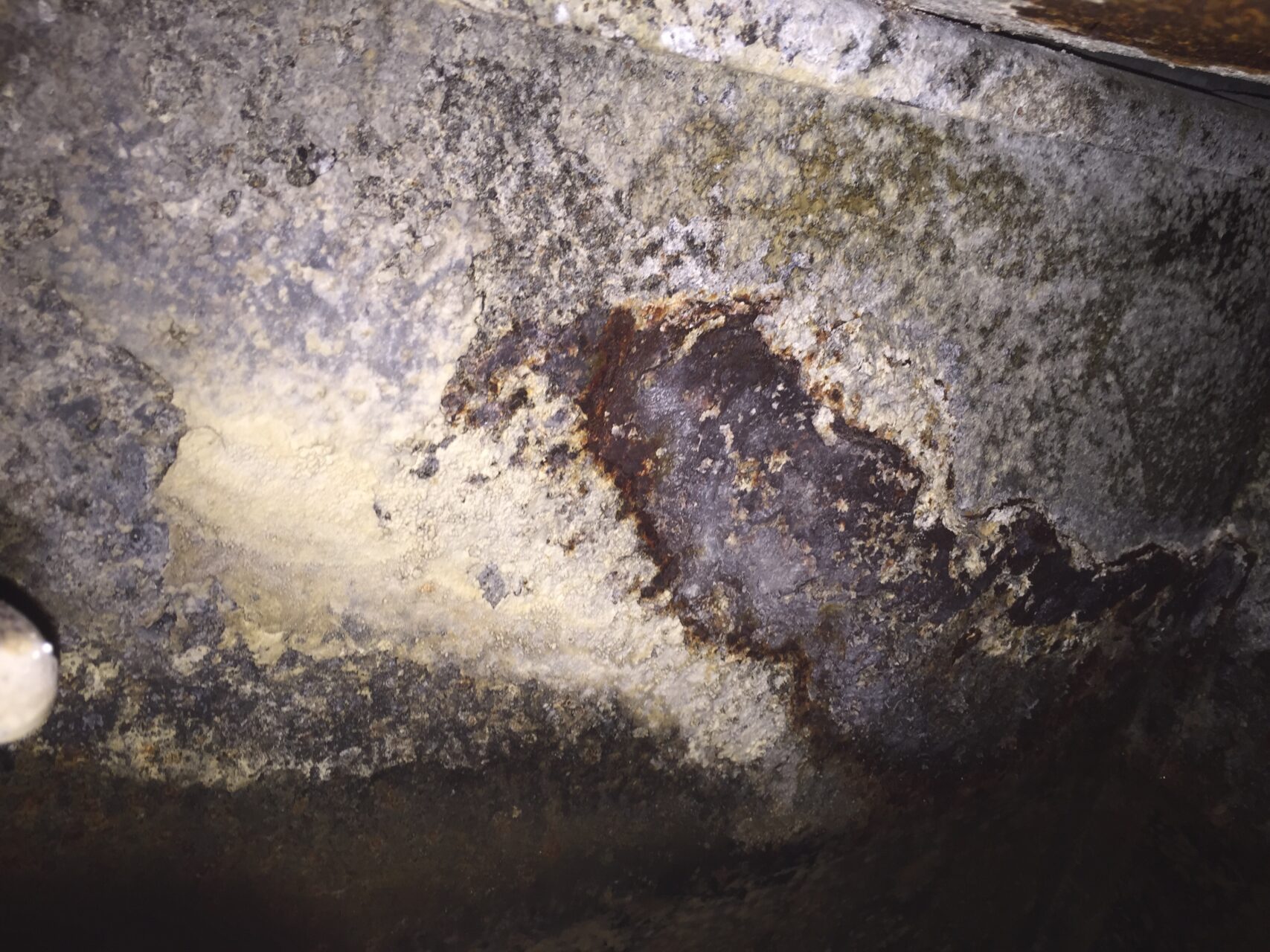
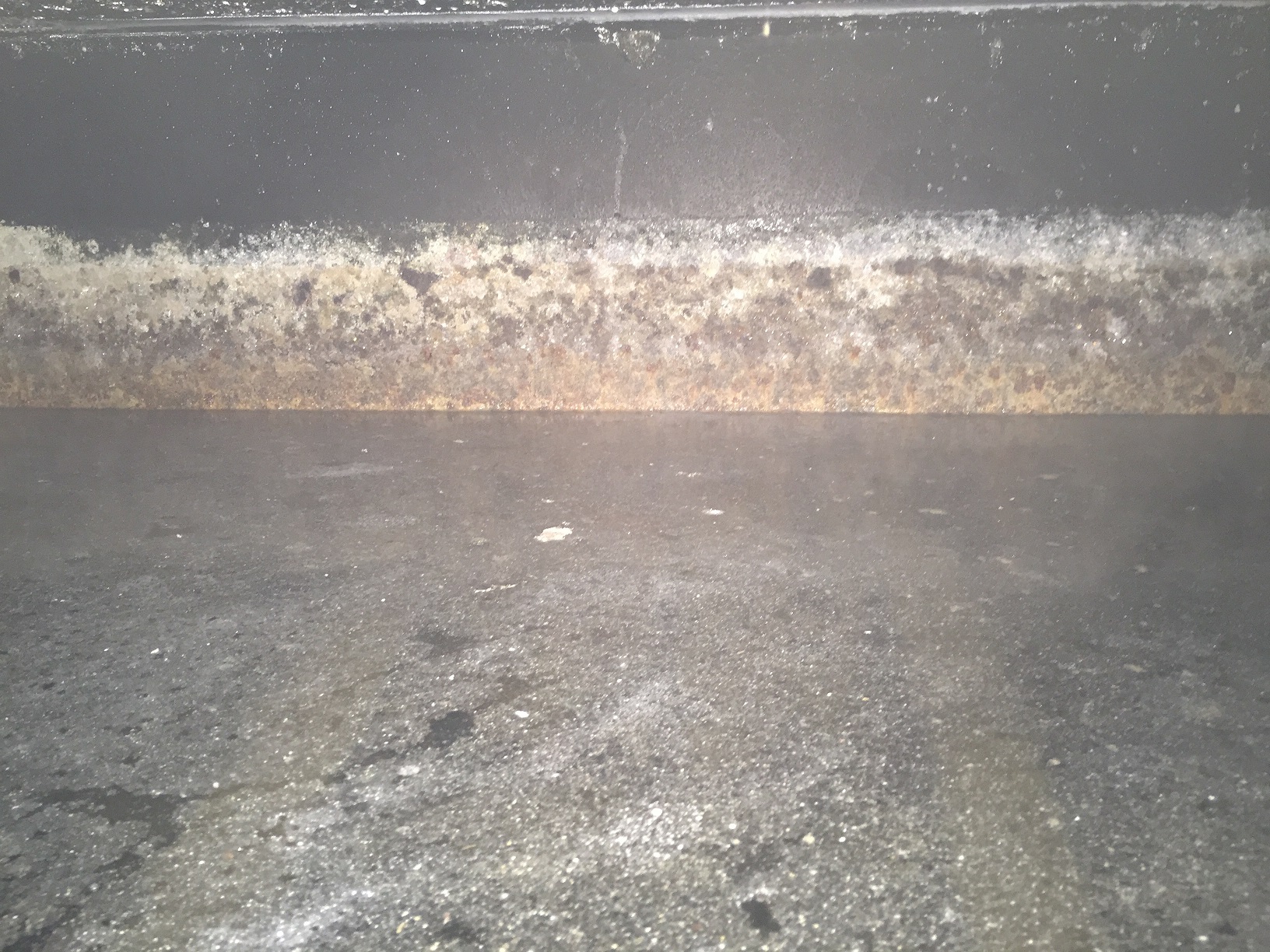
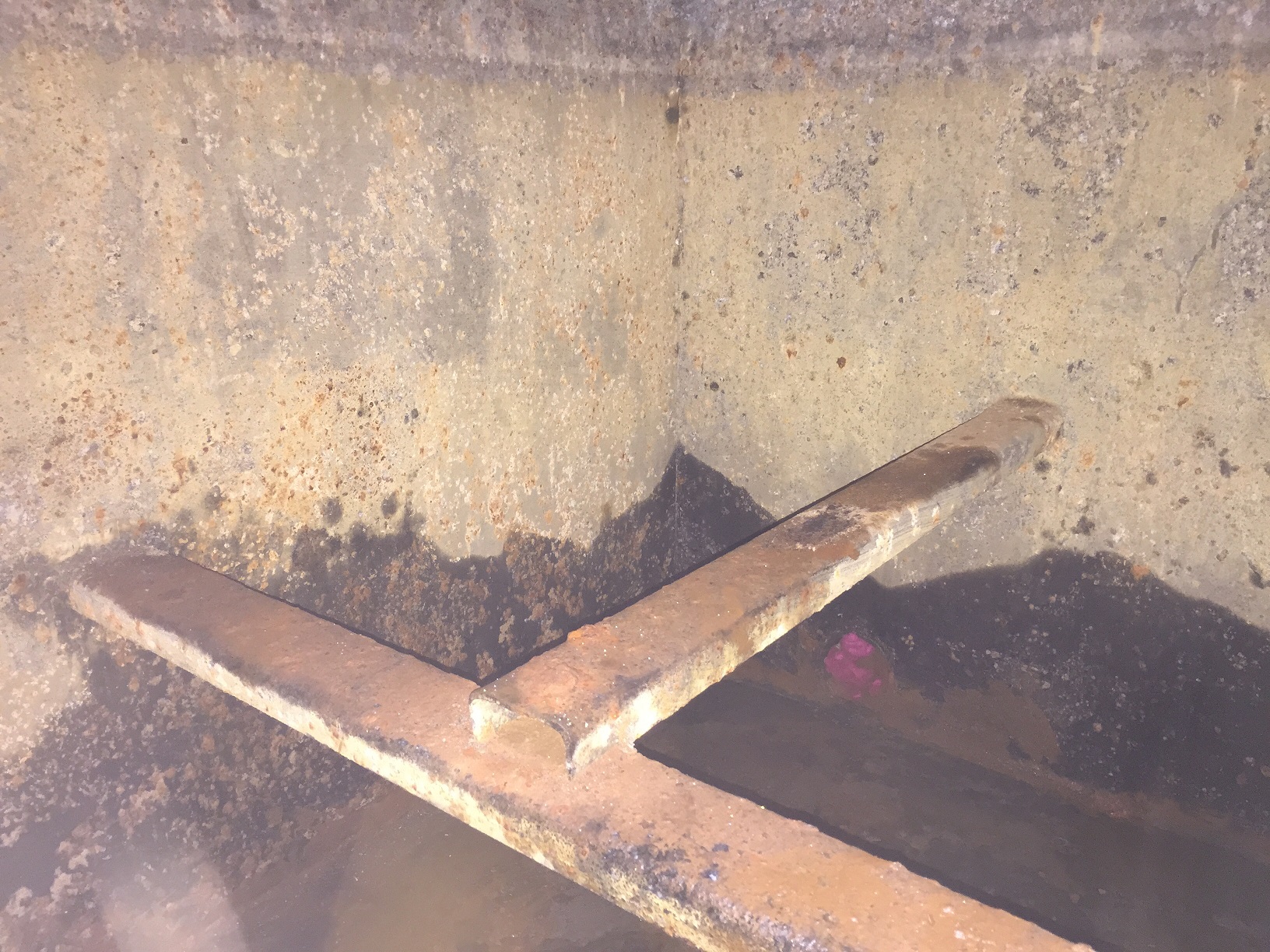
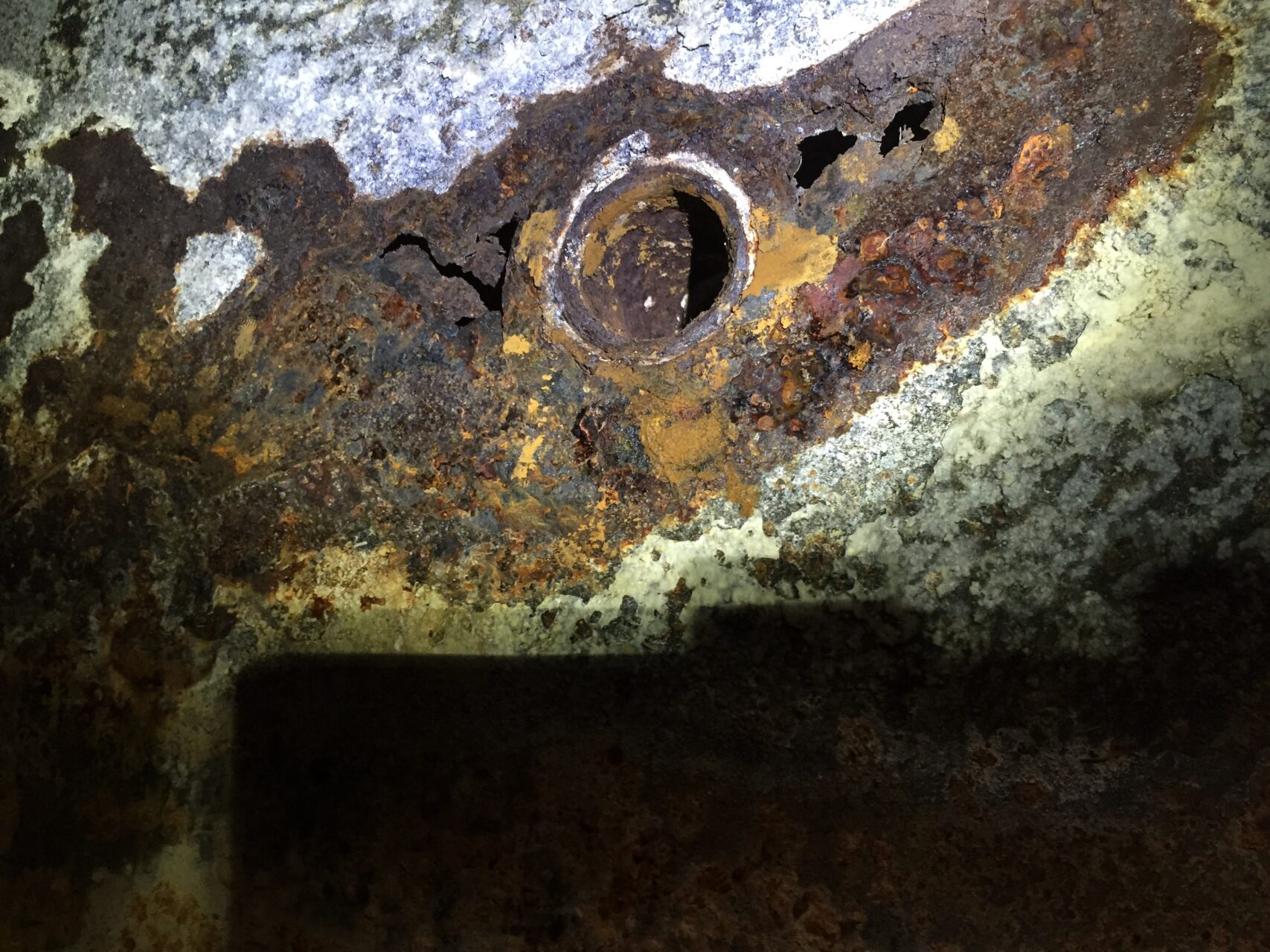
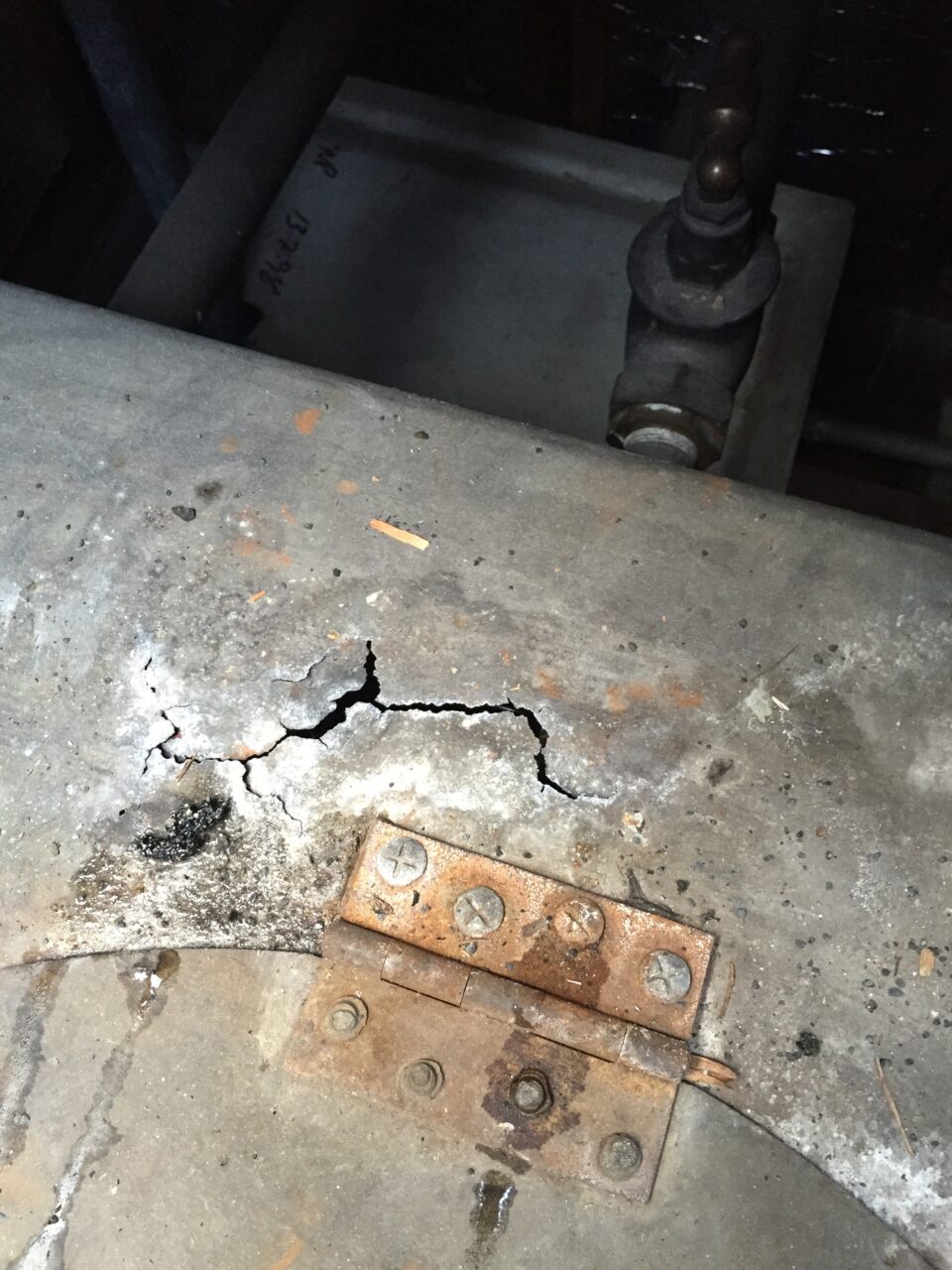
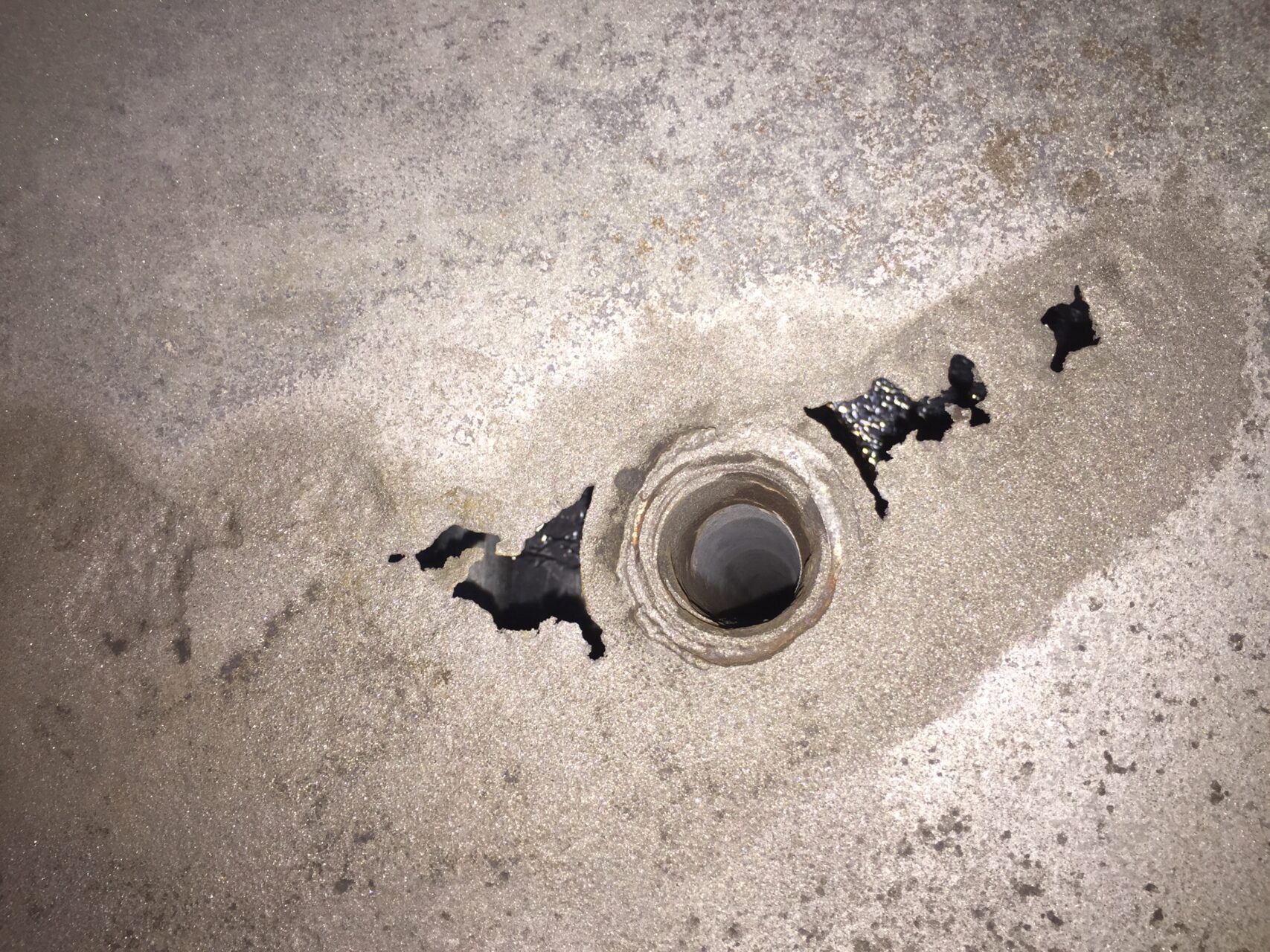
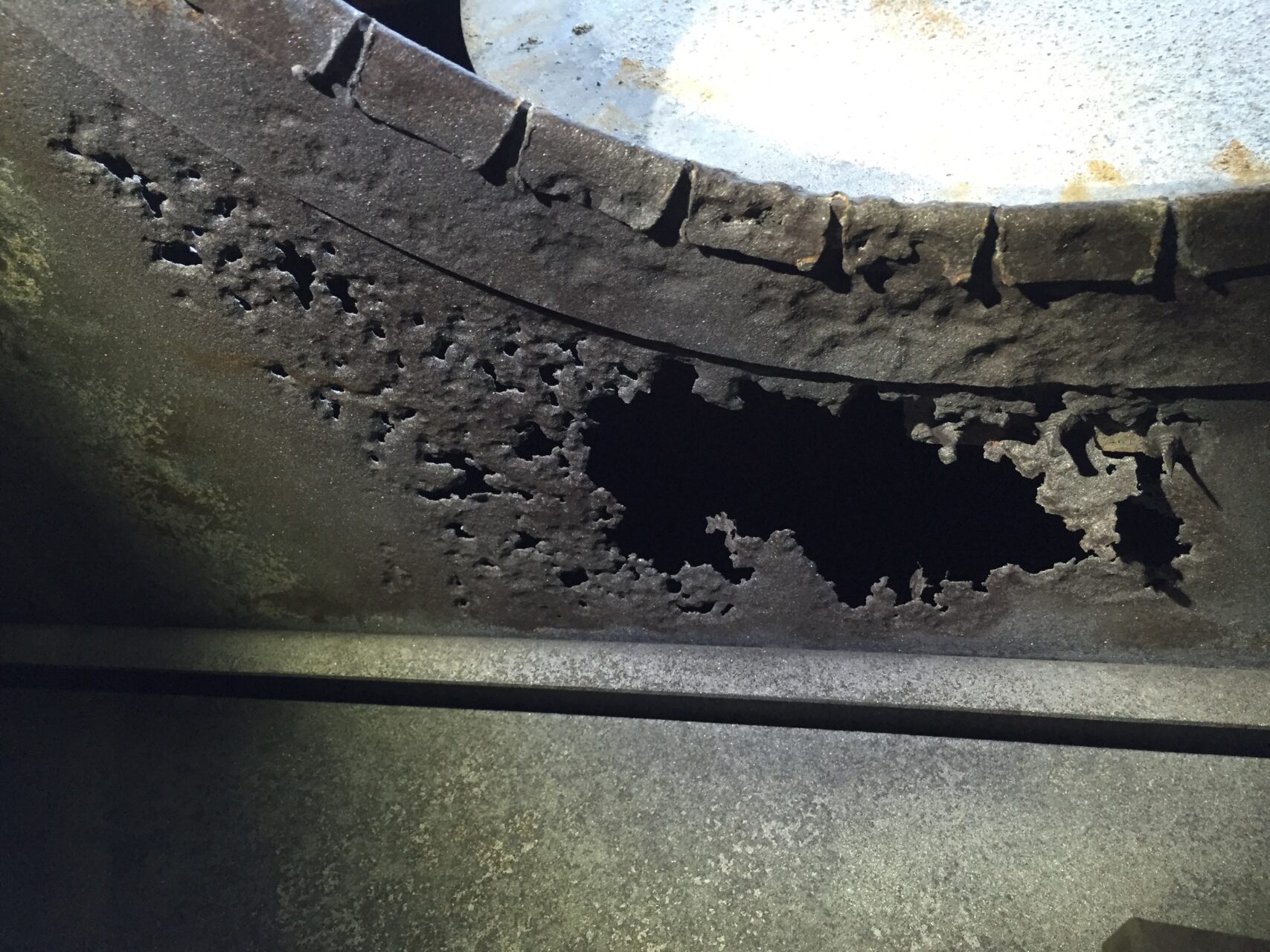
Once drained, the tanks showed that the original galvanising and an old bitumen-based coating had broken down. Rust was breaking through across the walls, there was a heavy band of corrosion at the waterline and the internal bracing was badly rusted. Around the access hatch and the pipe connections the corrosion had eaten right through the steel, and from outside a crack had opened up in the tank lid beside the hatch hinge.
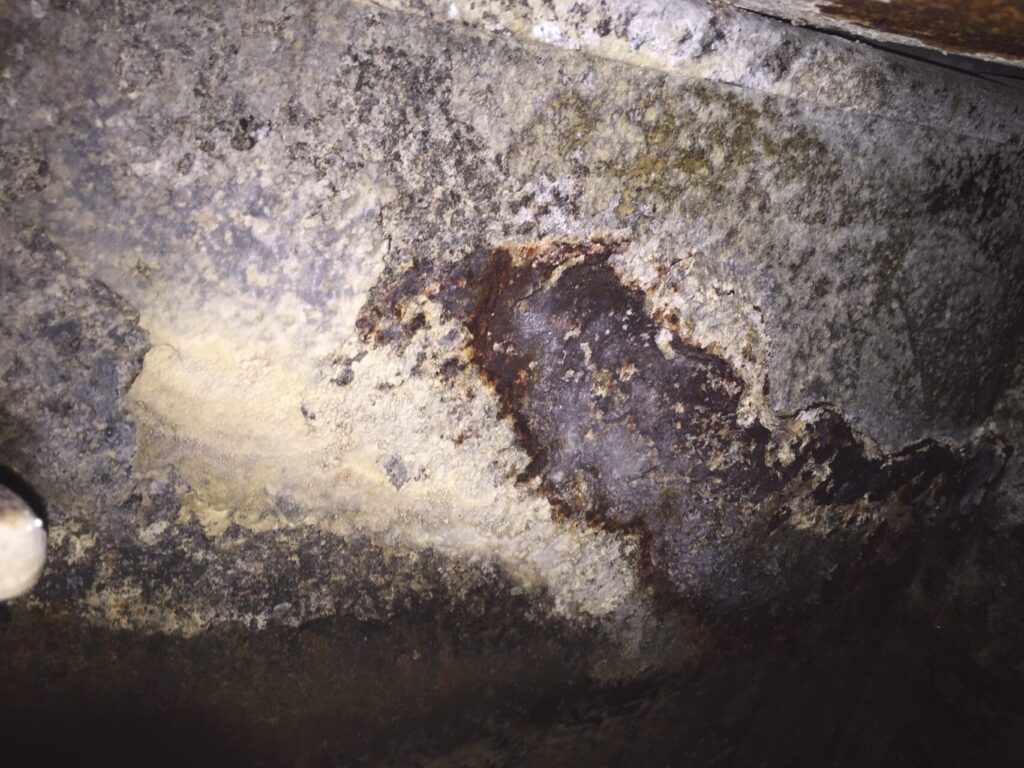
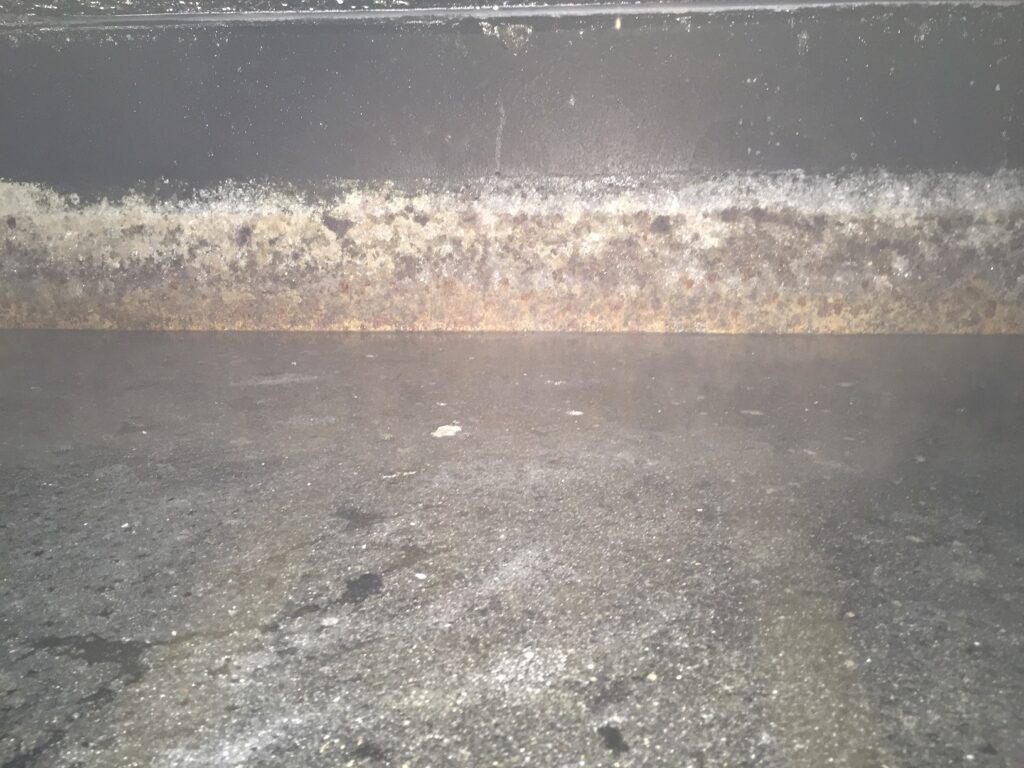
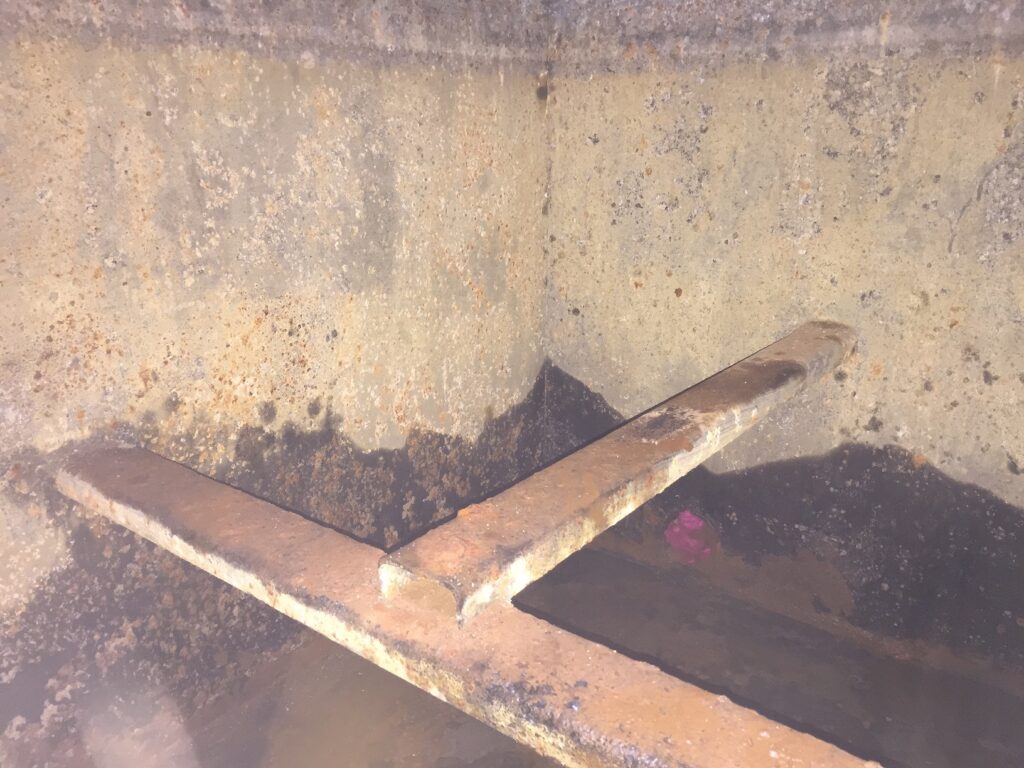
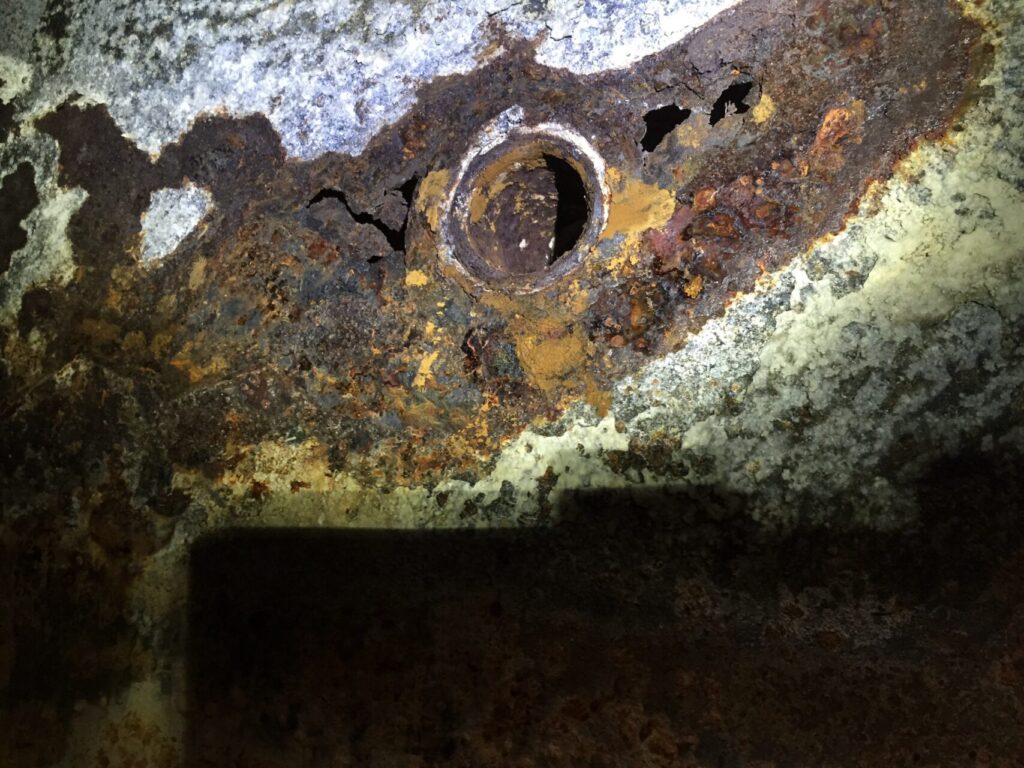
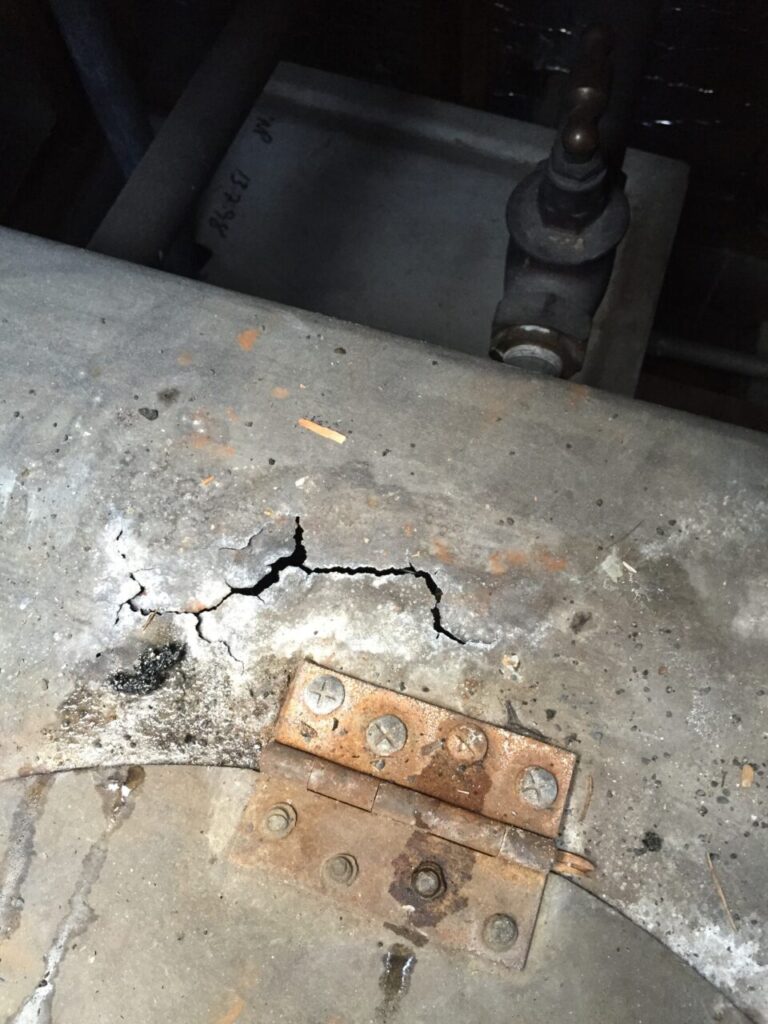
Corroded, uneven surfaces inside a drinking water tank give bacteria such as legionella somewhere to take hold, and holes in the roof let in dirt, debris and insects. Left alone, the corrosion would soon lead to leaks and the cost of replacing the tanks. The client needed the tanks repaired and relined with a hygienic, WRAS approved lining, with the work fitted around the school timetable.
THE SOLUTION
Safe access and site set up
Because the tanks are on a school roof, scaffold edge protection, tied-in access ladders and a hoist for equipment and materials were installed at the weekend, so no scaffold vehicles or erection work took place while pupils were on site, and the works were programmed around the school half-term.
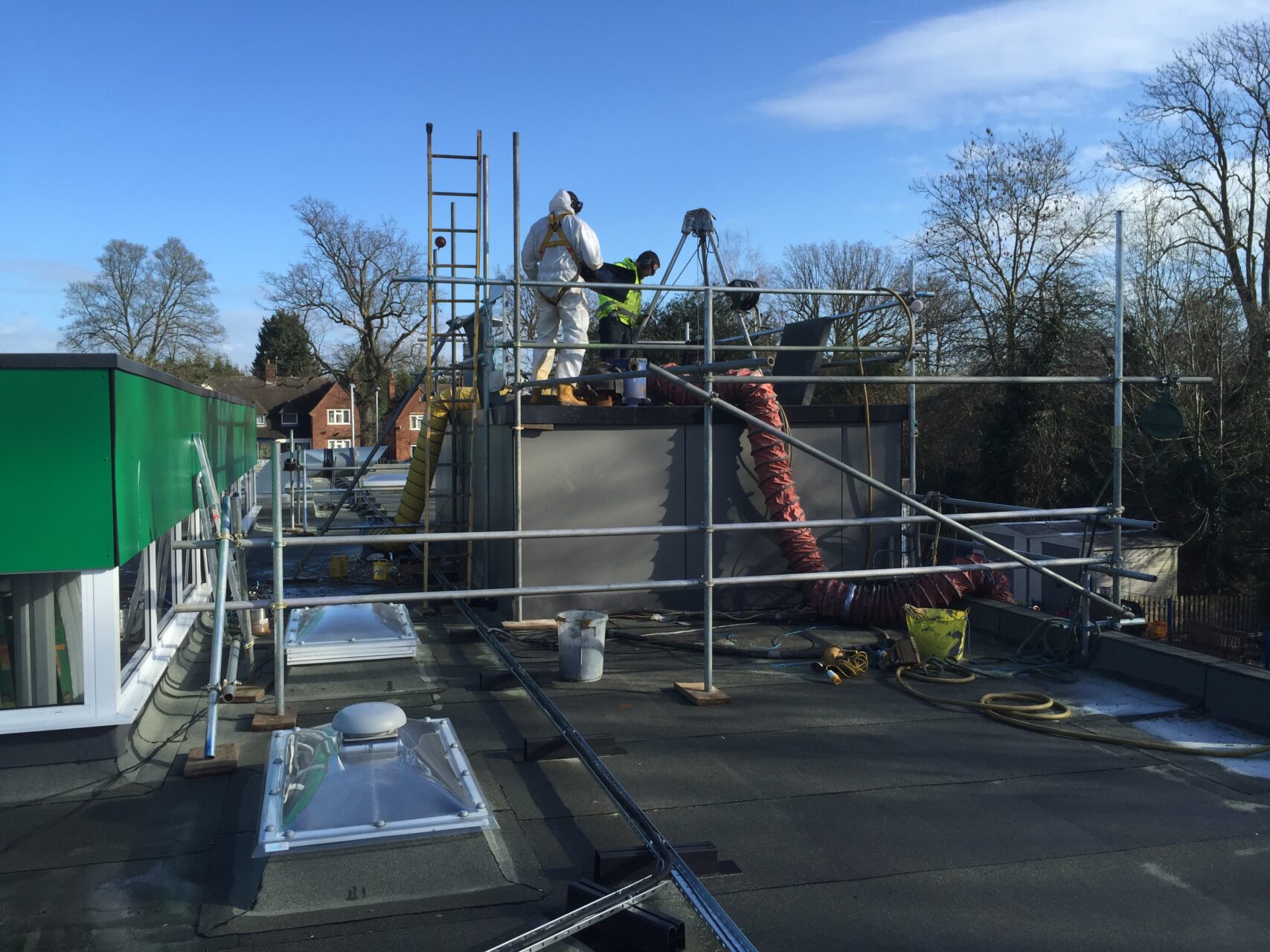
Each tank was treated as a confined space. The tanks were isolated and drained before work began, gas detector readings were taken before every entry and a winched tripod rescue system was set up over the access hatch, with a trained top man in attendance. Forced-air extraction was run into each tank throughout blasting and coating to keep the air clear.
Grit blasting
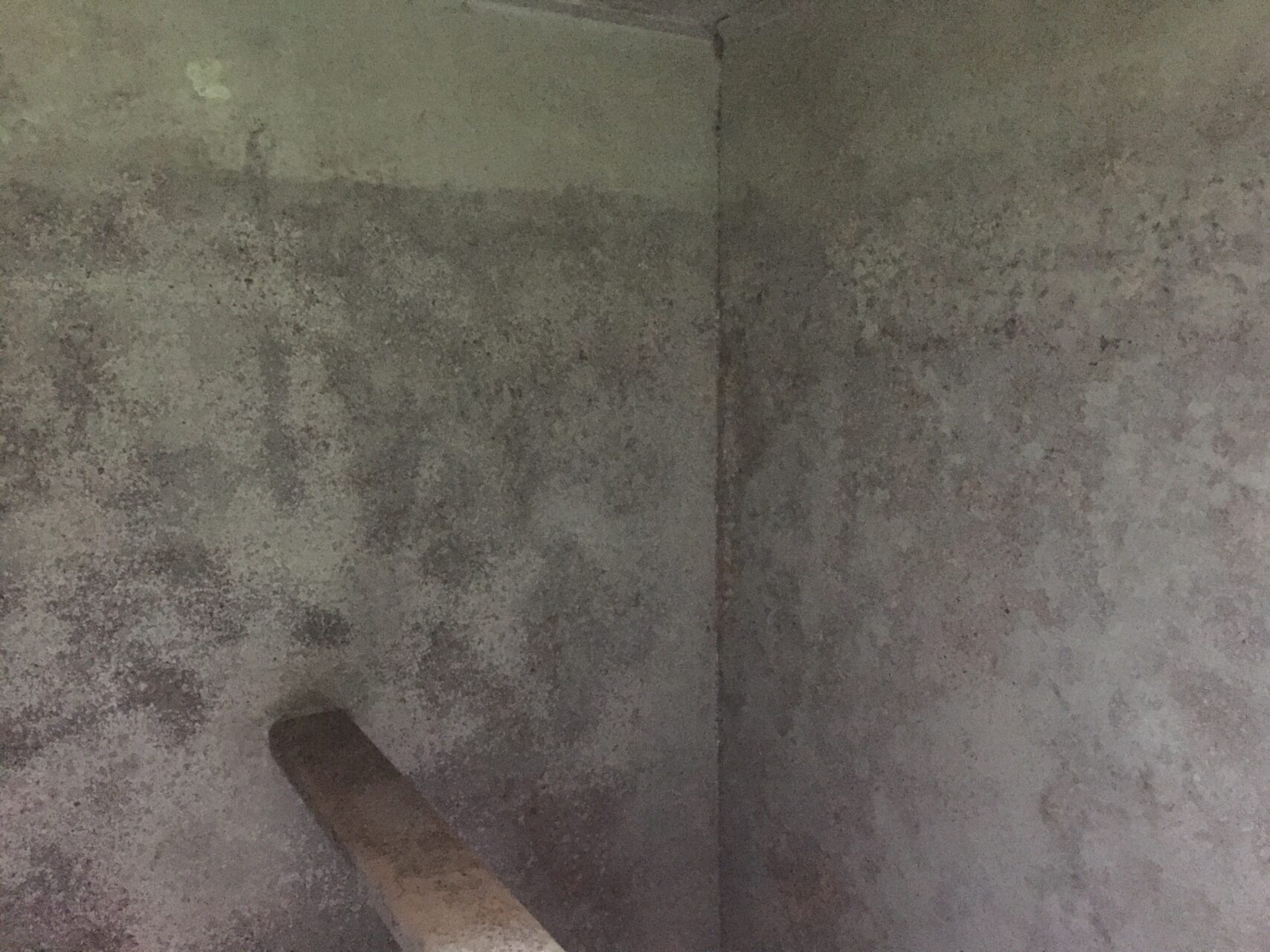
All internal surfaces – walls, floor, roof underside and bracing – were grit blasted to Sa 2.5 (ISO 8501-1), removing the old coating and corrosion back to clean steel and raising a sharp surface profile for the new lining to key into. Any areas of laminated rust were broken out with needle guns and tungsten carbide scrapers, and the tanks were vacuumed clean with three-stage vacuums to remove all dust and spent abrasive.
Quality checks before lining
Before any coating was applied, the prepared steel was inspected against the specification:
Surface preparation – the blasted steel was checked visually against the Sa 2.5 standard and the surface profile measured to confirm the 50 – 75 micron profile required by the Corroless EPF data sheet had been achieved. The profile is the key the lining grips on to.
Cleanliness – after vacuuming, surfaces were checked for dust and debris, as anything left on the steel would be trapped under the lining and weaken its bond.
Climatic conditions – air temperature, relative humidity, dew point and steel temperature were monitored before and during each coat, with relative humidity kept within the 85% limit set by Corroless for RF35. Keeping the steel at least 3°C above the dew point prevents condensation forming on the surface, which would stop the coating bonding and cause it to fail early.
Plate repairs
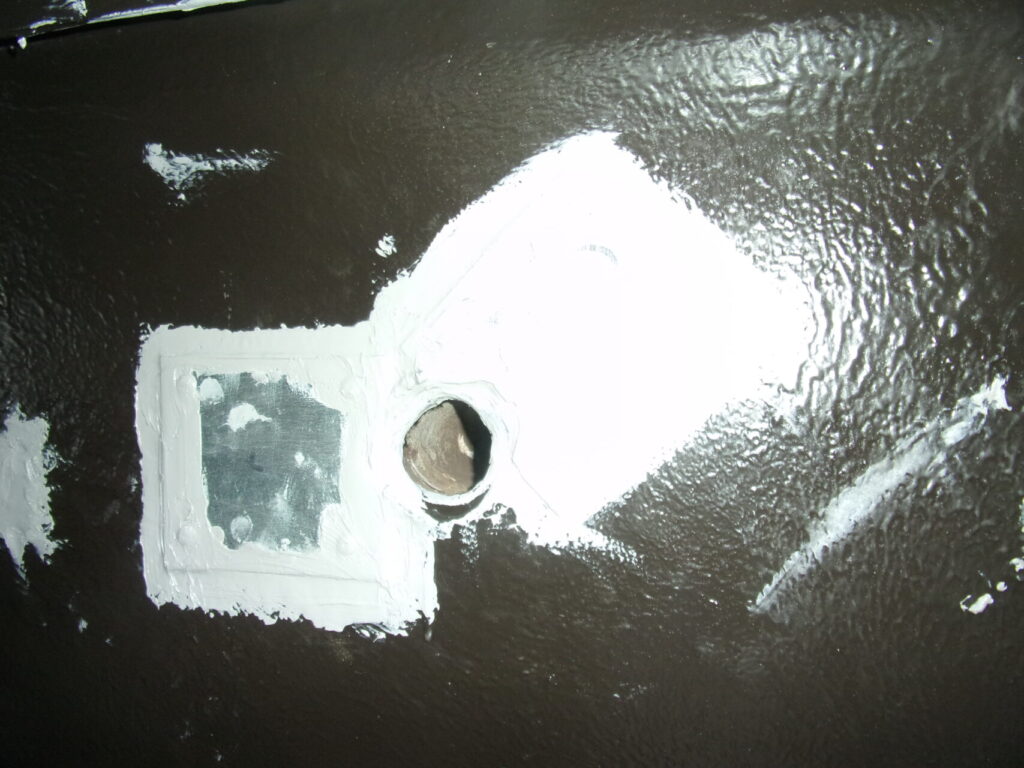
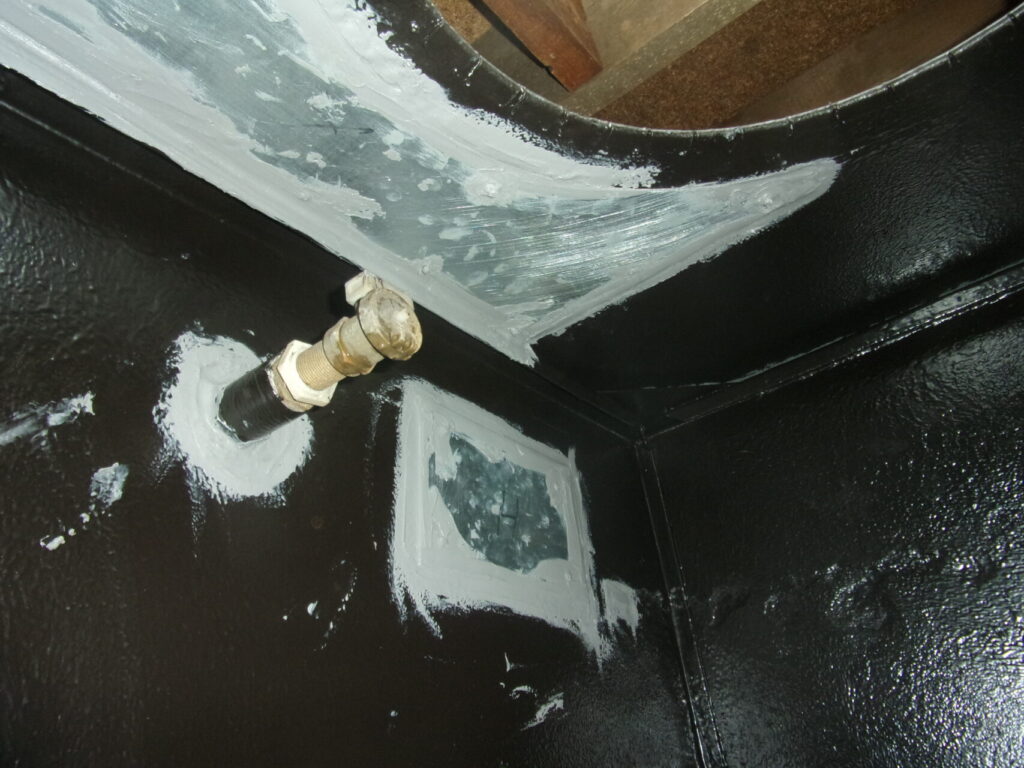
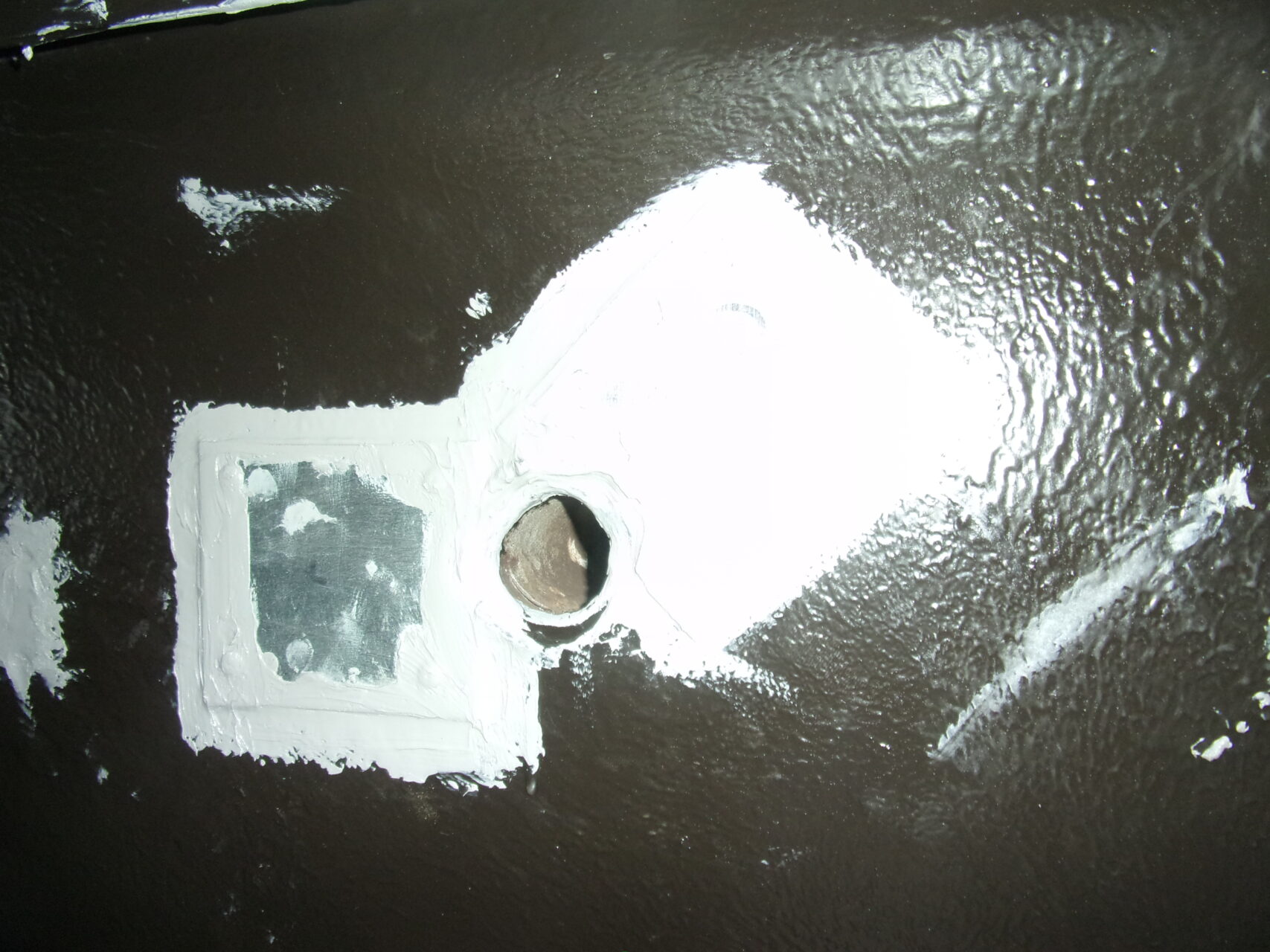
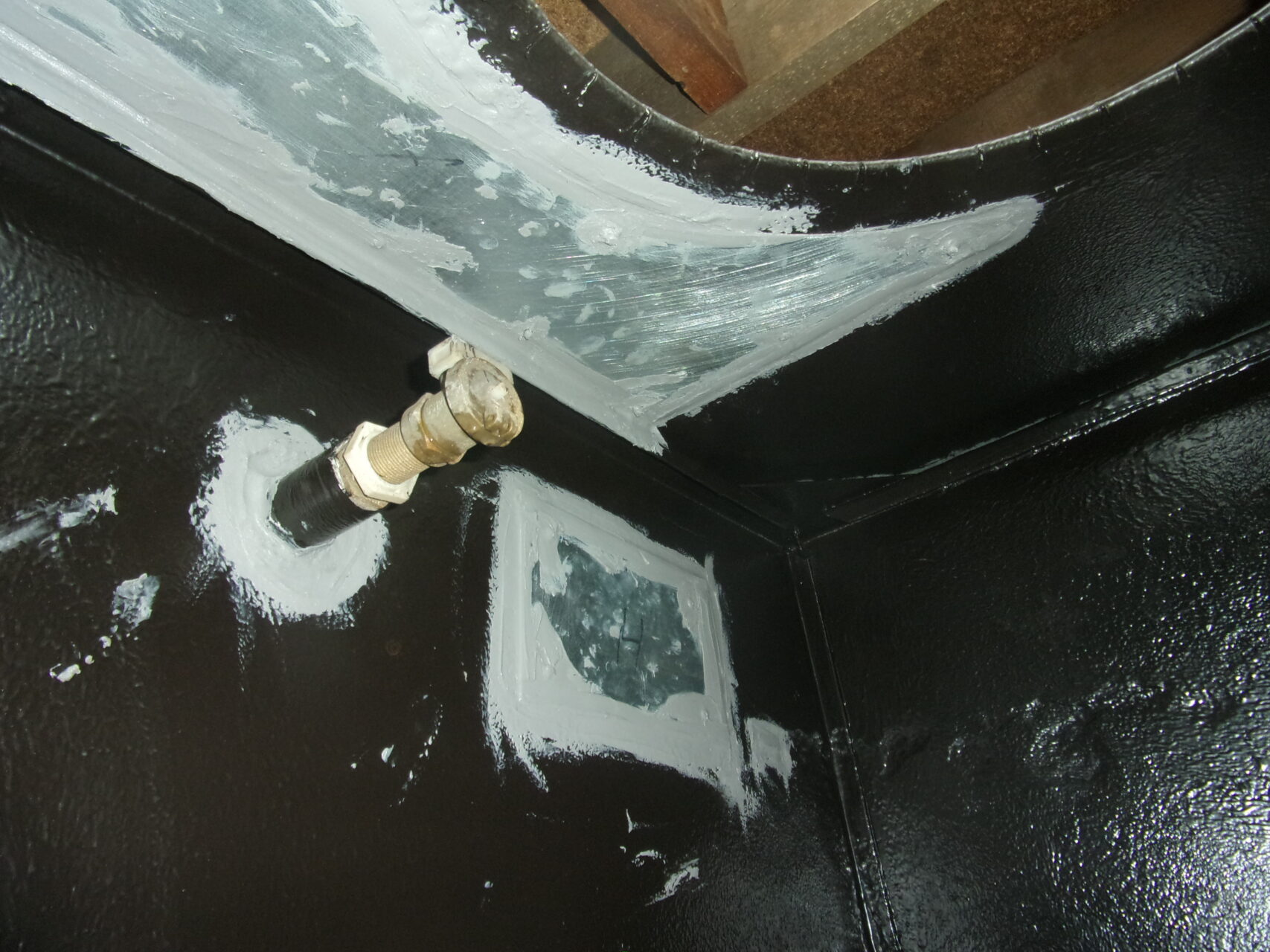
With the client’s agreement, the perforated areas around the pipe connections and the access hatch were repaired by bonding galvanised steel plates over the holes and sealing their edges, restoring a sound, continuous surface before lining. The plate repairs were then encapsulated within each coat of the lining system.
Tank lining system
The tanks were lined with a three-coat Corroless system: two coats of Corroless EPF rust-stabilising glass flake epoxy, followed by a finish coat of WRAS approved Corroless RF35 glass flake epoxy.
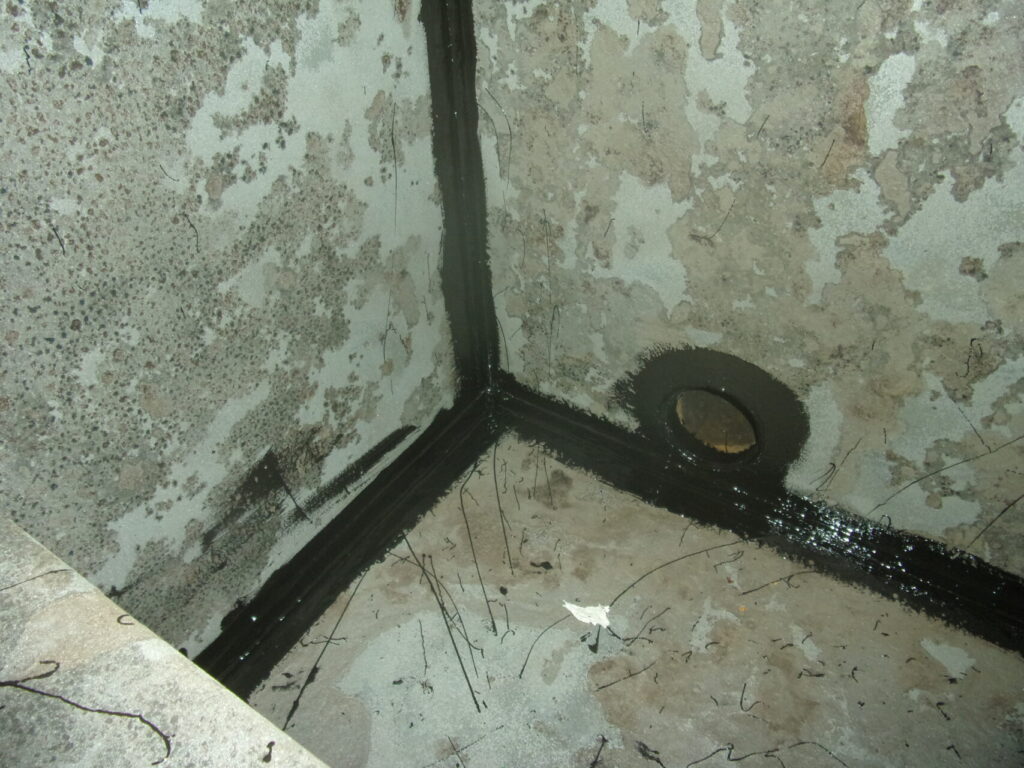
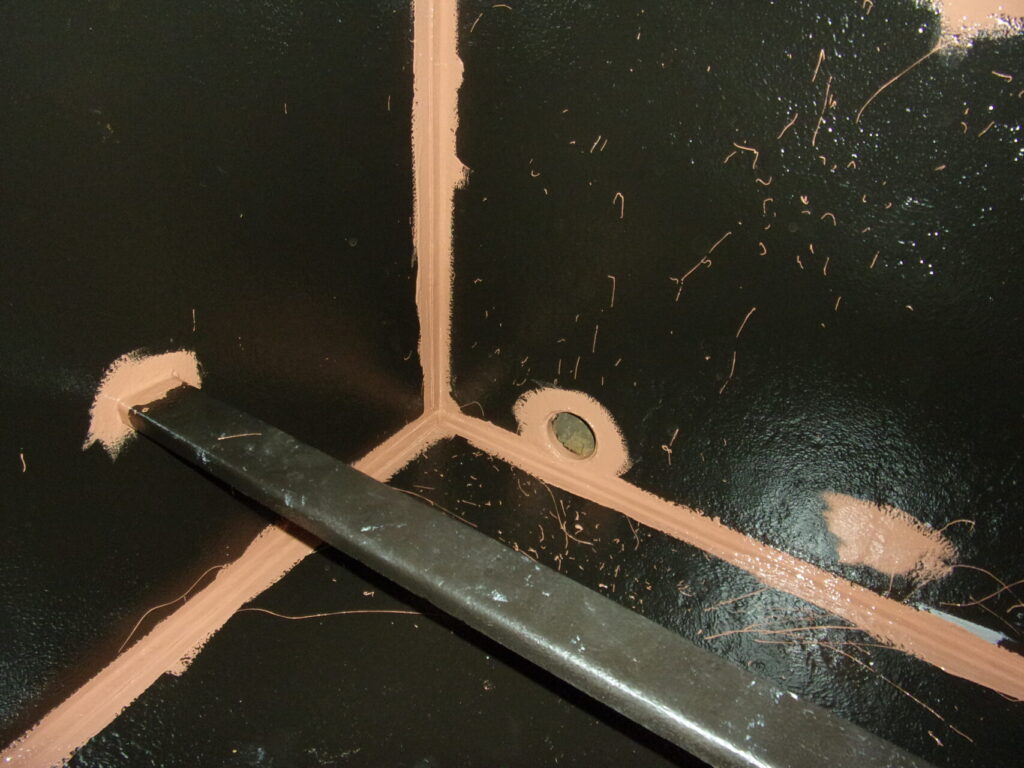
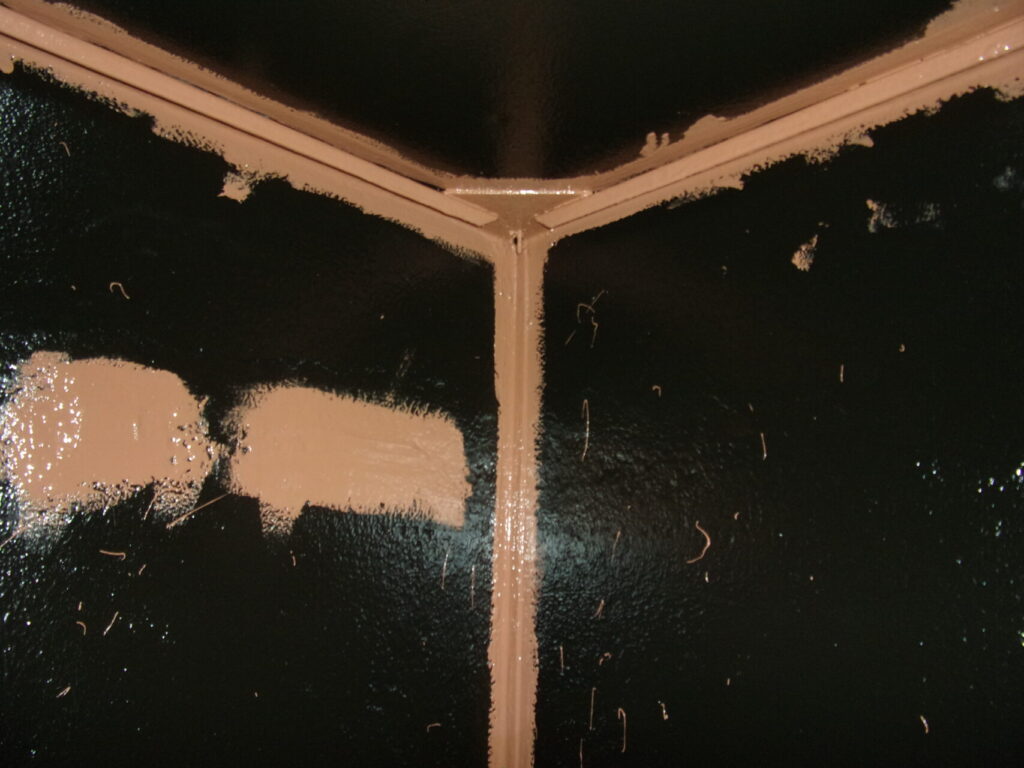
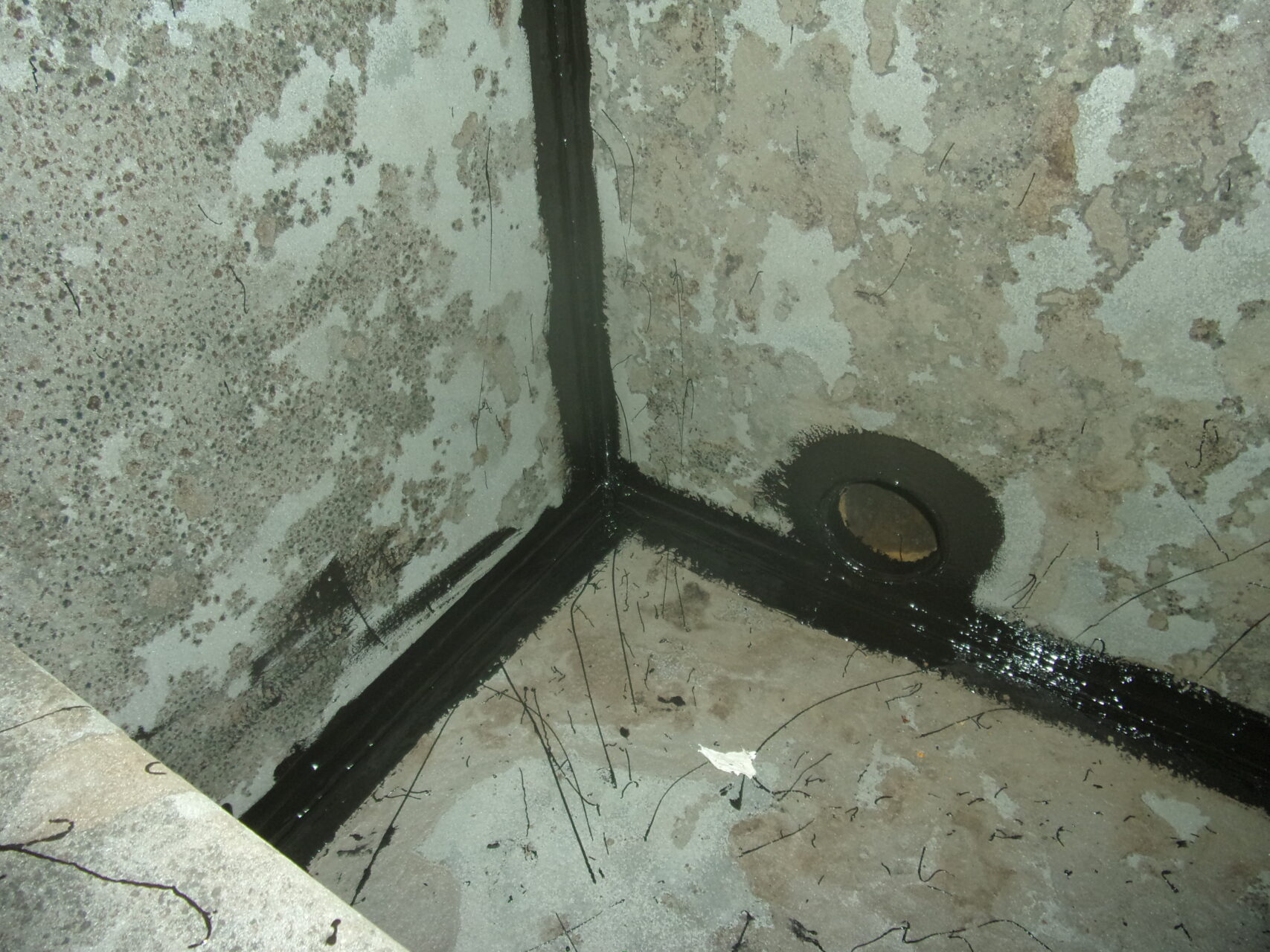
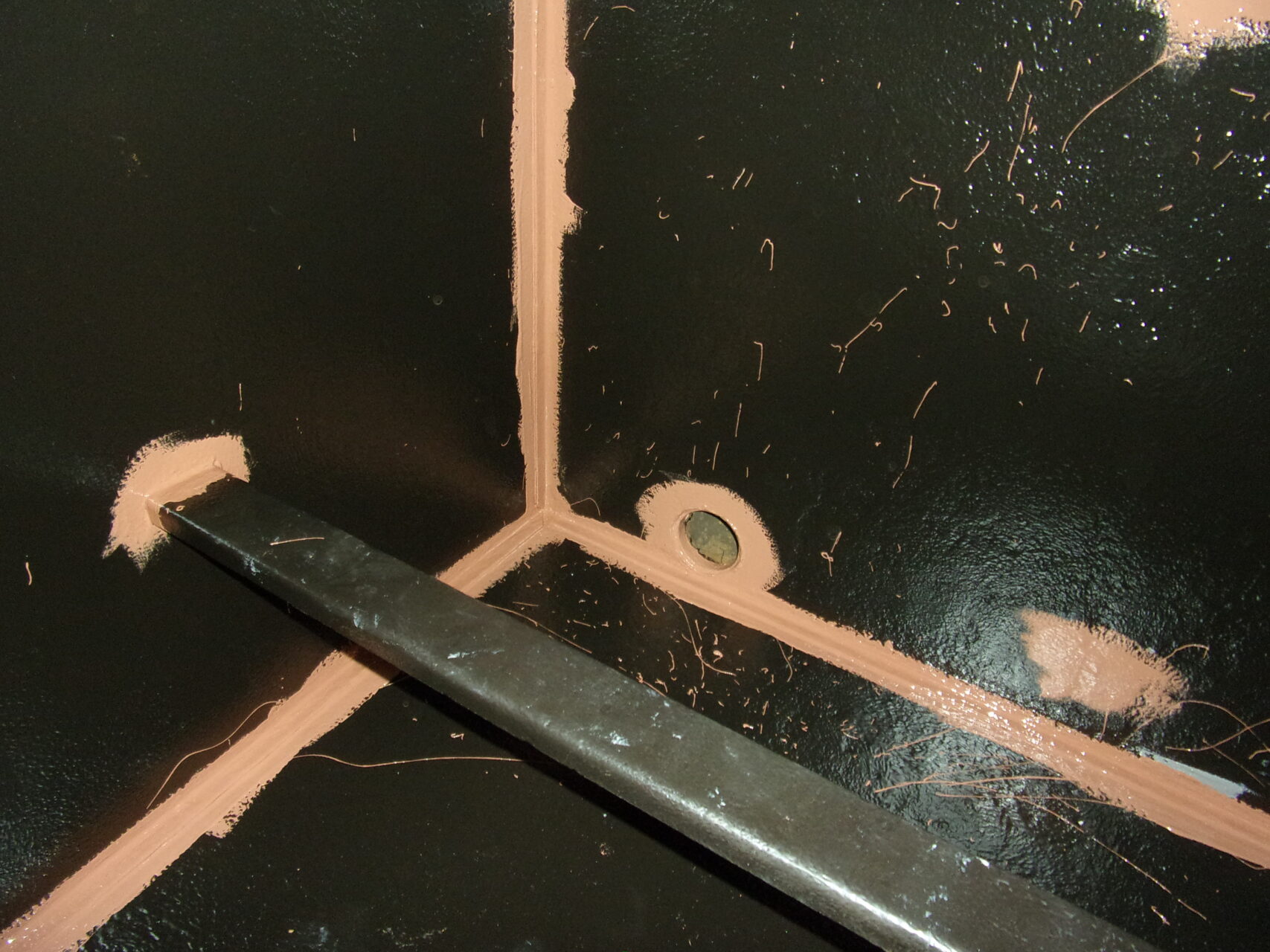
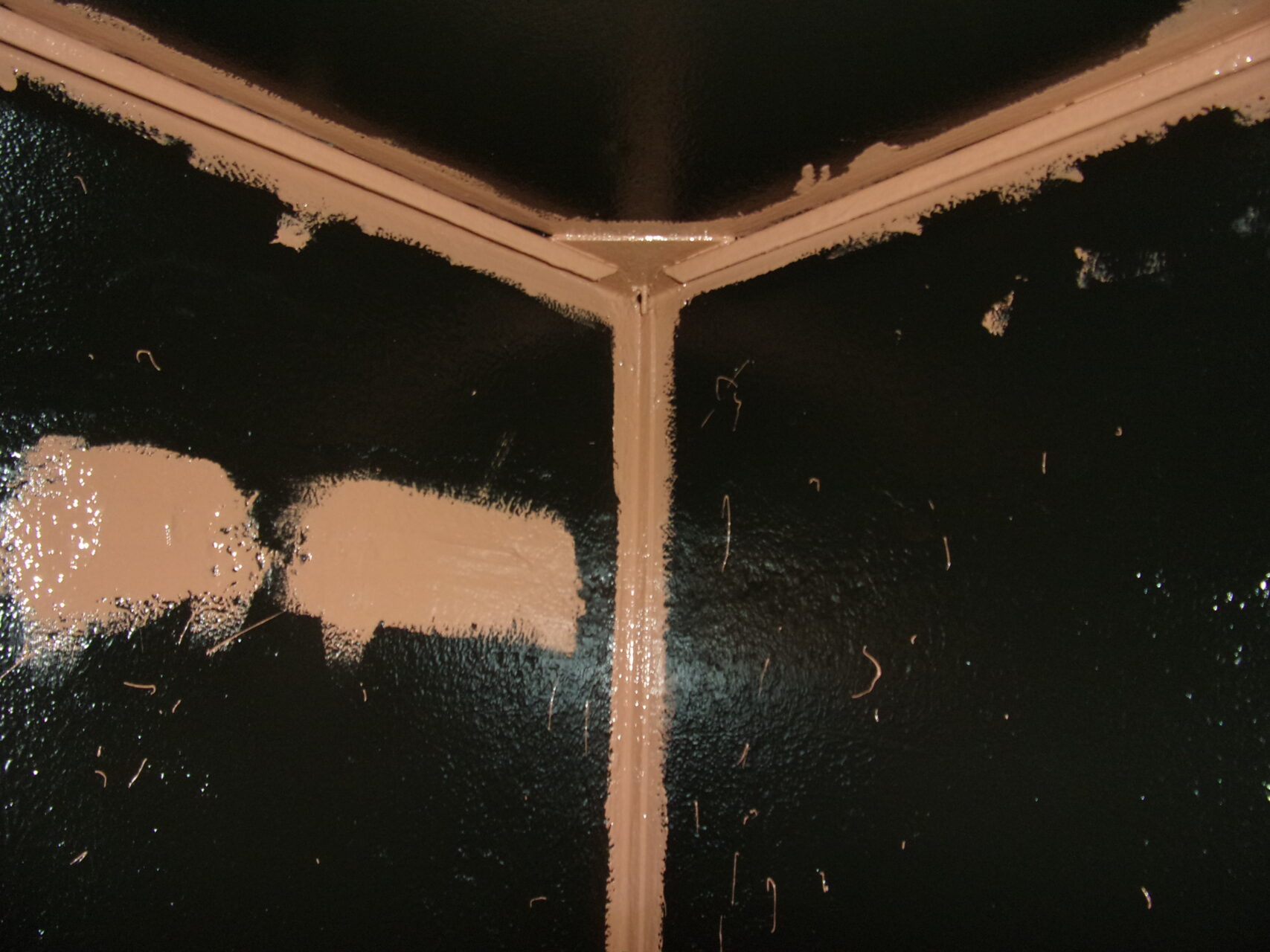
Corroless EPF contains a pigment that converts any residual corrosion into inert magnetite, along with self-leafing glass flake that overlaps within the film to form a barrier to oxygen and moisture. The first coat was applied in black at a nominal 200 microns, and the second in buff at a further nominal 200 microns. Applying each coat in a contrasting colour lets the operatives see at a glance that every surface has received full coverage.
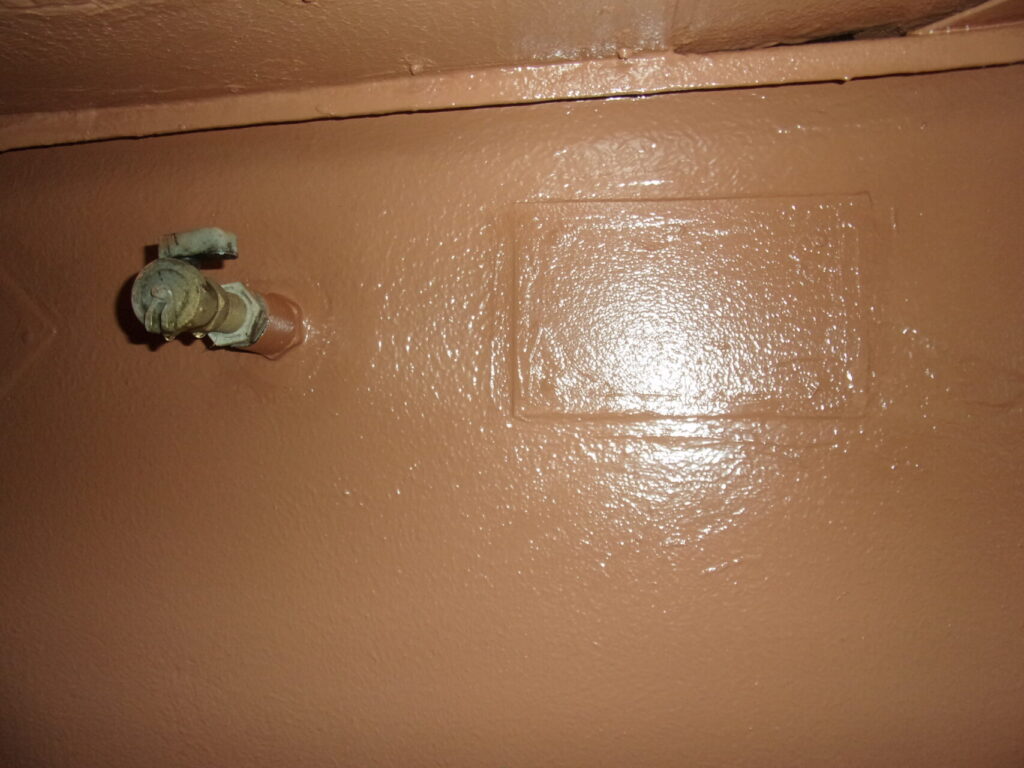
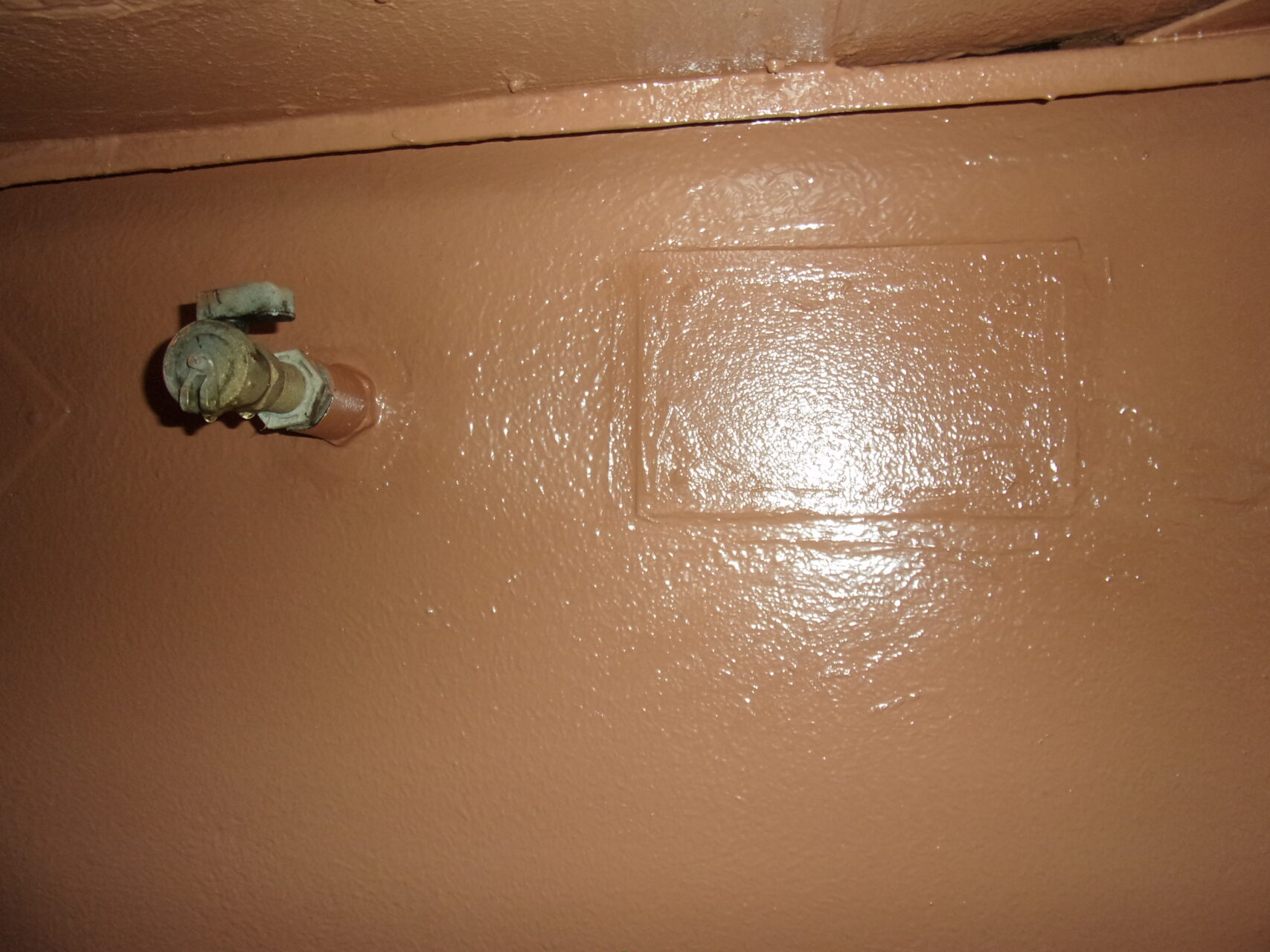
The finish coat of Corroless RF35 was then applied at a nominal 200 microns, giving a total nominal lining thickness of 600 microns. Each coat was built to the 200 micron dry film thickness given in the Corroless technical data for both products. RF35 is approved by WRAS for contact with drinking water, and its glass flake cures to a dense, smooth, tile-like finish that does not support the growth of bacteria such as legionella and is easy to keep clean.
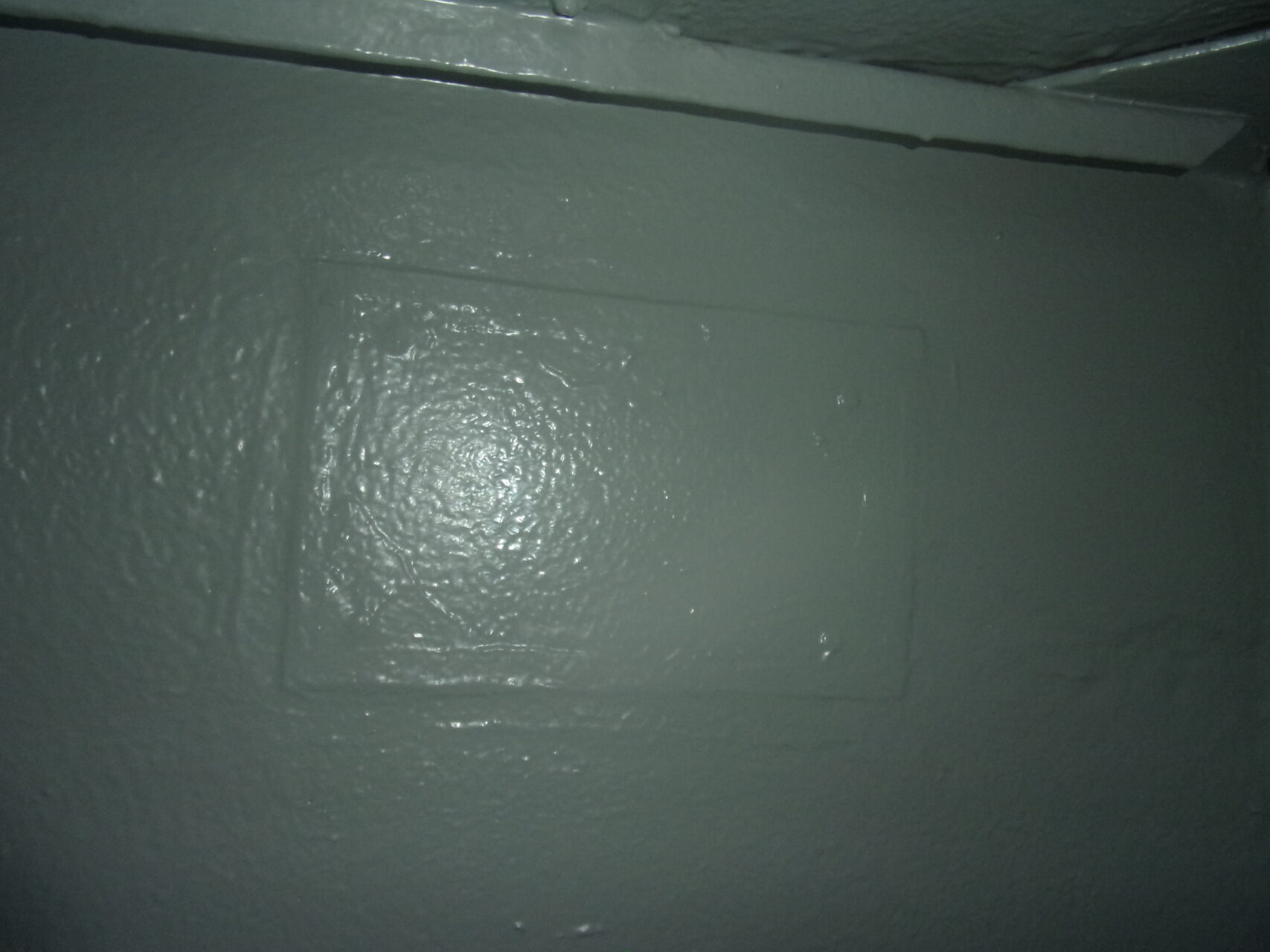
Wet film thickness was checked with a comb gauge as each coat was applied, so the coating could be built to the correct thickness while still wet.
Final inspection
Once cured, dry film thickness readings were taken across each tank to confirm the specified lining thickness had been achieved. The lining was then holiday spark tested to find any pinholes or thin spots invisible to the eye – in a water tank a single pinhole can be the starting point for corrosion under the lining. Any defects found were marked, touched in by brush with Corroless RF35 and re-tested.
THE RESULT
All three tanks now have a fully inspected, WRAS approved Corroless EPF and RF35 glass flake lining applied to correctly prepared steel, with the perforations permanently repaired. The tanks were cleaned and chlorinated before being refilled and returned to service, giving the school a hygienic, long-lasting water supply without the cost and disruption of replacing the tanks.
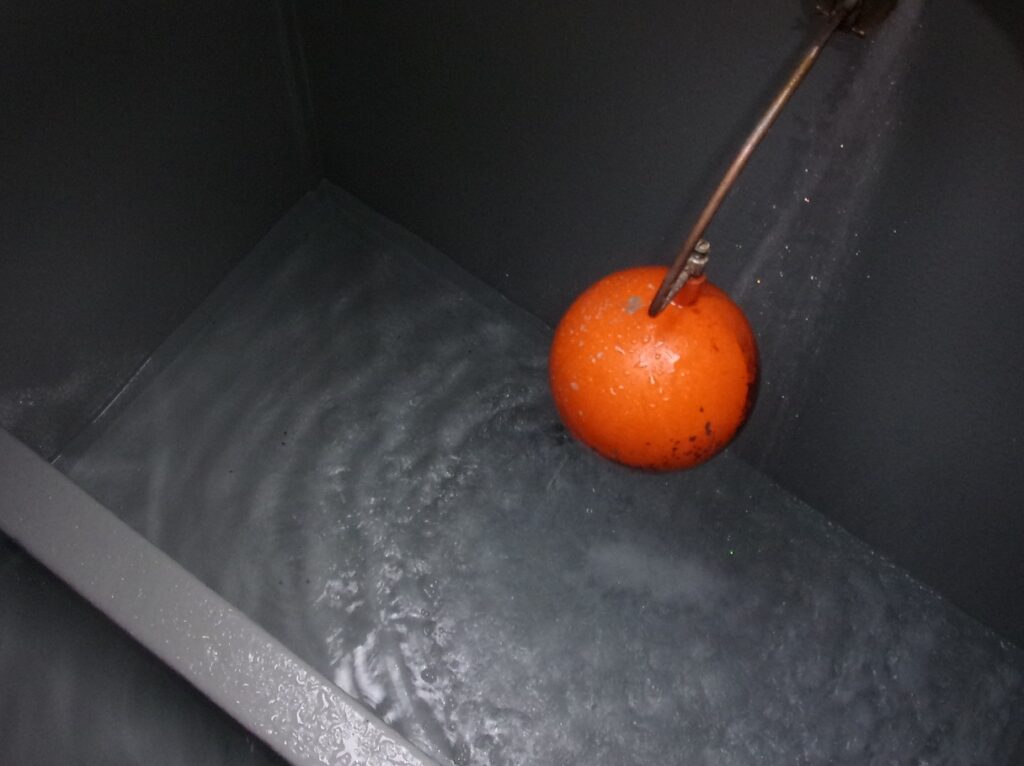
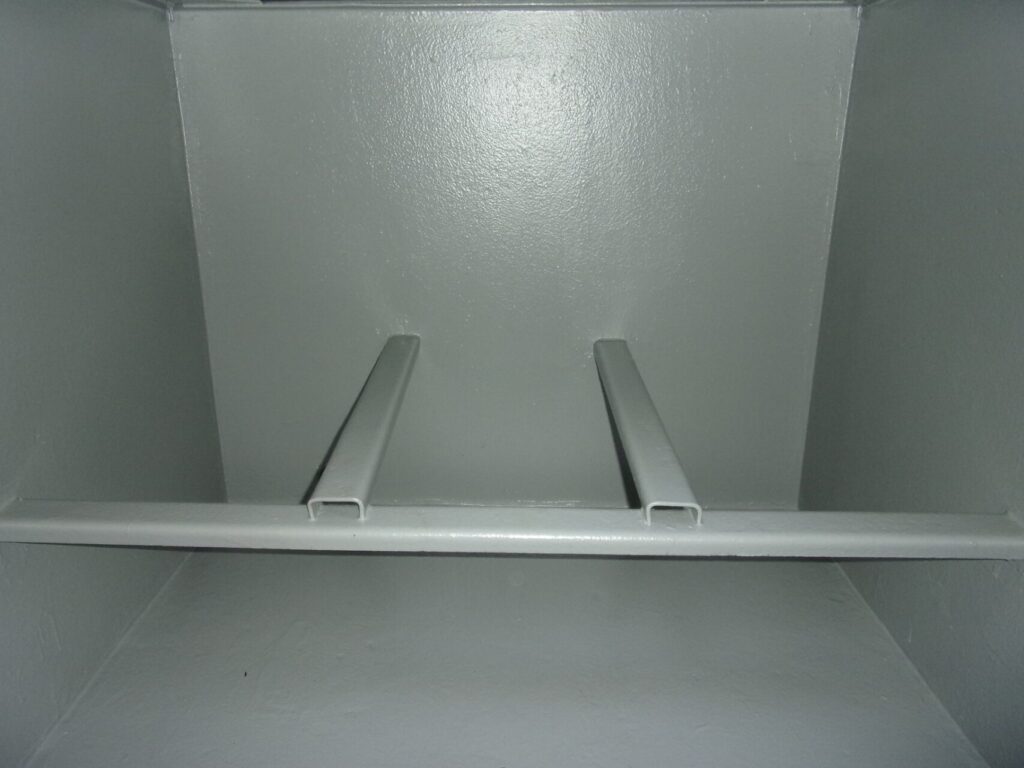
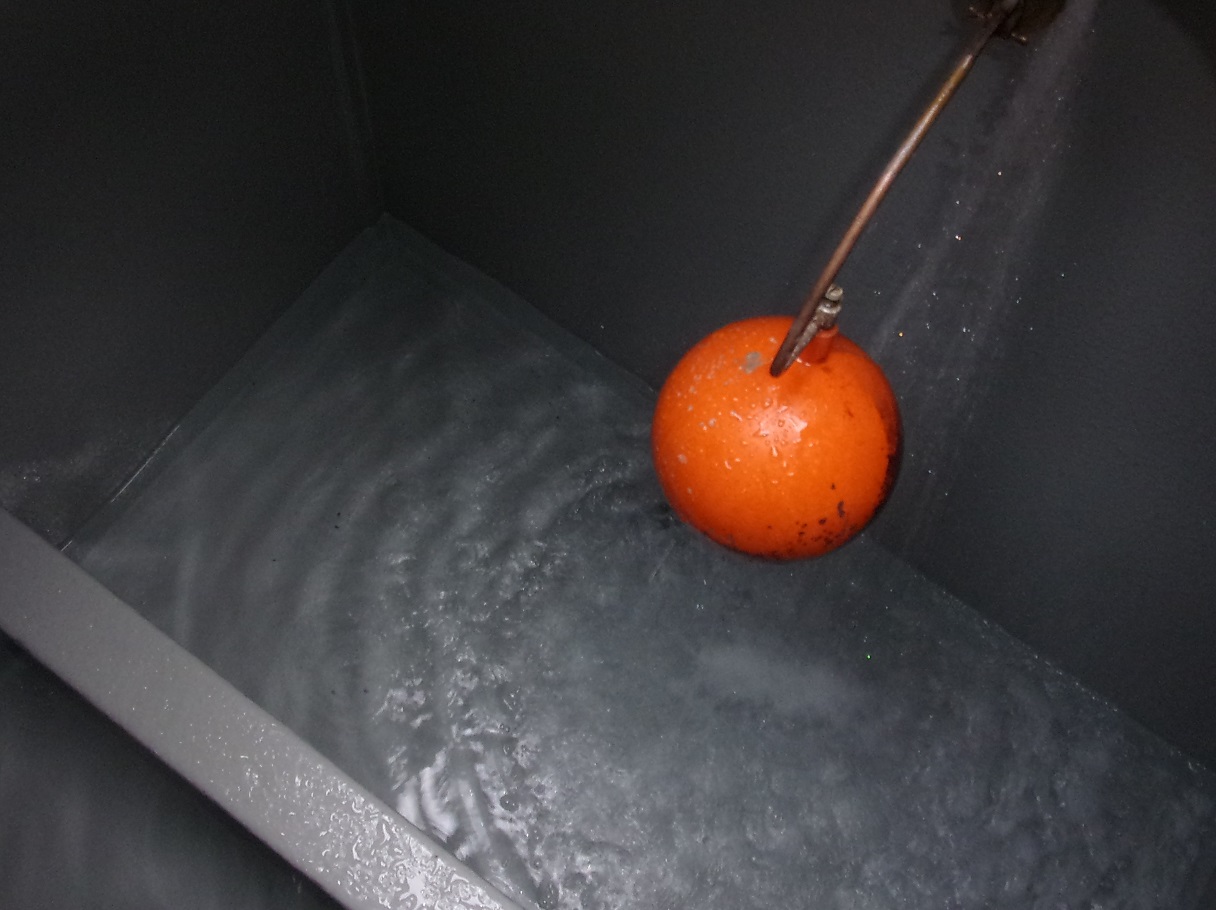
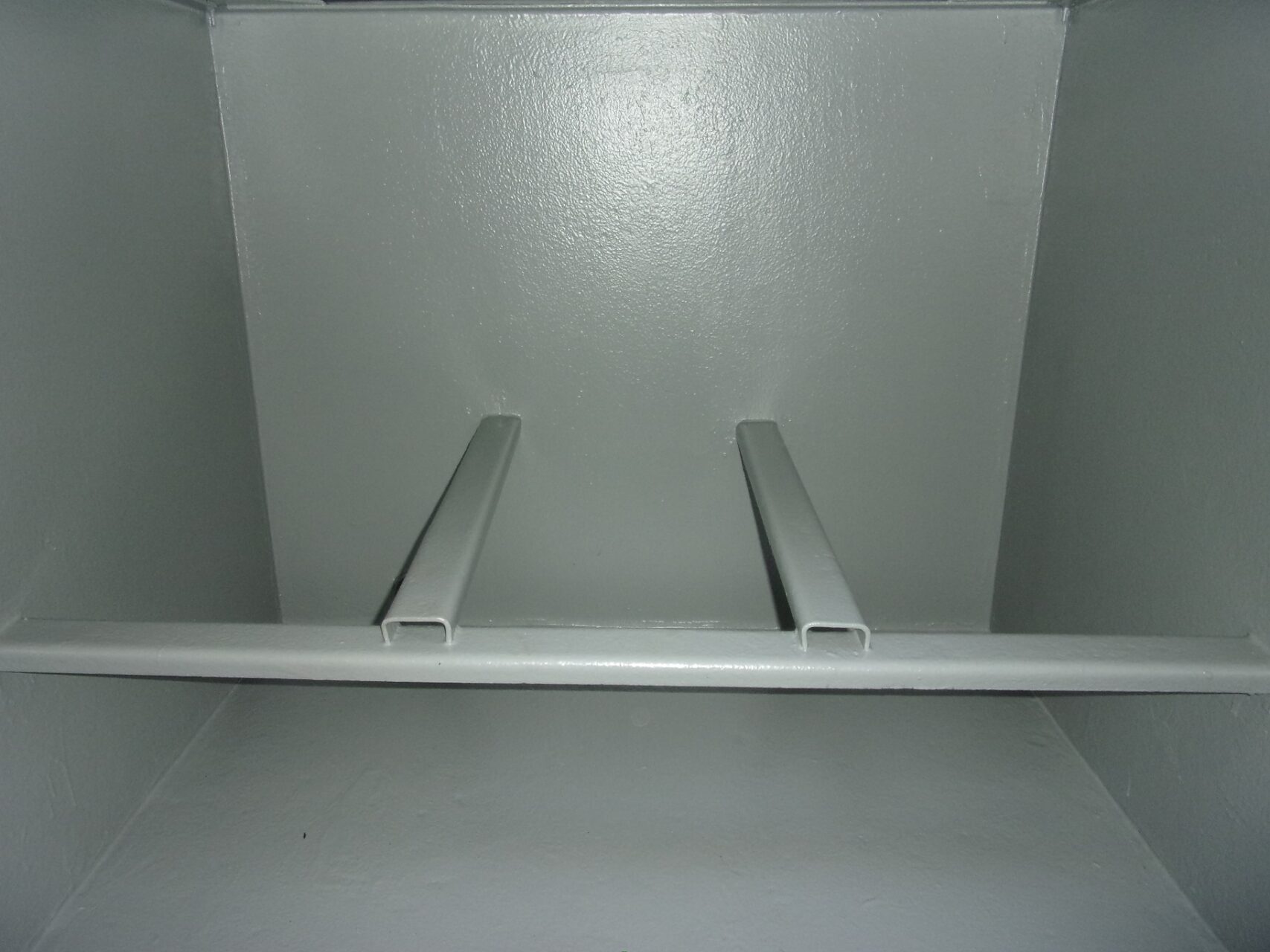
The works were programmed around the school half-term so the school was not disrupted, and all waste was removed from site. The lining is covered by a 10-year warranty.
Find out more about our steel tank lining services: https://www.corrolesseastern.co.uk/services/steel-tank-linings/