Factory Resin Flooring – East Anglia

THE PROBLEM

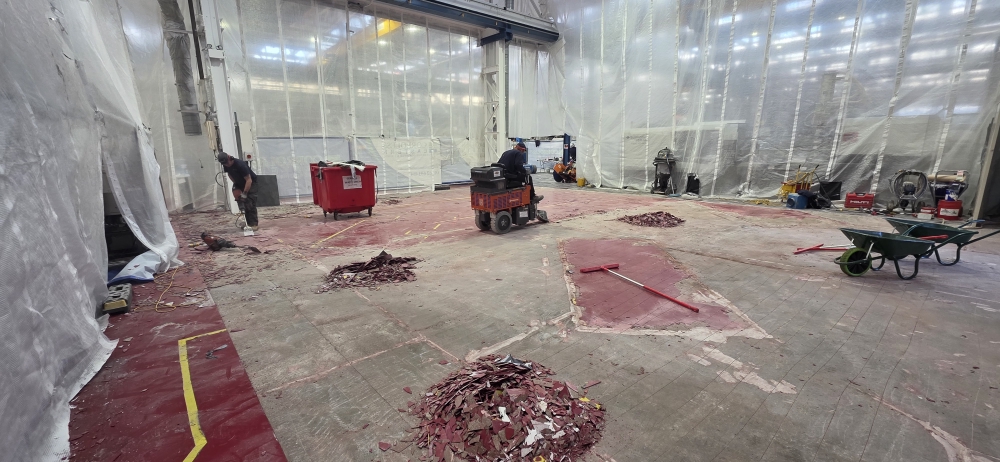
A global rigid plastic packaging manufacturer asked us to replace the floor in one of the injection moulding areas at its factory in East Anglia – a site where we have installed resin flooring many times before. The area, of approximately 220m², sits among live production machines beneath an overhead crane, and was being re-designed as part of a planned upgrade.

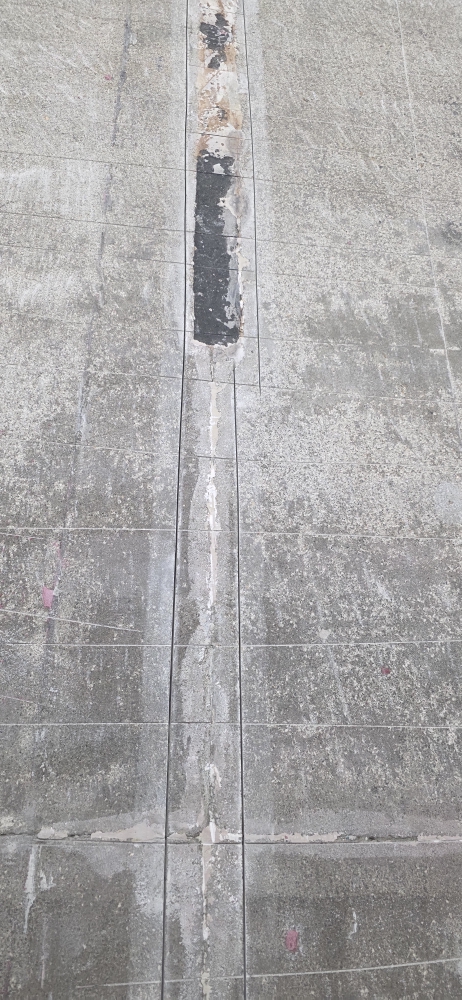
The existing red resin floor was failing. Expansion joints had never been cut into the finished floor and there was no damp proof membrane beneath it, so movement in the slab had cracked the floor along the joint lines and the surface had worn through, with scuffed and broken walkway lines.
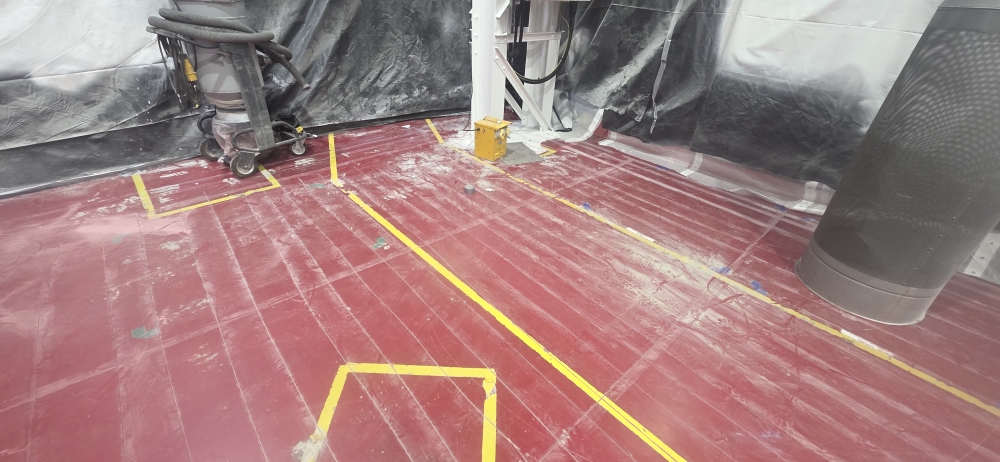
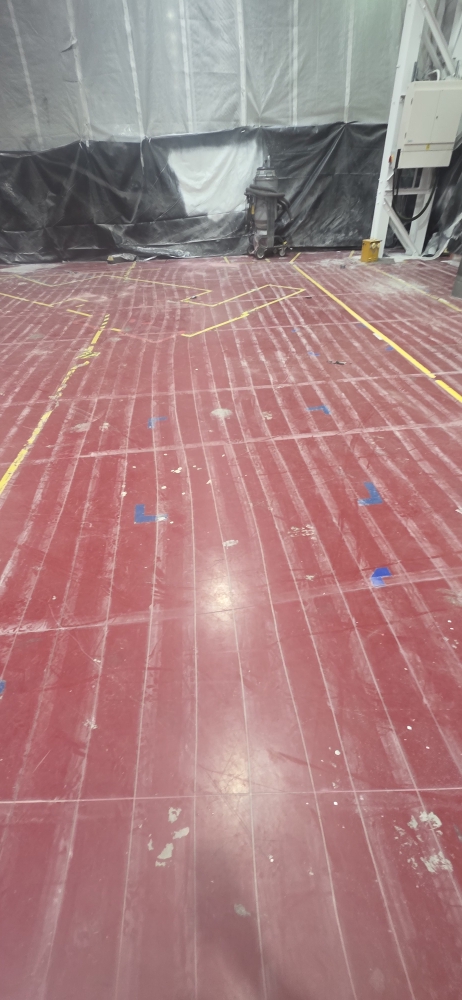
The client needed a durable, hard-wearing floor with a long service life, installed while production carried on around it. Dust was a particular concern – previous flooring works by others on site had been stopped when dust reached sensitive areas nearby.

THE SOLUTION

Dust control and protection

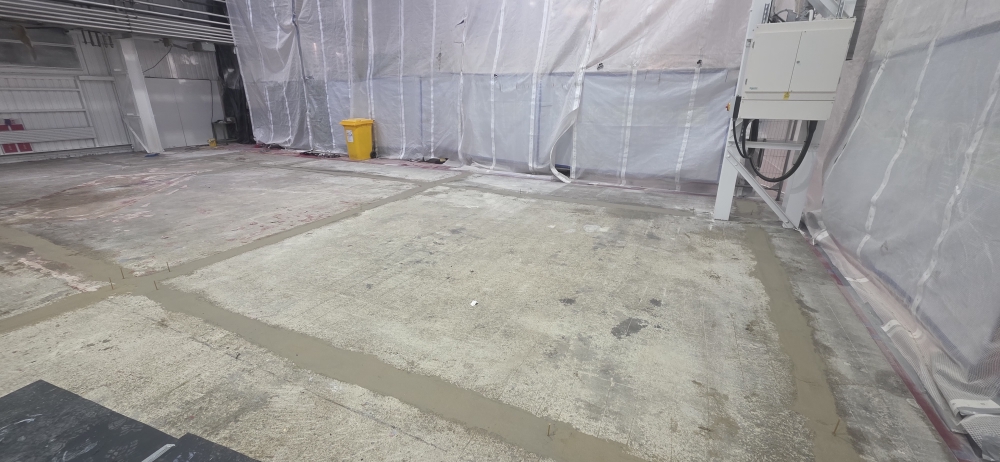
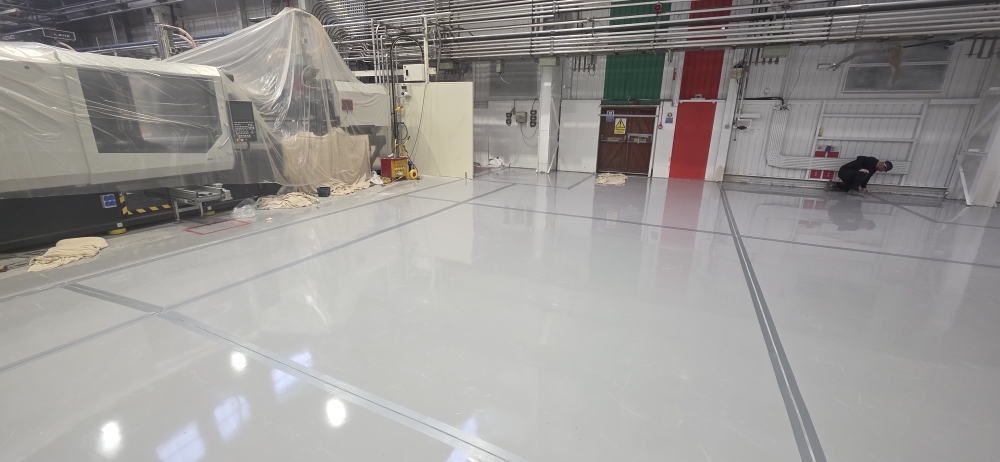
The work area was segregated with Heras fencing and fully sheeted, with dust extraction running throughout. Neighbouring injection moulding machines were wrapped in polythene with hardboard protection to their plinths, and all cutting and grinding equipment was vacuum controlled to keep dust to a minimum.

Removing the failed floor

The old floor was scored into strips and lifted with a ride-on tile lifter and 110v breakers, with all arisings loaded straight into a skip.

Factory Resin Flooring East Anglia 03 - Removing Failed Flooring With Ride-On Tile Lifter

Joint and concrete repairs

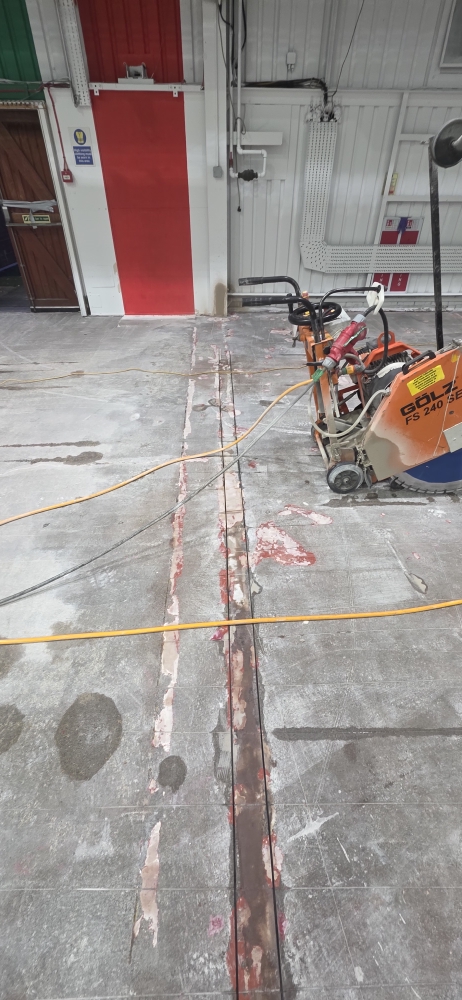
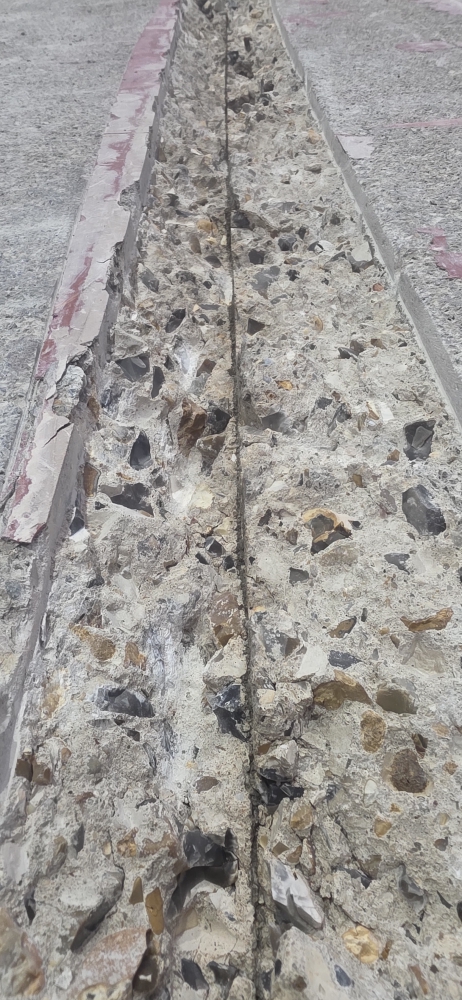
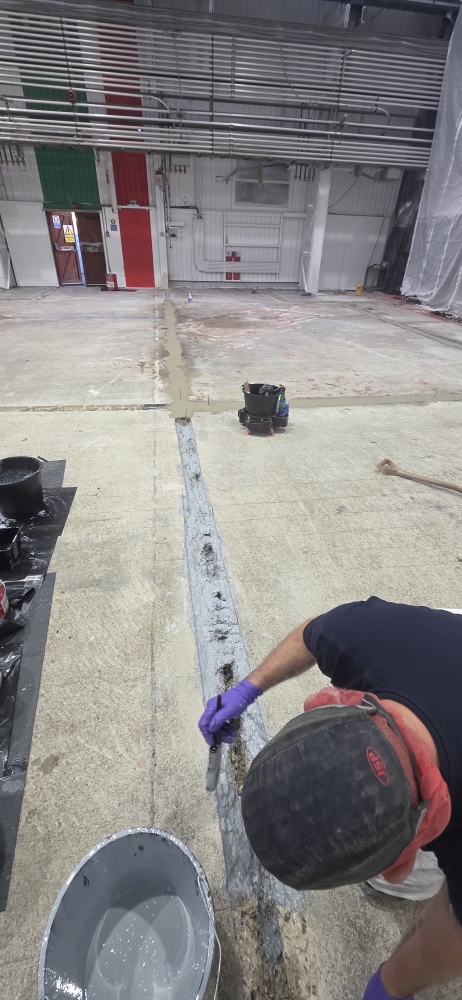
The failed joints, which still held the old bitumen filler, were saw-cut with vacuum-controlled floor saws and broken out back to sound concrete. Joint and crack lines that had been hidden beneath the old floor were marked out and cut out in the same way.

The joint chases were cleaned out and brush primed with Remmers Epoxy MT100, then filled flush with an epoxy and quartz mortar and sealed with a further coat of MT100 blinded with sand. Priming the chase first ensures the repair mortar bonds fully to the concrete rather than sitting loose in the joint.

Surface preparation

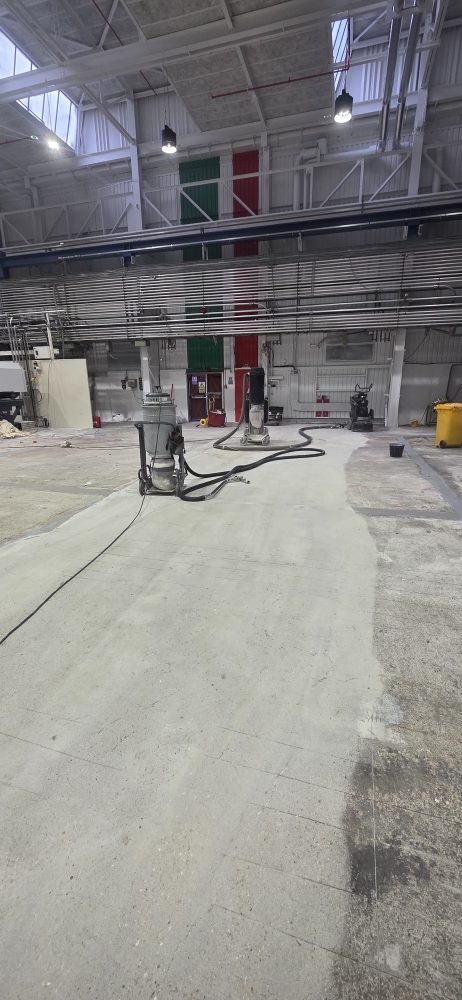
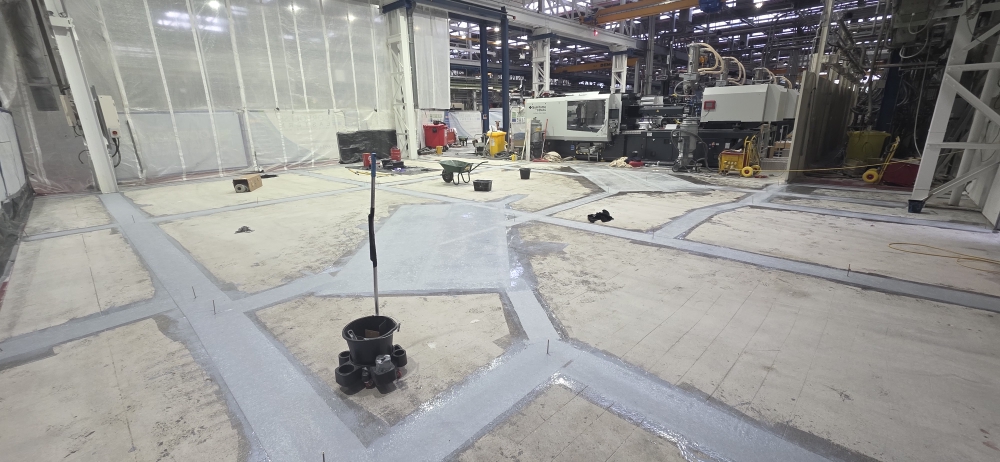
The whole slab was diamond ground with a planetary grinder under dust extraction to remove contamination and weak surface material, opening up the concrete so the new floor has a sound, clean surface to bond to. Glass fibre matting bedded in resin was then laid over all joints, cracks and old repairs to bridge them and reduce the risk of cracks reflecting through the new floor.

Moisture testing and priming

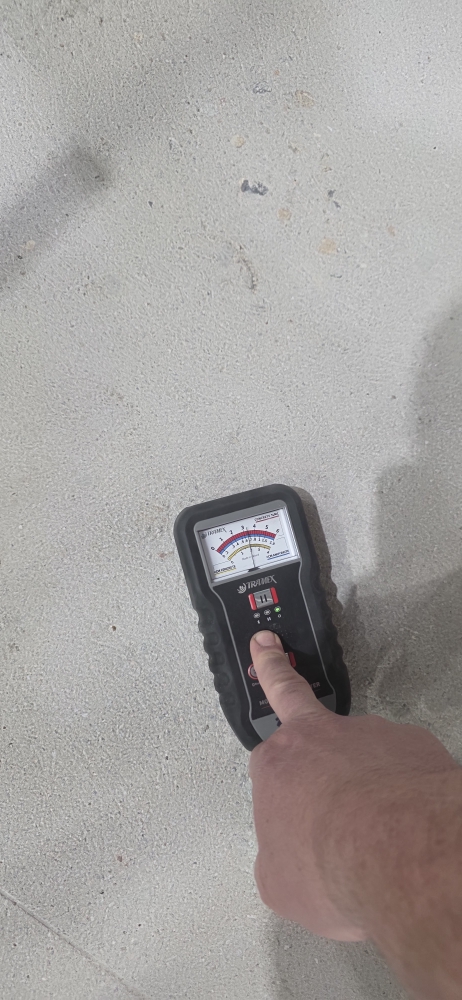
With no damp proof membrane under the slab, moisture rising through the concrete can push a resin floor off the surface and cause osmotic blistering. Moisture readings were taken across the ground slab with a Tramex concrete moisture meter, and a moisture- and oil-tolerant primer was specified as a “belt and braces” approach.

Factory Resin Flooring East Anglia 10 - Tramex Moisture Meter Test on Ground Slab

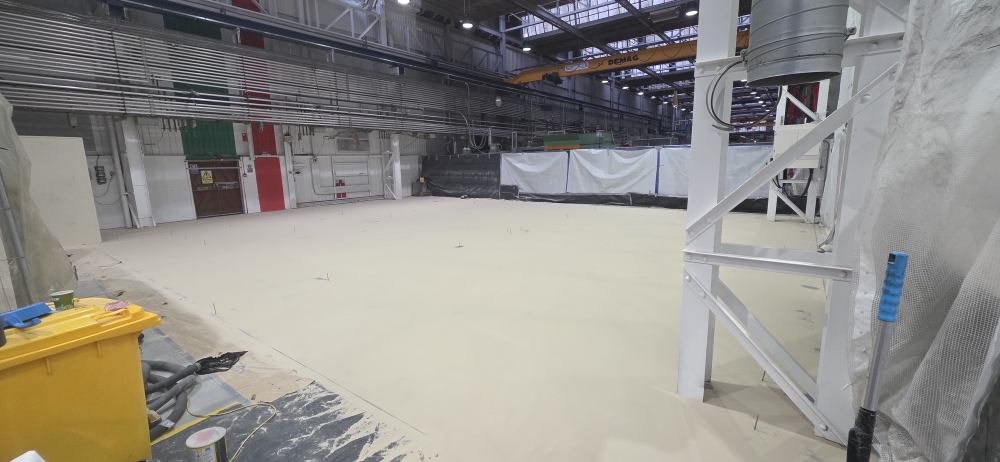
A scratch coat of Remmers Epoxy MT100 was applied across the floor to fill pores and small surface defects, followed by a second coat of MT100 fully blinded with DKI quartz. Applied in two coats, the primer forms a liquid damp proof membrane beneath the finished floor, while the quartz gives a strong mechanical key for the floor finish.

Climatic conditions were recorded with a PosiTector DPM during the repair works. Across 46 readings the surface temperature stayed at least 4.9°C above the dew point, with relative humidity below 79%. Keeping the surface at least 3°C above the dew point stops condensation forming, which would affect the cure and adhesion of the resin.

Resin floor finish

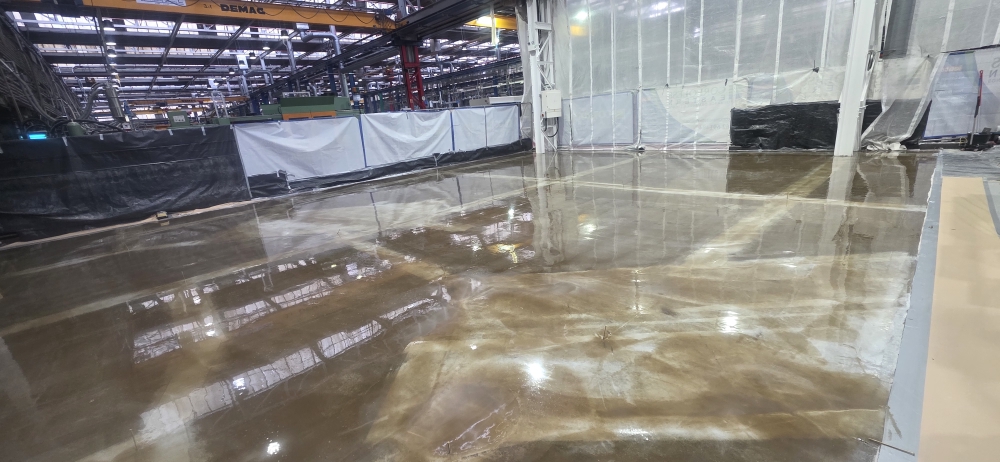
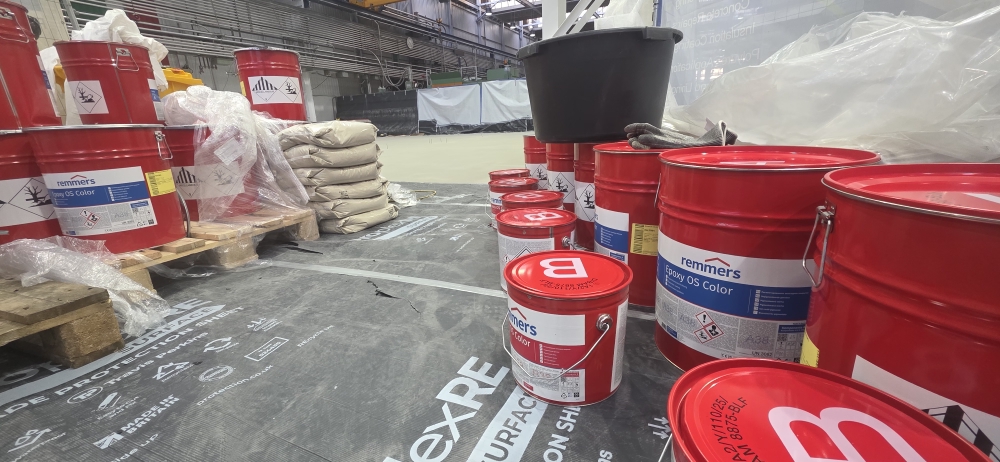
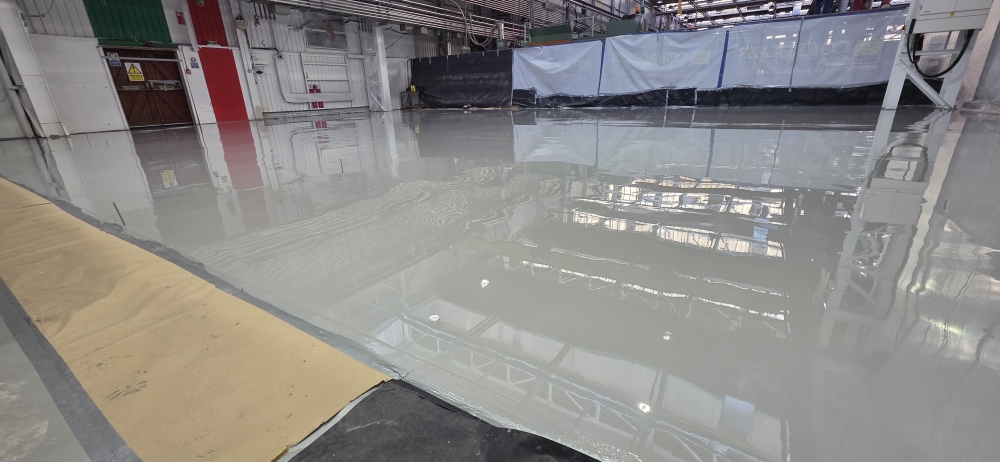
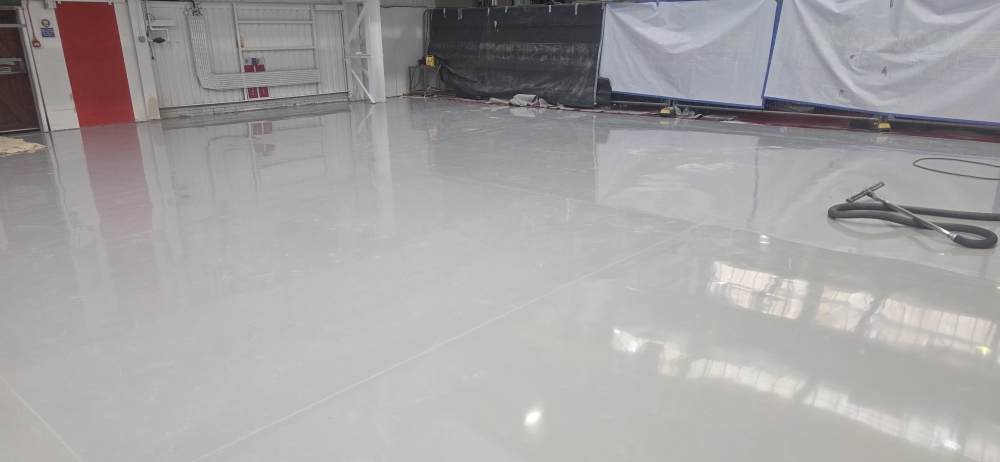
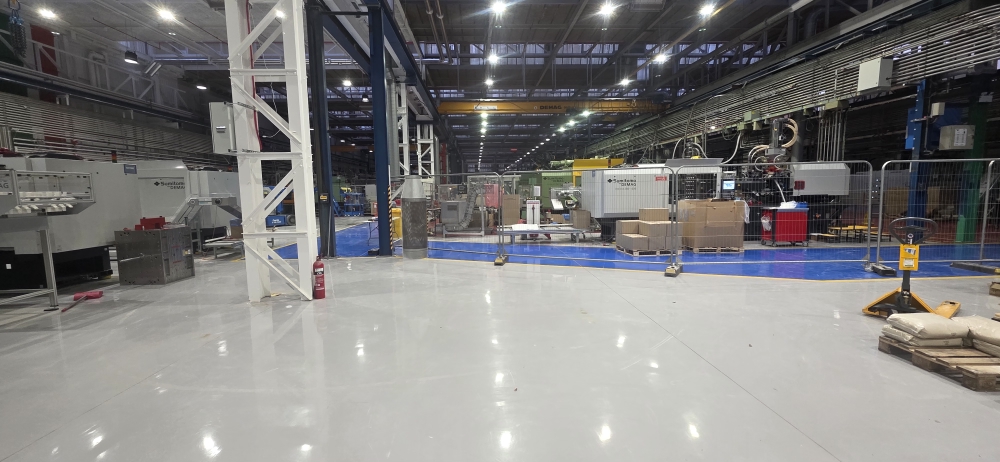
Once the loose quartz had been swept up and the surface de-nibbed and vacuumed, Remmers Epoxy OS Color was laid as a light grey self-smoothing epoxy floor by pin rake and trowel, then spiked rolled to release trapped air. The result is a seamless, high-gloss, hard-wearing surface that is easy to keep clean in a production environment.

Movement joints

Learning from the original floor, the slab movement joints were marked out and re-cut through the new floor with vacuum-controlled floor saws, taped either side and filled with Remmers Multi Sil NUW jointing compound. Reflecting the joints lets the slab move without cracking the new floor – the cause of the original failure.

Walkways and safety lines

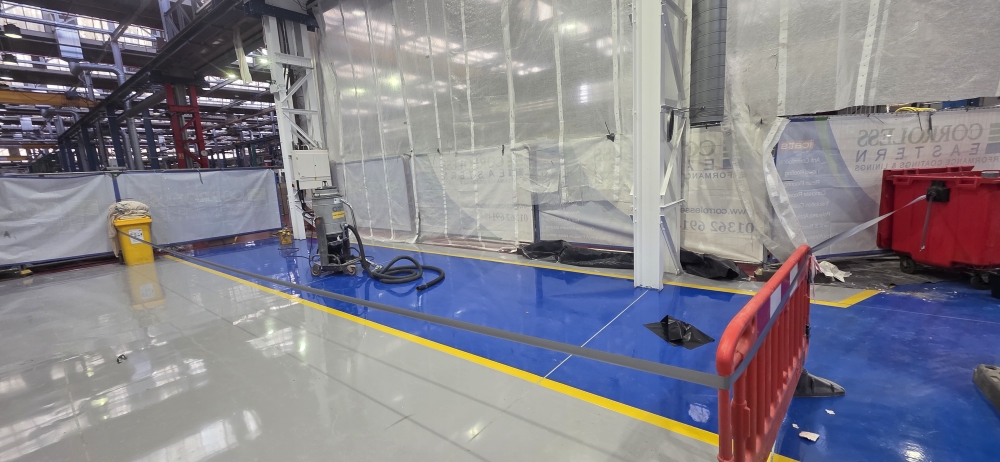
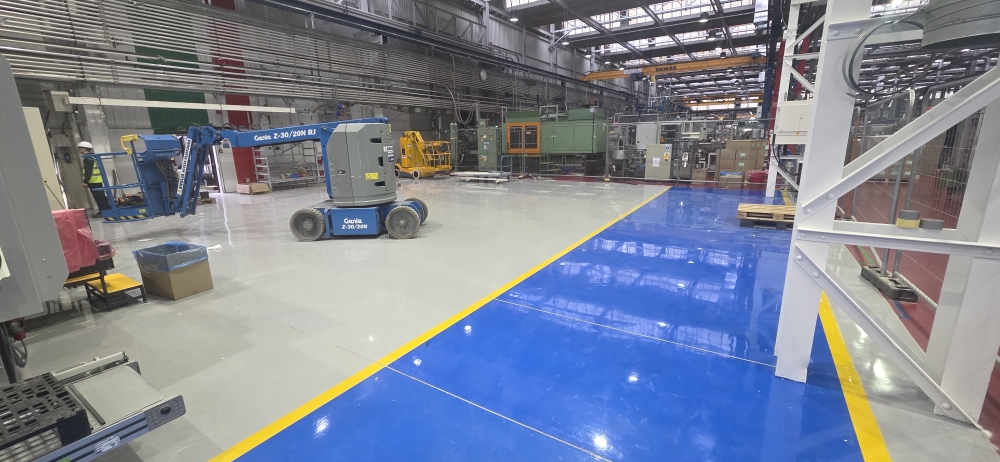
A high-gloss blue walkway was laid around the stair tower and pedestrian routes, and yellow safety lines were applied using KDR Polycoat Rapide polyaspartic, which cures quickly so the area can be put back into use sooner. Squares were coated for the machine feet, and a small area of defective concrete found within the floor was broken out, ground, primed and reinstated to the same specification.

Factory Resin Flooring East Anglia 18 - Blue Walkway With New Yellow Demarcation Lines

THE RESULT

The area now has a new, seamless Remmers Epoxy OS Color resin floor with sealed movement joints, a moisture-tolerant Remmers Epoxy MT100 primer acting as a liquid damp proof membrane, and clear walkways and safety lines. With the joints properly reflected through the new floor, it is designed to accommodate slab movement rather than crack as the old floor did, and the injection moulding machines were returned to production on the new surface.

The works were carried out between 1st December 2025 and 12th January 2026, working around the factory’s Christmas shutdown. Our site diaries recorded no safety concerns, the factory kept running throughout, and the work area was left clean and tidy at the end of every shift.

Find out more about our resin flooring services: https://www.corrolesseastern.co.uk/services/resin-flooring/