
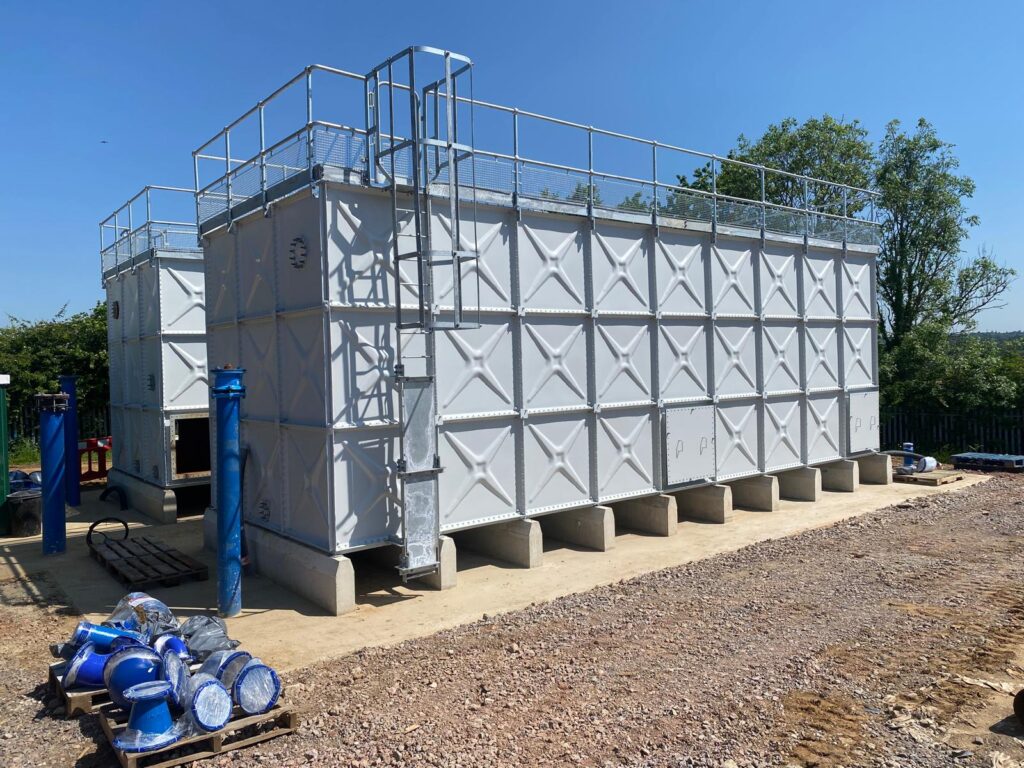
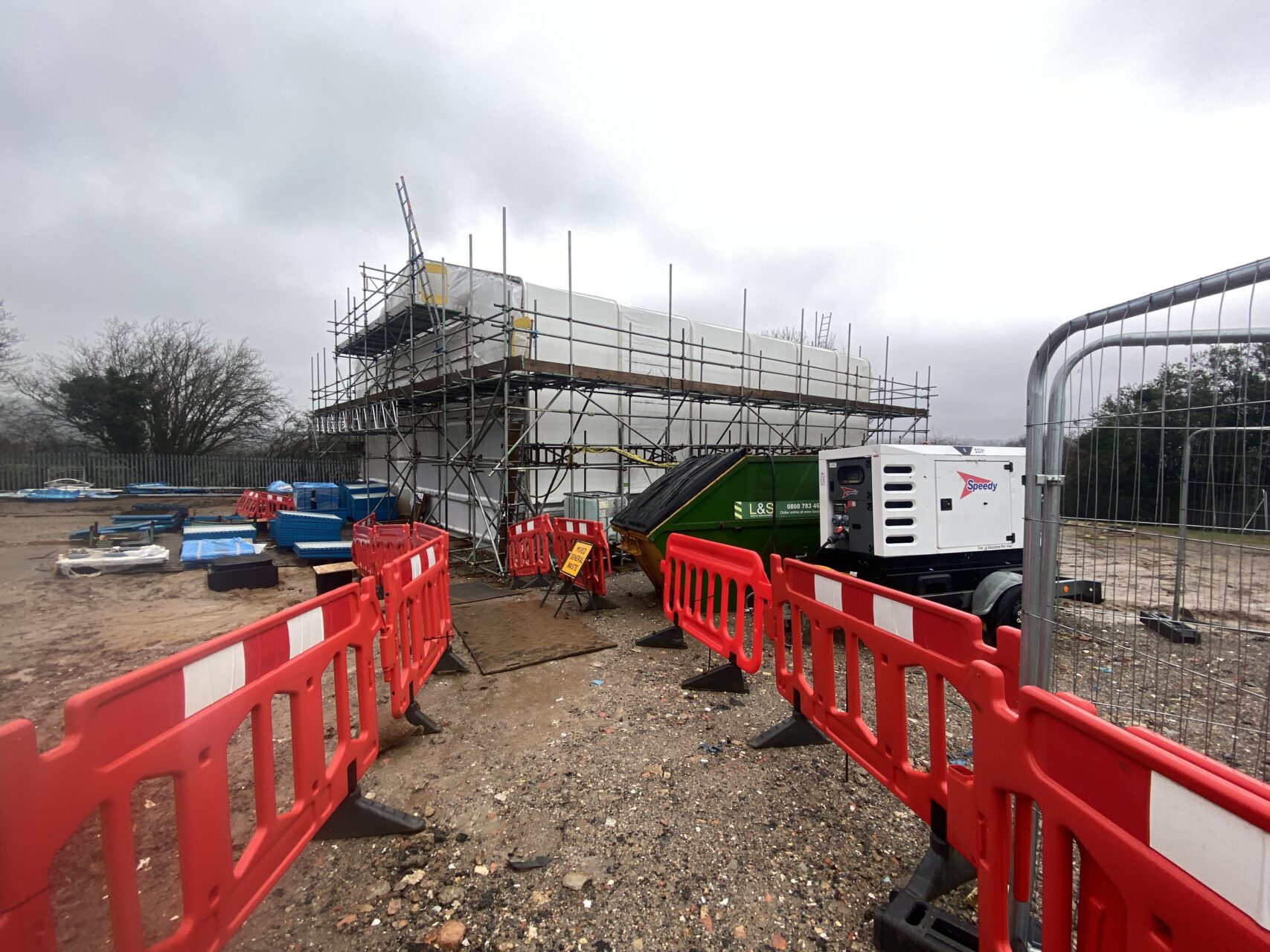
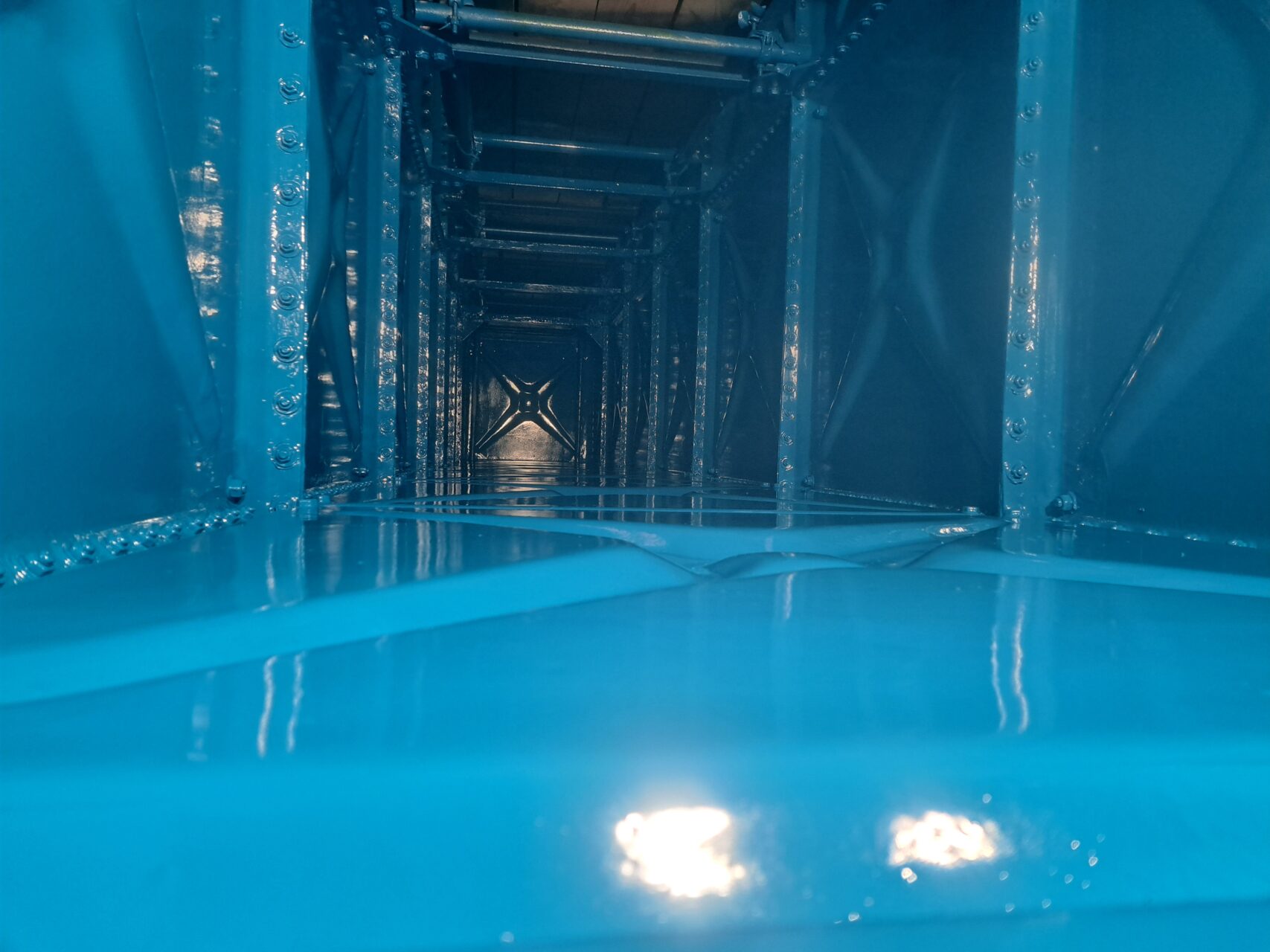
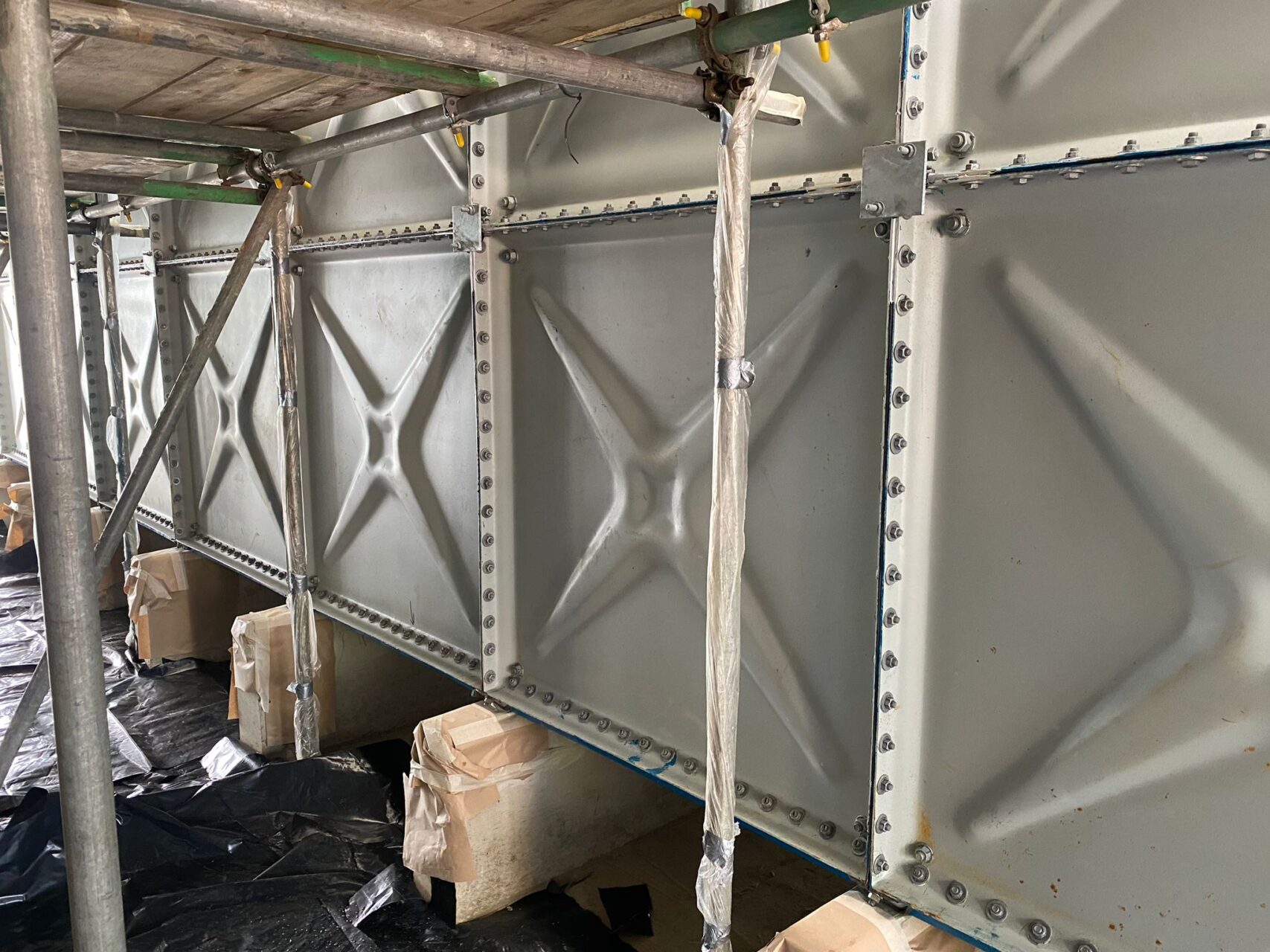
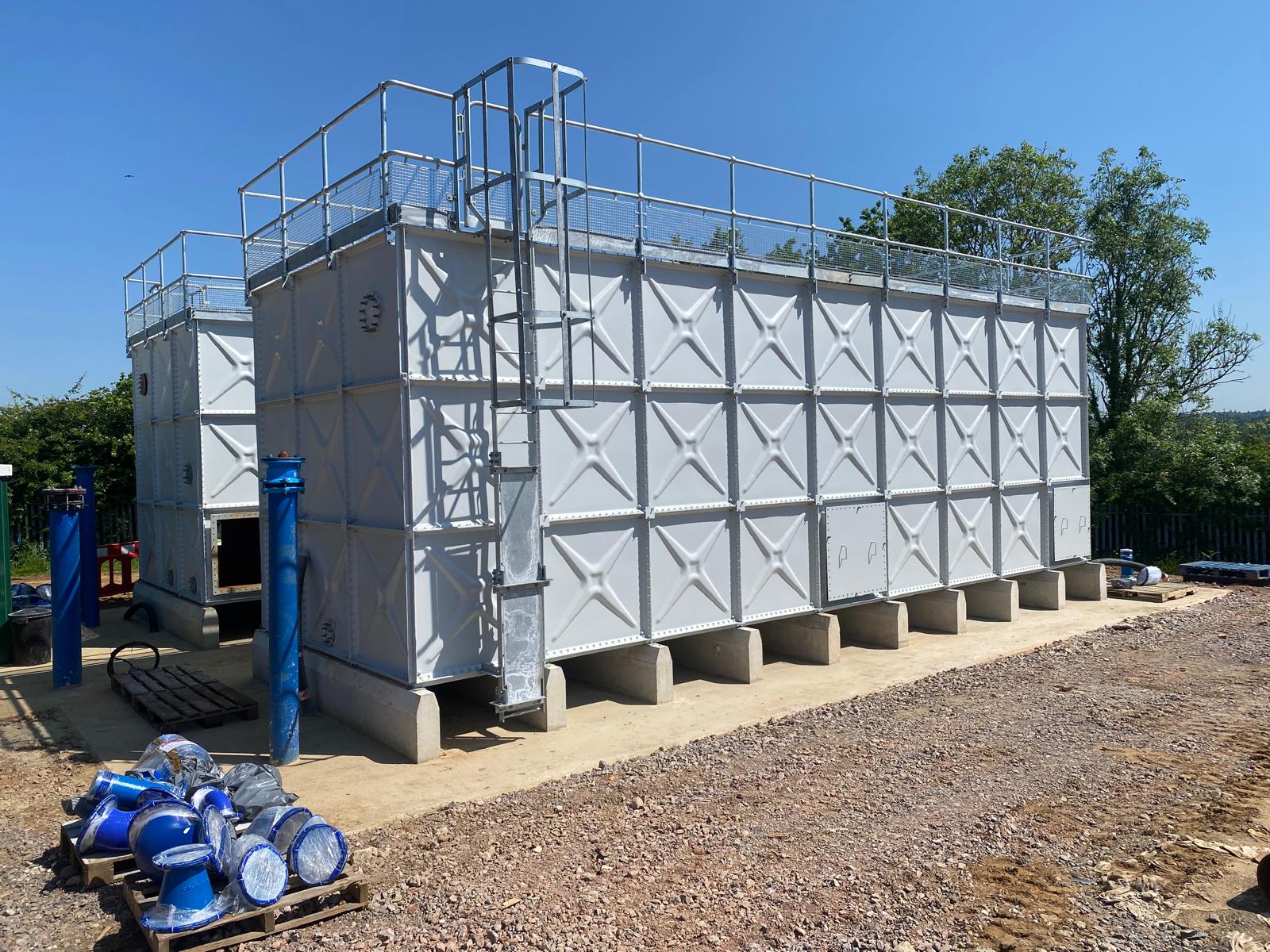
Working for a leading UK sectional steel tank manufacturer, we were asked to line and coat two new pressed steel contact tanks for a water treatment works near Petersfield, Hampshire. Contact tanks hold treated water for the contact time needed for disinfection before it goes into supply. Each tank measures 10.98m x 3.66m x 3.66m and is built from bolted pressed steel panels, with internal baffles, cross-stays and a covered roof. The tanks were to be erected inside a temporary scaffolded enclosure on site.
Contact Tank Lining – Petersfield
THE PROBLEM
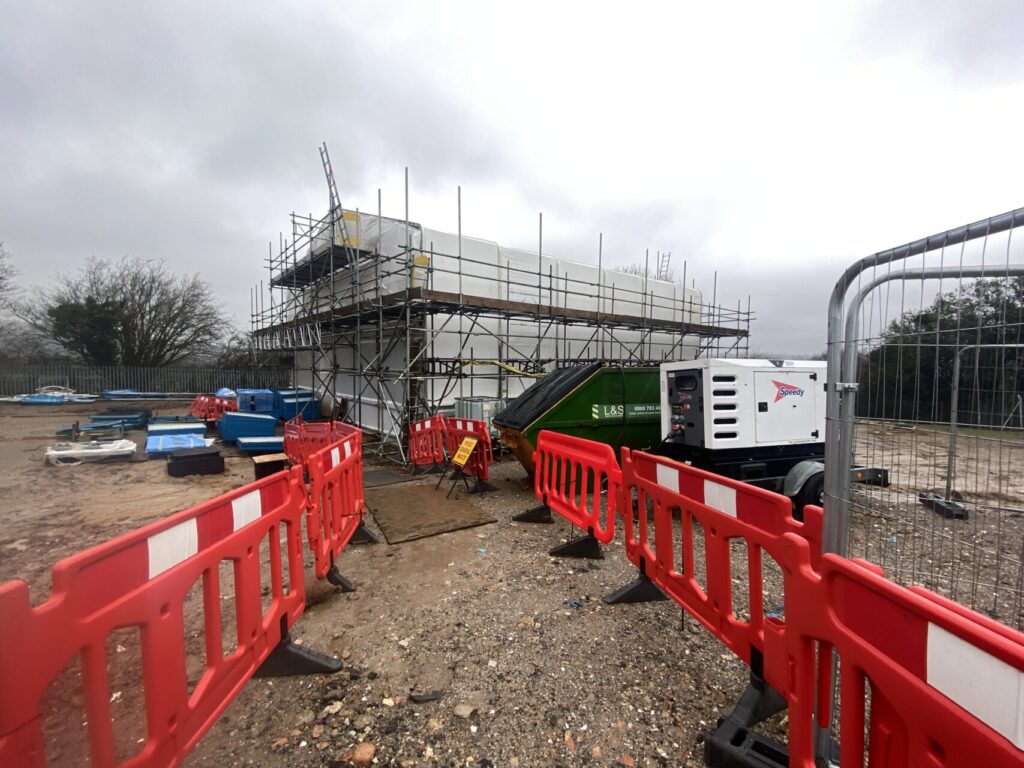
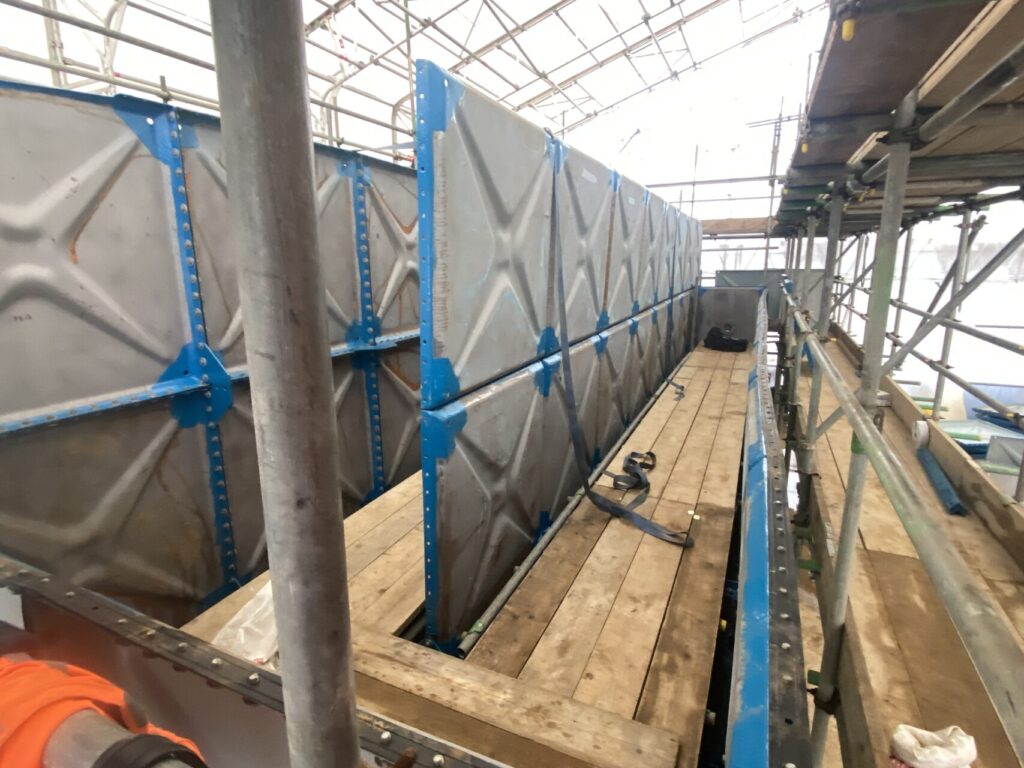
Because the contact tanks would hold treated drinking water, the internal lining had to be approved for contact with potable water to Drinking Water Inspectorate (DWI) standards. The steel also had to be prepared to a high standard, with all mill scale removed, so that the lining would bond properly and give long-term protection.
A sectional tank brings its own challenge. Once the panels are bolted together, the faces clamped inside each joint can no longer be reached, so they have to be protected before the tank is built. We worked with the manufacturer on a blasting trial using a factory panel to judge how long the mill scale would take to remove, and used the results to agree a two-stage method: prepare and coat the joint faces off site, then blast and line the erected tanks on site.
THE SOLUTION
Off-site joint protection
At the manufacturer’s works, the contact faces of every panel, plate and fitting for both tanks were abrasive blast cleaned and coated with Acothane DW to a nominal thickness of 500 microns. The coated parts were then packed for transport to site. This means the steel sandwiched in every bolted joint is protected for the life of the tank, even though it can never be reached again once the tank is built.
Joint sealant and abrasive blasting
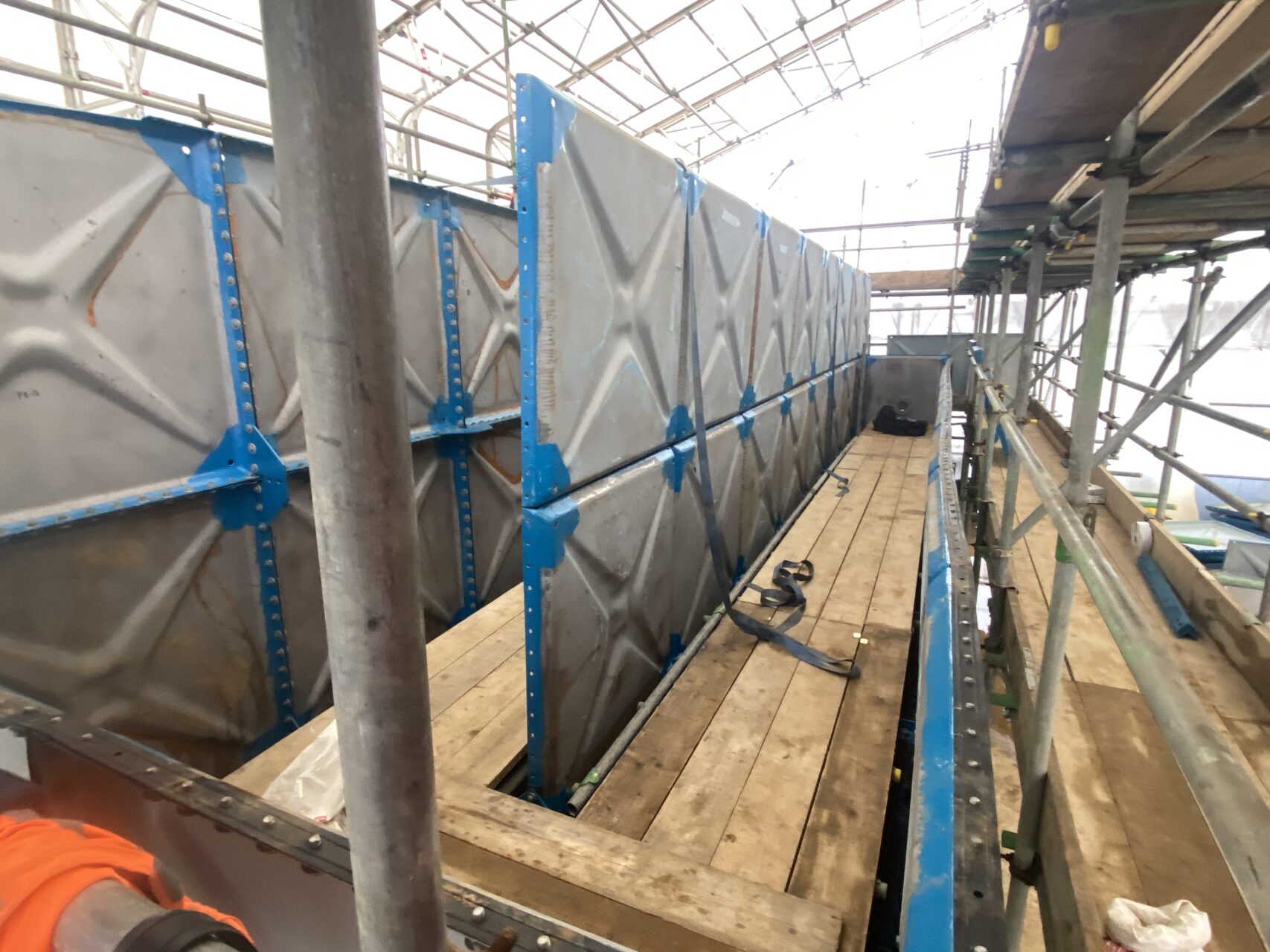
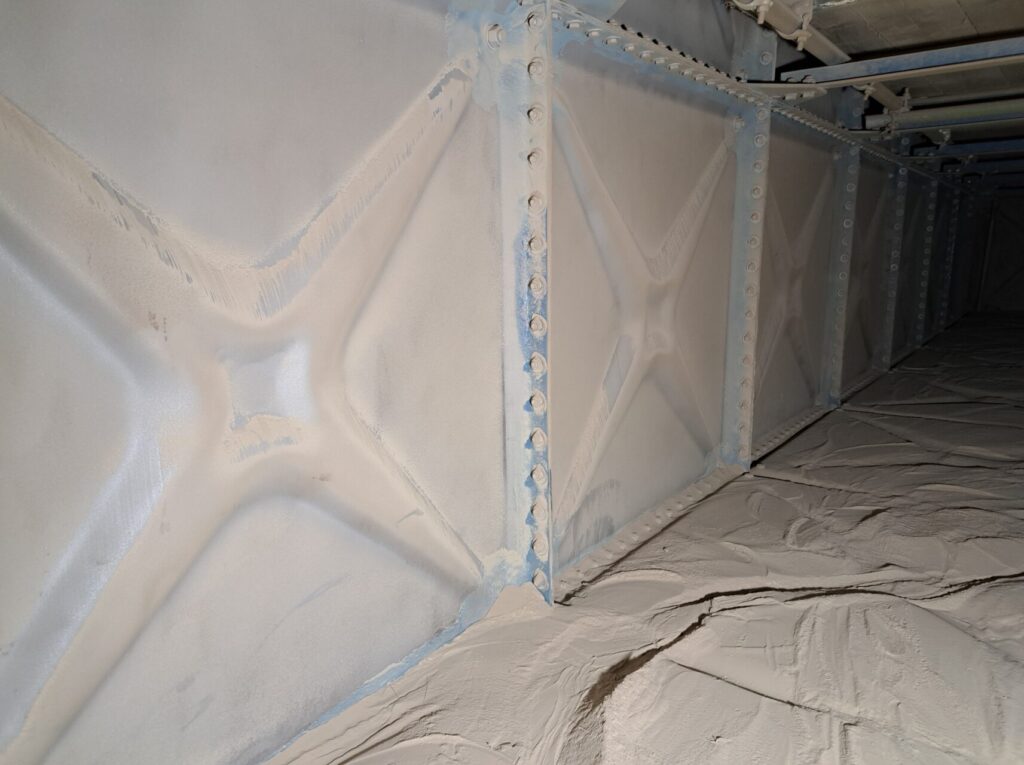
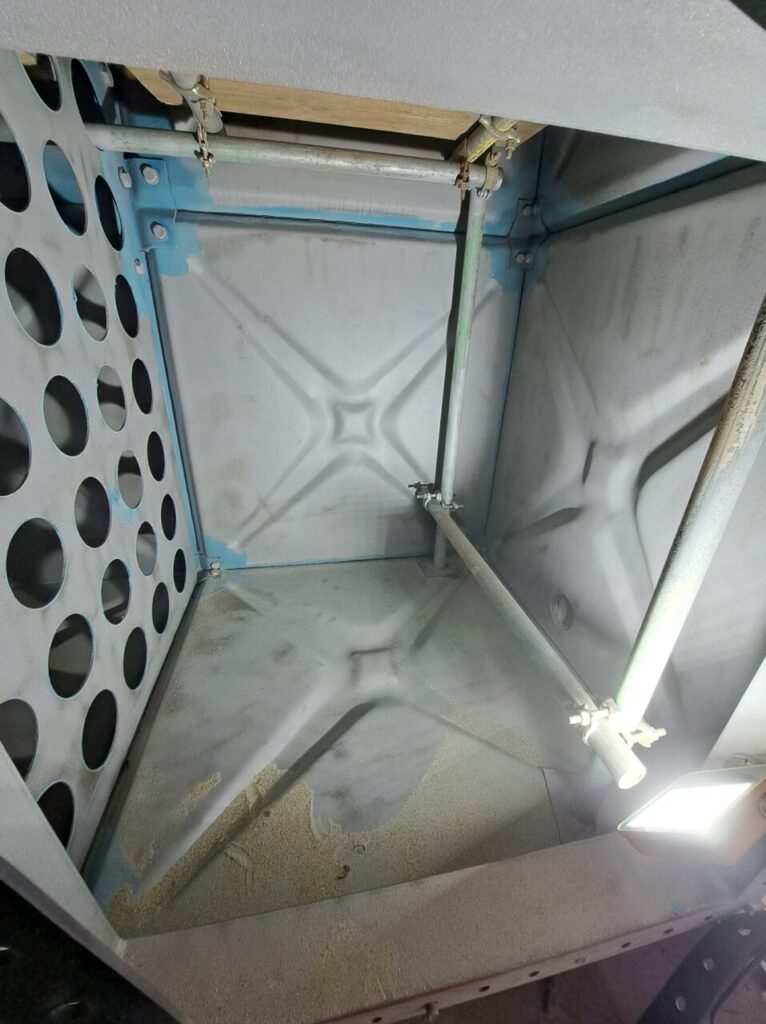
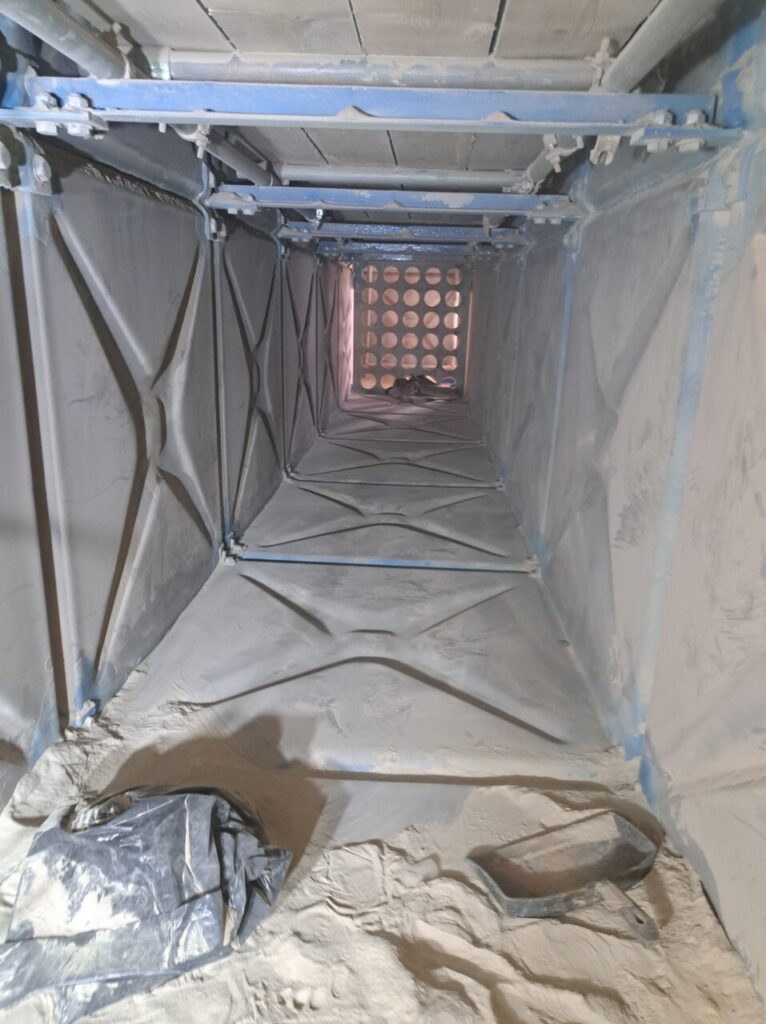
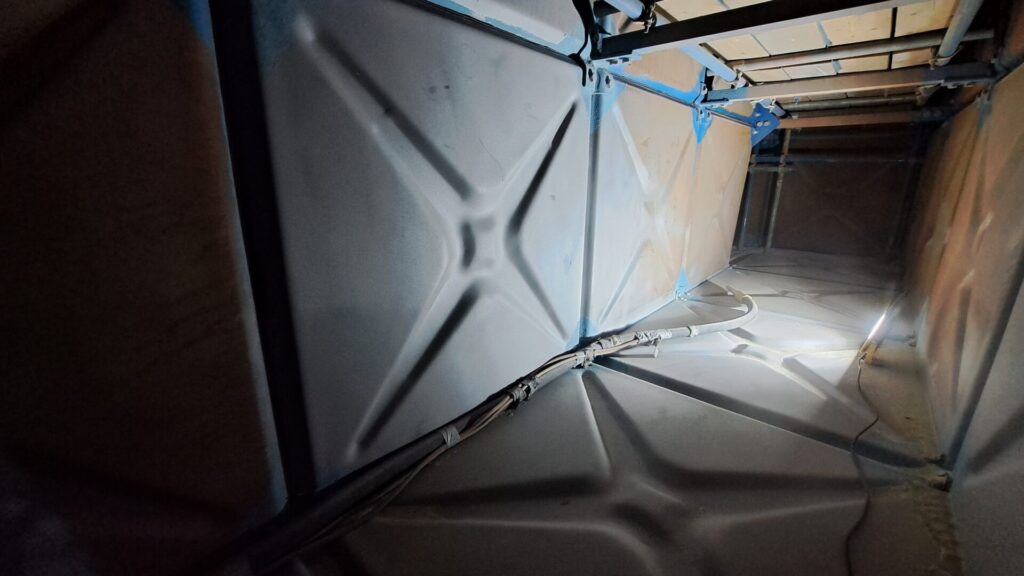
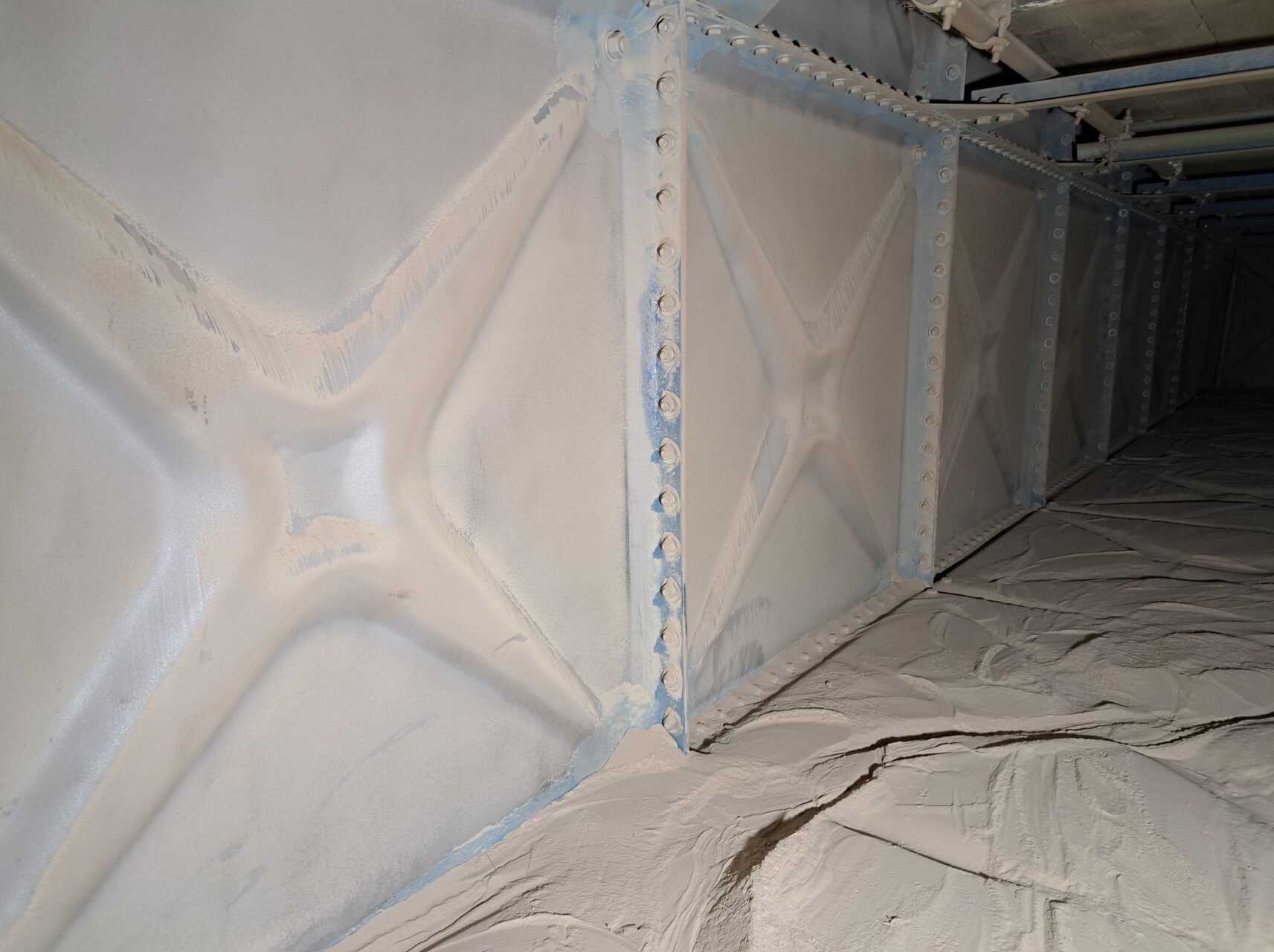
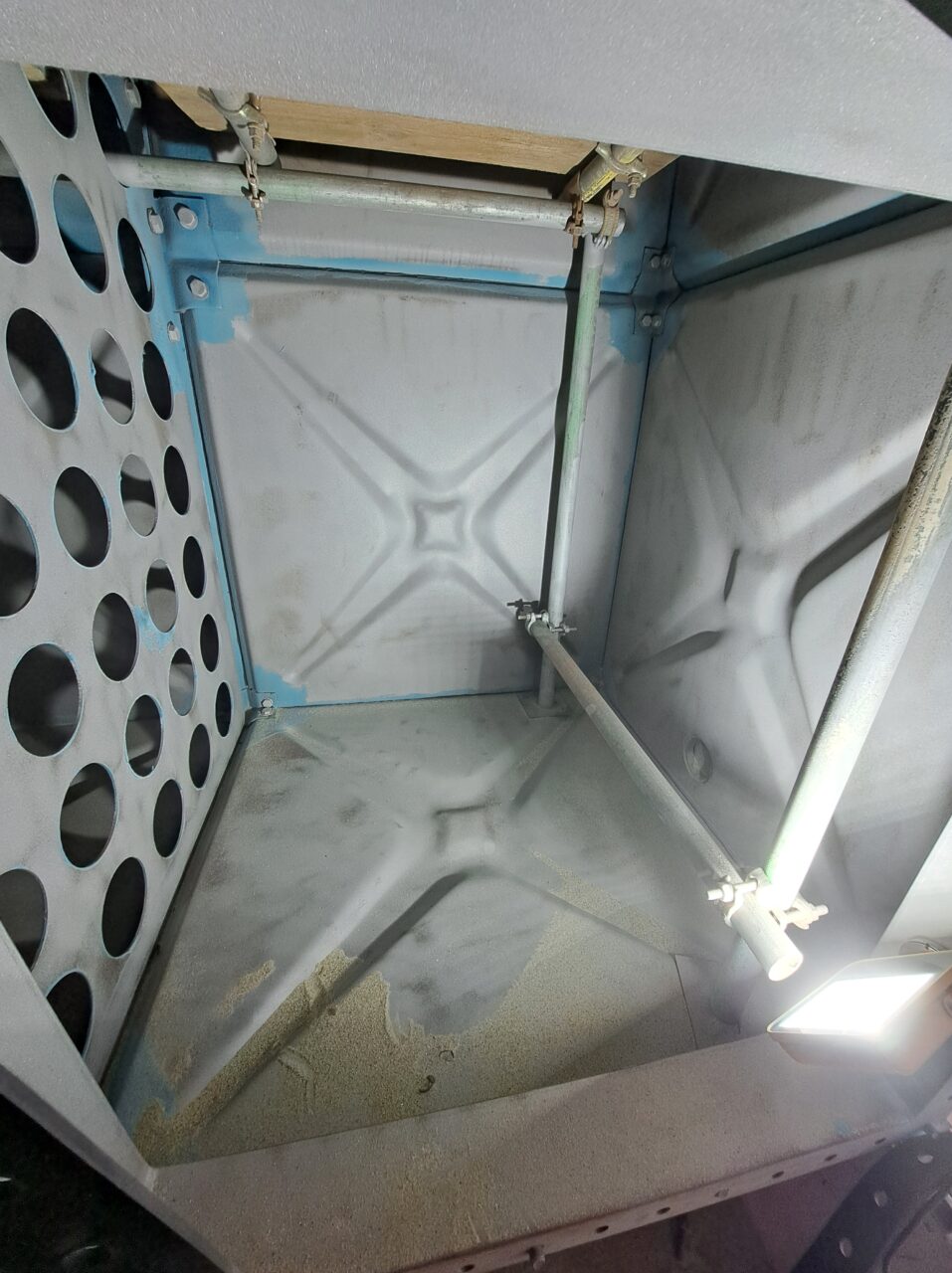
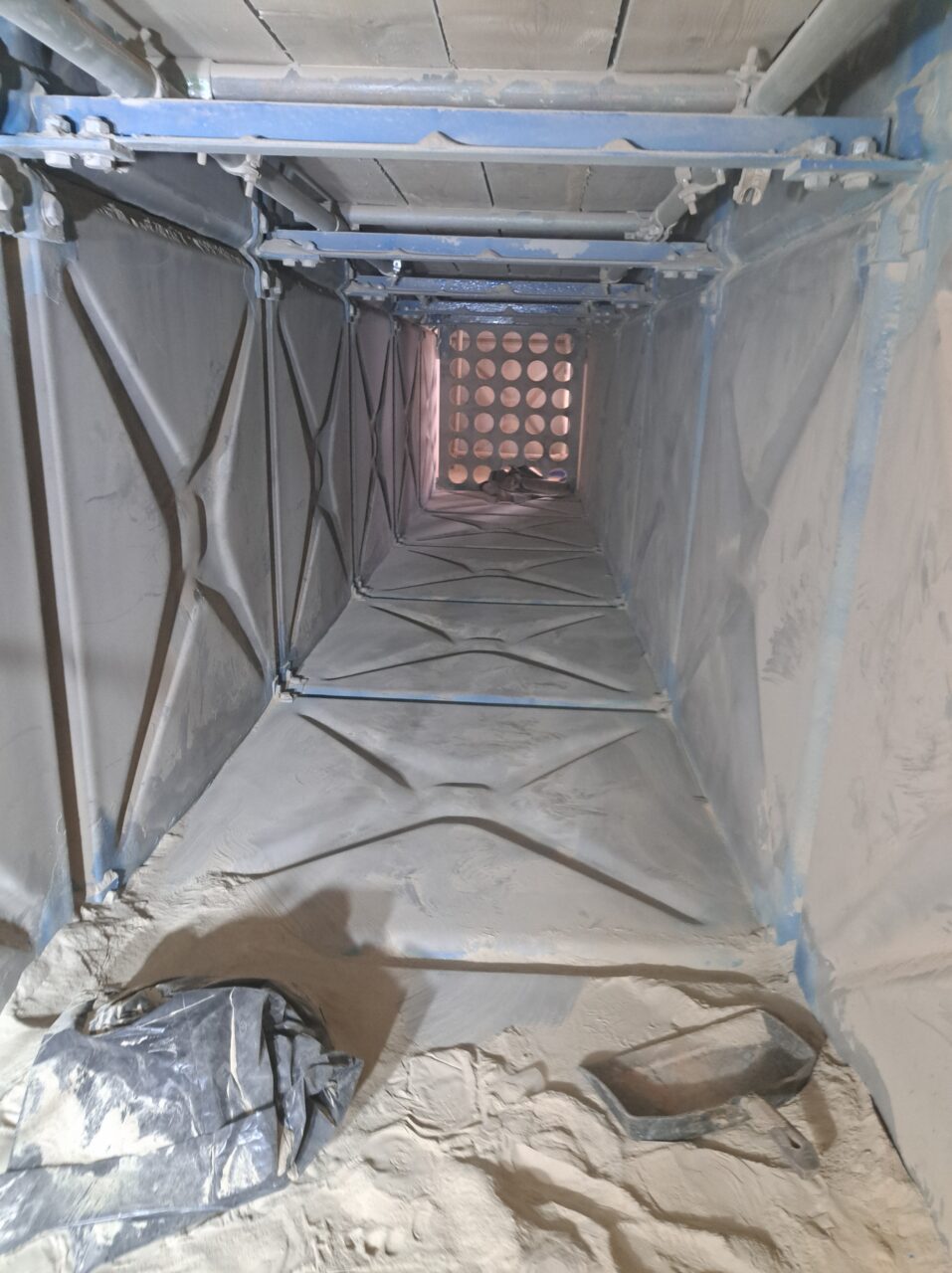
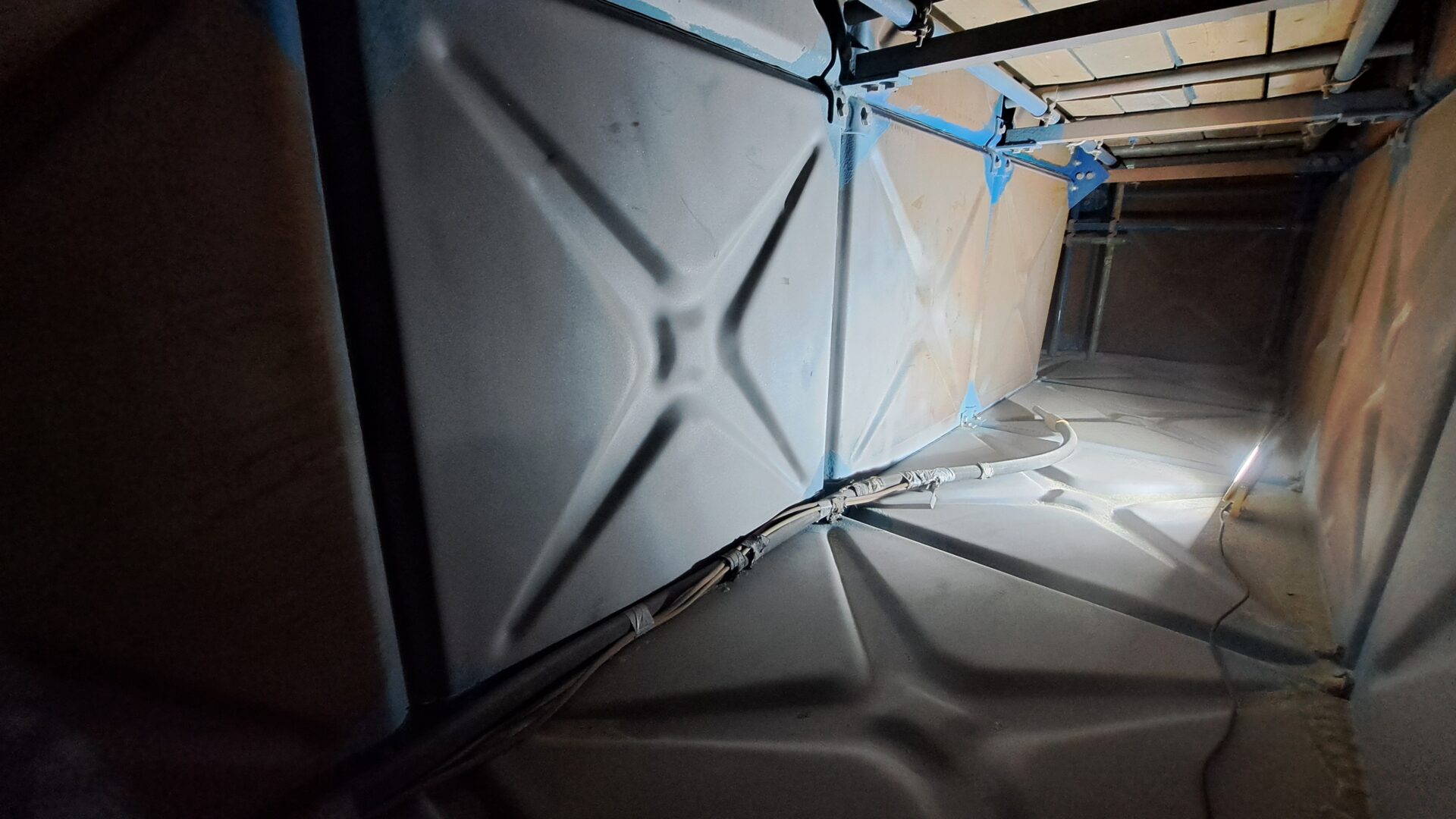
Once each tank was erected, excess jointing sealant was trimmed back from the internal seams by hand. All internal surfaces – walls, floor, roof underside, baffles and stays – were then grit blasted to Sa 2.5 (ISO 8501-1) to give clean, bright steel with a sharp surface profile. Dust extraction ran throughout blasting, and the spent abrasive was cleared out and the tanks vacuumed clean. Tank 1 was completed first, followed by Tank 2.
Quality checks before lining
Before any coating was applied, we checked that the steel was ready to receive it:
Surface profile – the profile is the key the lining grips on to. Readings with a PosiTector SPG averaged 102 microns across 32 readings in Tank 1 and 175 microns across 55 readings in Tank 2, against the 75 micron minimum specified.
Climatic conditions – 67 readings were recorded with a PosiTector DPM inside the two tanks, and every one showed the steel at least 3°C above the dew point. Keeping the steel above the dew point prevents condensation forming beneath the lining.
As the works took place in a drinking water asset, all work inside the tanks followed National Water Hygiene Scheme procedures. Each tank was treated as a confined space, with gas checks before entry and personal gas monitors worn at all times.
Internal tank lining system
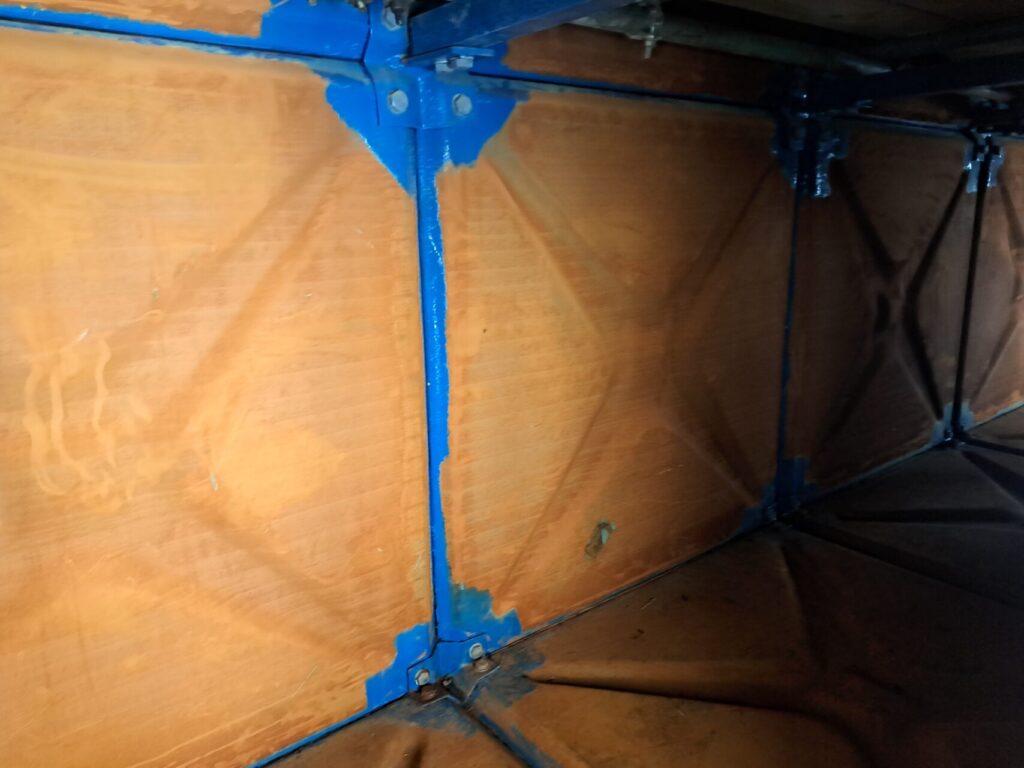
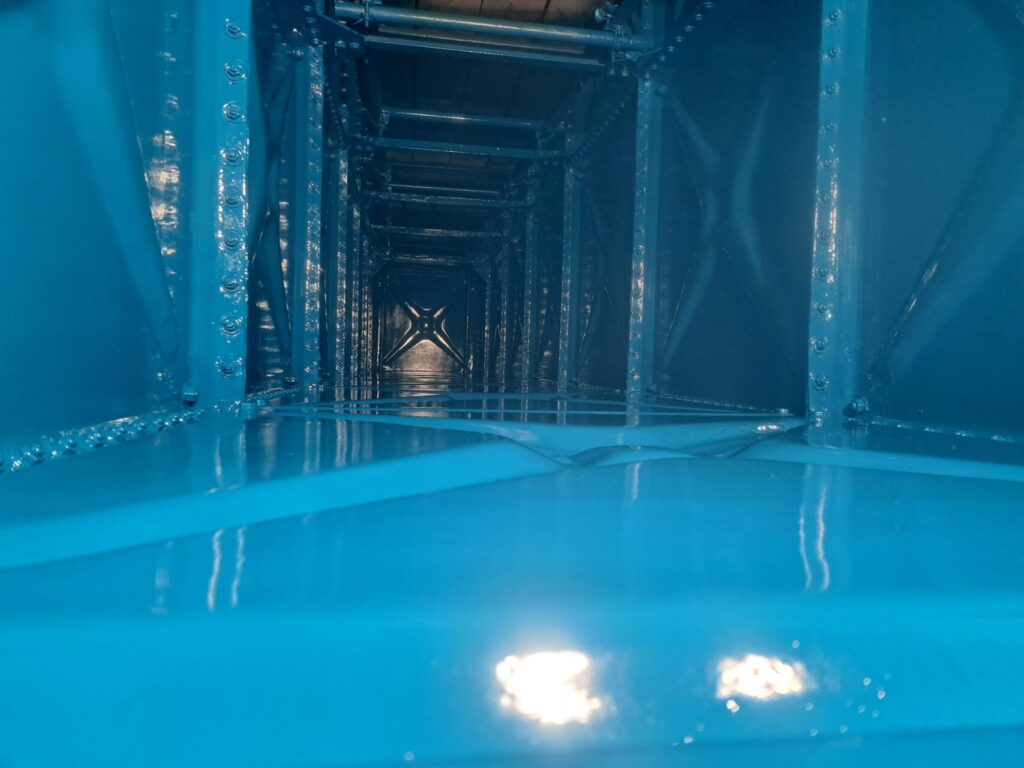
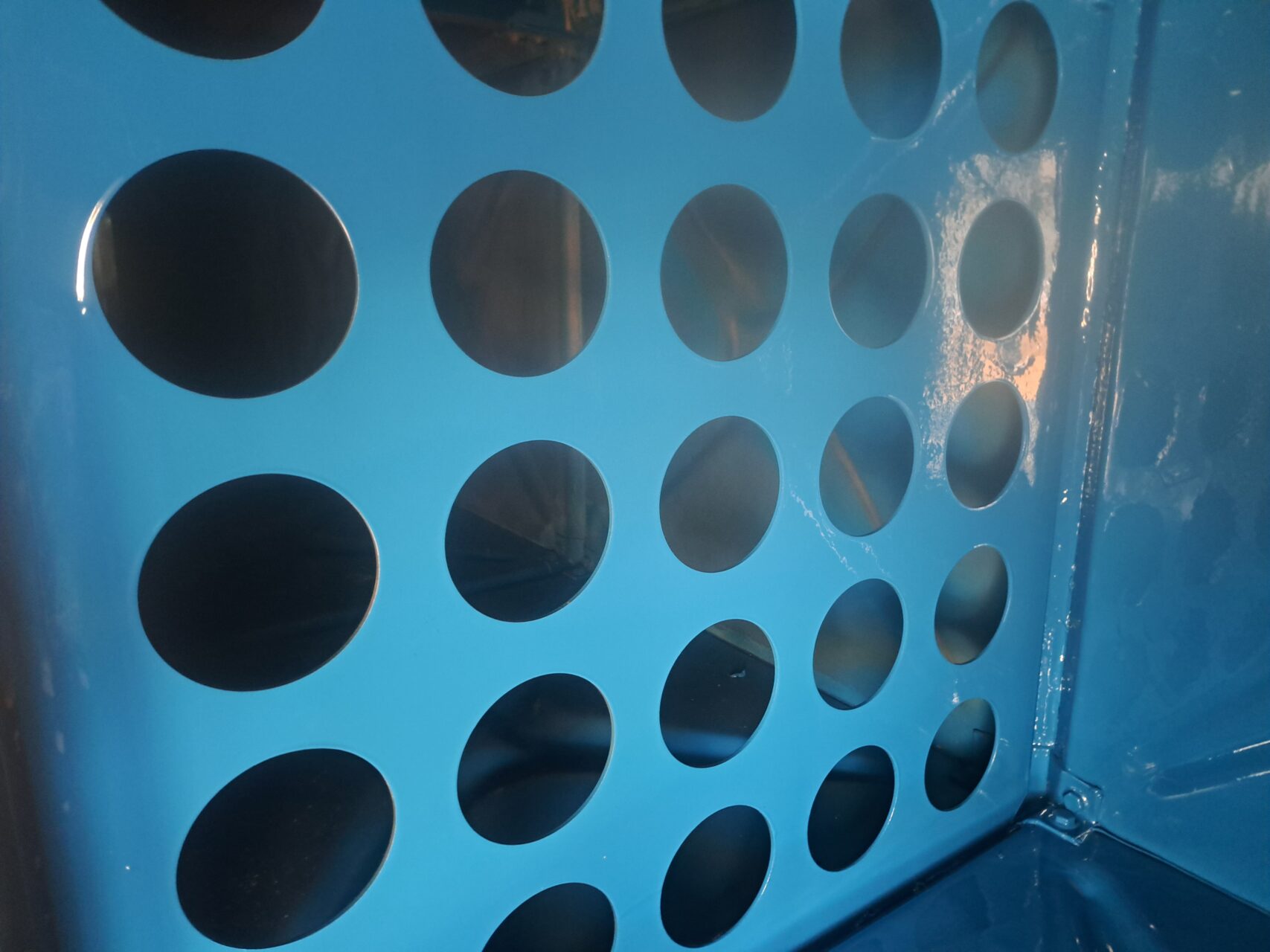
We used Acothane DW from Acothane UK, a two-pack, solvent-free polyurethane lining approved under Regulation 31(4)(a) of the Water Supply (Water Quality) Regulations for use in contact with drinking water. Being flexible, it is well suited to bolted sectional tanks.
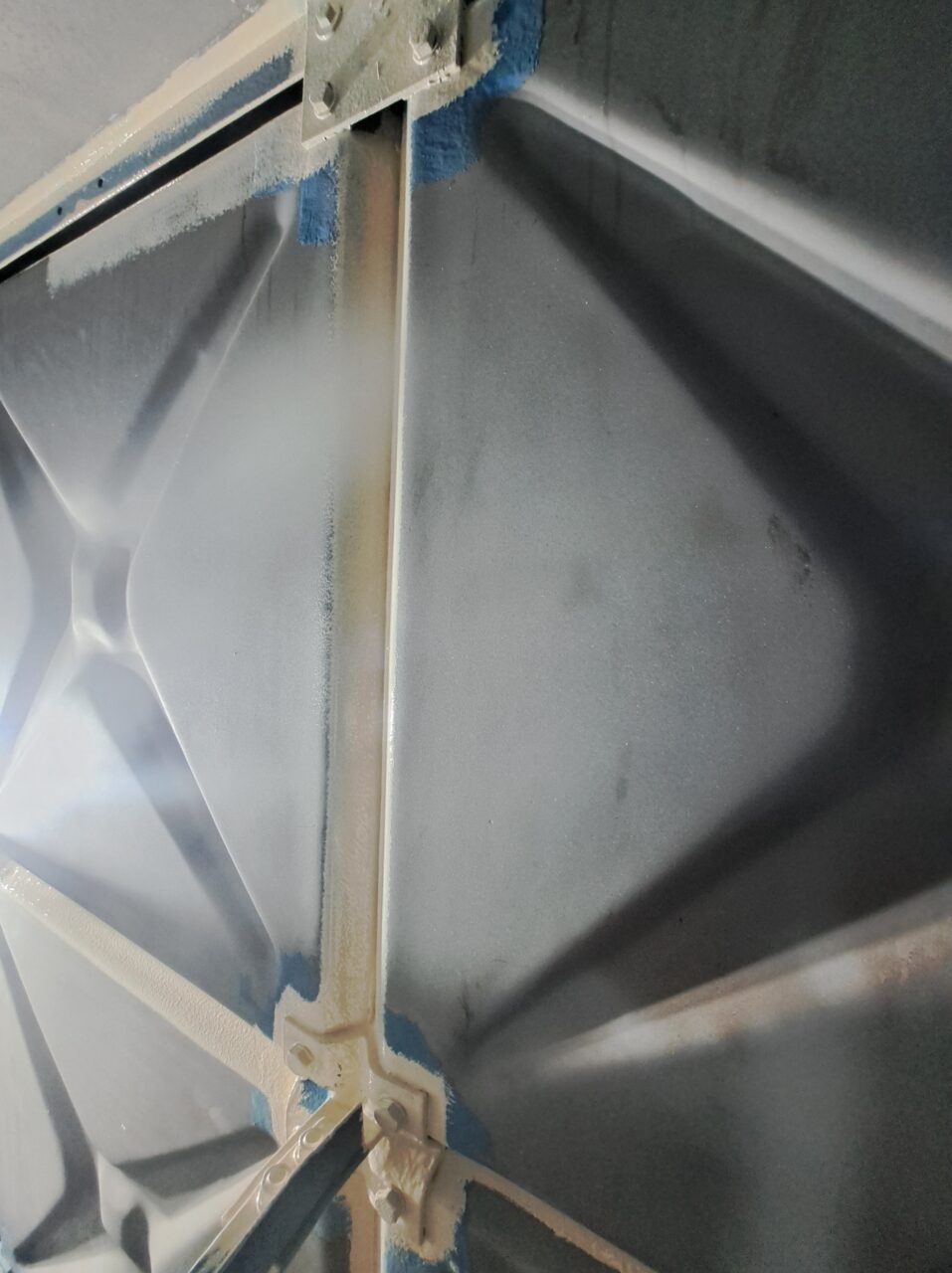
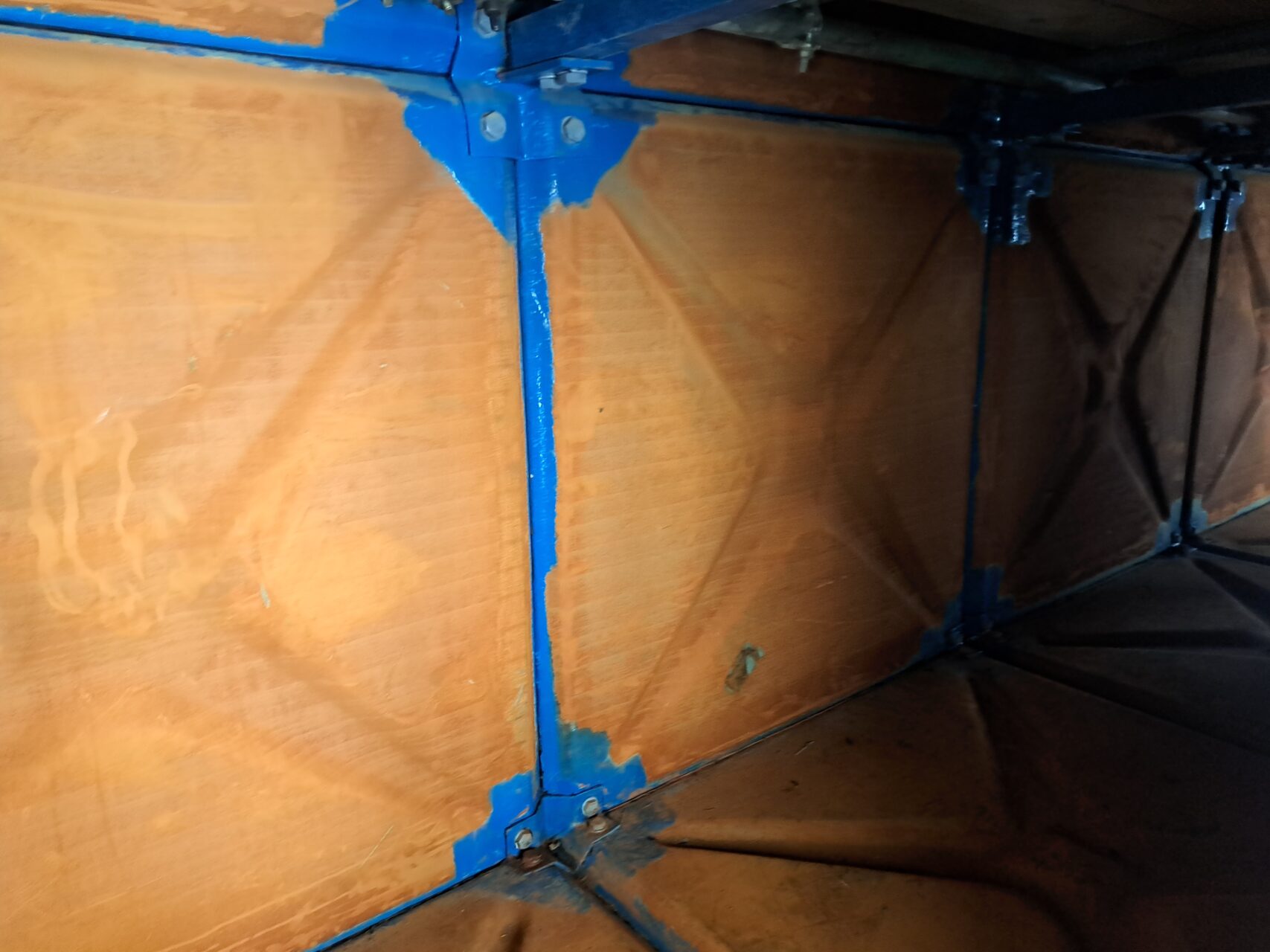
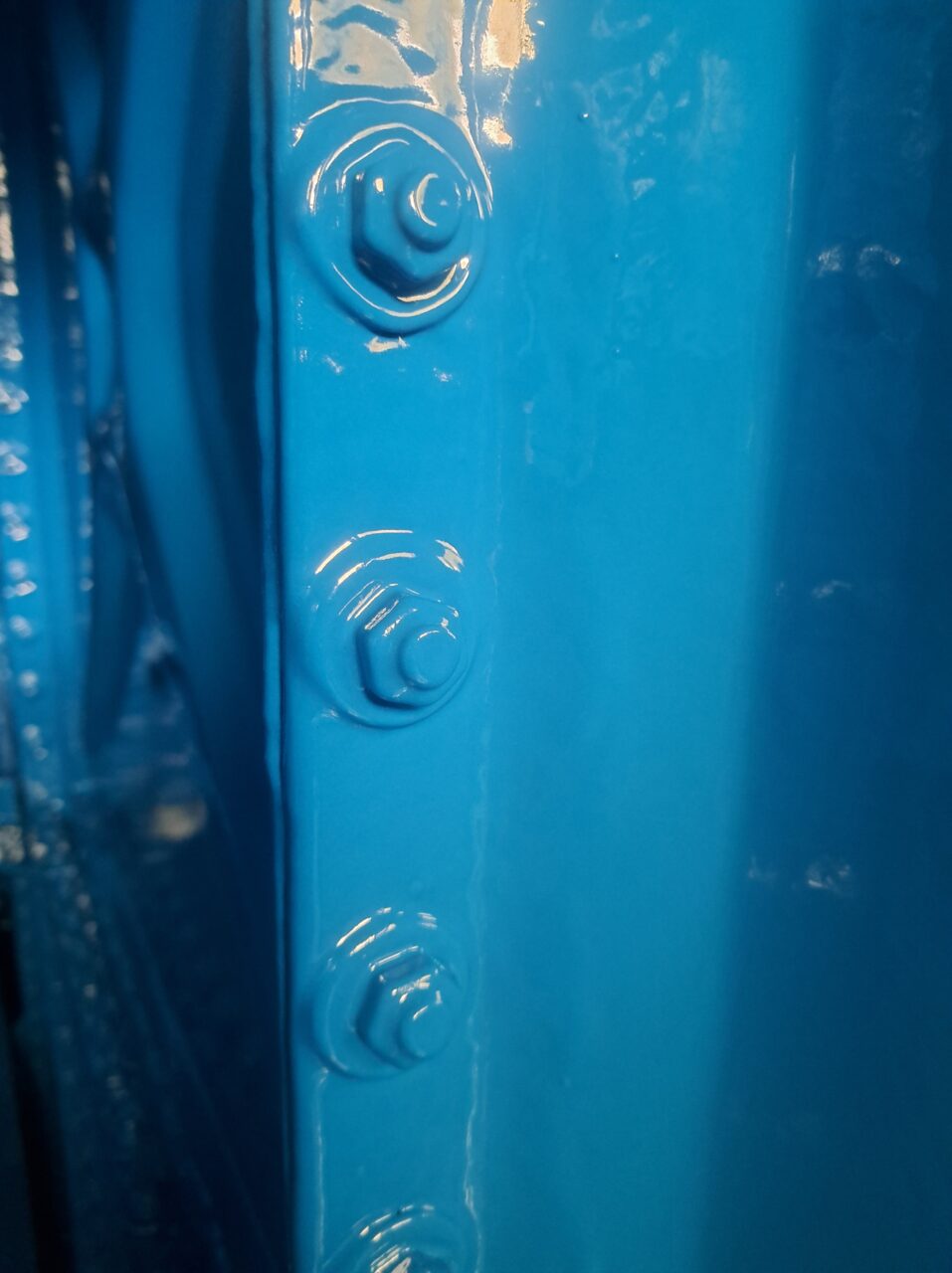
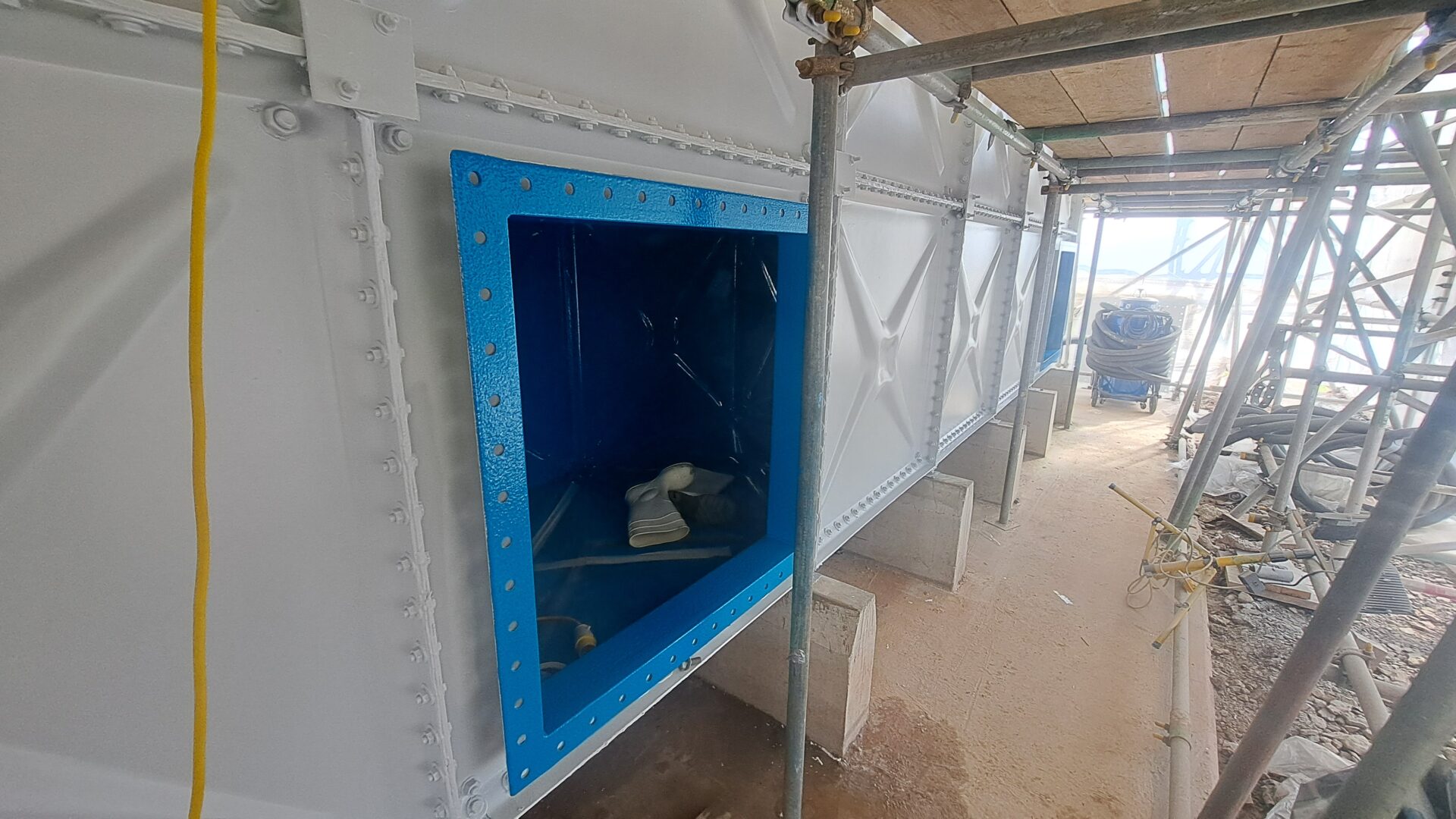
A stripe coat of Acothane DW in cream was first brushed onto all angles, edges, seams, bolts and stays. Coatings naturally pull thin over sharp edges and bolt heads through surface tension, so stripe coating builds extra thickness where a lining is most likely to fail.
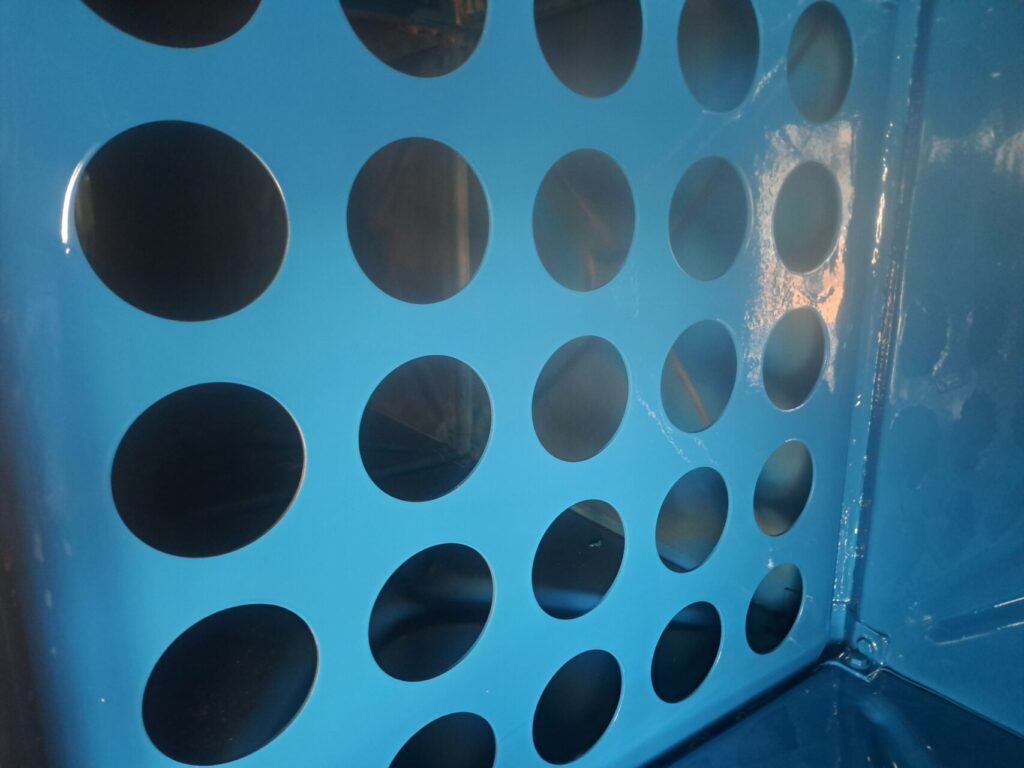
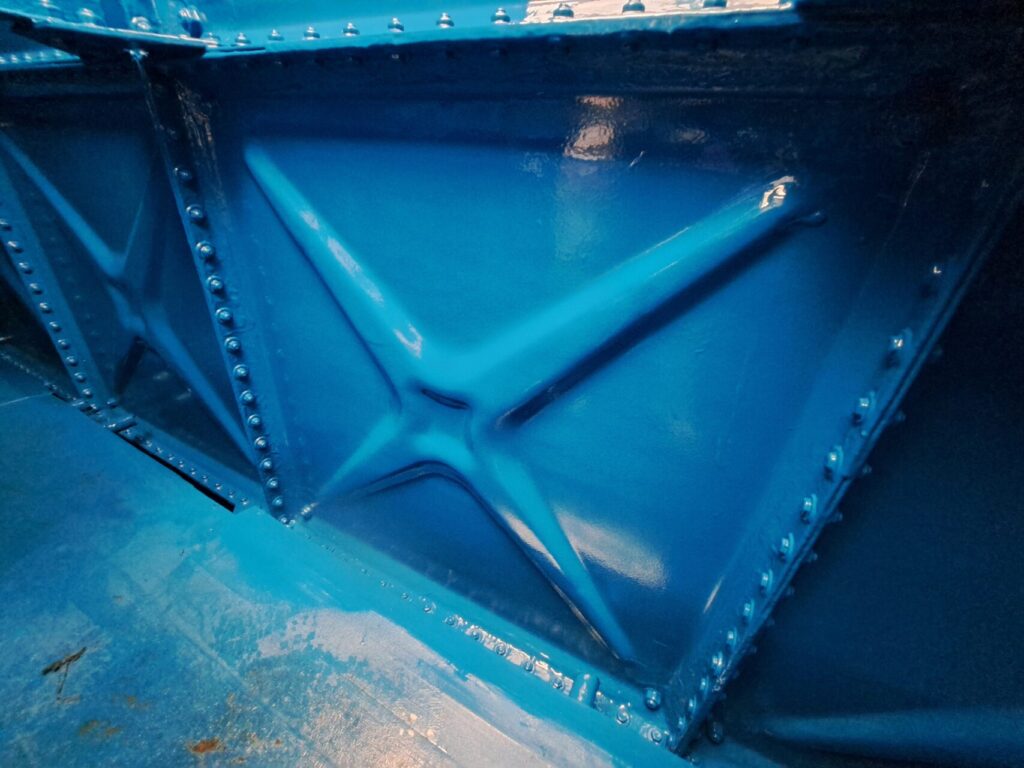
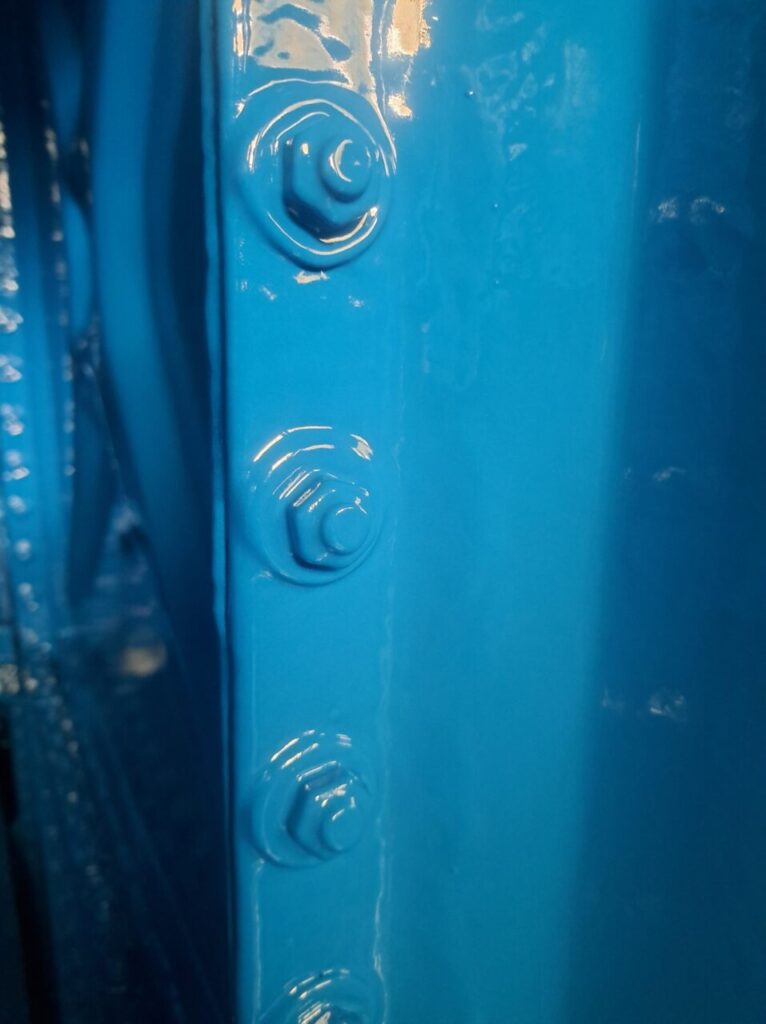
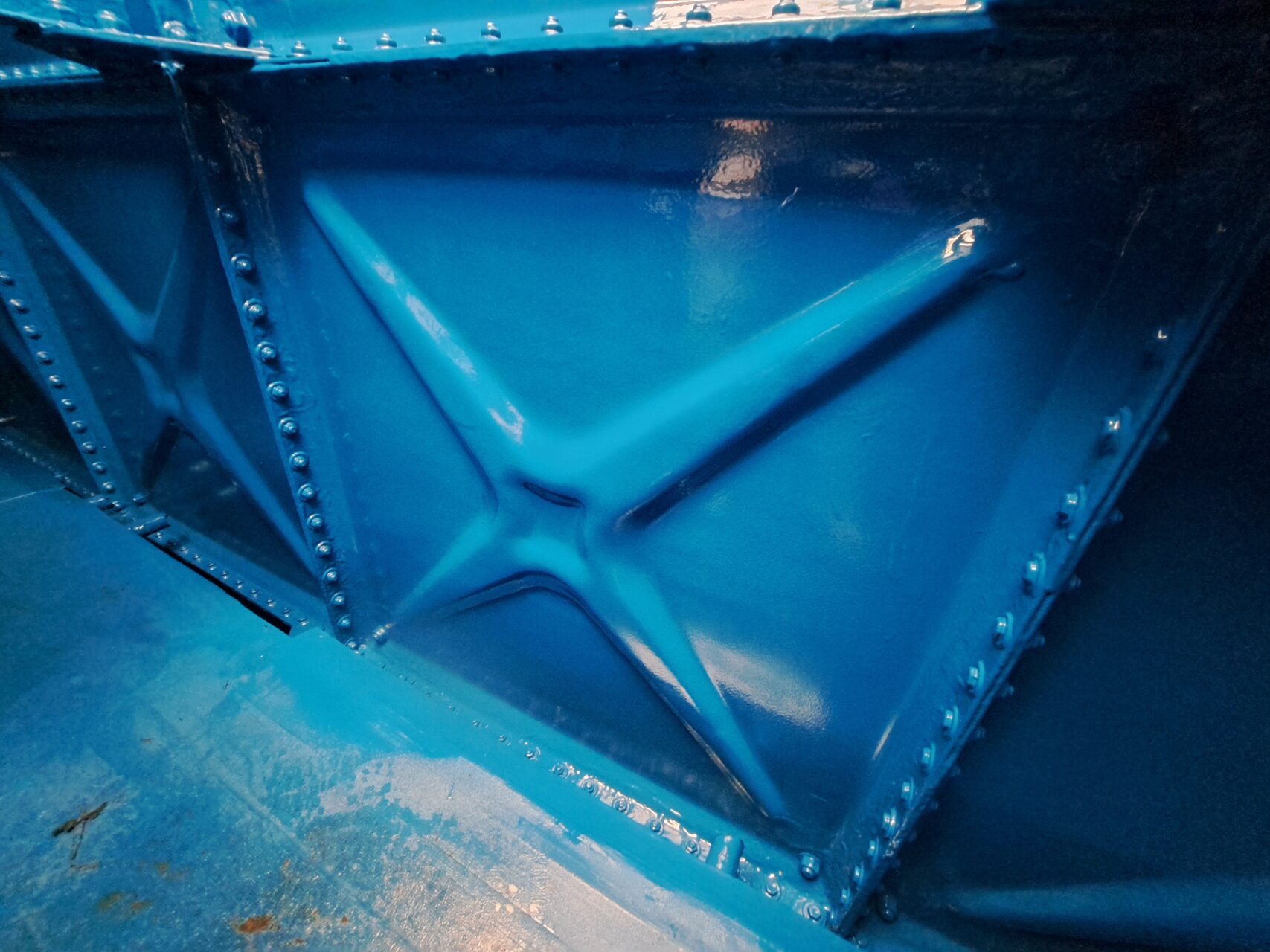
Two full coats of Acothane DW in blue were then applied by plural-component airless spray, each to a minimum of 500 microns, building to a target thickness of 1,000 microns and a minimum of 800 microns. The lining fully encapsulates the bolt heads and seams and covers the baffles and stays on all sides.
Final inspection
Once cured, dry film thickness readings were taken across the lining with a PosiTector 6000. In Tank 1, 55 readings averaged 1,220 microns, and in Tank 2, 83 readings averaged 1,296 microns. Every reading in both tanks was above 1,000 microns, comfortably over the 800 micron minimum. The lining was then inspected, and any areas marked for attention were touched in by brush with the same material.
External coating
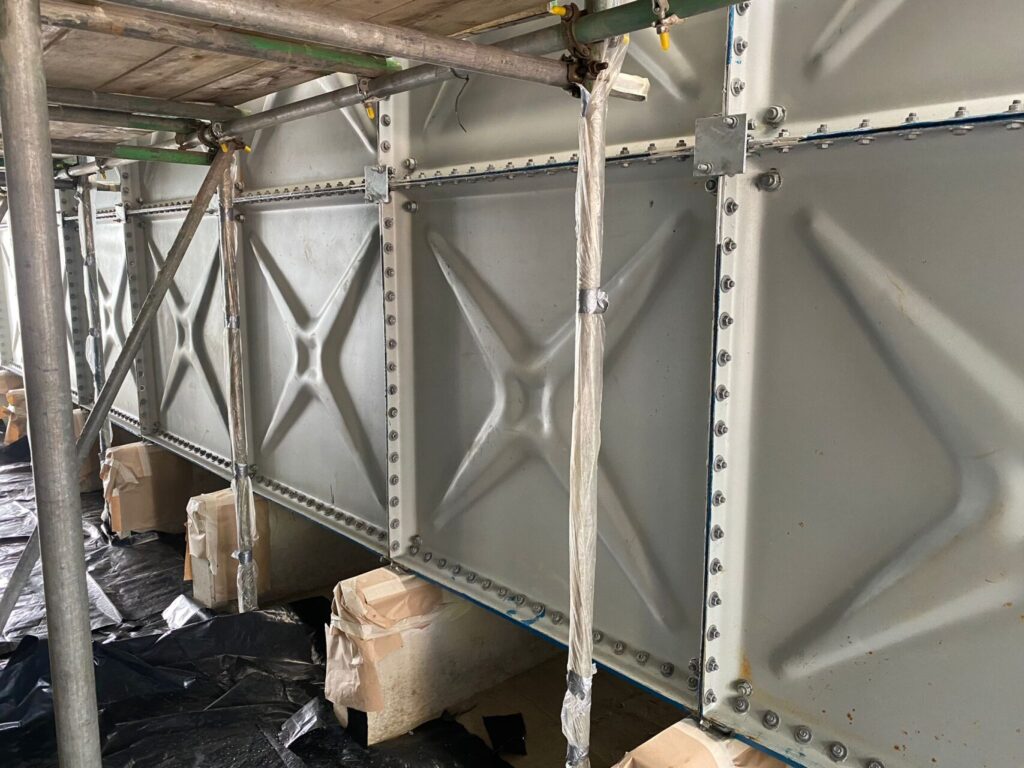
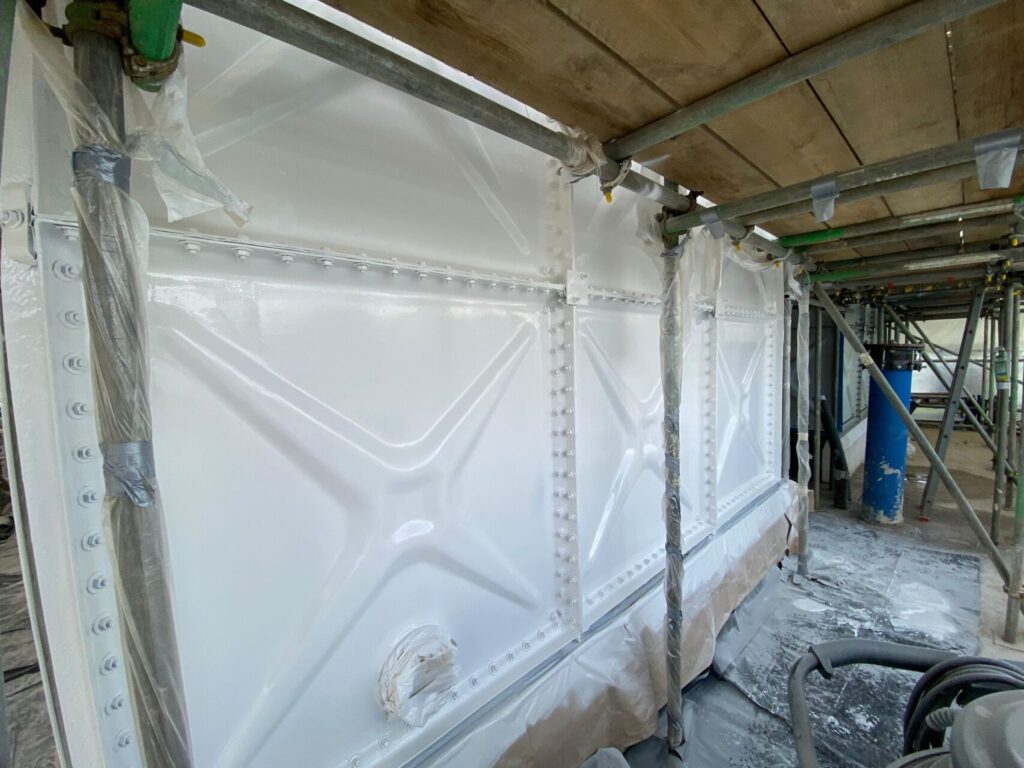
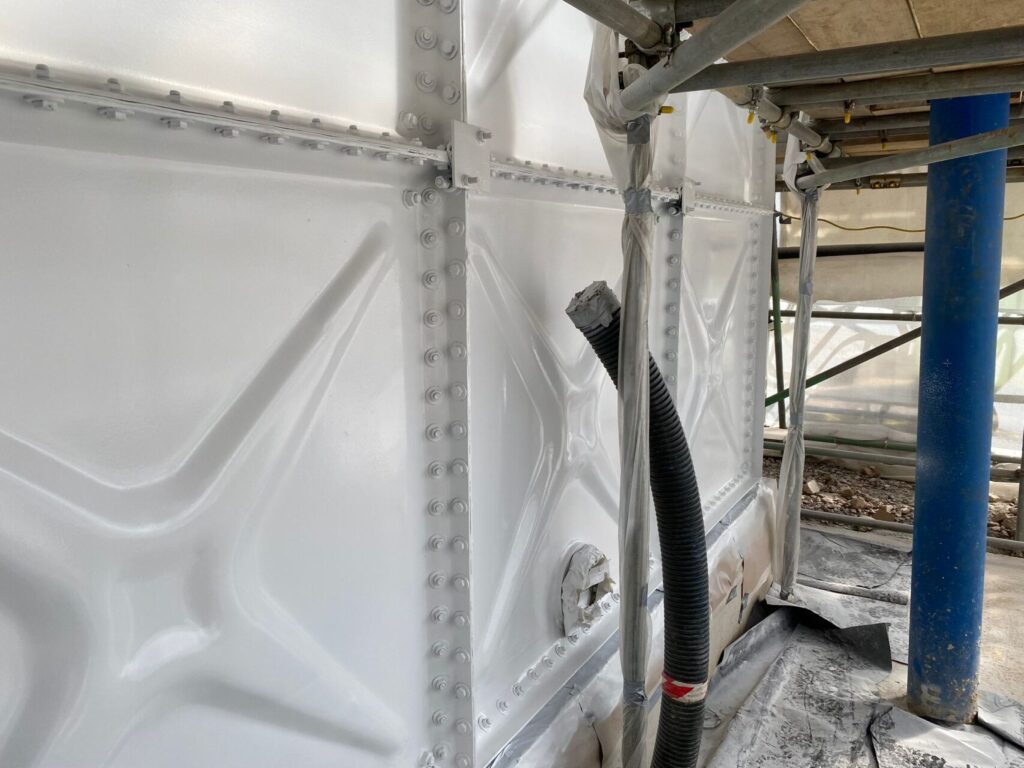
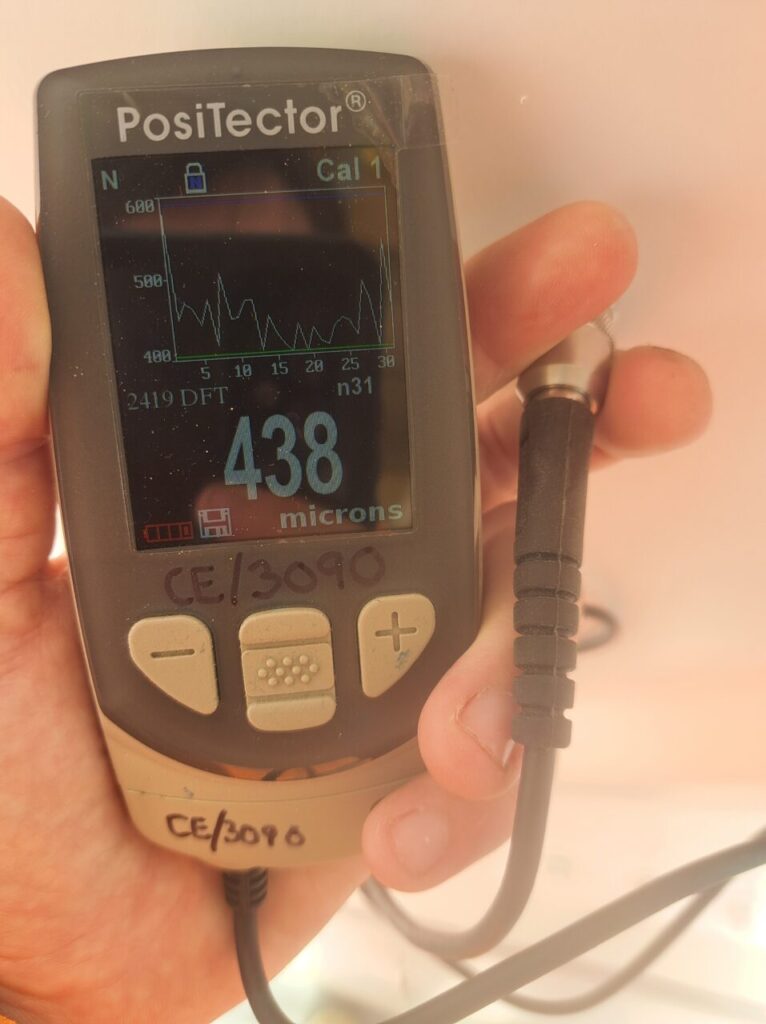
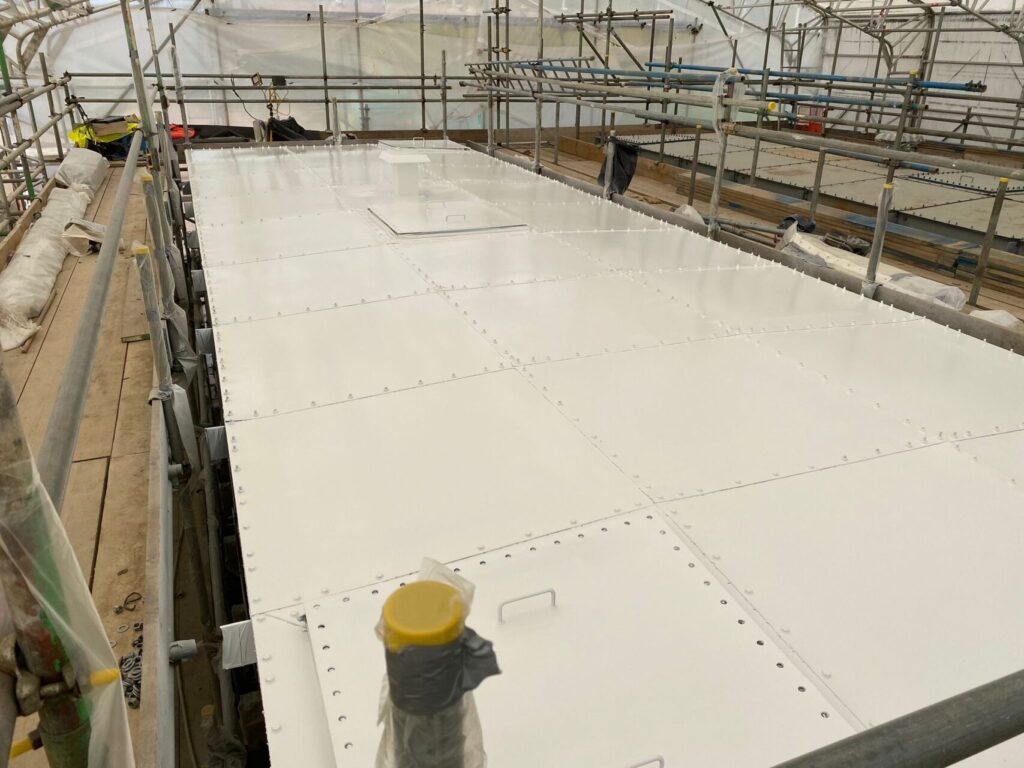
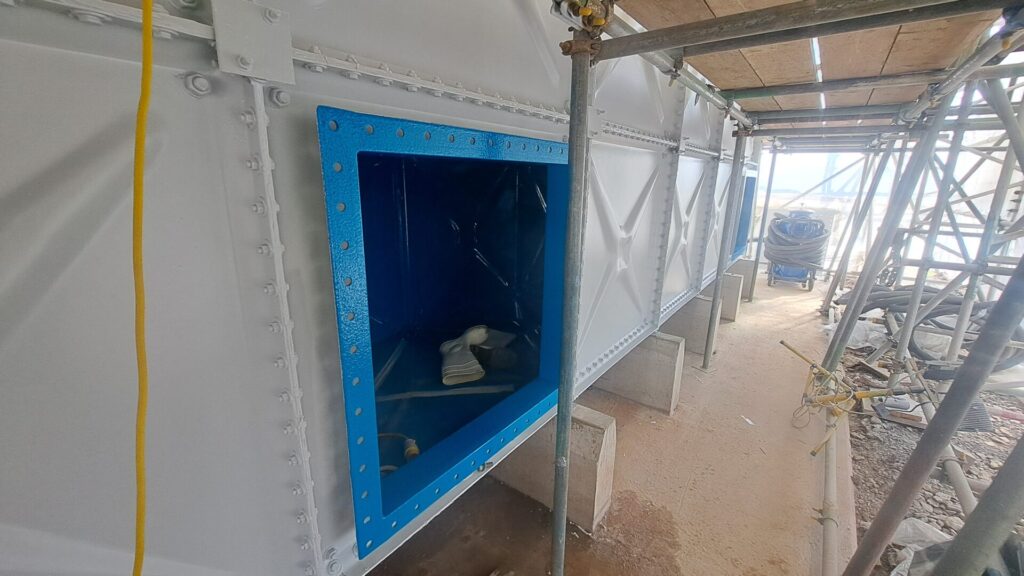
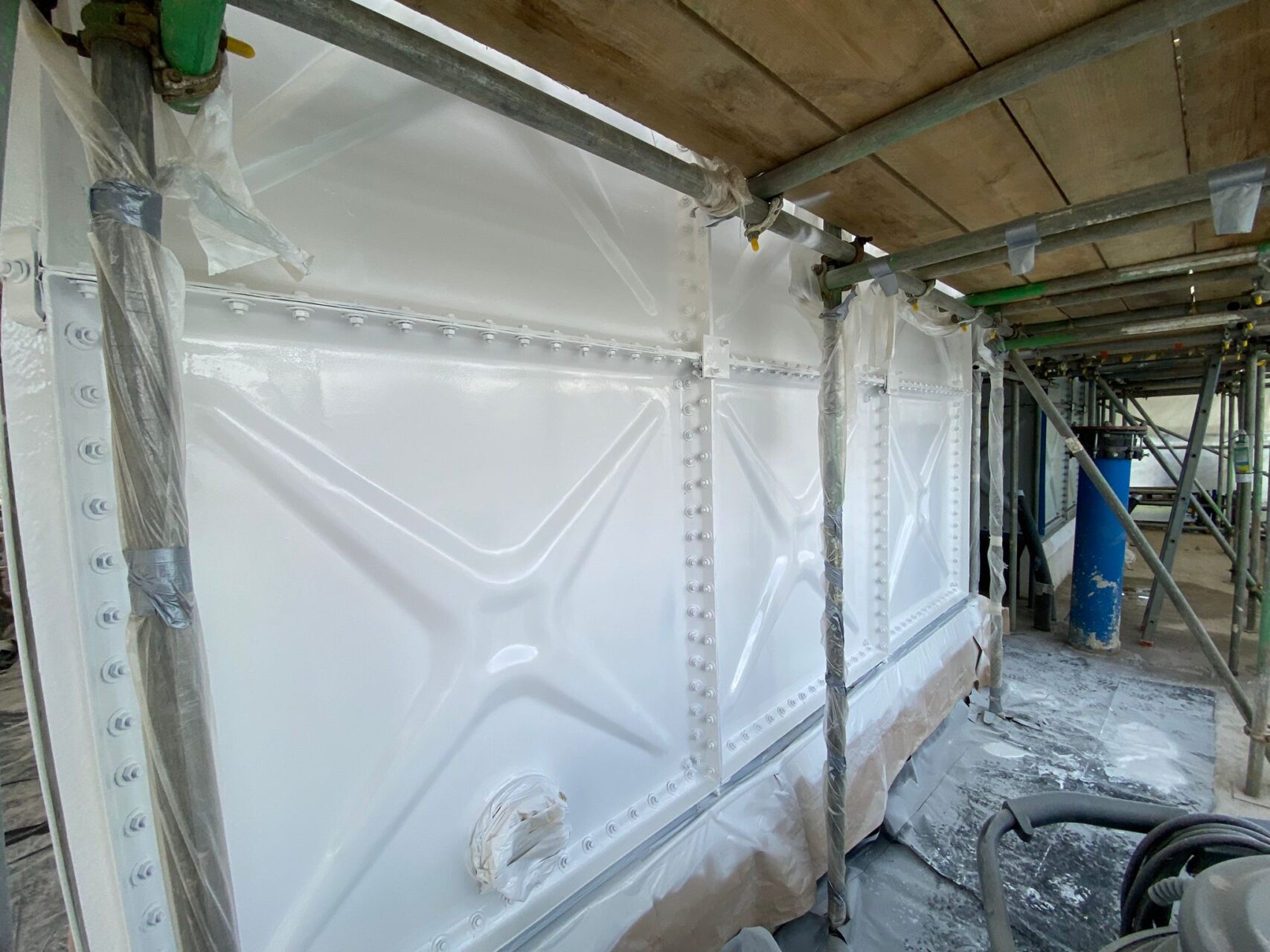
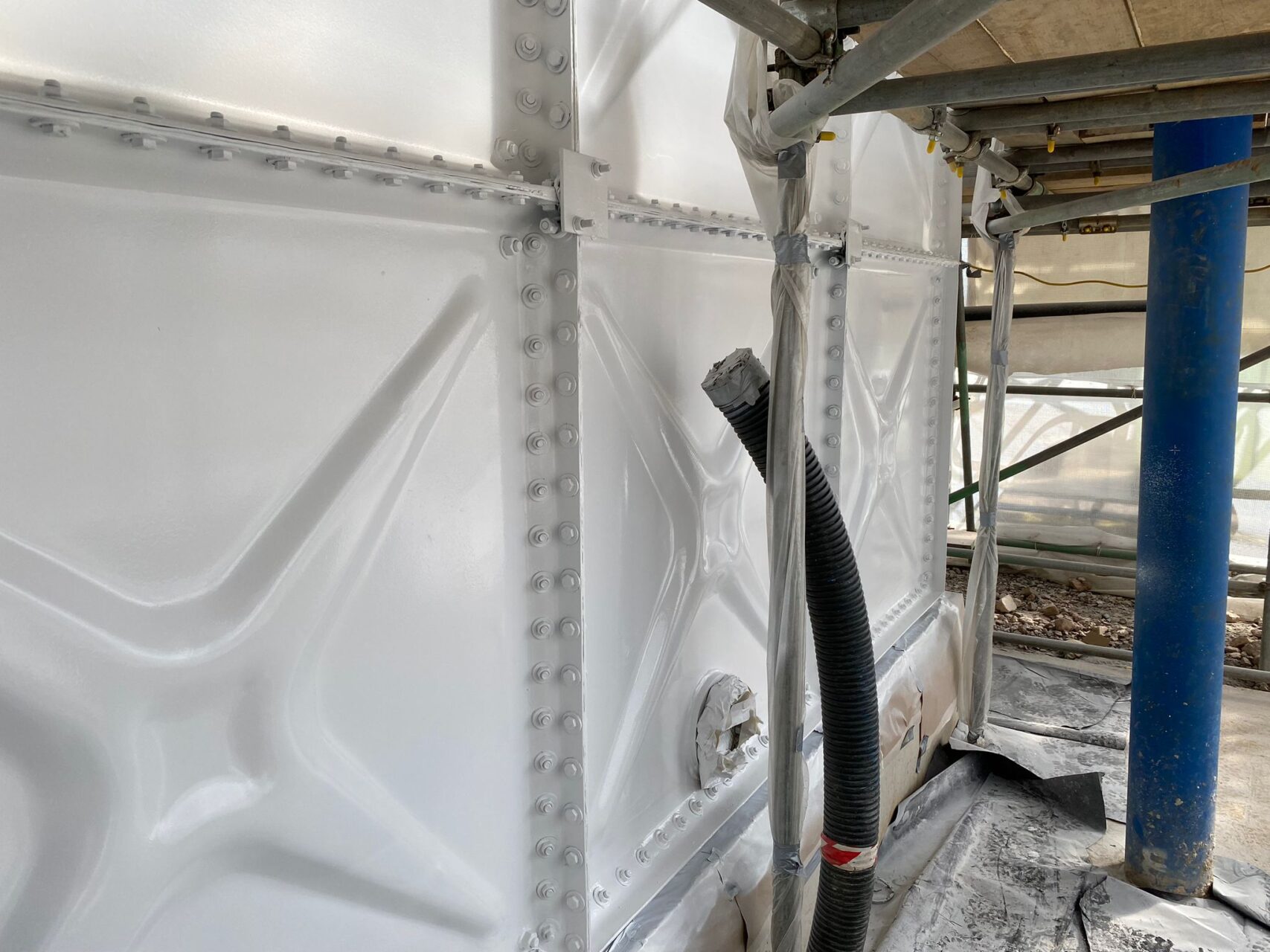
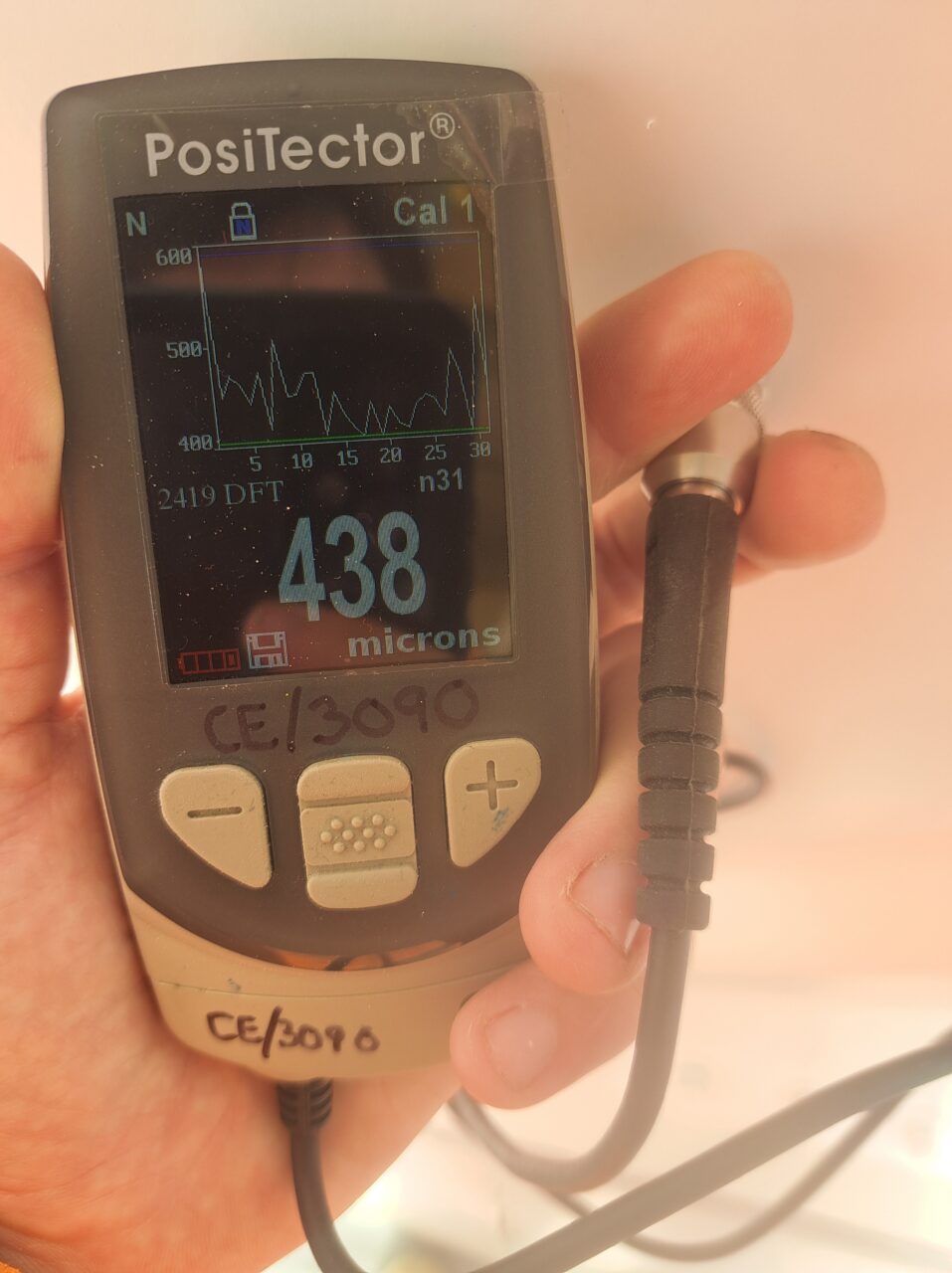
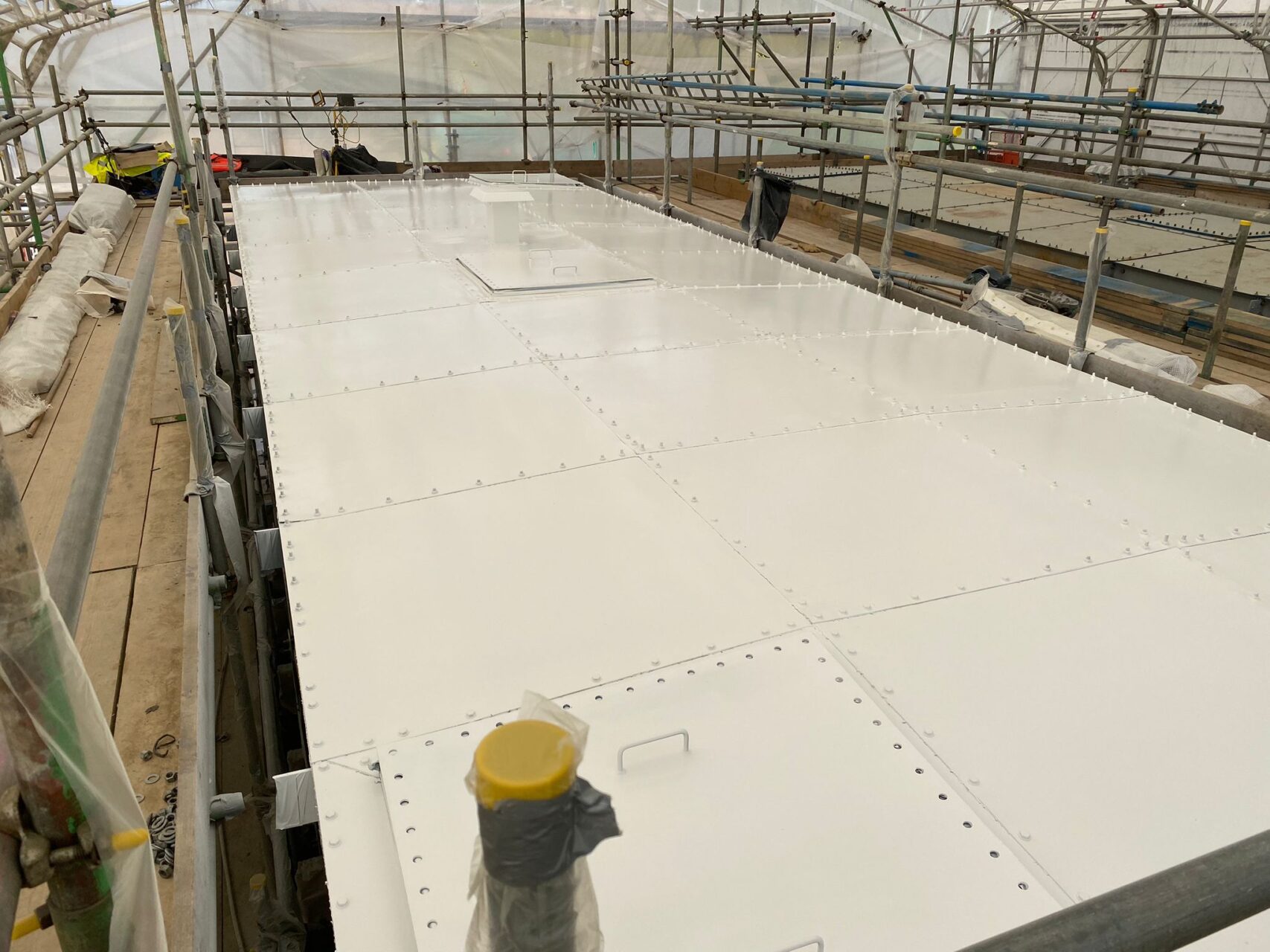
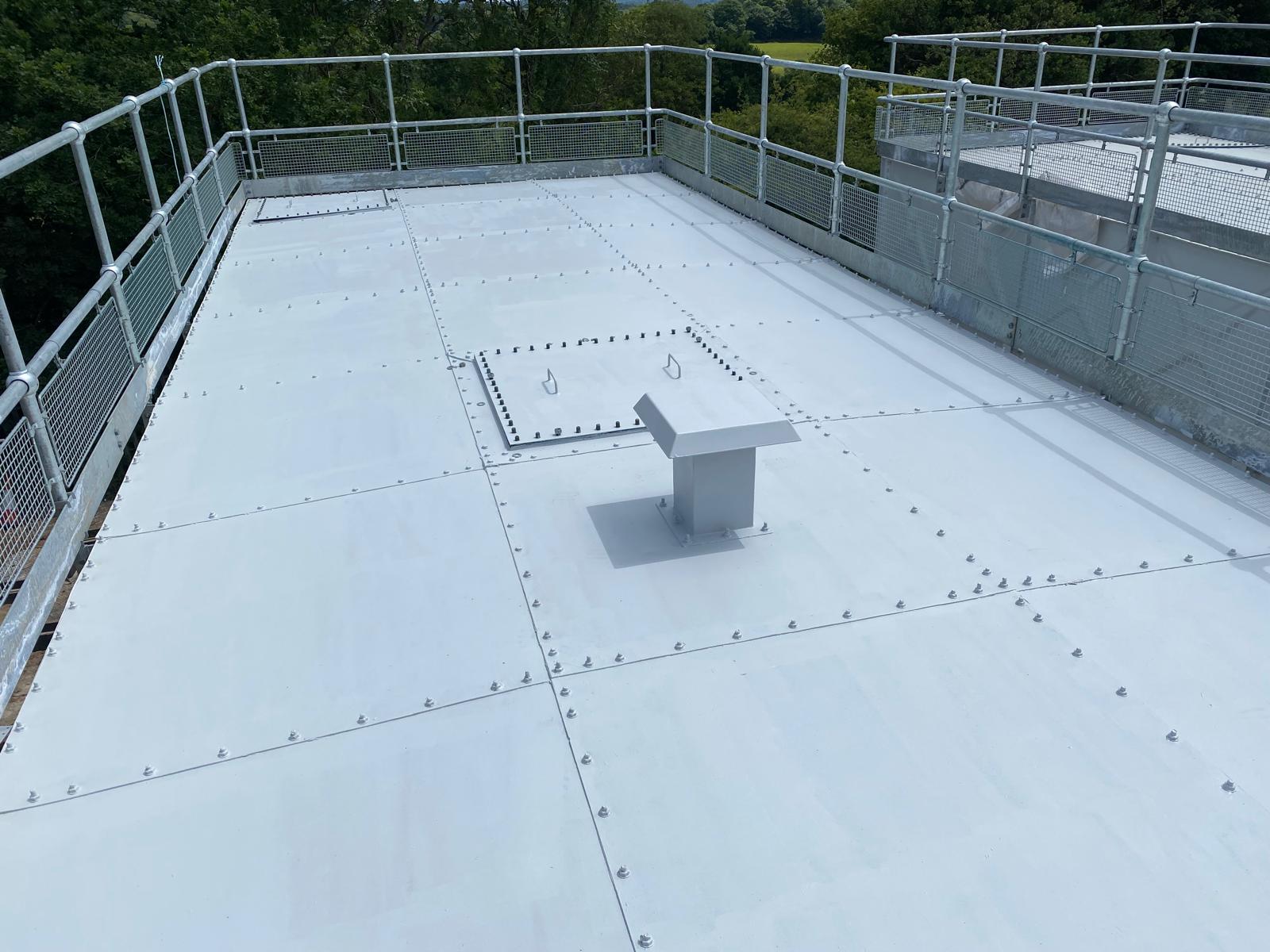
The tank externals were prepared by high-pressure water jetting, with the base supports and openings masked and protected. A stripe coat of Rust-Oleum Noxyde Plus was applied to the bolted flanges, edges and bolt heads, followed by two full coats by airless spray at 400g/m² per coat. Noxyde Plus is a water-based, elastic anti-corrosion coating that can flex with the bolted joints. Dry film thickness readings averaged 562 microns on Tank 1 and 440 microns on Tank 2, against a nominal 350 microns.
THE RESULT
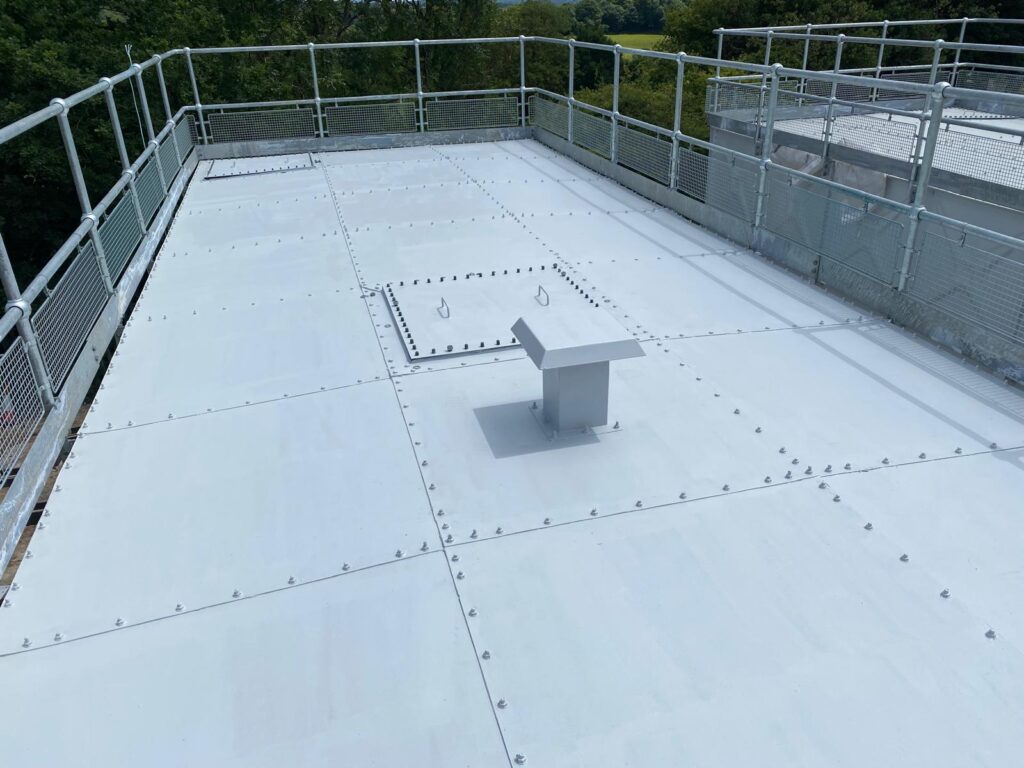
Both new pressed steel contact tanks now have a fully inspected Acothane DW drinking water lining applied to correctly prepared steel, with every bolted joint protected off site before erection. The externals are protected by a flexible Rust-Oleum Noxyde Plus coating, ready for the contact tanks to be brought into service.
The off-site joint protection was carried out in December 2023 and January 2024, and the on-site works between March and June 2024.
Find out more about our steel tank lining services: https://www.corrolesseastern.co.uk/services/steel-tank-linings/