Bund Wall Re-Lining – Newark, Nottinghamshire

THE PROBLEM

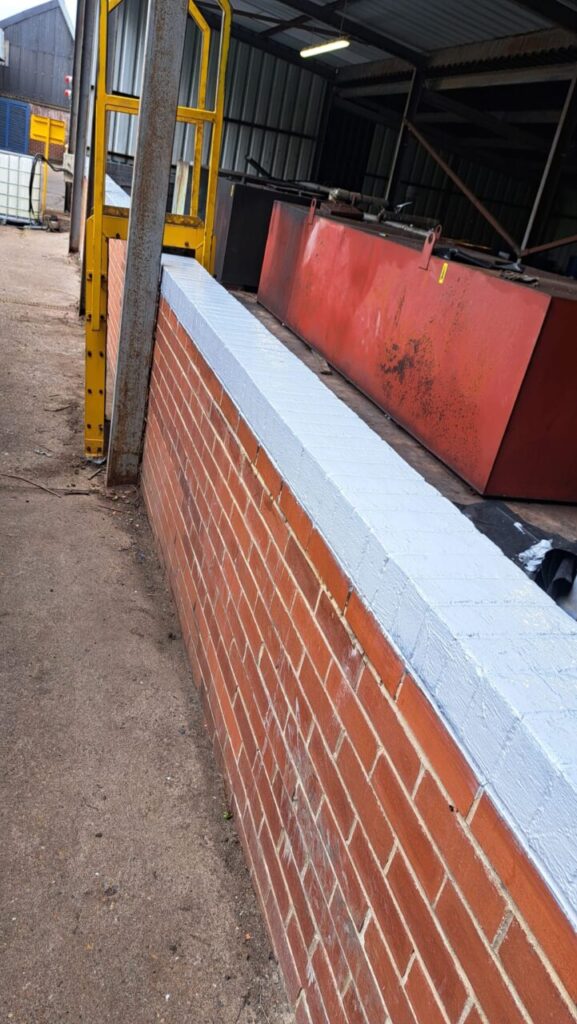
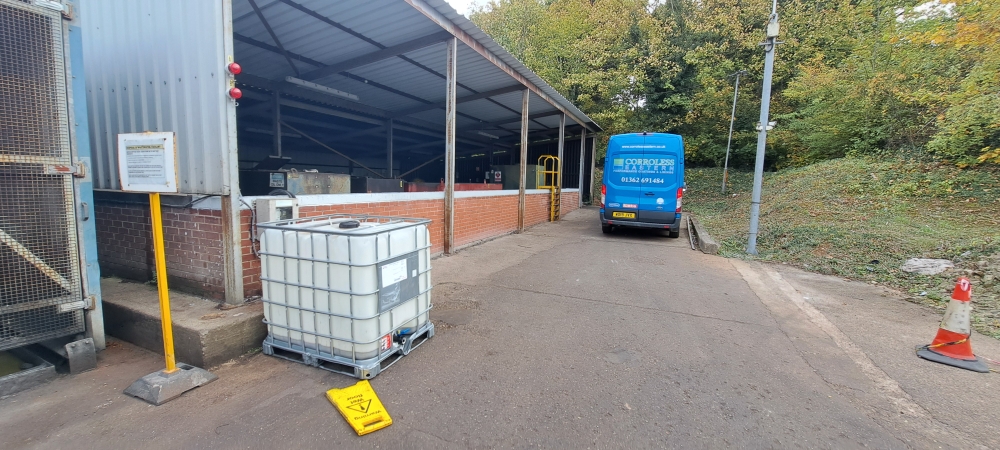
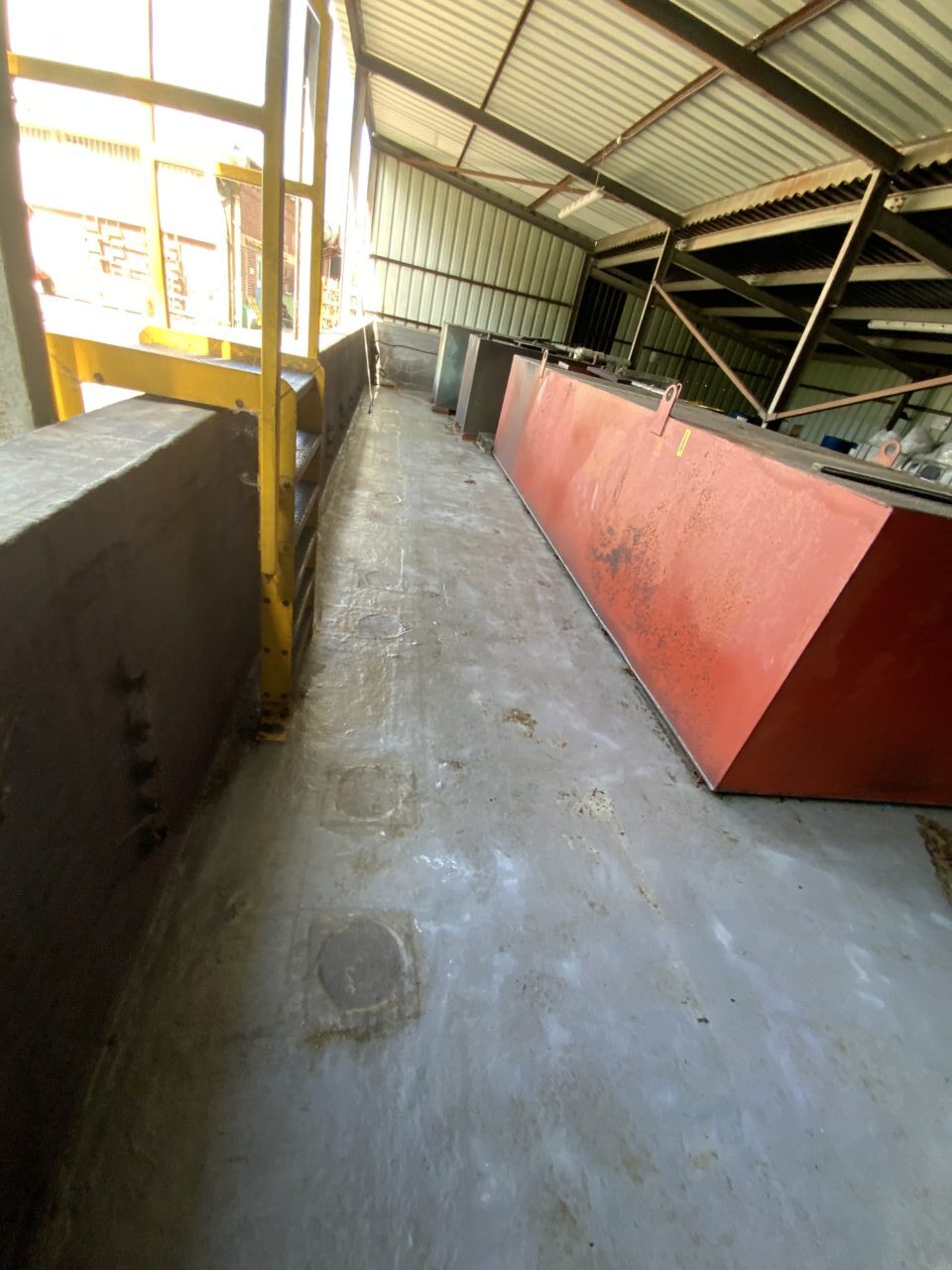
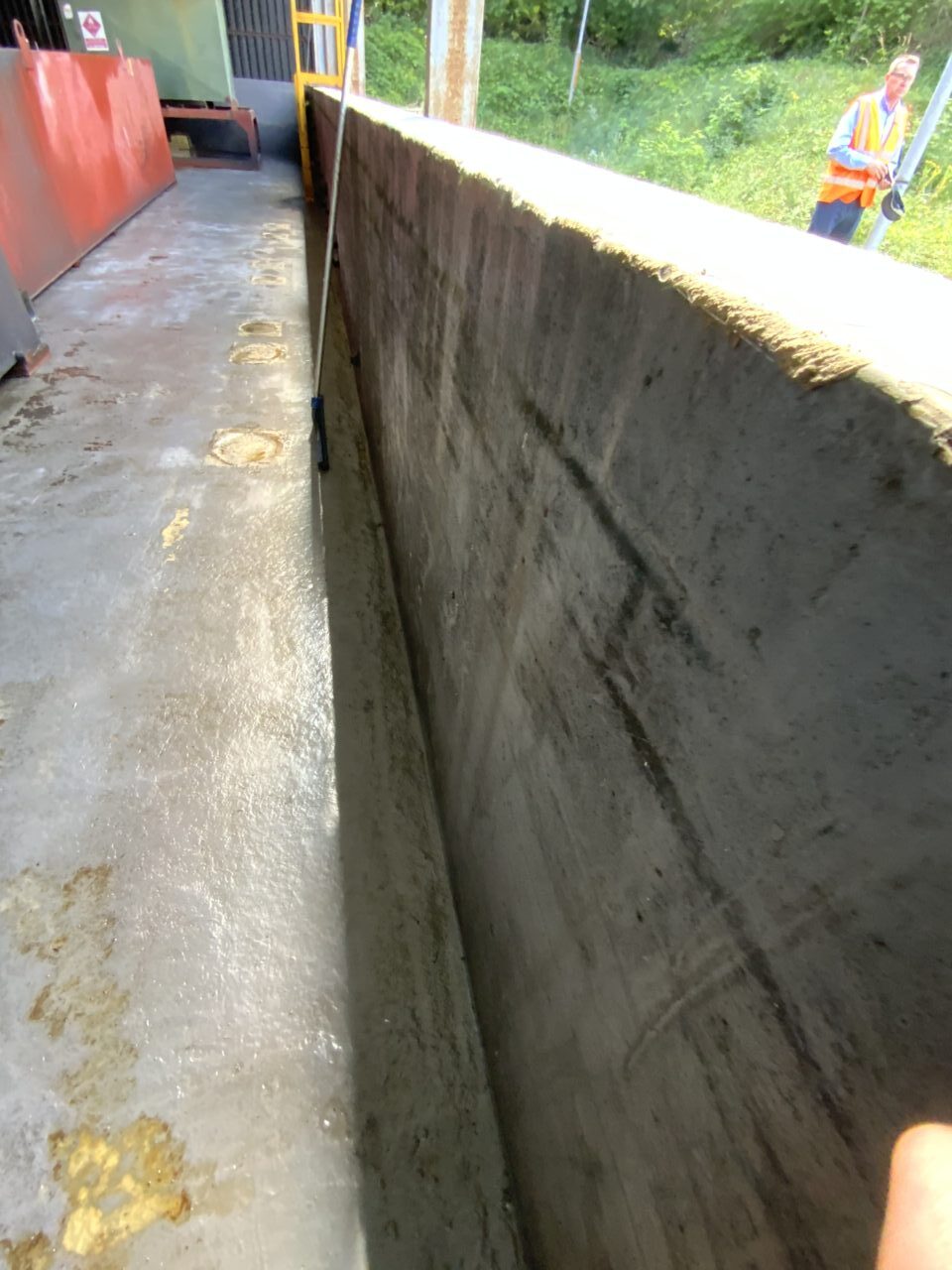
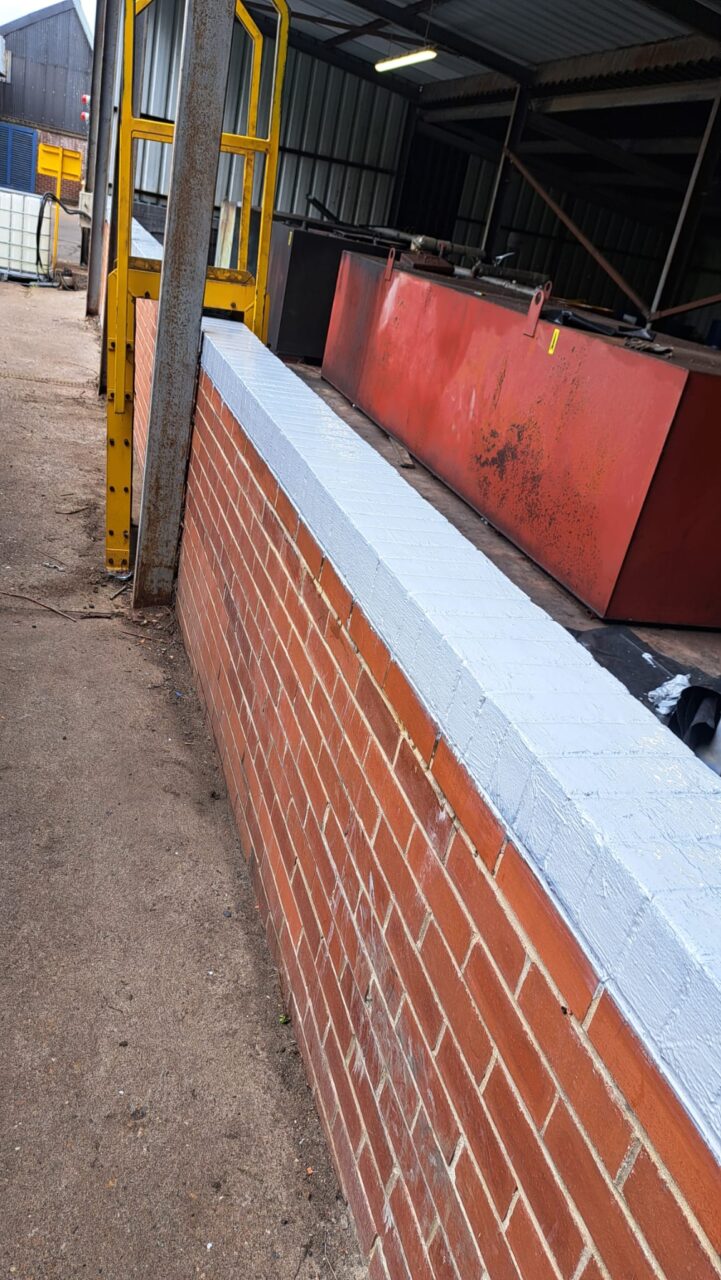
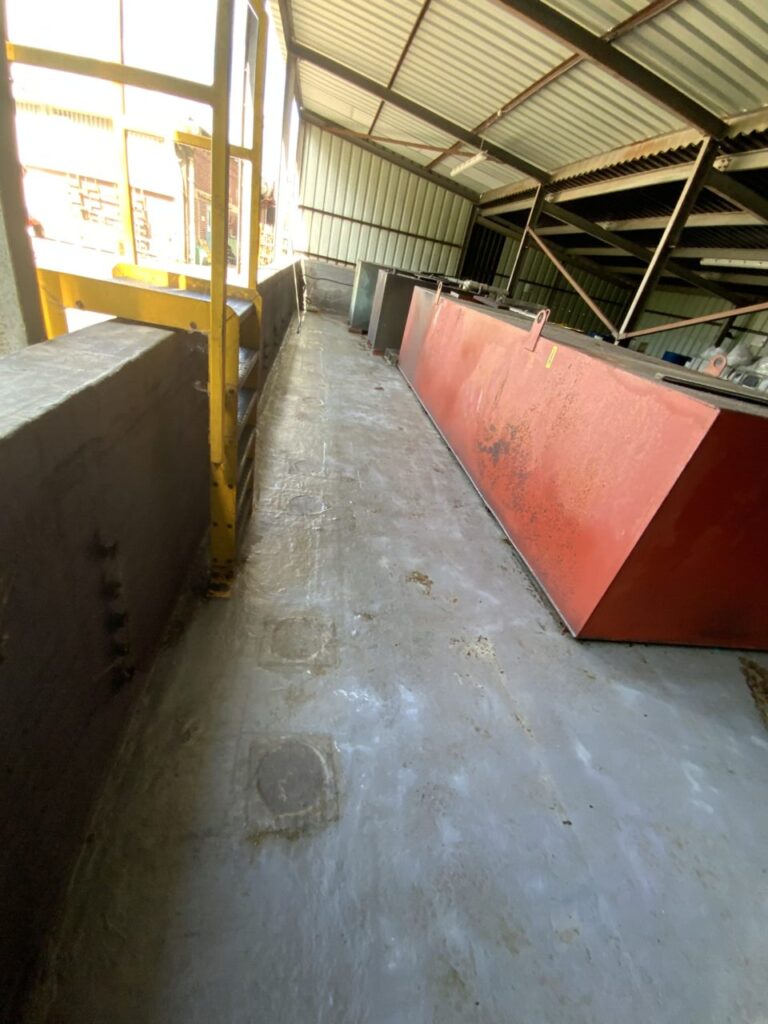
A leading global bearing manufacturer contacted us about the oil and diesel storage bund at their site in Newark, Nottinghamshire. The brick-built bund sits under an open canopy and houses several large steel tanks.

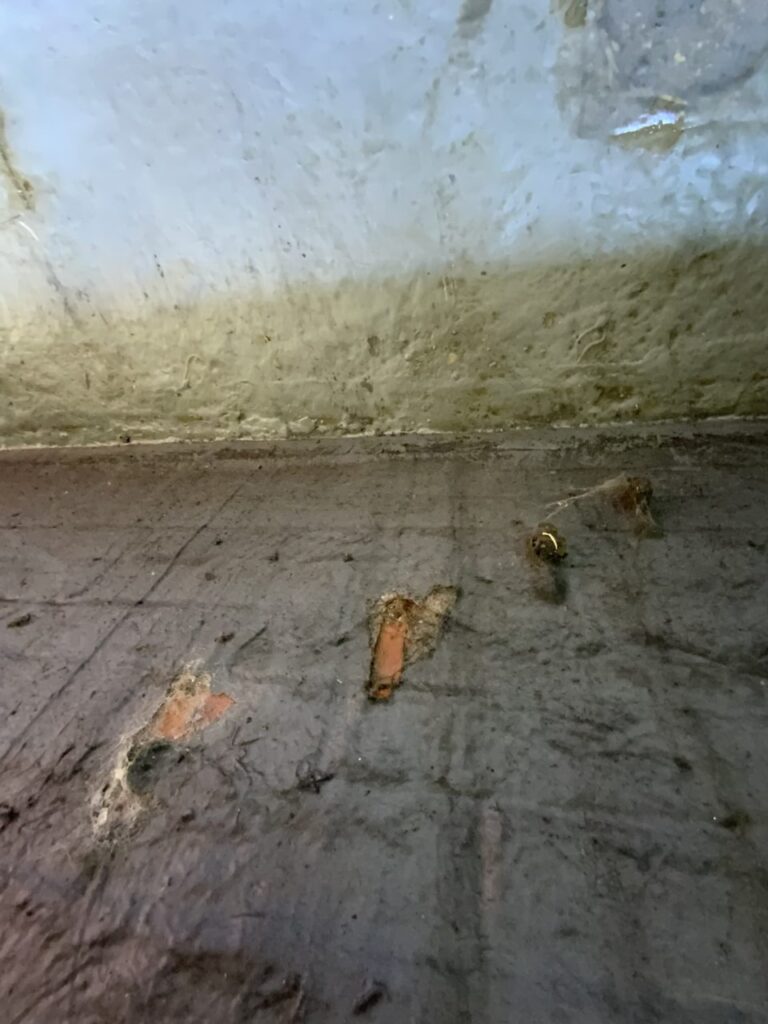
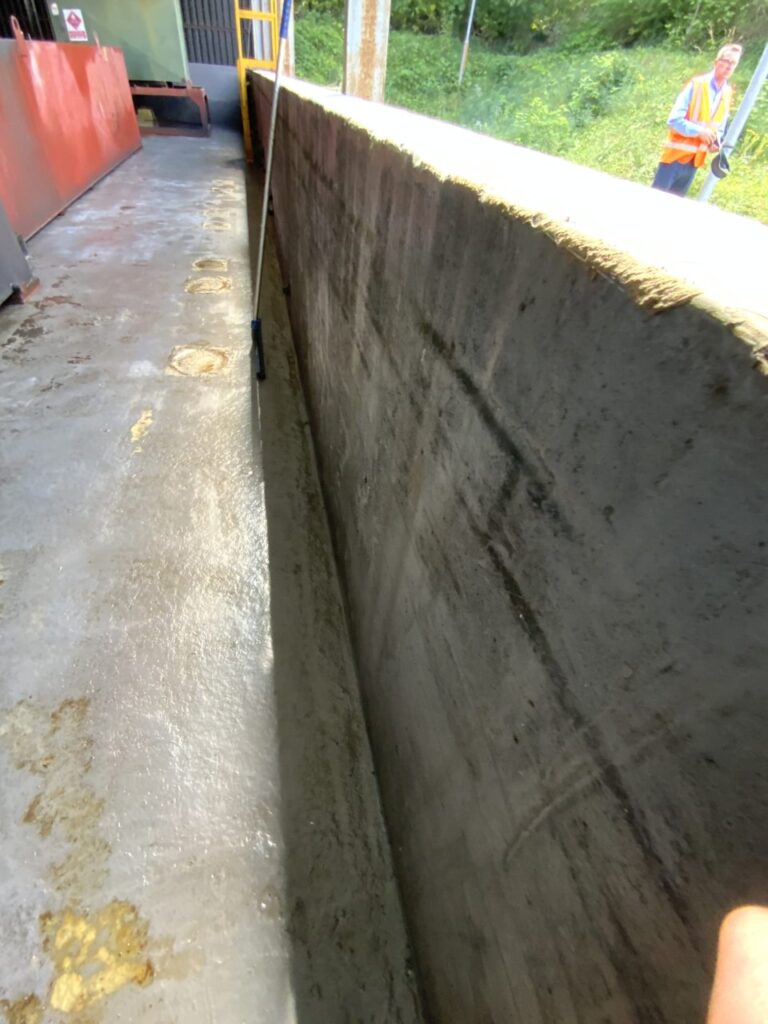
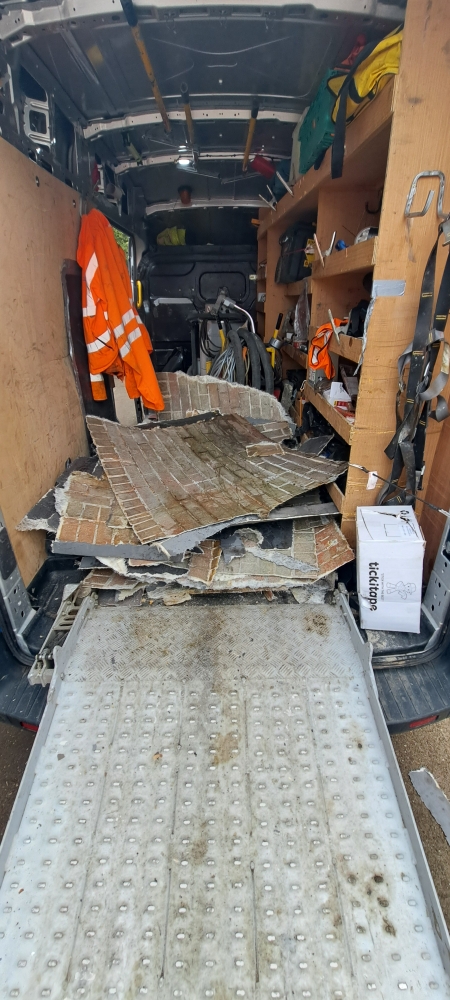
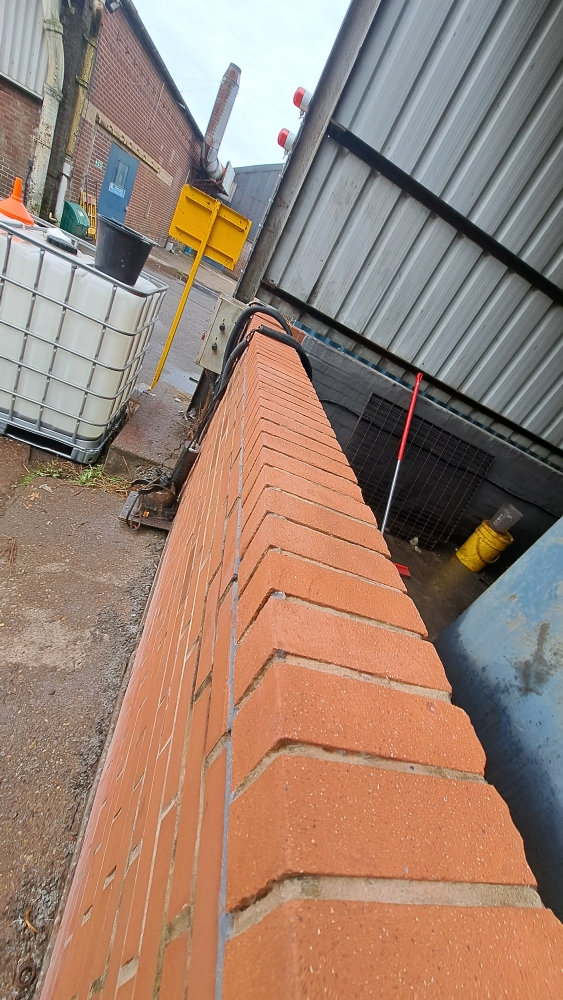
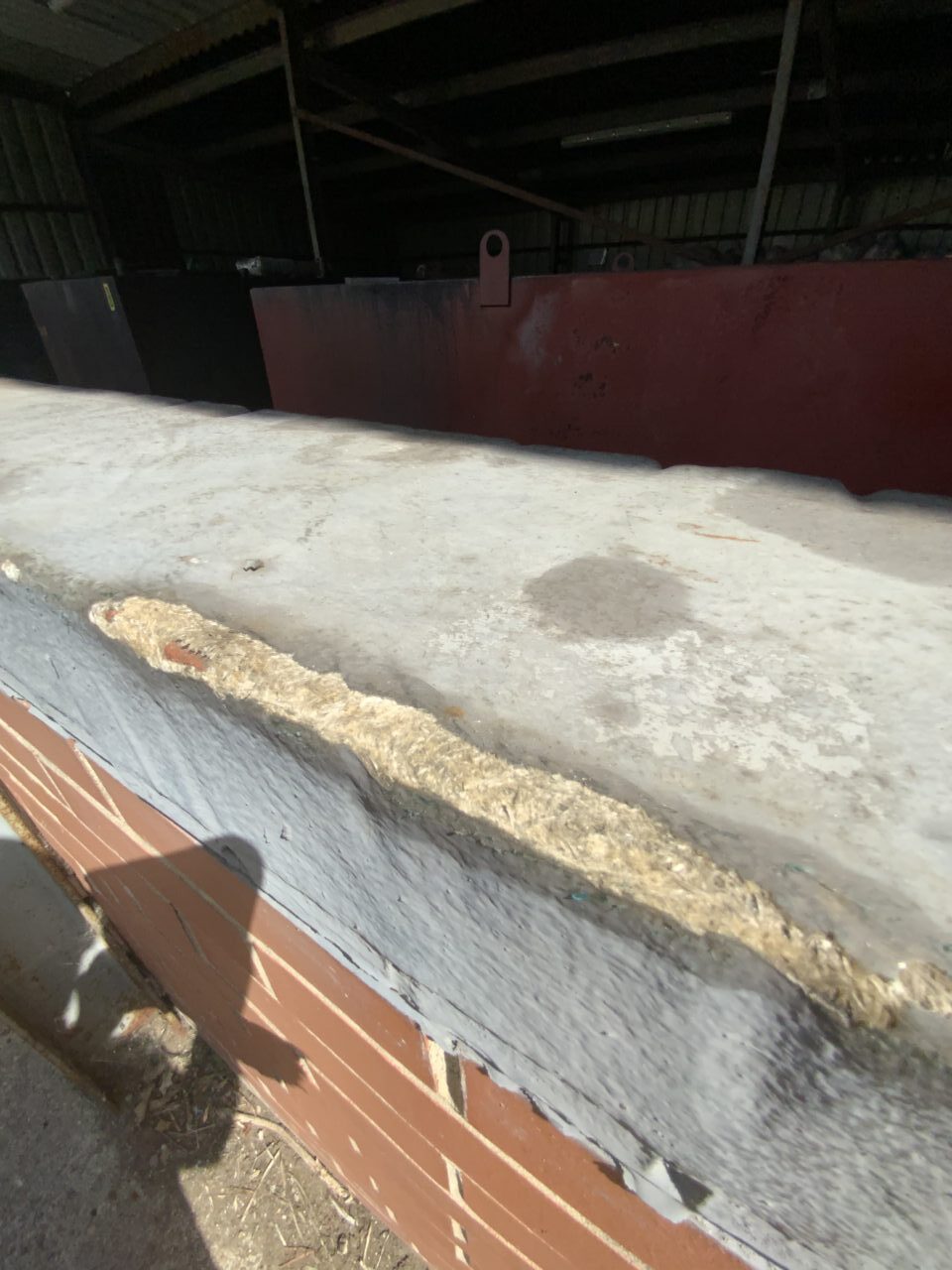
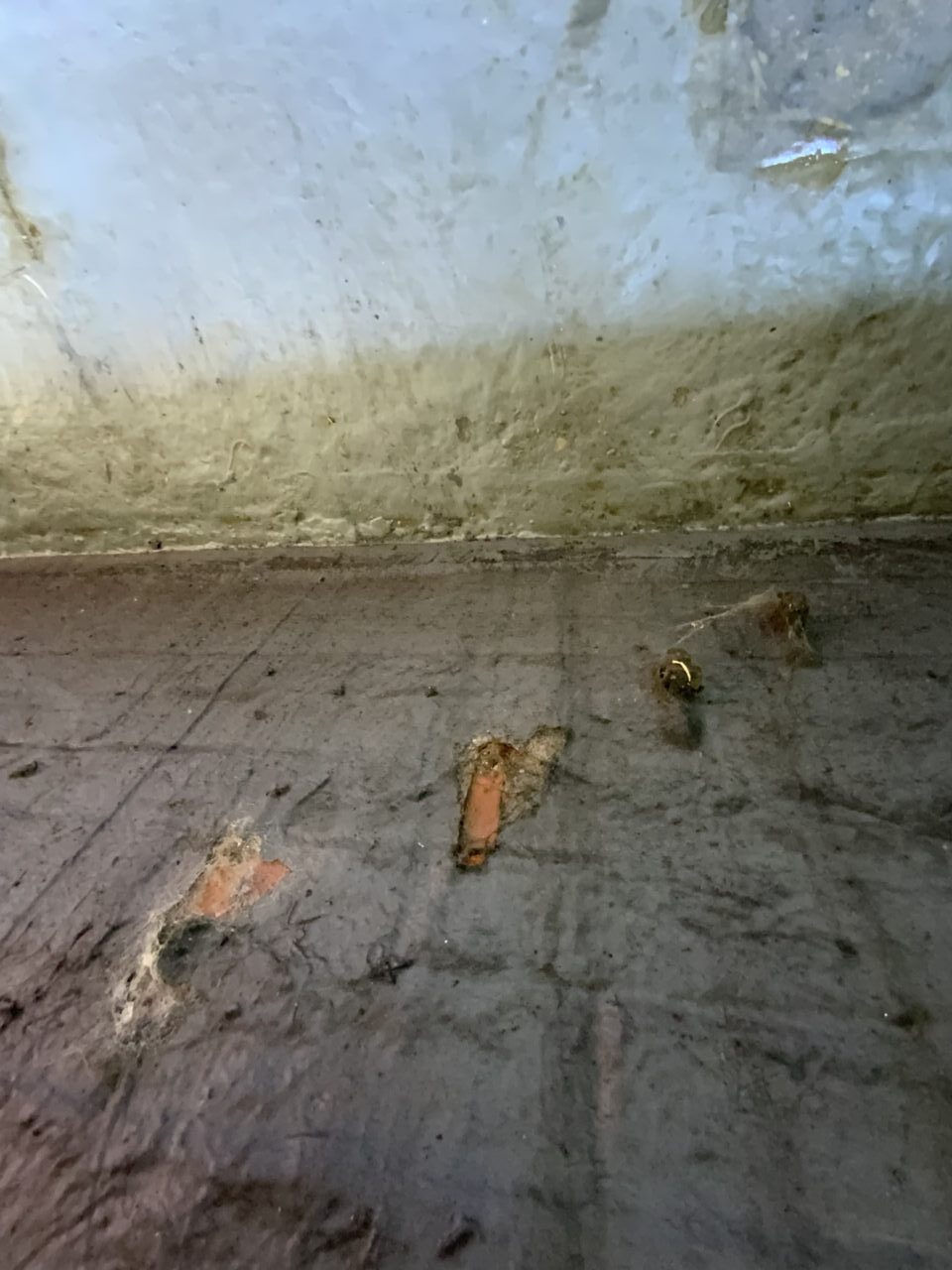
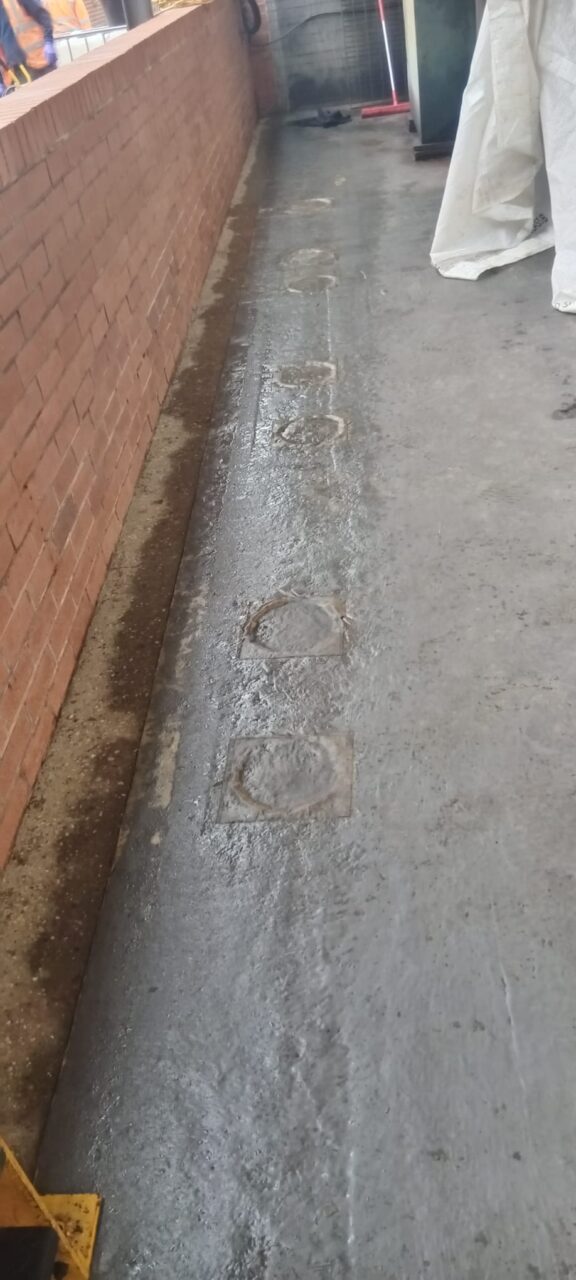
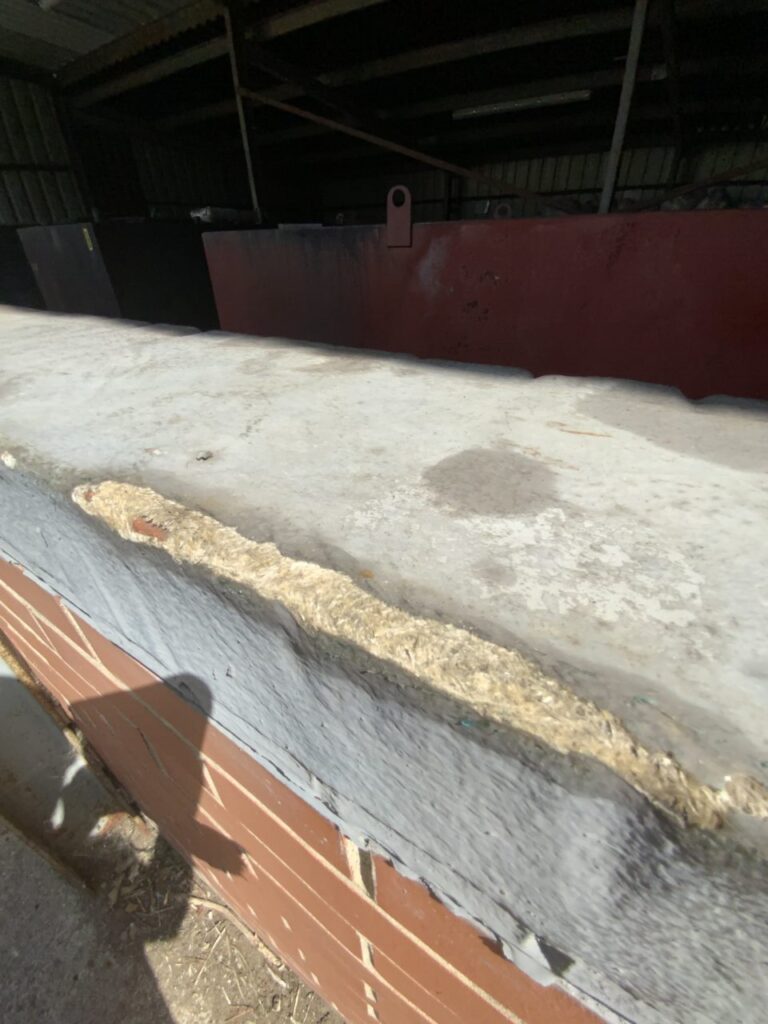
The bund had originally been lined with GRP, but the lining had failed. Along the top of the front wall the GRP had split and lifted, leaving the glass fibres exposed. In places it had broken through completely to the brickwork beneath. With an unknown amount of the lining compromised, the bund could no longer be relied on to contain a spill, which posed a clear environmental risk.

GRP is a rigid, brittle material. The bund is built of brick on a concrete base, and that kind of construction naturally moves slightly over time. A brittle lining cannot accommodate this, so it cracks and lets go. This was the most likely cause of the failure.

The tanks could not be moved, and there was no access to coat beneath them. Leaks had only ever been seen at the front wall. For both budgetary and technical reasons, the client chose to re-line the front wall only: the inside face, the wall top and 200 mm onto the floor.
THE SOLUTION

We recommended a Remmers bund lining system finished in Remmers Epoxy WHG. We have worked closely with Remmers for over 30 years. WHG has excellent chemical resistance and durability. It is also crack-bridging, so it can absorb normal movement in the structure without splitting, which is where the old GRP had failed.

Removal and preparation

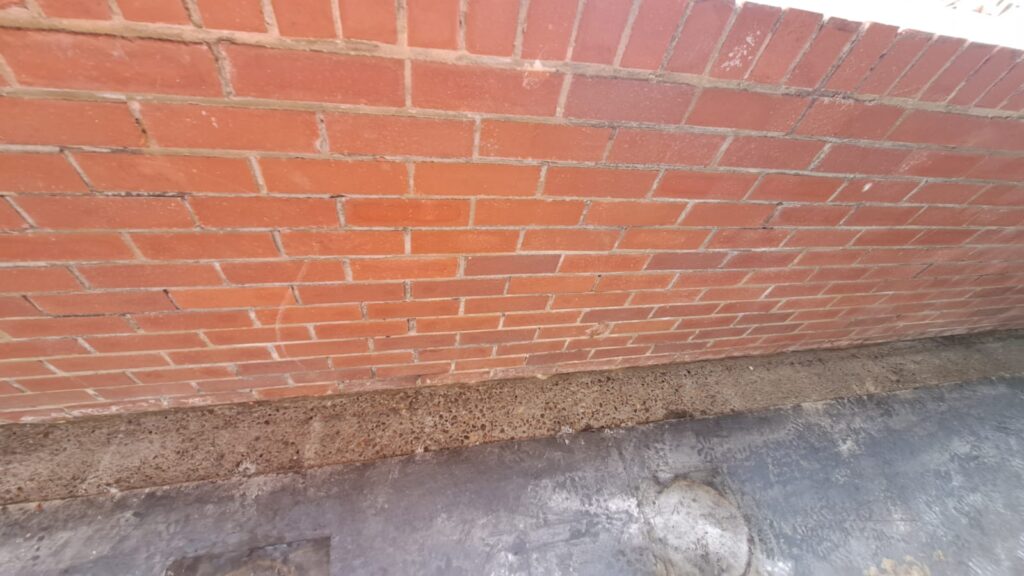
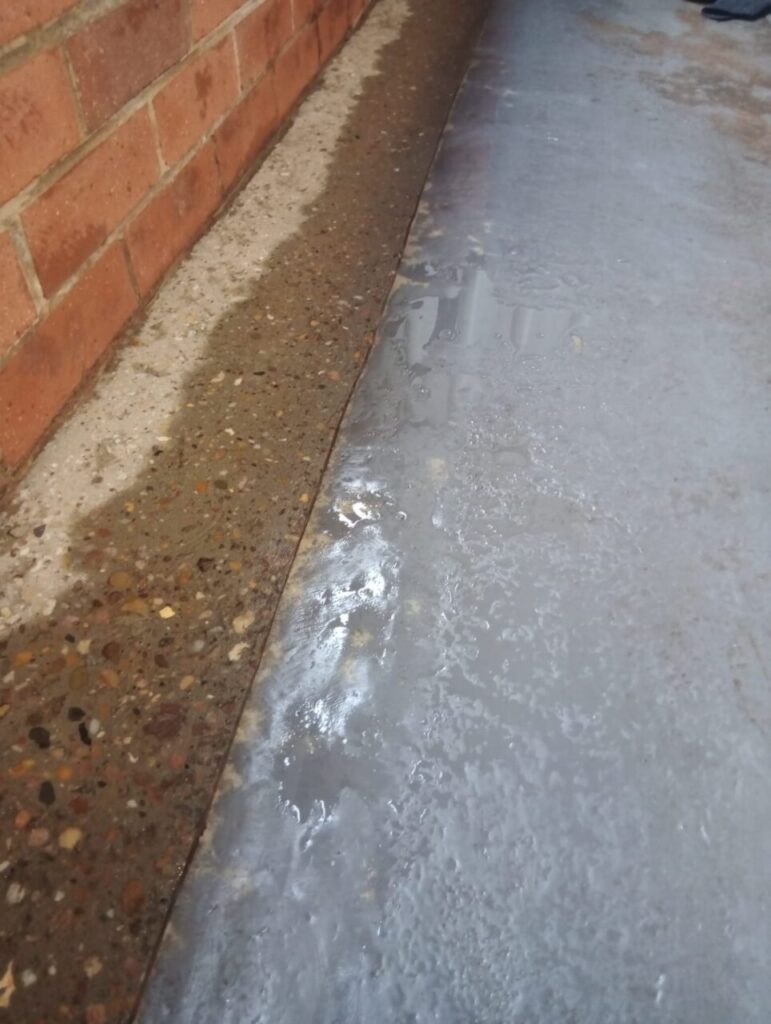
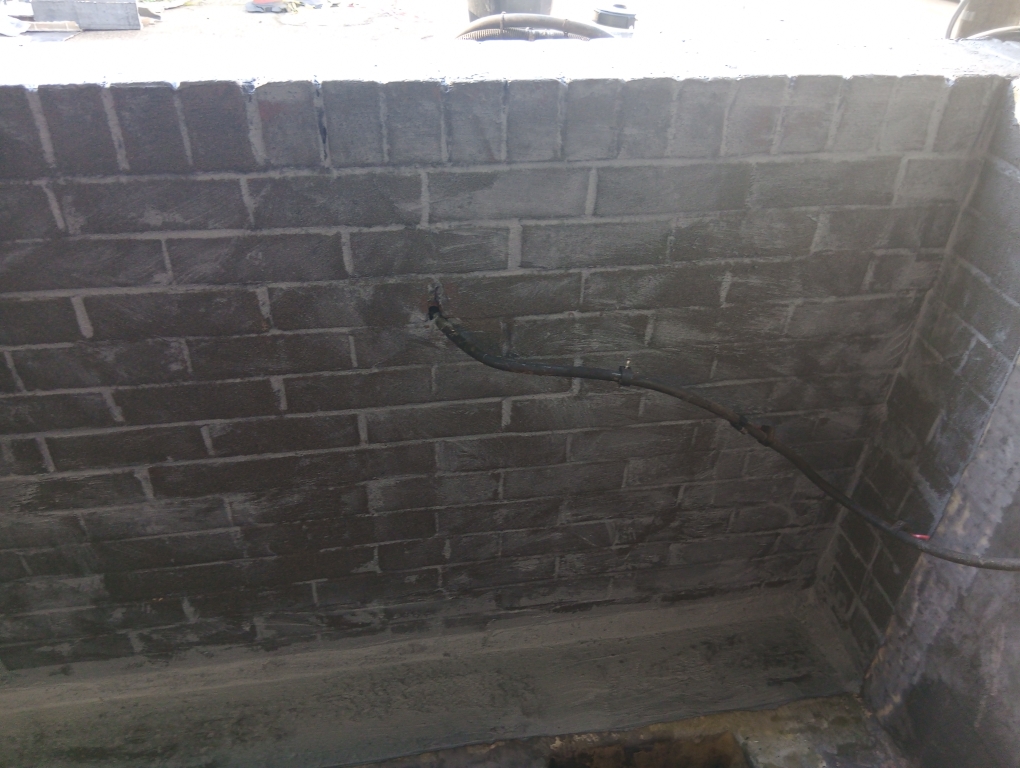
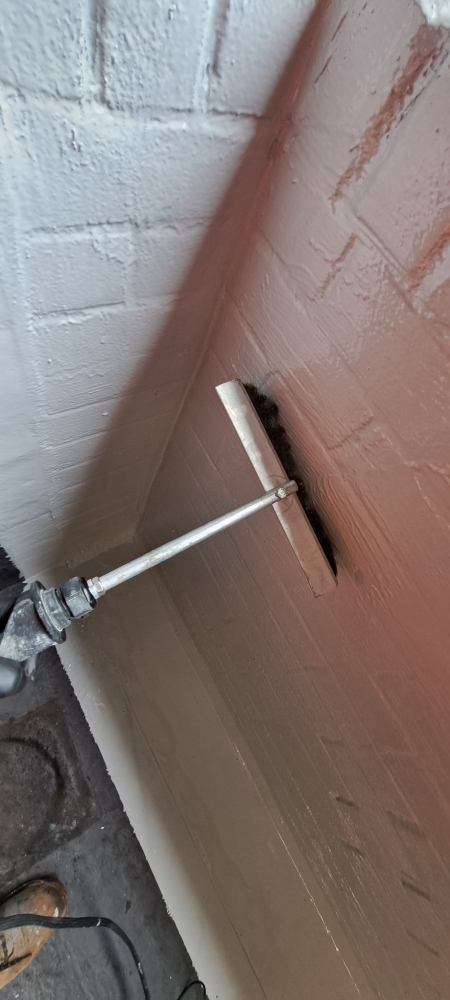
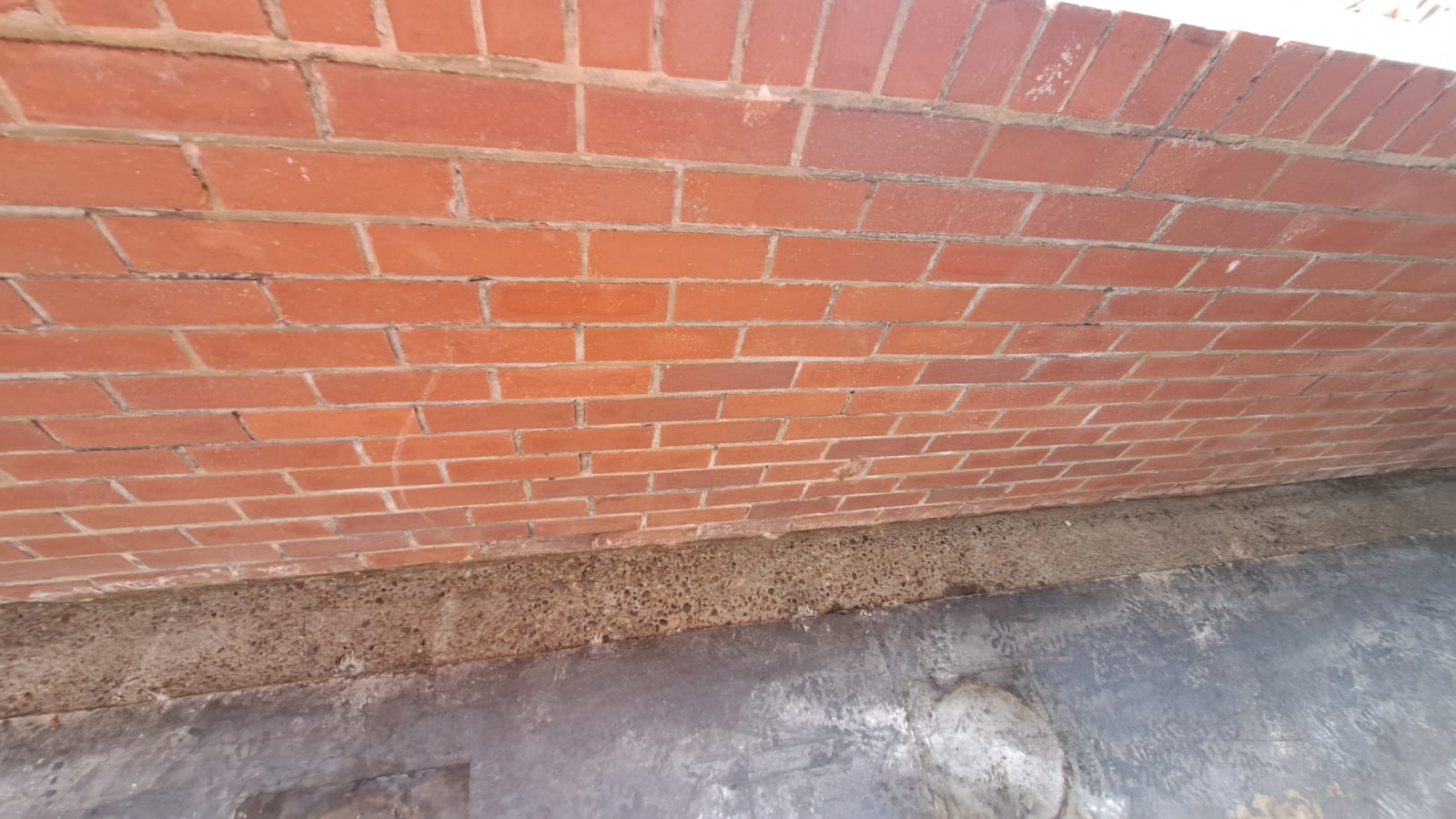
We screened the work area with flame-retardant sheeting. We then removed all of the failed GRP from the front wall, the wall top and a 200 mm strip of the floor. The old lining was taken off site for disposal. Next we diamond ground the brickwork and the floor strip using vacuum-controlled equipment. This removed any remaining resin and contamination and left a clean, sound surface for the new lining to bond to. The area was then pressure washed and cleaned down.

Fillet detail

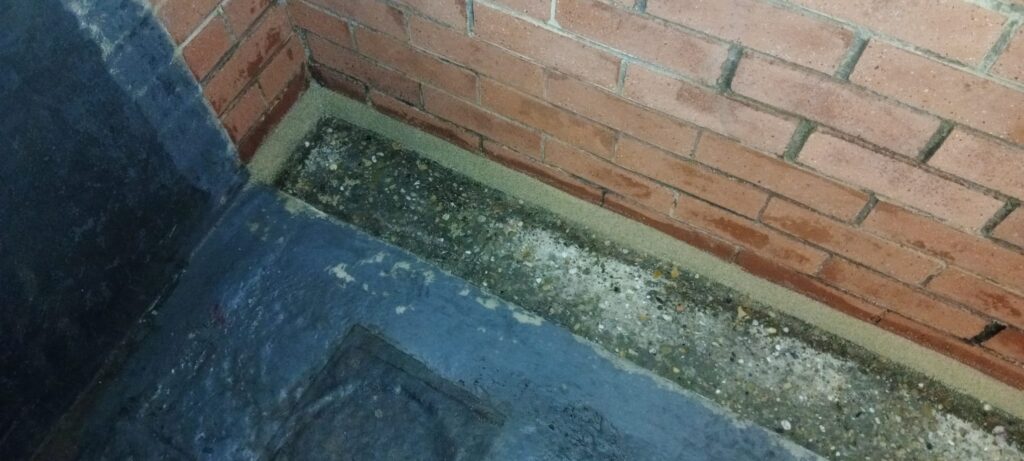
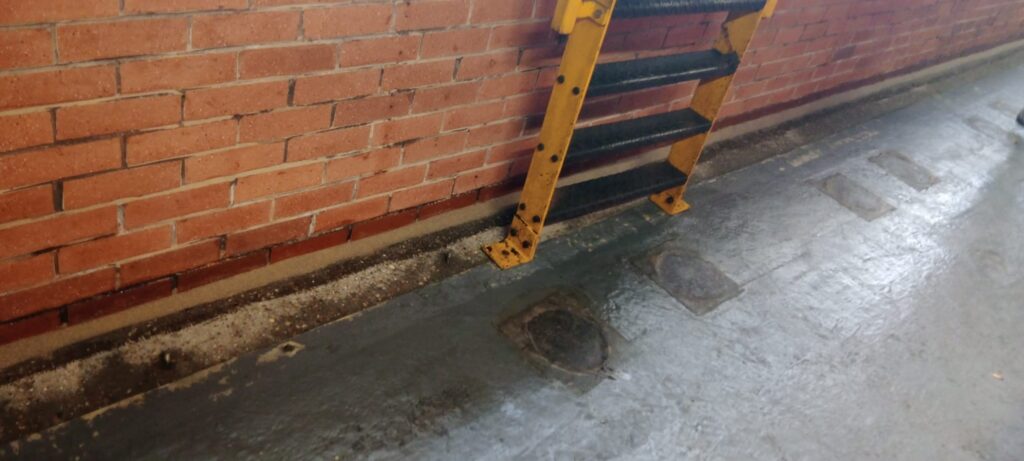
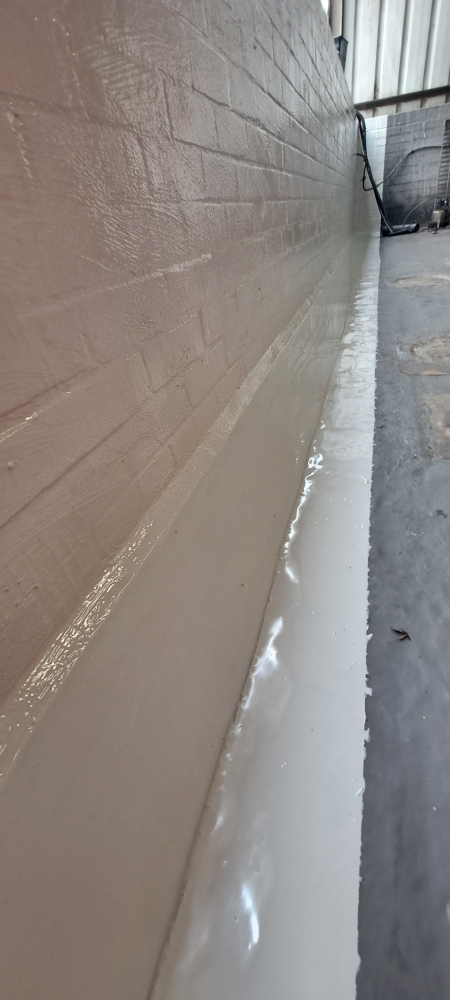
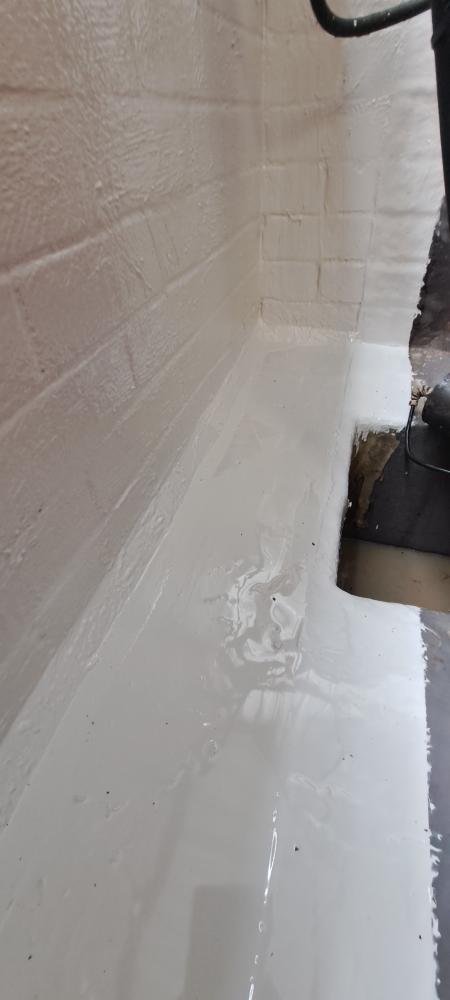
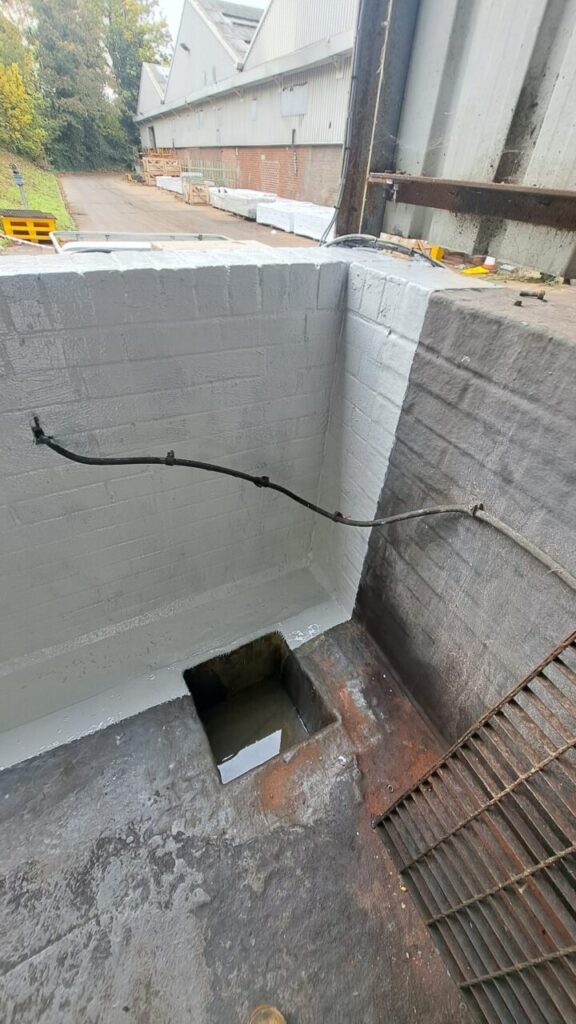
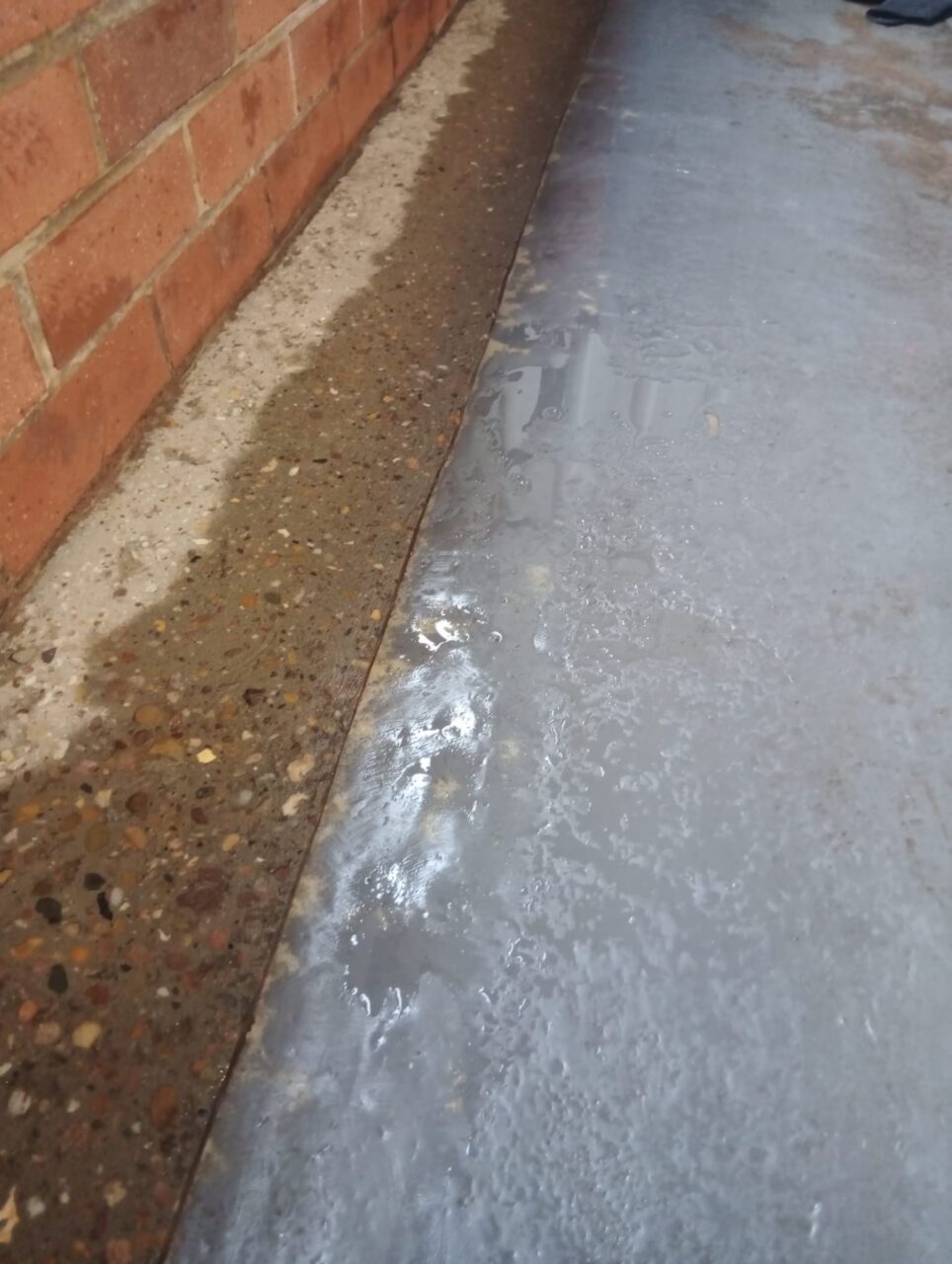
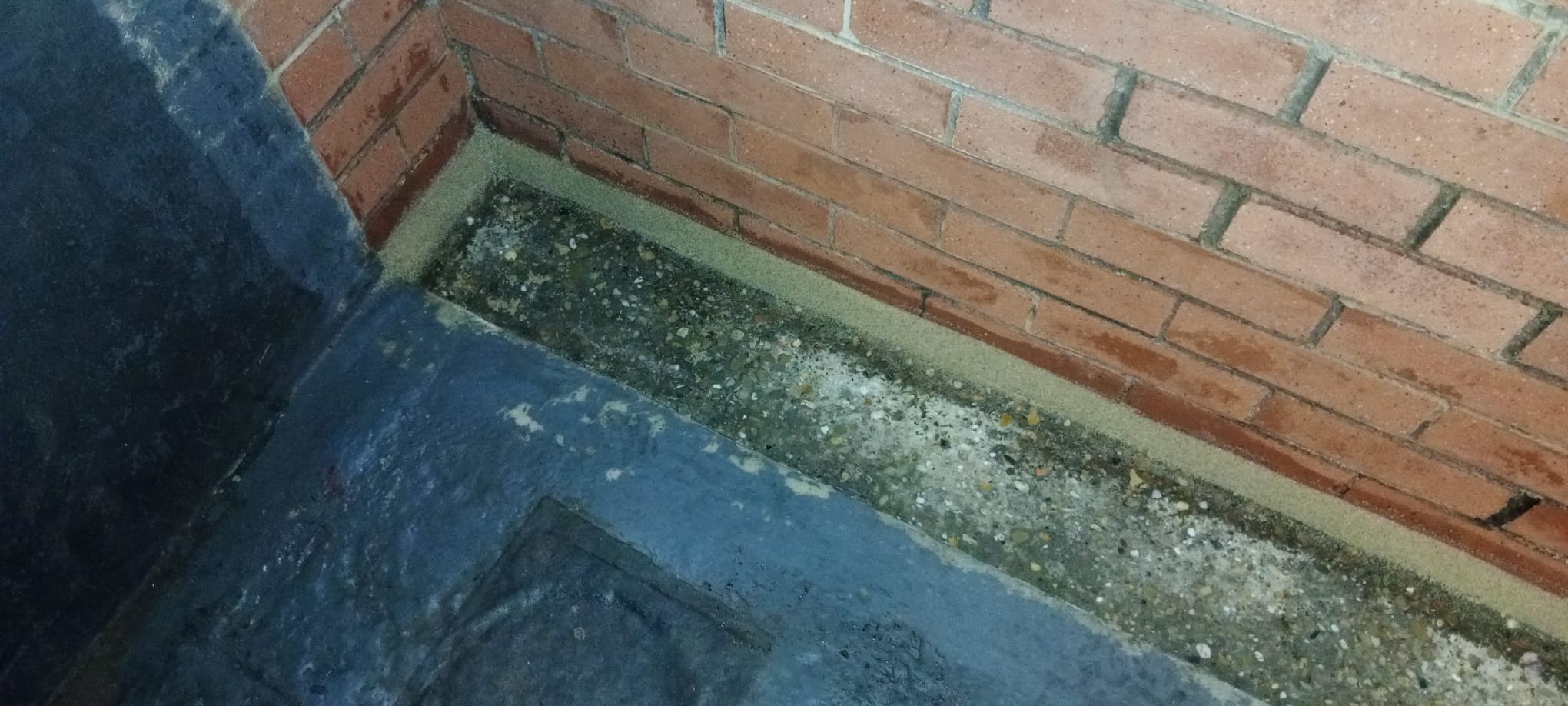
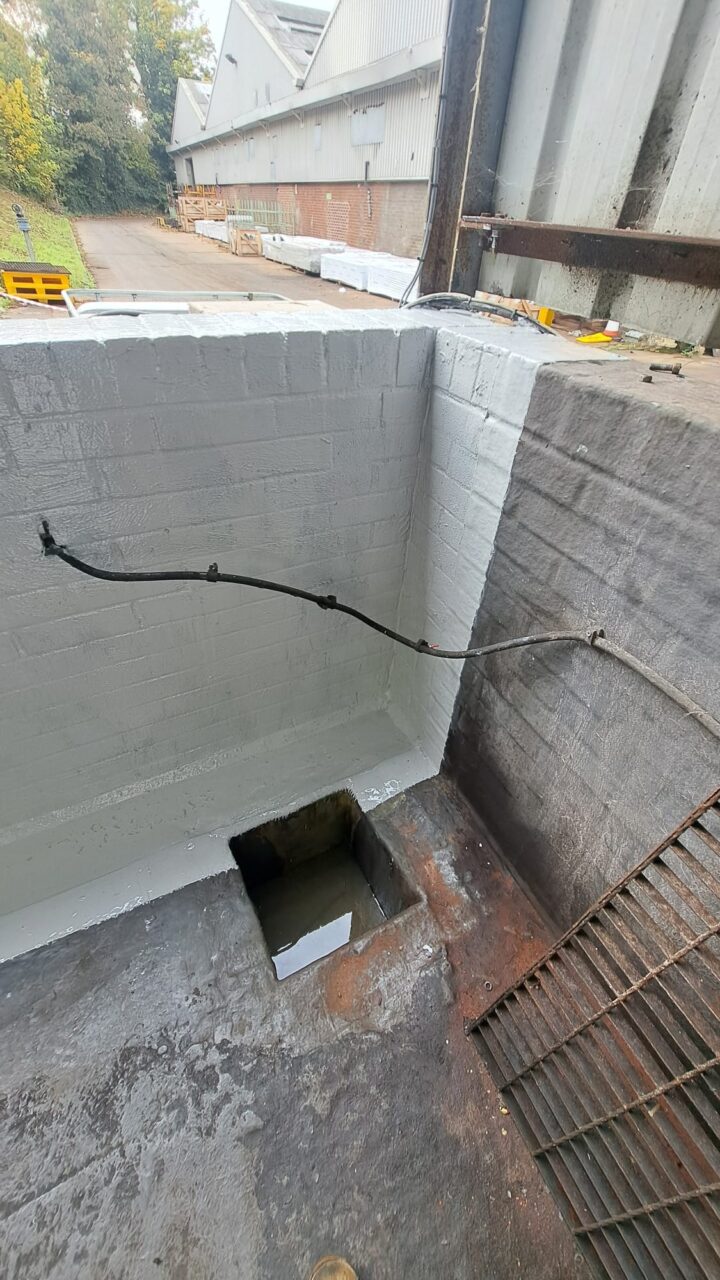
The wall-to-floor joint is where a bund lining is under most stress. We formed a resin mortar fillet along the full length of this joint. The fillet replaces the sharp internal corner with a rounded profile, so the lining can run continuously from wall to floor without a weak point.

During the works we had one night of heavy rain, which pushed humidity outside the coating limits. The team dried the area with wet vacuums and protected it with sheeting so that work could continue.

Climatic monitoring

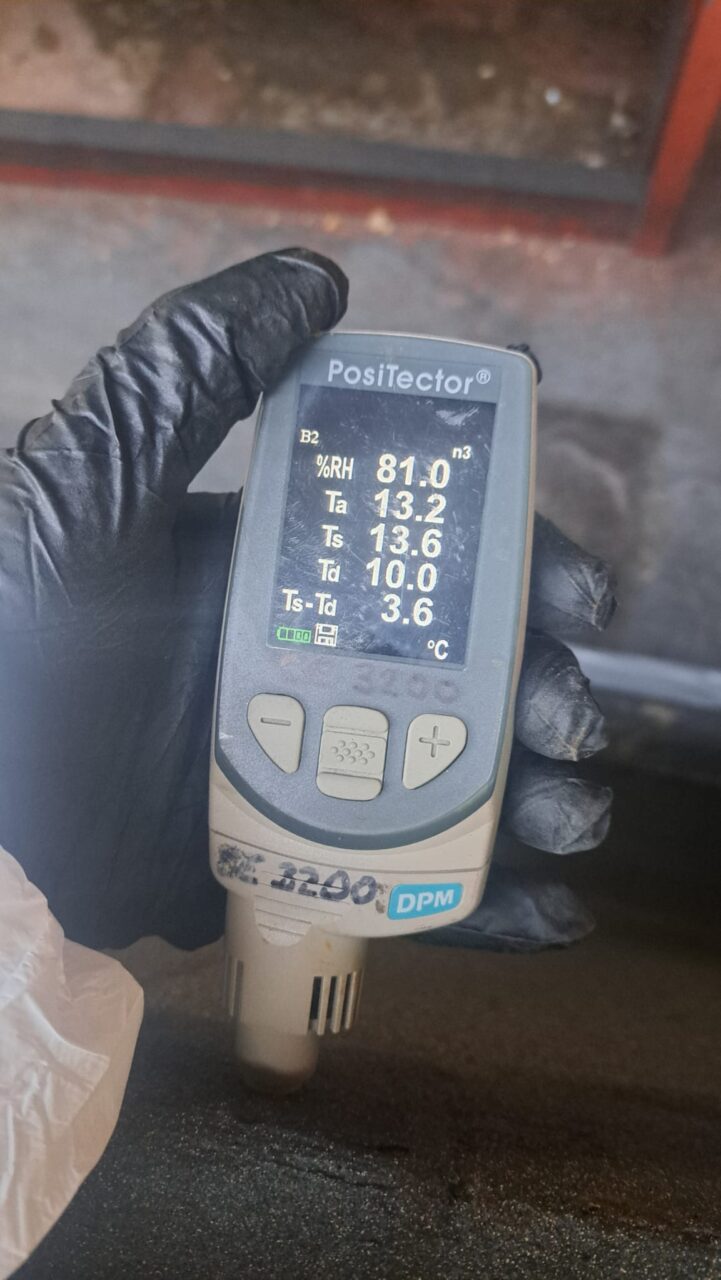
We checked conditions with a PosiTector DPM before and during each coating stage. Coatings applied in damp conditions, or onto a surface close to the dew point, can suffer from condensation under the film and poor adhesion. Across the coating days, relative humidity ranged from 69% to 87% and surface temperature from 12.5 °C to 17.3 °C. The surface stayed at least 3 °C above the dew point throughout, within the manufacturer’s limits.

Bund Wall Re-Lining Newark 13 - Climatic Check with PosiTector DPM

Lining application

We applied a Remmers waterproofing base coat to the brickwork by brush and roller. Next came a coat of Remmers Epoxy MT100, a highly damp- and oil-tolerant primer. Two coats of Remmers Epoxy WHG followed, carried over the wall top and 200 mm onto the floor to give a continuous, seamless lining.

Spark testing

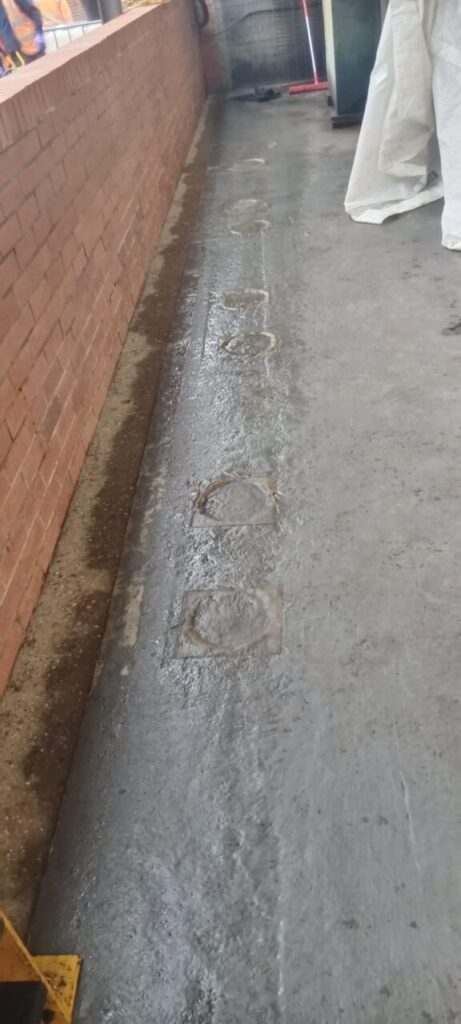
Once the lining had cured, we spark tested the entire area with a DC holiday detector. A single pinhole can undermine a bund lining’s integrity and lead to premature failure, especially where oils and fuels are stored. Spark testing finds any pinholes so they can be touched in, ensuring a 100% seamless finish.

Bund Wall Re-Lining Newark 16 - Spark Testing the Completed Lining

Completion

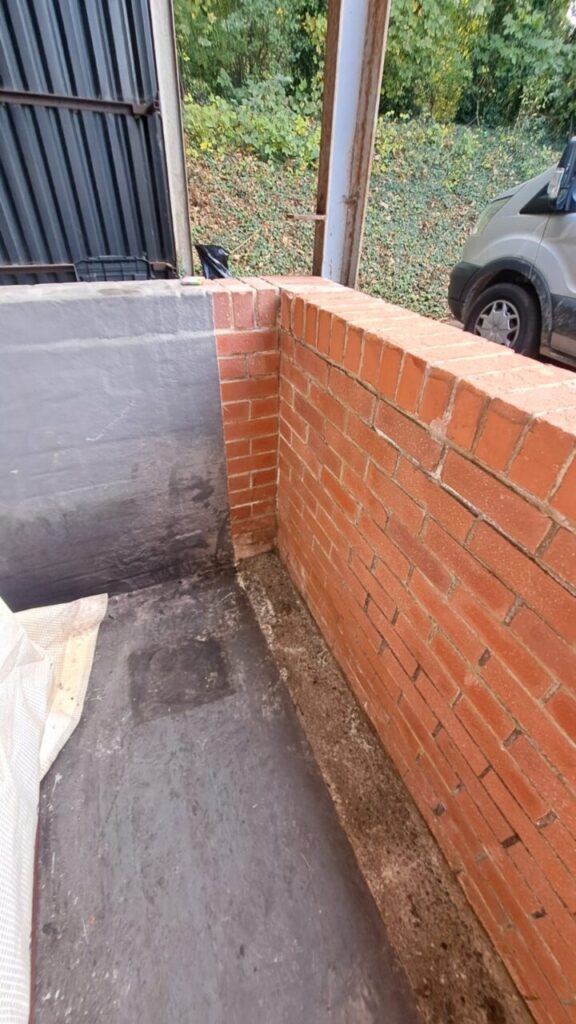
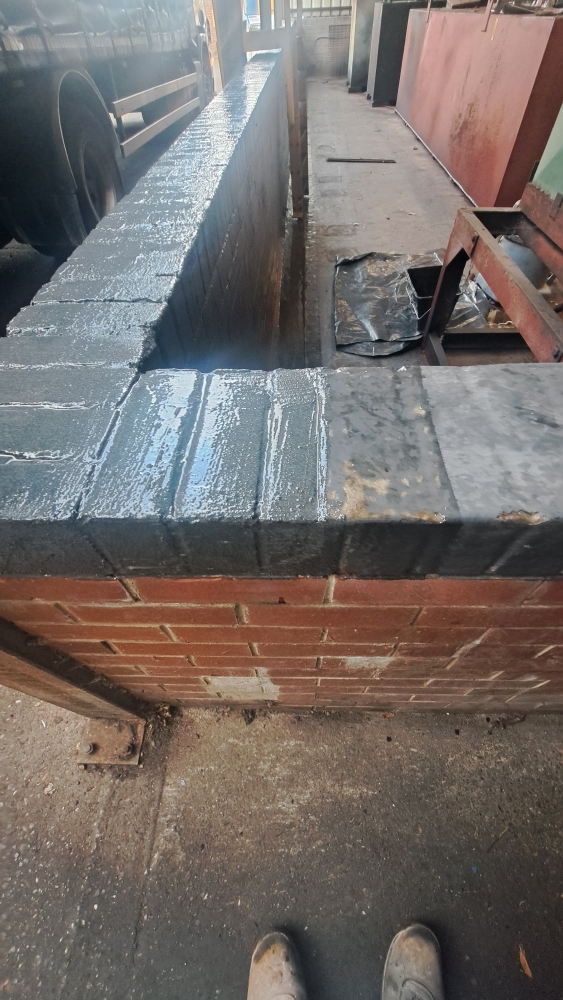
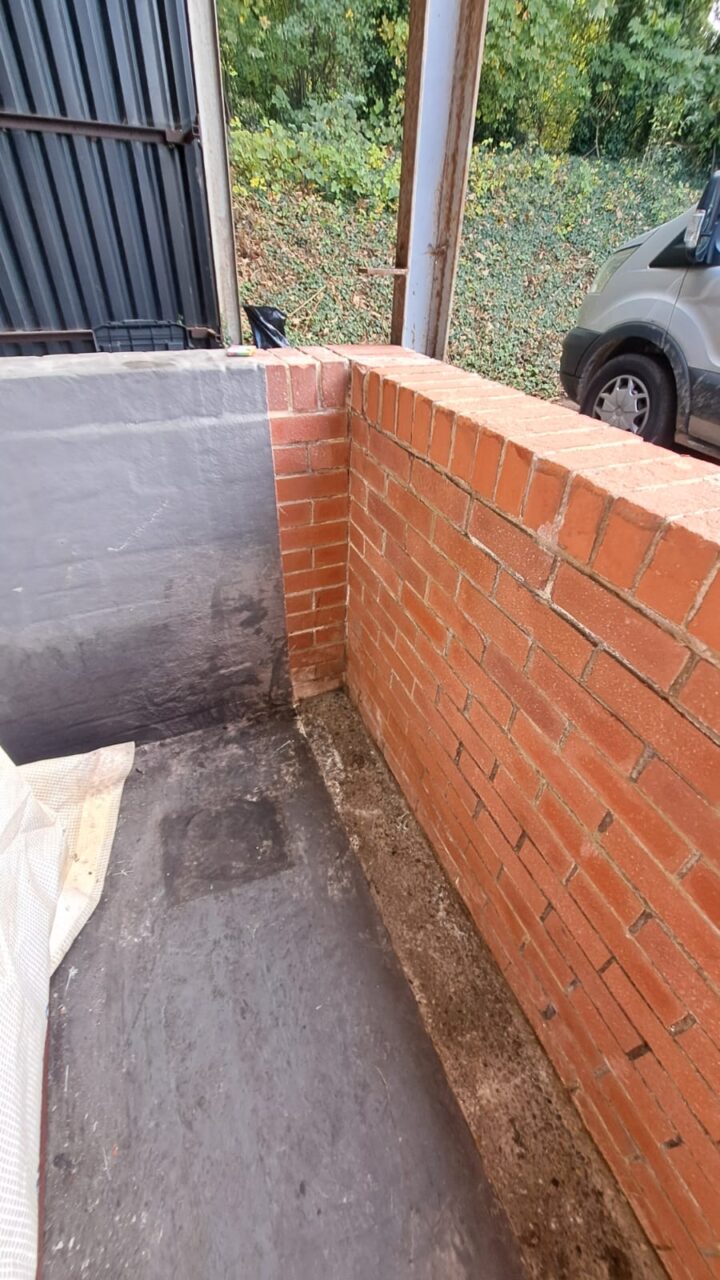
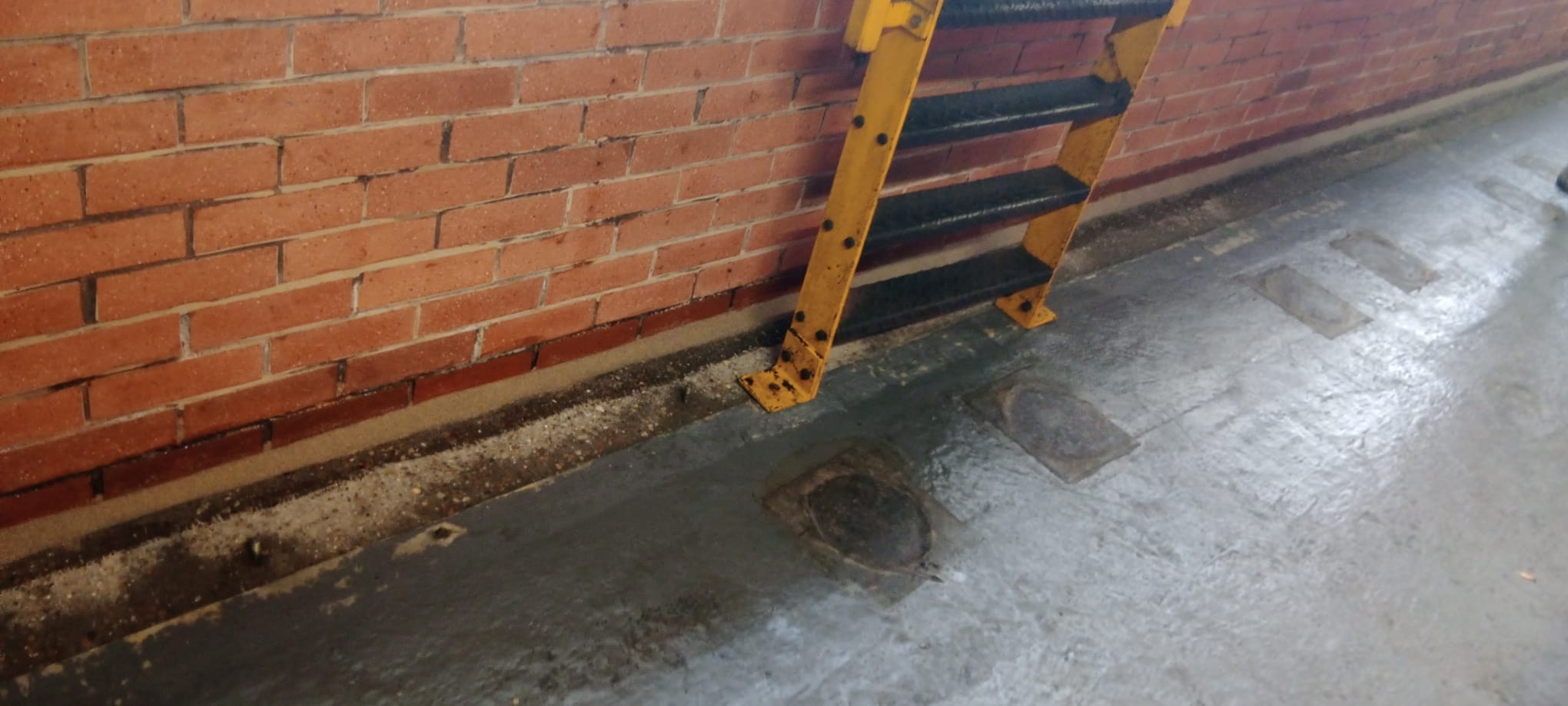
The front wall now has a seamless, crack-bridging lining from the outer edge of the wall top, down the inside face and 200 mm onto the floor. The fillet is fully encapsulated.
THE RESULT

The bund’s front wall is once again fully lined and able to contain the oil and diesel stored inside. The new lining is designed to move with the structure rather than crack like the GRP it replaced.

A two-person team completed the works in nine working days, from 29 September to 9 October 2025. They worked around the client’s live site, inducted through site security, and left the area clean and tidy at the end of each day. The client’s representative signed off the works on completion. The client’s QHSE manager confirmed he was happy with the job and asked us to pass on his thanks to the team.

Find out more about our bund lining services.