
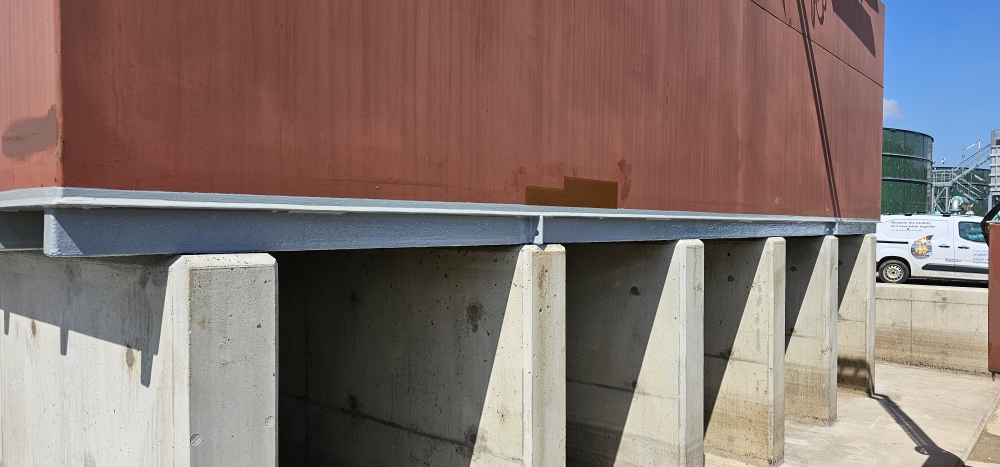
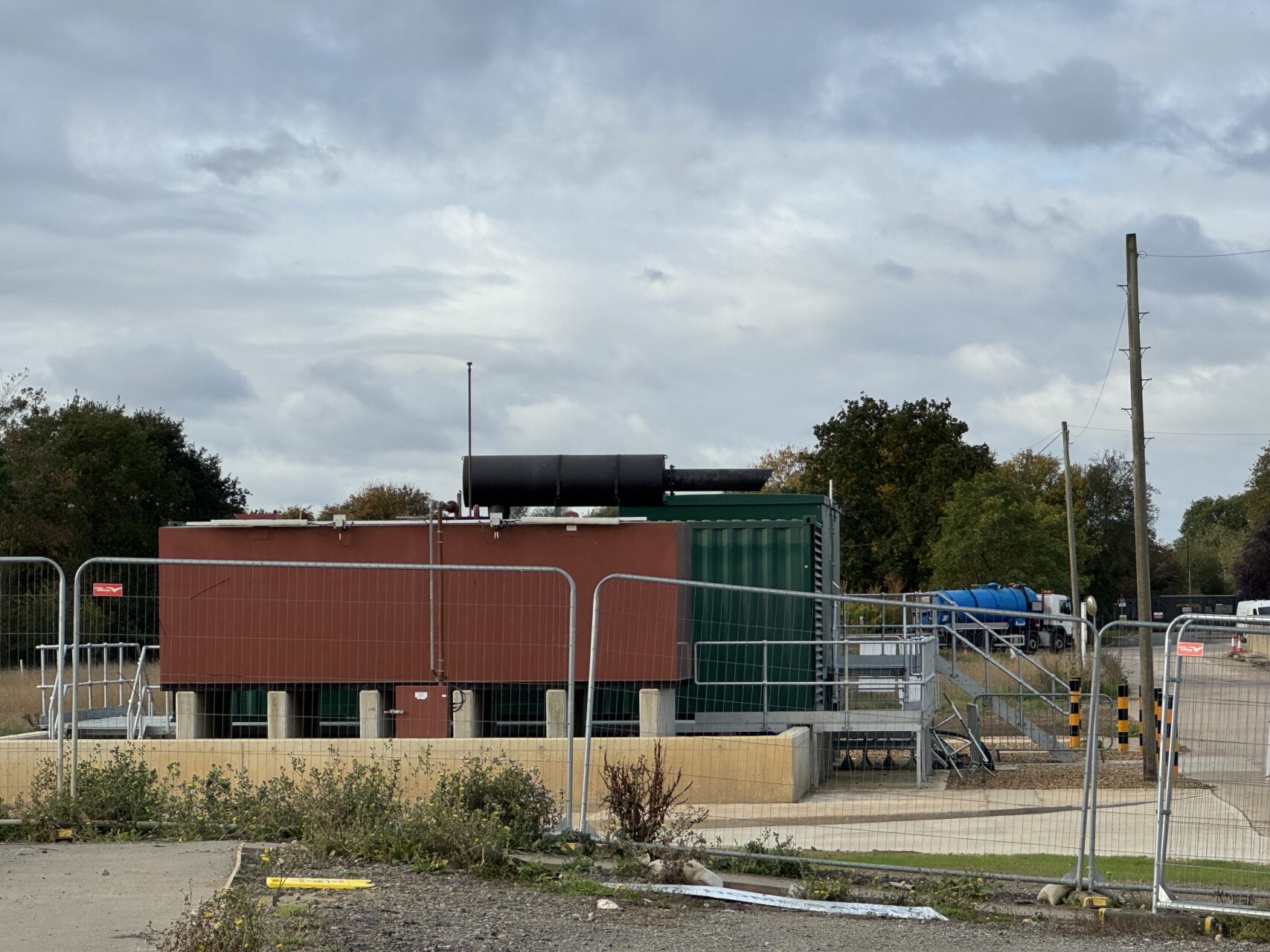
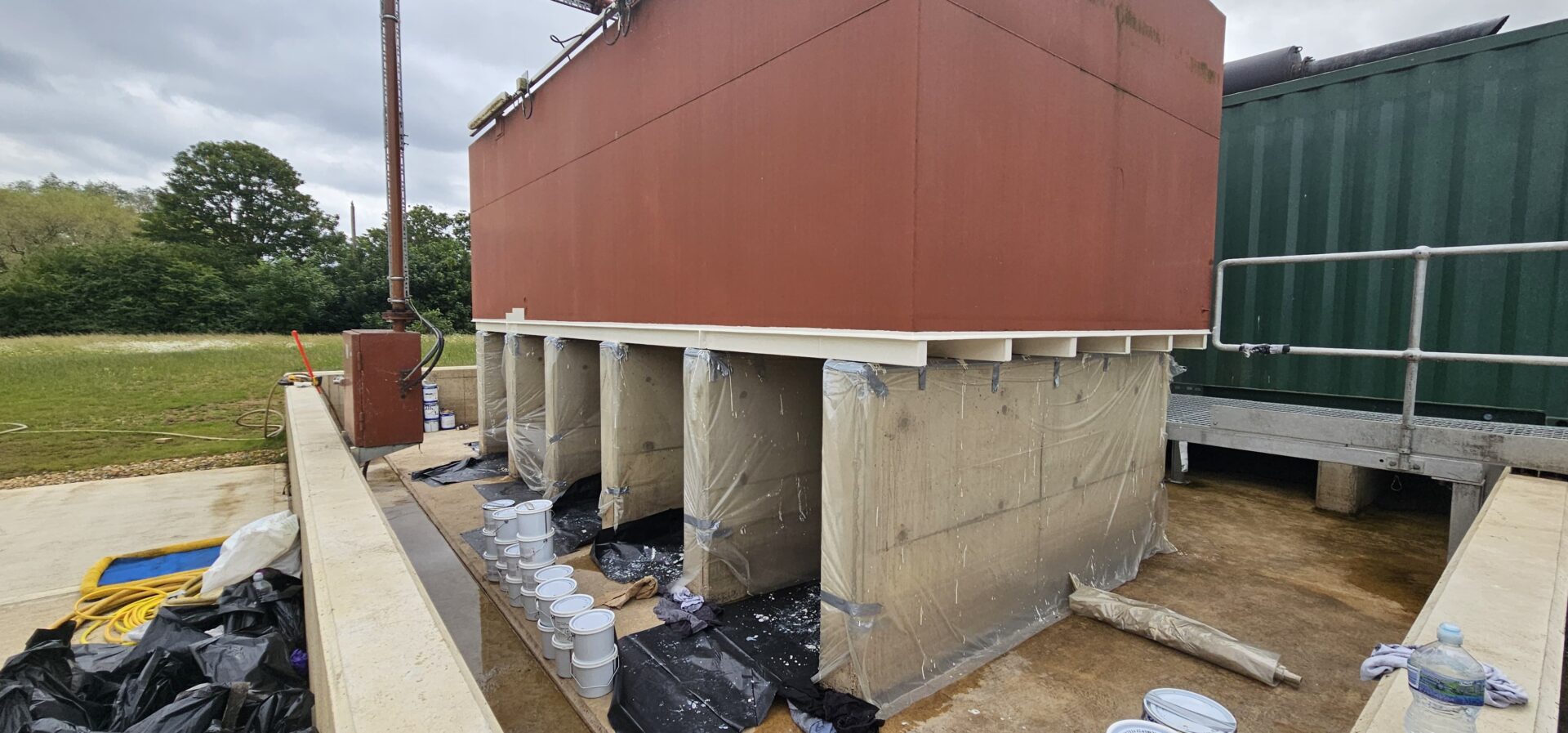
A leading UK water utility approached us about corrosion on a bulk diesel storage tank at one of its water recycling centres near Wellingborough, Northamptonshire. The tank sits on a row of concrete plinths inside a concrete bund and has a footprint of 2.7m x 6.75m.
Diesel Tank Base Coating – Wellingborough
THE PROBLEM
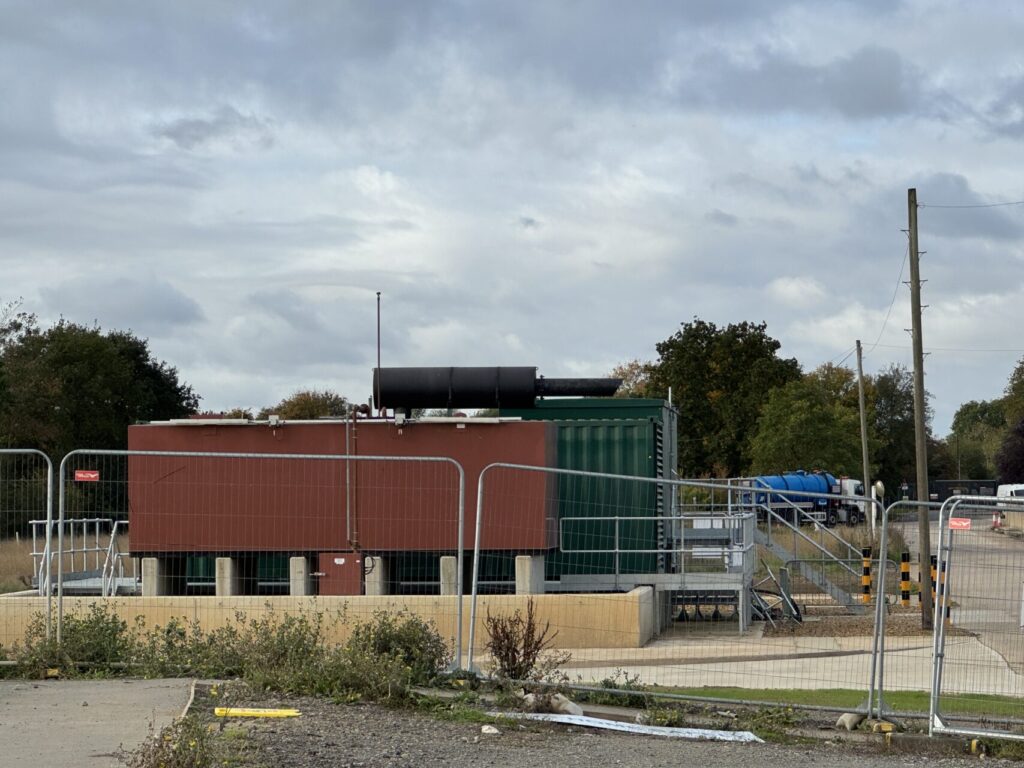
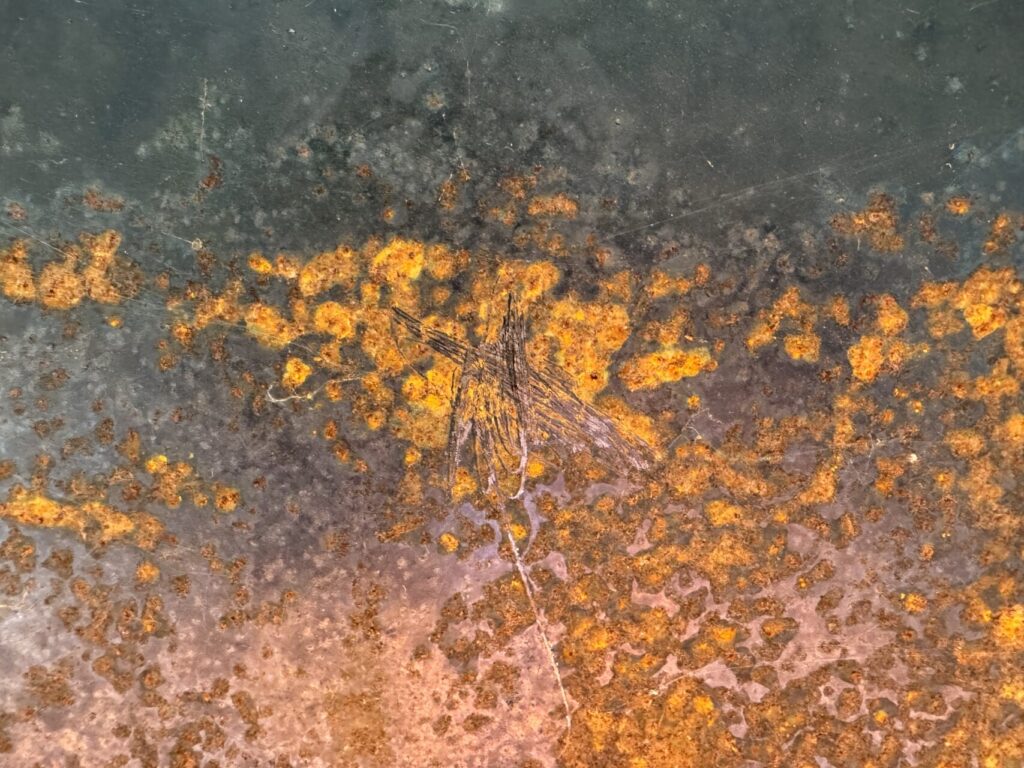
We originally priced a full external recoat of the tank. Budgets were tight, so the scope was reduced to patch repairs to the corroded areas only, and we visited site to confirm the cost. From above, the tank walls were in good order. Our site contact advised that most of the corrosion was on the underside, and this is where the real problem lay.
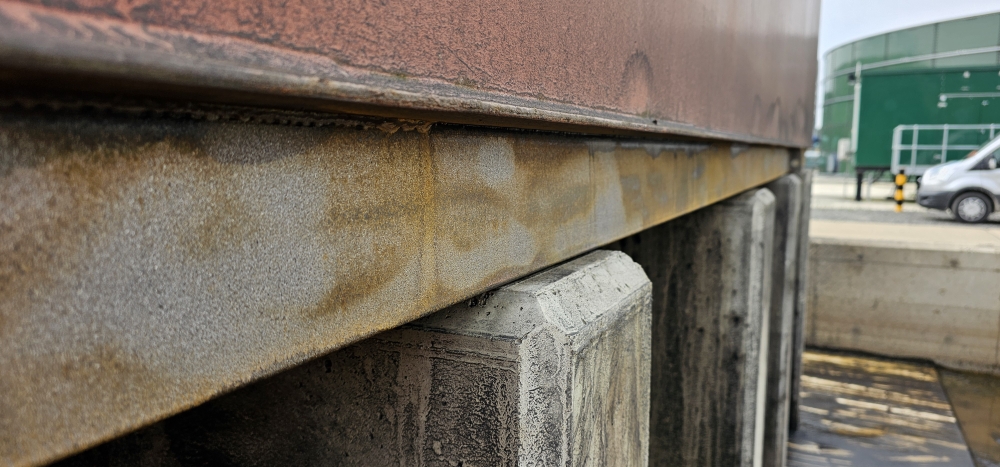
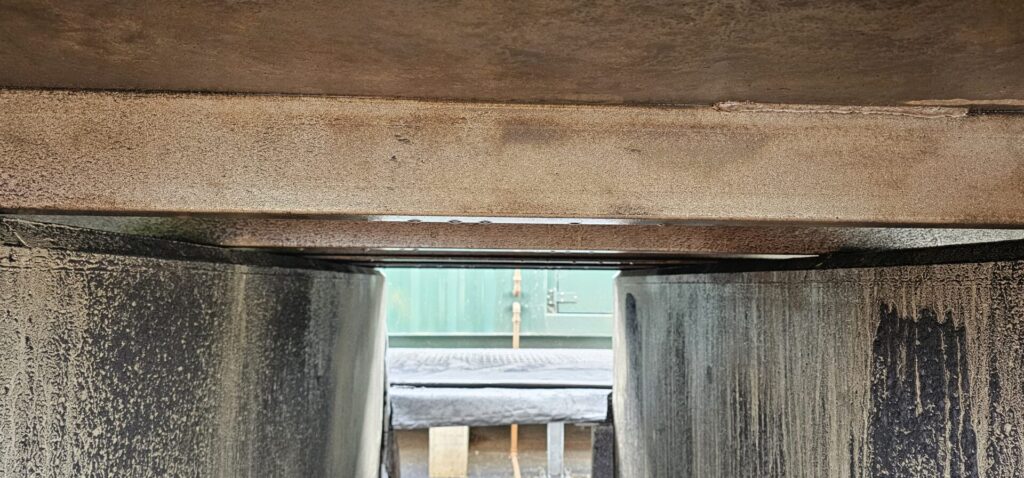
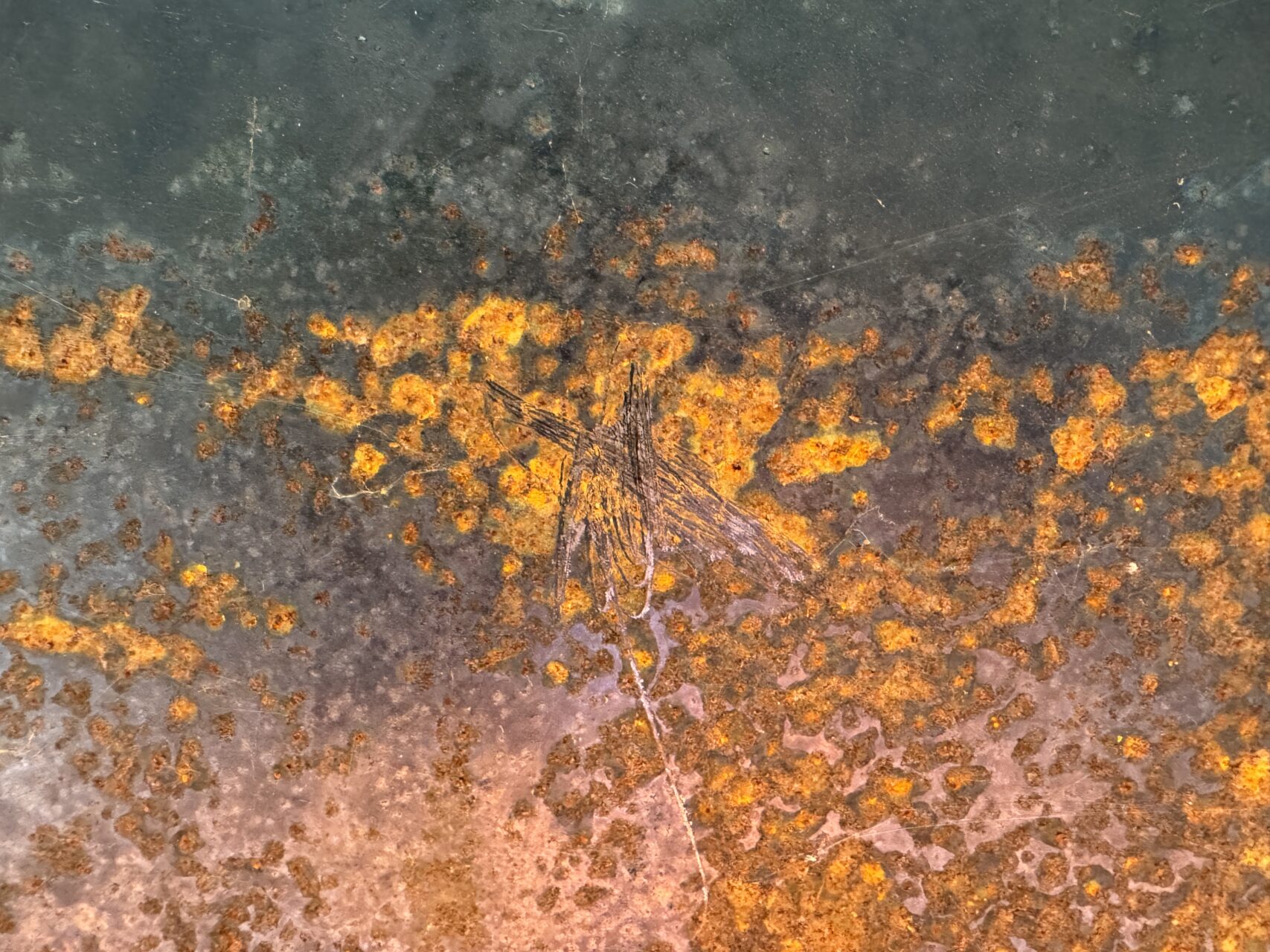
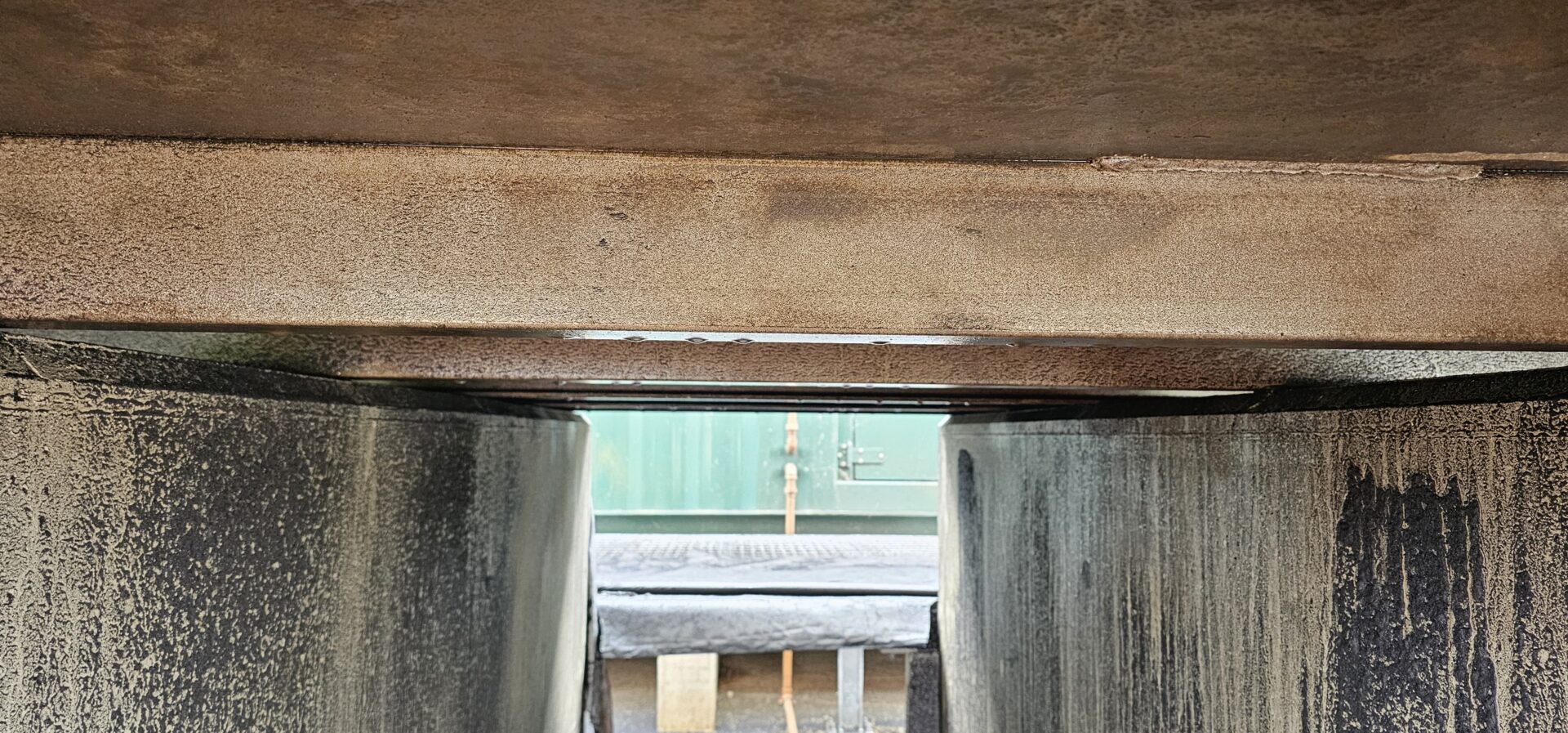
On investigation it was clear that the underside of the tank and its support steelwork had never been coated. The steel still carried its original mill scale – the dark, brittle oxide layer formed when steel is hot rolled – and corrosion was breaking through it.
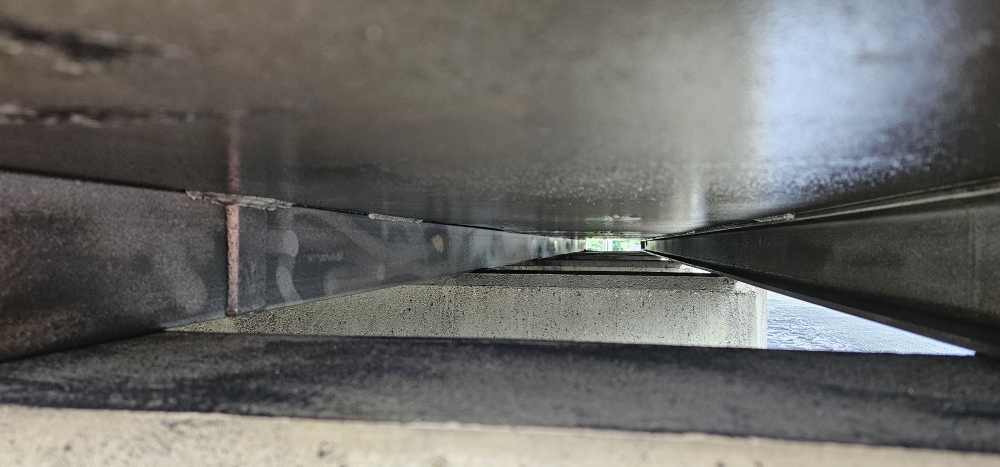
Mill scale should always be removed before a coating is applied. It is poorly adhered to the steel beneath, and as it cracks and lifts it takes any coating with it. With no existing coating to patch to and an unsuitable surface underneath, patch repairs were not a viable option. We revised our proposal to fully prepare and coat the underside of the tank and its supporting beams, a total area of approximately 31m².
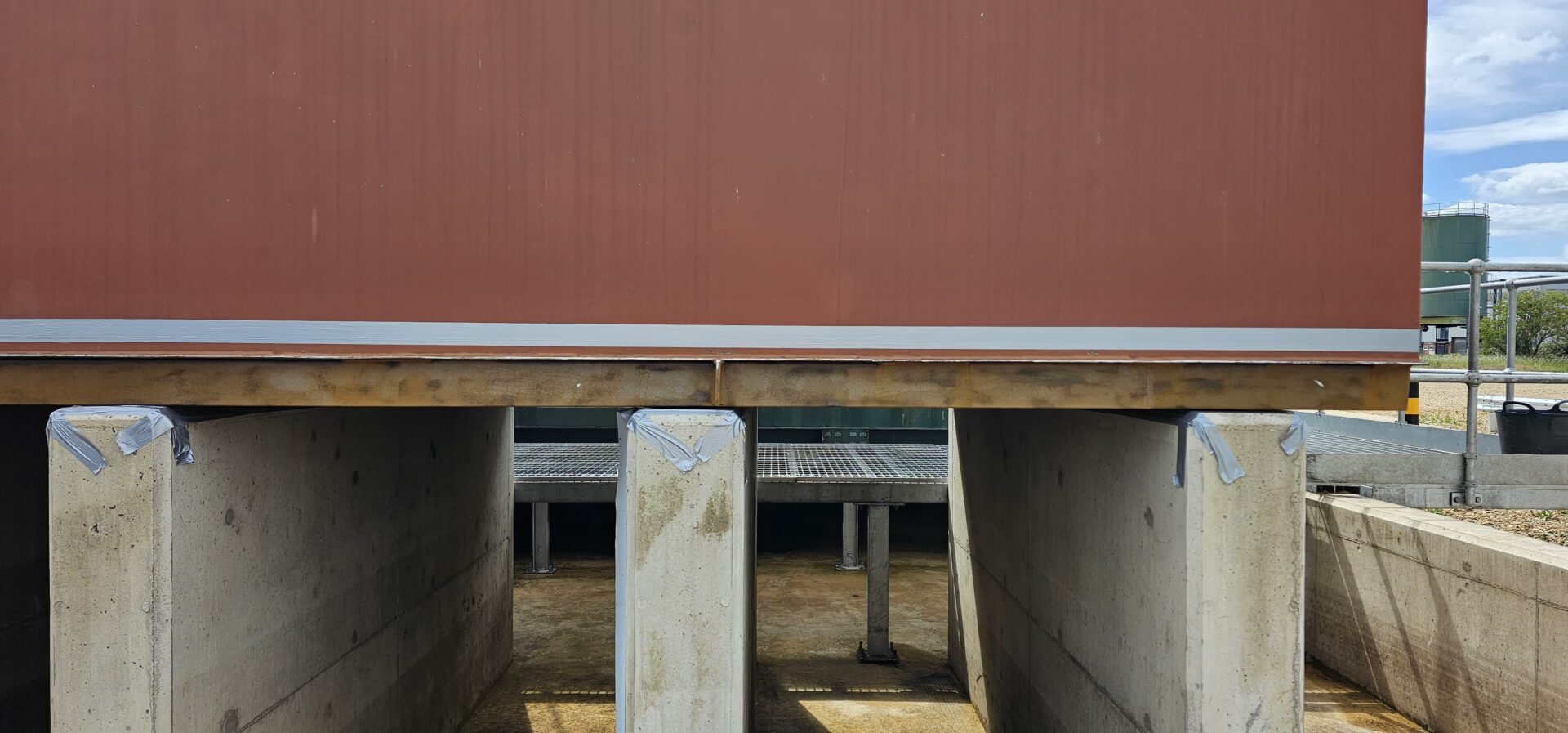
The underside also brought practical challenges. The working space between the plinths is tight, the tank had to stay in service, and the surrounding plinths, bund and tank shell all needed protecting from the blasting and coating works.
THE SOLUTION
Preparation and protection
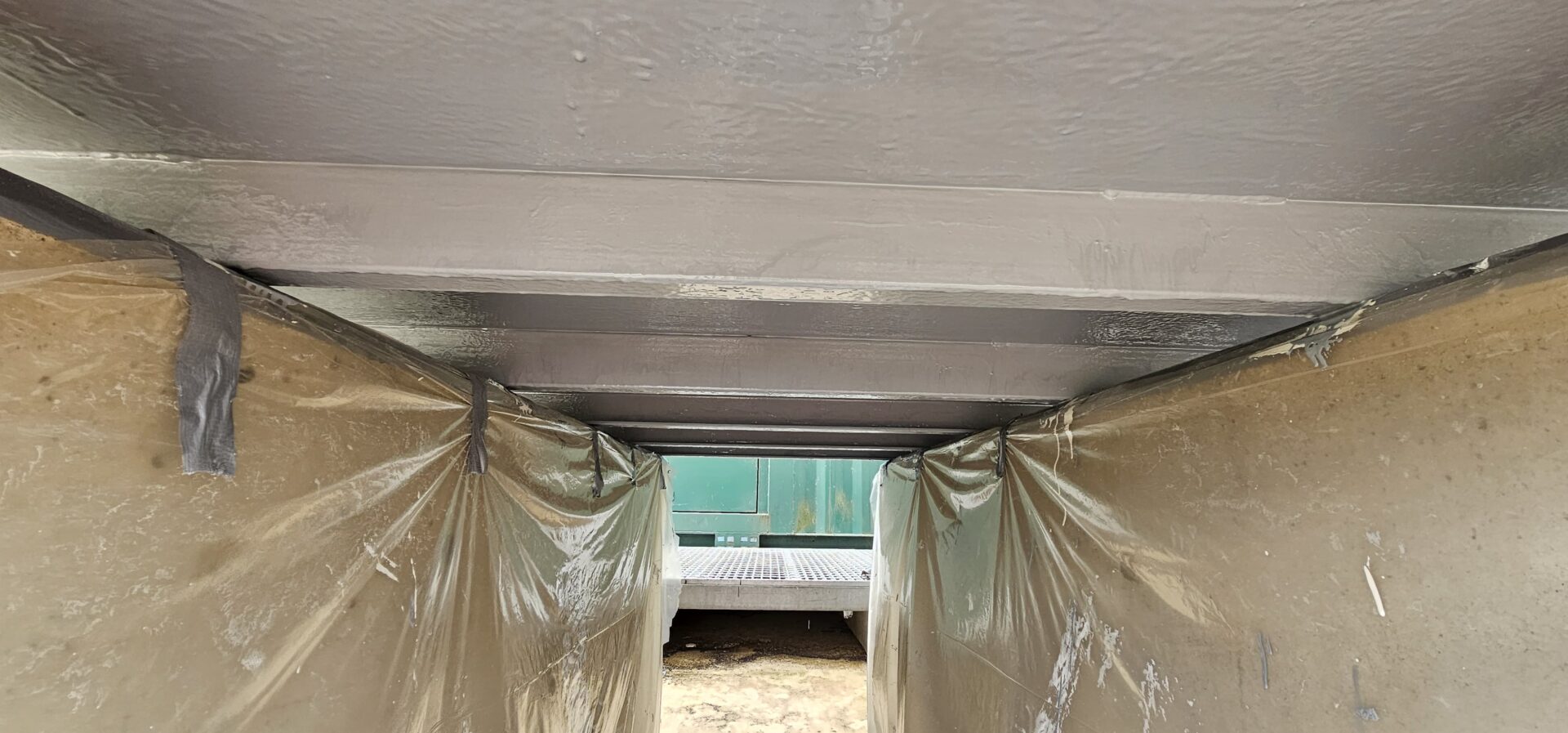
The bund was handed over pumped out. We masked the tank shell along the line of the base, then wrapped the tops and faces of the concrete plinths in heavy gauge polythene to protect them throughout the works.
Vapour blasting
All steelwork to the underside was prepared by vapour (water entrained abrasive) blasting to ISO 8501-4 Wa 2.5 with a minimum surface profile of 50 microns. Vapour blasting suppresses the dust generated by dry blasting, which was important on an operational site, and it removed the mill scale and corrosion back to clean, profiled steel.
Soluble salt testing and washing
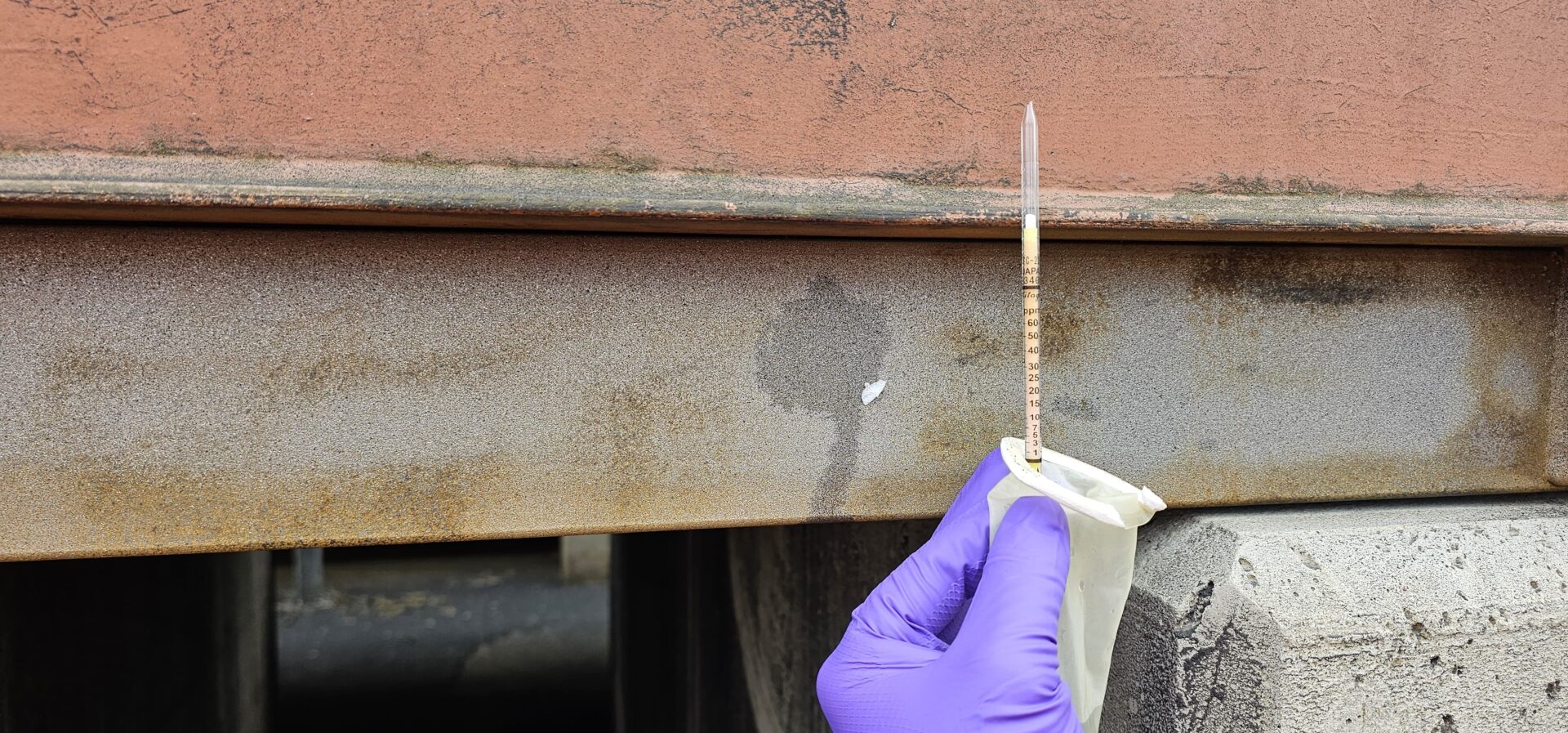
Soluble salts such as chlorides left on a blasted surface draw moisture through a coating and cause blistering and corrosion beneath it, so we carried out soluble salt tests on the blasted steel. The steelwork and bund were then pressure washed with clean water to remove blast residue before coating.
Coating system
Because wet blasting leaves light flash rusting on the steel, a surface tolerant coating was needed. We selected Sherwin-Williams Dura-Plate 301W, a surface tolerant epoxy that can be applied over flash rusted steel and is not restricted by relative humidity and dew point in the way most epoxies are. This made it well suited to the damp, shaded conditions beneath the tank.
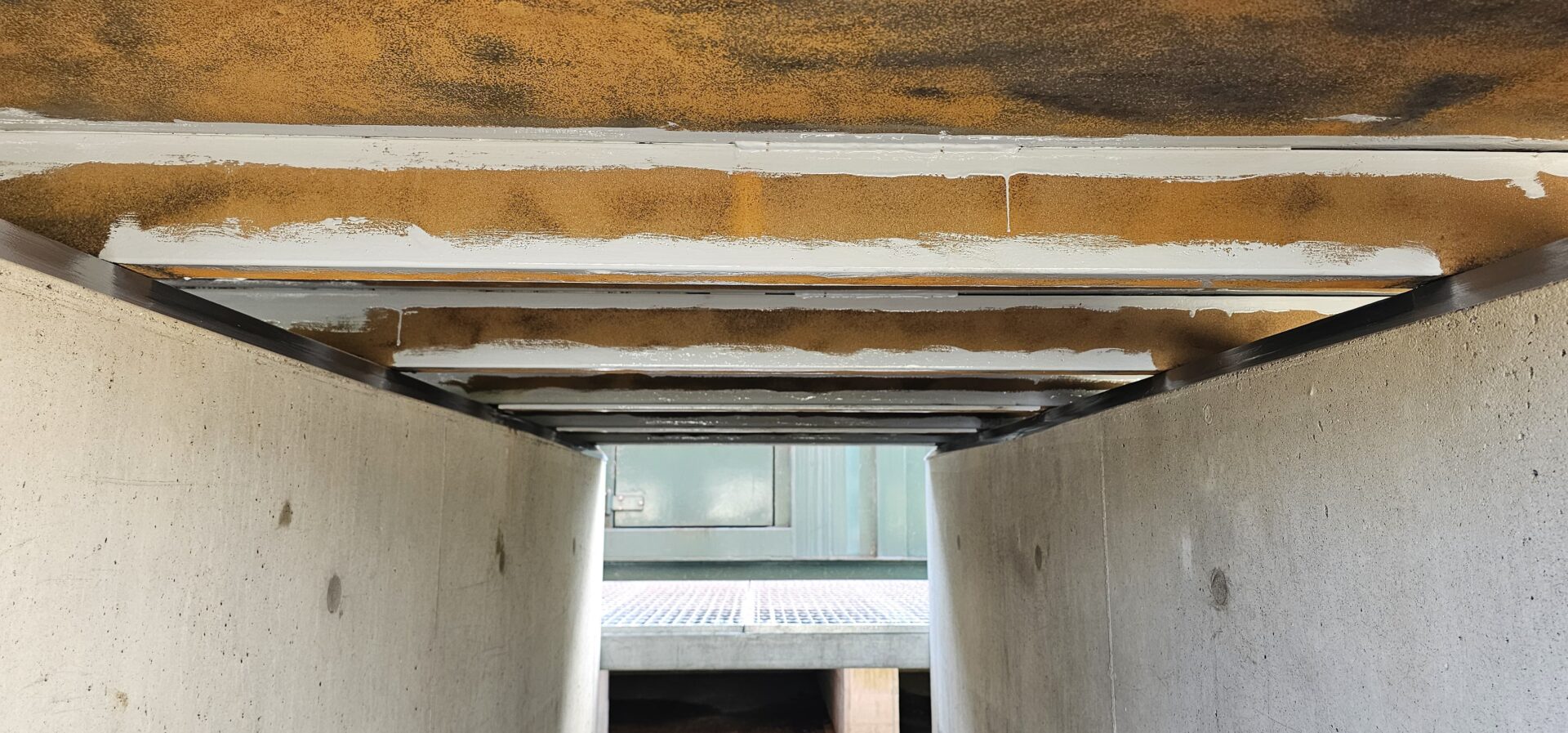
A heavy stripe coat was first brushed onto all welds, edges, angles and beam ends. Coatings naturally pull thin over sharp edges and welds, so stripe coating builds additional thickness where corrosion is most likely to start.
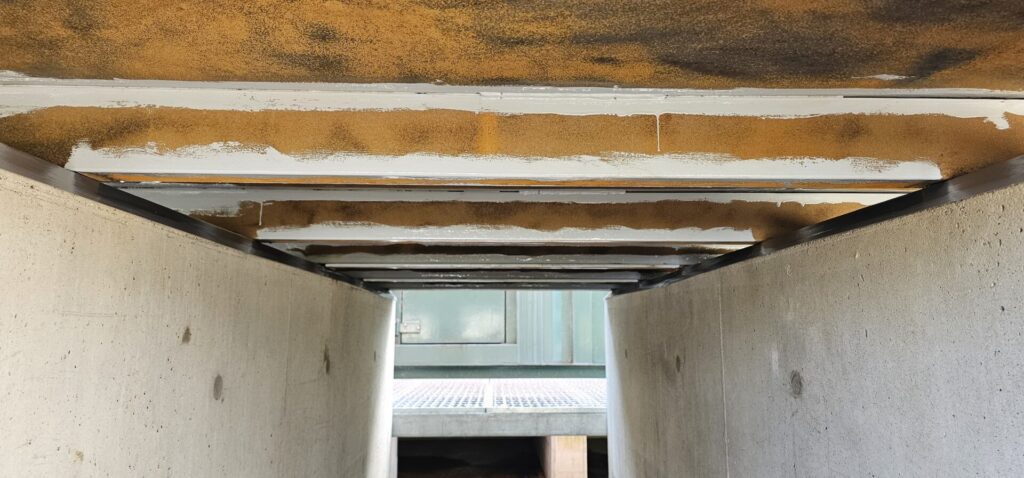
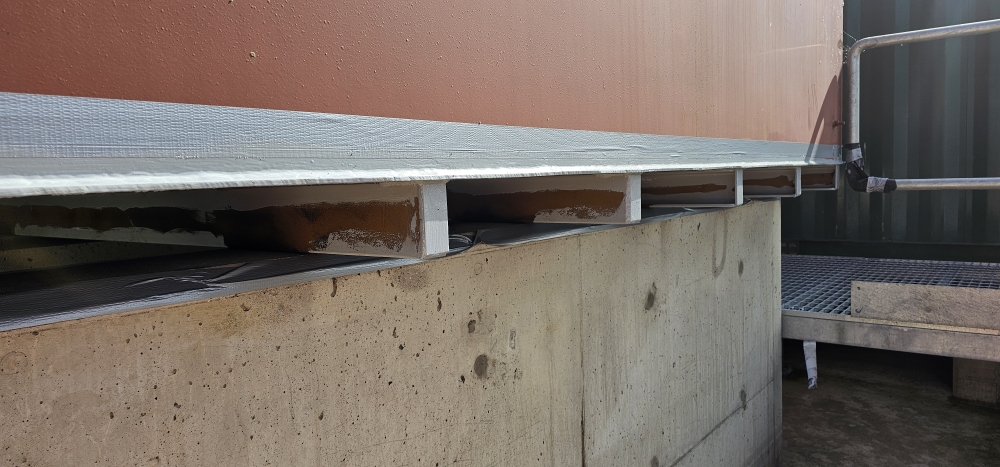
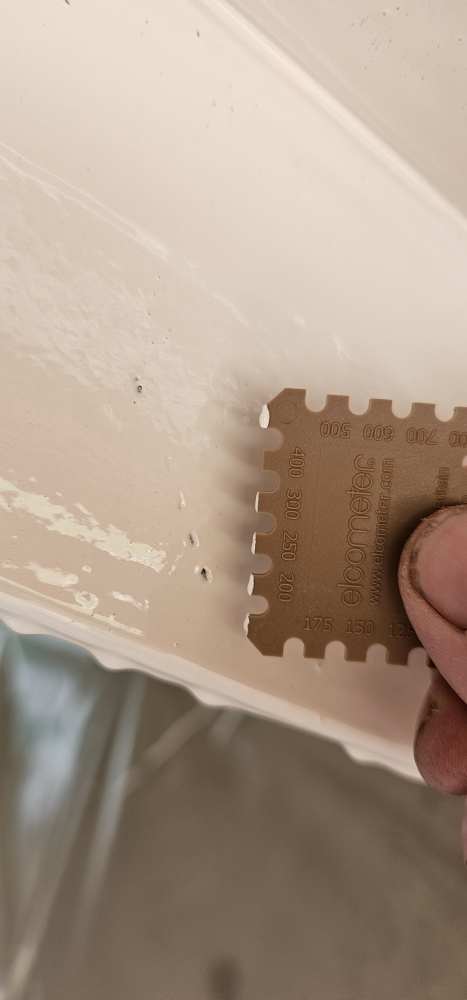
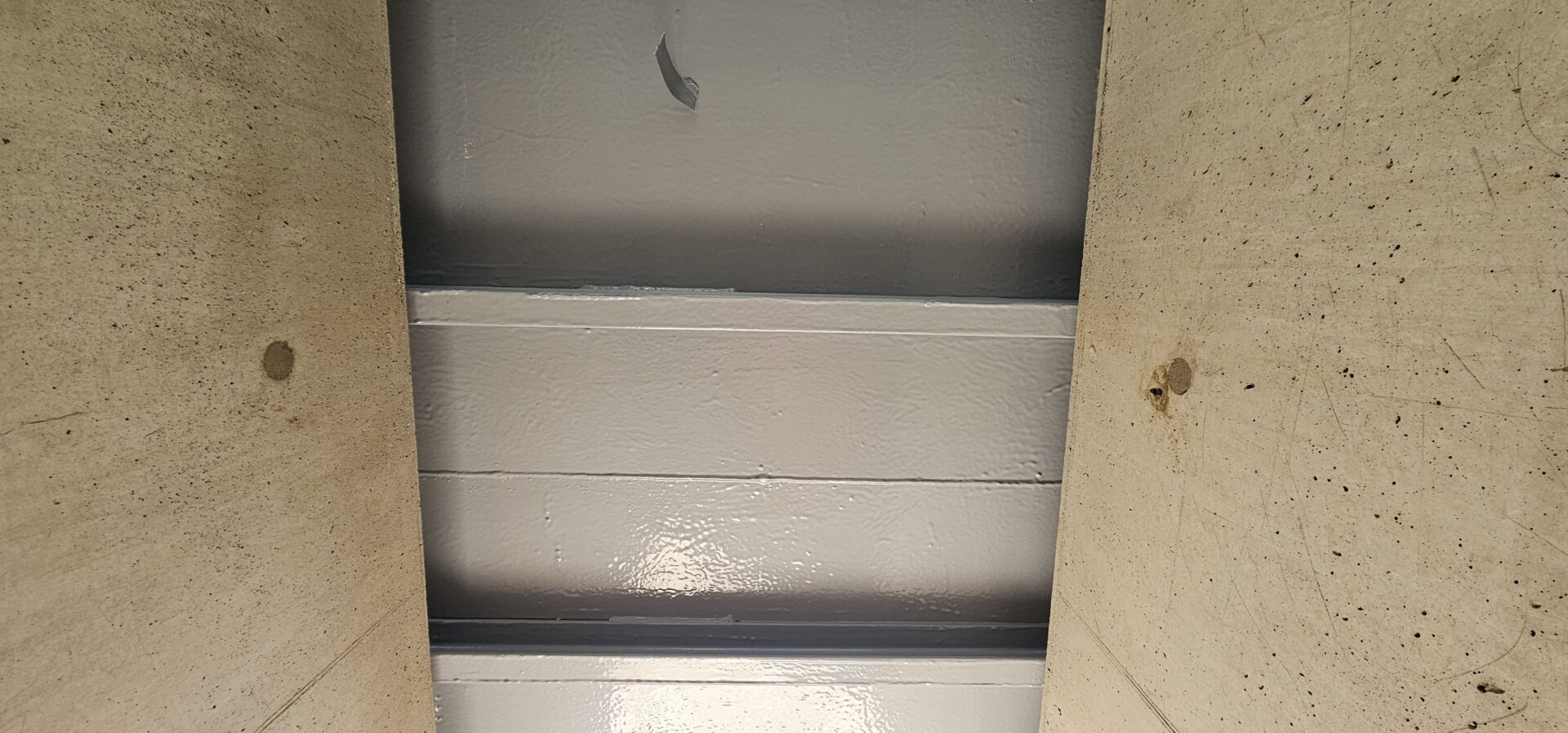
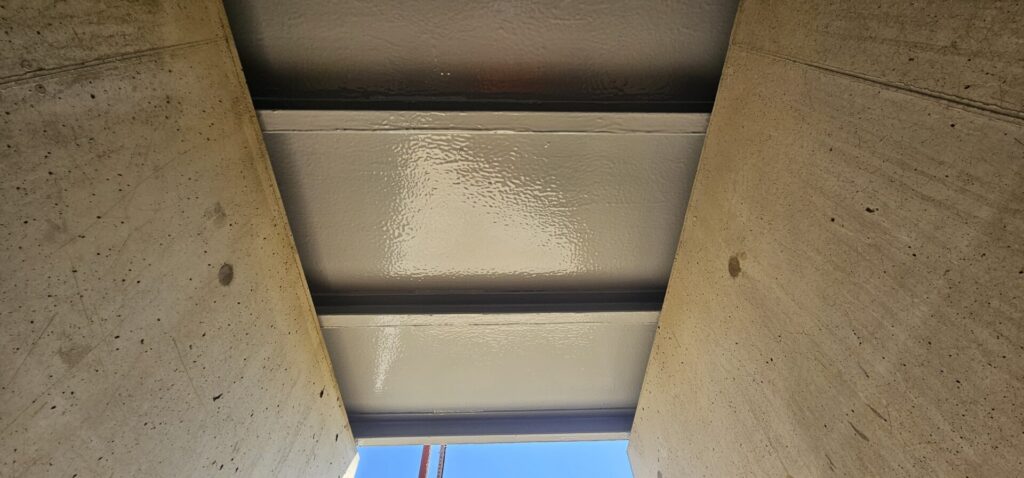
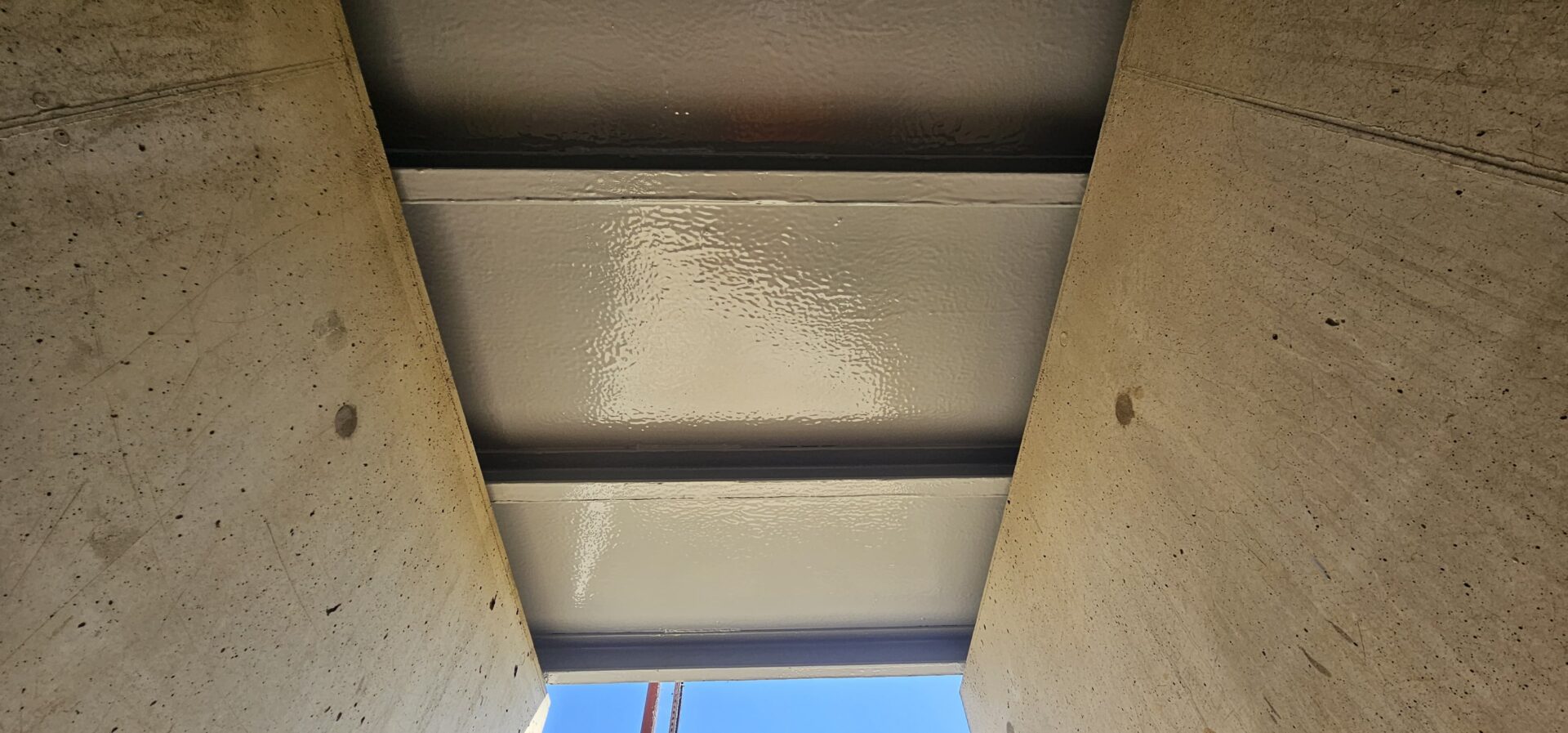
Two full coats of Dura-Plate 301W were then applied by brush and roller – a cream first coat followed by a light grey second coat. Using contrasting colours lets the operatives see at a glance that every surface has received full coverage of each coat. Wet film thickness was checked with a comb gauge during application.
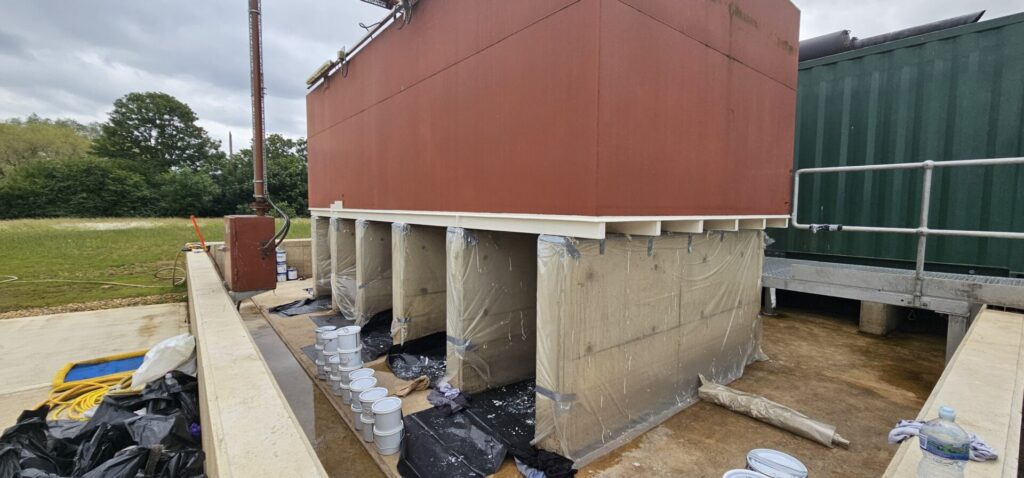
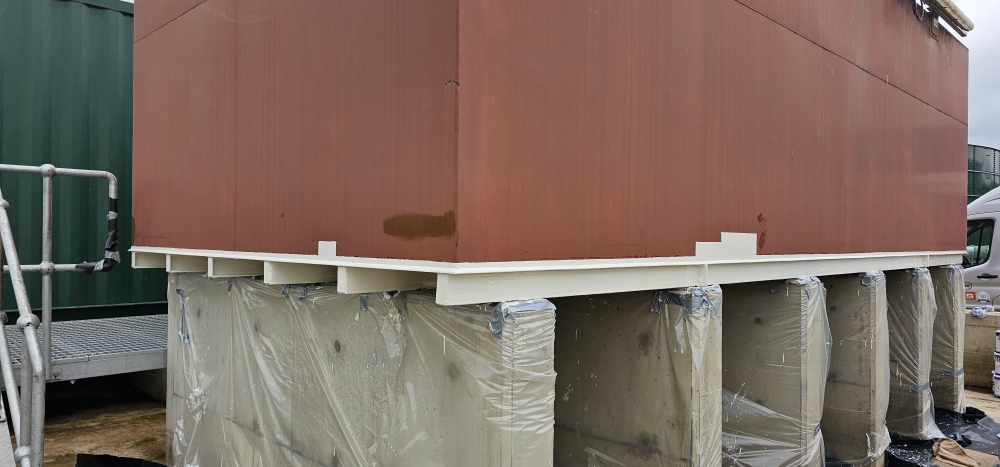
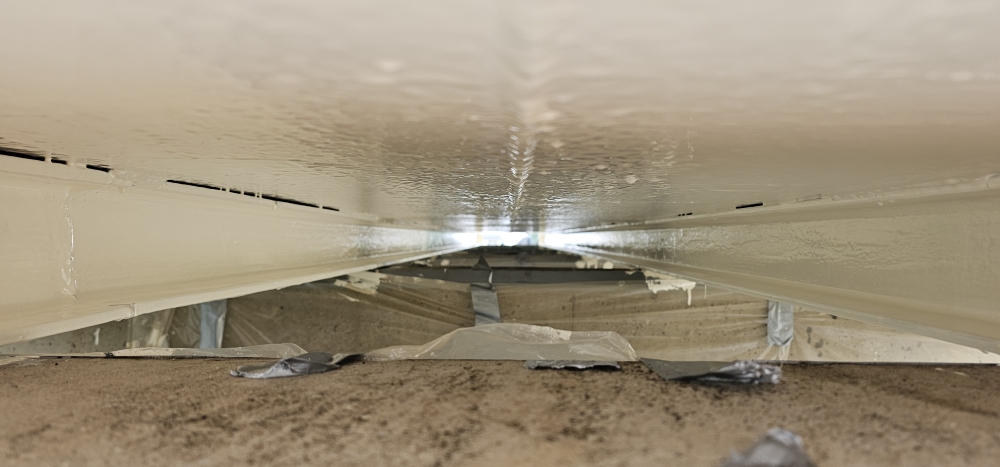
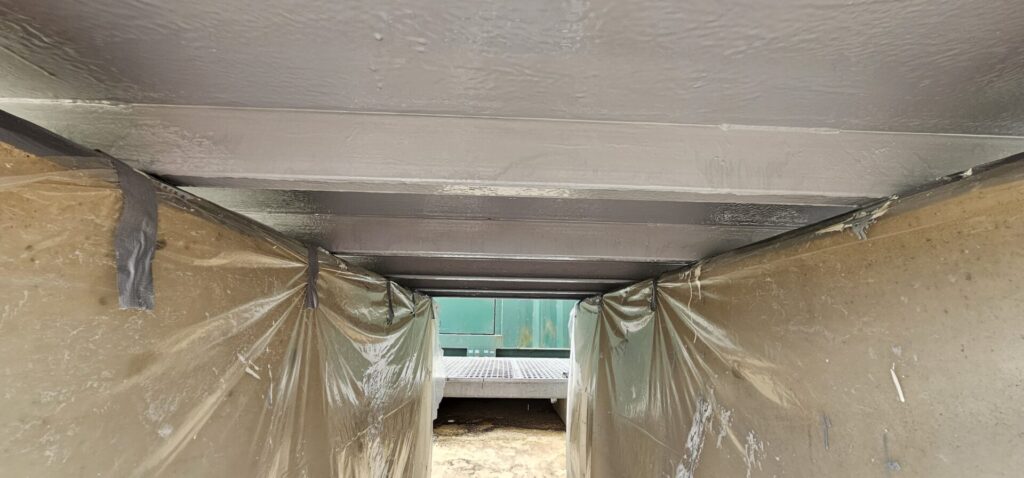
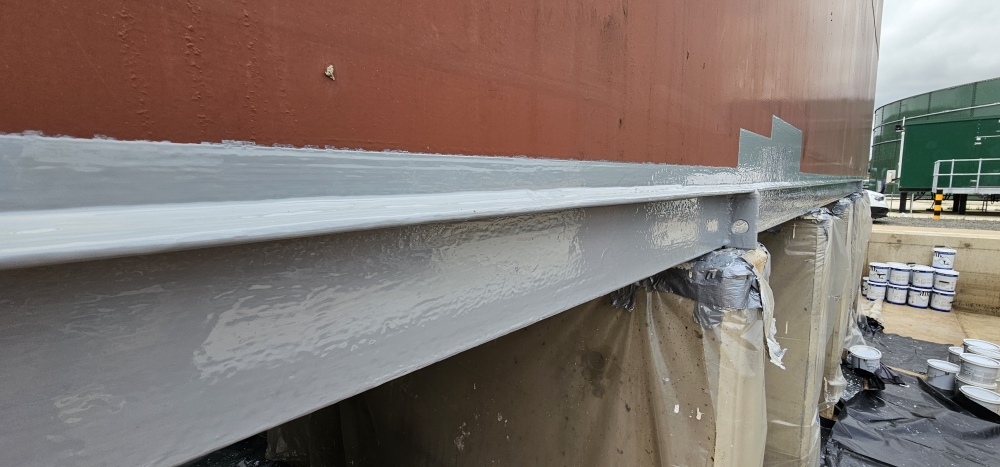
Climatic conditions were recorded with a PosiTector DPM before each coat. Before the first coat, the steel temperature was 24.2°C against a dew point of 17.7°C, and before the second coat it was 19.7°C against a dew point of 15.8°C – both comfortably above the minimum 3°C margin needed to prevent condensation forming on the steel.
Quality checks
Once cured, 308 dry film thickness readings were taken across the underside and beams with a PosiTector 6000. Every reading exceeded the 300 micron nominal specification, with a minimum of 356 microns and an average of 569 microns.
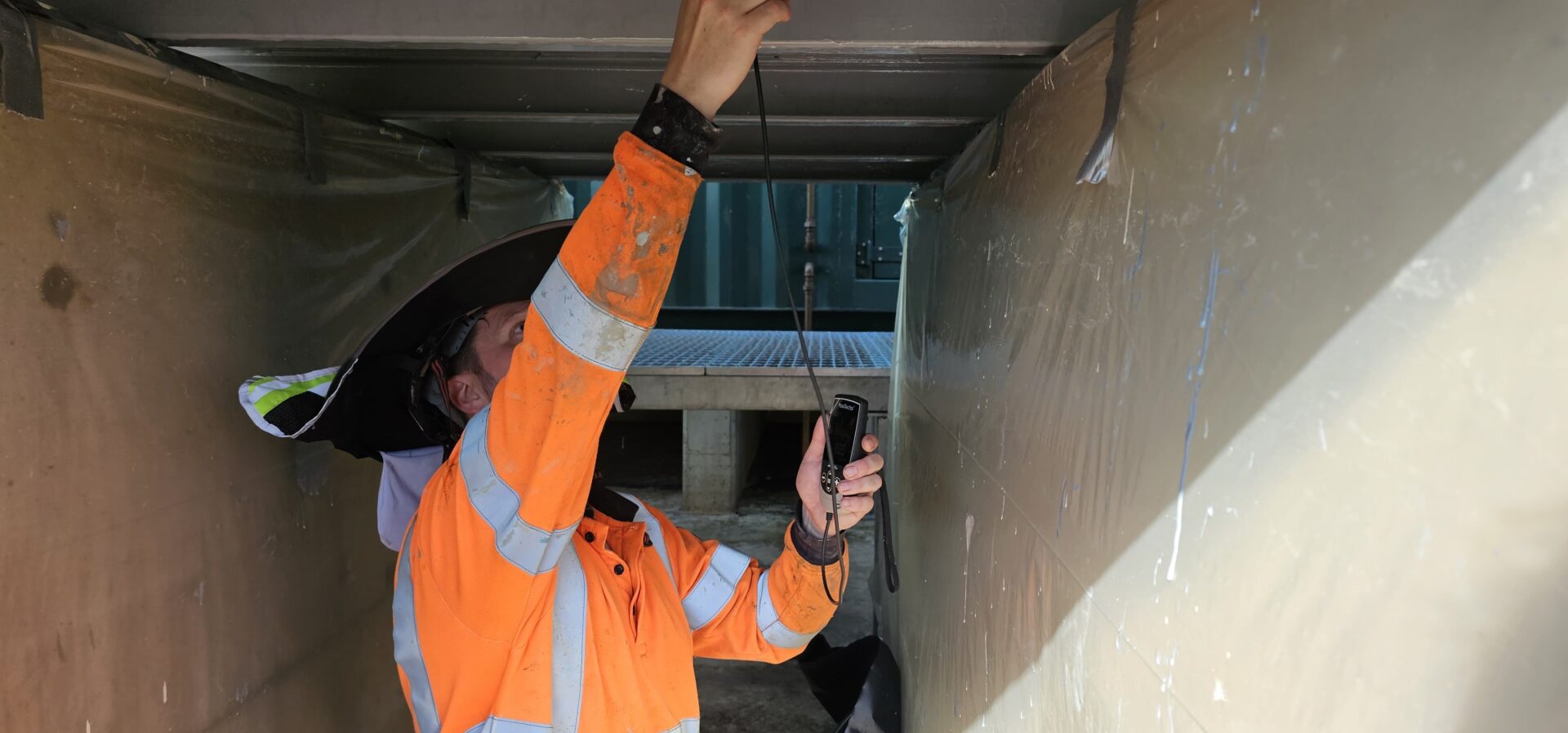
The coating was then spark (holiday) tested to find any pinholes or missed areas invisible to the eye. Any snags found were flagged, touched in with the same material and re-checked.
THE RESULT
The underside of the tank and all of its supporting steelwork, which had never been protected, now has a fully encapsulating, two-coat epoxy system applied to correctly prepared steel. Rather than a short-term patch repair over mill scale, the client has a long-term solution to the corrosion threatening the tank.
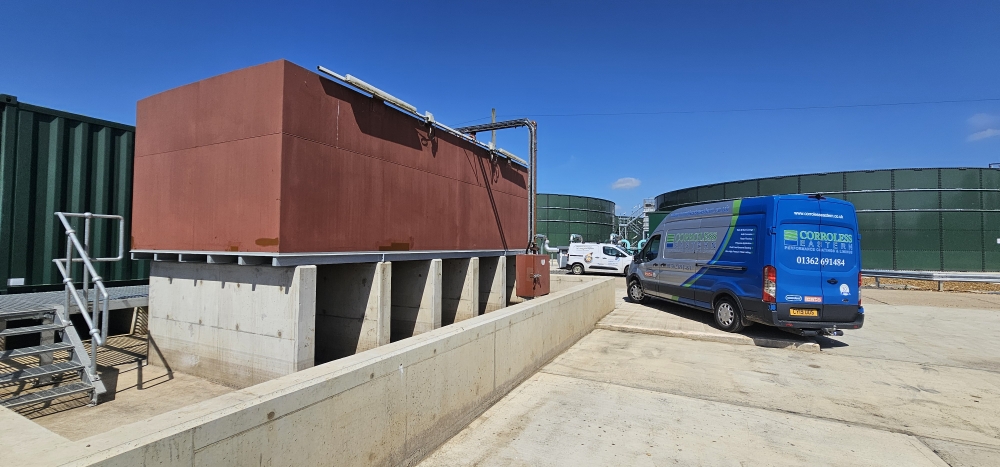
The works were completed in five days on site by a two-person team, well within the two weeks allowed. The site was left clean and tidy at the end of each day and no safety issues were reported throughout the works.
The coating system is covered by a 10-year Corroless Eastern warranty to first maintenance.
Find out more about our protective coatings services: https://www.corrolesseastern.co.uk/services/protective-coatings/