Waste Oil Tank Lining, Coventry

THE PROBLEM

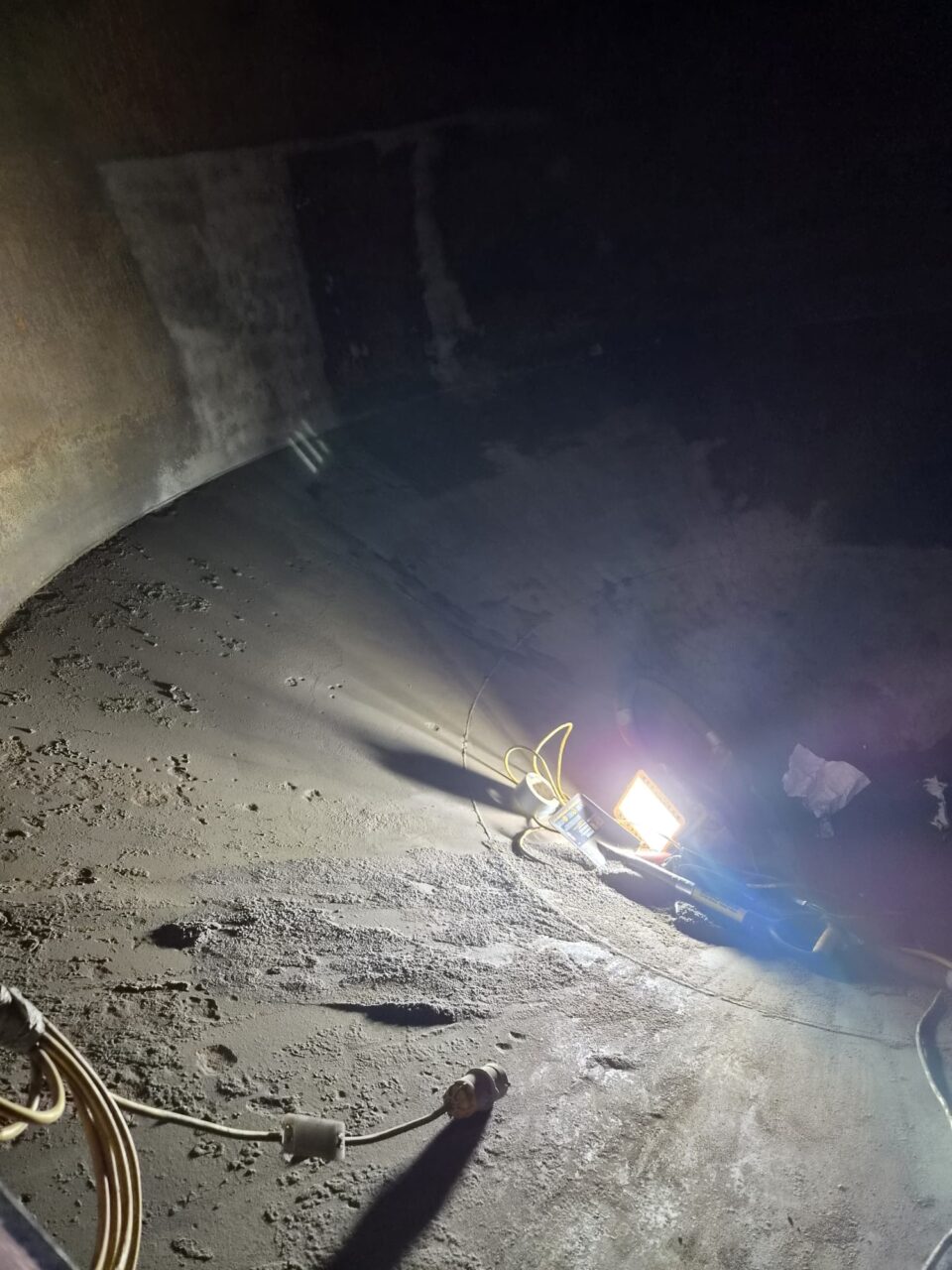
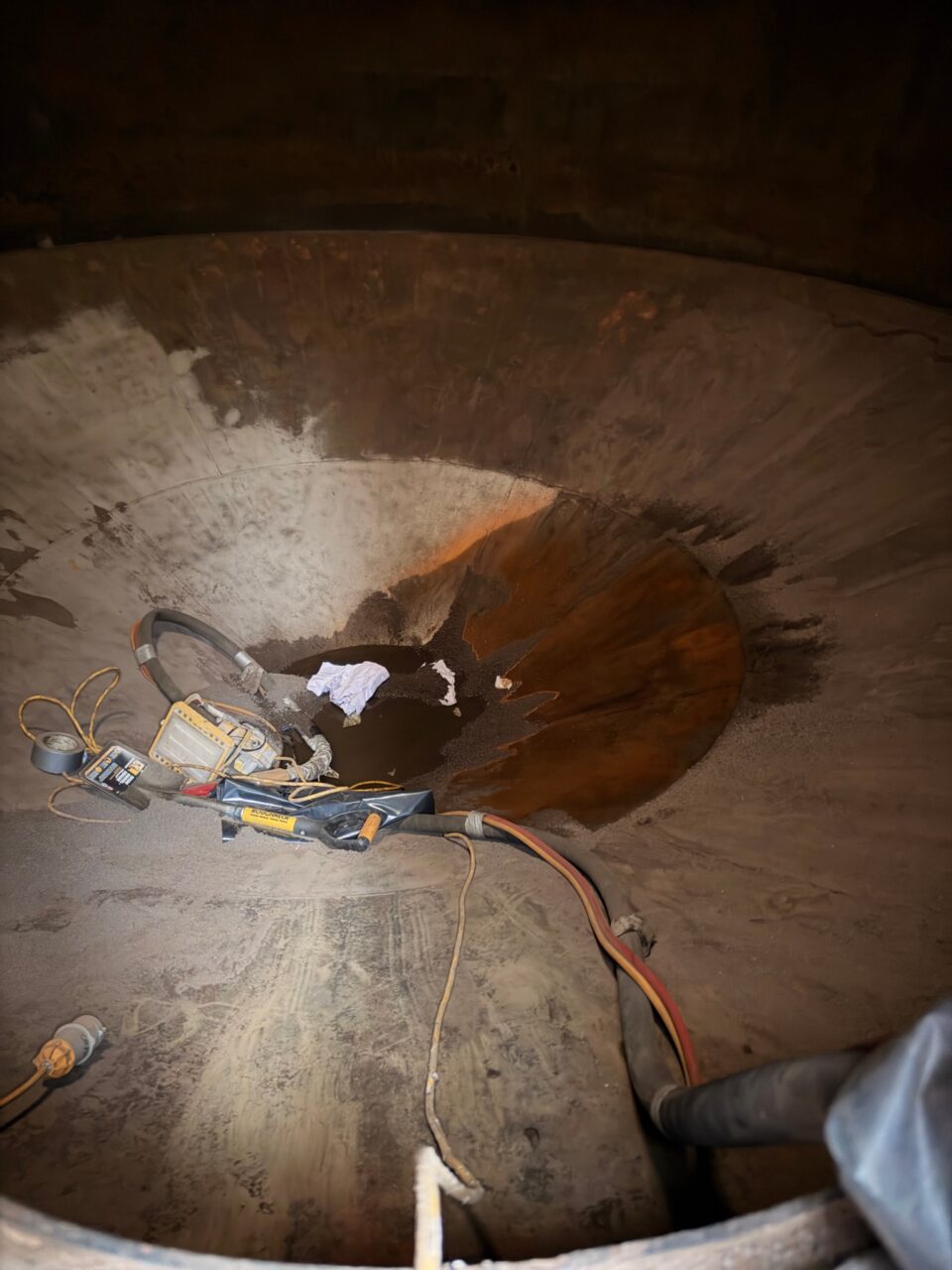
Our client, a leading UK waste management company, operates a 65,000 litre mild steel tank at their site in Coventry storing waste oil and water. The tank, installed in 1996, is 4.25m in diameter with a flat roof and a cone bottom supported on steel legs above a concrete base.

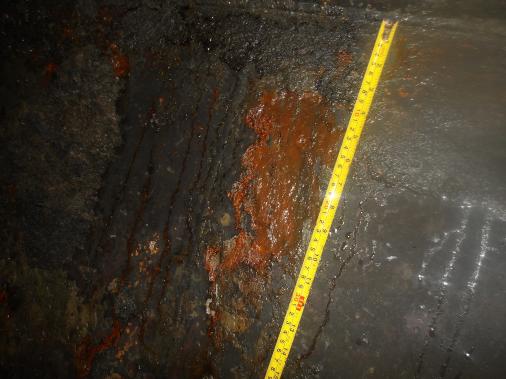
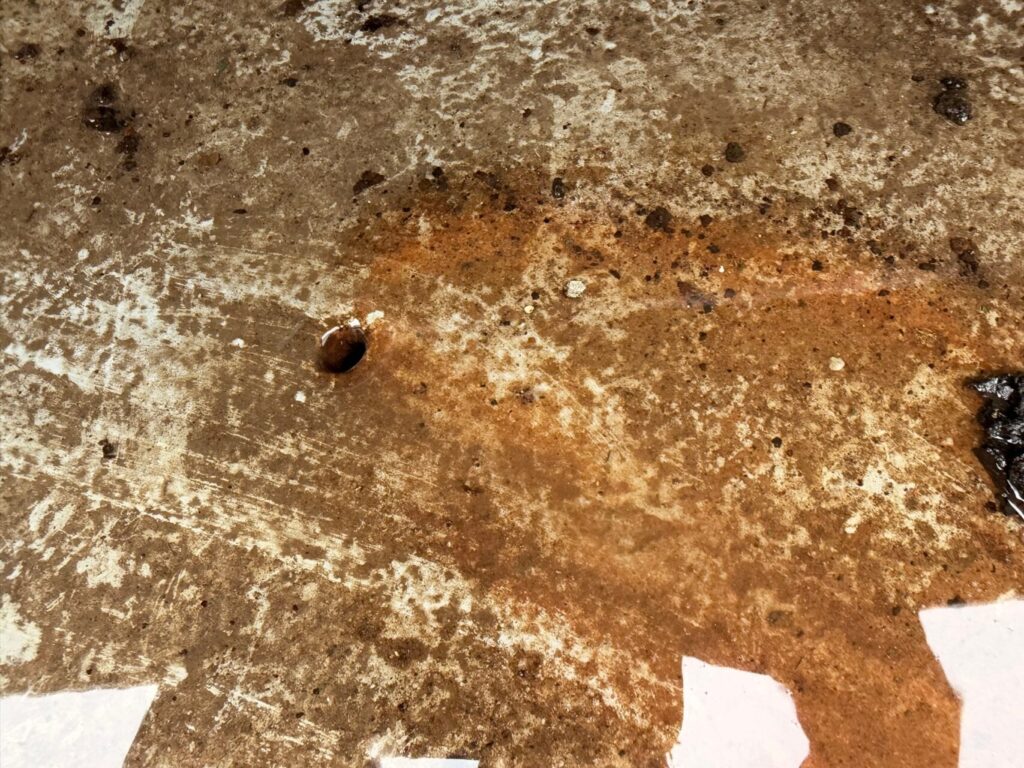
During an off-stream inspection carried out to EEMUA 159, the internal surfaces of the cone and the lower shell were found to be suffering from pitting corrosion, with runs of isolated pits down the cone measuring up to 4mm deep. The inspection report recommended that a chemical resistant lining system suited to the tank’s duty be installed to the cone bottom and extended above the cone to shell connection.
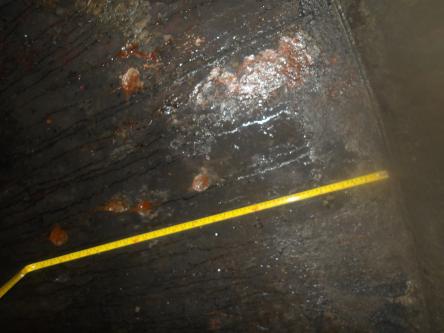
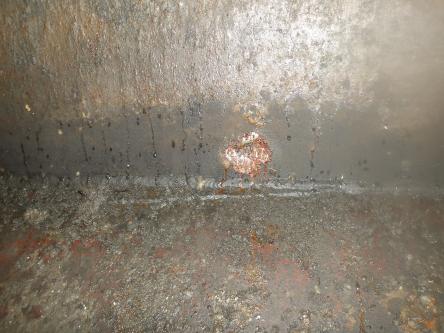
Our client required a durable, long term lining to protect the steel from further metal loss, with the works carried out within a two week window. The site also has neighbours in close proximity, so the surface preparation needed to keep dust to a minimum.

THE SOLUTION

Following a site visit with our client’s tank inspector, we proposed preparing the steel by low dust sponge blasting, filling the pitting with a ceramic epoxy repair putty and applying Amchem Purethane NXT, a solvent free polyurethane lining, to a nominal thickness of 1,000 microns. The lining was applied to the cone and 1m up the shell, a total area of around 44m², and is backed by a 10 year warranty. More information about our steel tank lining services can be found here.

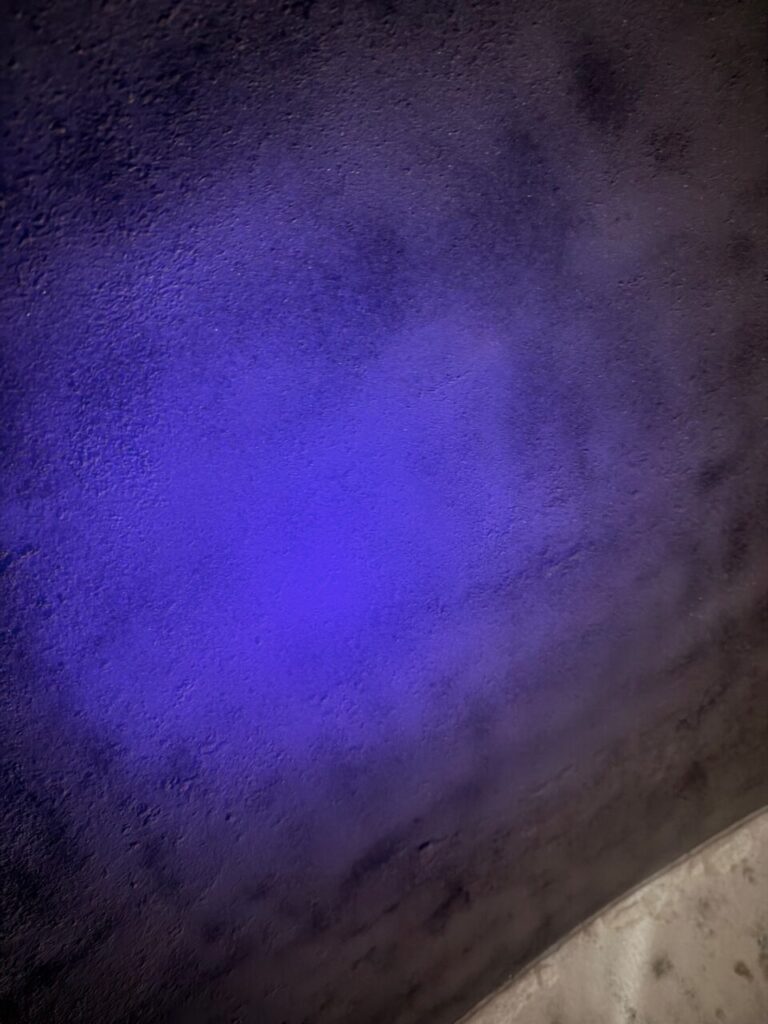
Access into the tank was by scaffold. The tank was cleaned and degreased by our client prior to handover, and the effectiveness of the cleaning was checked using a UV blacklight. Oils and greases fluoresce under UV light, and any left in place would prevent the new lining from adhering.

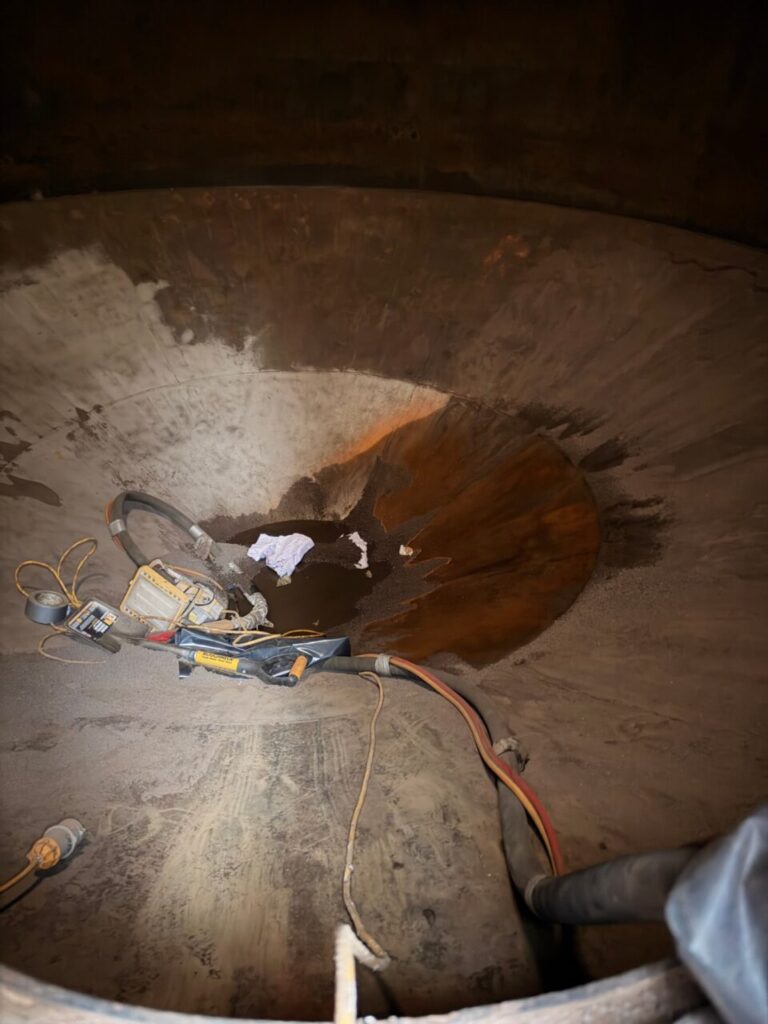
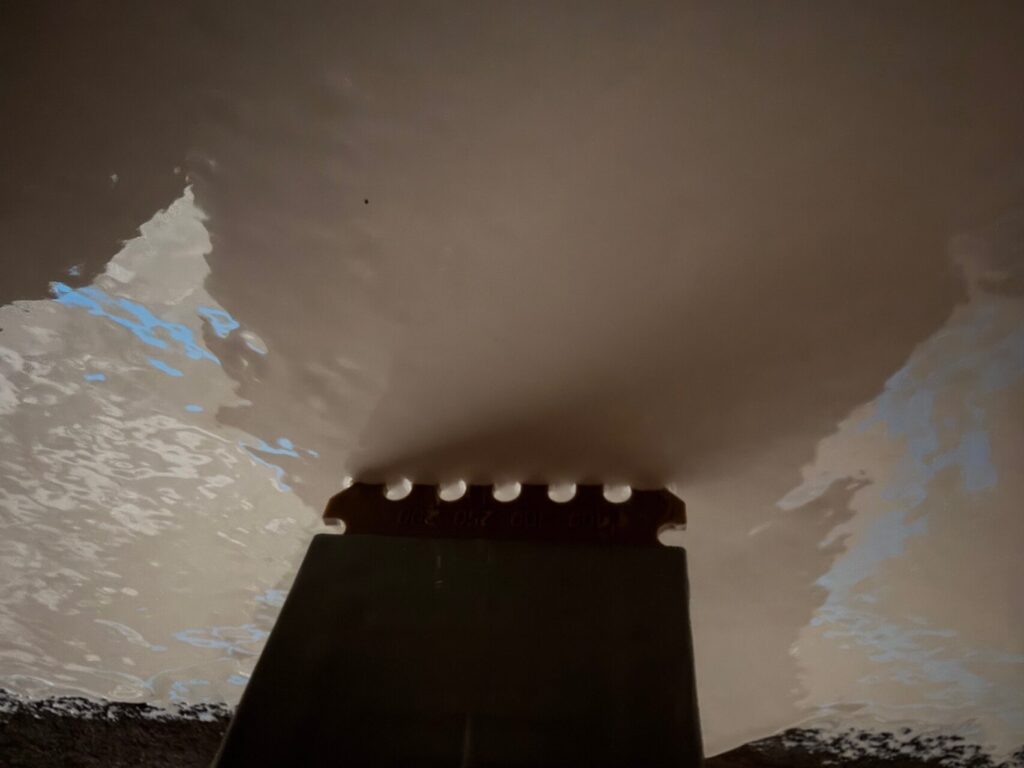
The steel was prepared to Sa2.5 as per ISO 8501-1 by method of sponge blasting. Sponge blasting media encapsulates the abrasive within a foam, greatly reducing the dust produced compared with conventional abrasive blasting, making it ideal for a site with close neighbours.

Waste Oil Tank Lining Coventry 05 - Sponge Blasting Under Way to Tank Cone

During the blasting works we experienced water ingress into the tank through a corrosion hole in the roof. This was quickly sealed with a temporary mastic repair and, once the water had been removed, blasting continued.

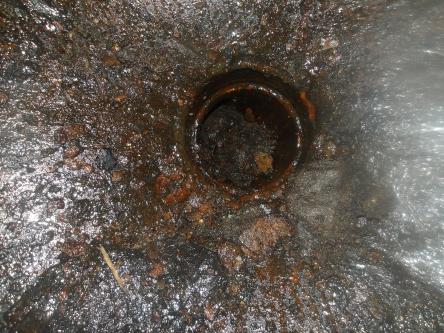
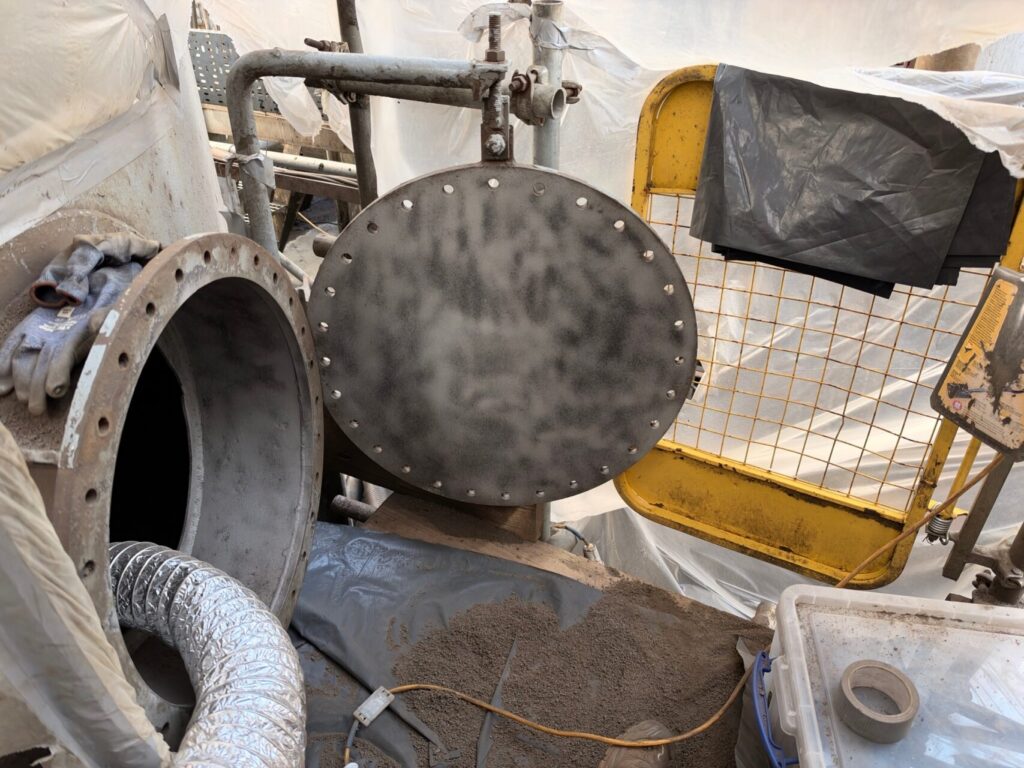
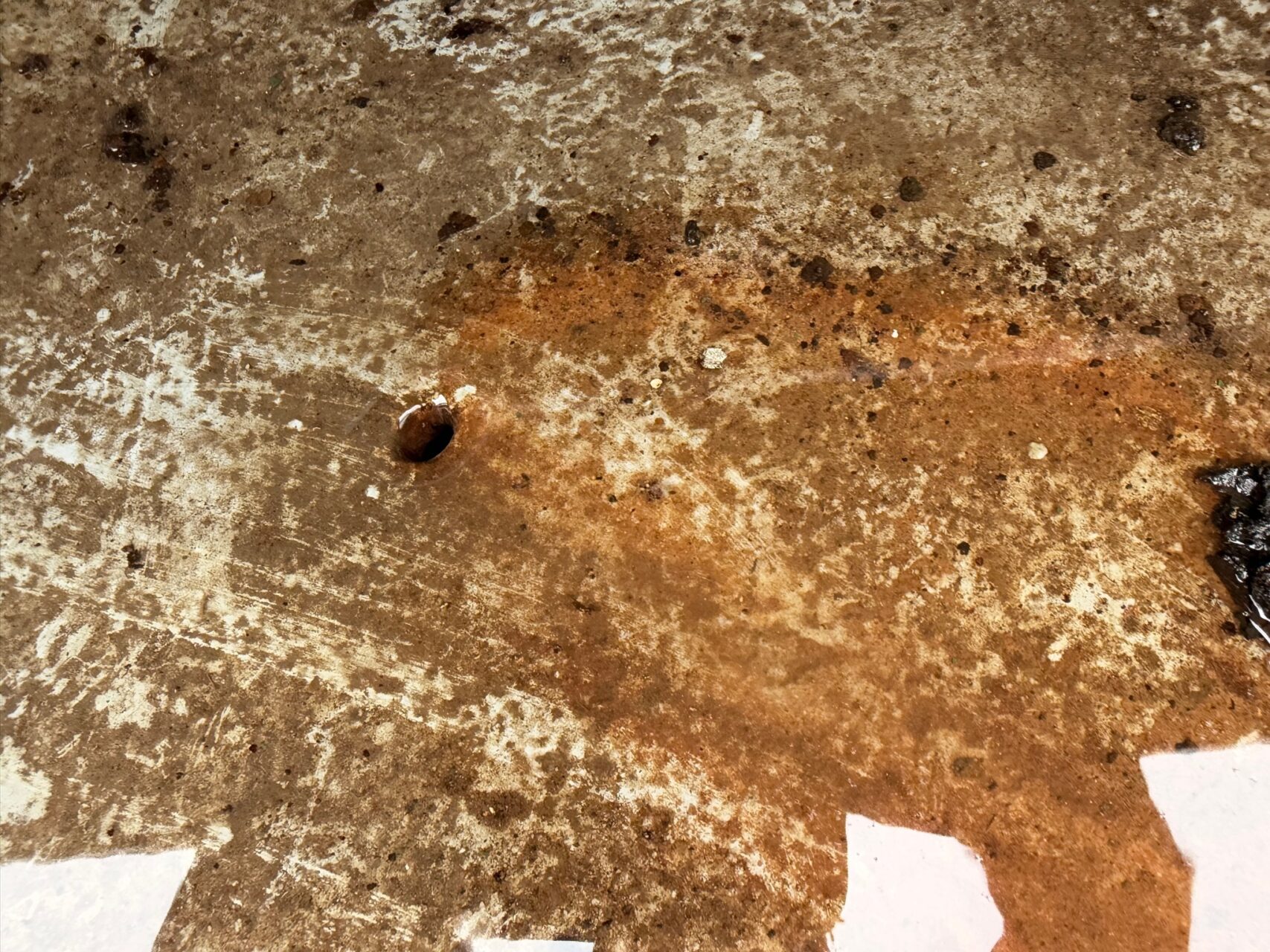
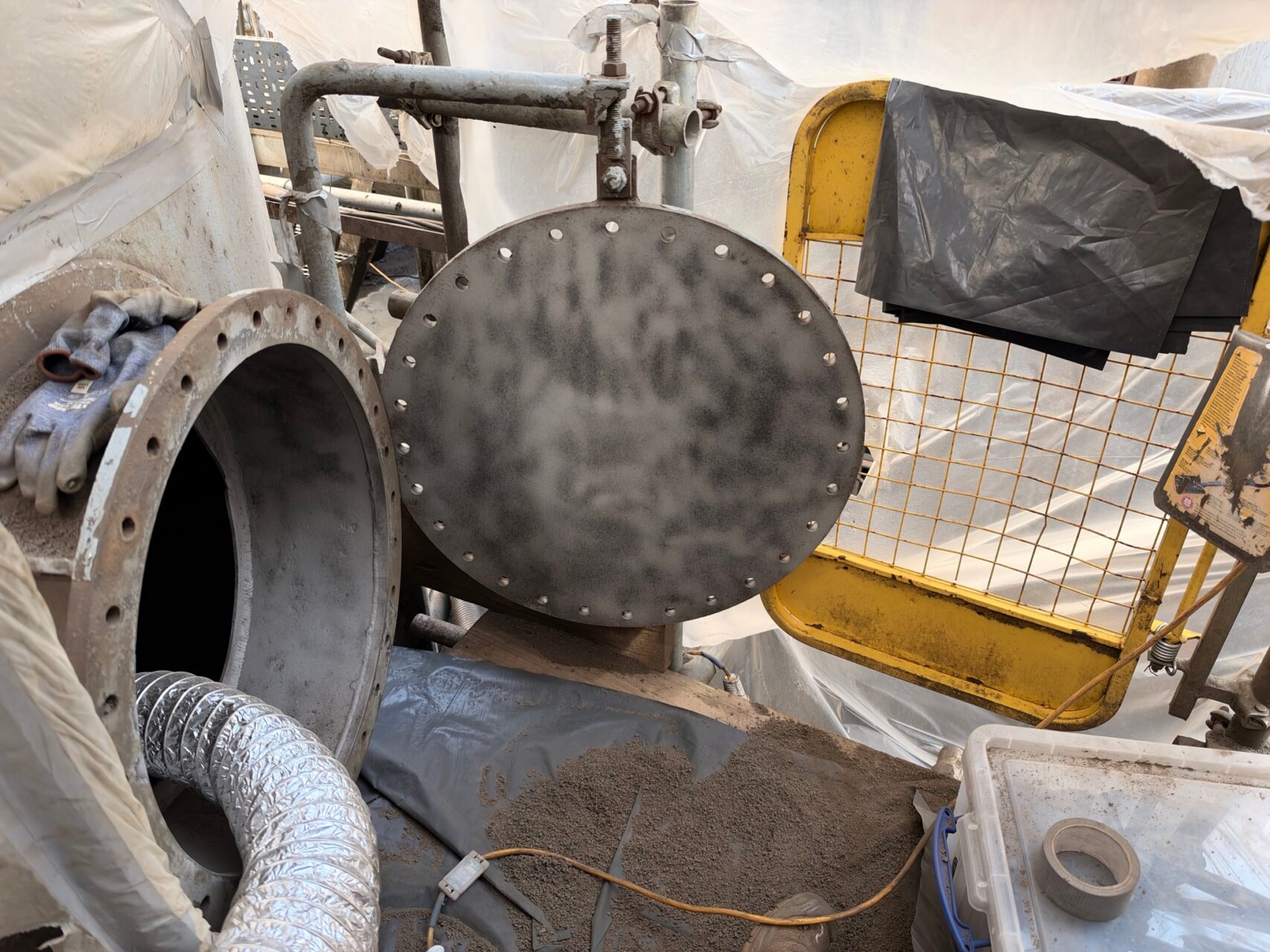
Blasting revealed heavy corrosion around the cone outlet. The tank was ventilated through the manway via ducting, with the area around the manway sheeted to contain the blast media.

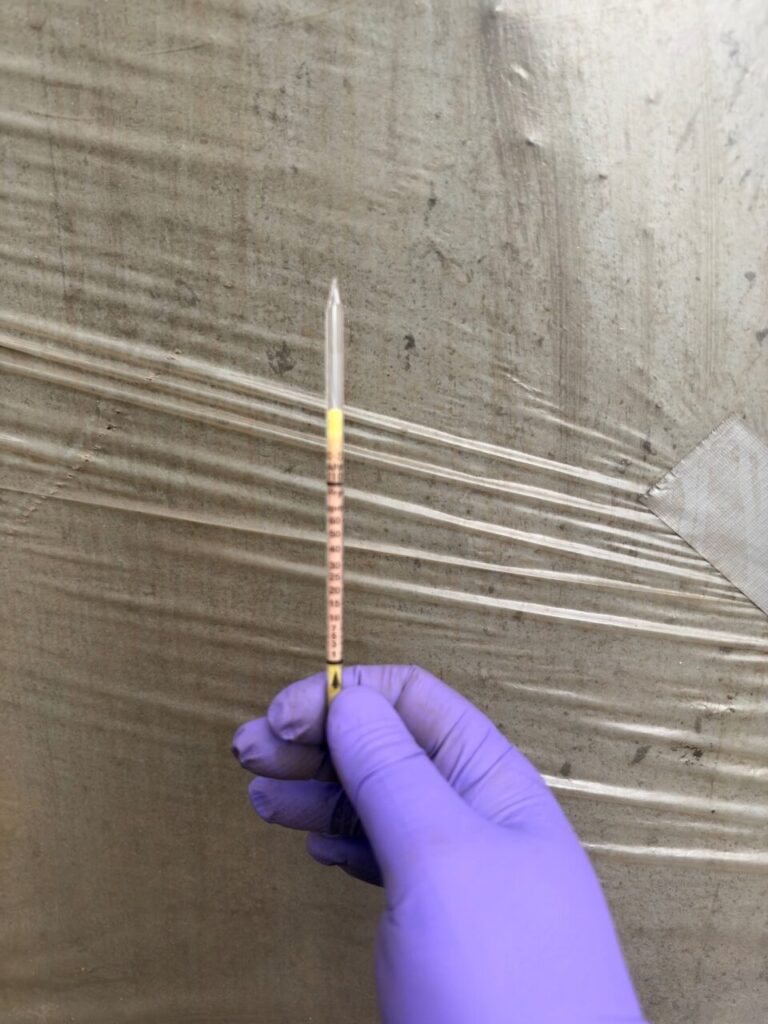
Following blasting, the tank was vacuumed clean and the prepared steel was inspected and tested before any coating was applied. The surface was rechecked for oils and greases with a UV blacklight, a dust tape test was conducted, and soluble salt testing was carried out. Soluble salts such as chlorides left beneath a lining draw moisture through the film and lead to osmotic blistering, a common cause of premature lining failure in tanks.

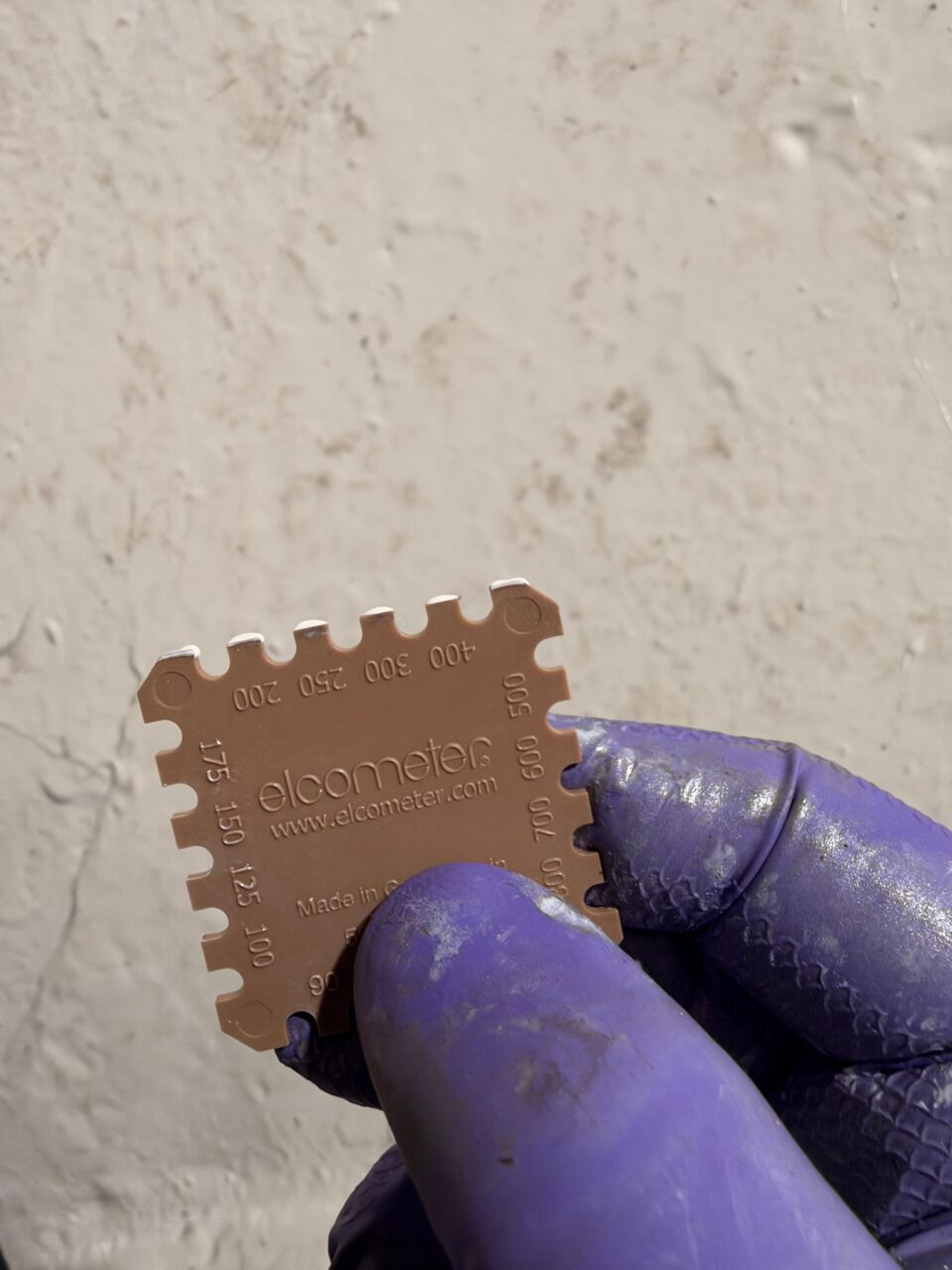
The blast profile was checked and recorded using a PosiTector SPG surface profile gauge. All 62 readings exceeded the specified minimum profile of 75 microns.

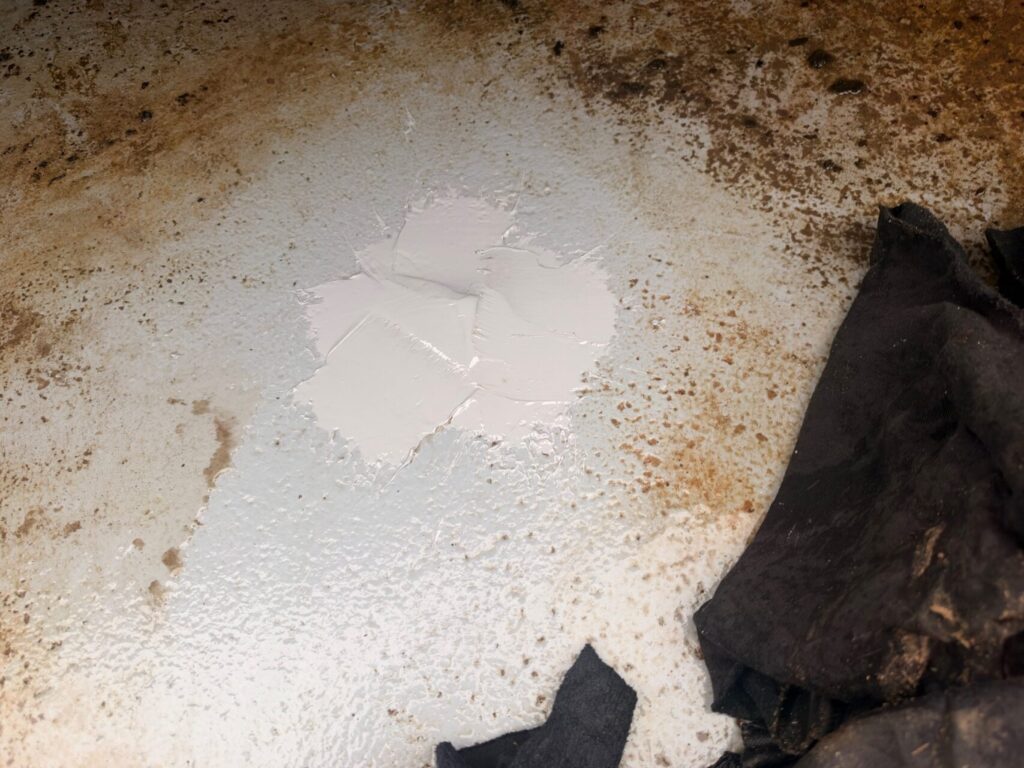
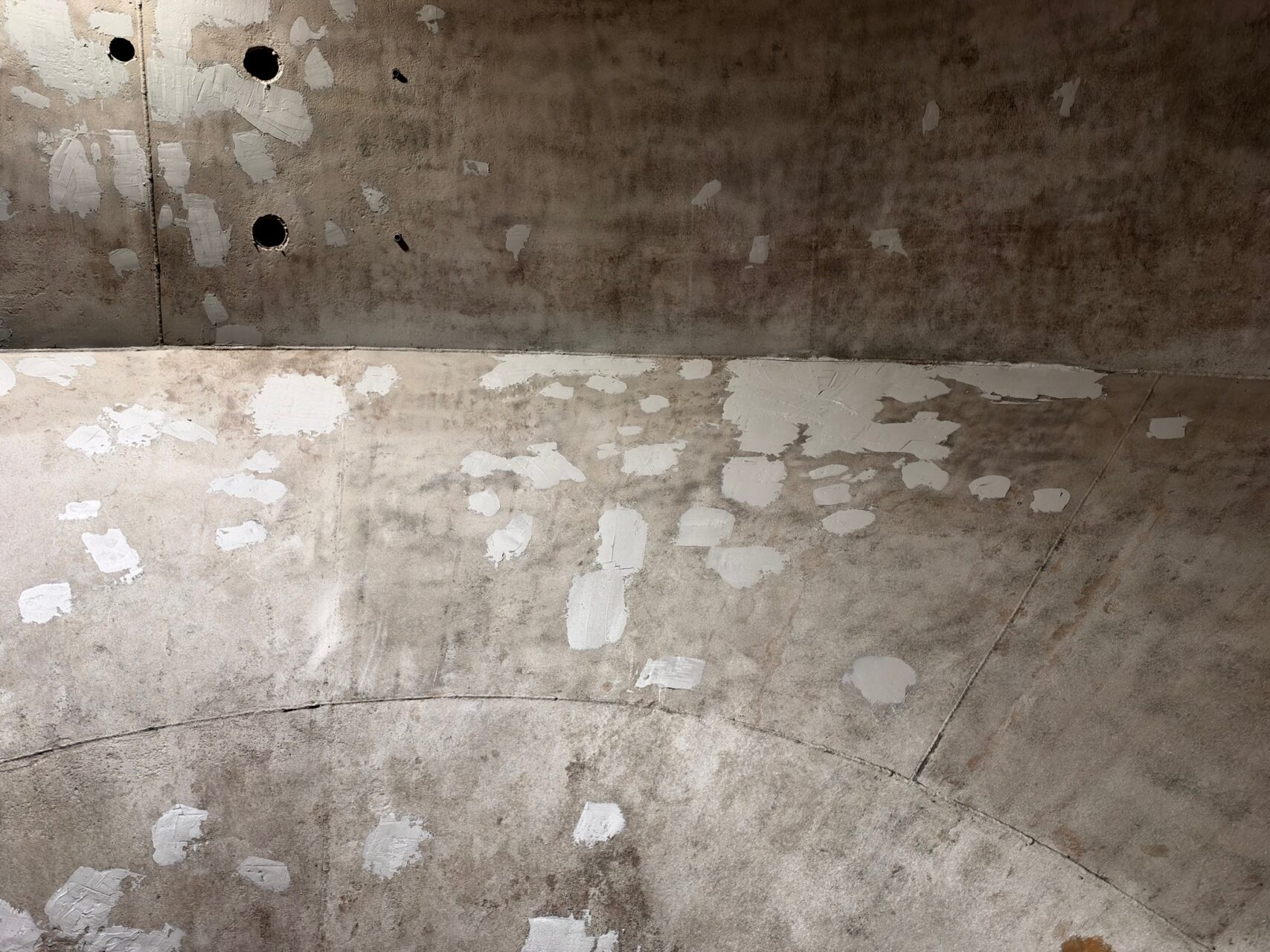
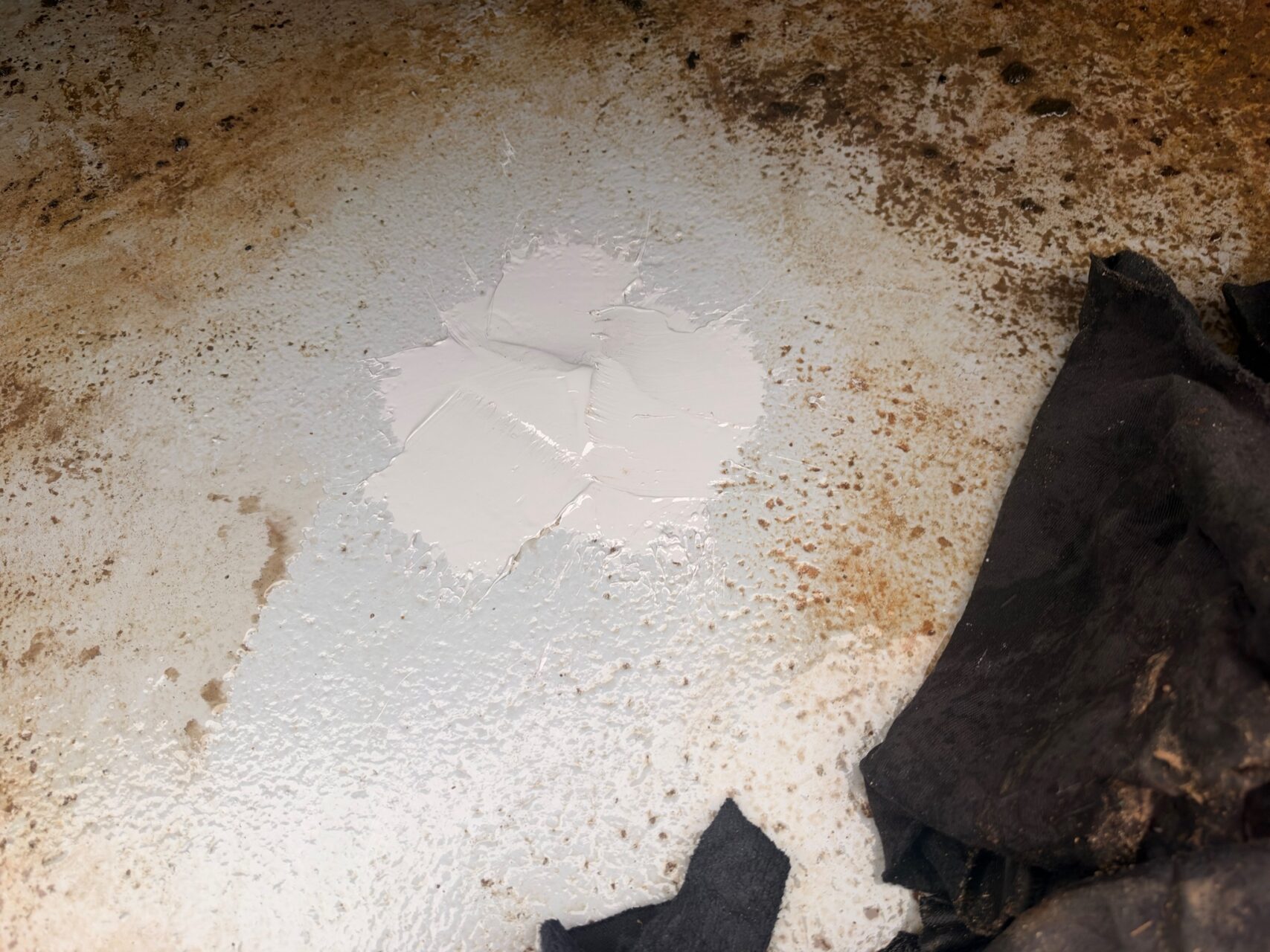
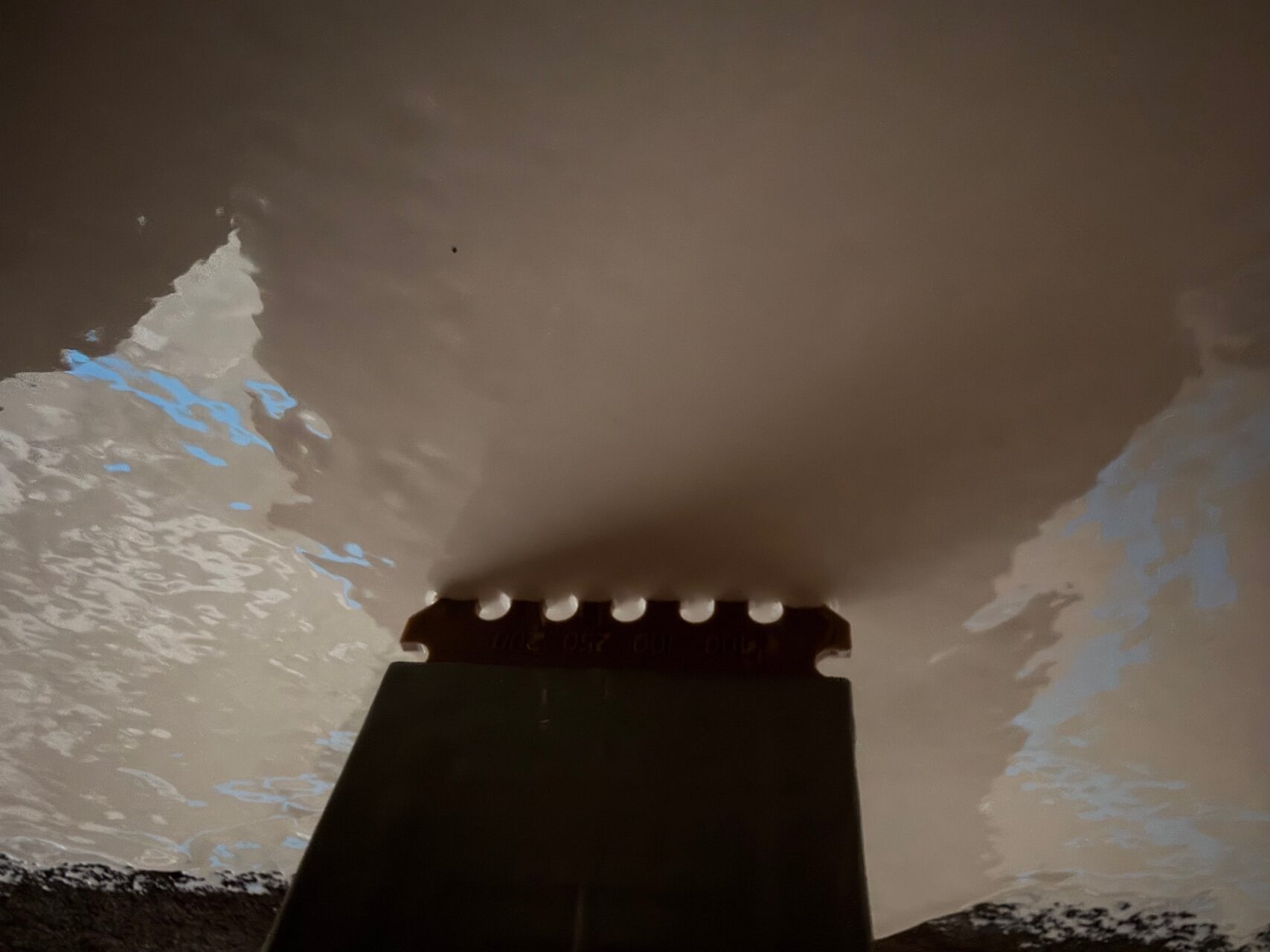
The pitting across the cone and shell was then filled with Chemco Ceram-chem RH500, a ceramic filled epoxy repair putty, applied with filling blades. Once cured, the putty repairs were abraded to provide a key for the lining. Filling the pits restores a smooth profile to the steel so the lining can be applied at an even thickness, without pin holes forming over the pits.

Waste Oil Tank Lining Coventry 13 - Ceramic Epoxy Putty Filling to Pitted Steel

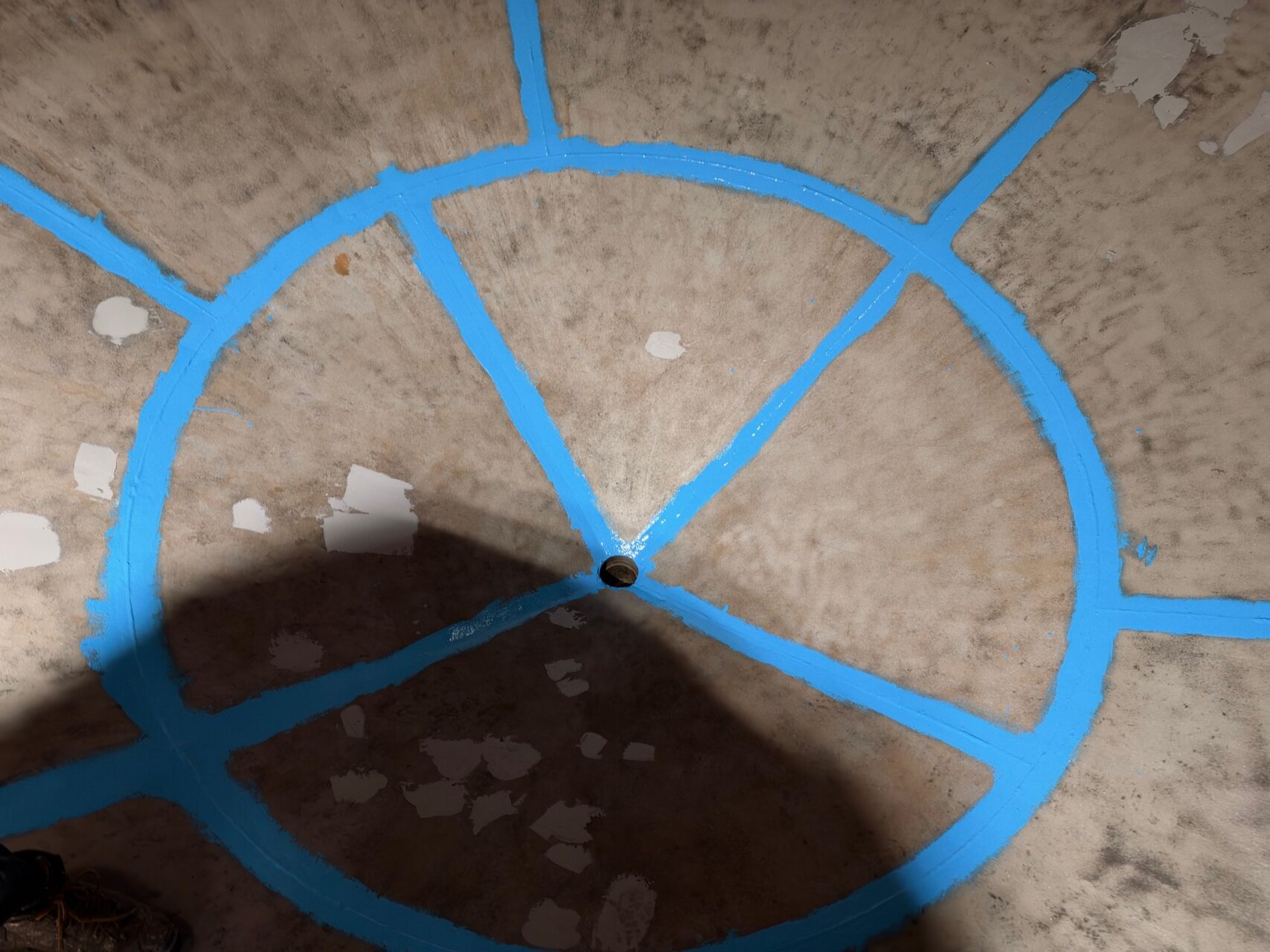
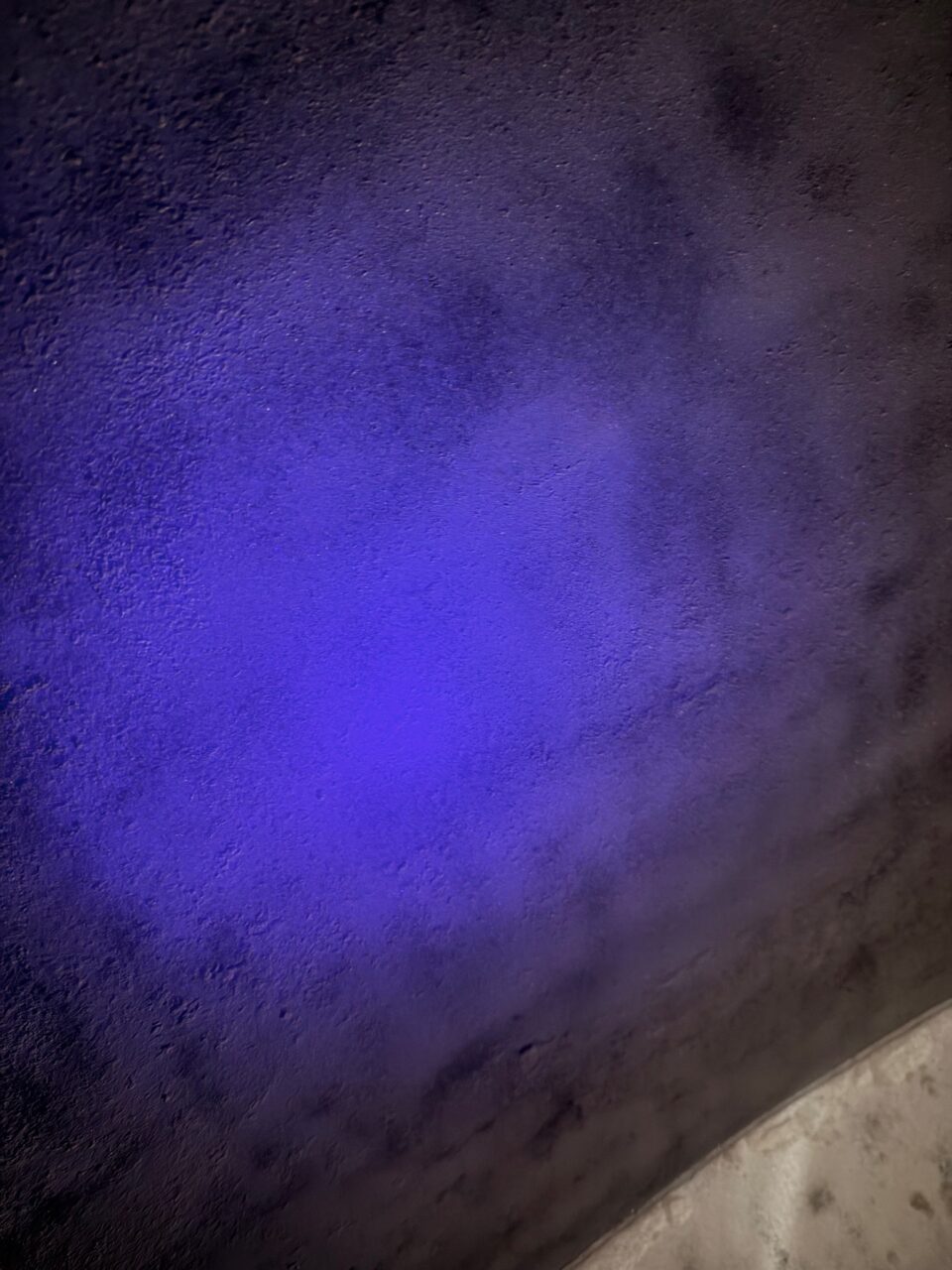
As per best coating practice, a heavy stripe coat was applied by brush to all angles, edges and welds, where coatings pull thin through surface tension. The stripe coat was applied in blue so its coverage could be clearly seen.

Waste Oil Tank Lining Coventry 14 - Stripe Coat to Welds and Putty Repairs

Prior to and during the lining application the climatic conditions were tested and recorded using a PosiTector DPM. Across the 45 readings logged on site, the surface temperature remained at least 3°C above the dew point at every reading.

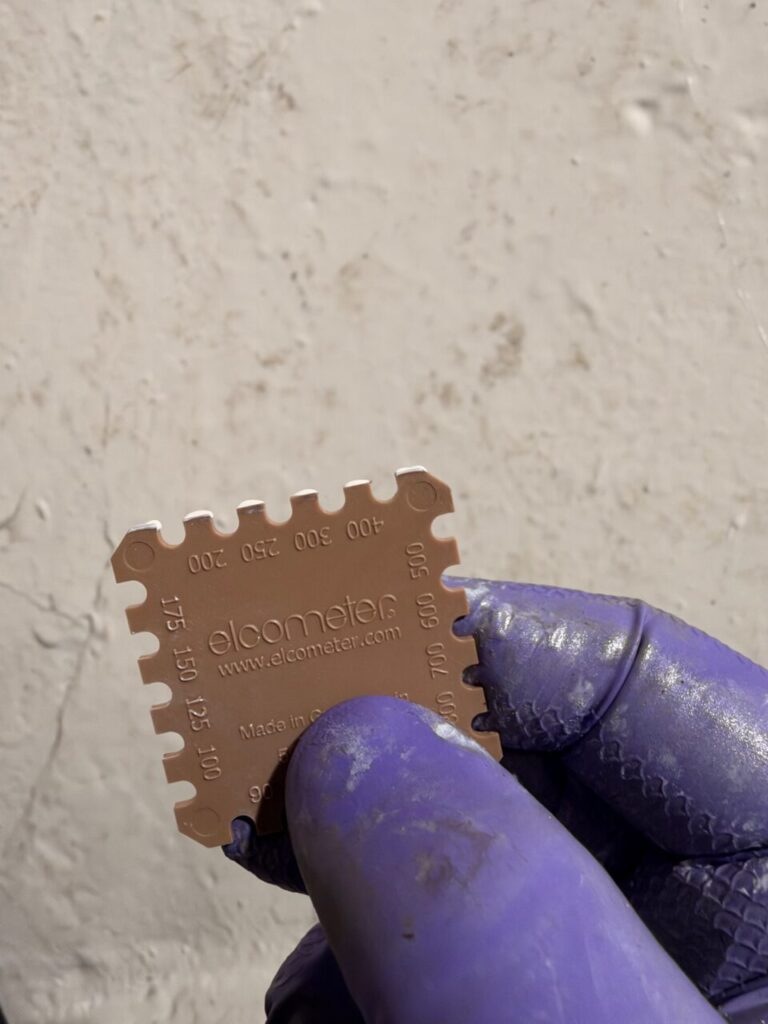
The first full coat of Amchem Purethane NXT was applied by brush and roller in cream, with wet film thickness readings taken throughout the application to ensure the required thickness was achieved.

The lining was then built up with further full coats over the following two days, the final coat being applied in a contrasting grey so that complete coverage of each coat could be visually confirmed.

On completion, 202 dry film thickness readings were taken across the lining using a PosiTector 6000. Every reading was at or above the specified 1,000 microns, with an average of 1,468 microns.

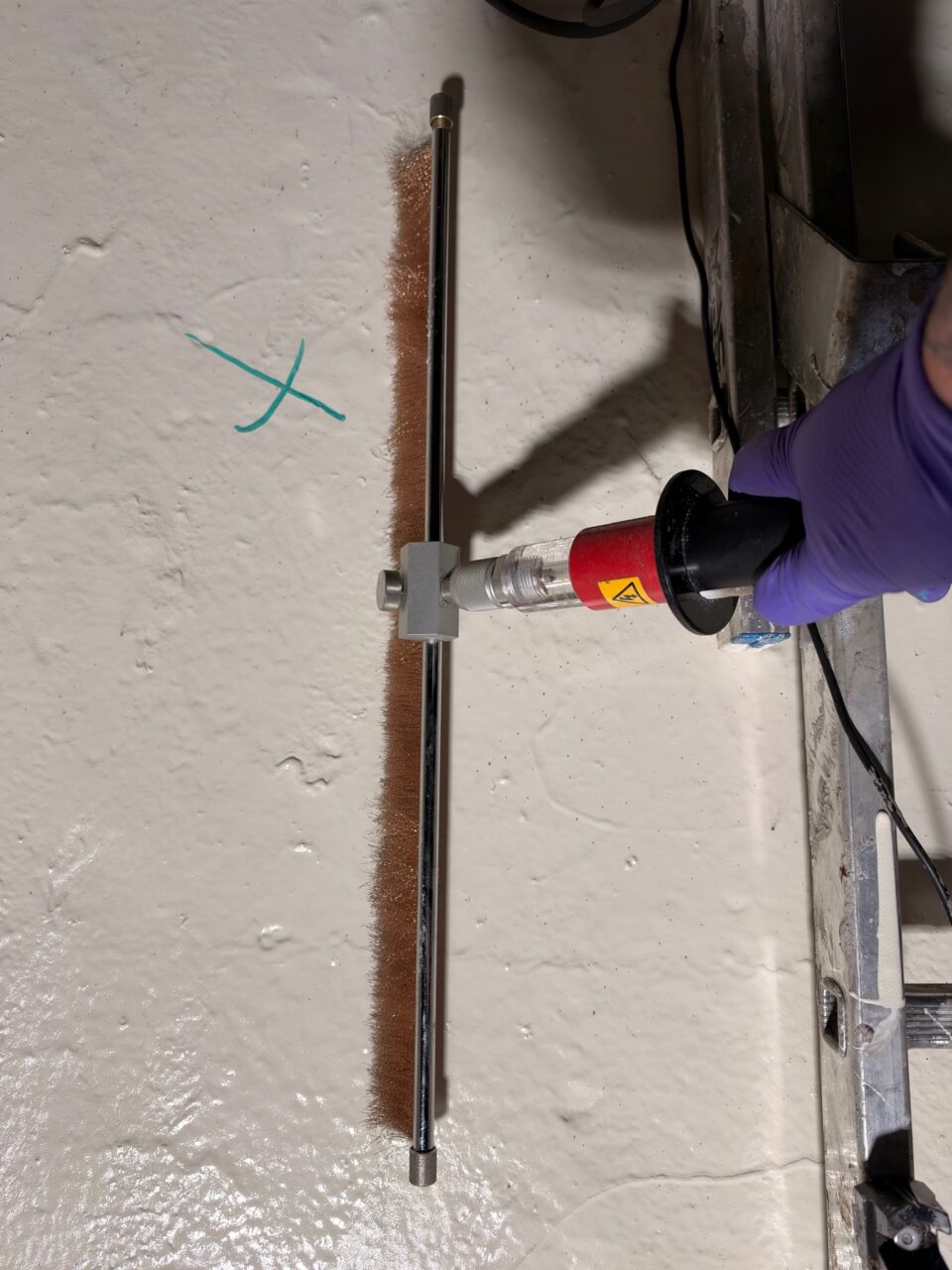
The cured lining was then tested for porosity using a DC holiday spark tester. In an immersion environment a single pin hole is a point of lining failure, making this a critical quality assurance step. Any areas identified were touched in using the same material applied by brush.

Waste Oil Tank Lining Coventry 19 - Holiday Spark Testing of Completed Lining

The works were completed in ten working days on site, within the two week programme.

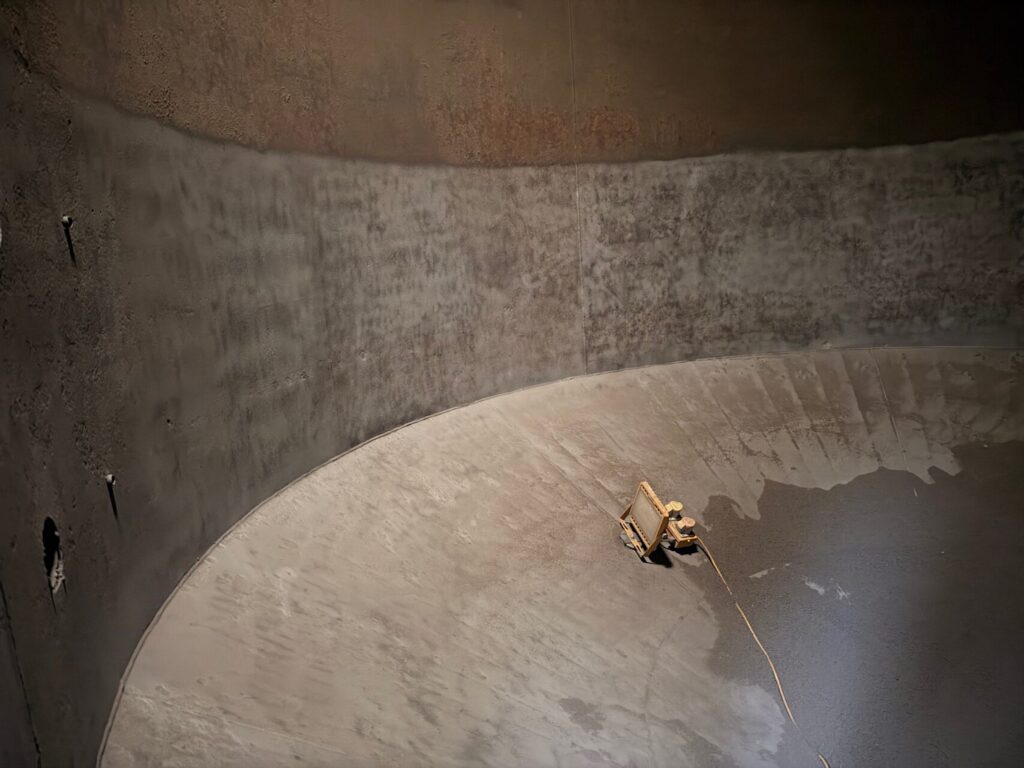
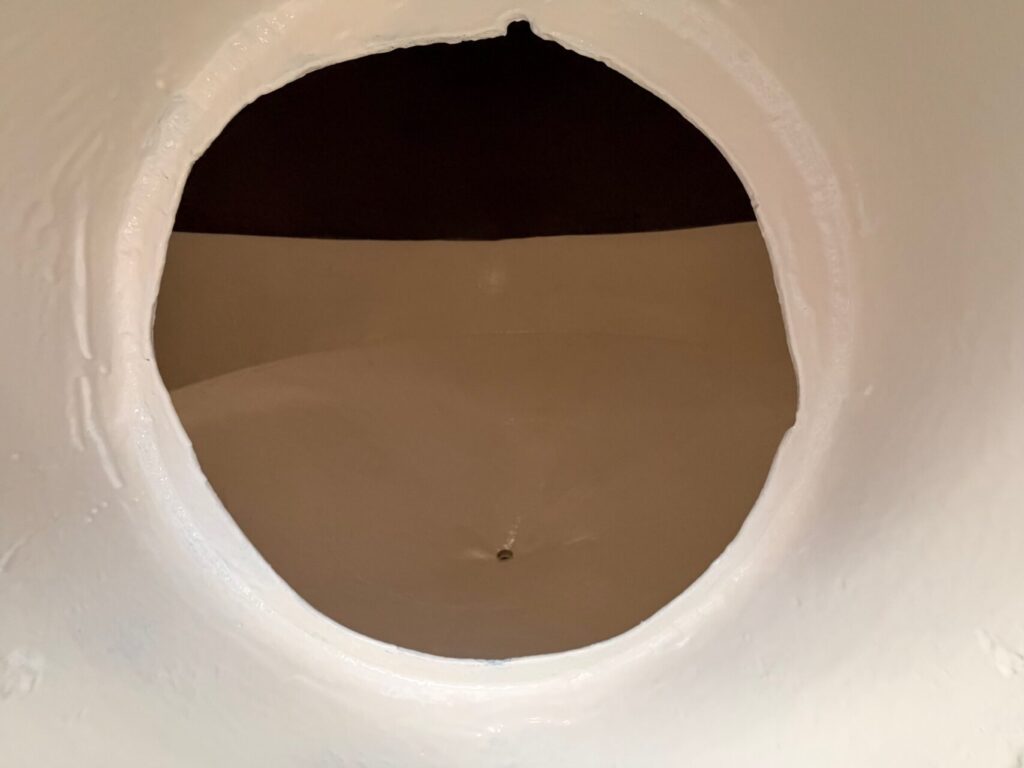
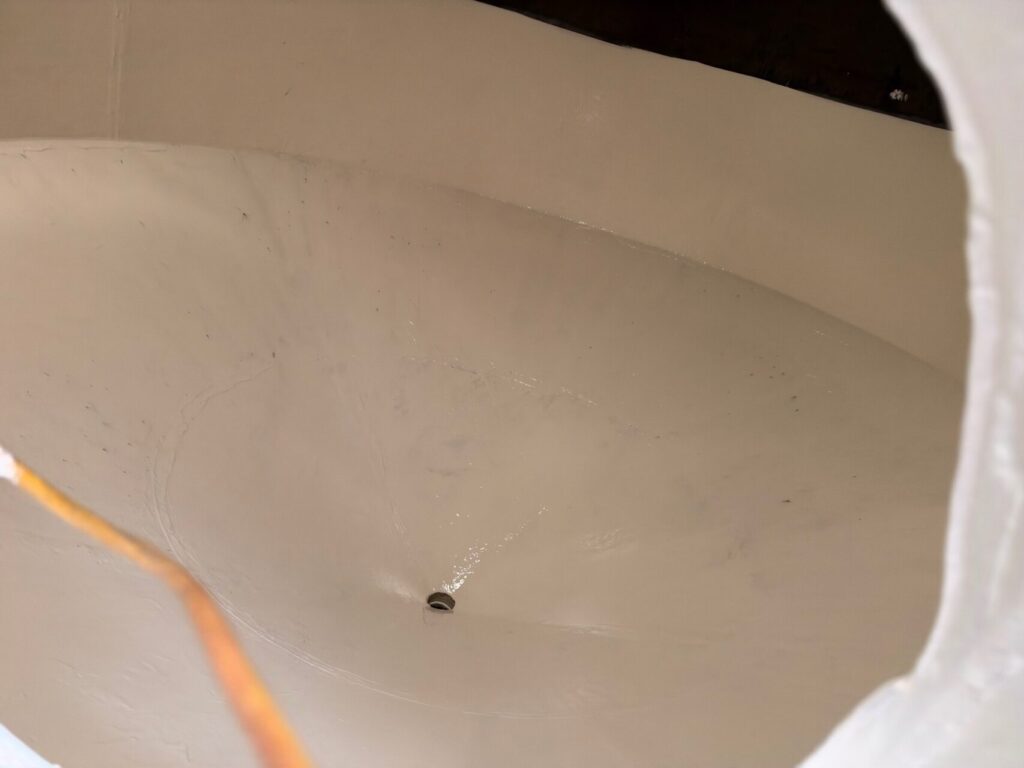
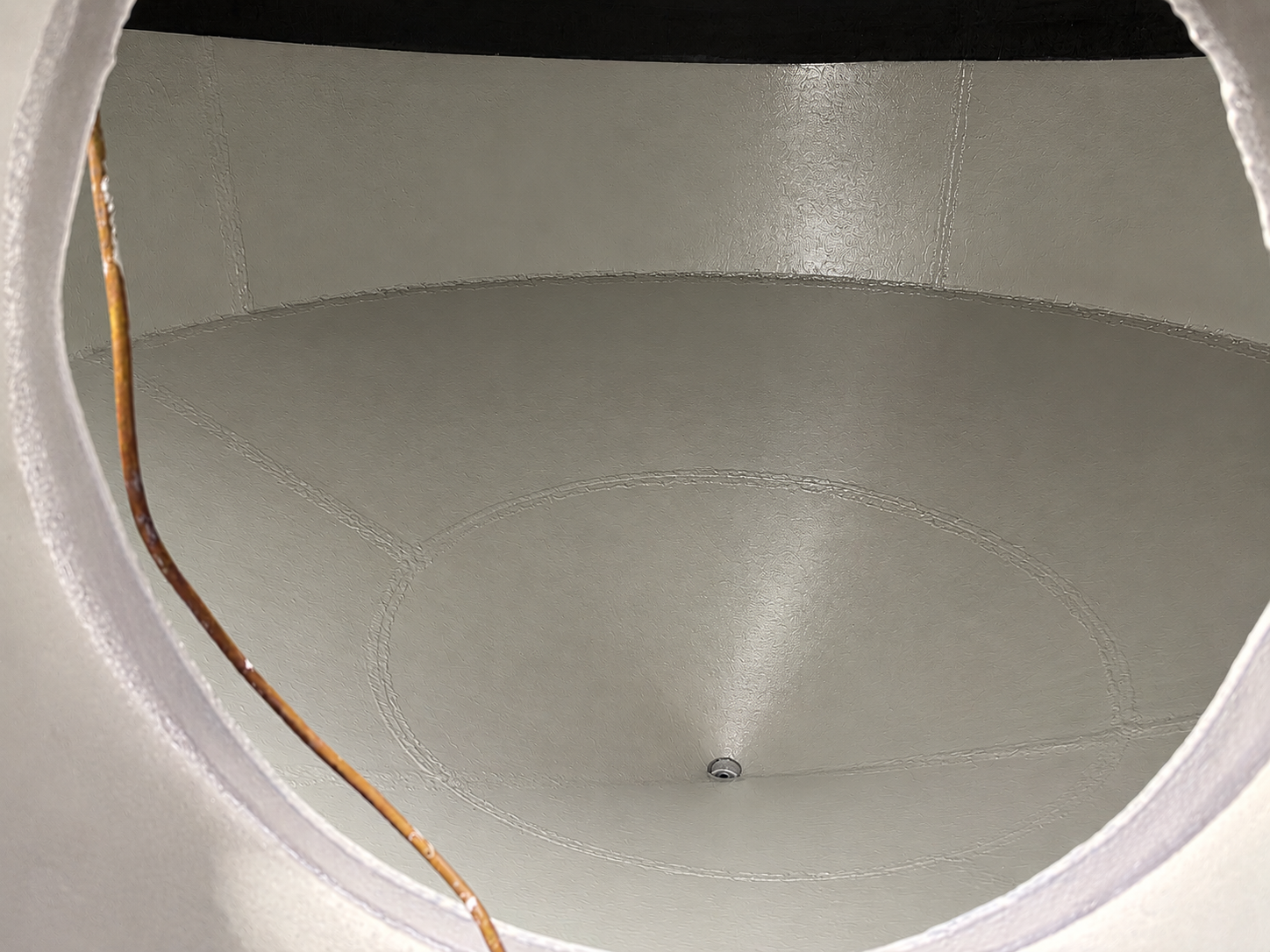
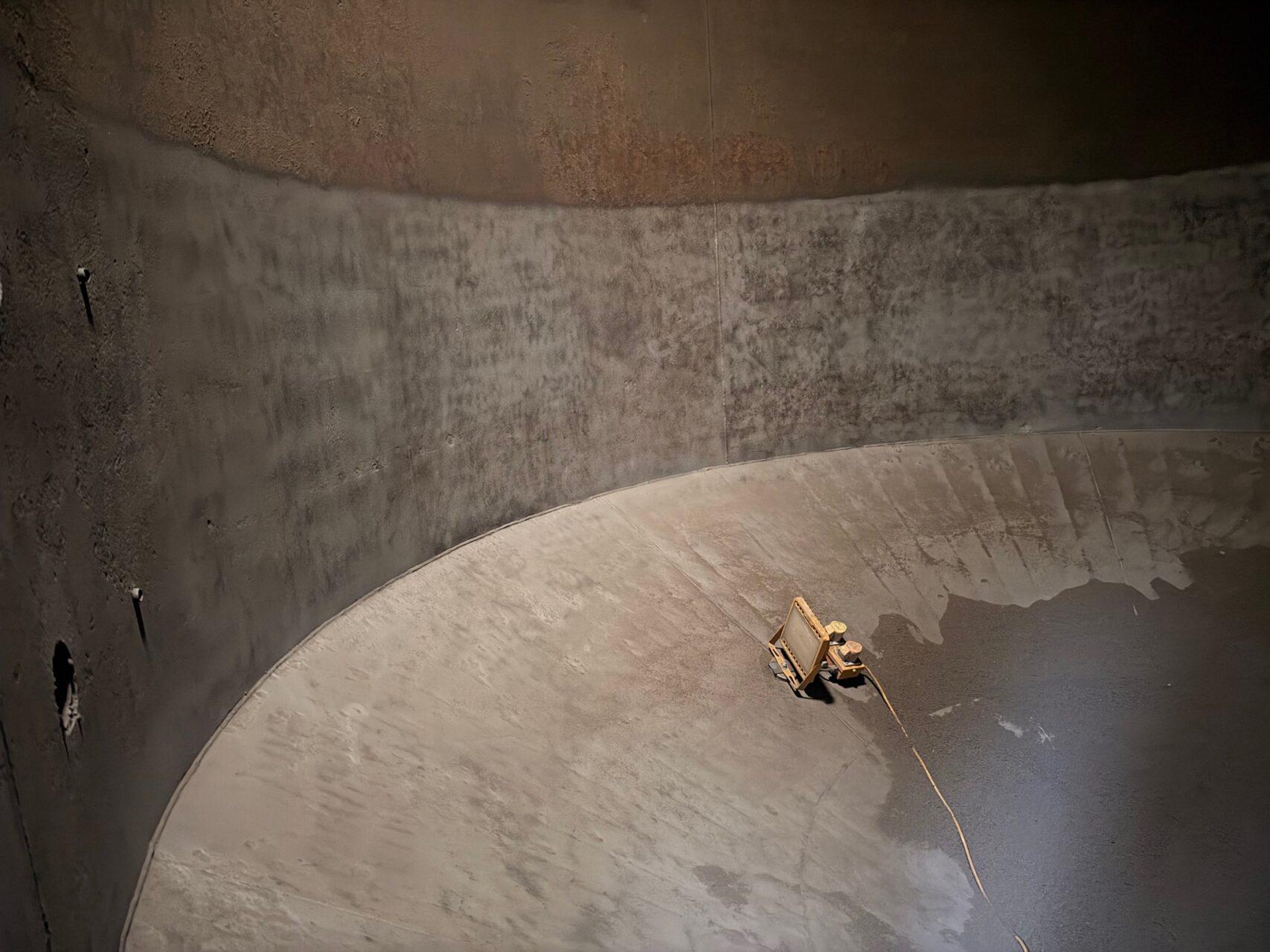
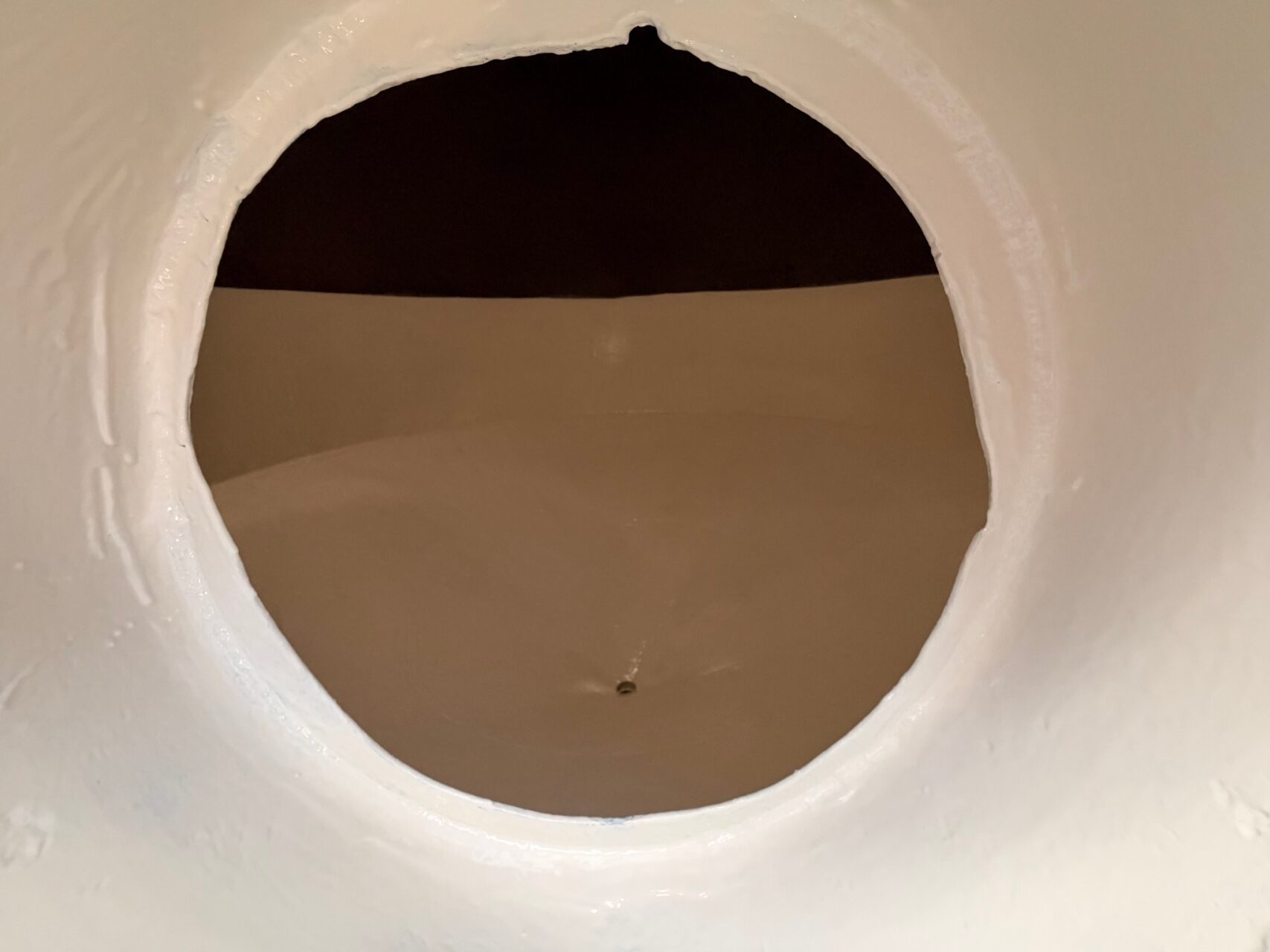
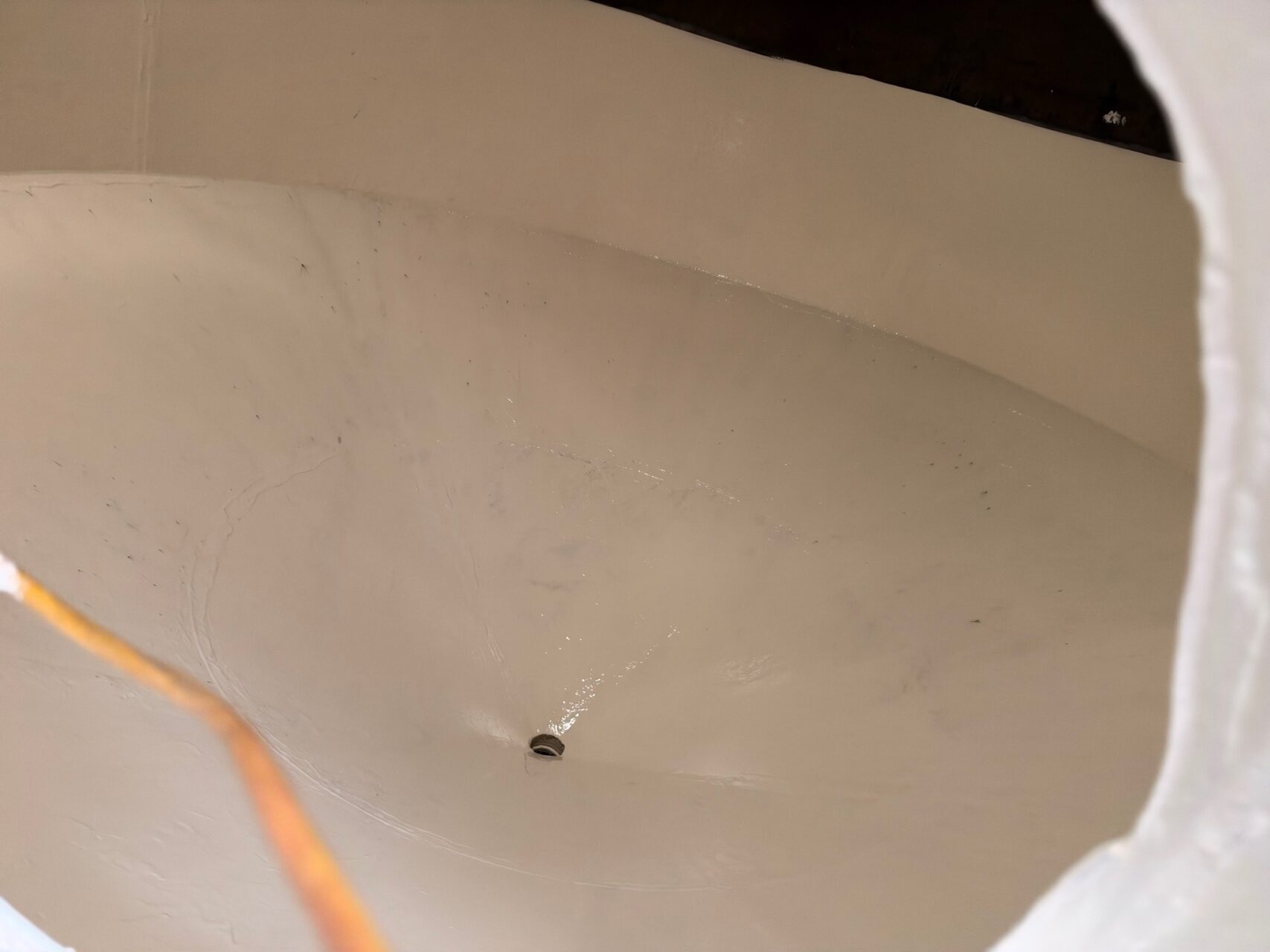
Our client now has the cone and lower shell of their tank repaired and protected with a seamless, solvent free polyurethane lining in excess of 1,000 microns, signed off on completion and backed by our 10 year warranty.

Waste Oil Tank Lining Coventry 20 - Completed Polyurethane Lining to Tank Cone