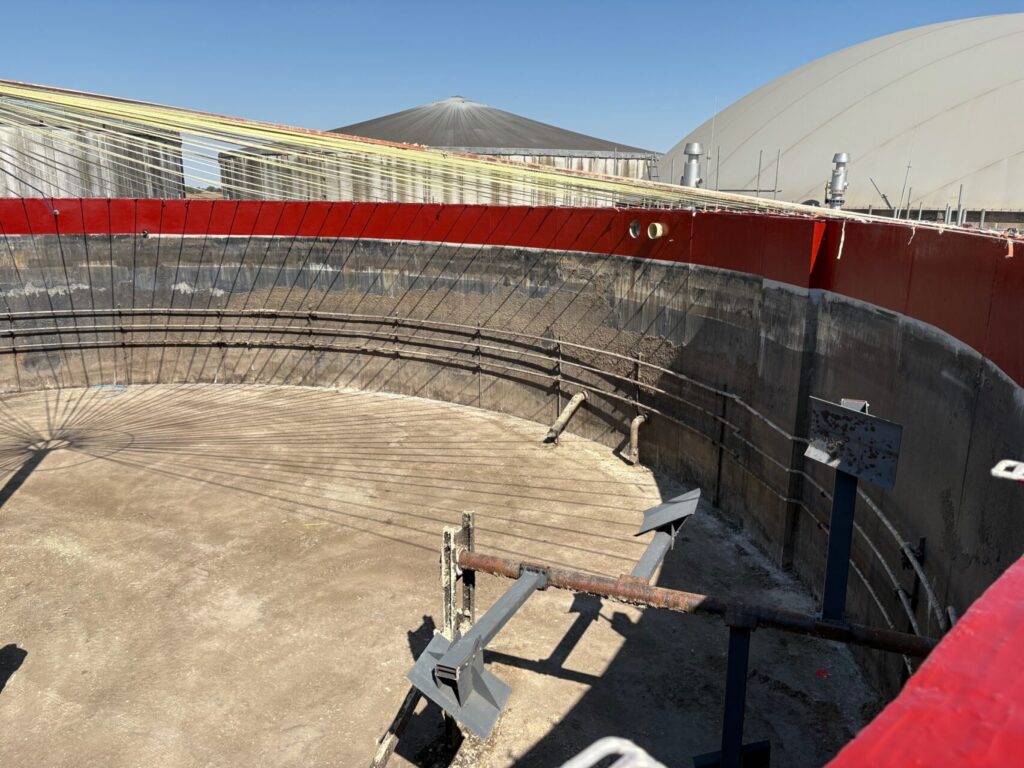
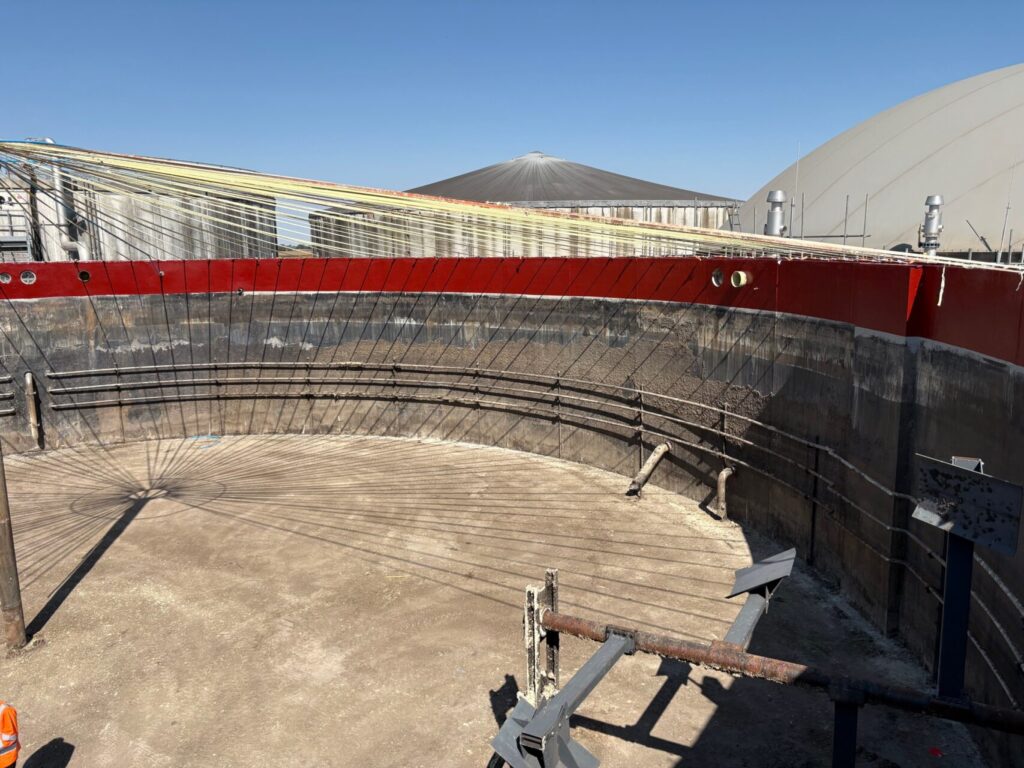
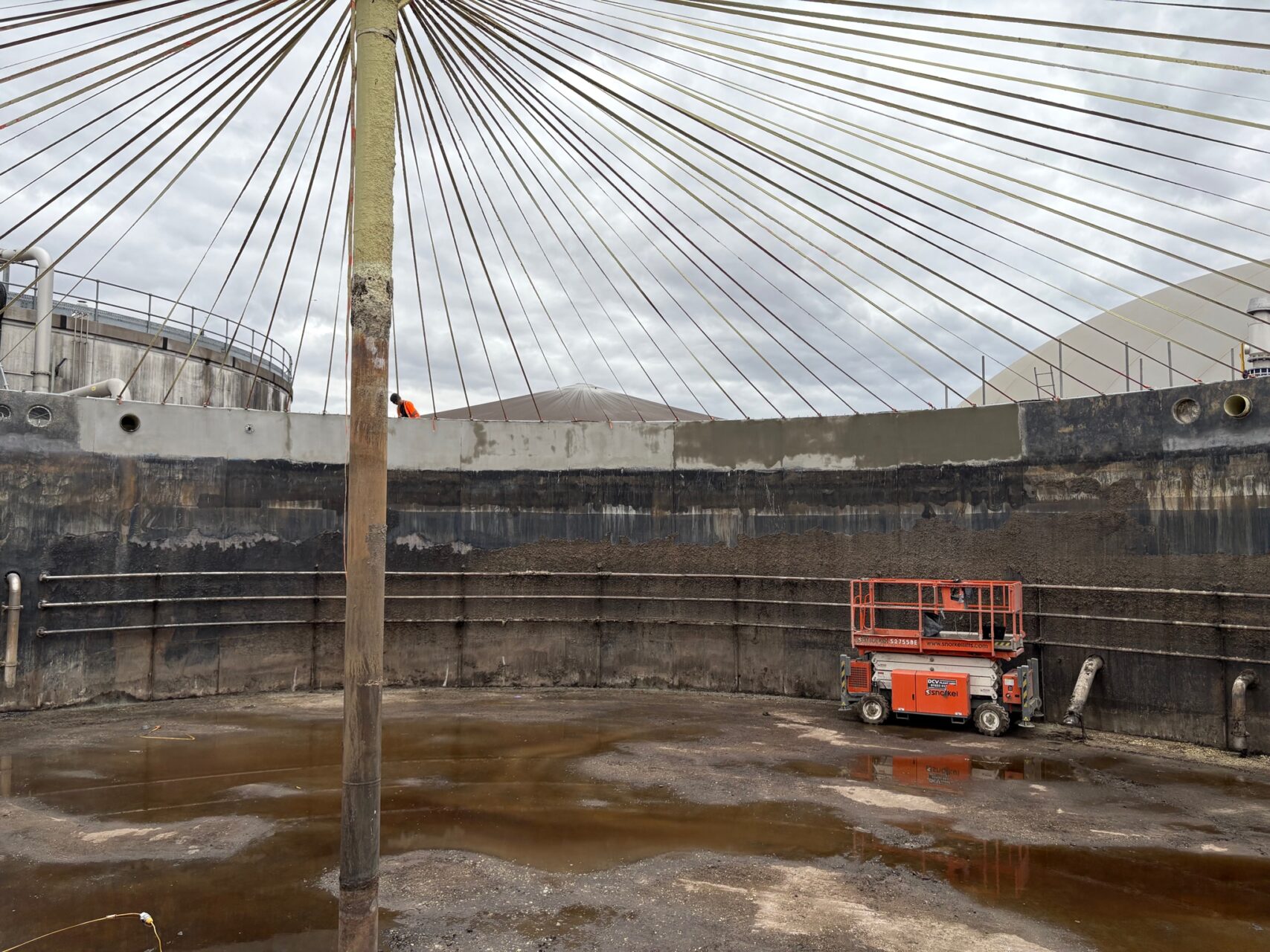
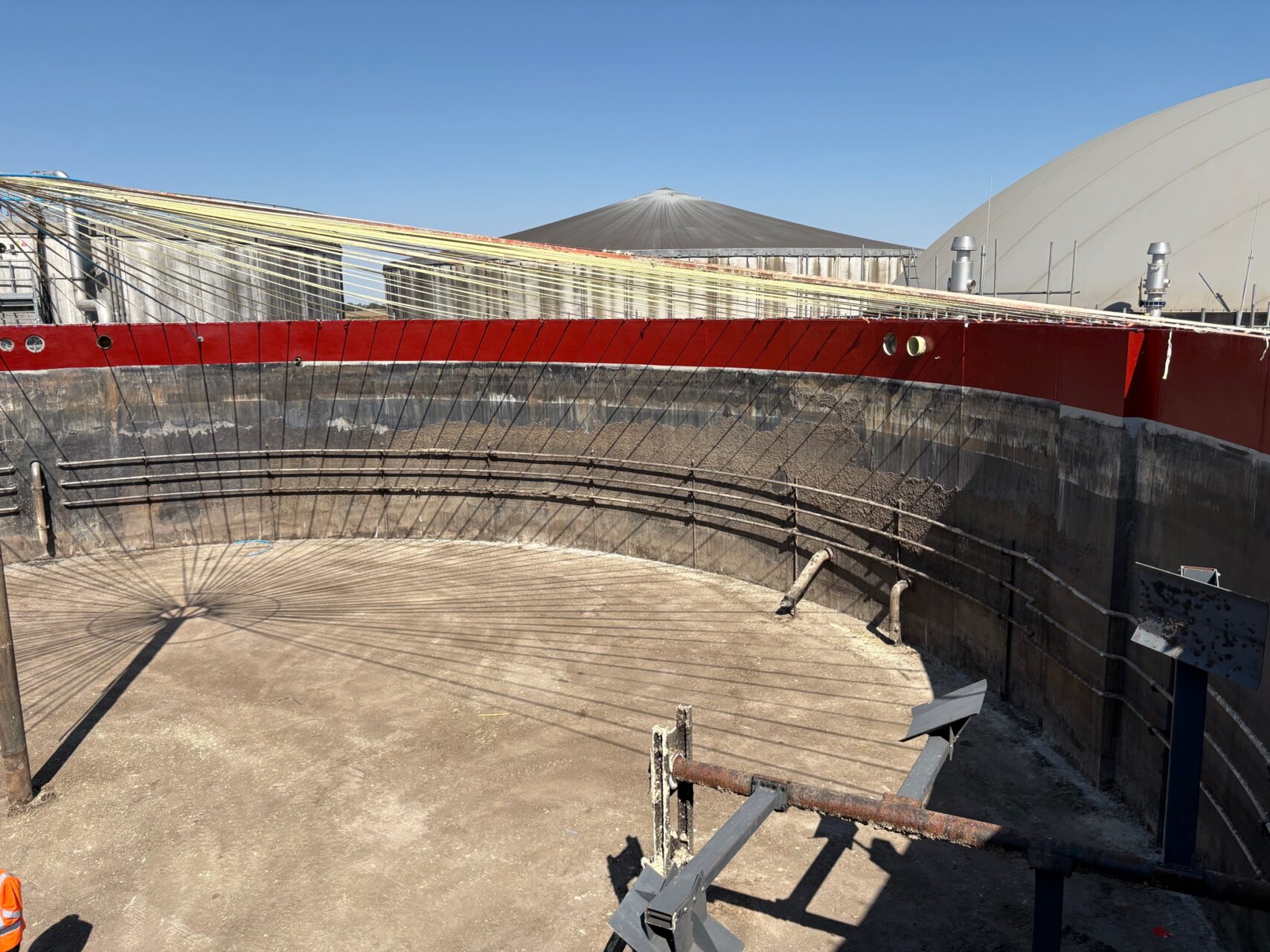
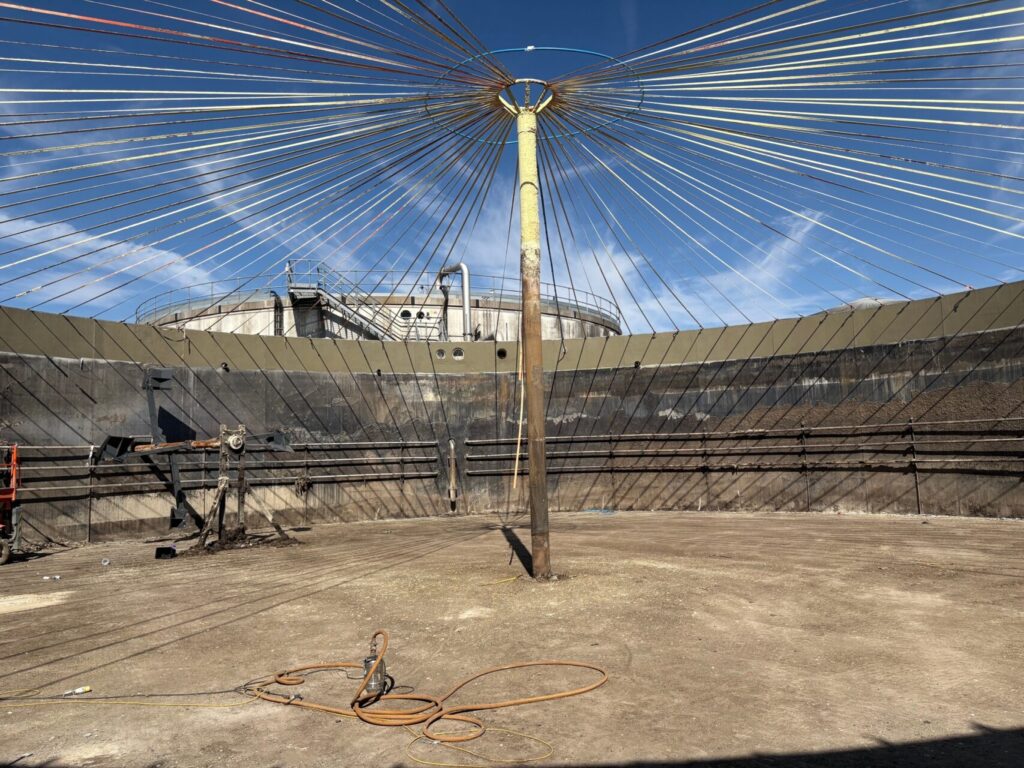
Our client, an operator of anaerobic digestion plants, had drained and cleaned a 28m diameter concrete post digester at an AD plant in South Lincolnshire, with the roof membrane removed from its central mast and support straps. With the tank empty, the concrete in the gas space could be inspected.
Post Digester Gas Space Lining, South Lincolnshire
THE PROBLEM
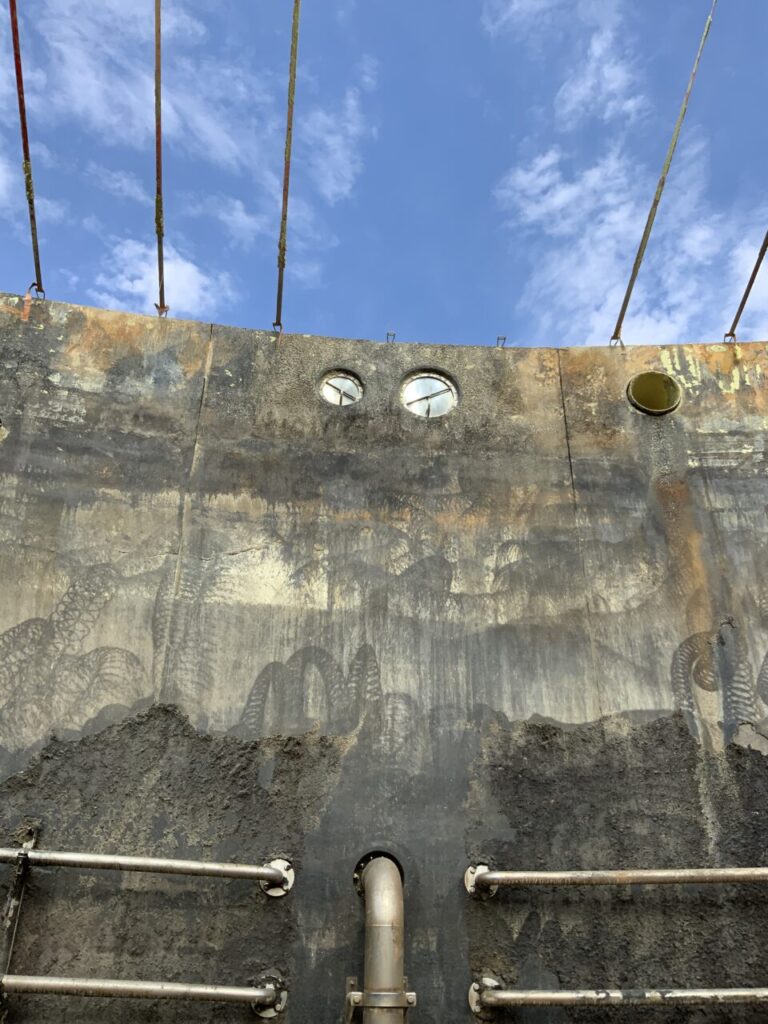


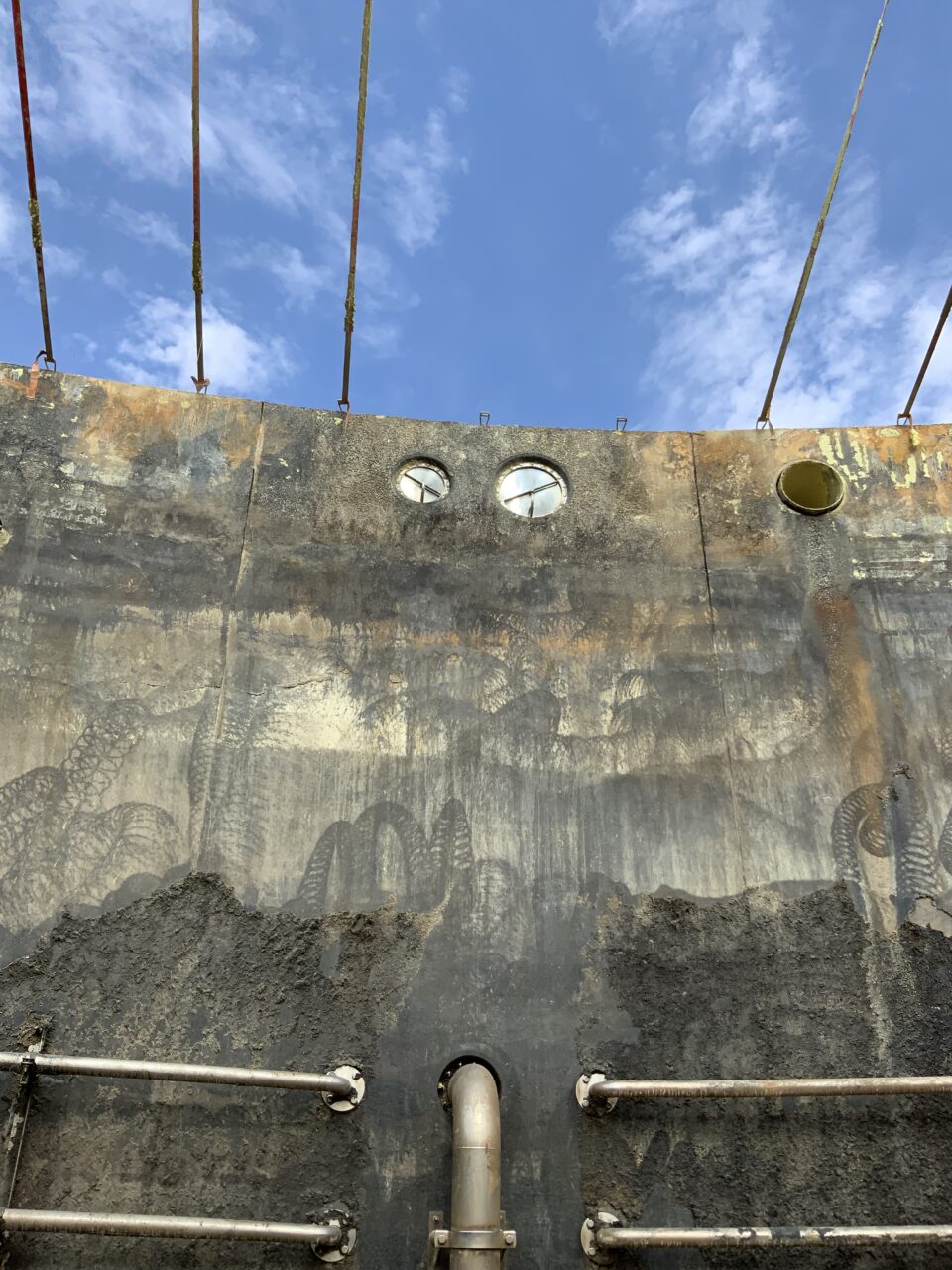
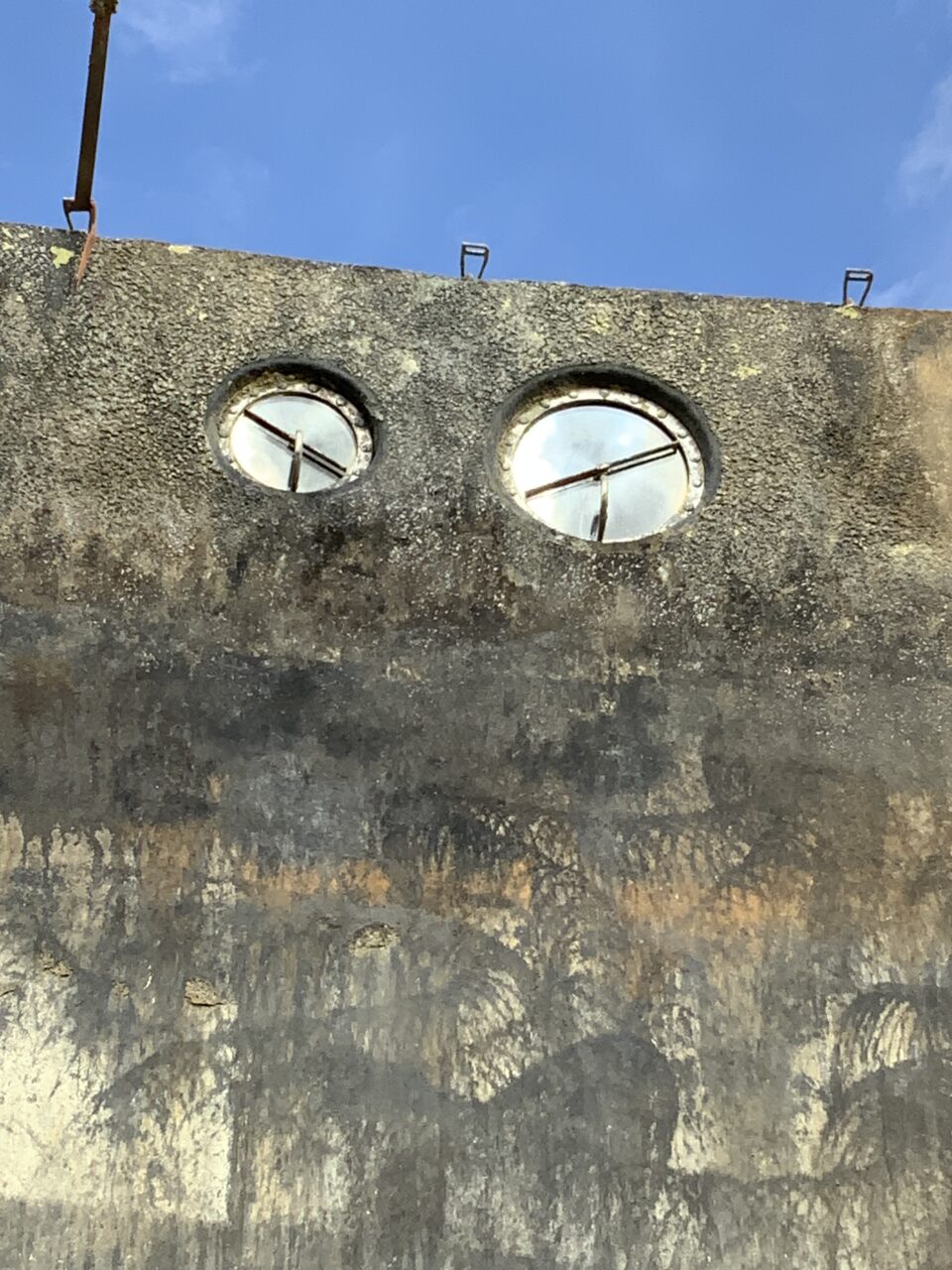
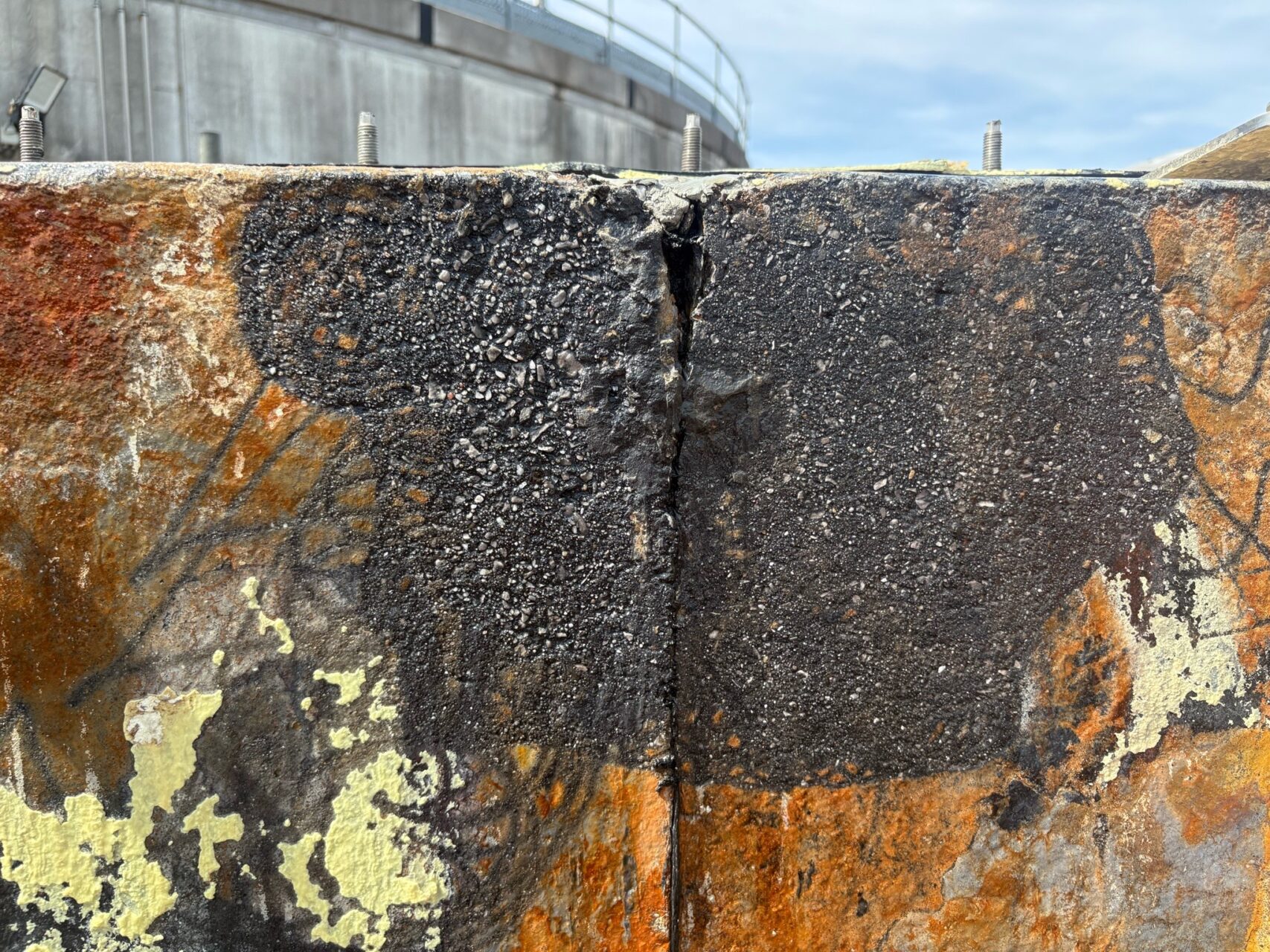
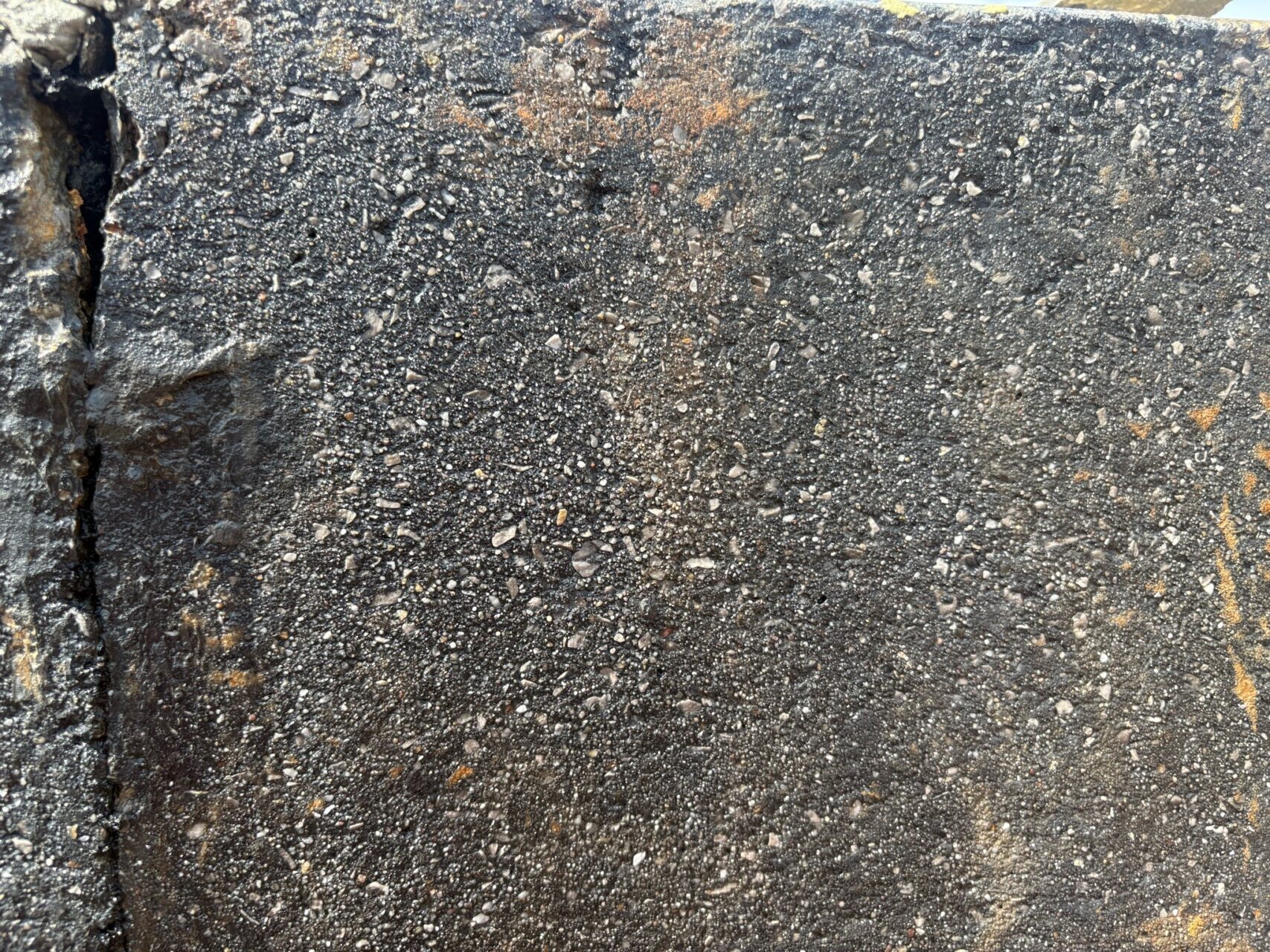
The gas space, the band of wall above the digestate line, was exhibiting degradation. The surface of the concrete had been lost around the top of the wall and the wall head, leaving exposed aggregate, and yellow sulphur deposits had formed across the concrete along with heavy staining around the sight glasses and wall penetrations.

Hydrogen sulphide in the gas space of a digester is converted by bacteria on the concrete surface into biogenic sulphuric acid, which steadily attacks the cement binder. Left unprotected, the surface loss would continue to progress into the structure. Our client required a long term protective coating solution to protect this asset for many years to come, carried out within the window while the tank was out of service.
THE SOLUTION
Initially all concrete surfaces to be coated were prepared by high pressure water jetting at 10,000psi, as recommended by leading manufacturers such as Sika. Unlike low pressure washing, this removes degraded and contaminated concrete while leaving sound material in place.
We proposed the Sika CR7000 system, a system we have used to refurbish several anaerobic digesters. The main benefit of this system is that it is vapour permeable, so there is no need to wait for the cementitious fairing coat to hydrate before lining, saving up to four days on the overall programme. The lining is also crack bridging and highly chemical resistant, and can be returned to service within 72 hours of completion. More information about our concrete tank lining services can be found here.
All surfaces to be lined were prepared by method of high pressure water jetting at 10,000psi, removing contaminants along with all degraded and eroded concrete back to a sound substrate. Access around the full circumference of the tank was by MEWP.


Once jetting was under way, our project manager reviewed the condition of the wall on site with our client. Where the jetting had not fully removed the surface along the bottom edge of this band, it was dressed back by vacuum controlled diamond grinding to give a clean, consistent termination line. Correct preparation is essential to the relining process, as a tank lining system is only as good as the substrate it is adhered to.

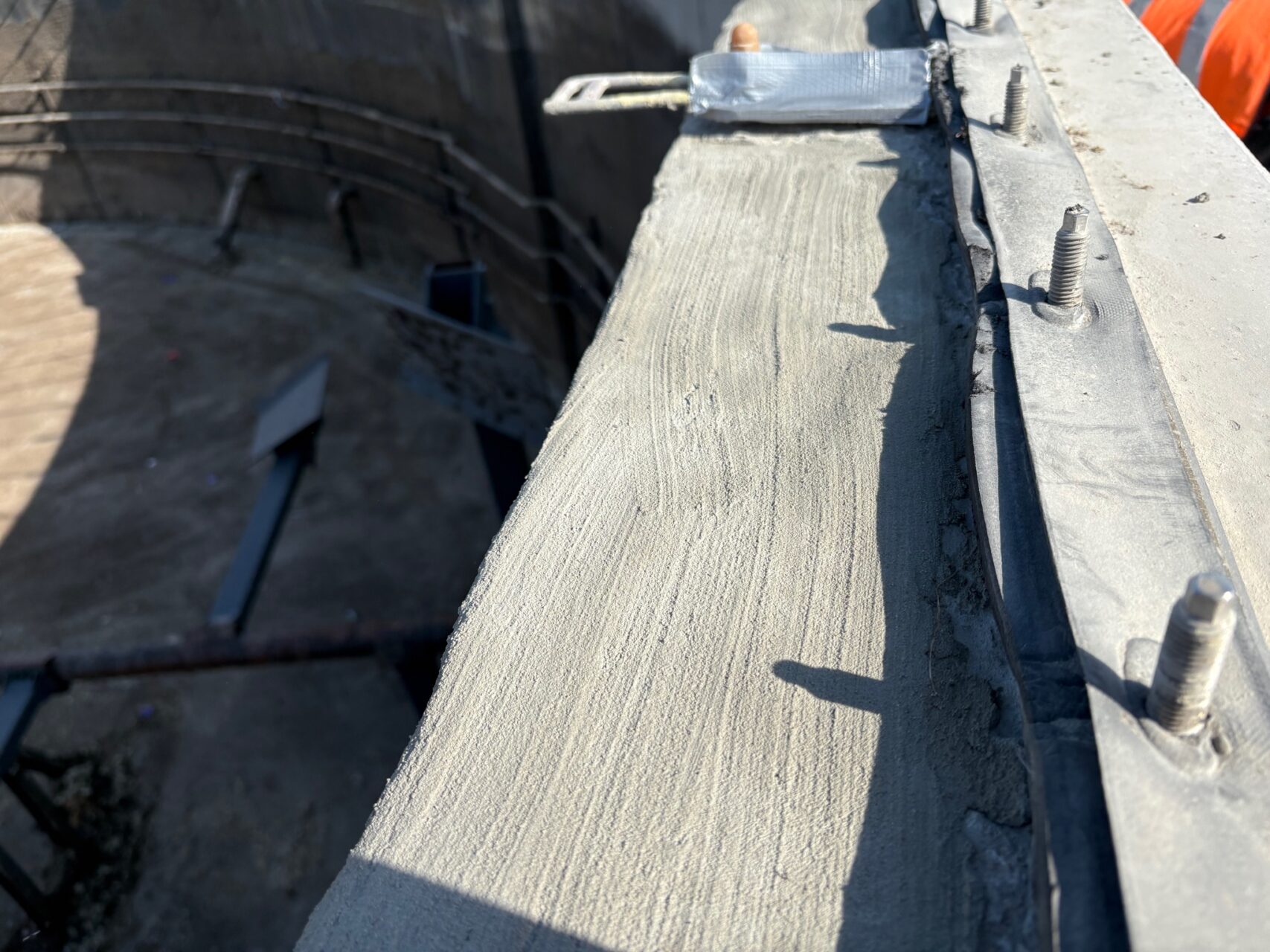
Following the loss of surface, the concrete was too open and uneven to coat directly, as an exposed aggregate surface would lead to pin holes in the lining. A cementitious fairing coat of SikaTop 586 Seal was therefore applied by trowel, restoring the profile of the concrete and providing a mechanical profile for the tank lining to adhere to. The fairing coat was carefully detailed around the sight glasses, pipe penetrations and roof strap fixings, and finished across the wall head up to the roof membrane clamping strip.

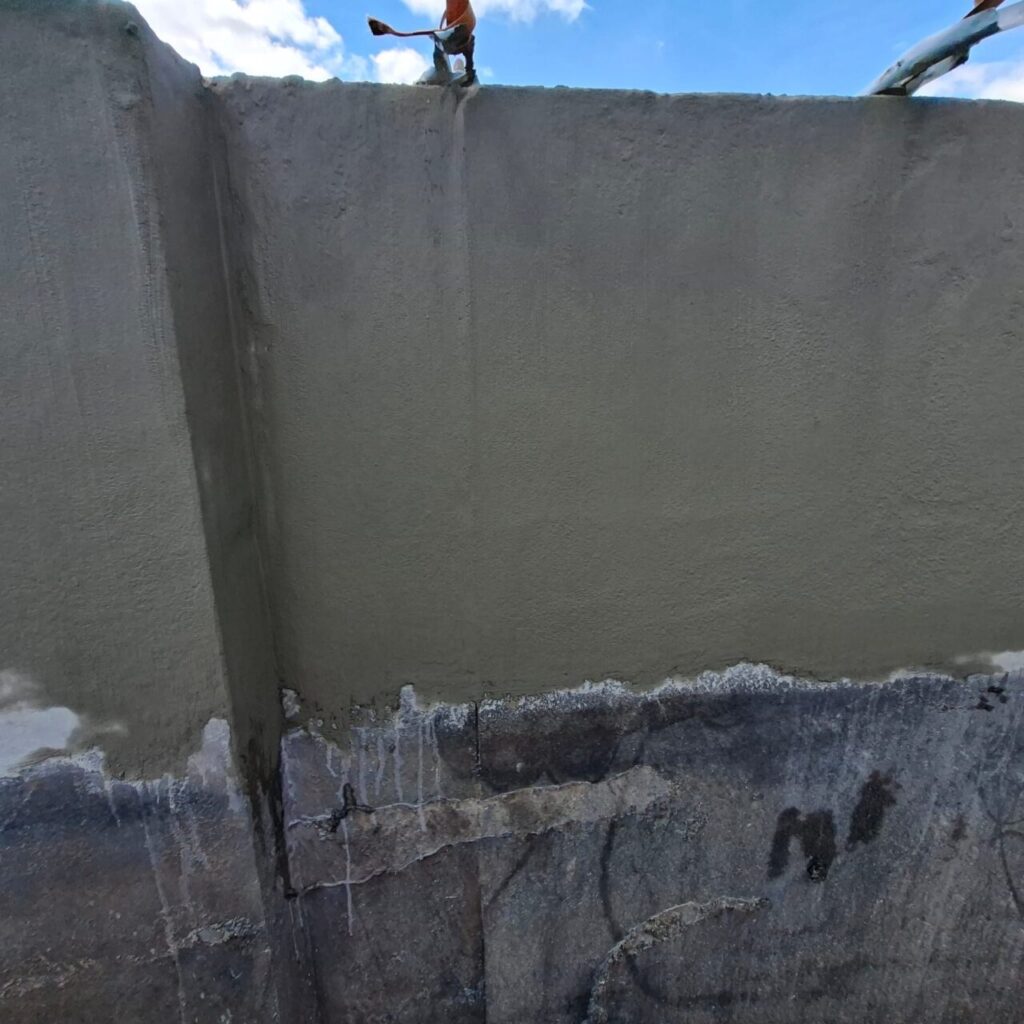
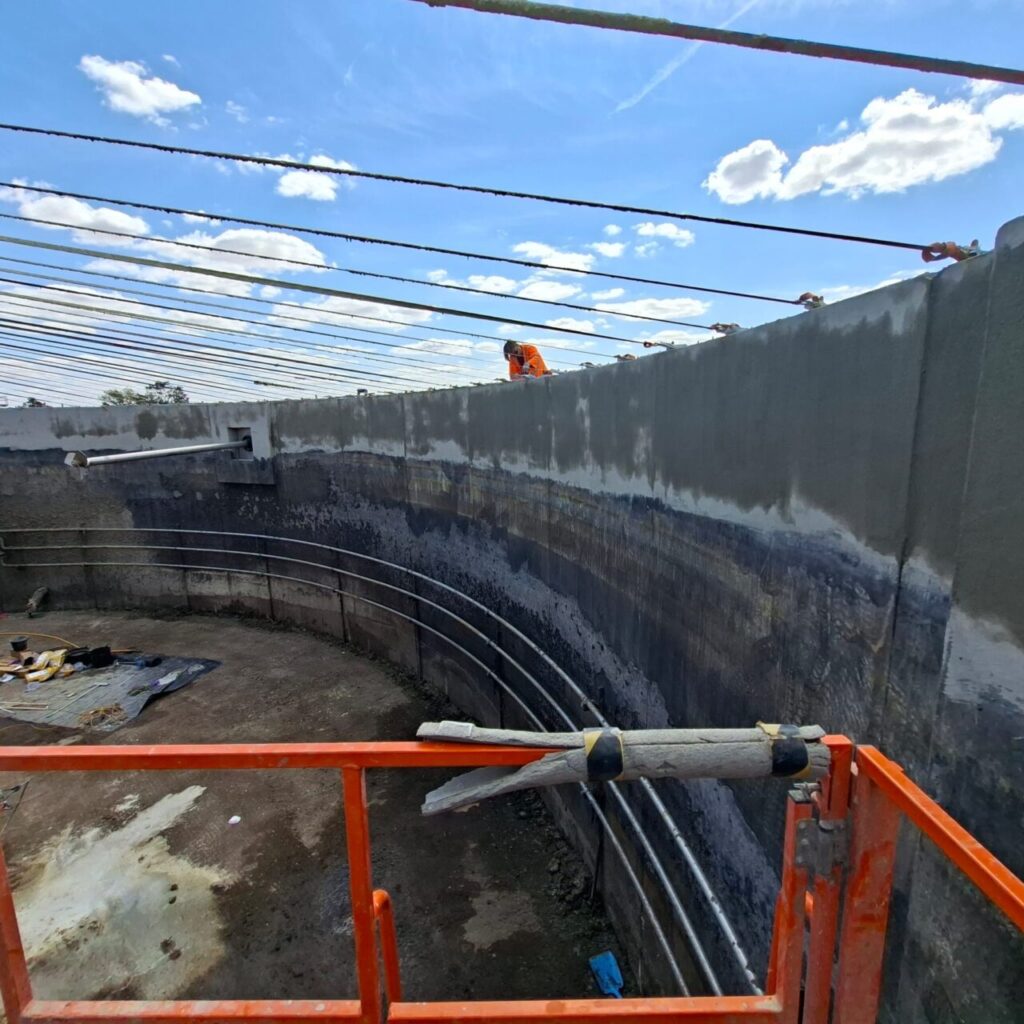


Once cured, the fairing coat was de-nibbed. On inspection, our supervisor was not satisfied with the adhesion of the fairing coat in an area along the top of the wall, so this was flash ground back and the fairing coat reapplied before any lining was applied.
Prior to and during the tank lining application the climatic conditions were tested and recorded using a PosiTector DPM to ensure conformance with the manufacturer’s recommendations. On the day of priming the surface temperature was at least 12.4°C above the dew point, comfortably above the minimum requirement of 3°C.
The prepared surfaces were primed with Sikagard P770 applied by brush and roller, so that the lining could be fully worked in and cut in around the roof straps, fixings and penetrations.
The first coat of Sikagard M790 was then applied by brush and roller in grey.

The second coat of Sikagard M790 was applied in a contrasting red. Applying the two coats in contrasting colours allows each coat to be seen to be complete, giving a total tank lining thickness of a nominal 800 microns. The lining was taken over the wall head and up to the roof membrane clamping strip, so that the full gas space is protected once the roof membrane is reinstated.

The works were completed within the quoted programme of 7 – 10 days. Daily site diaries recorded no safety concerns throughout the works, and the site was left clean and tidy at the end of every shift.
Our client now has the gas space of their post digester repaired and protected with a seamless, crack bridging Sika tank lining, backed by our 10 year warranty, ready for the roof membrane to be reinstated. Following completion, our client instructed us to carry out the same works to the second post digester on site.