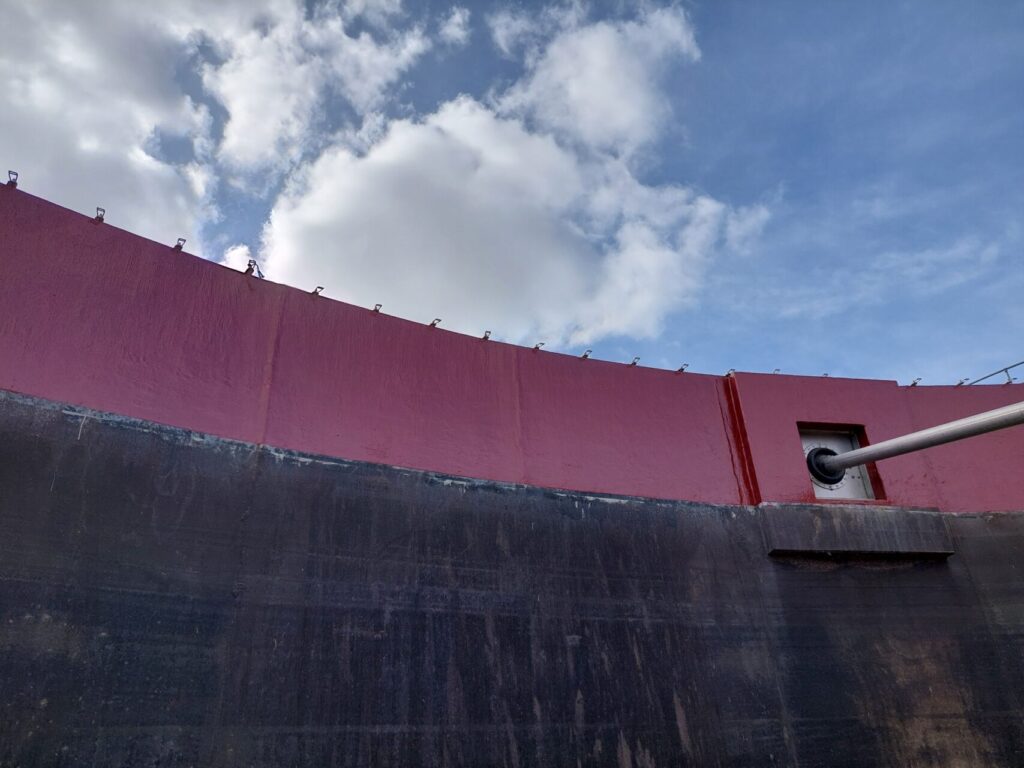
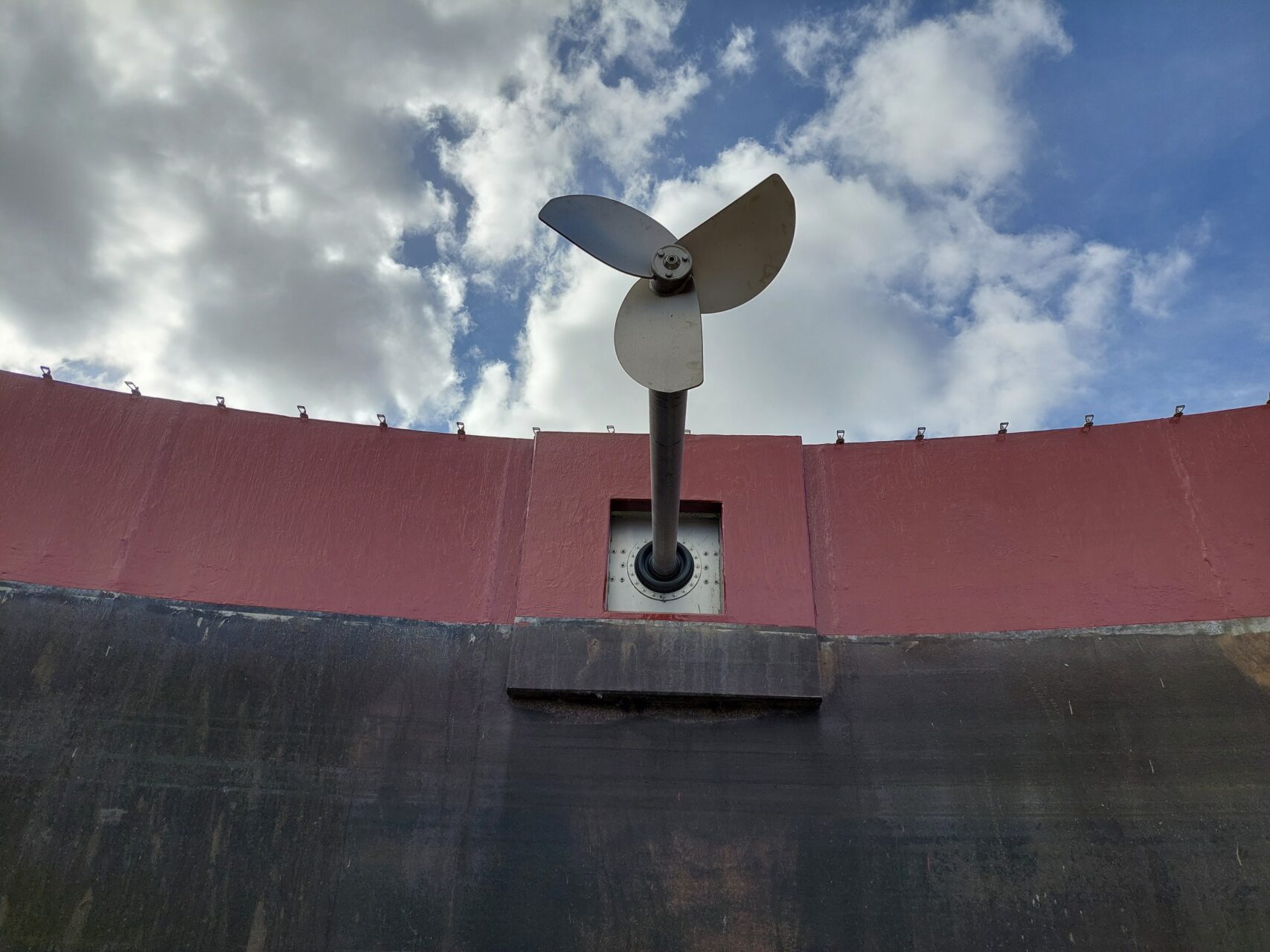
Our client, a specialist provider of services to the anaerobic digestion industry, was carrying out planned roof maintenance on a 28m diameter concrete post digester at an AD plant in North Lincolnshire. With the roof membrane removed, the digester drained and de-gritted, it was the ideal opportunity to inspect the internals of the tank.
Post Digester Crown Repair and Lining, Lincolnshire
THE PROBLEM
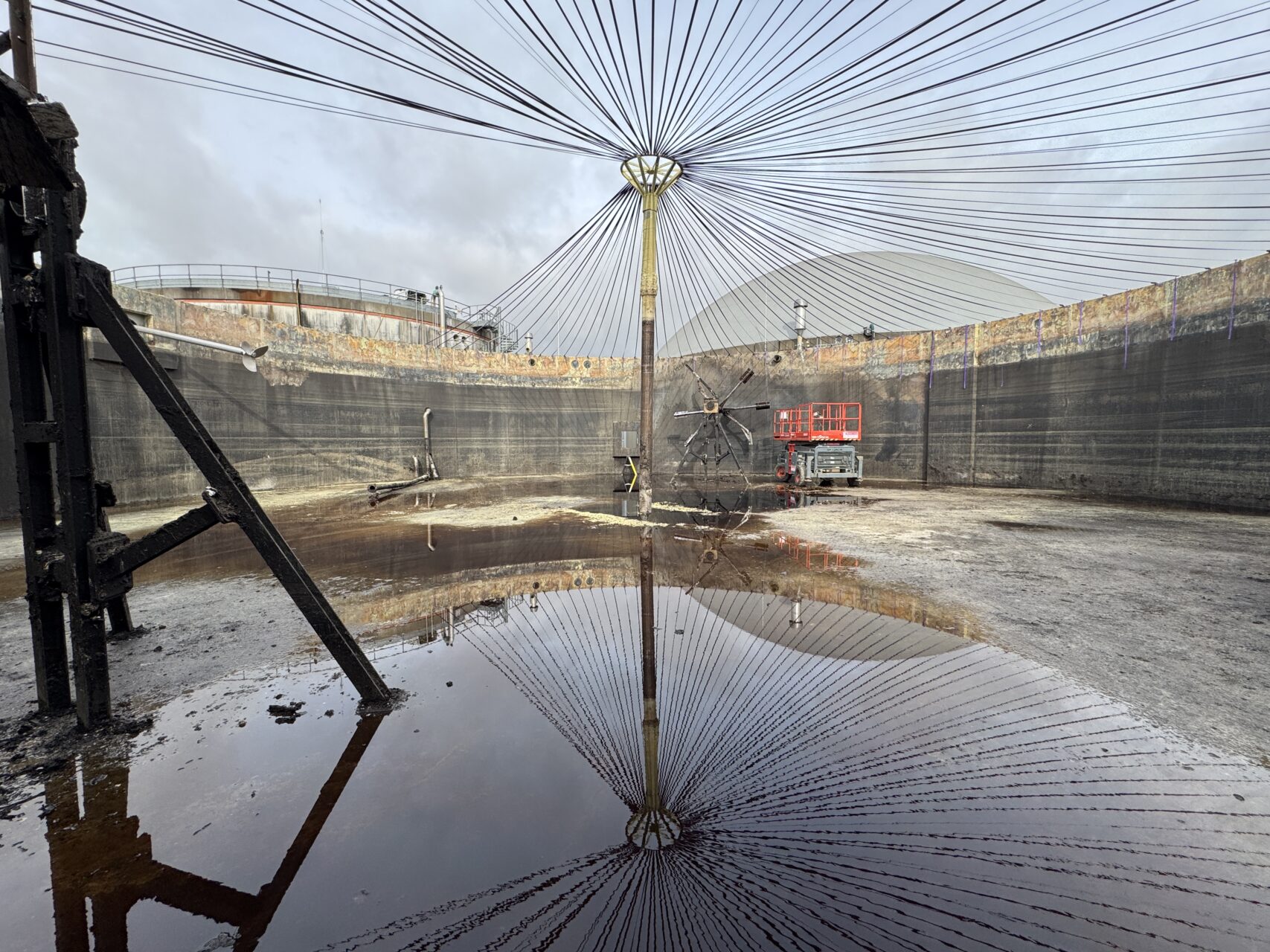
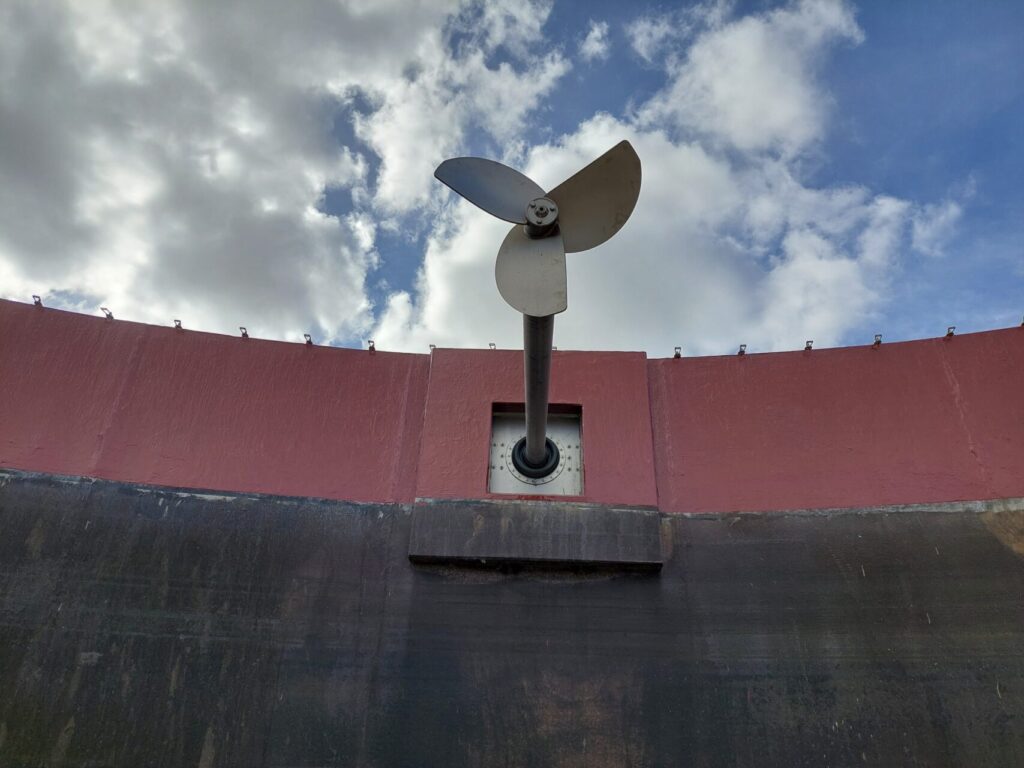
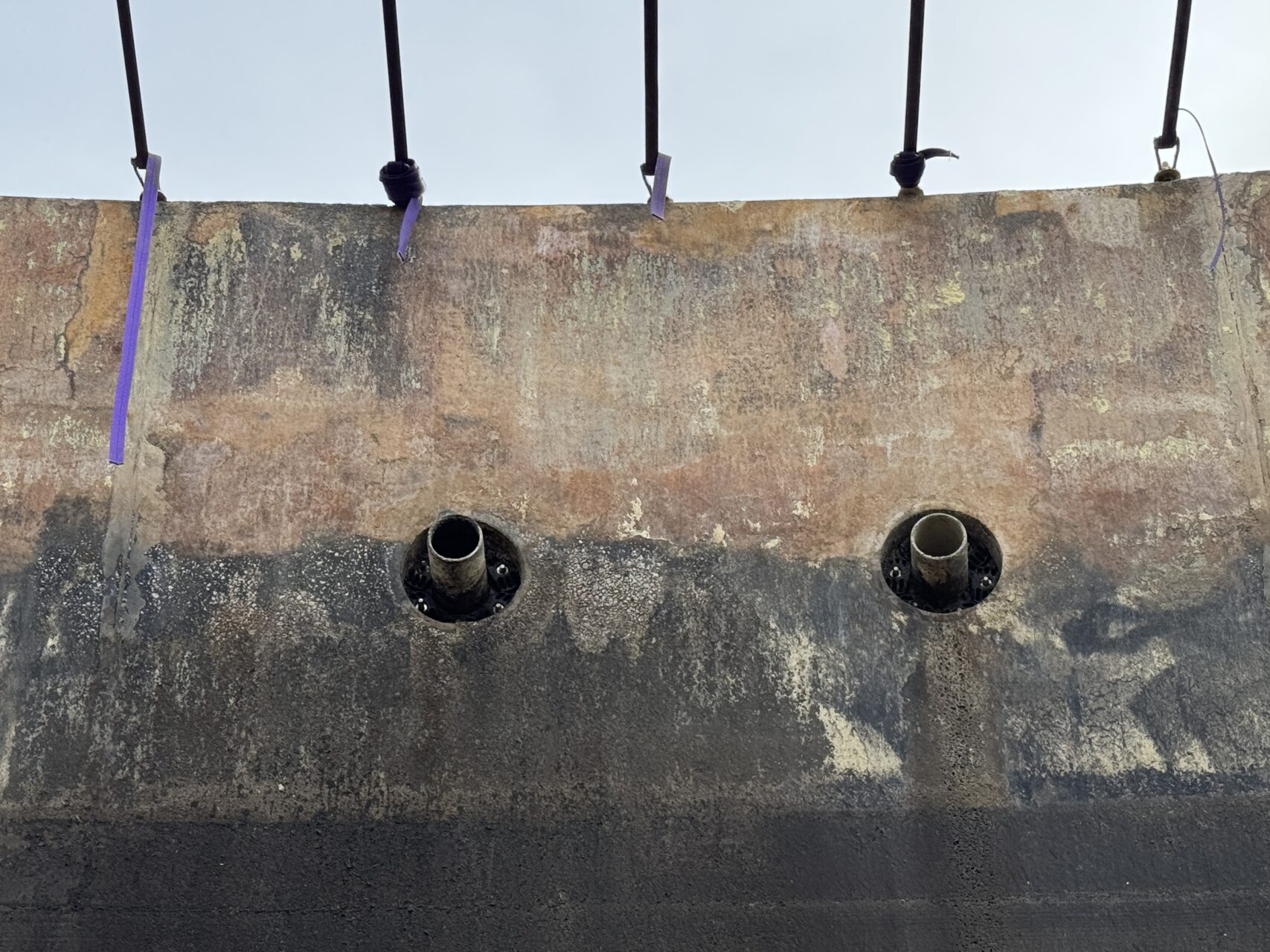
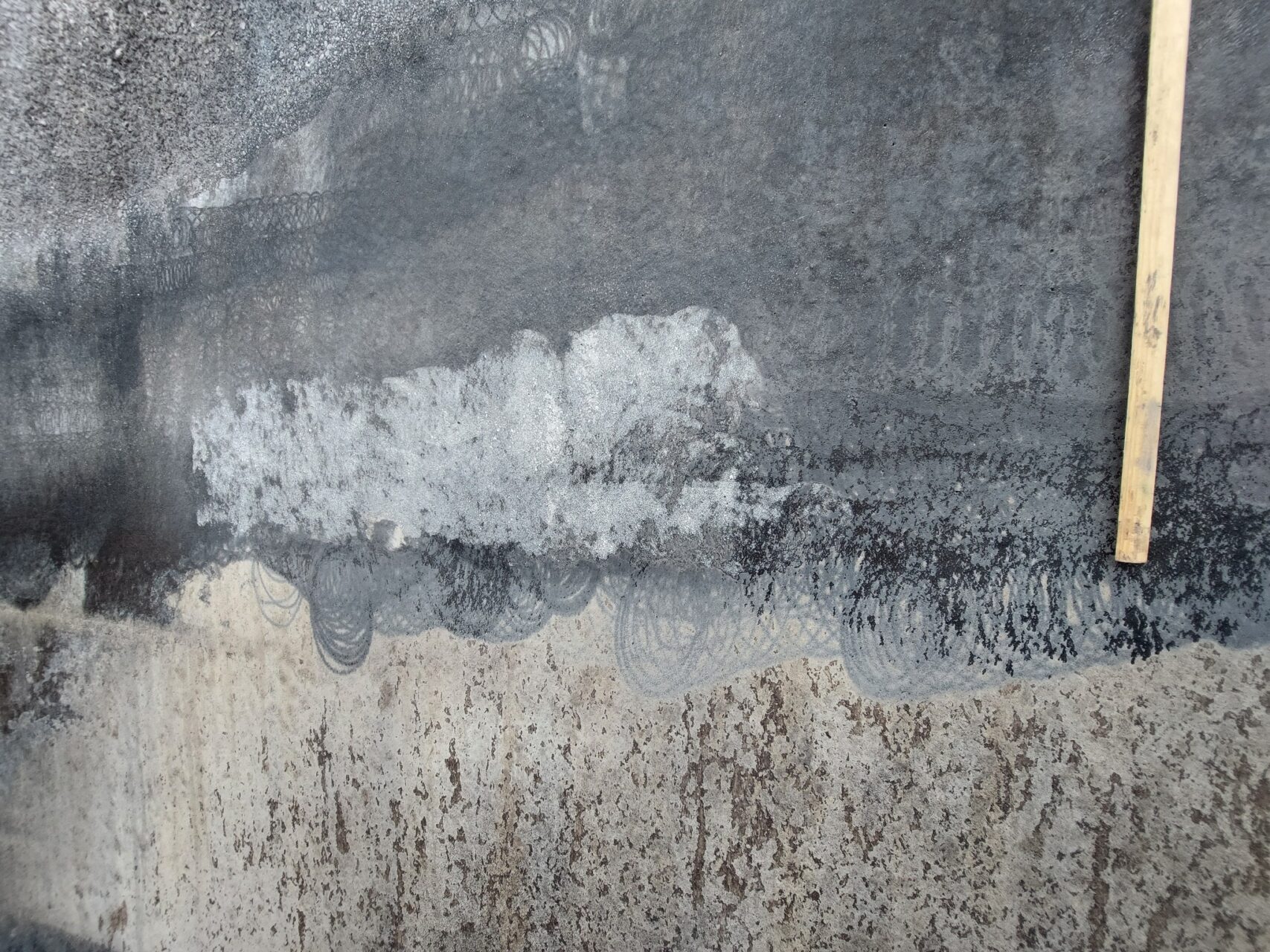
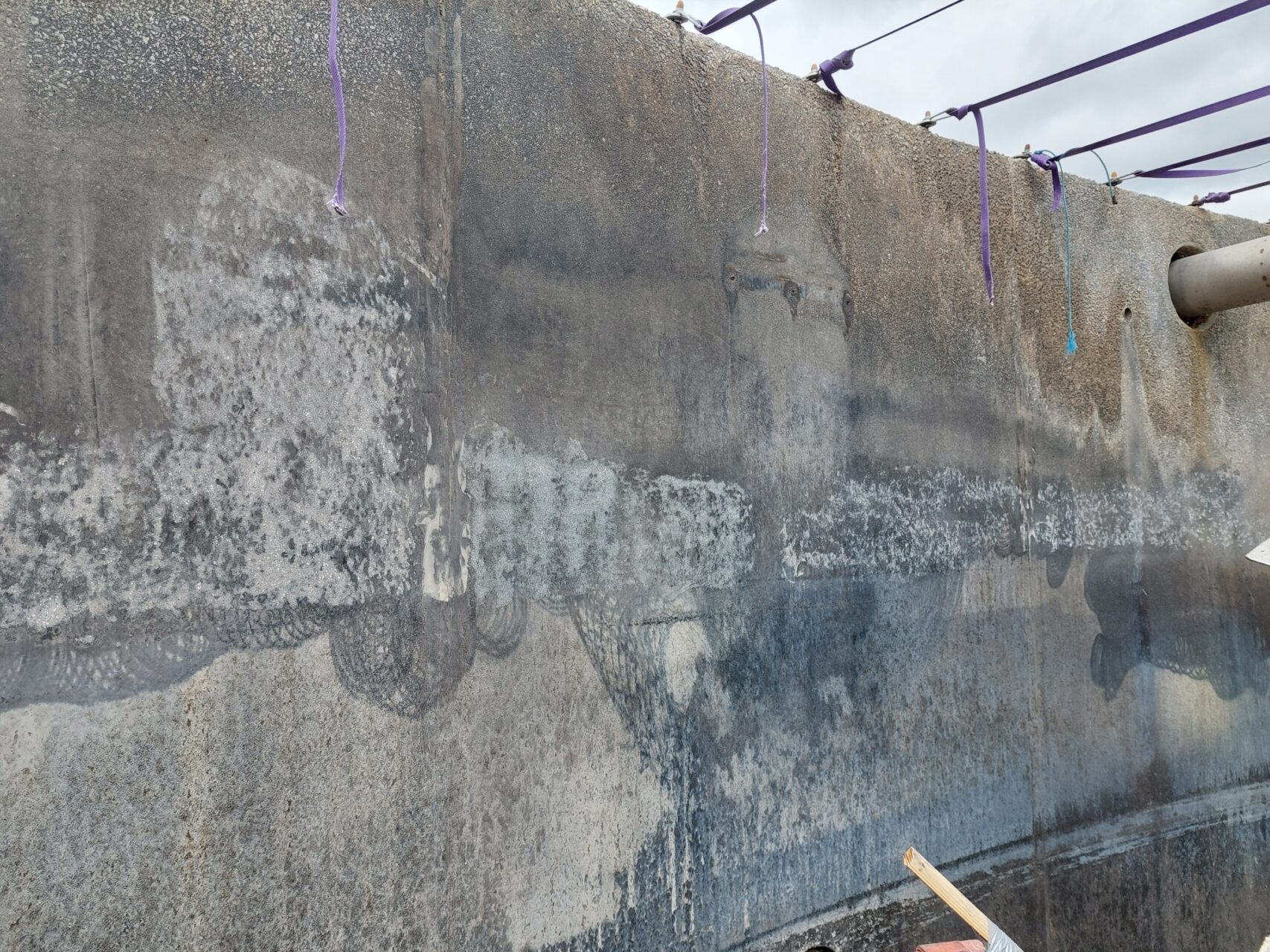
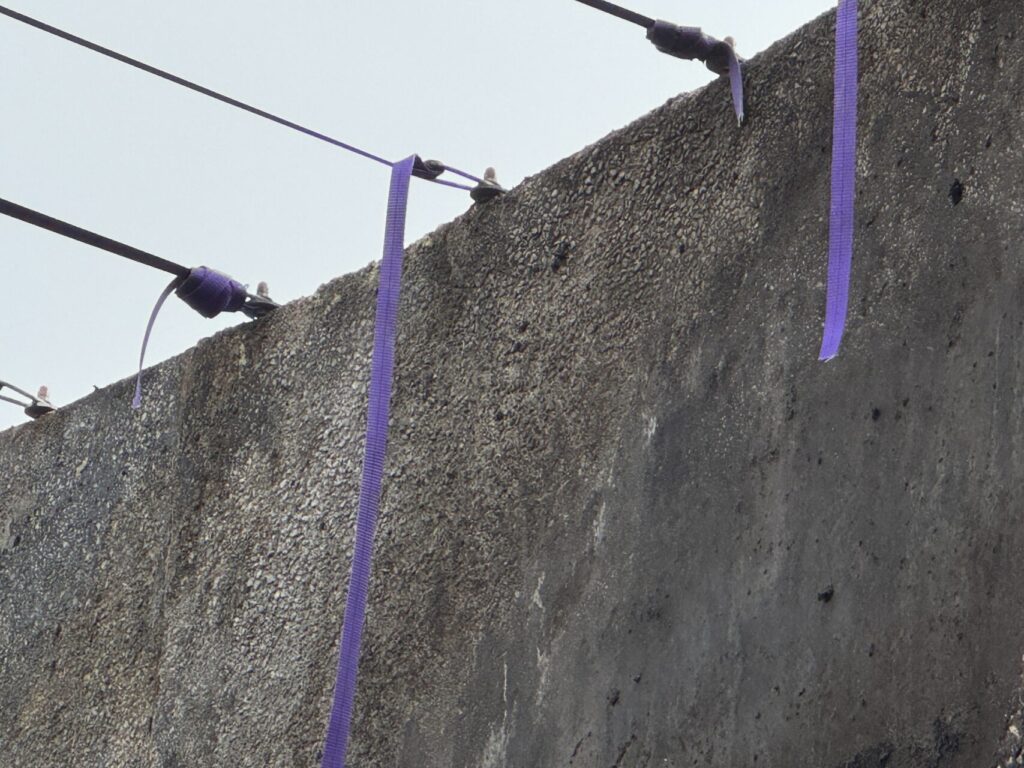
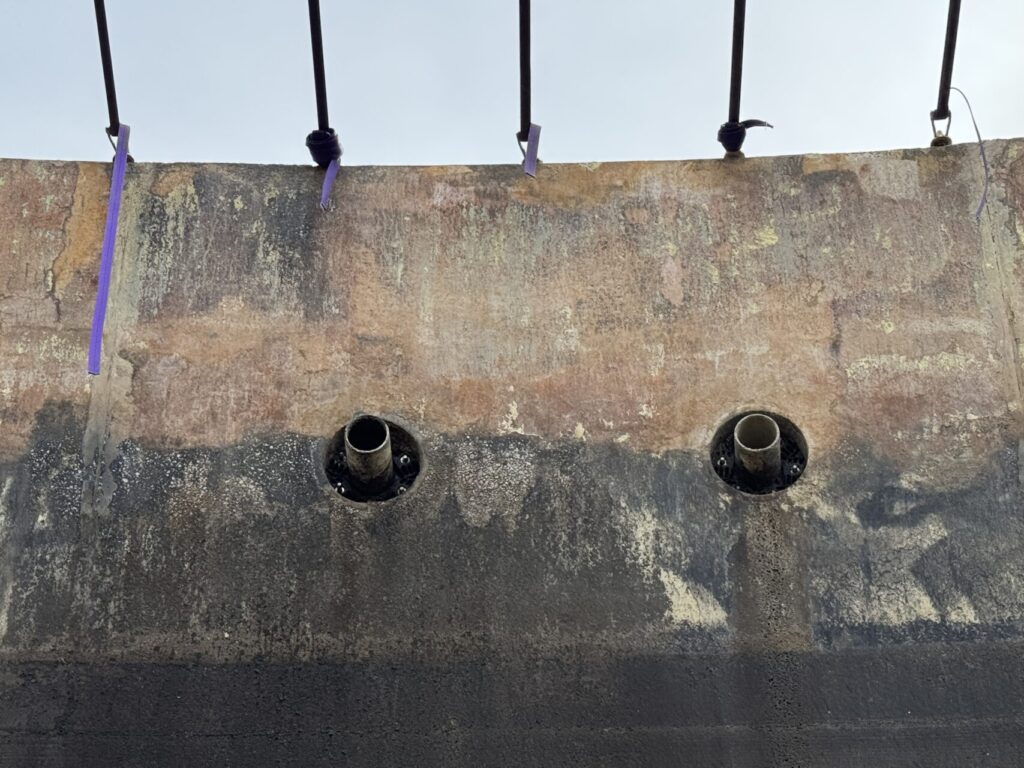
The gas space of the digester had been in service unlined for around nine years and, on the whole, the concrete was in relatively good condition. In localised areas, however, degradation and loss of the concrete surface had started to occur. This was focused around the two paddle mixers, where agitation of the digestate releases increased levels of hydrogen sulphide, and around the crown of the tank. Around the mixers there was approximately 5 – 10mm of surface loss with exposed aggregate, and the crown was consistently degraded around the full circumference with approximately 5mm of surface loss.

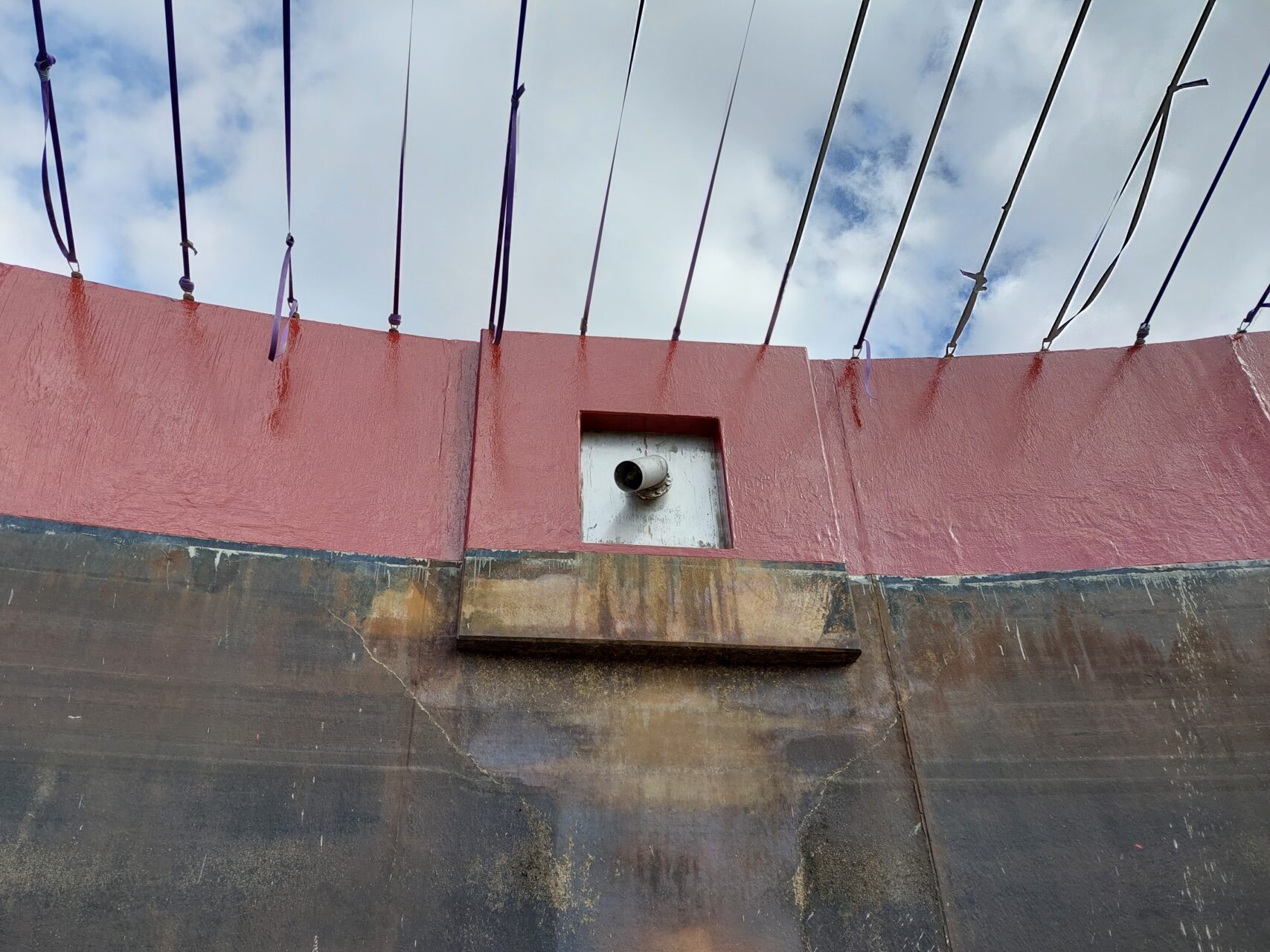
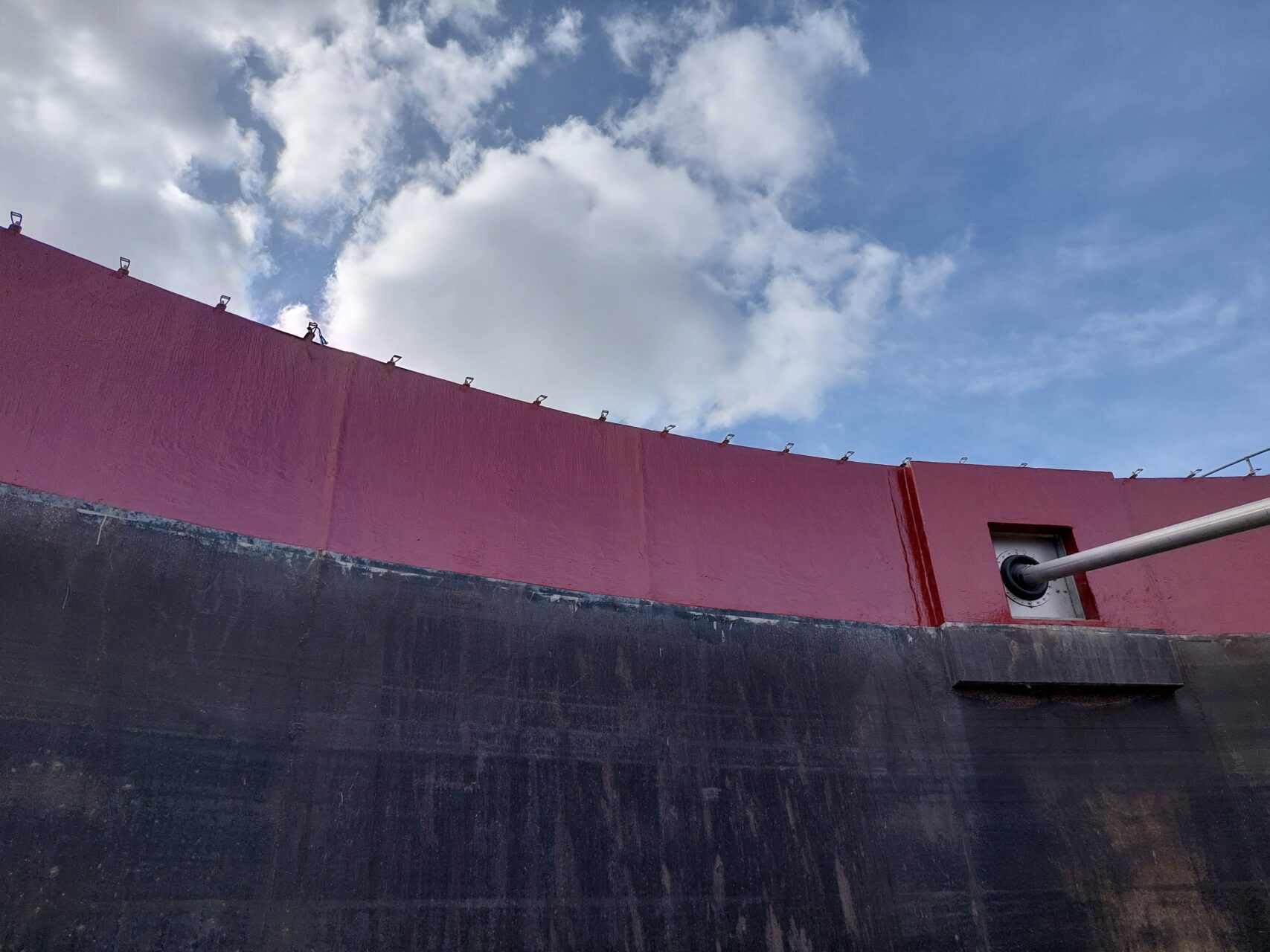
Hydrogen sulphide in the gas space of a digester is converted by bacteria on the concrete surface into sulphuric acid, which steadily attacks the cement binder. Left untreated, the surface loss would continue to progress into the structure. We put forward two approaches: repair and protect the degraded areas only, or repair the degraded areas and protect the entire band of the gas space. Although it is not uncommon to see post digesters left unprotected, we have repaired several tanks of this type, and best practice for protecting such a valuable asset is for the gas space to be lined with a suitable coating. The plant operator chose the full option, lining the crown and the top 1.5m of the wall, taking the lining down past the liquid line.
THE SOLUTION
We proposed the Sika CR7000 system, a system we have used to refurbish several anaerobic digesters. The benefit this system offers over other materials is that the primer has no limitation on the moisture content of the substrate, so once the cementitious repairs are in place no extended hydration period is required and the works can continue without delay. The lining is also crack bridging, which is always preferable when coating concrete structures in aggressive environments. More information about our concrete tank lining services can be found here (https://www.corrolesseastern.co.uk/services/concrete-tank-lining/).
All surfaces within the approximately 150m² area to be lined were prepared by method of high pressure water jetting at 10,000psi, removing contaminants along with all degraded and eroded concrete back to a sound substrate. Access around the full circumference of the tank was by MEWP.
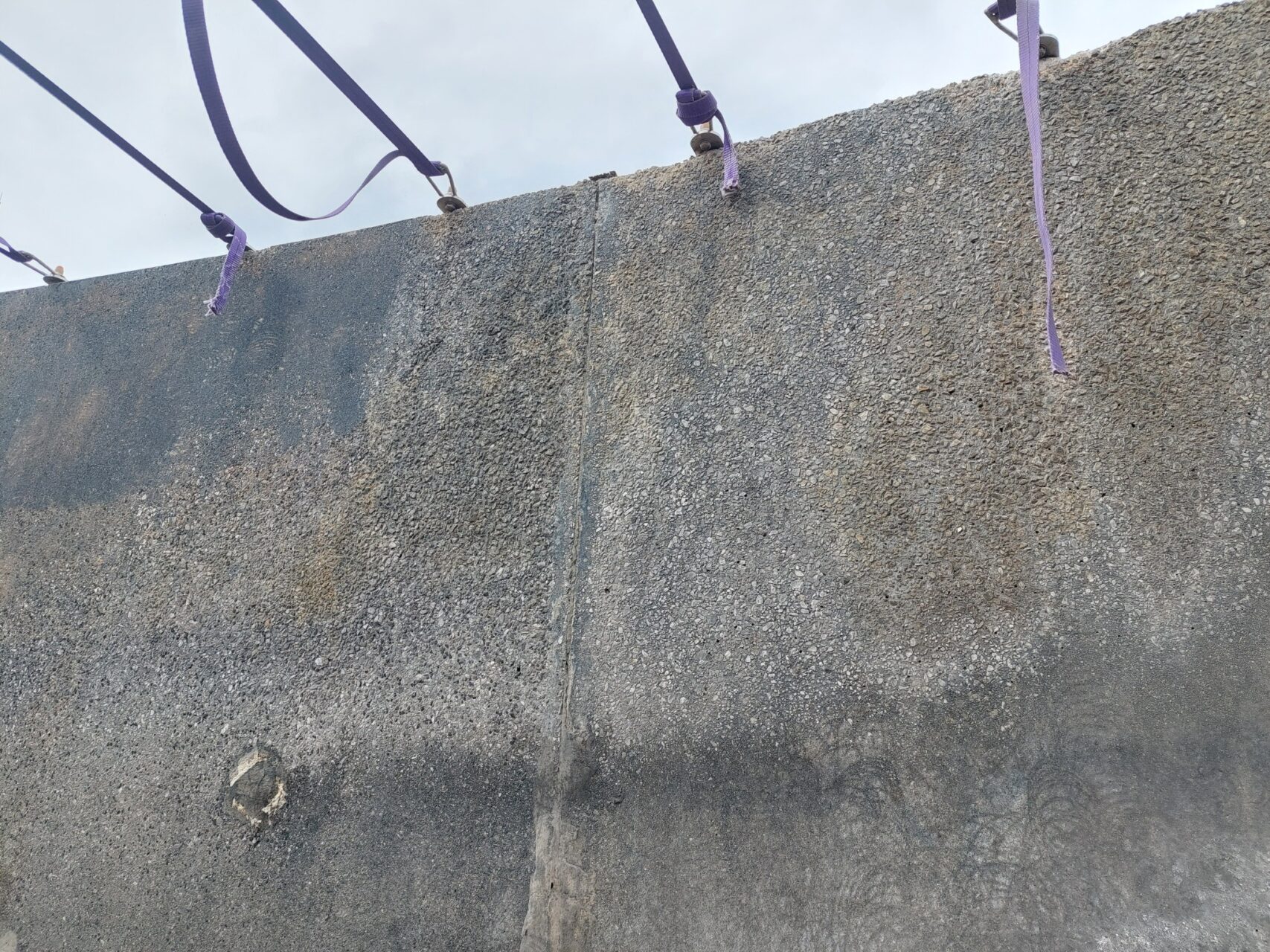
The surface was then further prepared by method of vacuum controlled diamond grinding, removing any remaining laitance and contamination and providing a mechanical key. Correct preparation is essential to the relining process, as a tank lining system is only as good as the substrate it is adhered to.


Following the loss of surface, the concrete was too open and uneven to coat directly, as an exposed aggregate surface would lead to pin holes in the lining. A cementitious fairing coat of SikaTop 586 Seal was therefore applied by trowel to an average thickness of 3mm and sponge float finished, restoring the profile of the concrete and providing a mechanical profile for the tank lining to adhere to. The fairing coat was carefully detailed around the pipe penetrations, mixer housings and fixings in the wall.

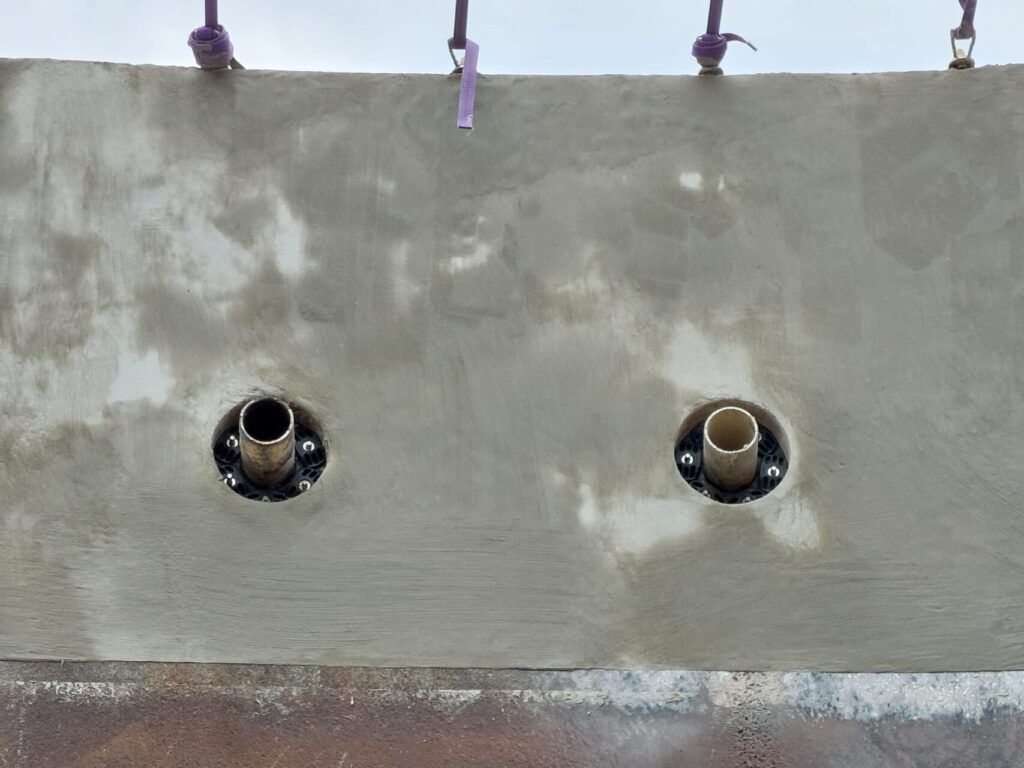
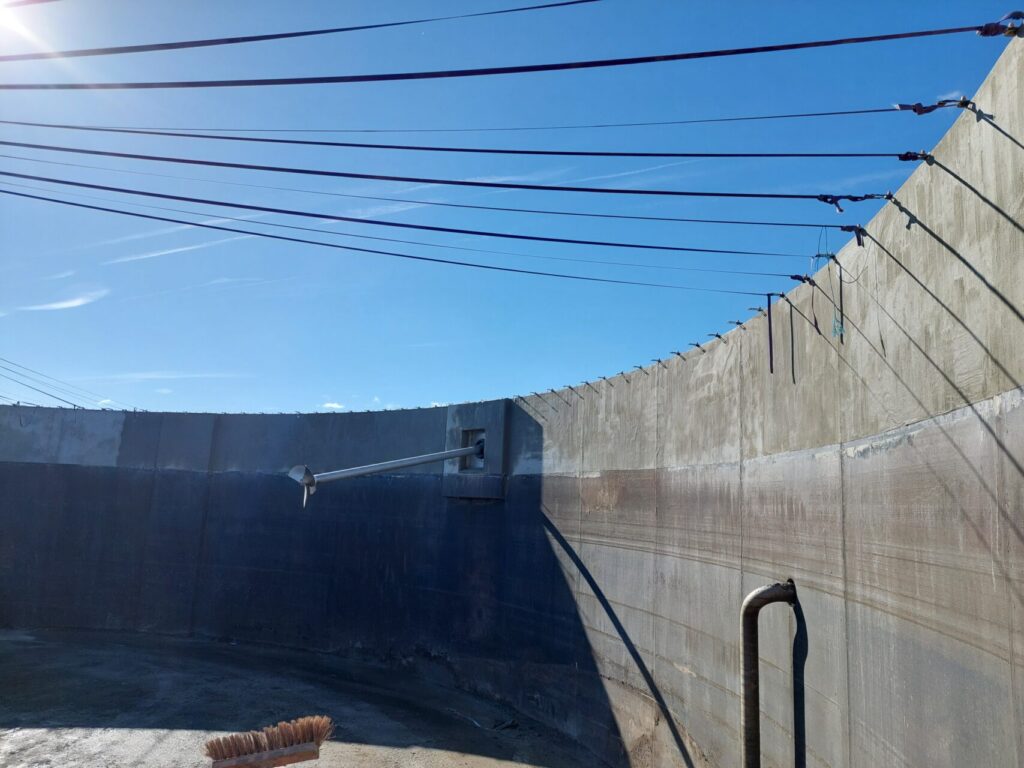
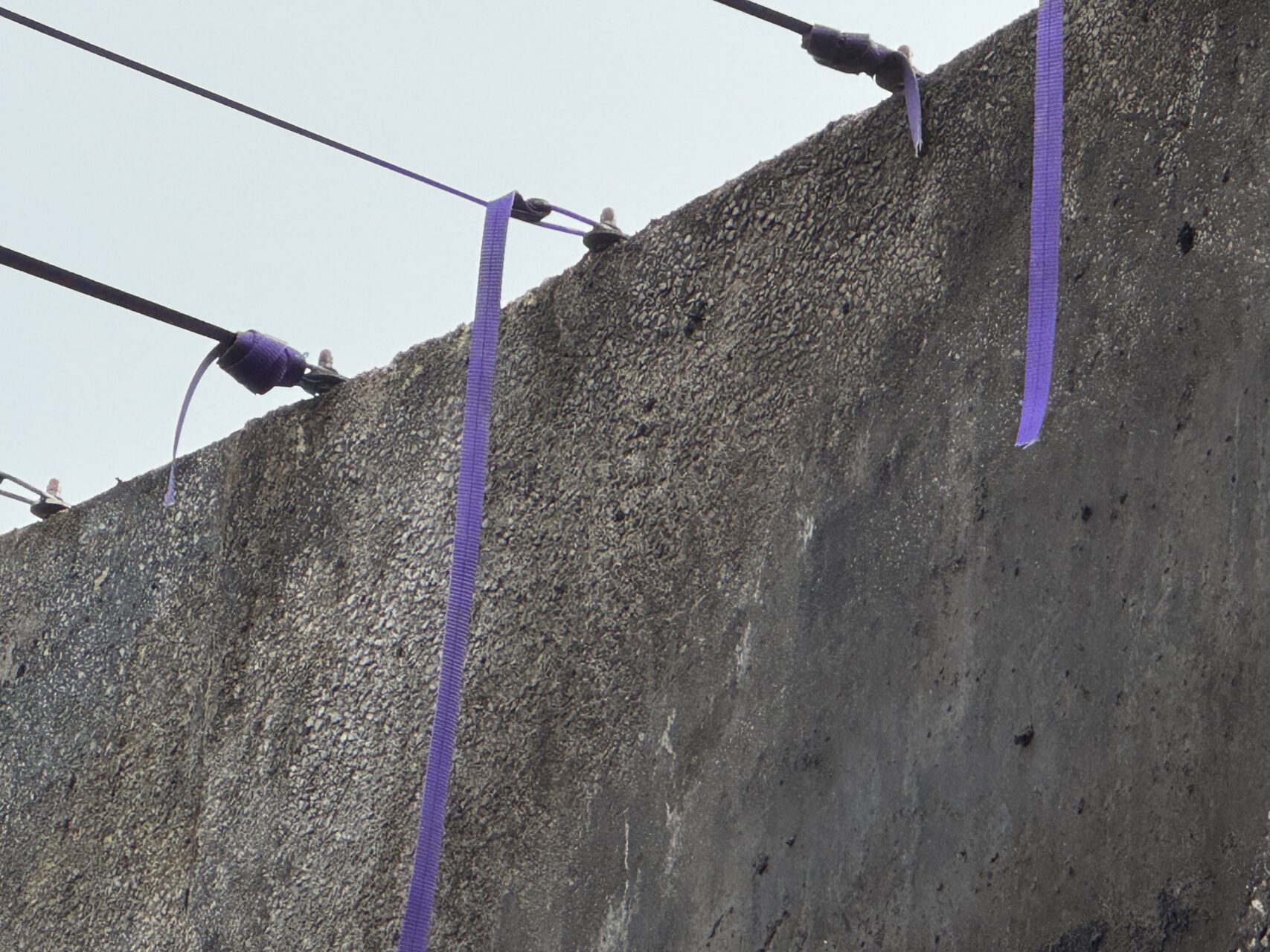
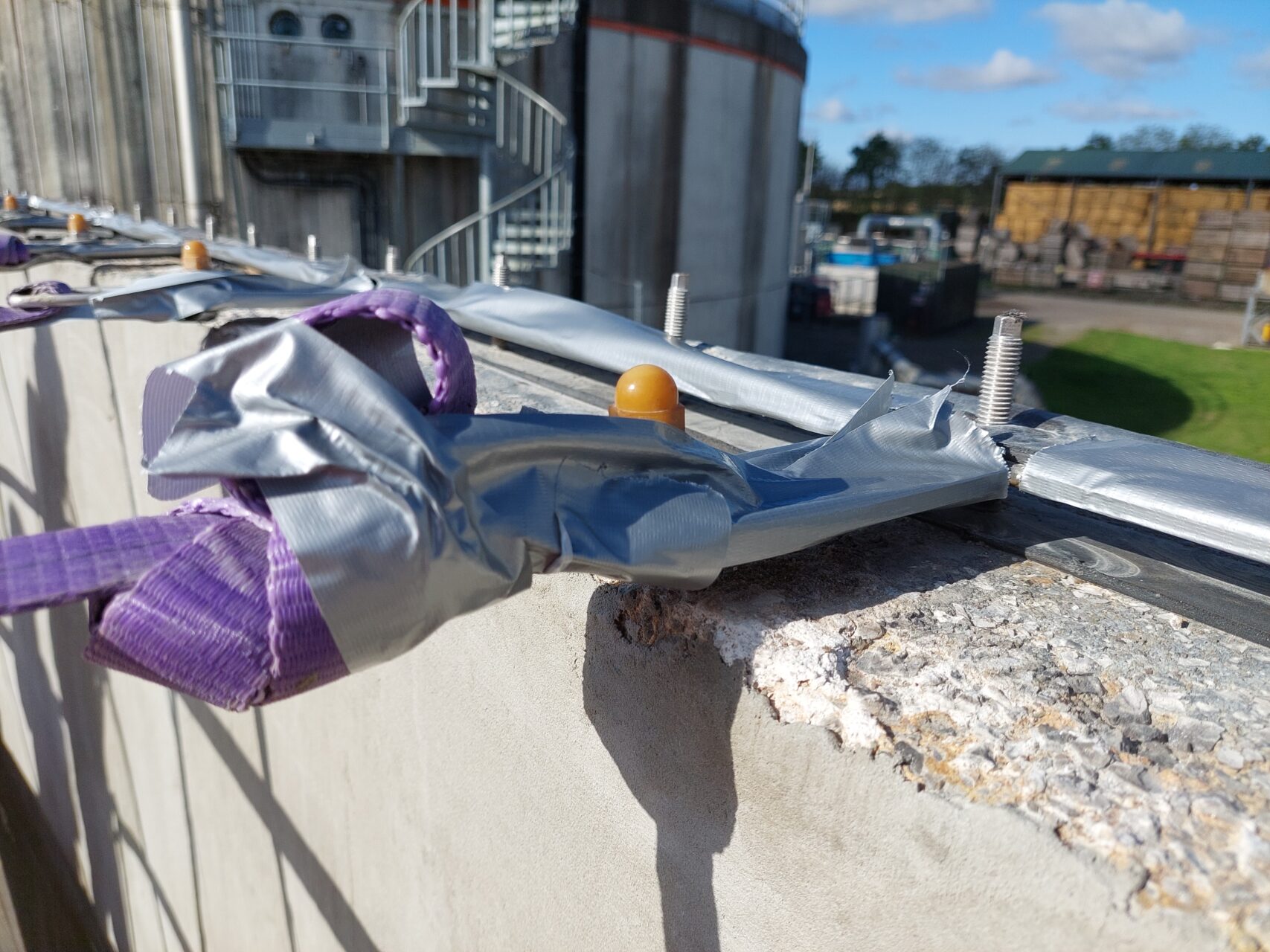
Once the fairing coat had cured, the surface was de-nibbed and the top of the wall, roof fixings and strap anchors were masked to give clean termination lines for the new lining.
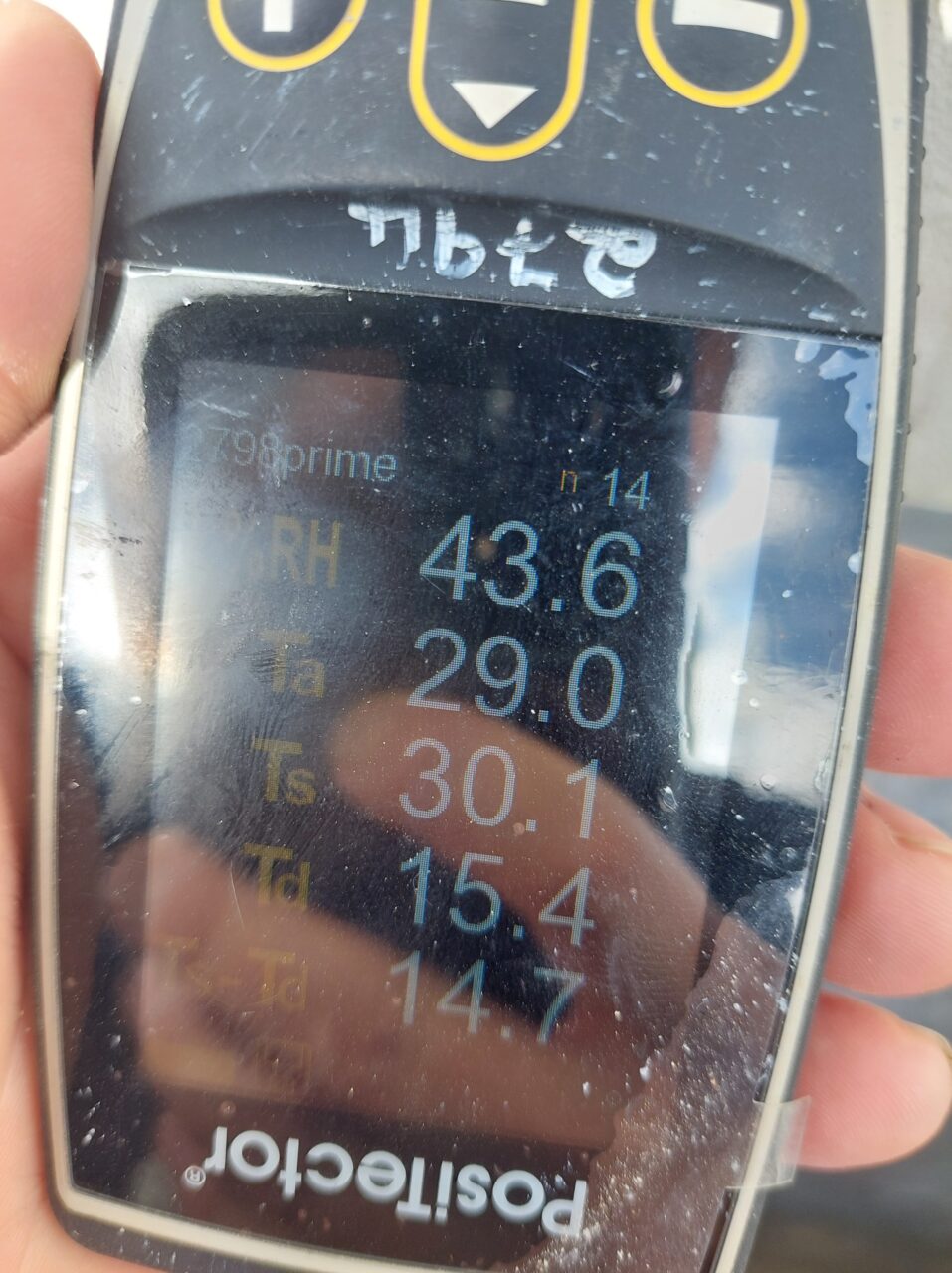
Prior to and during the tank lining application the climatic conditions were tested and recorded using a PosiTector DPM to ensure conformance with the manufacturer’s recommendations. On the day of priming the surface temperature was 14.7°C above the dew point, comfortably above the minimum requirement of 3°C.
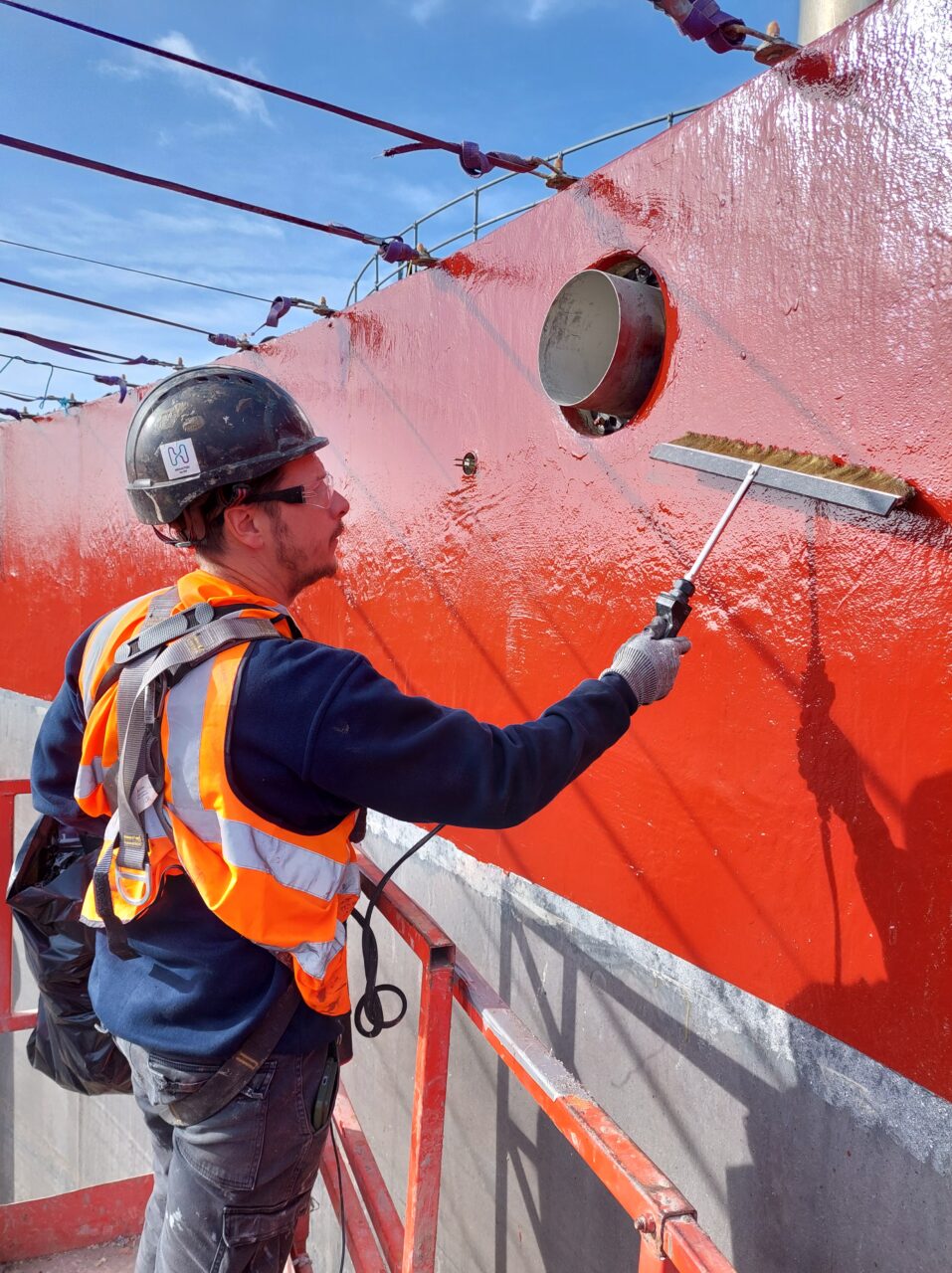
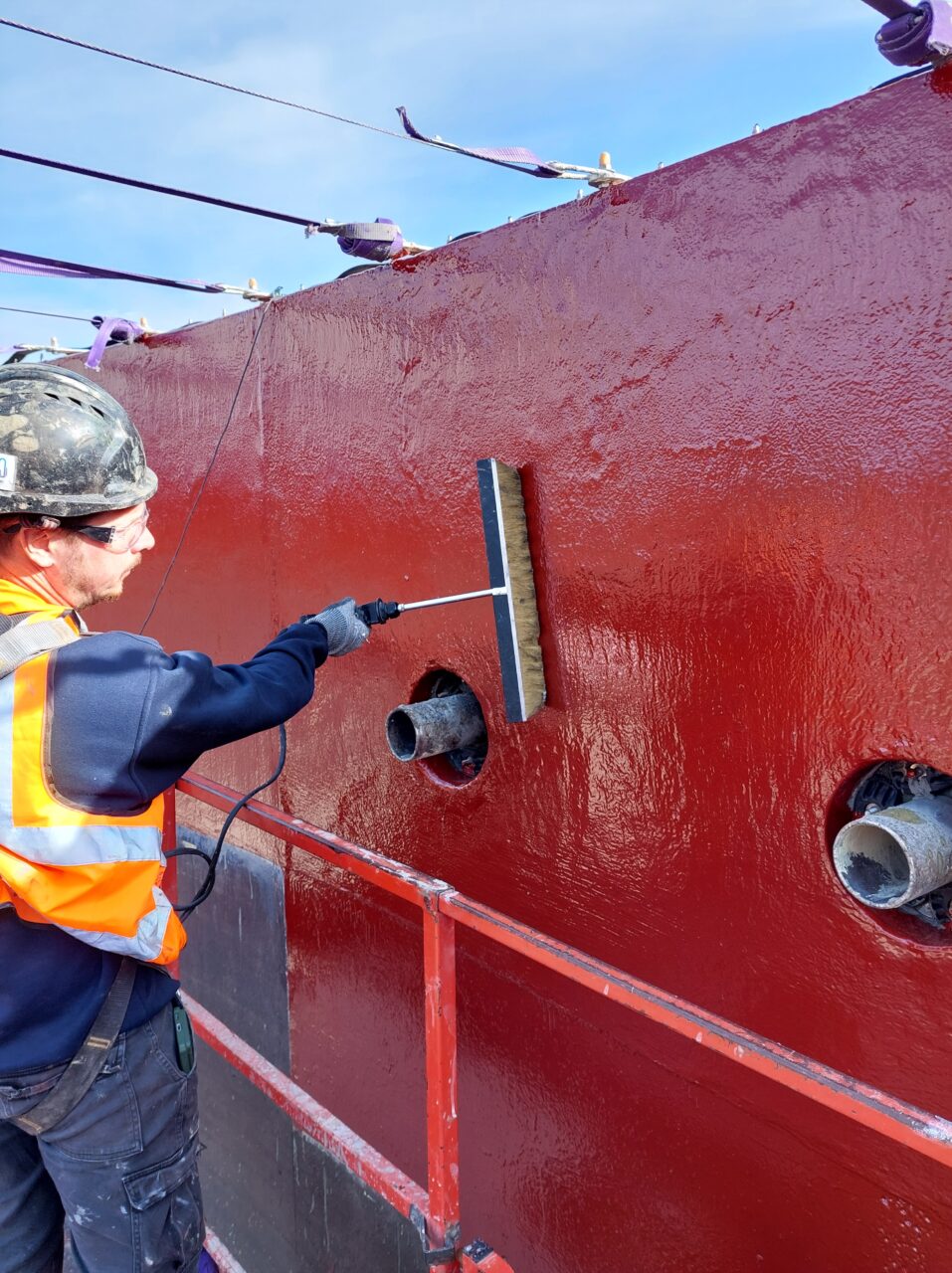
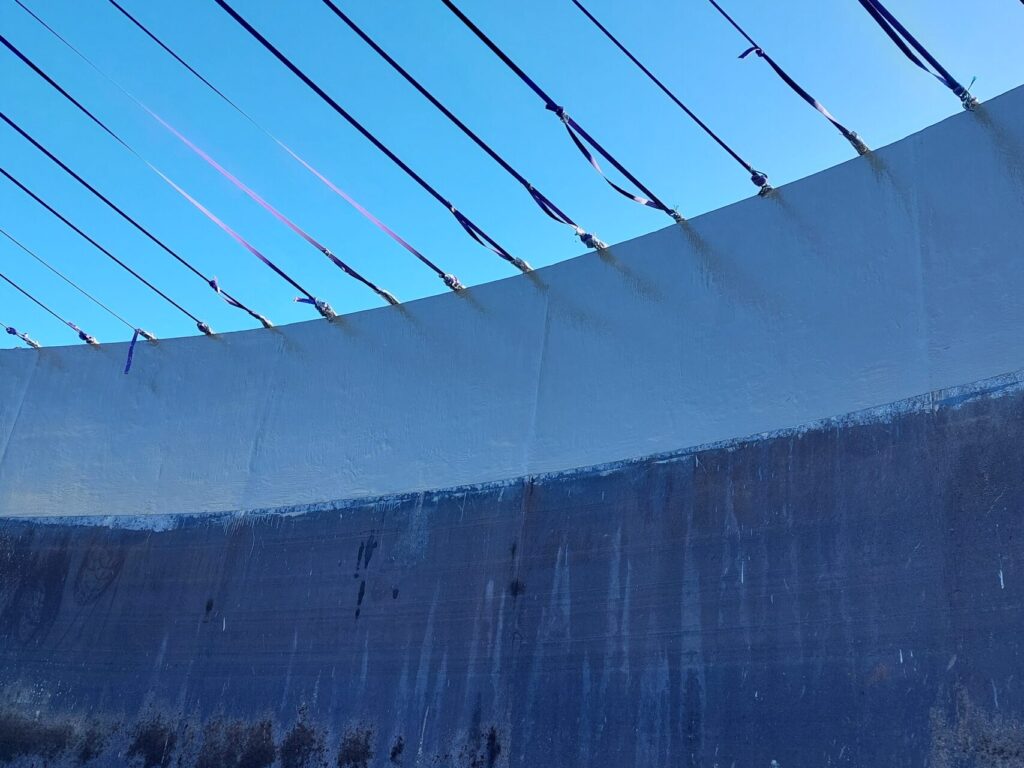
The prepared surfaces were primed with Sikagard P770 applied by brush and roller to a nominal wet film thickness of 200 microns. Brush and roller application was used throughout so that the lining could be fully worked in and cut in around the roof straps, fixings and penetrations.
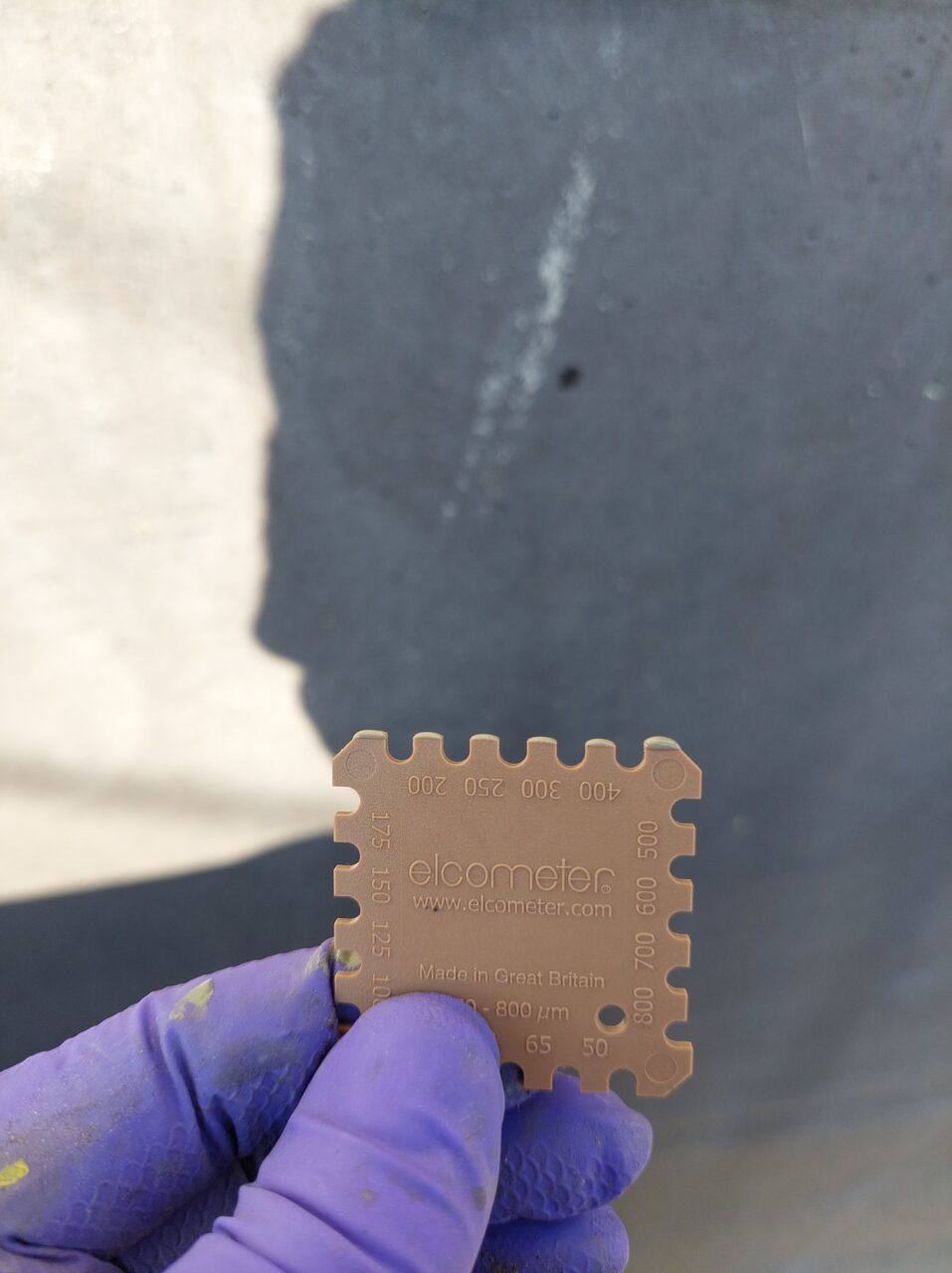
The first coat of Sikagard M790 was then applied by brush and roller in grey to a nominal wet film thickness of 300 microns. Wet film thickness readings were taken and recorded throughout using wet film combs.

The second coat of Sikagard M790 was applied in a contrasting red, again to a nominal wet film thickness of 300 microns, with regular wet film thickness readings taken and recorded. Applying the two coats in contrasting colours allows each coat to be seen to be complete, giving a total tank lining thickness of a nominal 800 microns.

A critical quality assurance check when applying tank linings is DC holiday spark testing. The cured lining was tested for porosity using a DC holiday spark tester, paying particular attention to the detailing around penetrations and fixings. Where pin holes were found they were marked prior to touching in by brush using the same material.
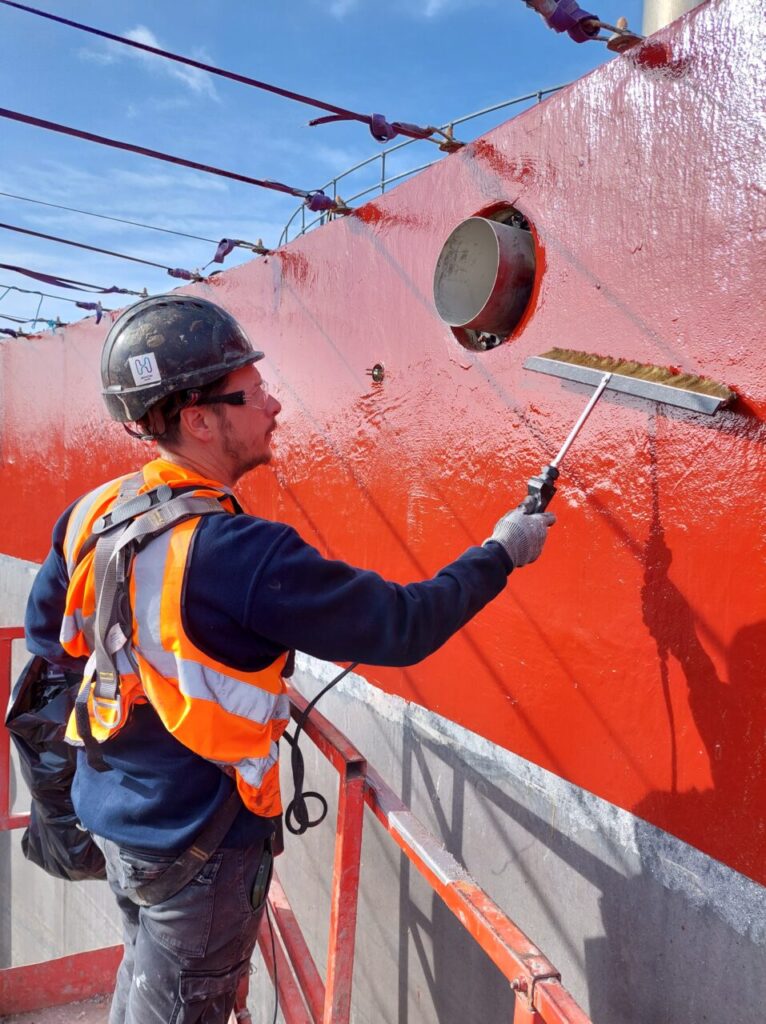
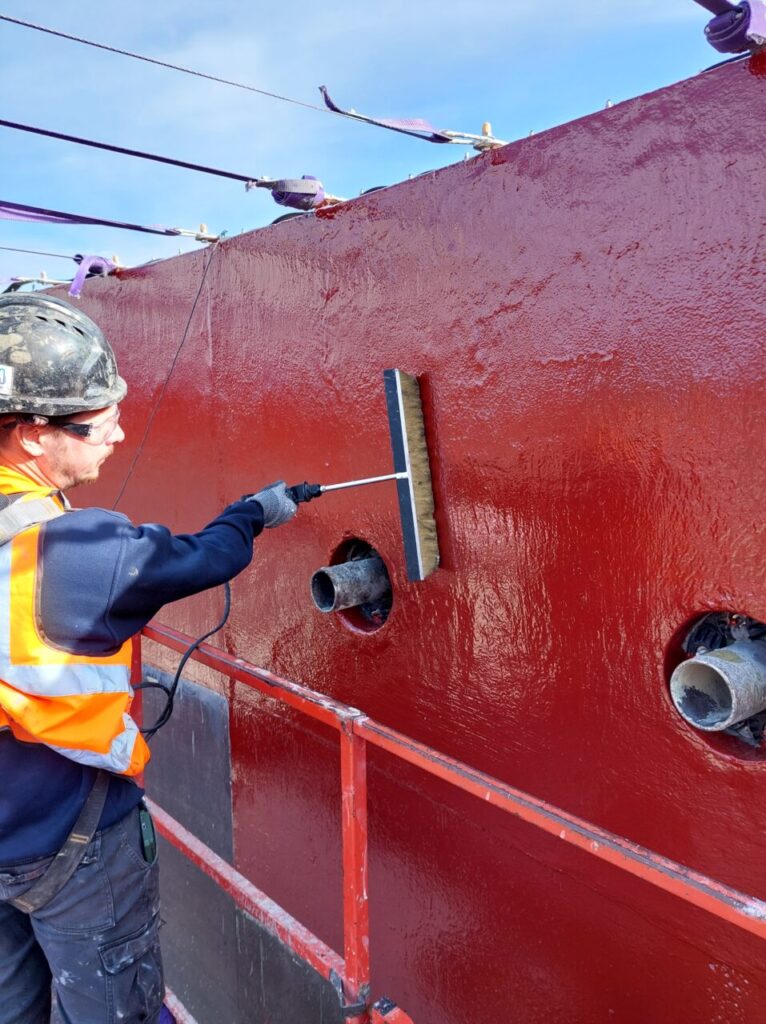
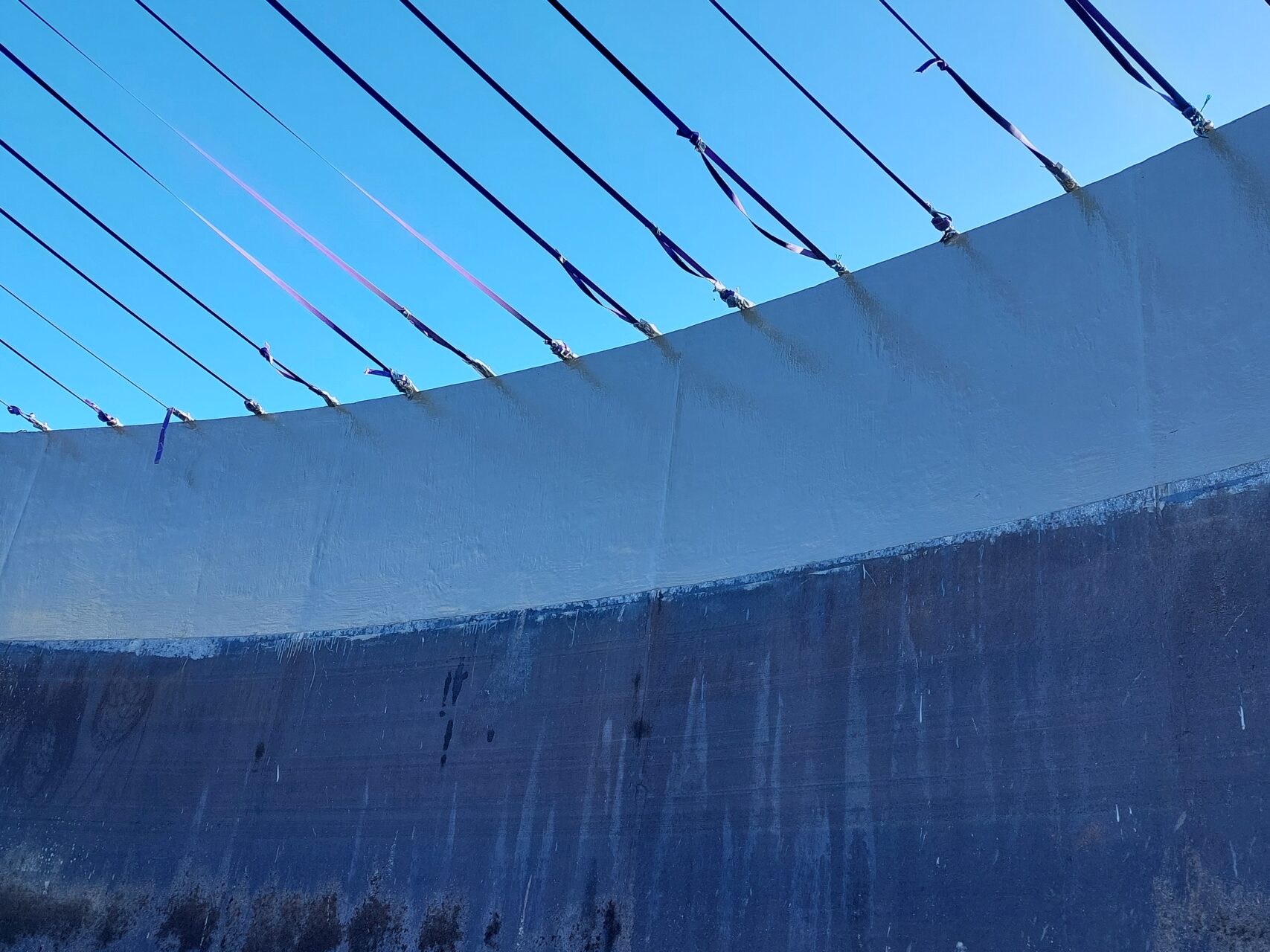
The lining was taken up over the wall head and up to the roof membrane clamping strip, so that the full gas space is protected once the new roof membrane is installed.

Daily site diaries recorded no safety concerns throughout the works, and the site was left clean and tidy at the end of every shift.
Our client now has the crown and top 1.5m of their post digester repaired and protected with a seamless, crack bridging Sika tank lining, backed by our 10 year warranty, protecting a valuable asset ahead of the roof membrane being reinstated.