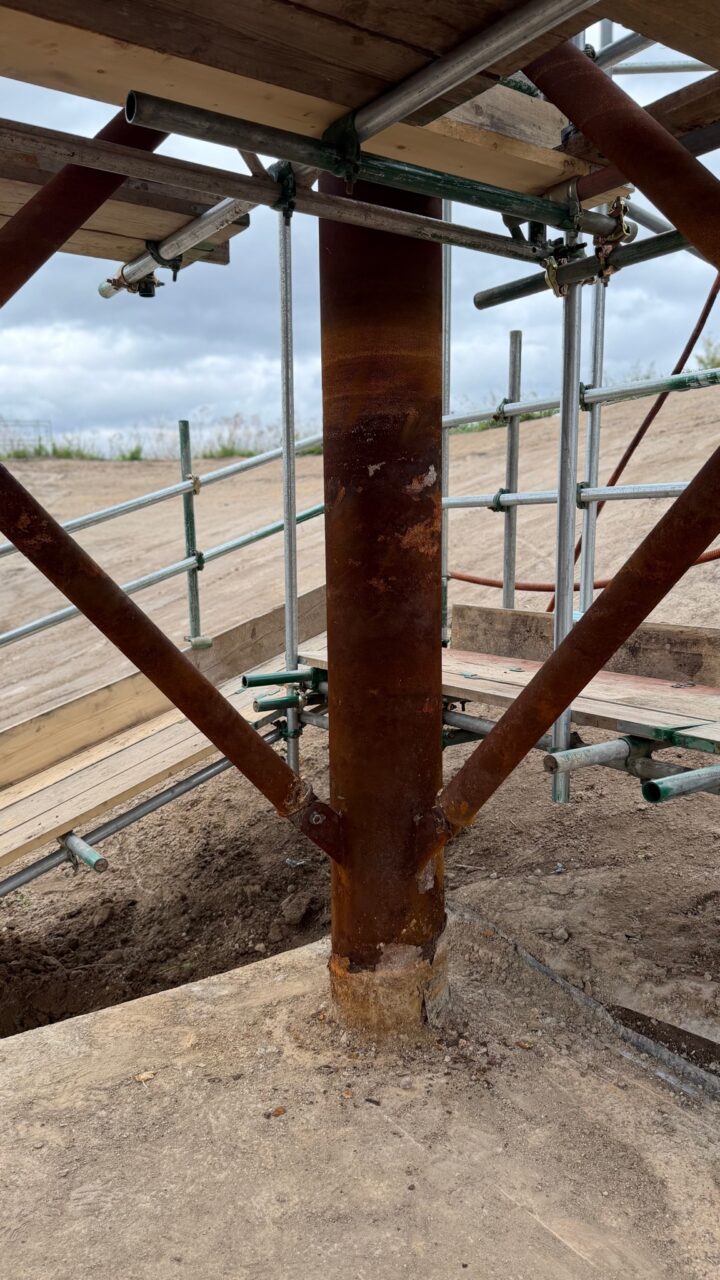
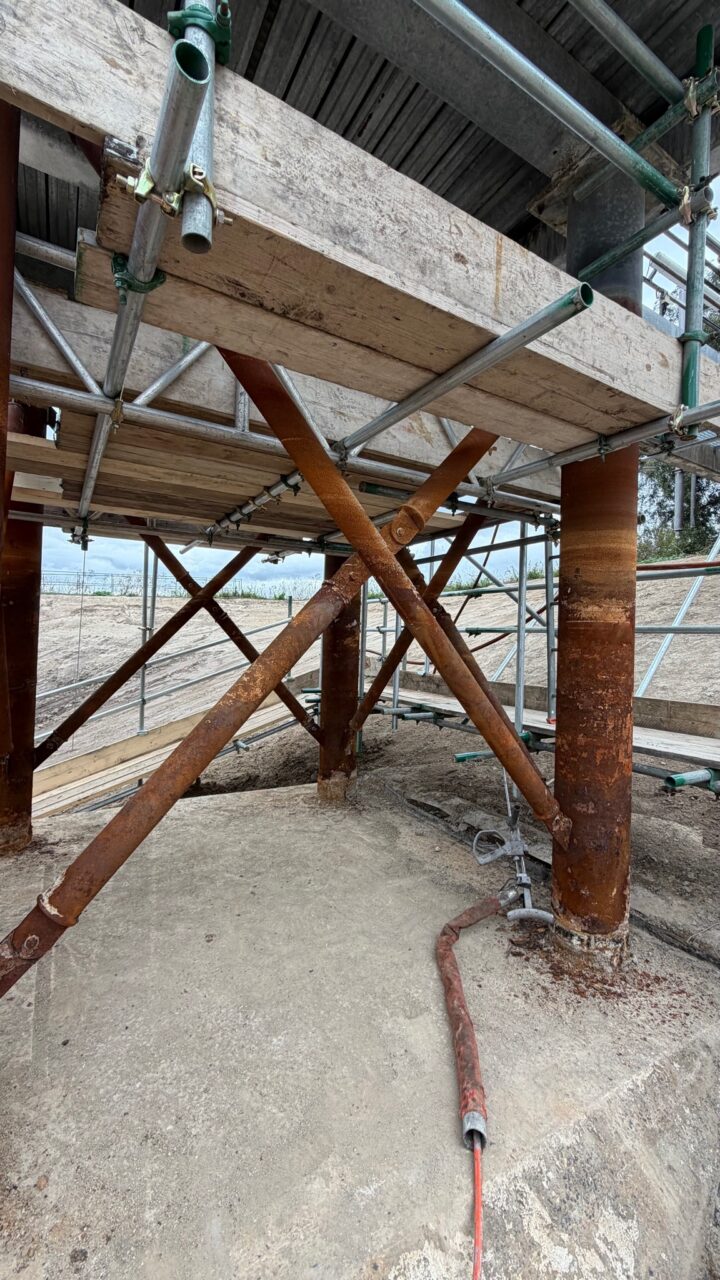
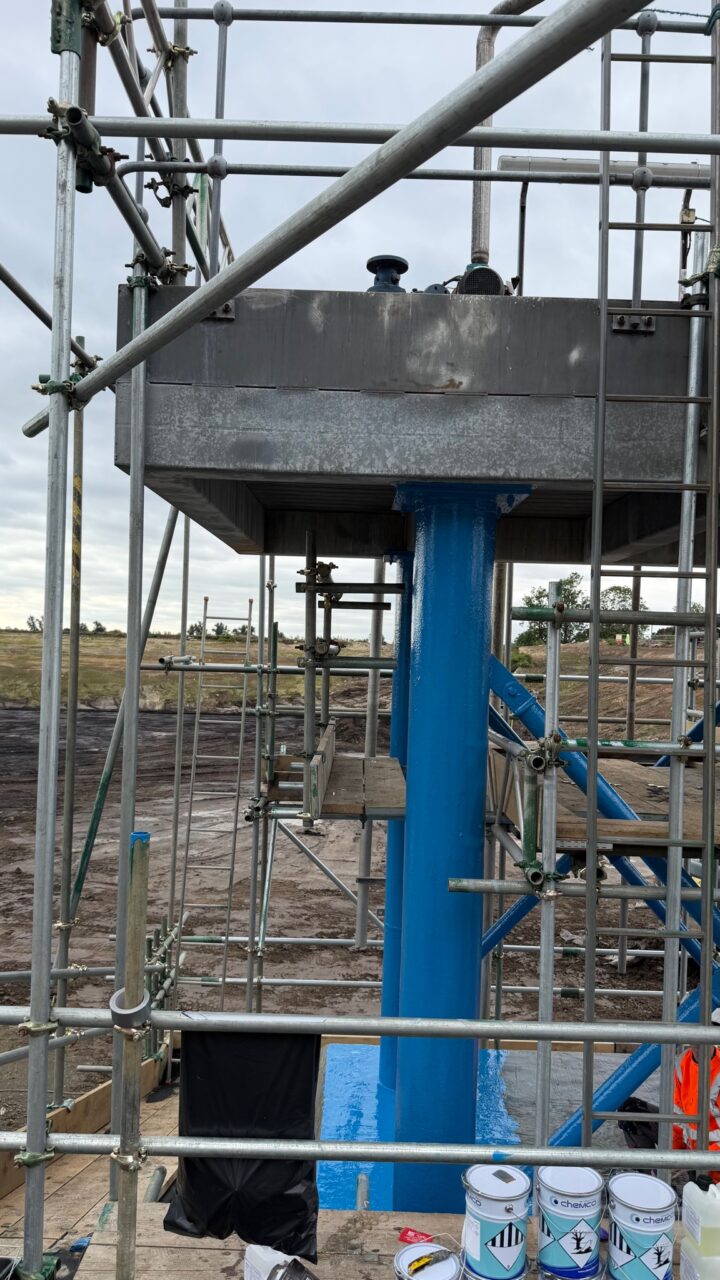
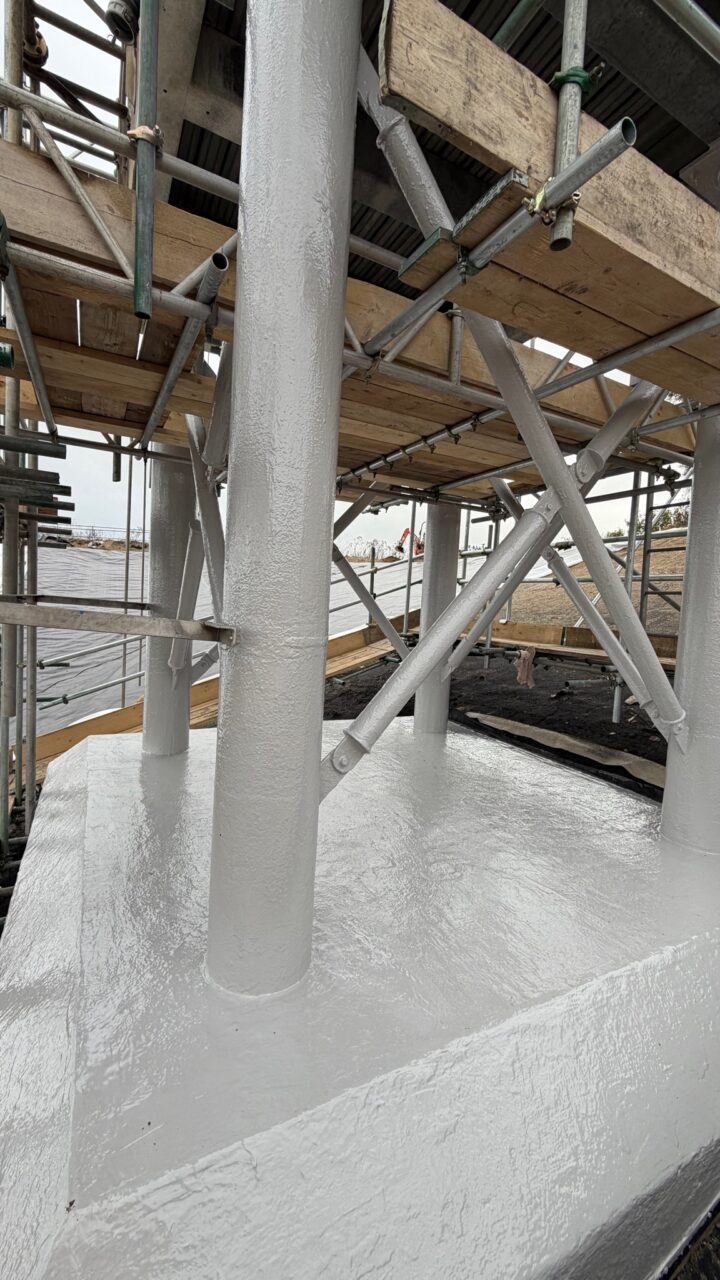
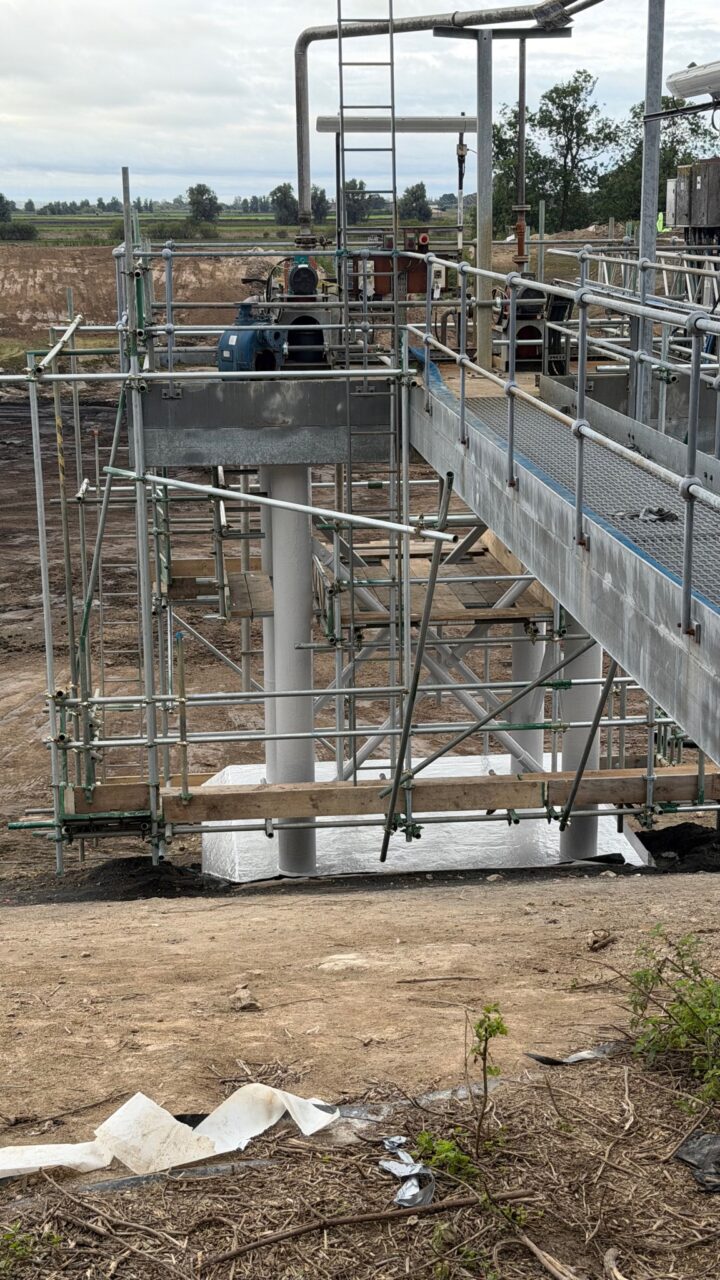
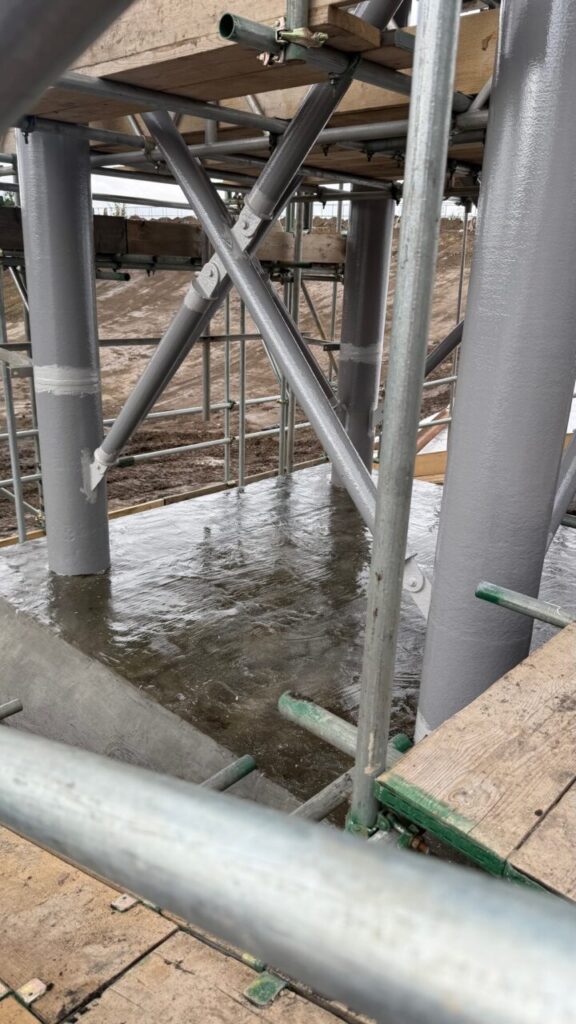
Our client was relining the surge pond at their factory in Norfolk. As part of these works it was revealed that the steel structure supporting the pump platform, and the concrete plinth it stands on, had both been suffering degradation as a result of exposure to the liquids contained within the pond.
Surge Pond Steelwork Protective Coating, Norfolk
THE PROBLEM


The structure consists of four tubular columns and sixteen diagonal braces, giving around 37m² of steelwork, standing on a 3.5m x 3.5m concrete plinth with around 20m² of exposed surface. The steelwork had originally been galvanised, but the galvanising had broken down and the steel was suffering active corrosion, particularly at the bolted bracing connections and the column bases. The surface of the concrete plinth had also begun to break down.

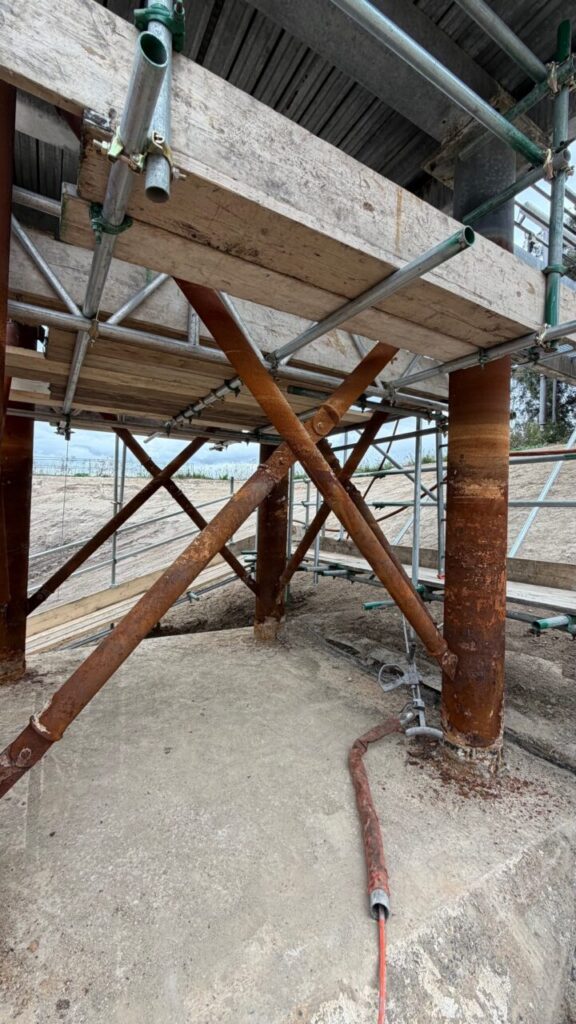
Once the pond was returned to service the structure would again be immersed in acidic process water, with a pH as low as 5. The client needed a protective coating system that would provide long term chemical and corrosion resistance to both the steel and the concrete, applied within a two week programme.
THE SOLUTION
We proposed the same coating system that we have previously used to protect mud thickener scraper steelwork in a similar operating environment: a solvent free epoxy primer to the steel, a damp tolerant epoxy primer to the concrete, followed by two coats of Chemco RW500, a solvent free epoxy novolac, to a total nominal thickness of 1,000 microns. Find out more information about our protective coating services.
Access was by means of a fixed scaffold provided by the client.
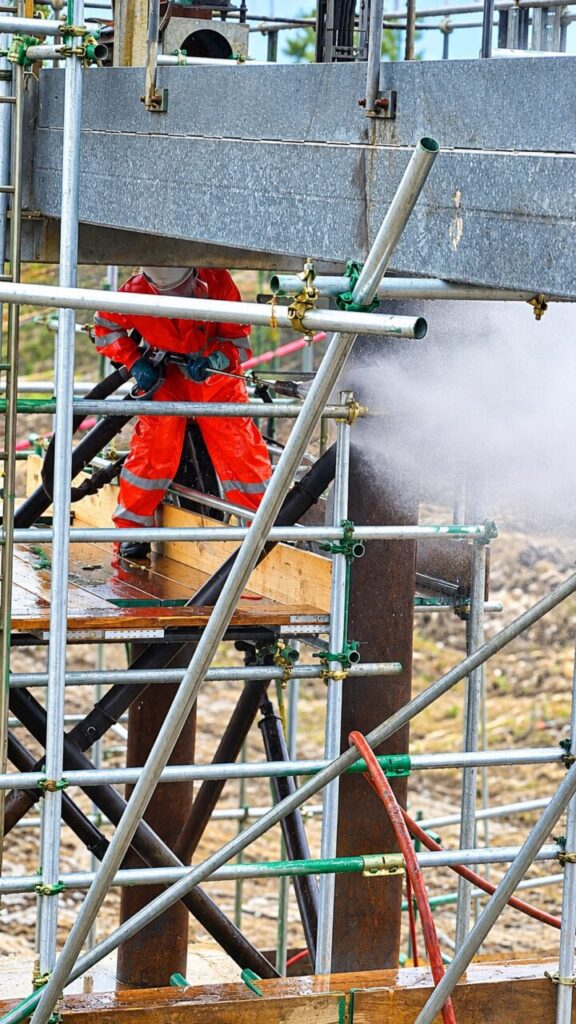
All surfaces were first cleaned by method of high pressure water jetting at 10,000 psi to remove contamination from the pond and any loose and degraded concrete. On an immersed structure such as this, the surfaces are heavily contaminated with process residues that must be removed before any protective coating can be applied.
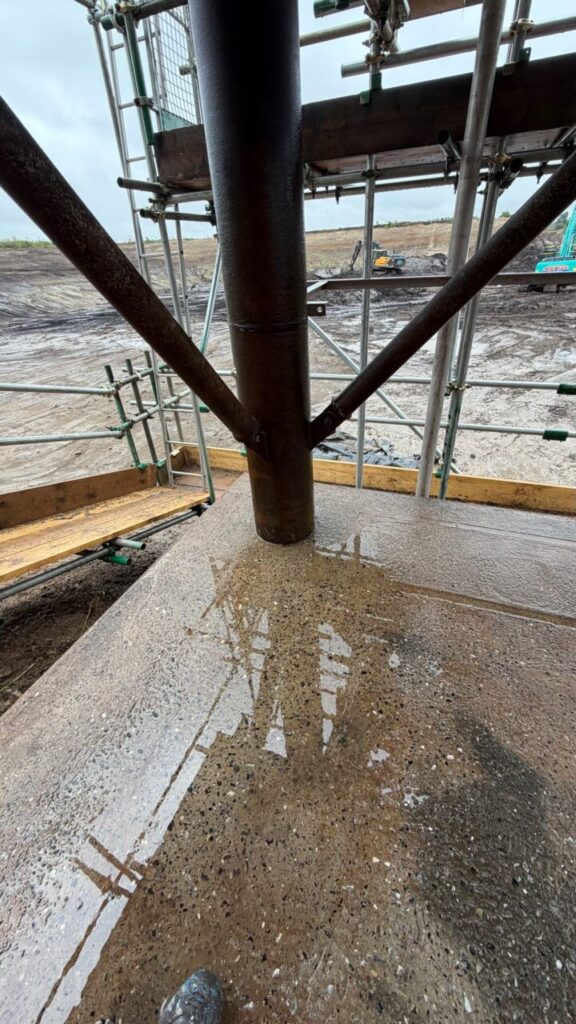
The concrete plinth was then reprofiled using SikaTop 586 Seal, a smooth finish waterproof render, applied by trowel and finished with a sponge float. This restored a sound, even surface to the plinth ready to receive the protective coating.
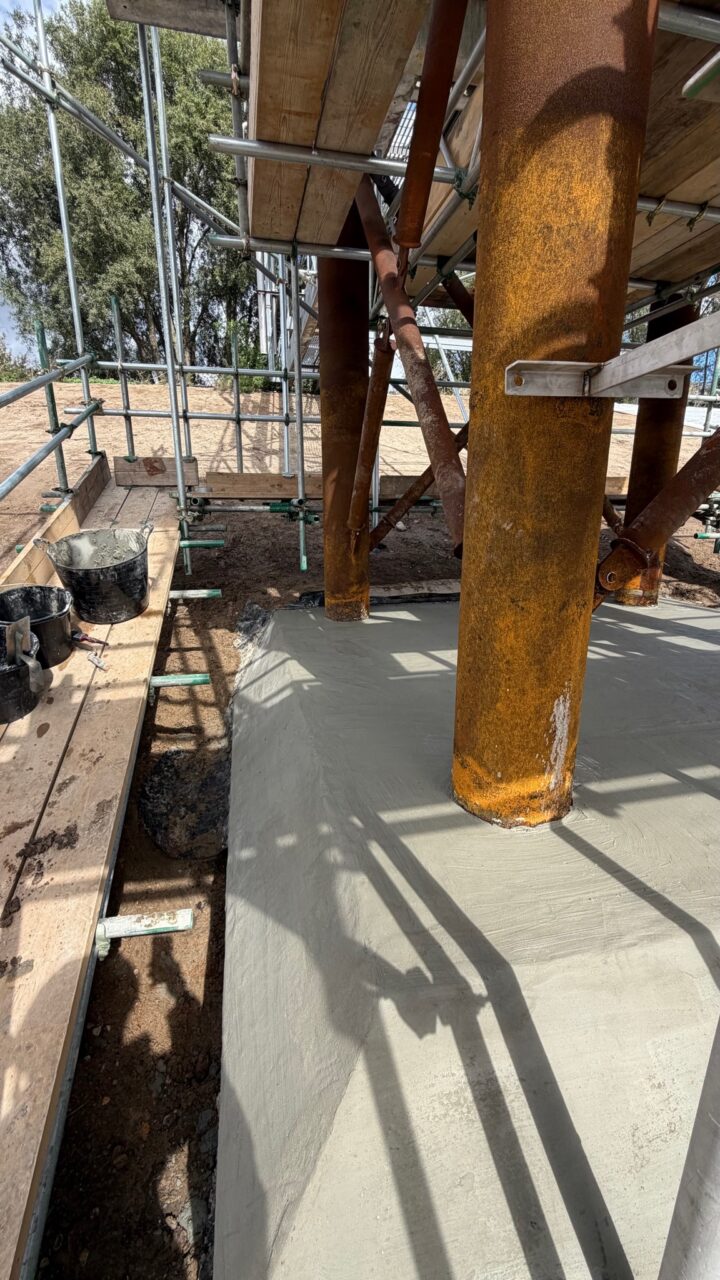
As part of our standard quality assurance a soluble salt test was conducted on the steelwork. Steel that has been immersed in process liquids is at high risk of chloride contamination, and any salts left on the surface beneath a new protective coating can lead to osmotic blistering and premature failure. No soluble salts were detected.

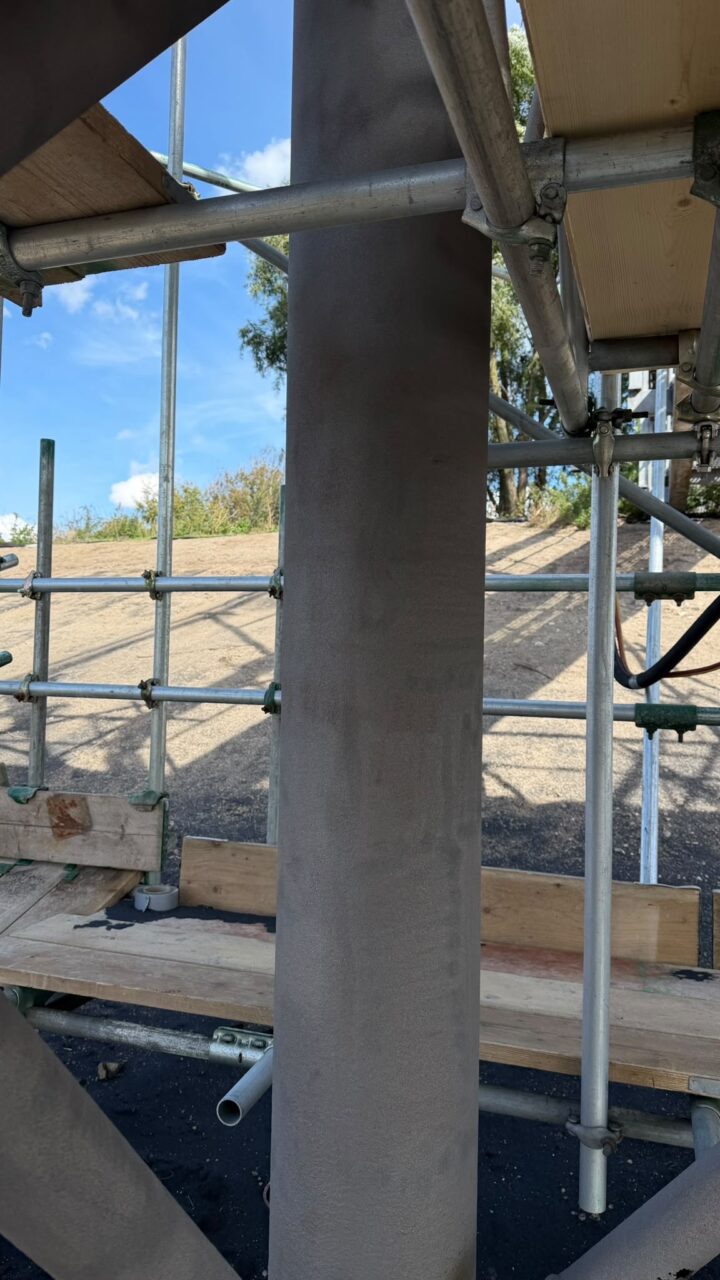
The steelwork was then prepared to Sa2.5 as per ISO 8501-1 by method of abrasive blasting, raising a minimum surface profile of 50 microns. The blast profile was checked and recorded, and a dust tape test was conducted to confirm the surface was clean prior to coating. Correct preparation is essential to the protective coating process as a coating system is only as good as the substrate it is adhered to.


In the same shift as the blasting, the prepared steel was primed using Chemco RS500P, a solvent free, surface tolerant epoxy primer containing anti corrosive pigments, applied by brush and roller to a wet film thickness of 200 microns. Priming in the same shift prevents the freshly blasted steel from flash rusting. The steelwork was blasted and primed in sections over consecutive days until all surfaces were complete.
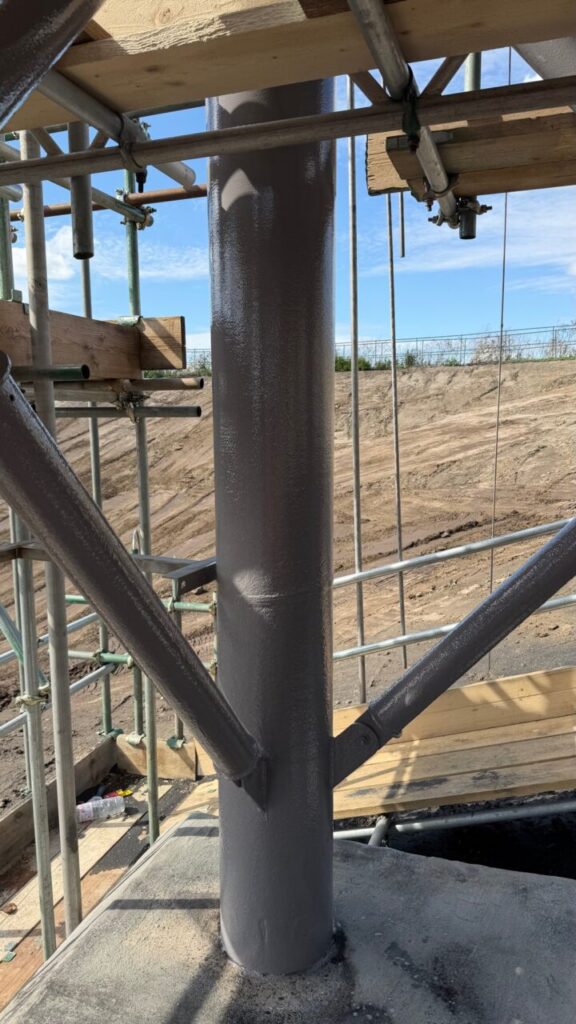

The moisture content of the rendered plinth was tested and recorded using a Tramex moisture meter prior to priming.

A heavy stripe coat of Chemco RW500 was applied by brush to all angles, edges, welds and bolted connections, as per good protective coating practice, to ensure full film build where coatings pull thin through gravity and surface tension. The concrete was then primed using Chemco Damp-Crete RH800, a damp tolerant epoxy primer, applied by brush and roller to a nominal thickness of 100 microns.

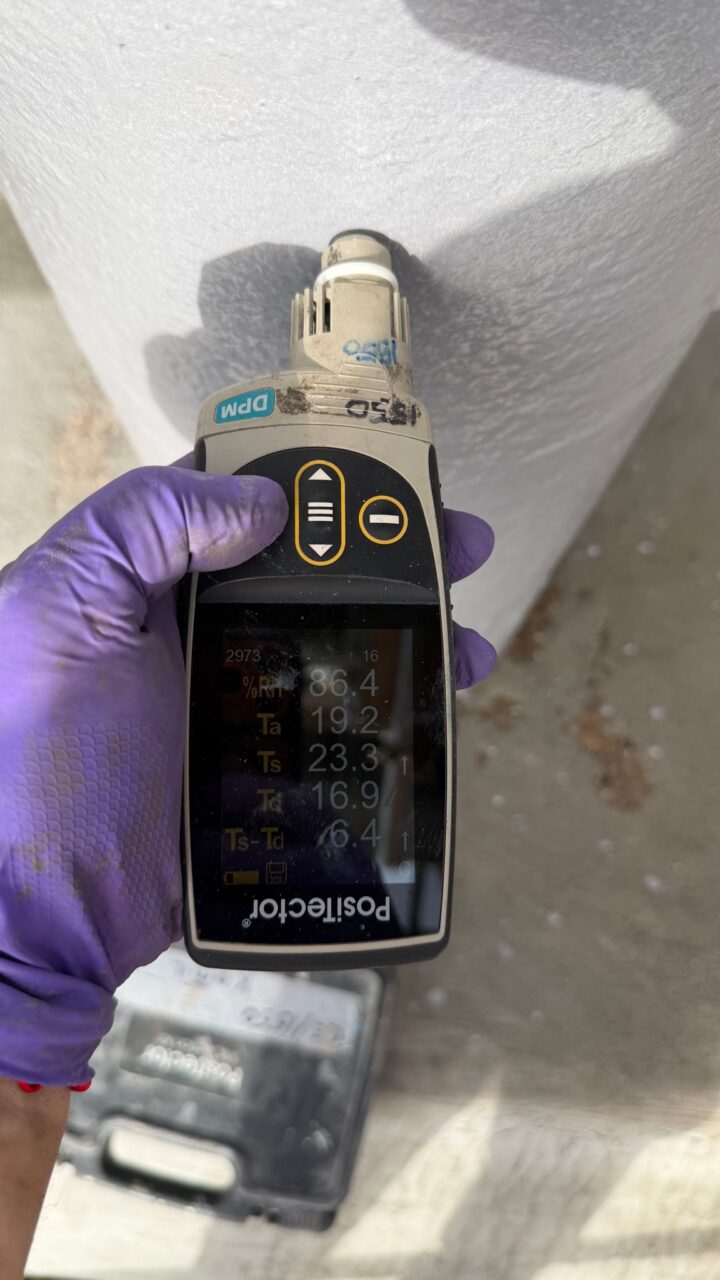
Prior to and during application the climatic conditions were tested and recorded using a PosiTector DPM, with 33 readings logged over the coating period. Relative humidity ranged from 53% to 86.6% and air temperatures from 14.5°C to 22.8°C, with the surface temperature remaining above the dew point at every reading.
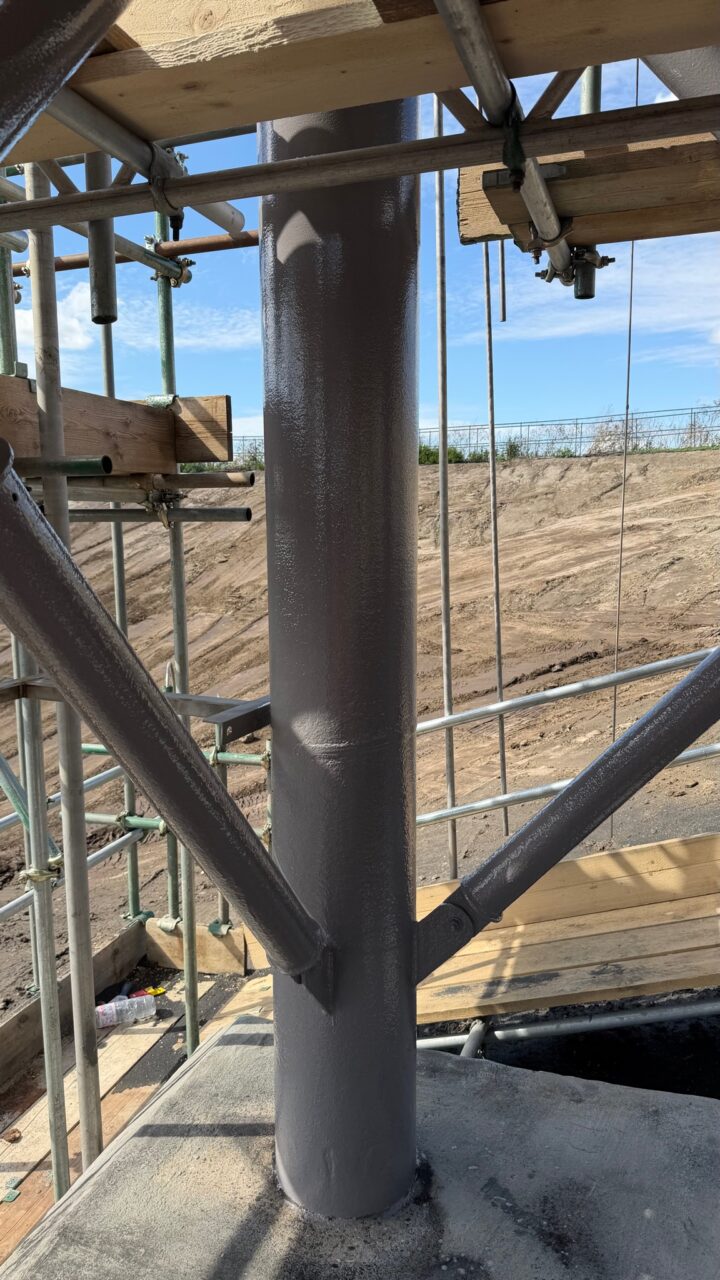
The first full coat of Chemco RW500 was applied to both the steel and the concrete by brush and roller at a wet film thickness of 400 microns. Chemco RW500 is a solvent free epoxy novolac, offering a higher level of chemical resistance than a standard epoxy, making it well suited to permanent immersion in acidic process water.


The second full coat was applied in the same manner and to the same thickness in a contrasting colour, so that full coverage of each coat could be visually confirmed.

On completion, 169 dry film thickness readings were taken across the steelwork. Every reading was at or above the specified 1,000 microns, with an average of 1,379 microns.
The cured protective coating was then tested for porosity using a DC holiday spark tester. In an immersion environment a single pin hole is a point of coating failure, making this a critical quality assurance step. Any pin holes and areas identified for attention were marked prior to touching in using the same material applied by brush.

The works were completed in nine working days on site, within the two week programme, despite weather interrupting the second day. The client now has a surge pond structure protected by a seamless epoxy novolac protective coating in excess of 1,000 microns, ready for the pond to be returned to service.