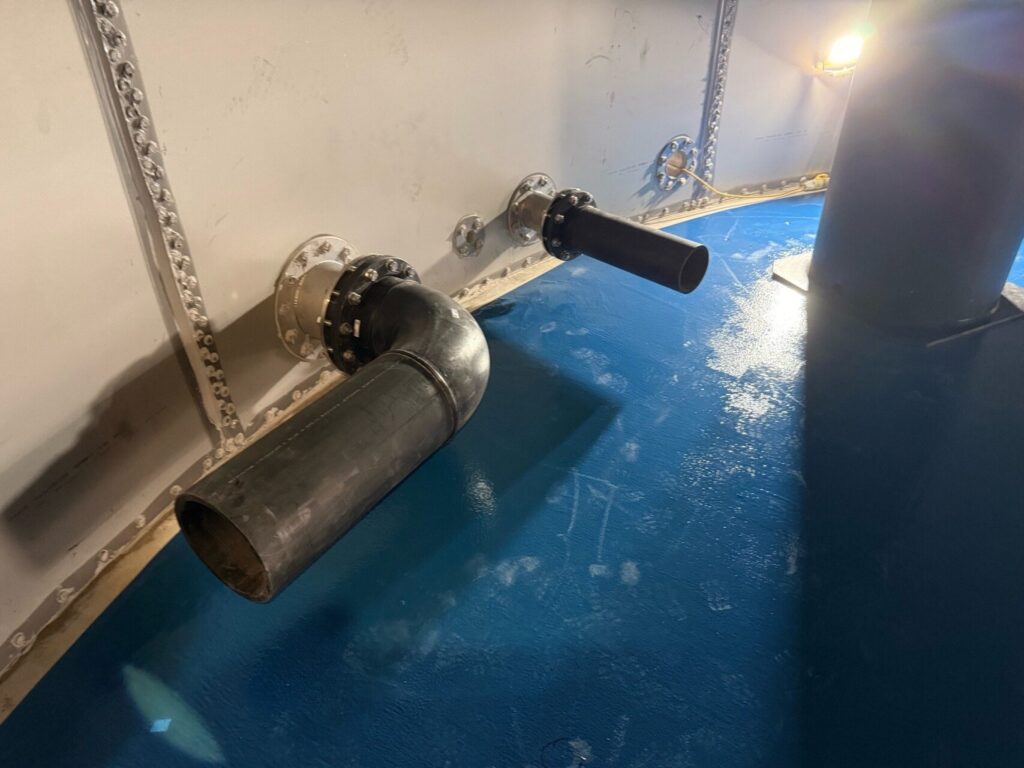
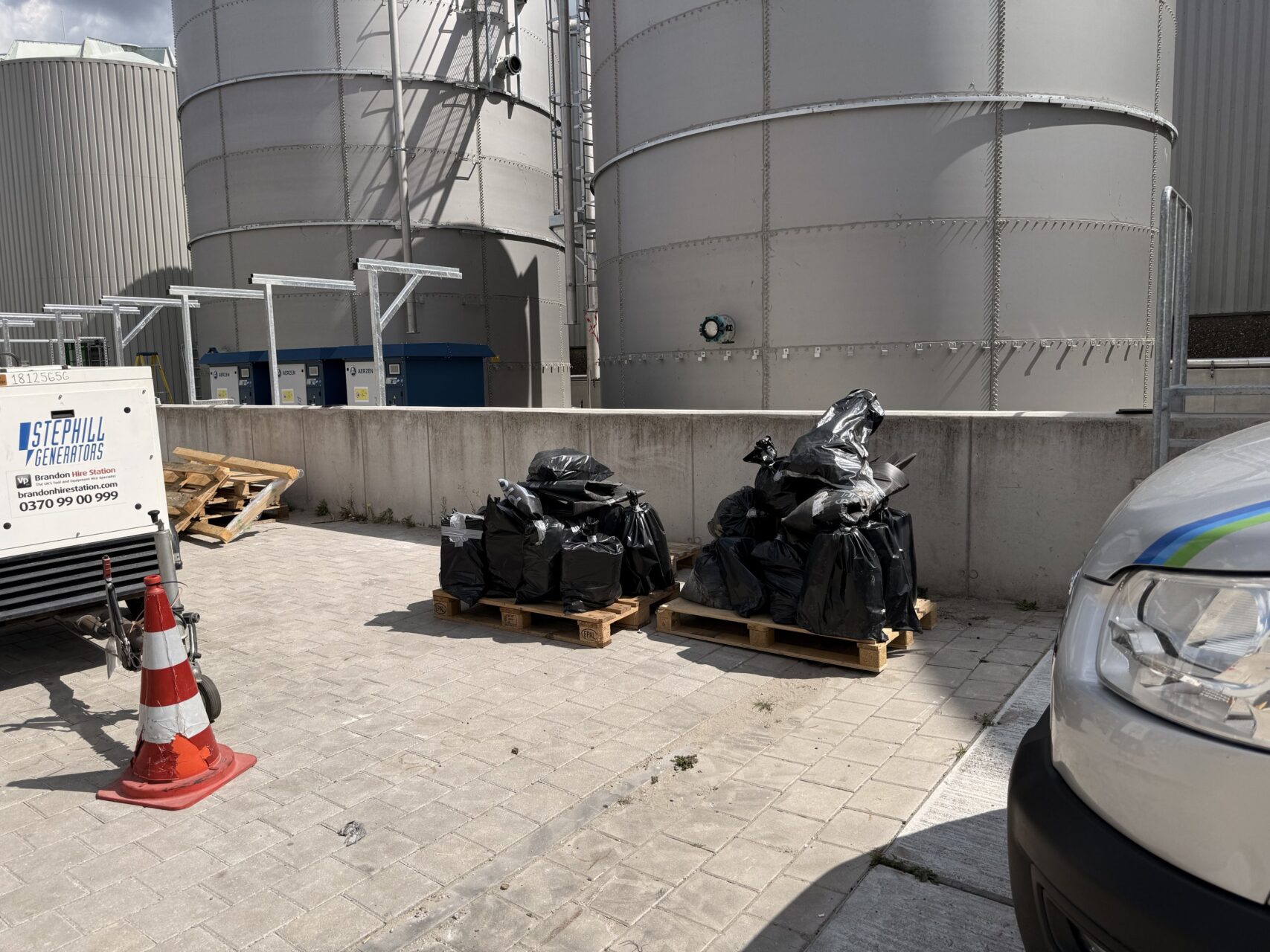
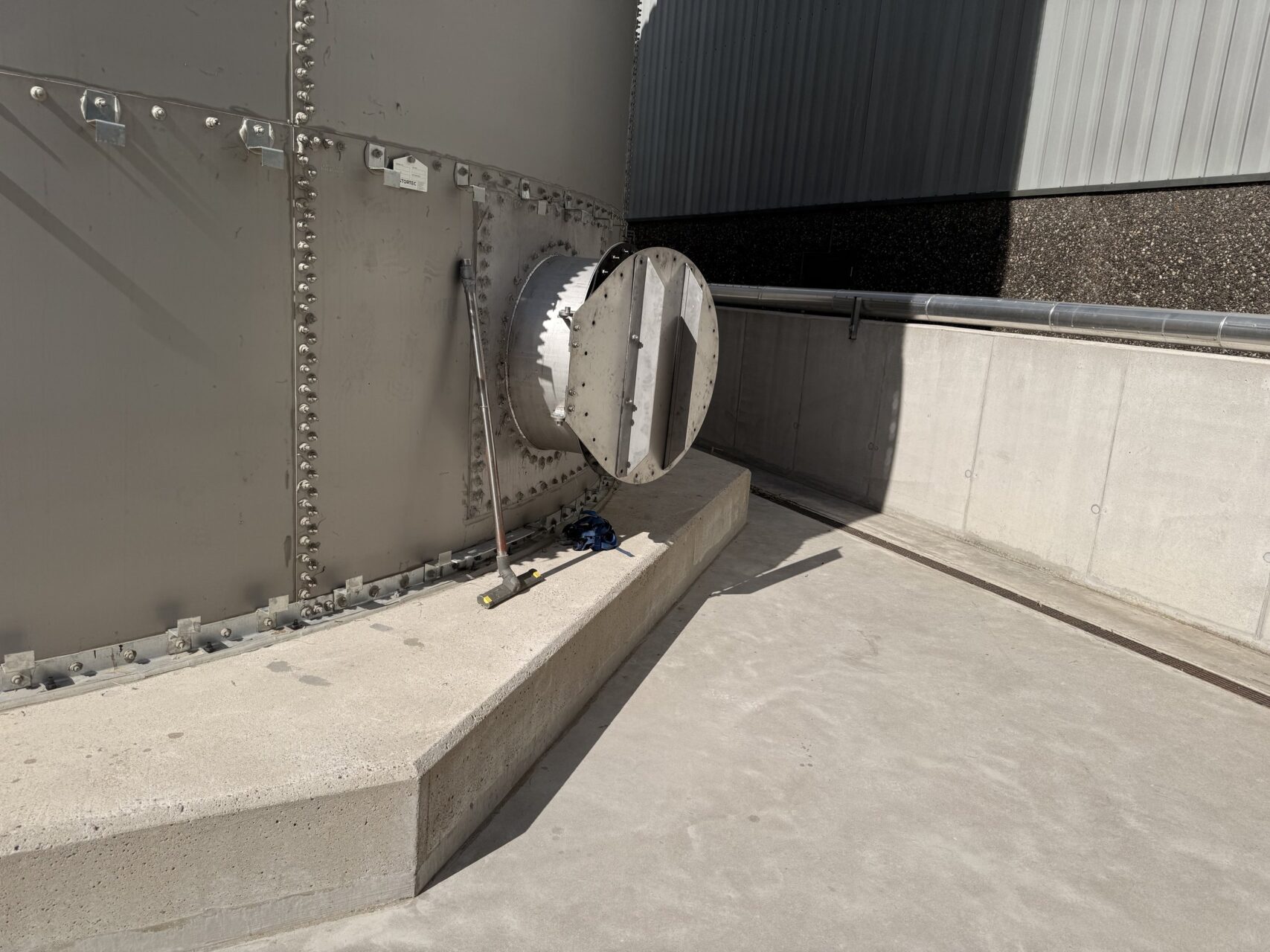
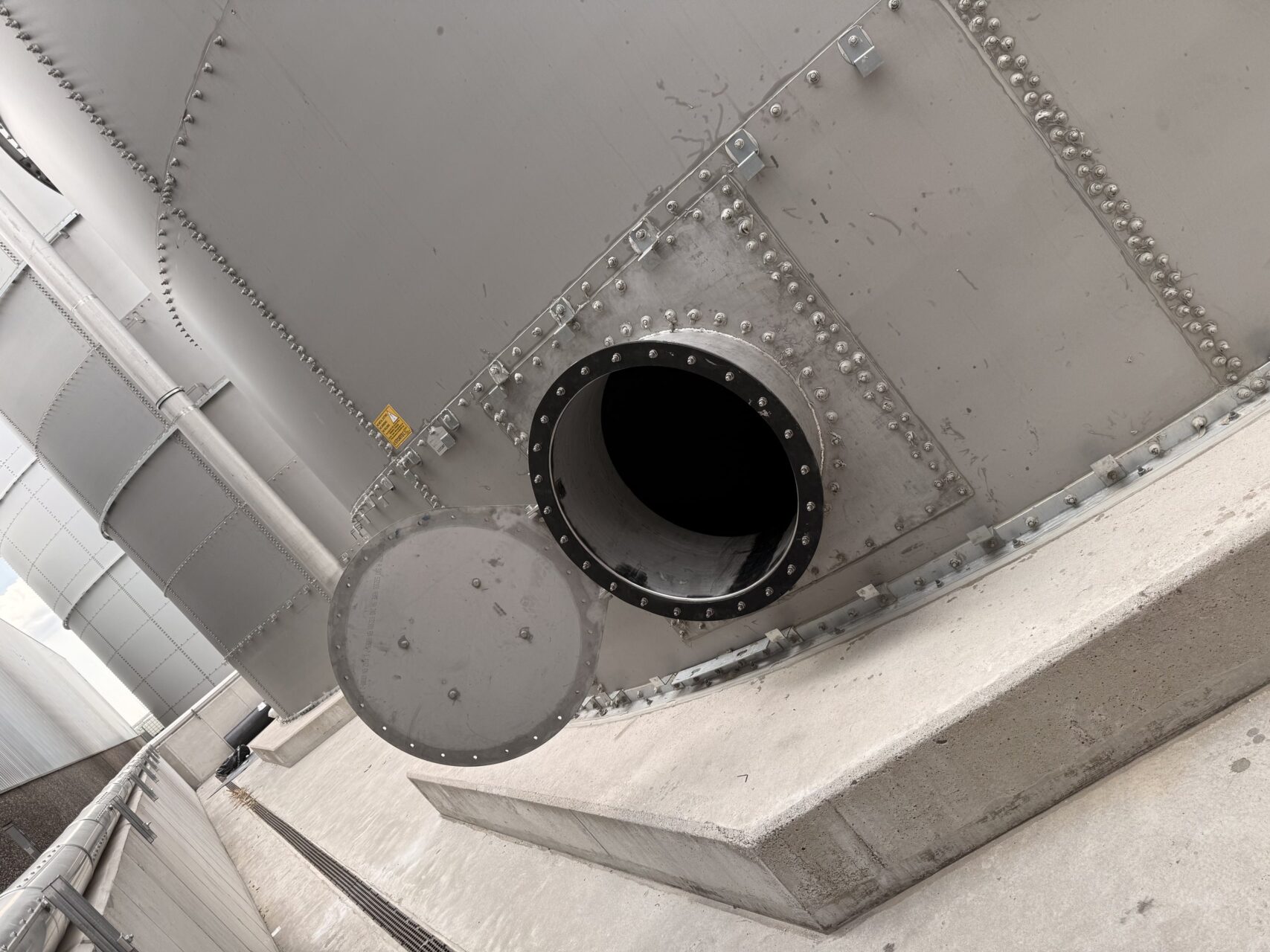
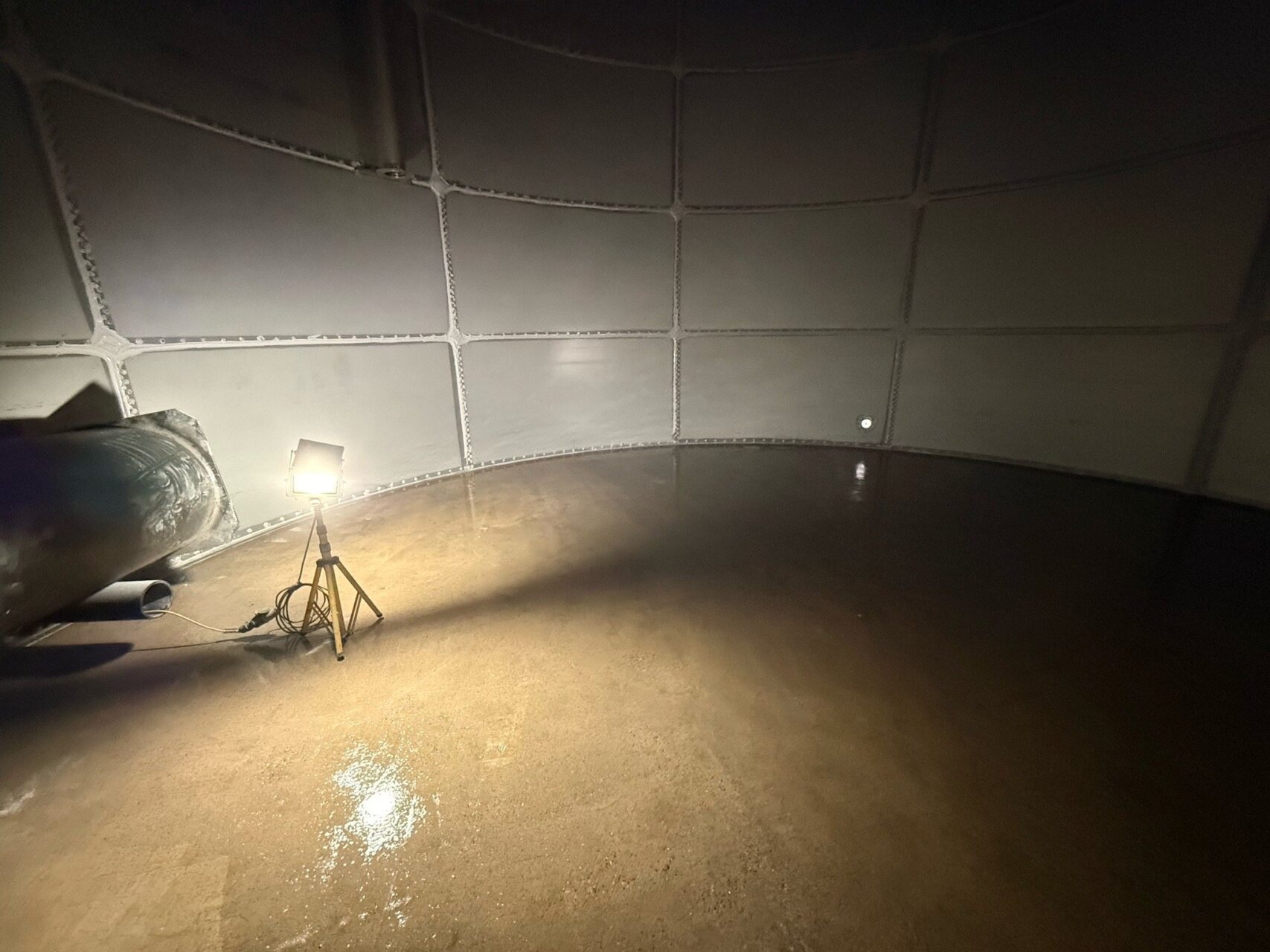
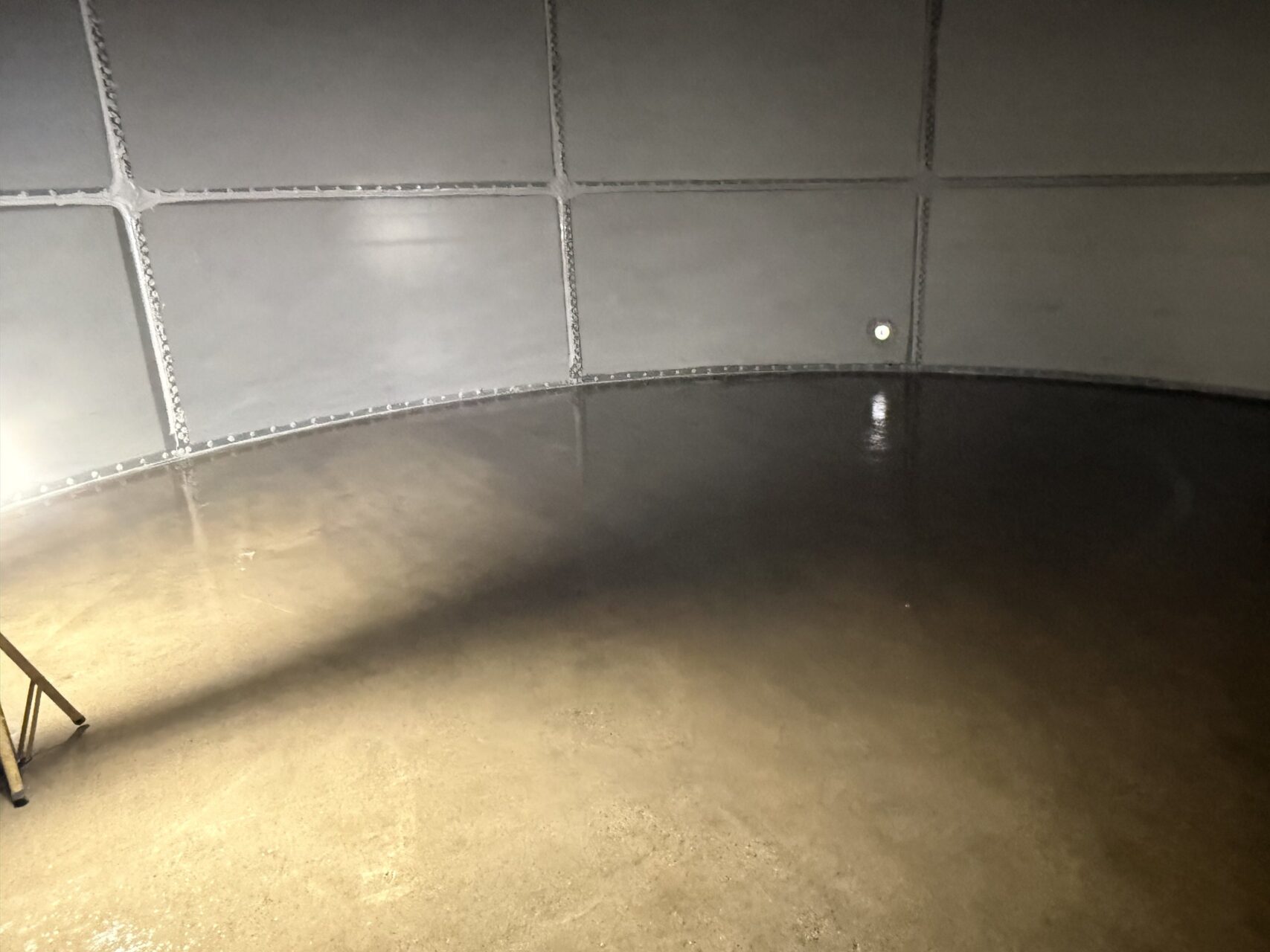
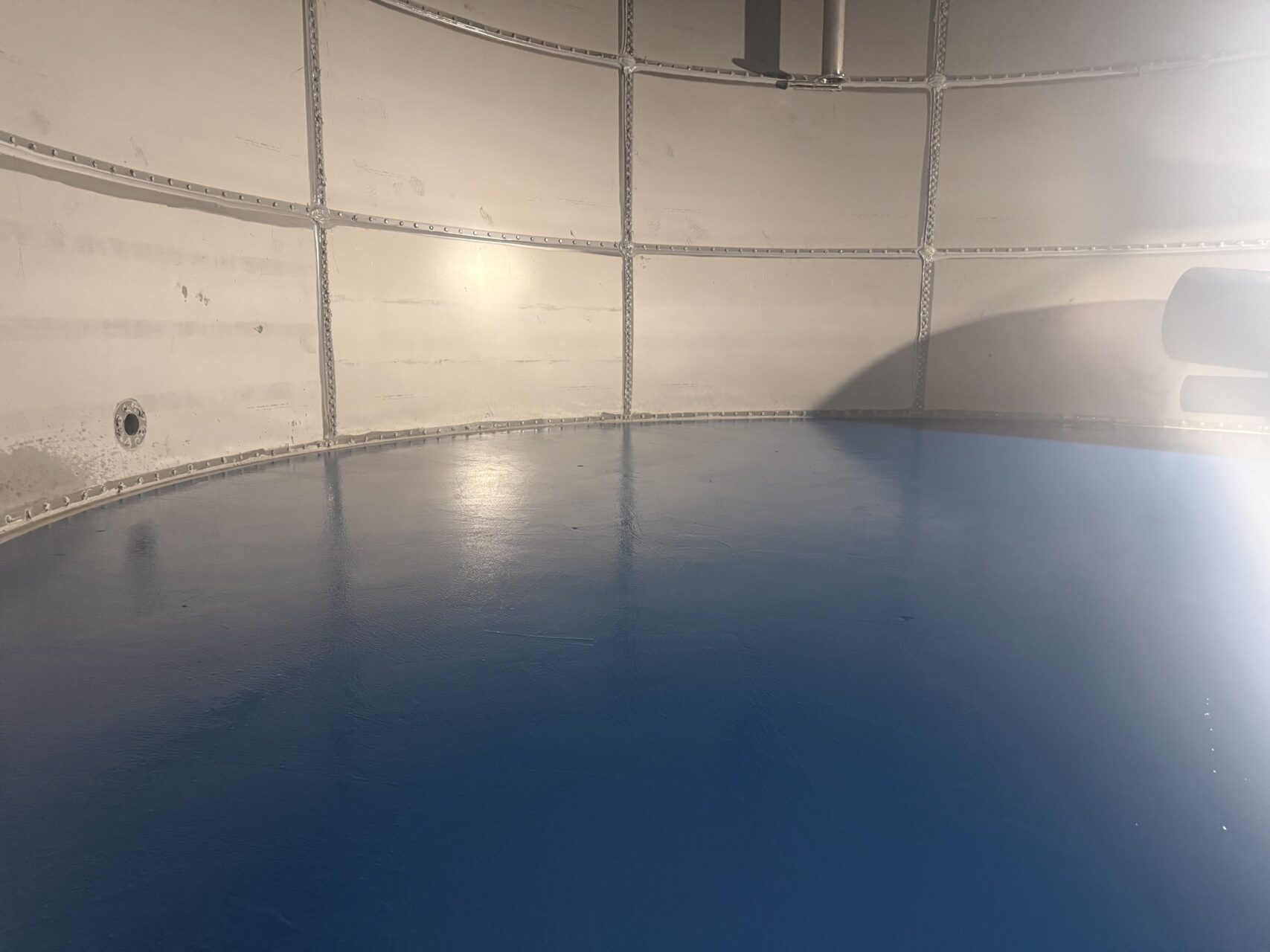
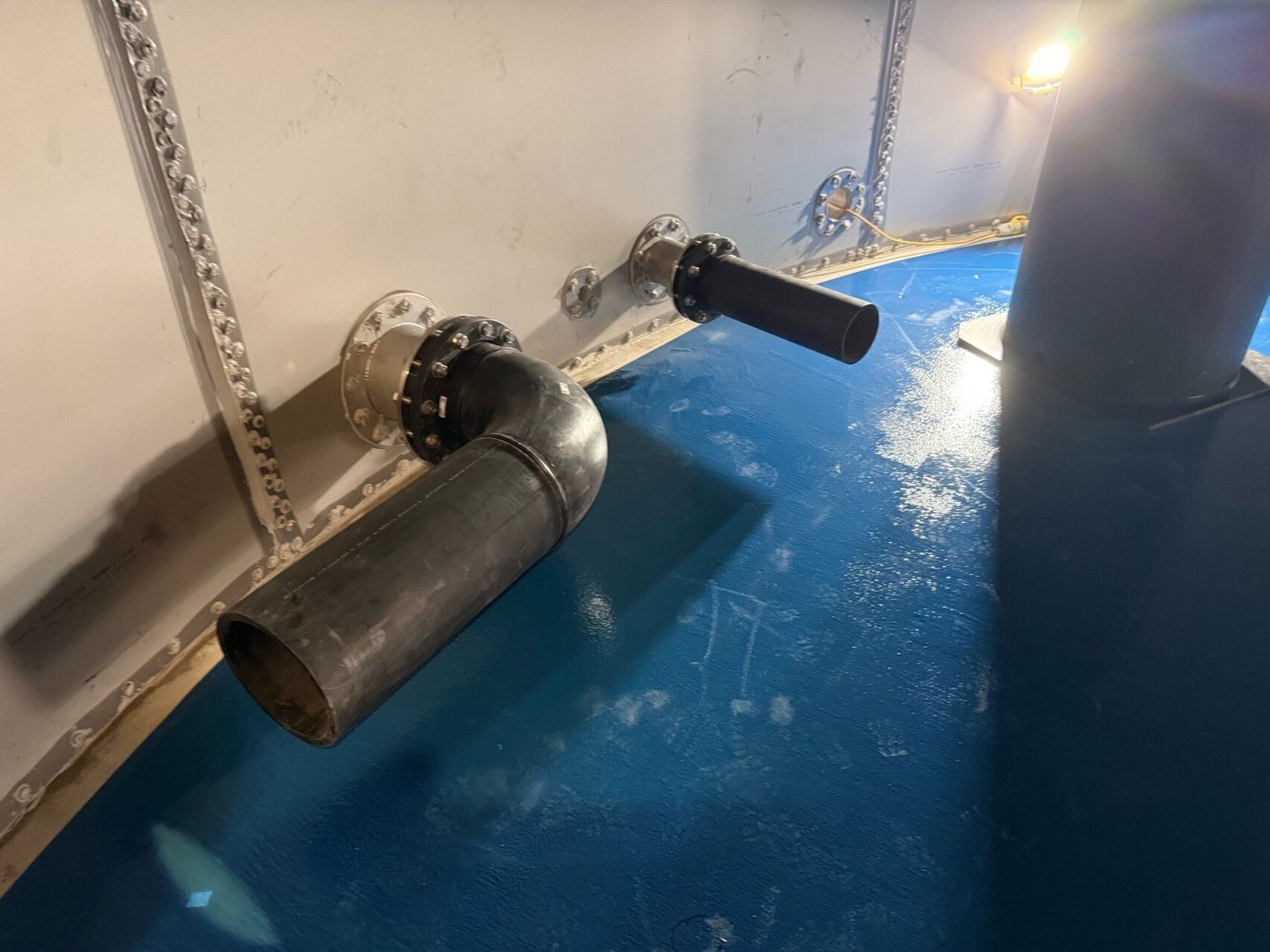
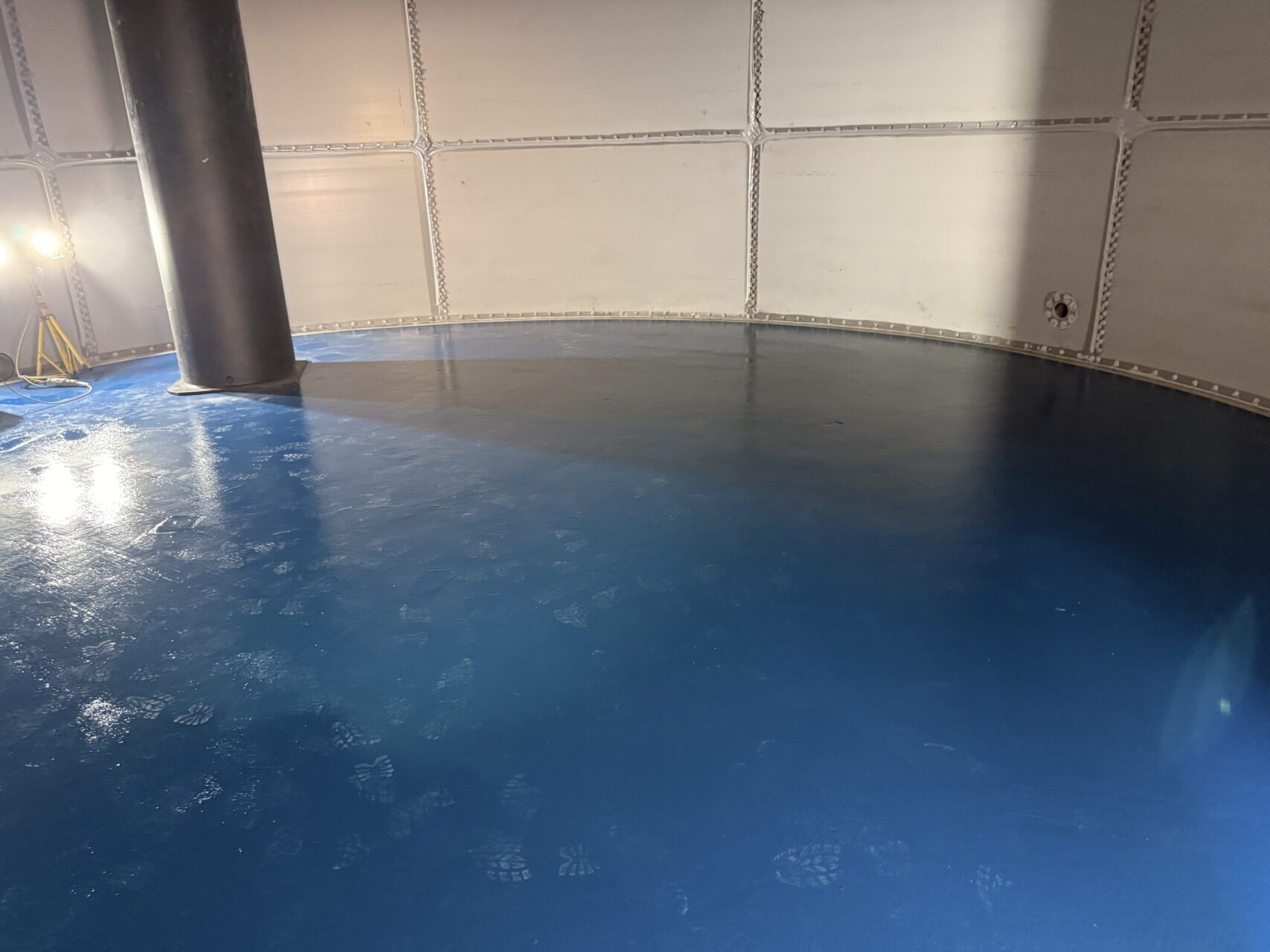
Our client, a specialist manufacturer and installer of bolted steel storage tanks, was constructing two new tanks at an industrial site in Amsterdam, Netherlands. Each tank was 8.54m in diameter and was built on a concrete base, which needed a protective tank lining before the tanks could be commissioned.
Concrete Tank Base Lining, Amsterdam
THE PROBLEM

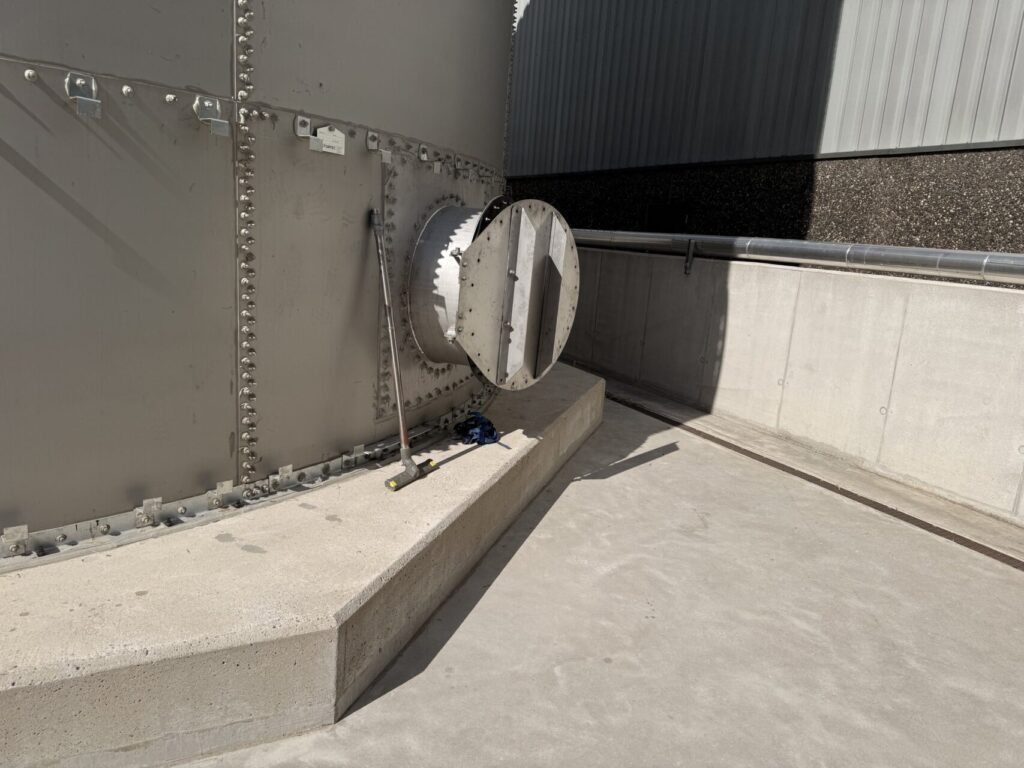

Once in service the tank bases would be permanently immersed in activated sludge, with a pH range of 6 to 9 and operating temperatures of up to 45°C. Unprotected concrete is porous and prone to cracking, so the tank lining needed to be durable, abrasion resistant and, critically, crack bridging. If a tank lining cannot accommodate minor movement in the concrete, any crack that forms will break the continuity of the lining and allow the contents to attack the concrete beneath.
As well as the technical requirements, the project brought its own logistical challenges. The works were overseas, so all plant, equipment and tank lining materials had to be shipped from our base in Norfolk. All operatives also needed VCA Basic certification, the mandatory site safety qualification in the Netherlands, and both tanks had to be completed in a single continuous visit working within confined spaces.
THE SOLUTION
When lining concrete tanks it is always preferable to use a crack bridging tank lining where possible. We offered the client a choice of two such systems: Remmers Epoxy Universal, a crack bridging epoxy applied to a nominal 600 microns, or Corroless ACO, a solvent free polyurethane tank lining applied to a nominal 1,000 microns.
The client selected Corroless ACO. Its greater applied thickness and improved abrasion resistance over the epoxy option made it the more robust long term tank lining for a tank floor in constant contact with activated sludge. More information about our concrete tank lining services.
All surfaces to be lined were prepared by method of vacuum controlled diamond grinding to remove surface laitance and contaminants and provide a mechanical key. Surface preparation is essential to gain good adhesion to concrete, and inadequate preparation is one of the most common causes of premature tank lining failure. Grinding was carried out using 9″ and 5″ floor grinders connected to three stage CFM vacuums, controlling dust within the enclosed tank environment.
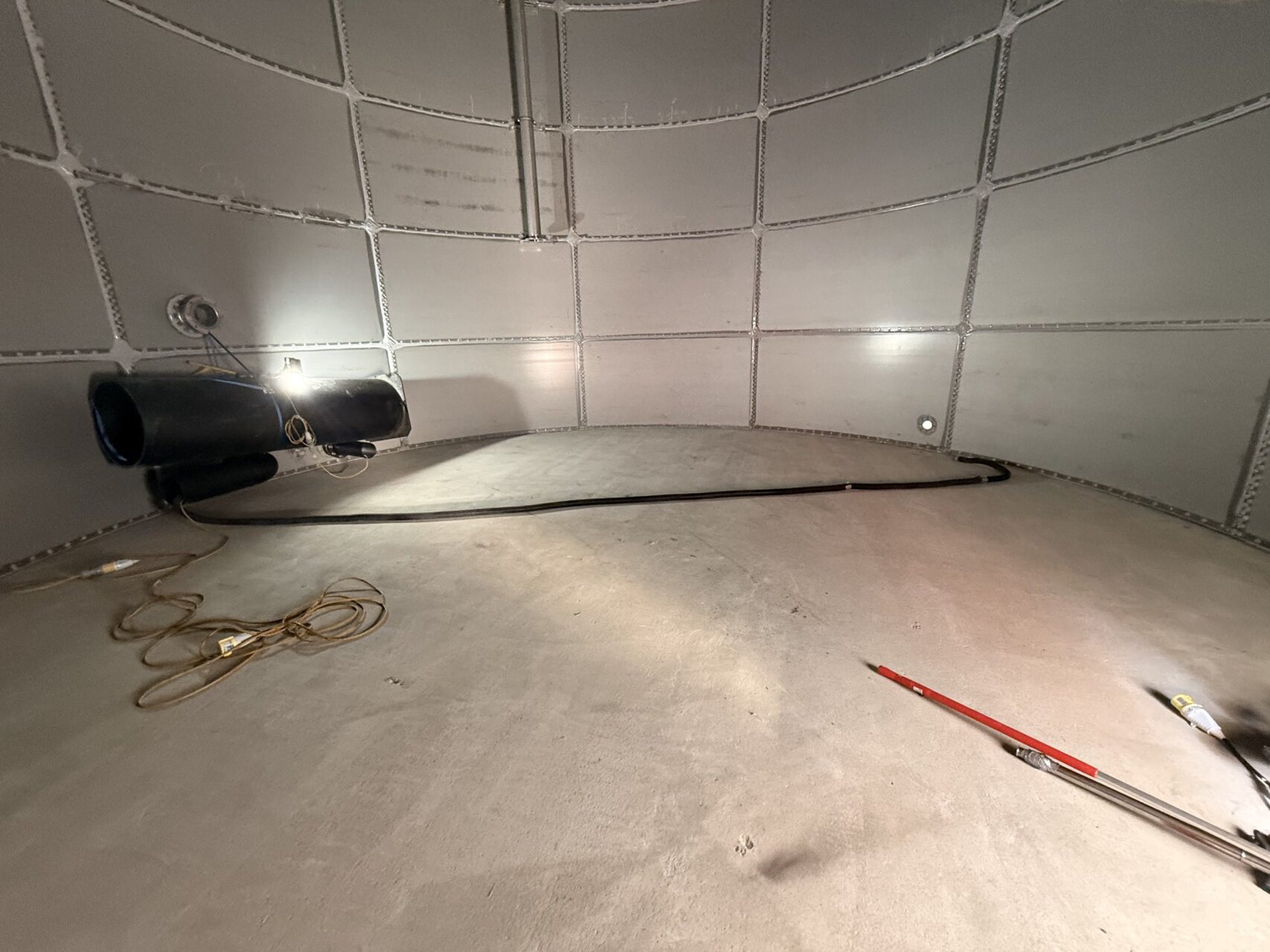
The tank bases were then thoroughly vacuumed clean. Any dust left on the surface would disrupt the bond of the new tank lining.
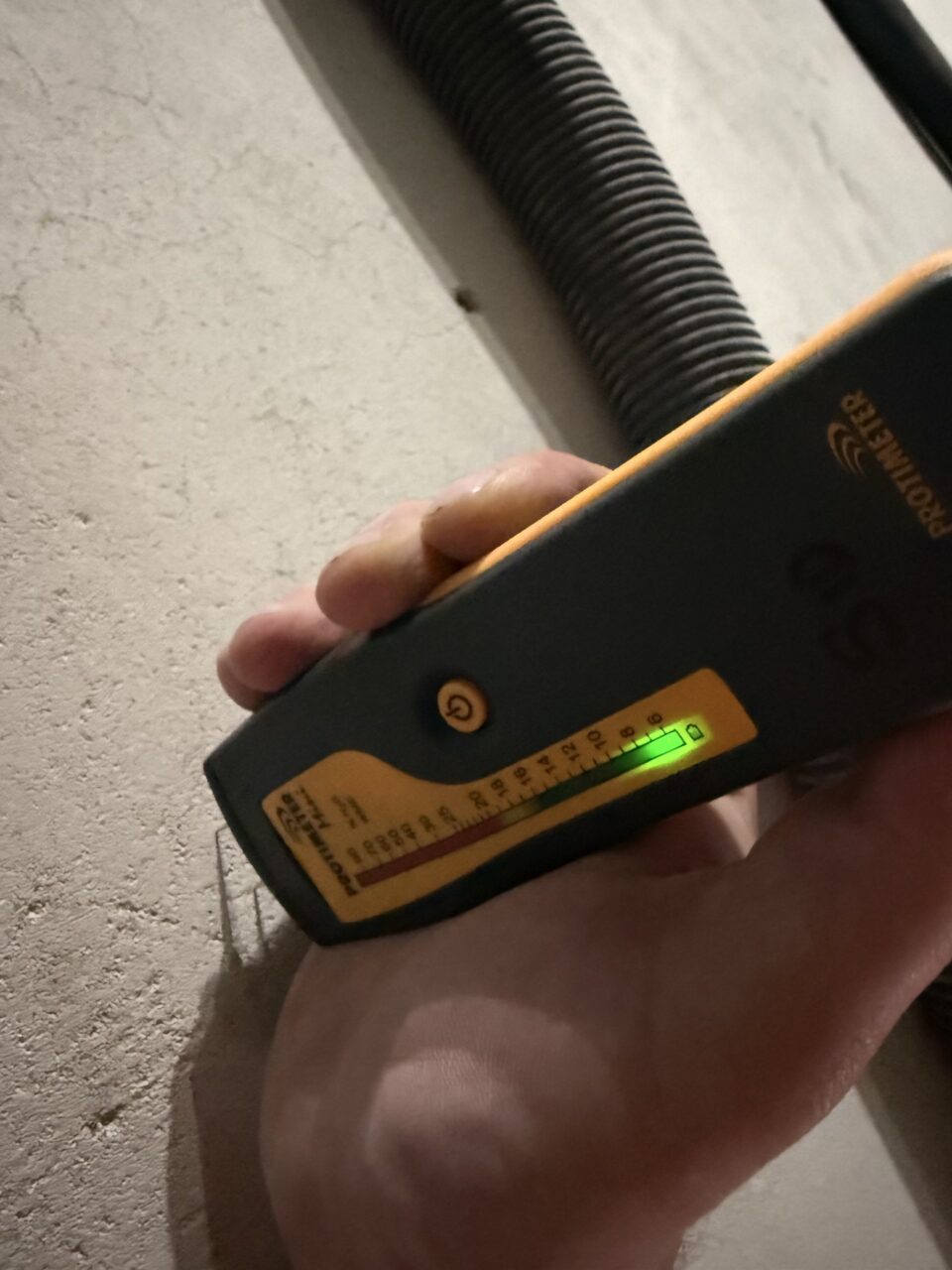
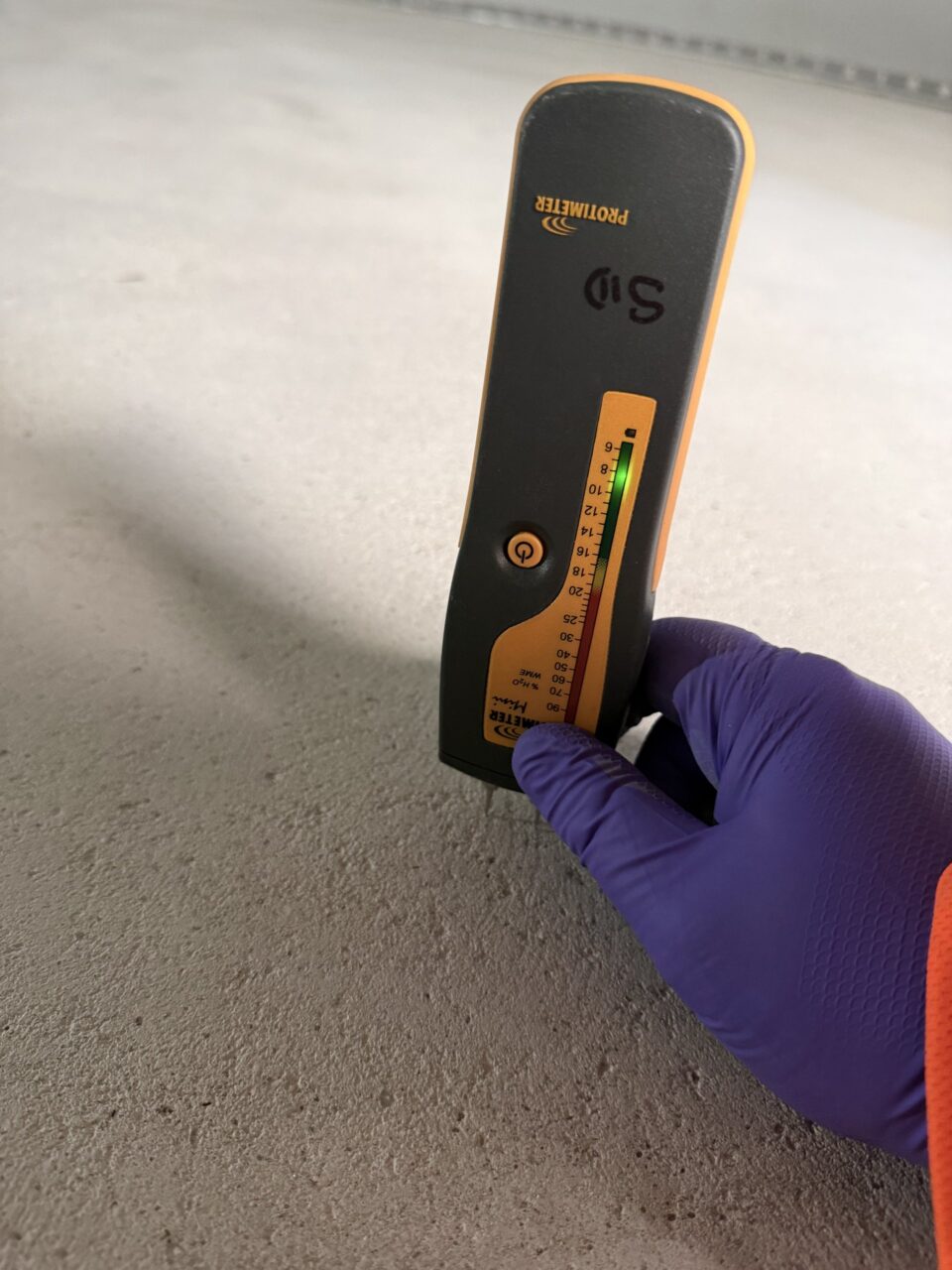
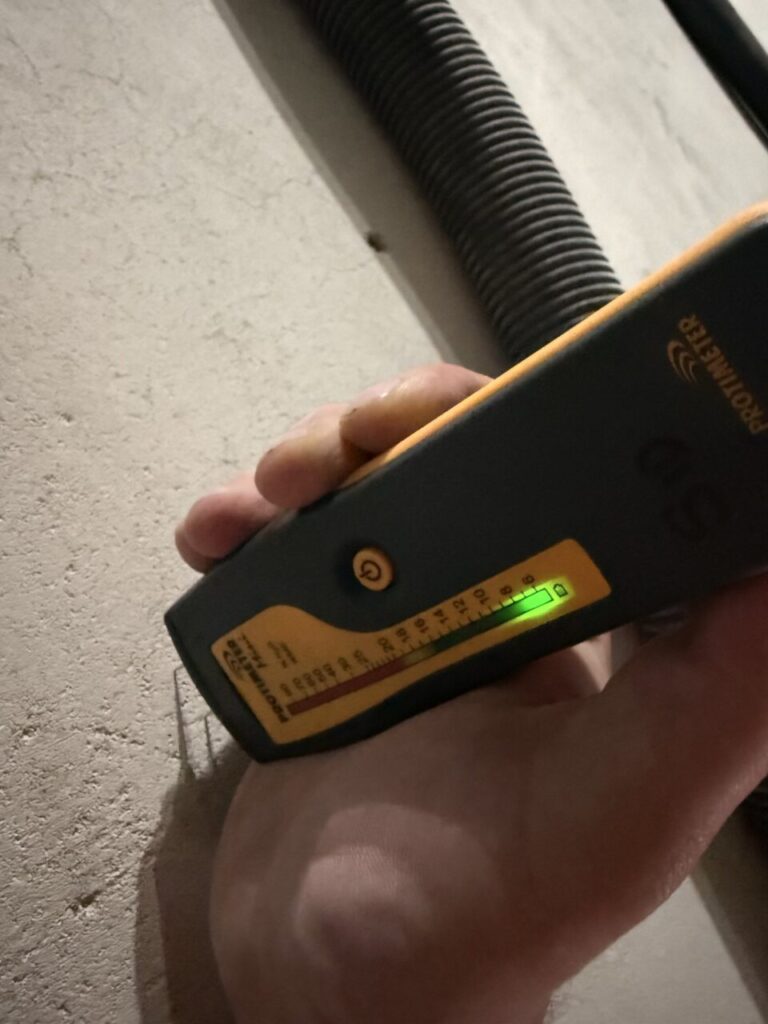
As part of our standard quality assurance when applying tank linings to concrete, the moisture content of both slabs was tested and recorded. Both tank bases passed against the manufacturer’s requirement of below 16% on the WME scale. Excess moisture in concrete can lead to osmotic blistering and loss of adhesion, making this a critical check before any tank lining is applied.

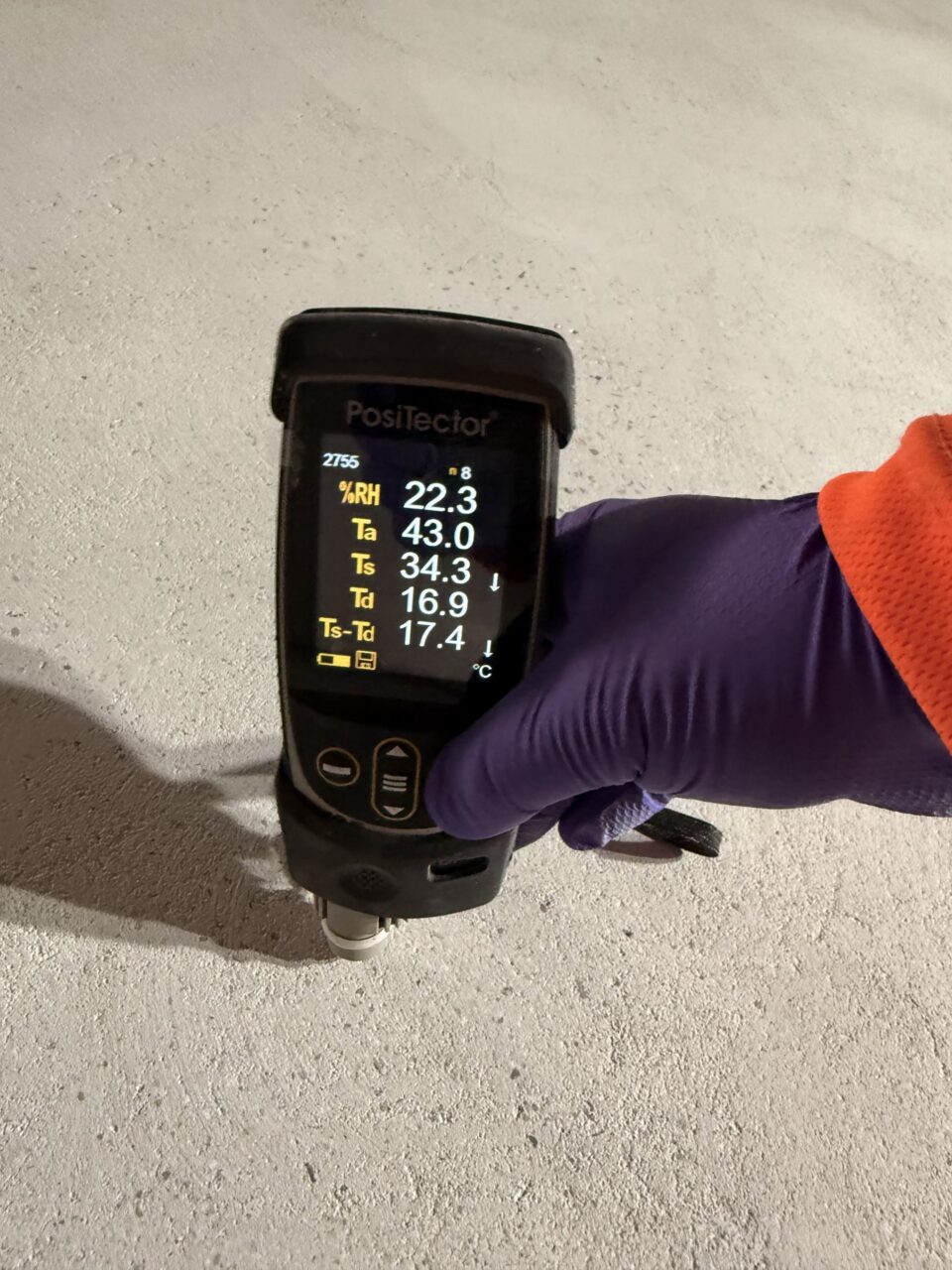
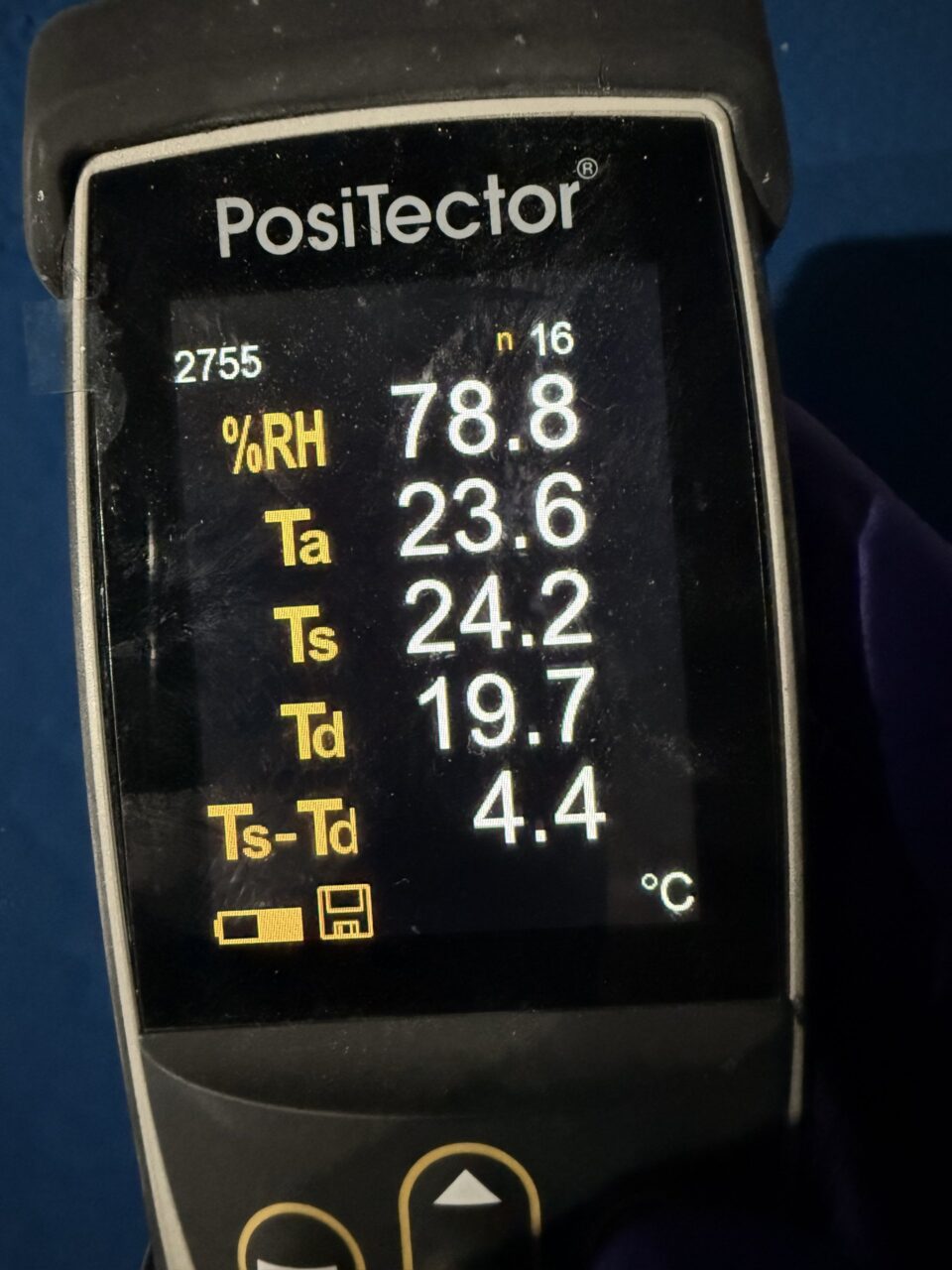
Prior to and during tank lining application the climatic conditions were tested and recorded using a PosiTector DPM, with 31 readings logged over the application period. Air temperatures within the tanks ranged from 21°C to 43°C and relative humidity peaked at 80.8%, but the surface temperature never fell below 4.4°C above the dew point, comfortably within the manufacturer’s minimum of 3°C. Dehumidification equipment was included within the order as a safeguard to protect application conditions.
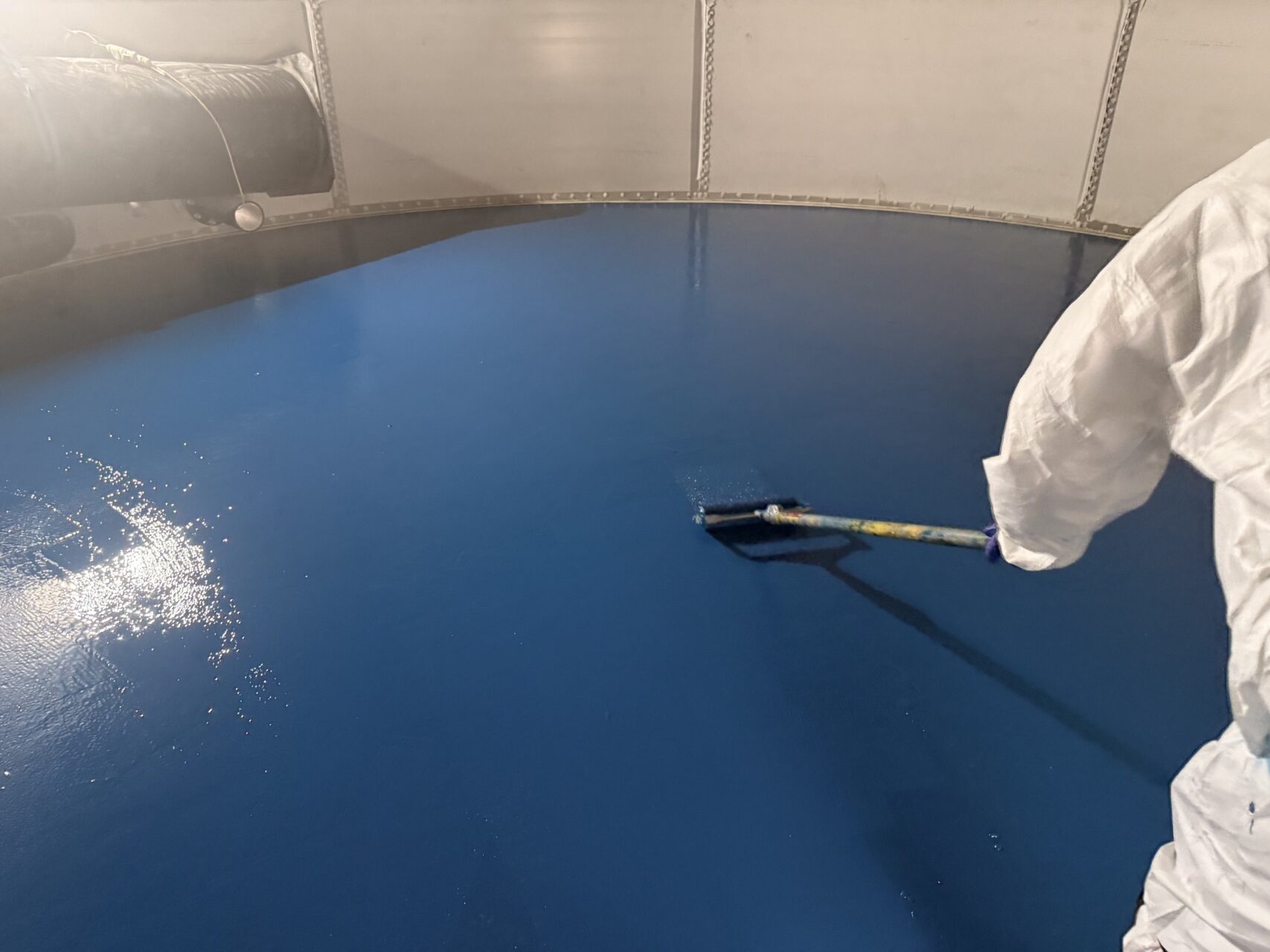
The prepared concrete was first sealed using Corroless ACO LV Sealer, a low viscosity, solvent free polyurethane sealer applied by brush and roller at a wet film thickness of 100 microns. Being low viscosity, the sealer penetrates the prepared concrete, sealing the surface and providing an ideal base for the tank lining build coats. Edges were masked prior to application to give a clean, straight termination line at the wall to floor junction.
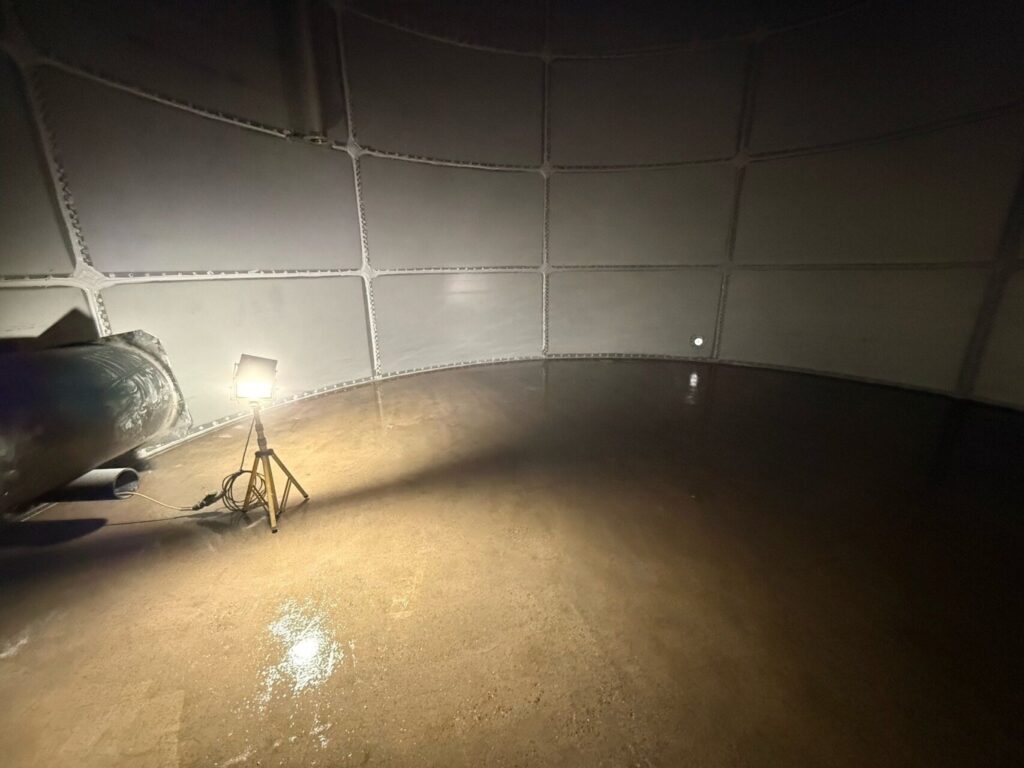

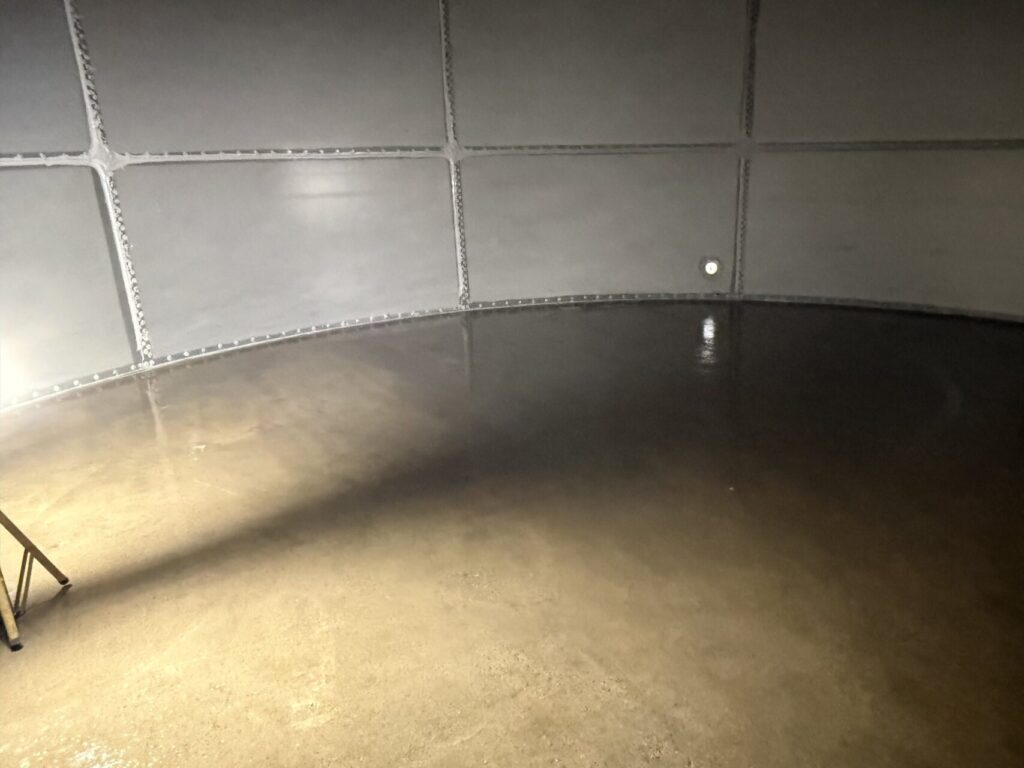

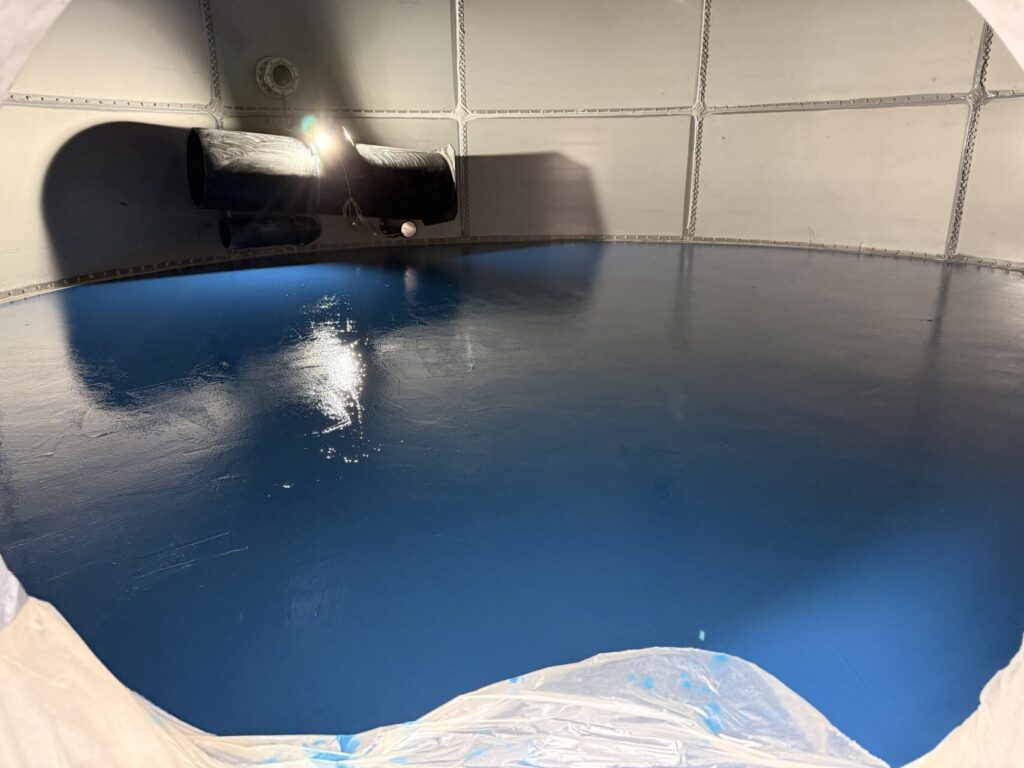

Climatic conditions were again tested and recorded prior to the second coat.
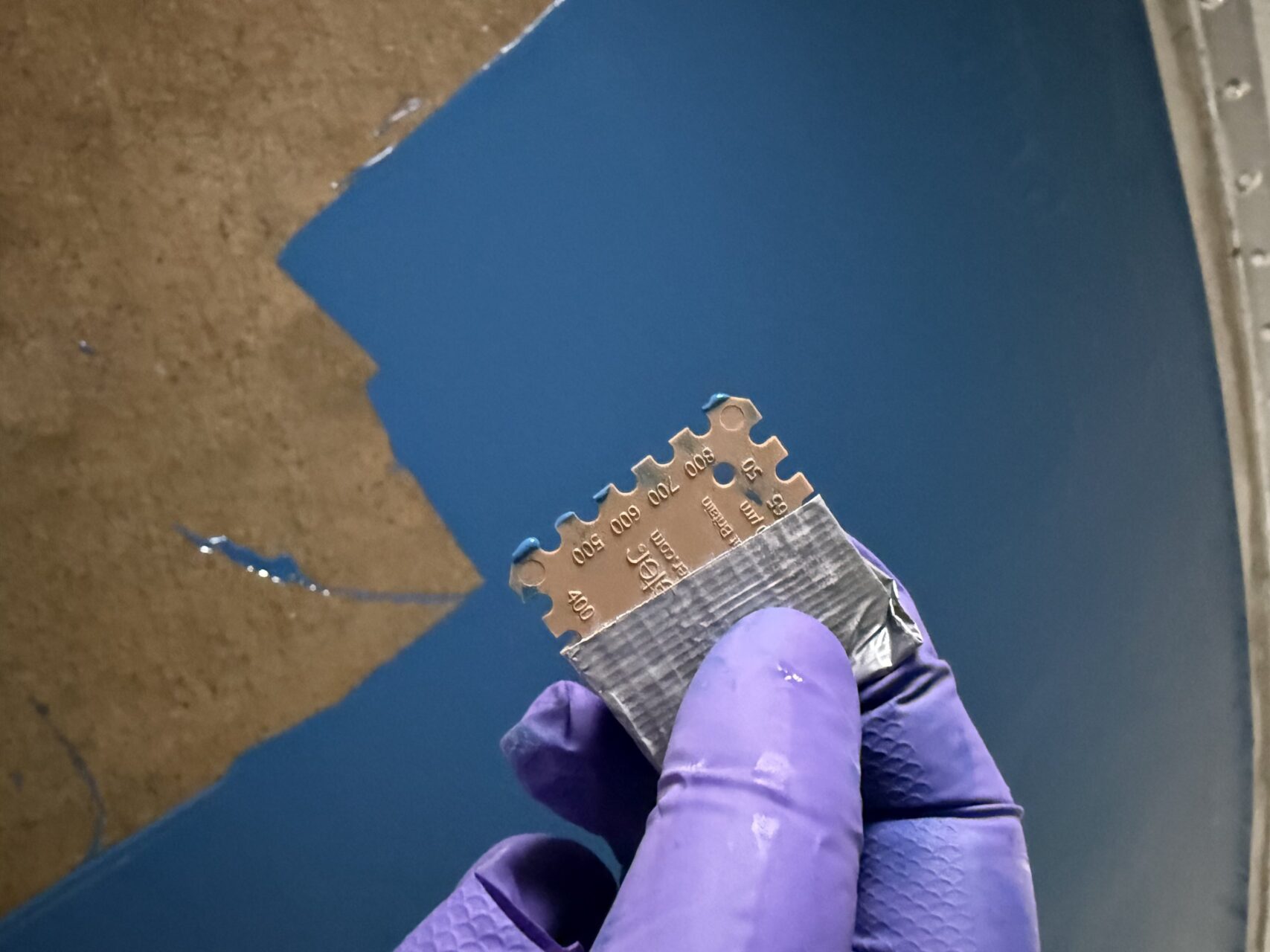
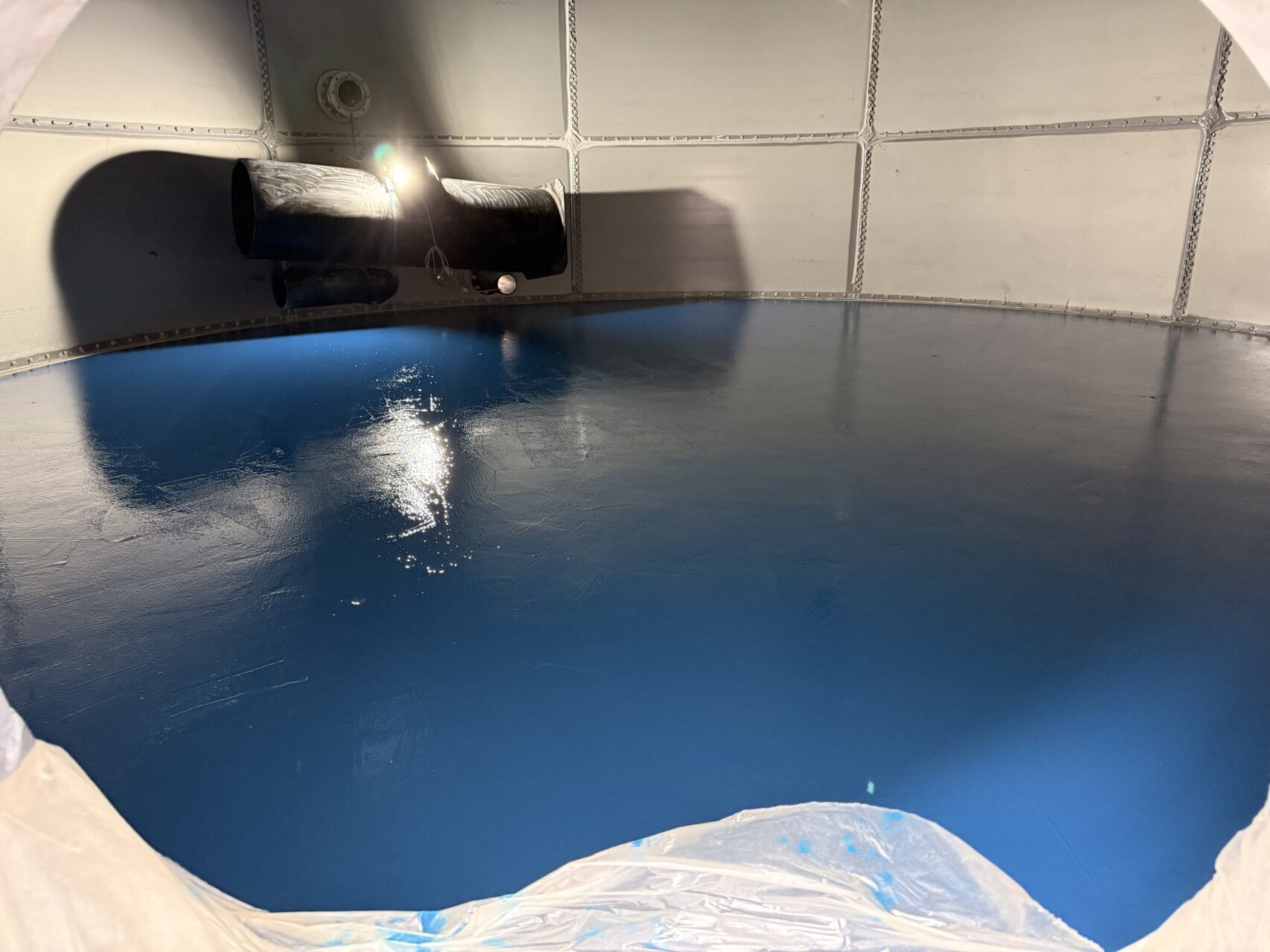
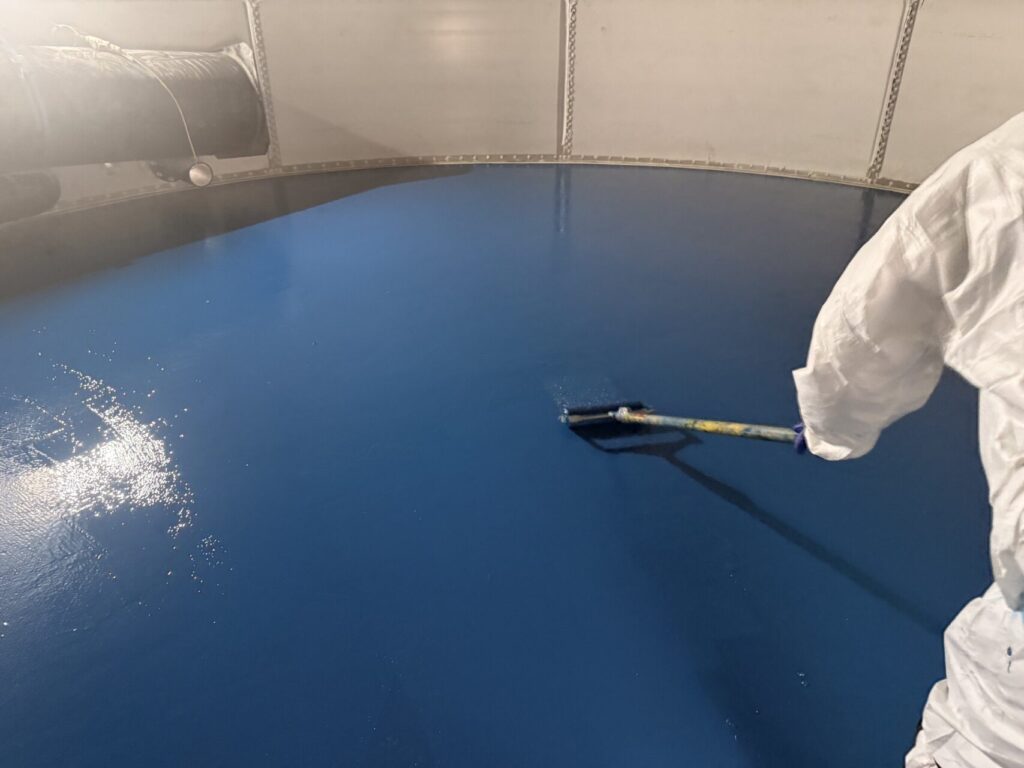
The second coat of Corroless ACO was then applied in the same manner and to the same thickness, achieving a total tank lining thickness in excess of 1,000 microns. Each coat was applied on consecutive days, within the manufacturer’s maximum overcoating window, to ensure full inter coat adhesion. Material batch numbers were recorded for each application, giving the client full traceability of the tank lining system.

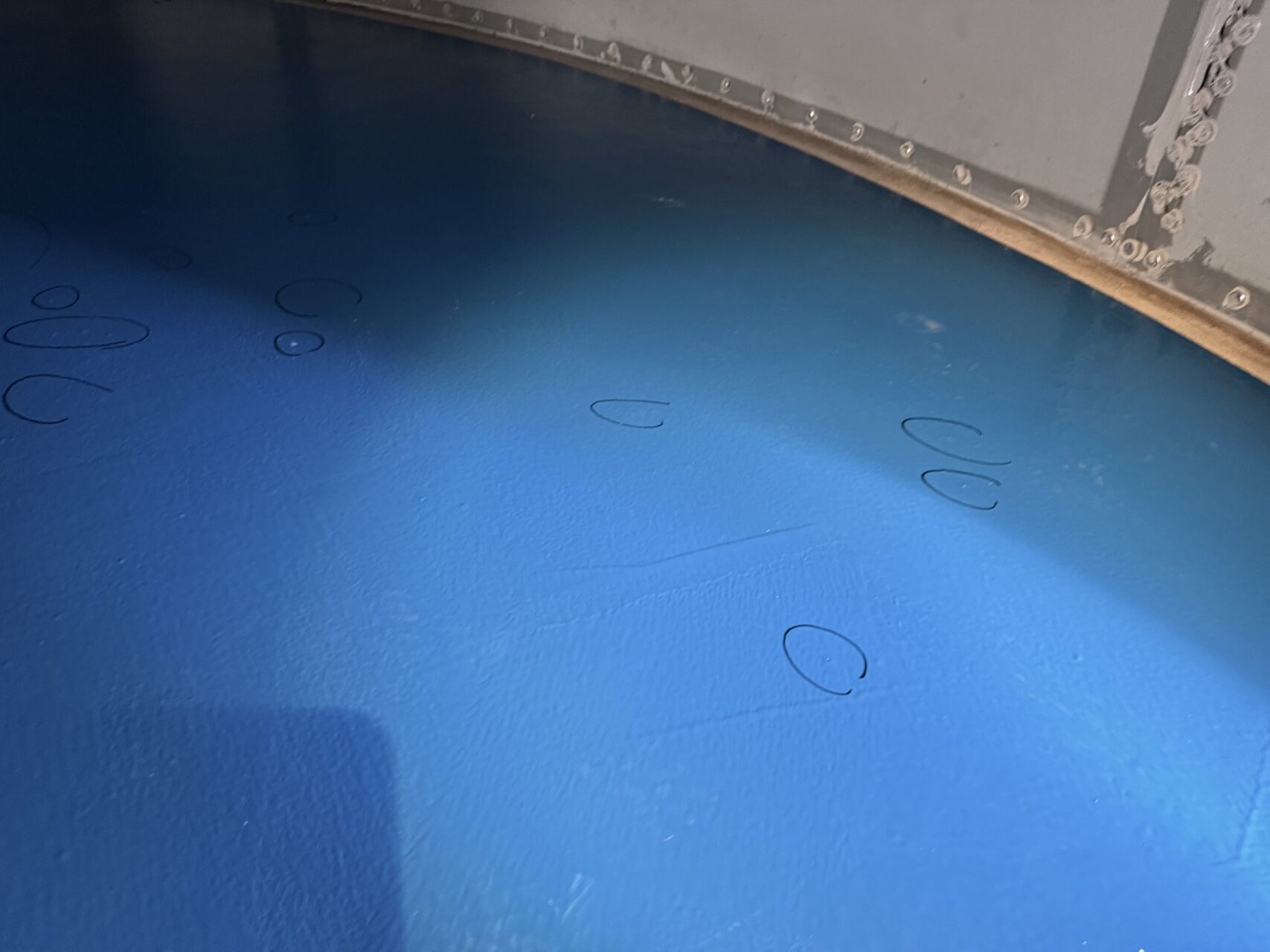
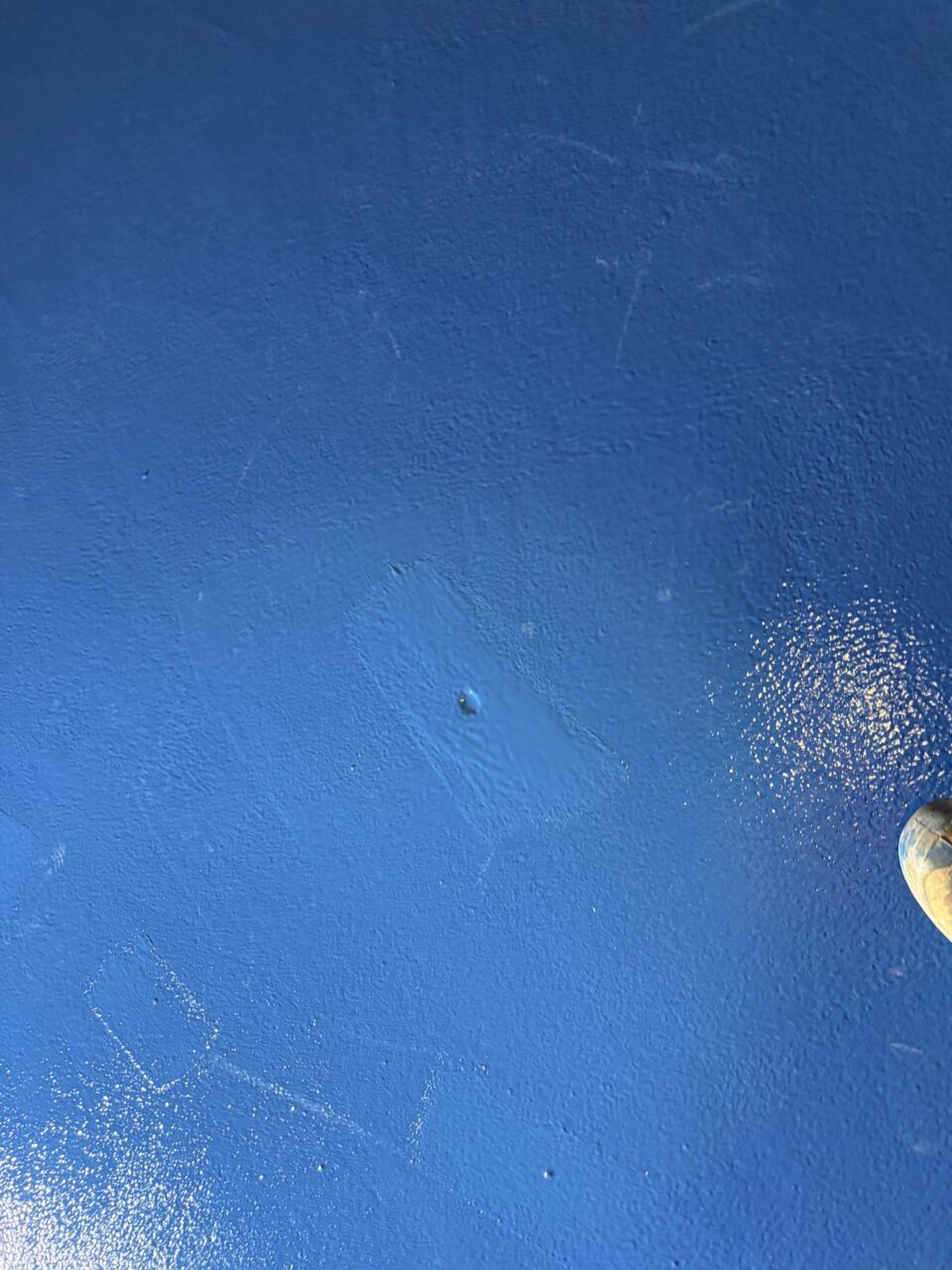
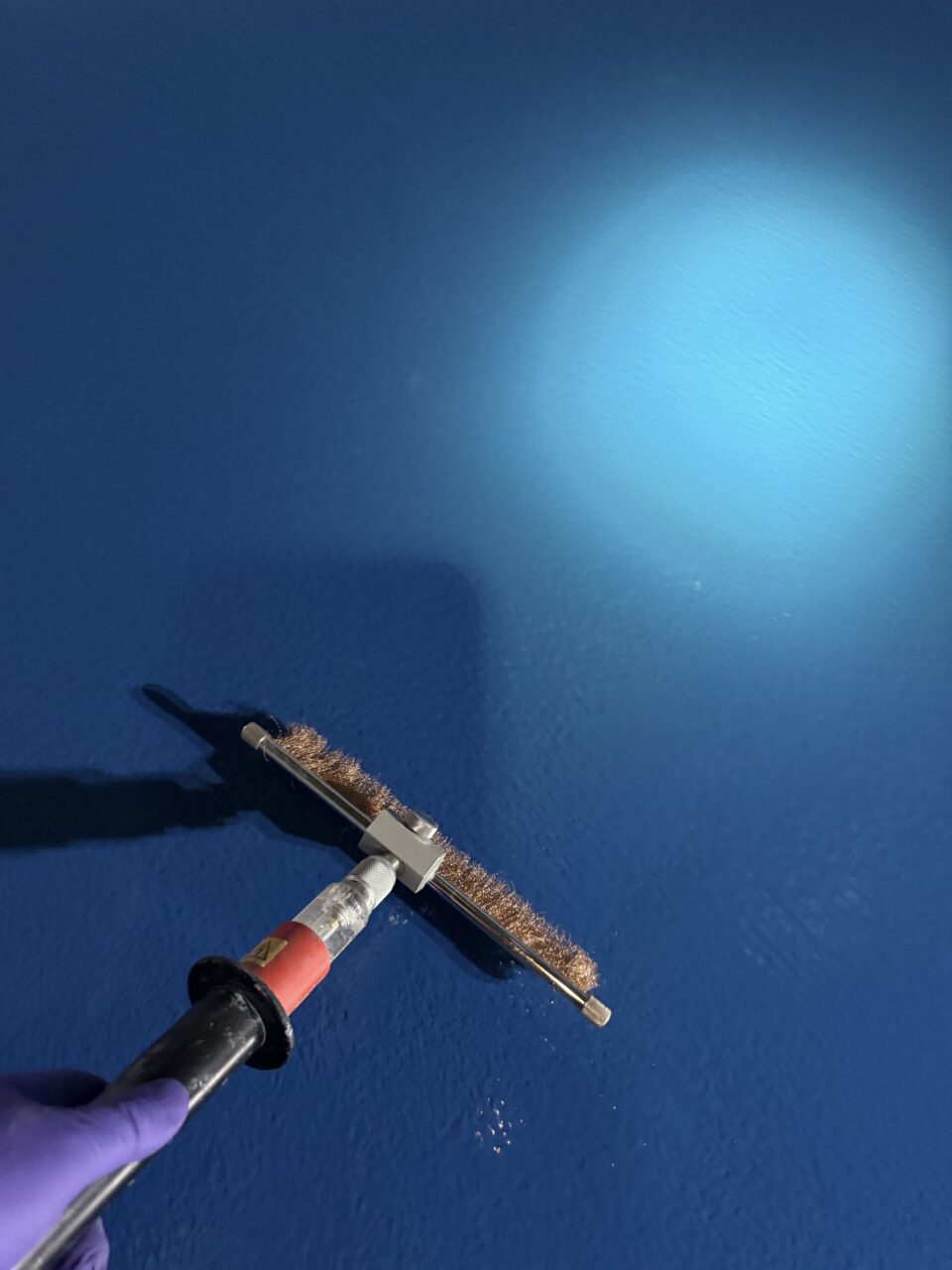
The cured tank lining was tested for pin holing by method of DC holiday spark testing. In an immersion environment a single pin hole is a point of tank lining failure, making this a critical quality assurance step.

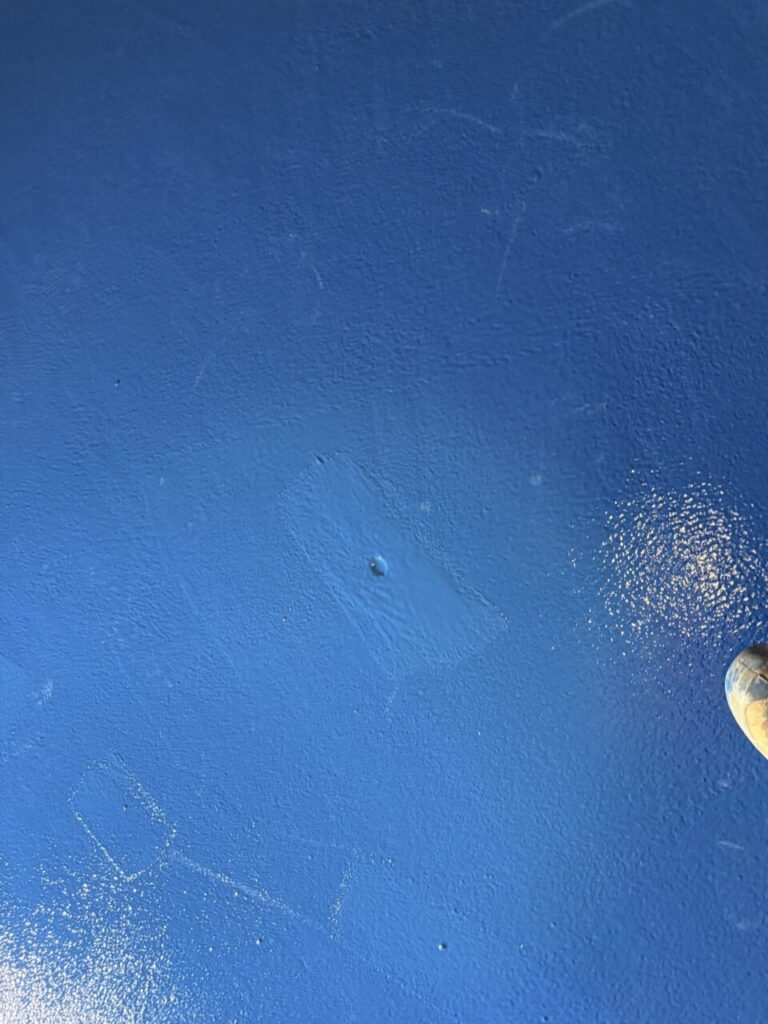
Both tank bases were prepared, lined, tested and handed over in five working days on site, within the six days programmed. Daily site diaries recorded no safety, material or equipment issues throughout the works.
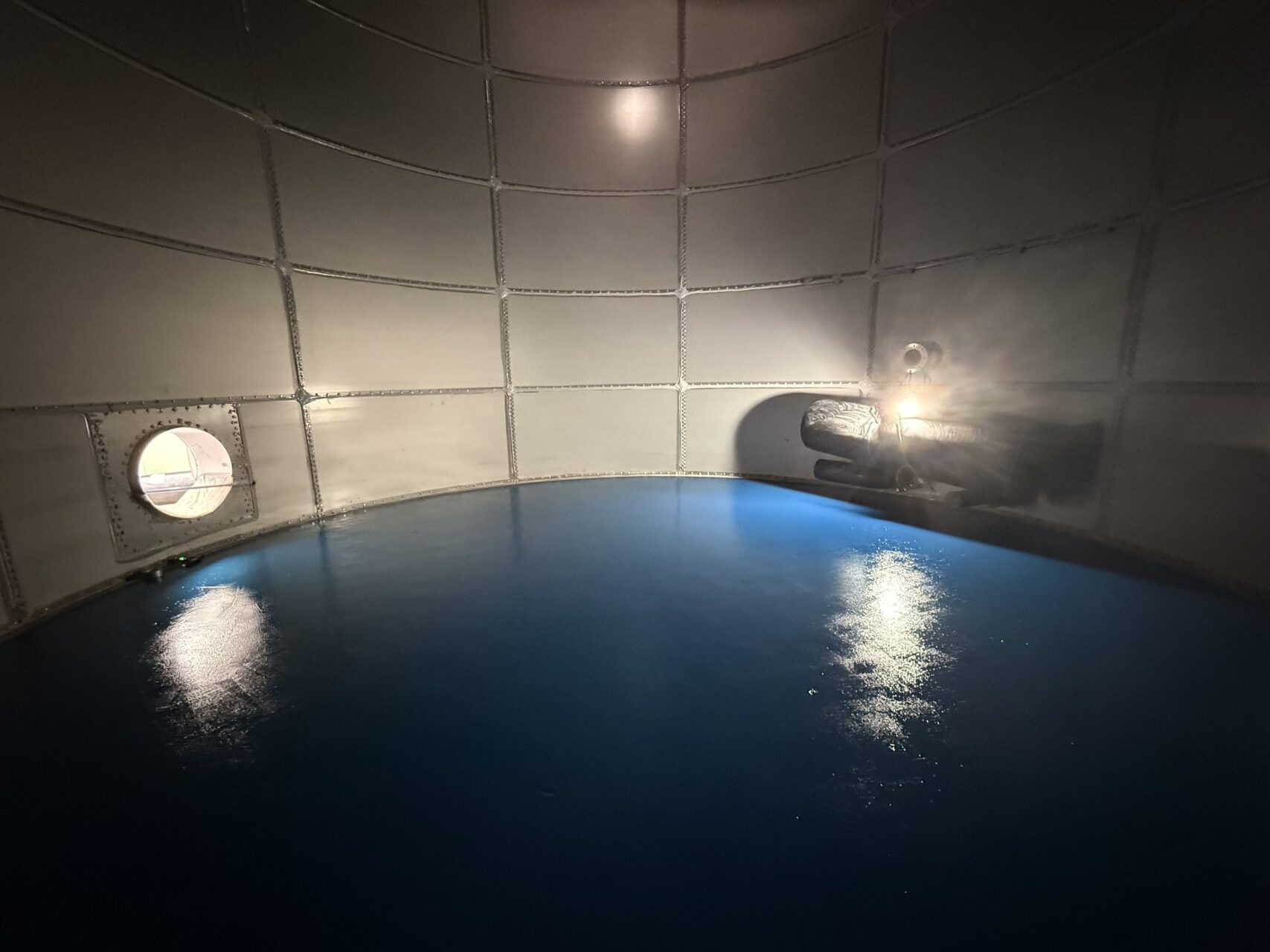
On completion a full quality assurance dossier was issued to the client, including moisture results, climatic data, wet film thickness records, batch traceability and the manufacturer’s technical data sheets. The client now has two concrete tank bases protected by a seamless, crack bridging polyurethane tank lining in excess of 1,000 microns.